Sole Proprietorship For Stock Trading
Description
Get your form ready online
Our built-in tools help you complete, sign, share, and store your documents in one place.
Make edits, fill in missing information, and update formatting in US Legal Forms—just like you would in MS Word.
Download a copy, print it, send it by email, or mail it via USPS—whatever works best for your next step.
Sign and collect signatures with our SignNow integration. Send to multiple recipients, set reminders, and more. Go Premium to unlock E-Sign.
If this form requires notarization, complete it online through a secure video call—no need to meet a notary in person or wait for an appointment.
We protect your documents and personal data by following strict security and privacy standards.

Make edits, fill in missing information, and update formatting in US Legal Forms—just like you would in MS Word.

Download a copy, print it, send it by email, or mail it via USPS—whatever works best for your next step.

Sign and collect signatures with our SignNow integration. Send to multiple recipients, set reminders, and more. Go Premium to unlock E-Sign.

If this form requires notarization, complete it online through a secure video call—no need to meet a notary in person or wait for an appointment.

We protect your documents and personal data by following strict security and privacy standards.
Looking for another form?







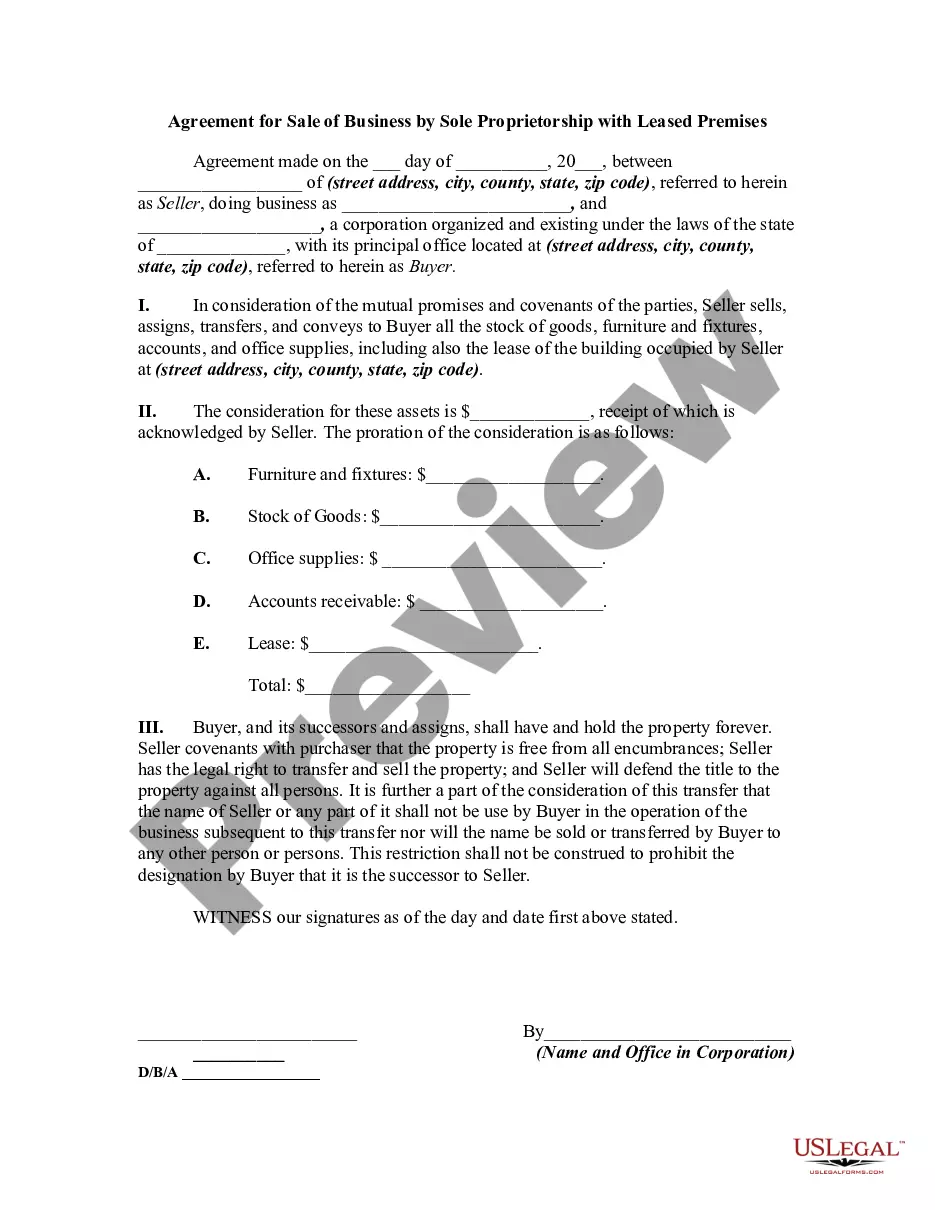
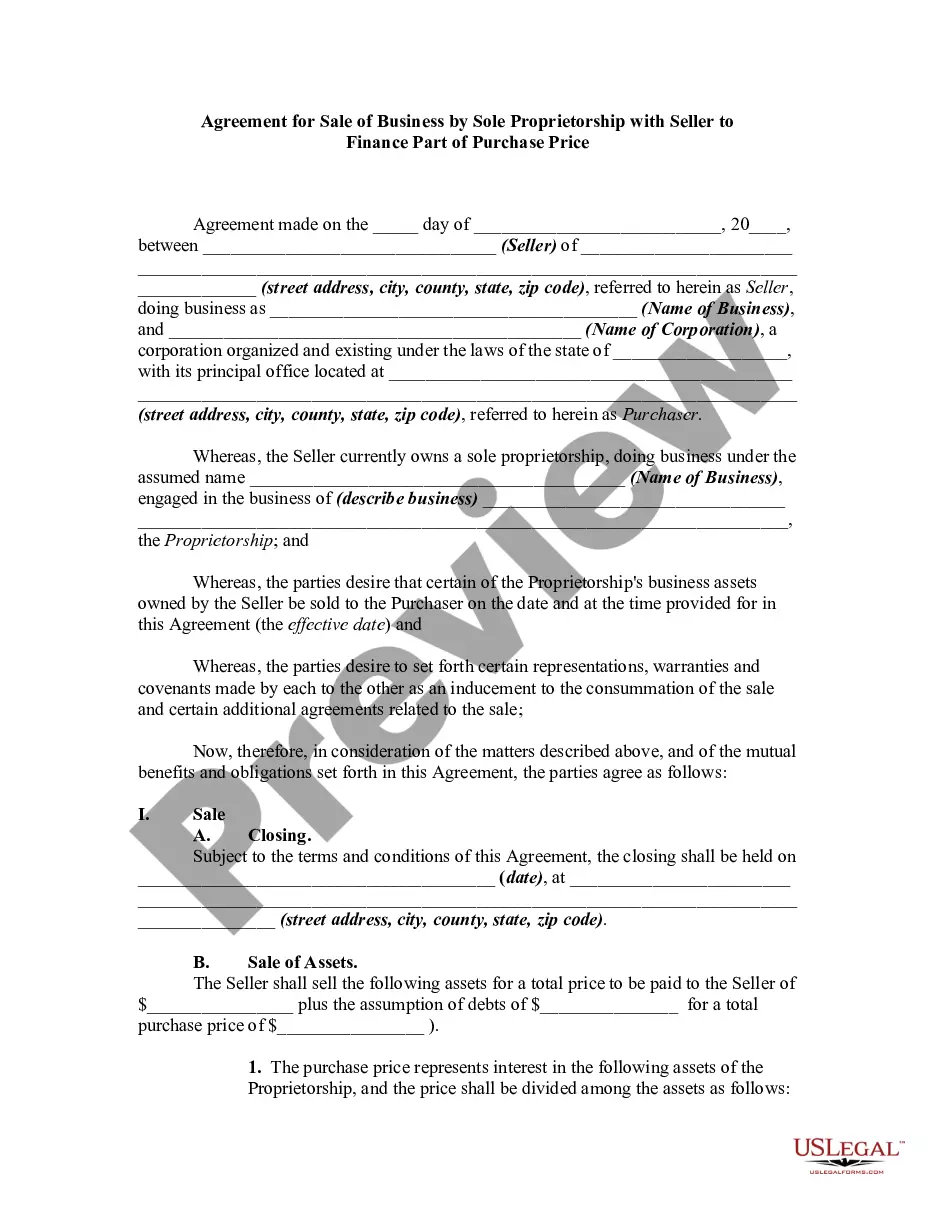
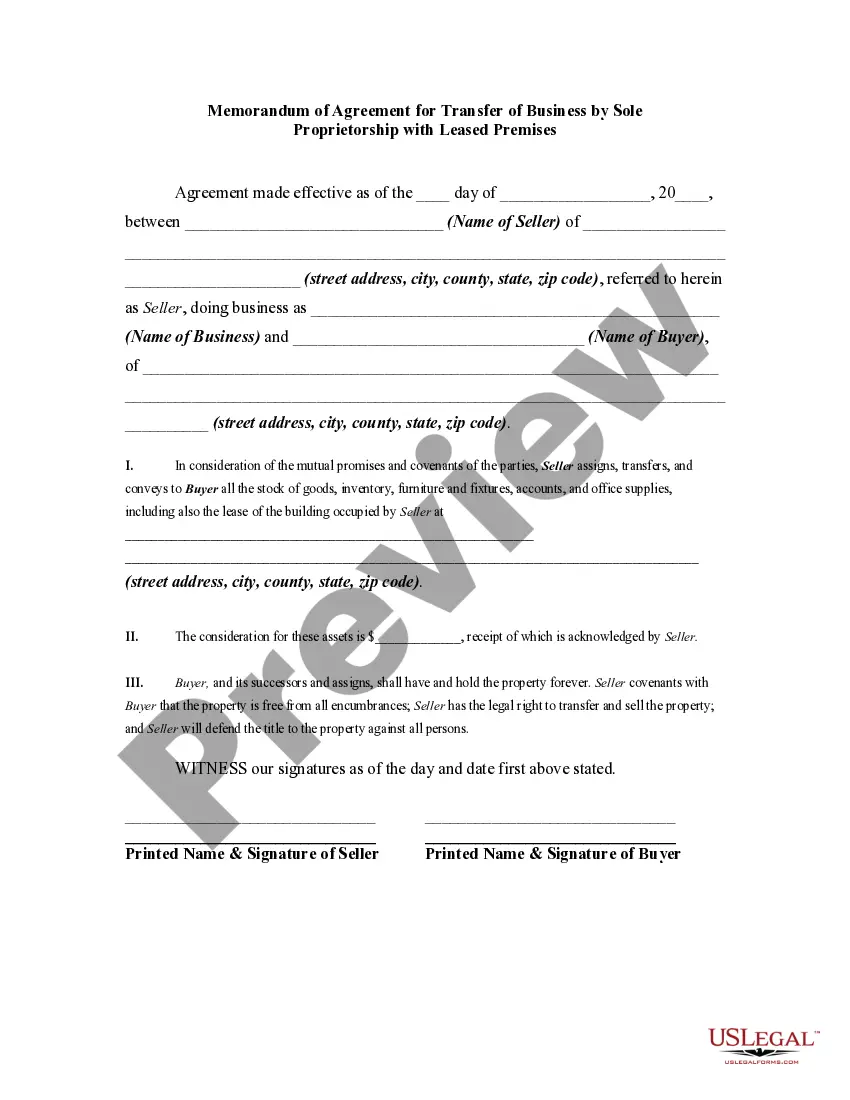
How to fill out Agreement For Sale Of Business By Sole Proprietorship With Leased Premises?
- If you're a returning US Legal Forms user, log into your account and click the Download button next to your desired form template. Ensure that your subscription is active; if not, renew it based on your current plan.
- For first-time users, begin by previewing the form and its description. Verify that it meets your specific needs and complies with local jurisdiction requirements.
- If the form isn't suitable, utilize the Search tab above to locate the correct template. Once you find it, proceed to the next step.
- Purchase the document by clicking the Buy Now button and selecting your preferred subscription plan. You’ll need to create an account to access the complete library.
- Complete your purchase by providing your payment information, either through a credit card or your PayPal account.
- Finally, download your form to your device and complete it. You can always access it later in the My Forms section of your profile.
Utilizing US Legal Forms not only streamlines the process but also ensures that you have access to a robust collection of over 85,000 legal documents. Their professional support can help ensure your documents are precise and compliant.
Start your sole proprietorship journey today by visiting US Legal Forms to access the resources you need!
Form popularity
FAQ
You can open a trade account as a sole trader, which is an essential part of engaging in stock trading. Financial institutions generally welcome sole proprietors to establish accounts, facilitating direct access to stock markets. Establishing a trade account under your sole proprietorship for stock trading allows you to manage your investments and leverage trading tools effectively. If you need assistance, uslegalforms provides resources to navigate the process easily.
Yes, a sole trader can operate under a trading name, which is often referred to as a 'doing business as' (DBA) name. This option allows you to brand your stock trading activities distinctively, without forming a separate legal entity. Choosing an appropriate trading name can enhance your visibility and credibility in the stock market. Remember, registering your trading name through legal channels ensures you are compliant with local regulations.
The main difference between a sole proprietorship and an S Corp lies in how they are structured and taxed. A sole proprietorship is owned by one individual who reports all income on their personal tax return. In contrast, an S Corp allows for more formal structure, with limited liability, and it can help reduce self-employment taxes on earnings. When considering the sole proprietorship for stock trading, the simplicity of this model often appeals to individual traders.
Yes, you can buy stocks in a sole proprietorship. This business structure allows you to invest directly in stock trading without any special legal barriers. As a sole proprietor, all profits and losses from your trading activities pass directly to you, simplifying tax reporting. Utilizing the sole proprietorship for stock trading can be an effective way to manage your investments personally.
The best business structure for stock trading often comes down to personal preference and financial goals. A sole proprietorship for stock trading is popular for its simplicity and ease of management. Alternatively, some traders opt for an LLC to take advantage of liability protection and tax flexibility. Evaluating these different structures and asking for expert advice can help you choose the right model for your trading activities.
Yes, stocks can be owned by an LLC, providing certain advantages for investors. By placing stocks in an LLC, individuals can protect their personal assets from potential liabilities. However, keep in mind that the structure of your business should align with your trading strategy, whether it's a sole proprietorship for stock trading or an LLC. Consulting with a legal or financial expert can clarify how this setup could work best for you.
There are several reasons why some investors might avoid LLCs, especially for trading stocks. Many investors prefer the straightforward nature of a sole proprietorship for stock trading, which allows them to maintain full control and simpler tax reporting. Additionally, some investors might find the initial costs and administrative requirements of maintaining an LLC to be less appealing. Ultimately, each investor has different goals, and understanding your own needs can help you make the best choice.
Starting an LLC for stock trading can offer some benefits, but it may not always be necessary. A sole proprietorship for stock trading is often simpler and less costly to set up. If you want to limit personal liability and have more formal structure in your trading activities, an LLC might be worth considering. However, evaluate your specific needs and consult with a financial advisor to make an informed decision.
Sole proprietorships have several disadvantages, including unlimited personal liability, difficulty in raising capital, lack of business continuity, limited expertise, and challenges in market competition. For instance, should your trading incur debts, you are personally responsible. Moreover, growth might be limited compared to corporations. Despite these drawbacks, a sole proprietorship for stock trading remains a popular option due to its straightforward nature.
Trading can fall under a sole proprietorship if you operate as an individual. This means you handle all the trading activities without a formal business entity. A sole proprietorship for stock trading can provide simplicity and clarity in managing your personal investments. However, consider the implications for liability and taxes.