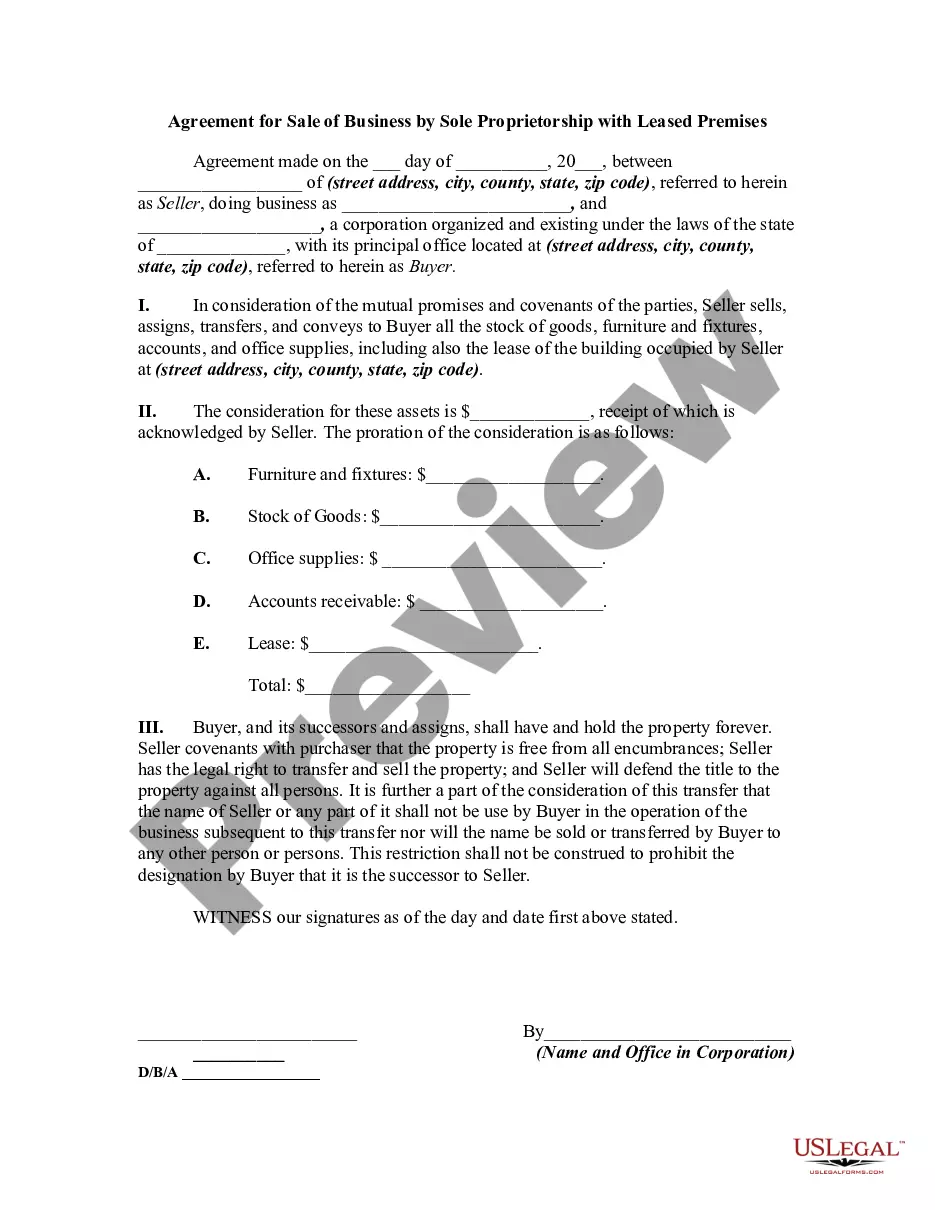
Sole Proprietorship For Small Business
Description
Get your form ready online
Our built-in tools help you complete, sign, share, and store your documents in one place.
Make edits, fill in missing information, and update formatting in US Legal Forms—just like you would in MS Word.
Download a copy, print it, send it by email, or mail it via USPS—whatever works best for your next step.
Sign and collect signatures with our SignNow integration. Send to multiple recipients, set reminders, and more. Go Premium to unlock E-Sign.
If this form requires notarization, complete it online through a secure video call—no need to meet a notary in person or wait for an appointment.
We protect your documents and personal data by following strict security and privacy standards.

Make edits, fill in missing information, and update formatting in US Legal Forms—just like you would in MS Word.

Download a copy, print it, send it by email, or mail it via USPS—whatever works best for your next step.

Sign and collect signatures with our SignNow integration. Send to multiple recipients, set reminders, and more. Go Premium to unlock E-Sign.

If this form requires notarization, complete it online through a secure video call—no need to meet a notary in person or wait for an appointment.

We protect your documents and personal data by following strict security and privacy standards.
Looking for another form?







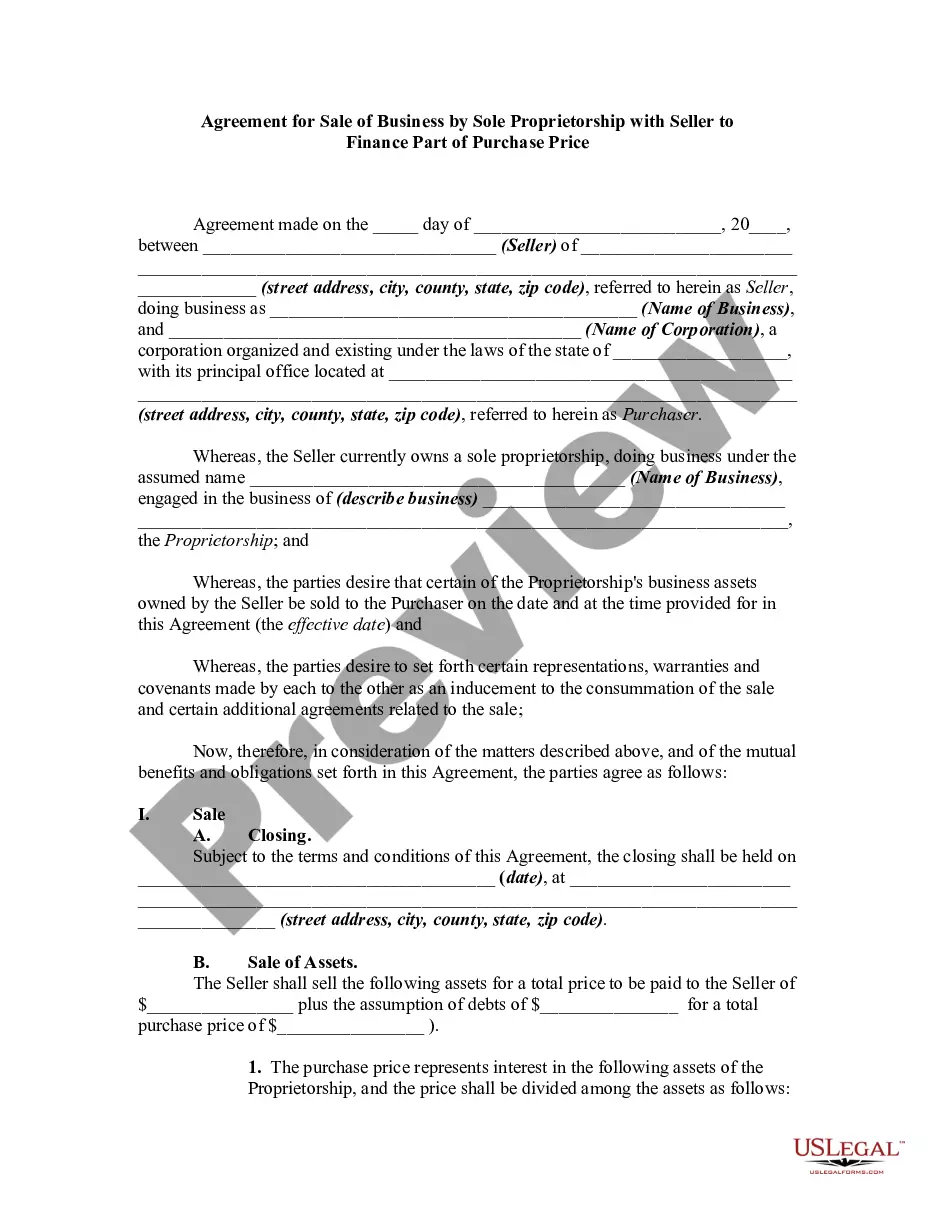
How to fill out Agreement For Sale Of Business By Sole Proprietorship With Leased Premises?
- Begin by logging into your US Legal Forms account if you're an existing user. Check that your subscription is active; if not, renew it according to your plan.
- For first-time users, start by reviewing the available forms in Preview mode. Look for a sole proprietorship template that meets your local jurisdiction requirements.
- If you don’t find the right form immediately, utilize the Search feature to explore other relevant templates. Once you identify a suitable one, proceed to the next step.
- Next, click the Buy Now button corresponding to your chosen form and select the subscription plan that fits your needs. You’ll need to register for an account to access the complete library.
- Complete your purchase by entering your credit card information or using PayPal to pay for your subscription.
- Finally, download the form to your device for easy access and fill it out. You can also find it anytime in the My Forms section of your profile.
By following these steps, you'll have your sole proprietorship documents ready in no time.
Leverage the extensive support and resources available at US Legal Forms to ensure your legal documents are accurate and comprehensive. Start your journey today!
Form popularity
FAQ
Setting yourself up as a sole proprietor is quite simple. You need to choose a business name, obtain any necessary licenses, and possibly register for a DBA (Doing Business As) if you're not using your own name. Platforms like US Legal Forms can simplify this process by providing templates and guidance tailored for a sole proprietorship for small business.
Choosing between an LLC and a sole proprietorship depends on your business needs. A sole proprietorship for small business provides simplicity in management and tax filings. However, an LLC offers personal liability protection which can safeguard your personal assets. Evaluating your specific situation will help you make the best decision.
Yes, a sole proprietorship can certainly qualify as a small business. It is the simplest business structure for individuals launching their enterprises. This type of business allows you to keep all profits and maintain full control. Additionally, registering as a sole proprietorship is straightforward and can often be done using online platforms like US Legal Forms.
A sole proprietorship can be quite useful for a small business, particularly if you are just starting. It allows for easy setup and fewer compliance demands, which means you can focus more on growing your business. By using a sole proprietorship for small business, you have the flexibility to adapt rapidly to changes in the market. Plus, USLegalForms provides the necessary resources and forms to help you establish and manage your sole proprietorship smoothly.
While a sole proprietorship for small business offers many advantages, it also has some downsides to consider. For instance, you are personally liable for all debts and legal obligations, which can pose a risk to your personal assets. Furthermore, raising funds may be more challenging compared to other business structures, as investors often seek more formalized entities. It's essential to weigh these risks against the benefits before deciding.
In Tennessee, you do not need to register a sole proprietorship for small business at the state level, but you may need to register your business name if it differs from your own. Additionally, check with local authorities for any permits or licenses specific to your industry. Registering can help protect your business name and improve credibility.
Filing your own taxes as a sole proprietor for small business is straightforward. Gather all your financial records, including business income and expenses. Use Form 1040 along with Schedule C to report your earnings and any applicable deductions, making sure to check the IRS guidelines for any additional forms you may need.
Sole proprietors for small business can receive tax refunds, but it depends on your overall tax situation. If your withholdings and estimated tax payments exceed your tax liability for the year, you may qualify for a refund. Maintaining accurate records of your expenses and income can help maximize potential refunds.
Filing taxes as a sole proprietor for small business involves reporting your income and expenses on Schedule C, which you attach to your Form 1040. You will detail your business income and deduct allowable expenses to calculate your net profit. This profit becomes part of your personal income, so proper record-keeping throughout the year is essential.
To establish yourself as a sole proprietorship for small business, you must first choose a business name. Next, you should obtain any necessary licenses or permits required by your local and state authorities. Additionally, consider opening a separate bank account for business transactions to keep your personal and business finances organized.