Timeshare Last Week
Description
Get your form ready online
Our built-in tools help you complete, sign, share, and store your documents in one place.
Make edits, fill in missing information, and update formatting in US Legal Forms—just like you would in MS Word.
Download a copy, print it, send it by email, or mail it via USPS—whatever works best for your next step.
Sign and collect signatures with our SignNow integration. Send to multiple recipients, set reminders, and more. Go Premium to unlock E-Sign.
If this form requires notarization, complete it online through a secure video call—no need to meet a notary in person or wait for an appointment.
We protect your documents and personal data by following strict security and privacy standards.

Make edits, fill in missing information, and update formatting in US Legal Forms—just like you would in MS Word.

Download a copy, print it, send it by email, or mail it via USPS—whatever works best for your next step.

Sign and collect signatures with our SignNow integration. Send to multiple recipients, set reminders, and more. Go Premium to unlock E-Sign.

If this form requires notarization, complete it online through a secure video call—no need to meet a notary in person or wait for an appointment.

We protect your documents and personal data by following strict security and privacy standards.
Looking for another form?
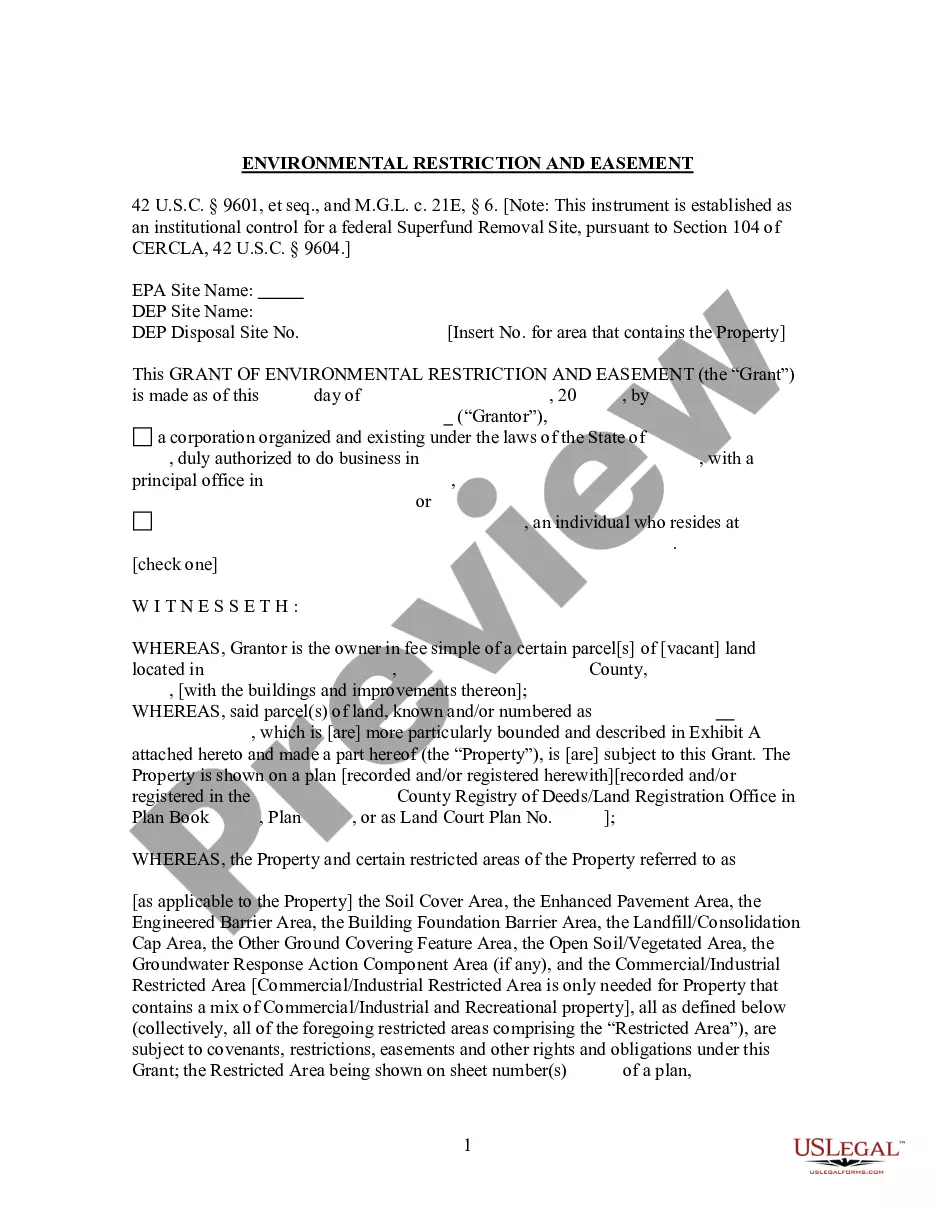

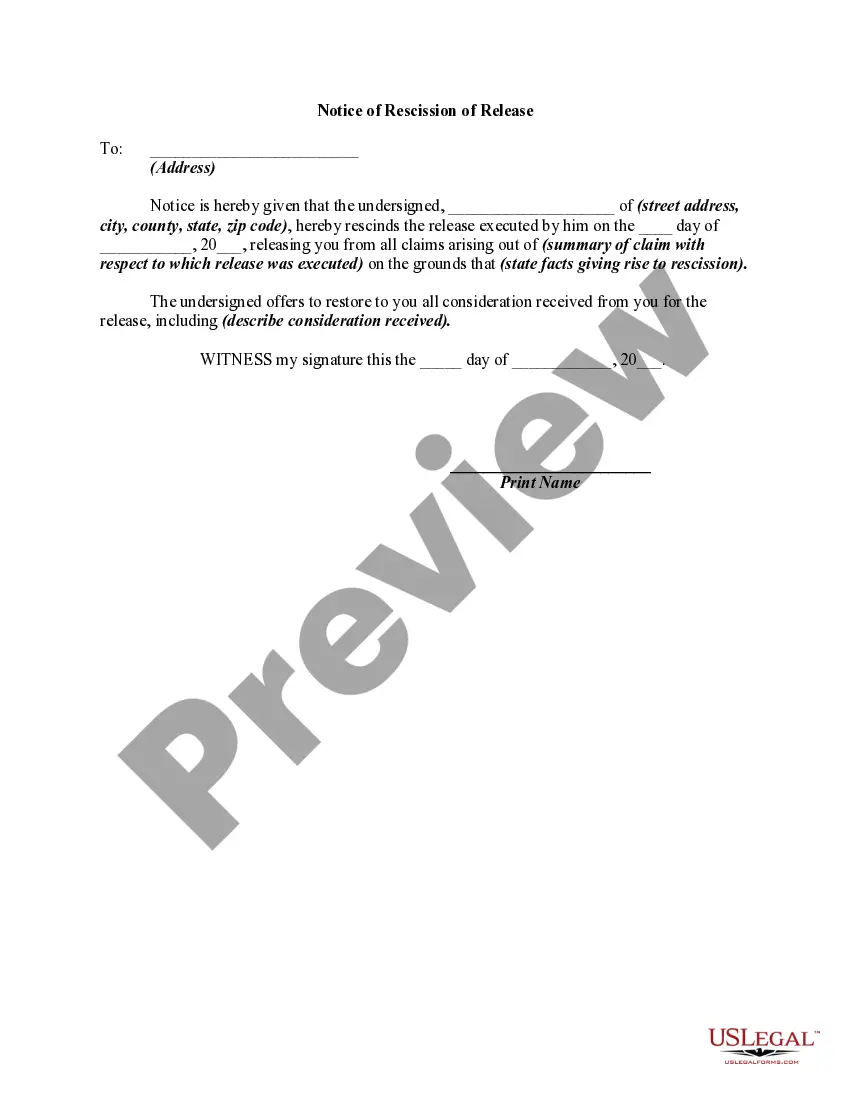
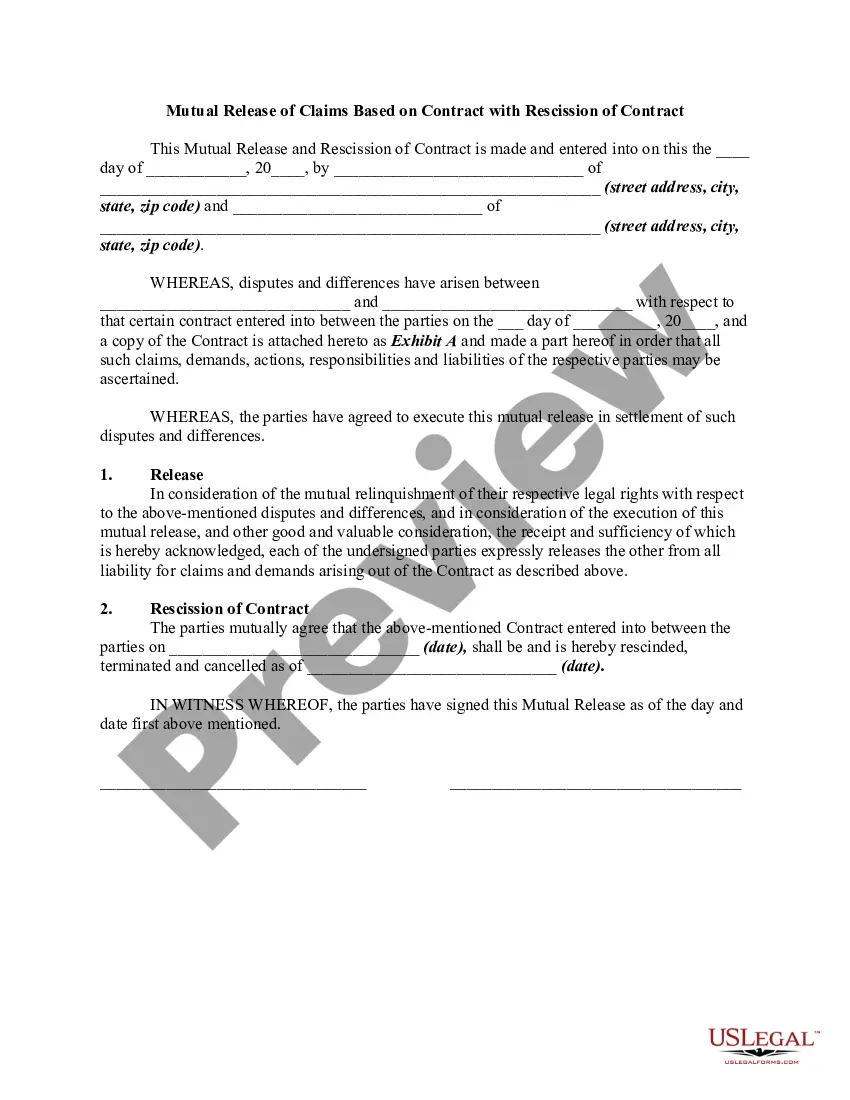
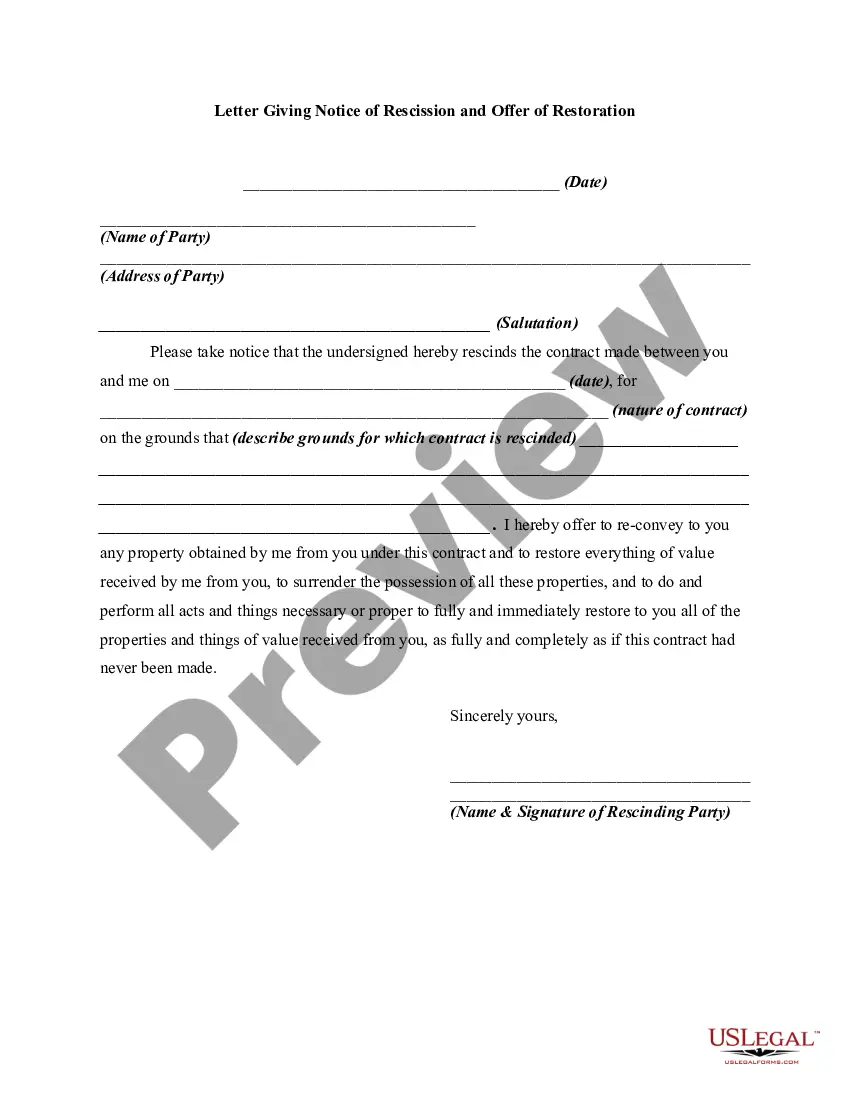
How to fill out Notice Of Rescission Of Release?
- Start by logging into your account on the US Legal Forms website. If this is your first time, register to create an account.
- Preview the available forms to find the one that suits your needs. Ensure it aligns with local jurisdiction requirements before proceeding.
- If the form you need is not available, you can utilize the search function to explore other options that might fit your legal scenario.
- Once you’ve found the right template, click on the Buy Now button and select your desired subscription plan.
- Complete your purchase by enter your payment details. You can opt for credit card payment or use PayPal for convenience.
- Download and save the document on your device for completion, while also being able to access it later via the My Forms section of your account.
In conclusion, US Legal Forms empowers you to manage your legal documents with ease, providing access to over 85,000 editable legal forms and the support of premium experts. This makes it an excellent choice for anyone looking to streamline their documentation process.
Don’t wait—take advantage of these resources today and simplify your legal needs!
Form popularity
FAQ
Legally walking away from a timeshare can involve several steps. You might need to review your contract thoroughly and consult with professionals who specialize in timeshare exits. Platforms like US Legal Forms can offer valuable resources and documentation to support your decision, especially after any frustrations you faced since your timeshare last week.
Many individuals experience regret after purchasing a timeshare, often due to high maintenance fees or restricted availability. However, some owners cherish their experiences, especially if they effectively manage their bookings. If you regret your choice after your timeshare last week, remember that there are legal avenues available for relief and possible release from your obligations.
Floating weeks grant timeshare owners flexibility in choosing their vacation dates within a specified season or range. This means you can reserve your time that suits your schedule best, rather than being tied to a fixed date. If you enjoyed your stay last week, floating weeks can help ensure you return at your convenience in the future.
Finding an affordable exit strategy from your timeshare requires careful planning and research. The cheapest option often involves contacting the timeshare company directly to negotiate your exit. Alternatively, utilizing services like US Legal Forms can provide you with the necessary documentation to legally terminate your ownership, especially if you've felt burdened since your timeshare last week.
The 1 in 4 rule applies to timeshare ownership, allowing owners to book their vacations every fourth year at a specific property. This system gives you access to a designated week without overlapping bookings from other owners. Understanding this rule can enhance your planning for a getaway, especially if you enjoyed your timeshare last week.
To report a timeshare on your tax return, include it as part of your personal property. You'll typically need to supply information about the timeshare's value and any deductions associated with its use. If you made changes to your timeshare last week, be sure to reflect that in your reporting.
Yes, claiming your timeshare on your taxes is generally necessary, especially if you incur expenses or receive rental income. It’s important to track any relevant tax deductions related to your timeshare last week to maximize your filing accuracy. Keeping detailed records will make this process easier.
Getting rid of a timeshare week can be straightforward, but it requires careful planning. You can sell, rent, or even donate it to a charity. Consider platforms like UsLegalForms to create the necessary documents to streamline the process of transferring your timeshare last week.
If you own a timeshare, you typically need to report it on your taxes as part of your real estate holdings. The IRS requires disclosure of any property, including a timeshare, to determine your overall taxable income. Keep records of any financial transactions concerning your timeshare last week for comprehensive reporting.
Yes, if you rented out your timeshare, you must report any rental income earned. According to IRS guidelines, this income should be reported on your tax return. Make sure to account for any expenses related to your timeshare last week to ensure that you accurately reflect your net income.