Charitable Lead Trust For Human Rights
Description
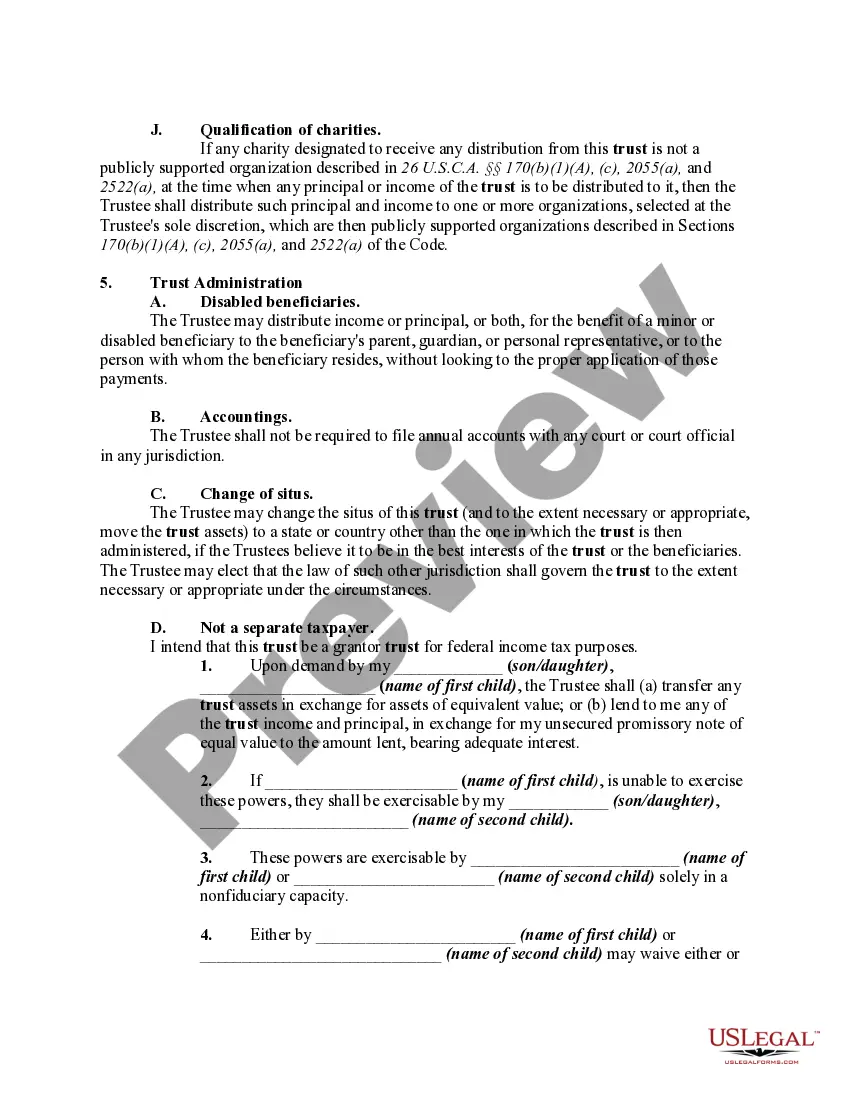
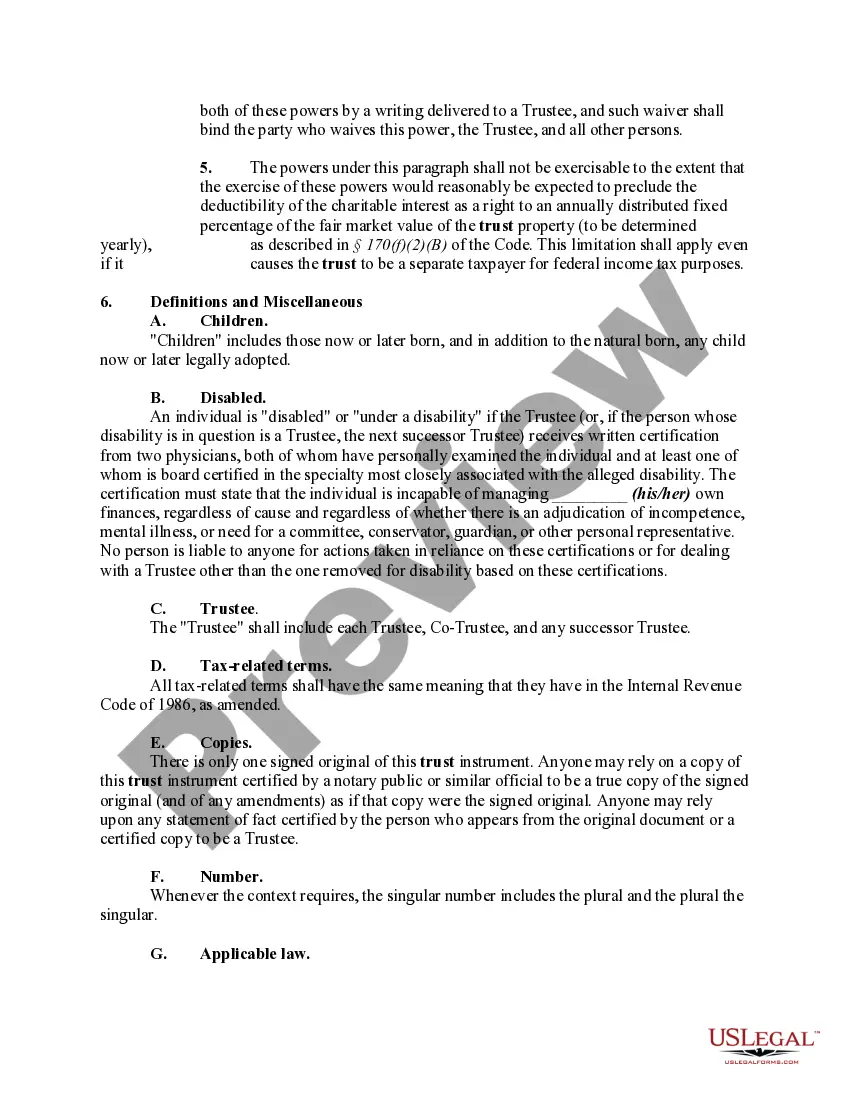

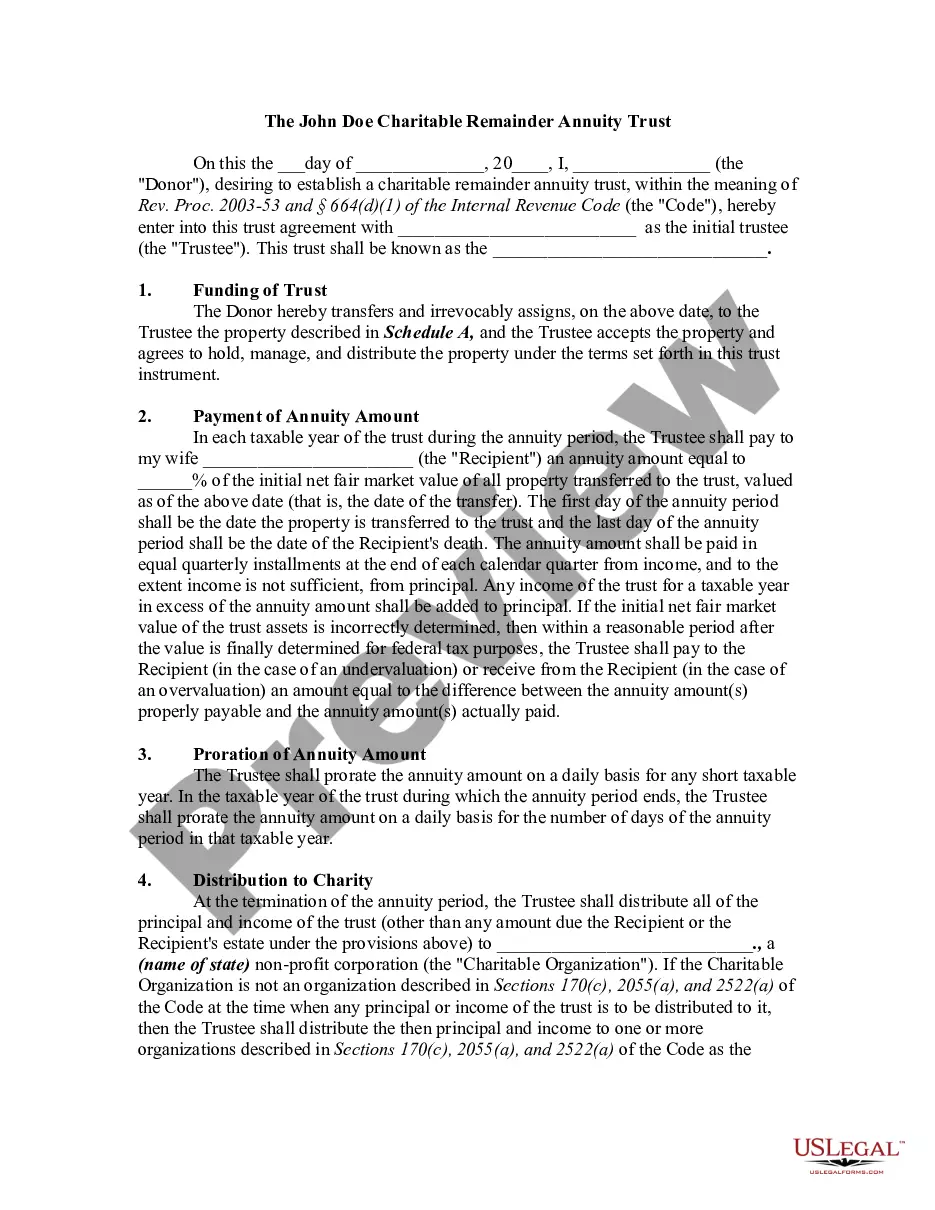
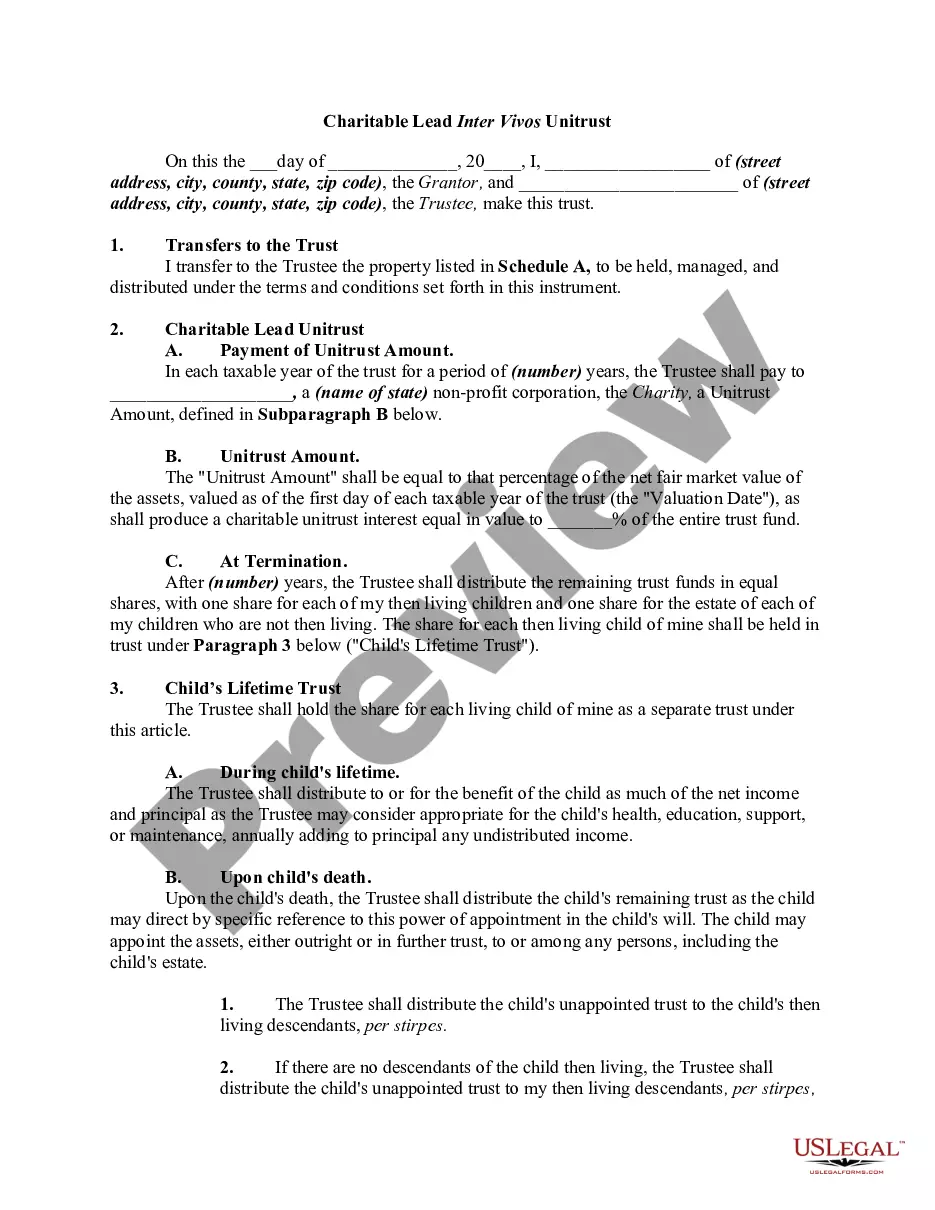
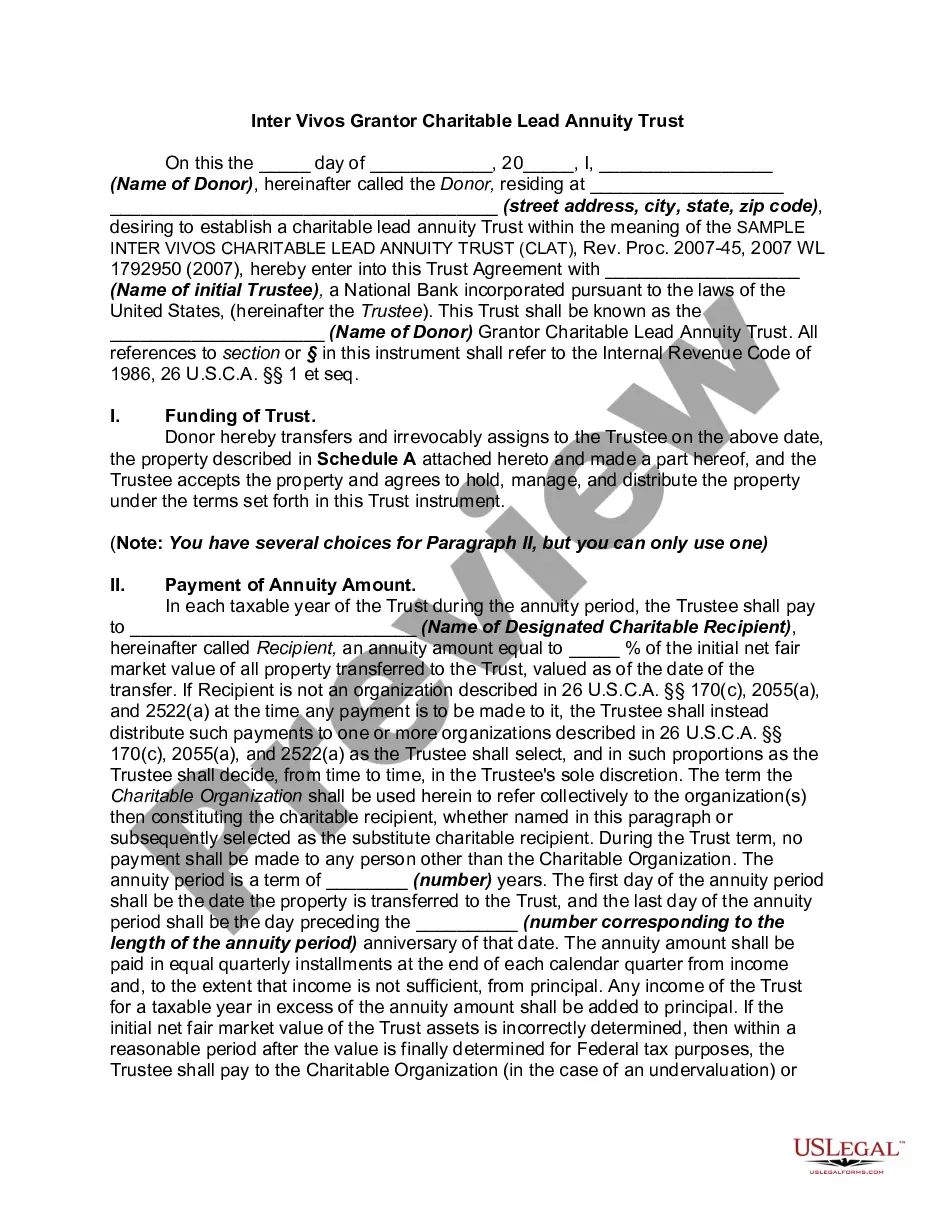
Get your form ready online
Our built-in tools help you complete, sign, share, and store your documents in one place.
Make edits, fill in missing information, and update formatting in US Legal Forms—just like you would in MS Word.
Download a copy, print it, send it by email, or mail it via USPS—whatever works best for your next step.
Sign and collect signatures with our SignNow integration. Send to multiple recipients, set reminders, and more. Go Premium to unlock E-Sign.
If this form requires notarization, complete it online through a secure video call—no need to meet a notary in person or wait for an appointment.
We protect your documents and personal data by following strict security and privacy standards.

Make edits, fill in missing information, and update formatting in US Legal Forms—just like you would in MS Word.

Download a copy, print it, send it by email, or mail it via USPS—whatever works best for your next step.

Sign and collect signatures with our SignNow integration. Send to multiple recipients, set reminders, and more. Go Premium to unlock E-Sign.

If this form requires notarization, complete it online through a secure video call—no need to meet a notary in person or wait for an appointment.

We protect your documents and personal data by following strict security and privacy standards.
Looking for another form?









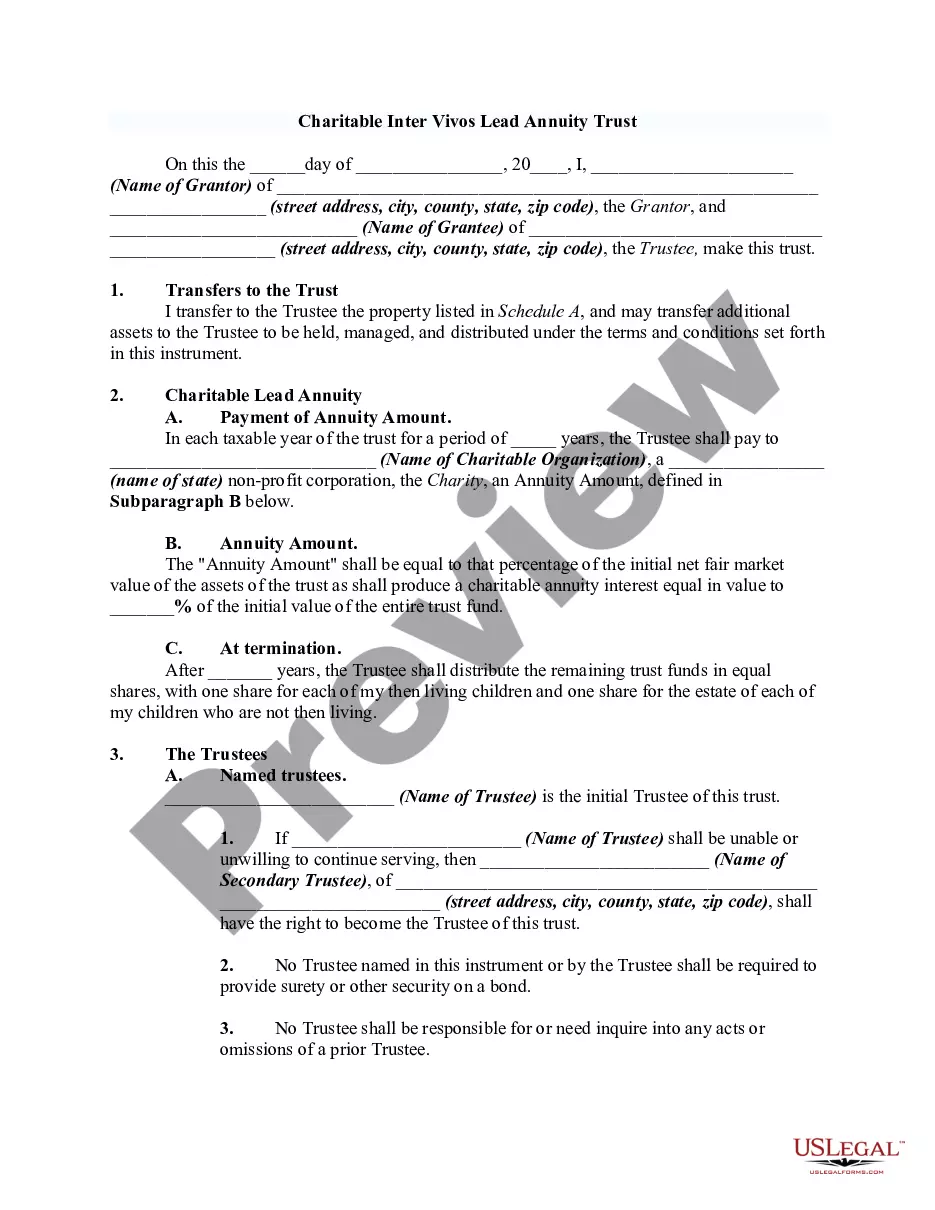
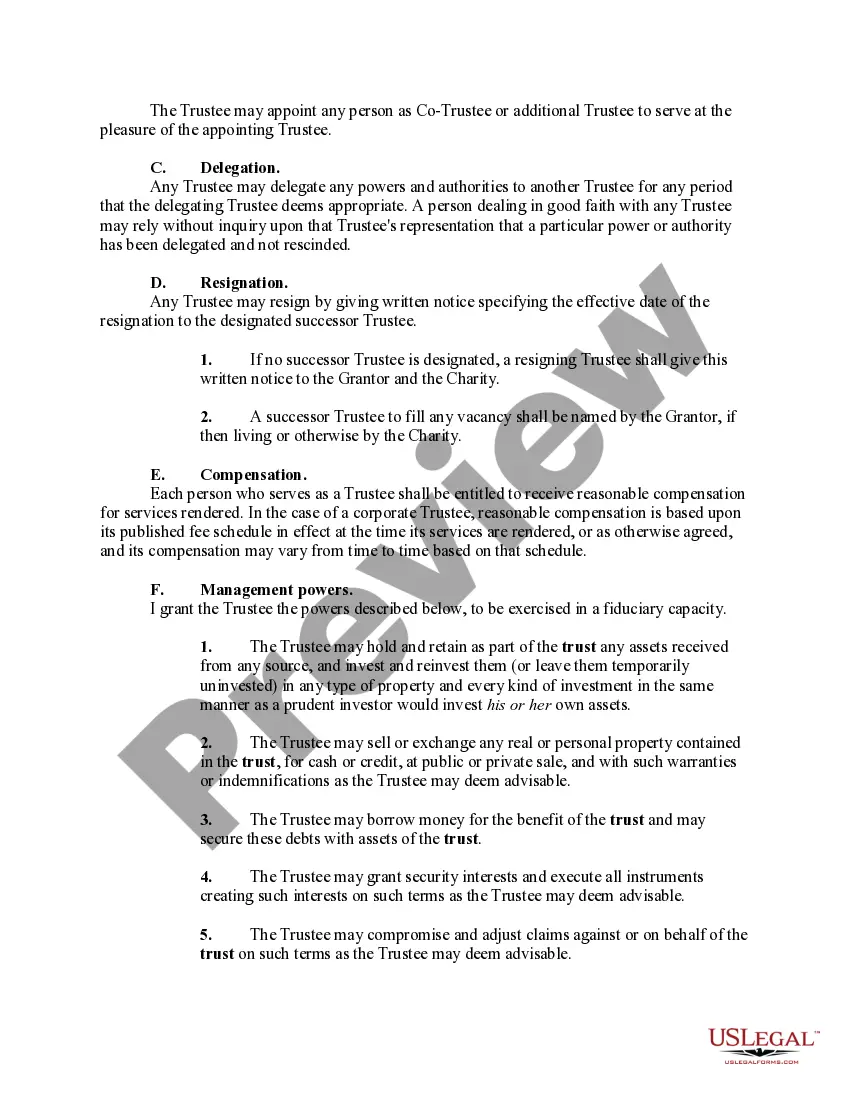
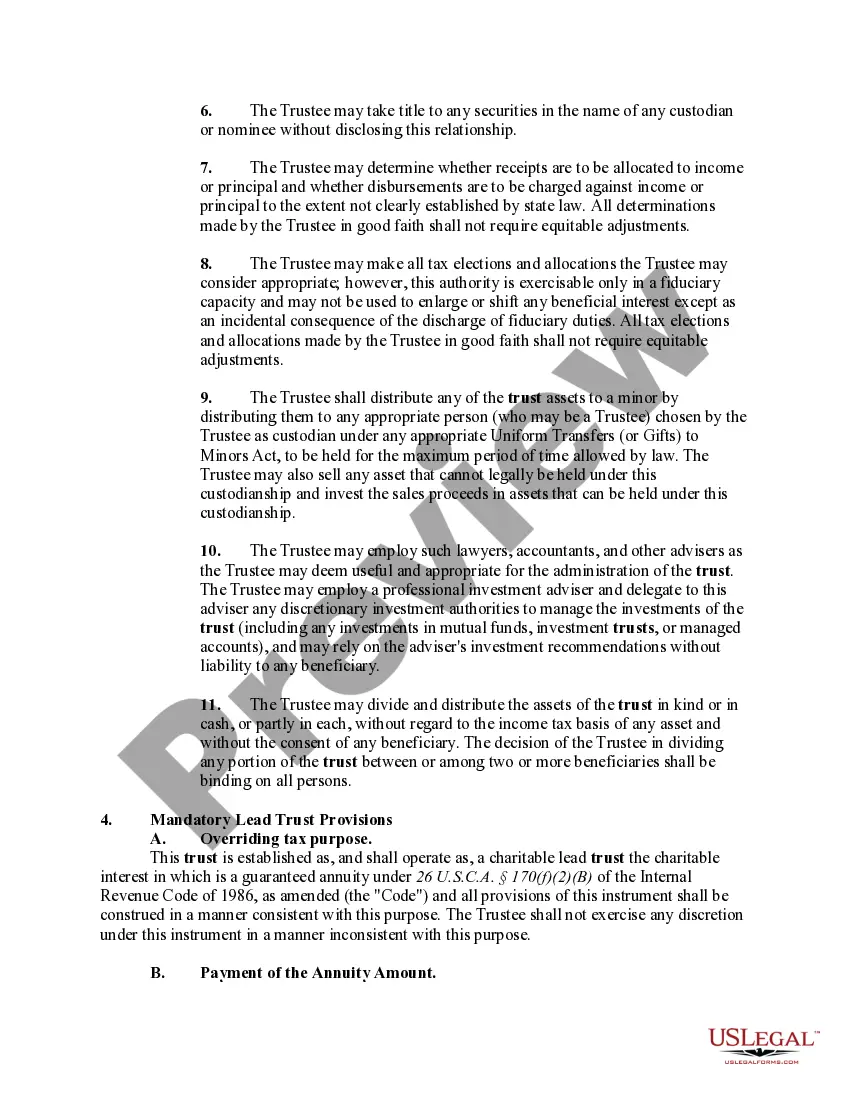
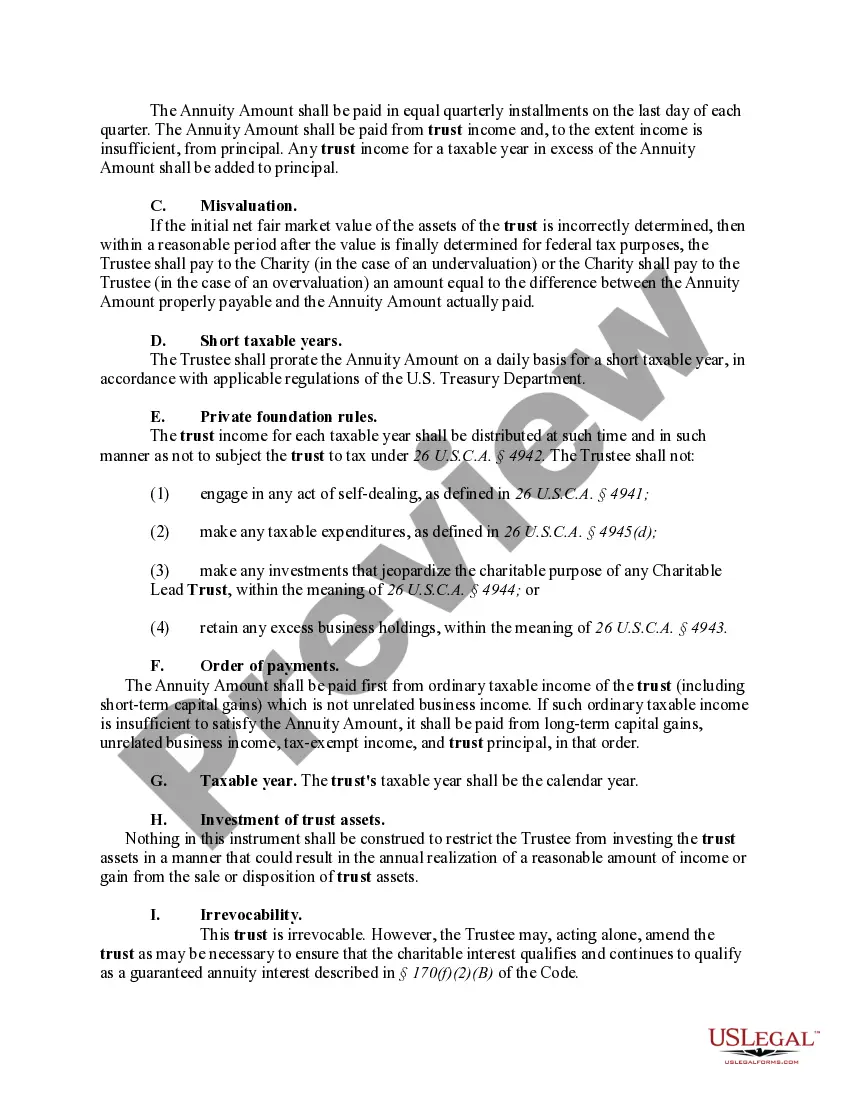
How to fill out Charitable Inter Vivos Lead Annuity Trust?
- Log into your US Legal Forms account if you have previously used the service. Ensure your subscription is active to access the necessary templates.
- If you're a new user, start by previewing the available templates. Look carefully at the descriptions and confirm that they comply with your local jurisdiction's requirements.
- Utilize the search function to locate the most suitable template if you encounter any discrepancies with your first choice.
- Proceed to purchase by clicking on the Buy Now button and selecting your preferred subscription plan. Create an account to unlock the full library.
- Complete your transaction by entering your payment details, either through credit card or PayPal.
- Download the completed form to your device and find it later in the My Forms section of your profile for easy access.
By following these steps, you’ll be well on your way to setting up a charitable lead trust that aligns with your philanthropic goals. US Legal Forms offers a comprehensive library to simplify the process, empowering you to make impactful decisions.
Take action today and secure the necessary legal forms to begin your charitable lead trust for human rights. Visit US Legal Forms to explore their extensive collection!
Form popularity
FAQ
An example of a charitable trust is a charitable remainder trust, which provides income to a donor or beneficiaries for a specific period before transferring the remaining assets to a charity. For instance, a person might establish a trust that pays them income for 20 years, after which the funds will go to a human rights organization. This type of trust not only supports a good cause but also offers tax benefits. Using a charitable lead trust for human rights can exemplify this practice.
At the end of a charitable lead trust, the remaining assets transfer to your beneficiaries, such as family members or other heirs. This transfer occurs after the trust has fulfilled its charitable purpose, supporting important human rights causes during its term. Importantly, this structure allows you to make a lasting impact while ensuring your loved ones benefit as well. It's imperative to understand these outcomes when considering a charitable lead trust for human rights, as it balances philanthropy with personal financial goals.
A CLAT, or Charitable Lead Annuity Trust, provides fixed payments to a charity for a set period, while a CLUT, or Charitable Lead Unitrust, offers payments that vary based on the trust's asset value. Both types serve the purpose of funding charitable causes, including those focused on human rights, but they cater to different financial strategies. Choosing between a CLAT and a CLUT hinges on your financial goals and the nature of your charitable intent. Understanding these differences can help you make informed decisions about your charitable lead trust for human rights.
A charitable lead trust is beneficial when you wish to support human rights initiatives while also receiving tax benefits. It's ideal for donors who want to contribute regular income to a charity over a specific period. This trust allows you to make a significant impact on issues that matter to you while preserving assets for future generations. By creating a charitable lead trust for human rights, you can ensure ongoing support for initiatives you care about.
Generally, a charitable lead trust is not included in the gross estate of the grantor. However, specifics can depend on how the trust is structured and funded. When creating a charitable lead trust for human rights, planning your estate effectively can help you maximize benefits and minimize tax implications. Working with a skilled estate planner can ensure you take full advantage of the trust's benefits.
Indeed, a charitable lead trust files Form 1041 to report its income and distributions to both the trust grantor and beneficiaries. This form is essential for transparency and compliance with IRS regulations. If you're involved in establishing a charitable lead trust for human rights, knowing when and how to file can save you from future complications. Professional assistance can be invaluable in navigating these rules.
A charitable lead trust is not tax-exempt in the same way as a charitable organization. However, it can provide tax benefits to both the donor and the charity involved. When you set up a charitable lead trust for human rights, you may receive deductions for contributions made, but understanding the full scope of tax implications is vital. Consulting with a tax advisor can help clarify these benefits.
Yes, a charitable lead trust must file a tax return annually, typically using Form 1041. This return details the income generated and any distributions made to the charitable beneficiaries. If you're considering a charitable lead trust for human rights, managing tax obligations is crucial for maintaining compliance. Engaging with professionals can simplify this process.
Charitable trusts can file either Form 1041 or Form 990, depending on certain factors. Form 1041 is for trusts that need to report income, while Form 990 is used primarily by tax-exempt organizations. When establishing a charitable lead trust for human rights, knowing which form to file can impact your organization’s compliance and benefits. It's advisable to seek expert advice to navigate the requirements accurately.
A charitable remainder trust typically files Form 1041, which is the U.S. Income Tax Return for Estates and Trusts. This form allows the trust to report its income, deductions, and credits. If you're considering a charitable lead trust for human rights, understanding tax filing requirements can help you make informed decisions about managing your trust. It's essential to consult with a tax professional for personalized guidance.