Tax Unitrust Amount With Interest Rate
Description
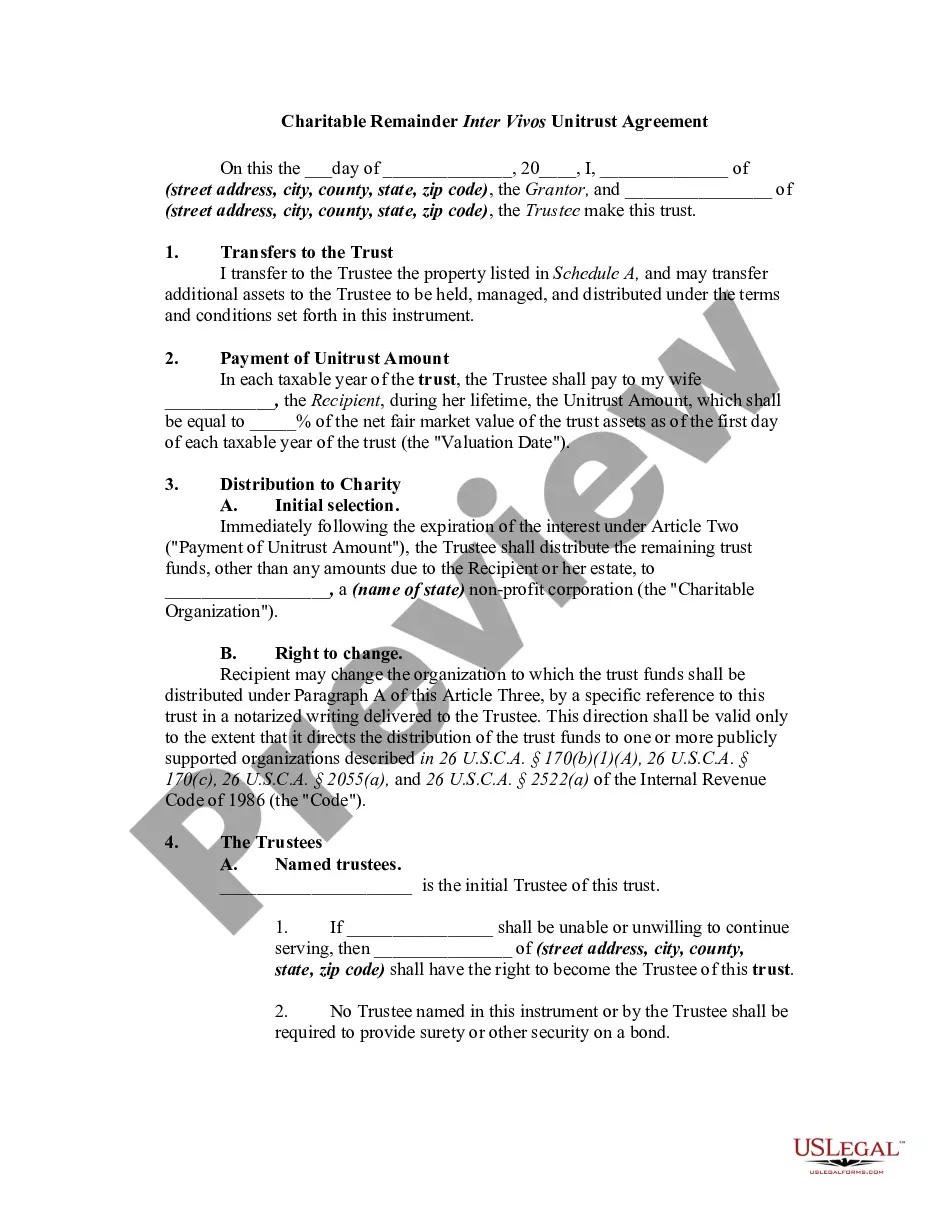
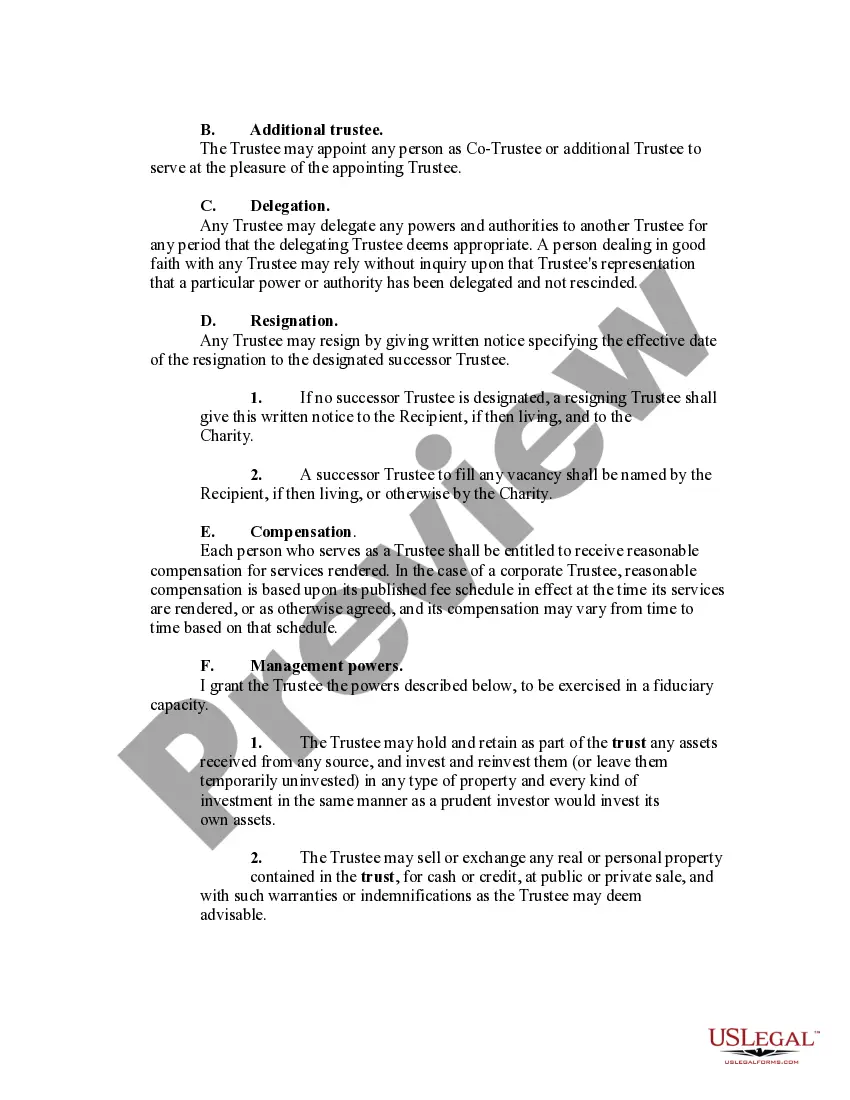
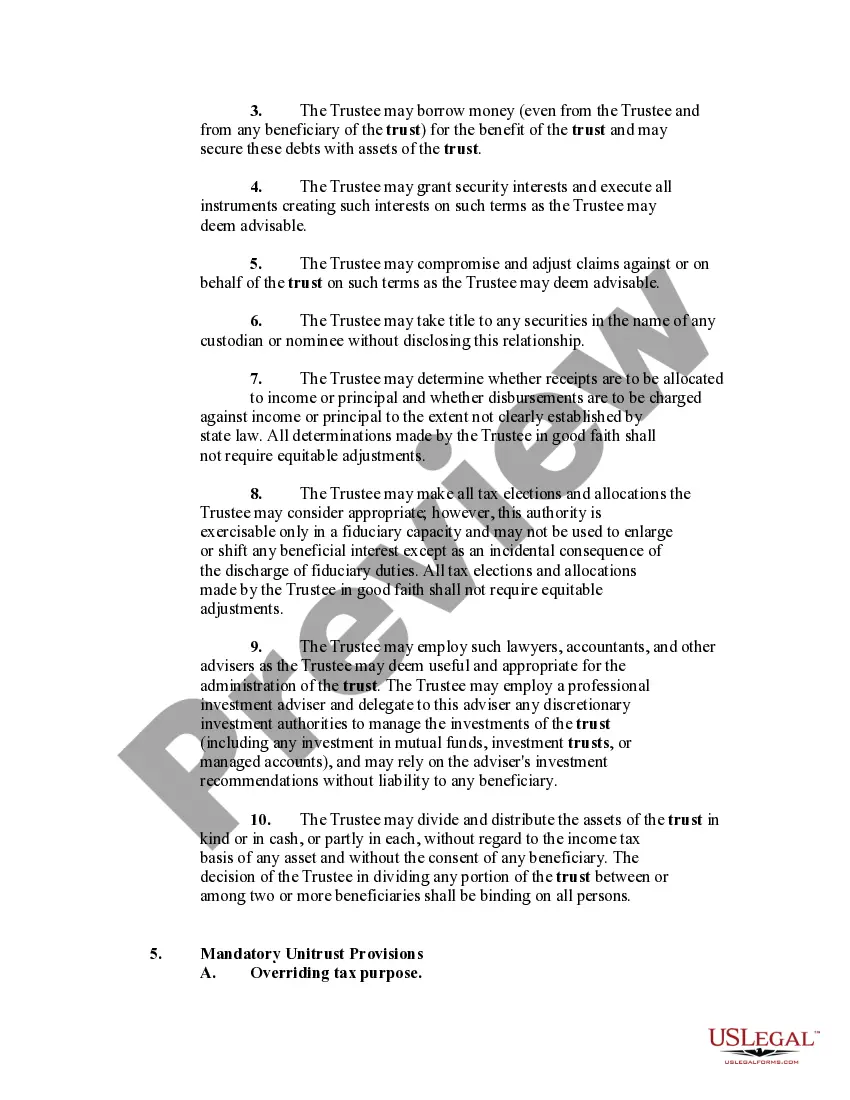
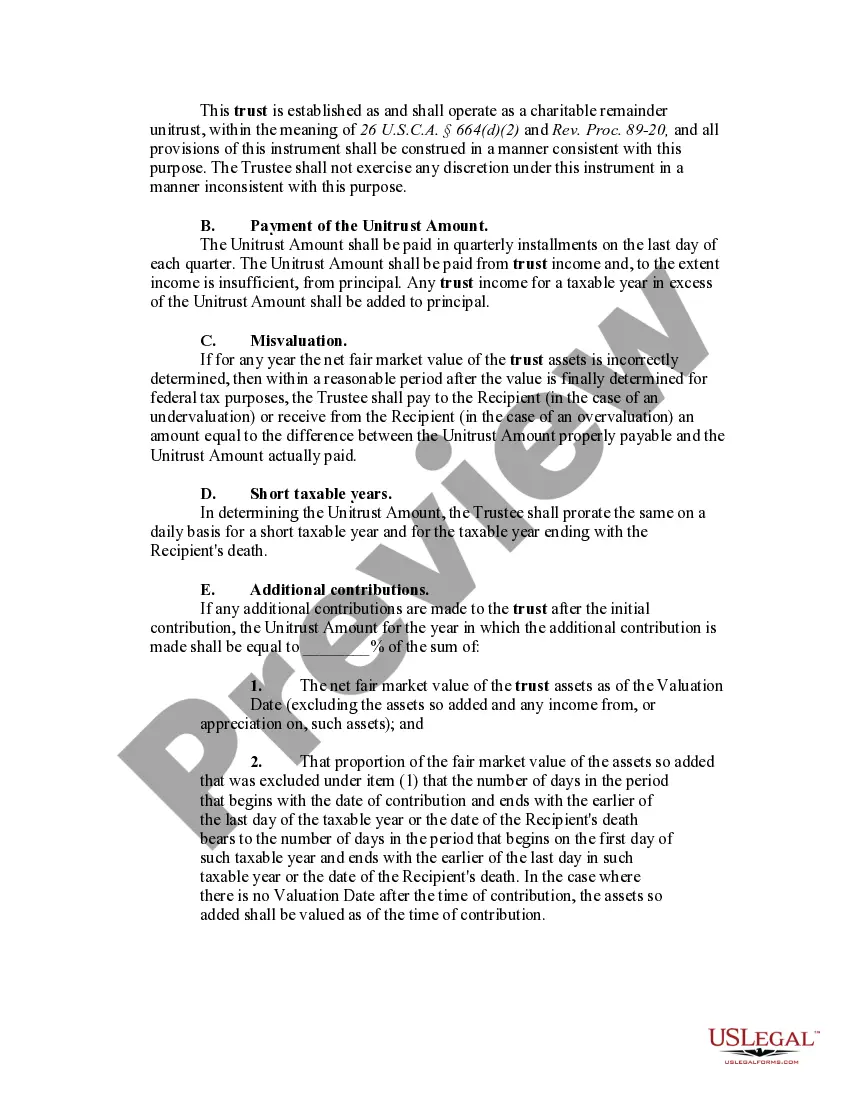
Get your form ready online
Our built-in tools help you complete, sign, share, and store your documents in one place.
Make edits, fill in missing information, and update formatting in US Legal Forms—just like you would in MS Word.
Download a copy, print it, send it by email, or mail it via USPS—whatever works best for your next step.
Sign and collect signatures with our SignNow integration. Send to multiple recipients, set reminders, and more. Go Premium to unlock E-Sign.
If this form requires notarization, complete it online through a secure video call—no need to meet a notary in person or wait for an appointment.
We protect your documents and personal data by following strict security and privacy standards.

Make edits, fill in missing information, and update formatting in US Legal Forms—just like you would in MS Word.

Download a copy, print it, send it by email, or mail it via USPS—whatever works best for your next step.

Sign and collect signatures with our SignNow integration. Send to multiple recipients, set reminders, and more. Go Premium to unlock E-Sign.

If this form requires notarization, complete it online through a secure video call—no need to meet a notary in person or wait for an appointment.

We protect your documents and personal data by following strict security and privacy standards.
Looking for another form?







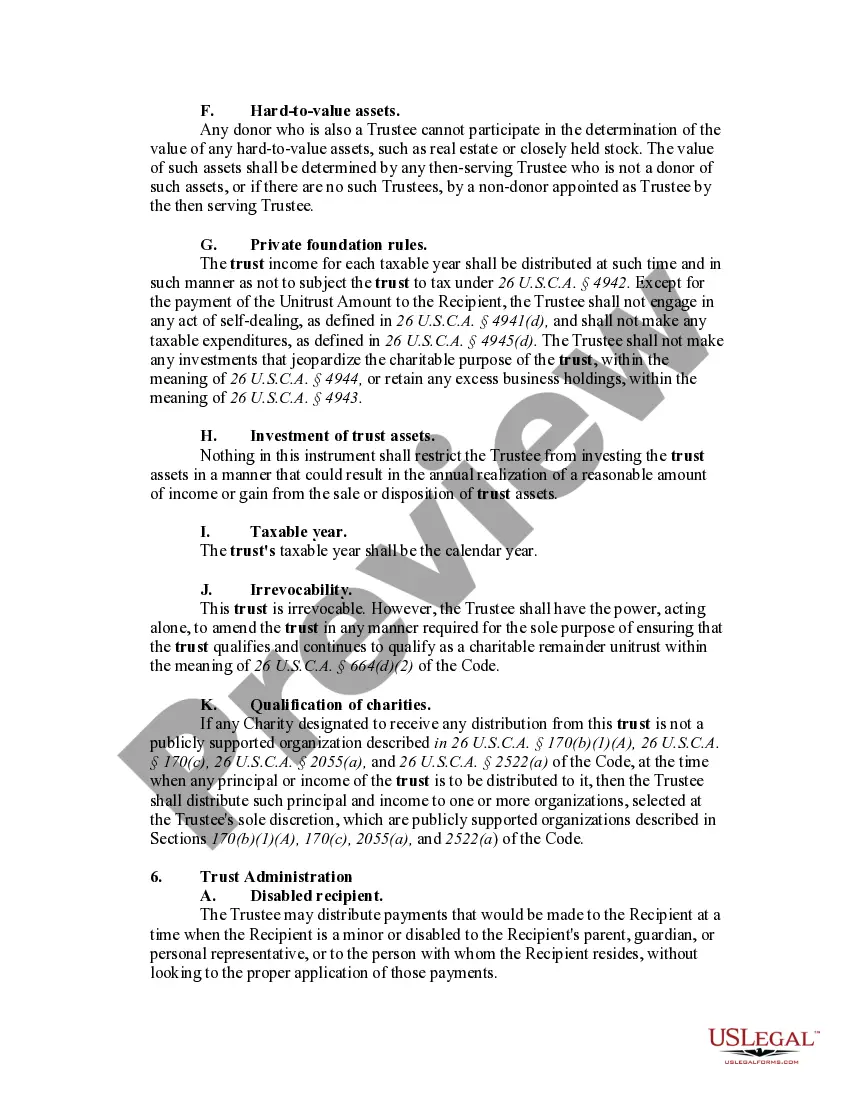
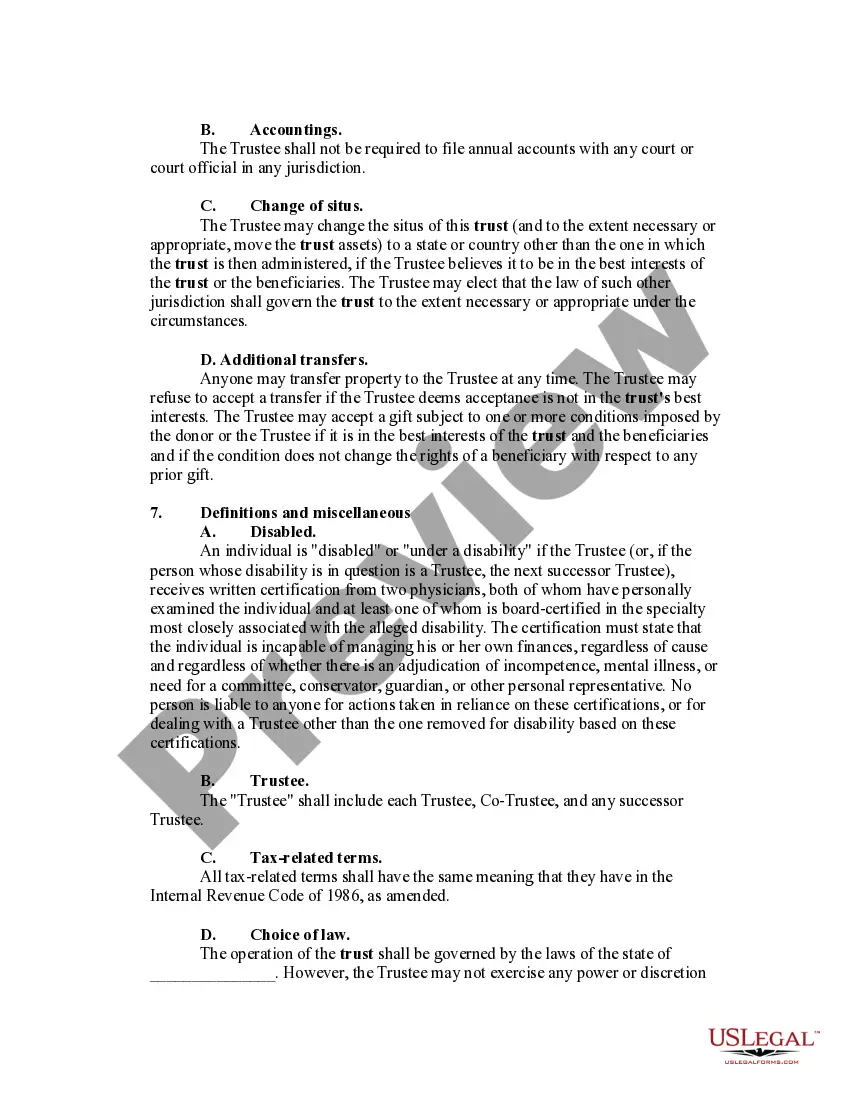
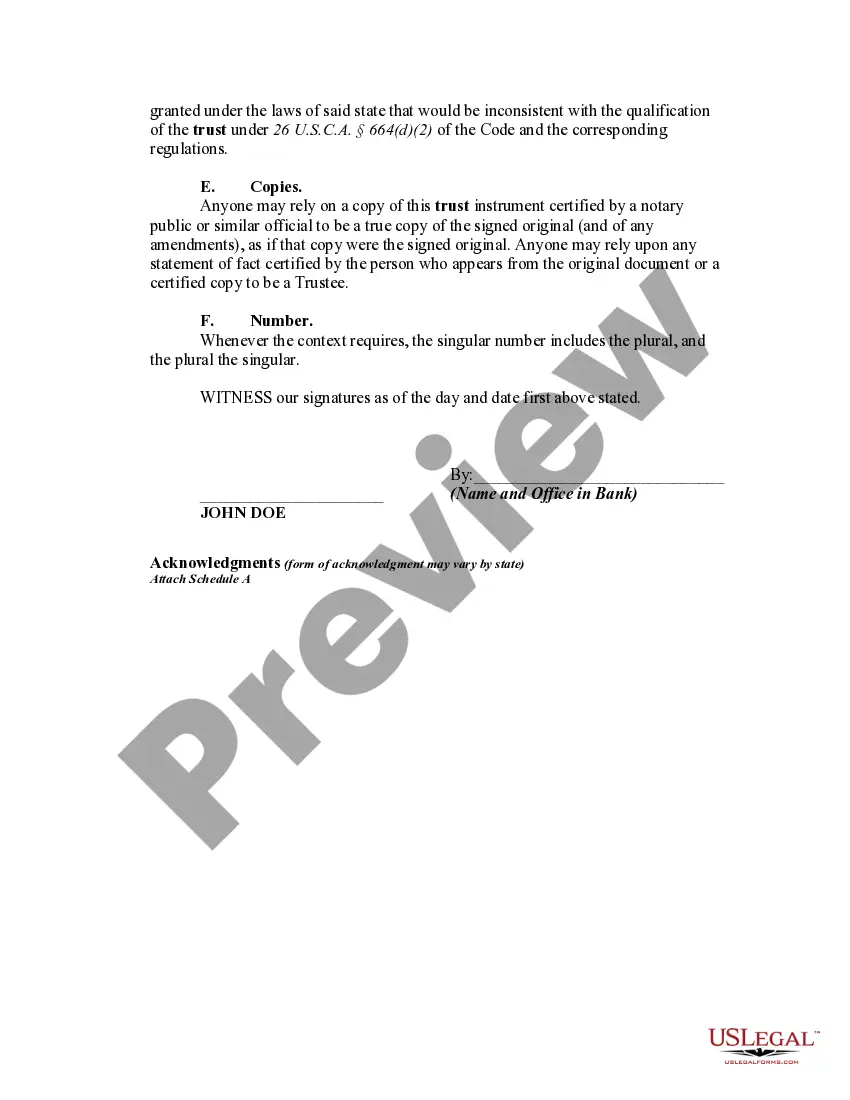
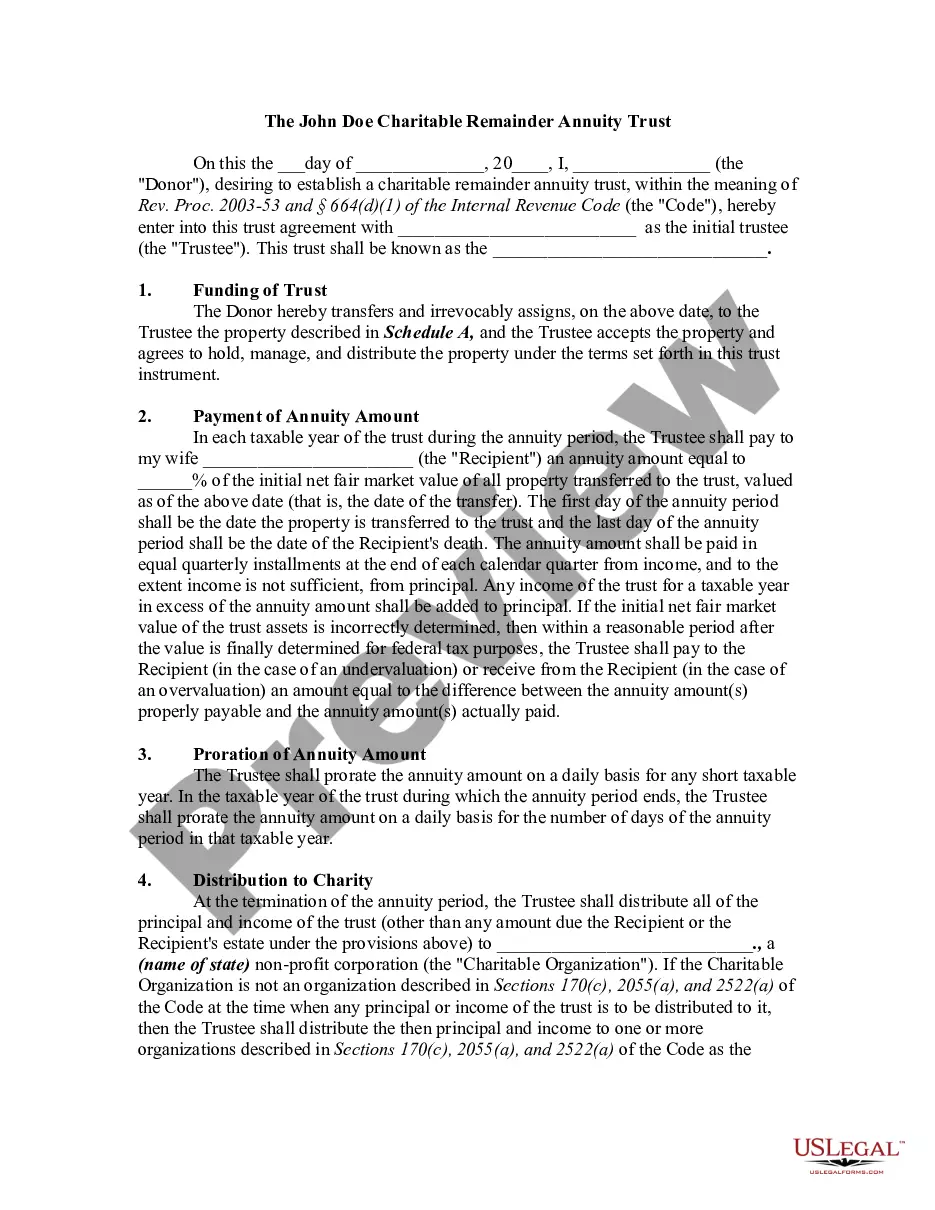
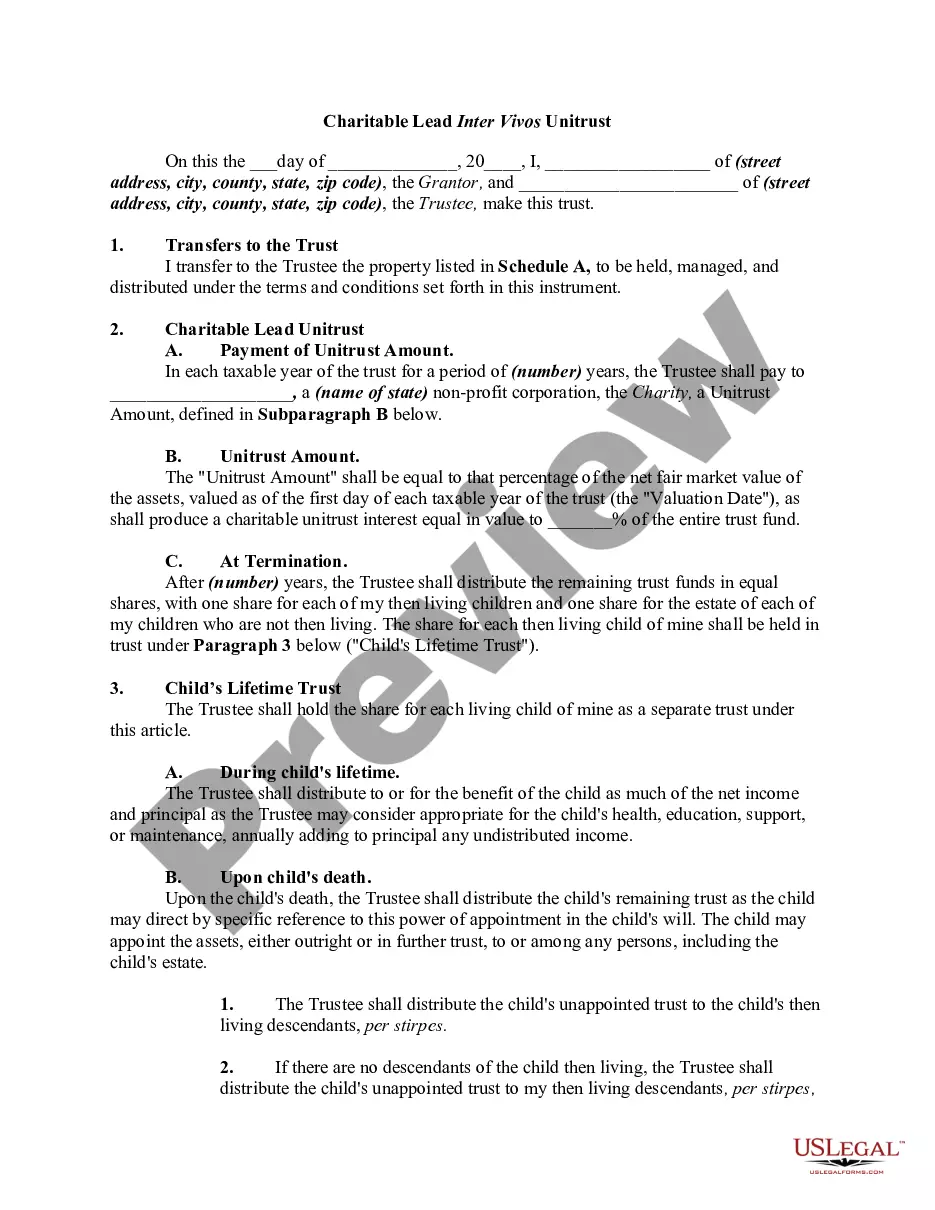
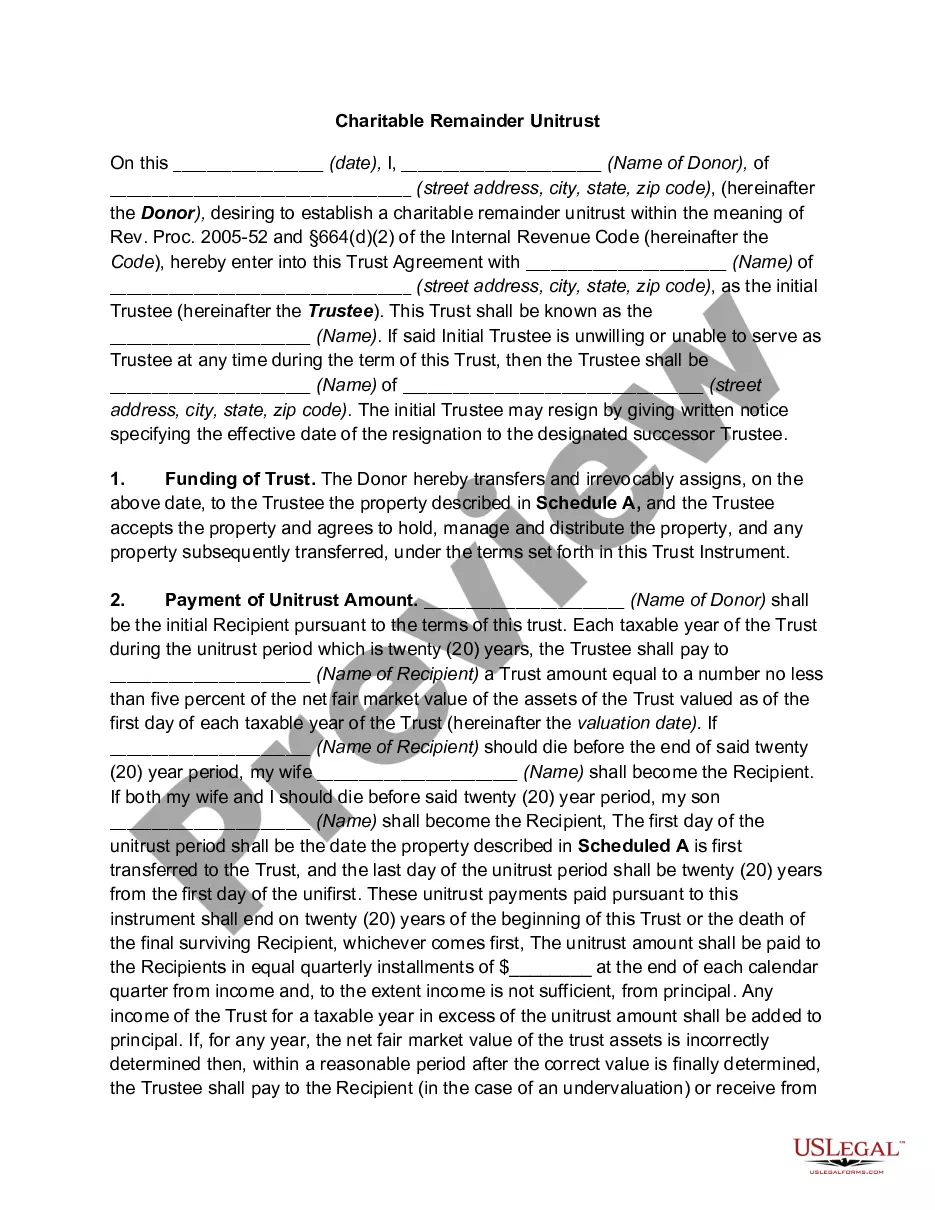
How to fill out Charitable Remainder Inter Vivos Unitrust Agreement?
- If you're an existing user, log in to your account and ensure your subscription is active. Click the Download button to obtain your form template.
- For first-time users, review the Preview mode and the form description closely to ensure it aligns with your specific needs and local requirements.
- If the chosen document isn't suitable, make use of the Search tab to locate the correct template that meets your criteria.
- Once you've found the right form, click on the Buy Now button and select your preferred subscription plan. You will need to create an account for access.
- Provide payment information via credit card or PayPal to finalize your subscription and make the purchase.
- After payment, download your form to your device, where it will also be accessible later in the My Forms section.
With US Legal Forms, users benefit from an extensive library of over 85,000 fillable and editable legal forms, ensuring that you have access to a diverse and comprehensive collection.
Take advantage of premium expert assistance to ensure your documents are completed correctly. Start today and experience the ease of managing your legal forms!
Form popularity
FAQ
The value of a remainder interest is the portion of a trust that remains after all income distributions are made to beneficiaries. This value is influenced by the tax unitrust amount with interest rate, which helps determine how much remains for the beneficiaries at the end of the trust term. Knowing this value assists you in financial planning and estate management. Platforms like uslegalforms provide valuable guidance to navigate these calculations and enhance your understanding.
A Charitable Remainder Unitrust (CRUT) payout is calculated based on the fair market value of the trust assets at the beginning of each year. The tax unitrust amount with interest rate you set influences the payout to beneficiaries during the trust's term. It’s essential to review the trust agreement and understand fluctuating values, as they can affect annual distributions. Utilizing resources from uslegalforms can guide you through this process effectively.
The IRS interest rate is determined quarterly based on the federal short-term rate plus a specific percentage. This rate is used to calculate interest on unpaid taxes, and it changes periodically based on market conditions. Knowing how the IRS interest rate is set can be useful when evaluating the implications of the tax unitrust amount with interest rate. For clarity on these calculations, US Legal Forms provides helpful resources and information to assist you.
To calculate tax interest, first determine the amount of tax owed, then identify the applicable interest rate for your situation. Next, multiply the tax owed by the interest rate to find the tax interest amount. This calculation is fundamental for understanding financial obligations related to the tax unitrust amount with interest rate. For detailed explanations and templates, refer to US Legal Forms, which can assist you in navigating tax-related calculations.
The formula for calculating interest rates can vary, but a common approach is to use the equation: Interest = Principal x Rate x Time. This formula helps you understand how much interest you will earn or owe based on your principal amount, the interest rate, and the time period involved. Understanding this formula is crucial when considering the tax unitrust amount with interest rate, ensuring you make informed financial decisions. Check out resources on US Legal Forms for comprehensive guidance.
The unitrust amount is usually calculated based on the fair market value of the trust's assets at the time of distribution. You need to consider both the initial valuation and any adjustments reflecting market conditions. The calculation involves applying the designated percentage rate, such as 5%, to determine annual payouts. Understanding the implications of the tax unitrust amount with interest rate will help you manage your financial planning effectively.
Trust fund payouts are typically subject to income tax. The specific tax rate may depend on the type of trust and the recipient's income level. When calculating the tax unitrust amount with interest rate, it is vital to consider how these payouts will impact your overall tax situation. Consulting with a tax advisor can lead to better financial outcomes regarding your trust distributions.
The 5% rule for Charitable Remainder Unitrusts (CRUT) dictates that the trust must distribute at least 5% of its net fair market value annually to beneficiaries. This rule ensures that there is a regular flow of income while preserving the trust's principal. It’s important to factor in the tax unitrust amount with interest rate to maximize your financial strategy. Adhering to this rule can provide a mix of income and charitable benefits.
Unitrust distributions are generally taxed as ordinary income. This means you must report them on your tax return like your salary or wages. However, the specific tax implications can vary based on your total income and the nature of the distributions. Understanding how the tax unitrust amount with interest rate interacts with your other income is crucial to effective tax planning.
Unitrust interest refers to the income generated from a unitrust, which can include interest, dividends, and other earnings. The tax unitrust amount with interest rate can influence how much income beneficiaries receive. Understanding unitrust interest is essential for effective financial planning. Utilizing resources like USLegalForms can provide valuable information to enhance your understanding of these financial concepts.