Charitable Unitrust Trust Blank For The Future
Description
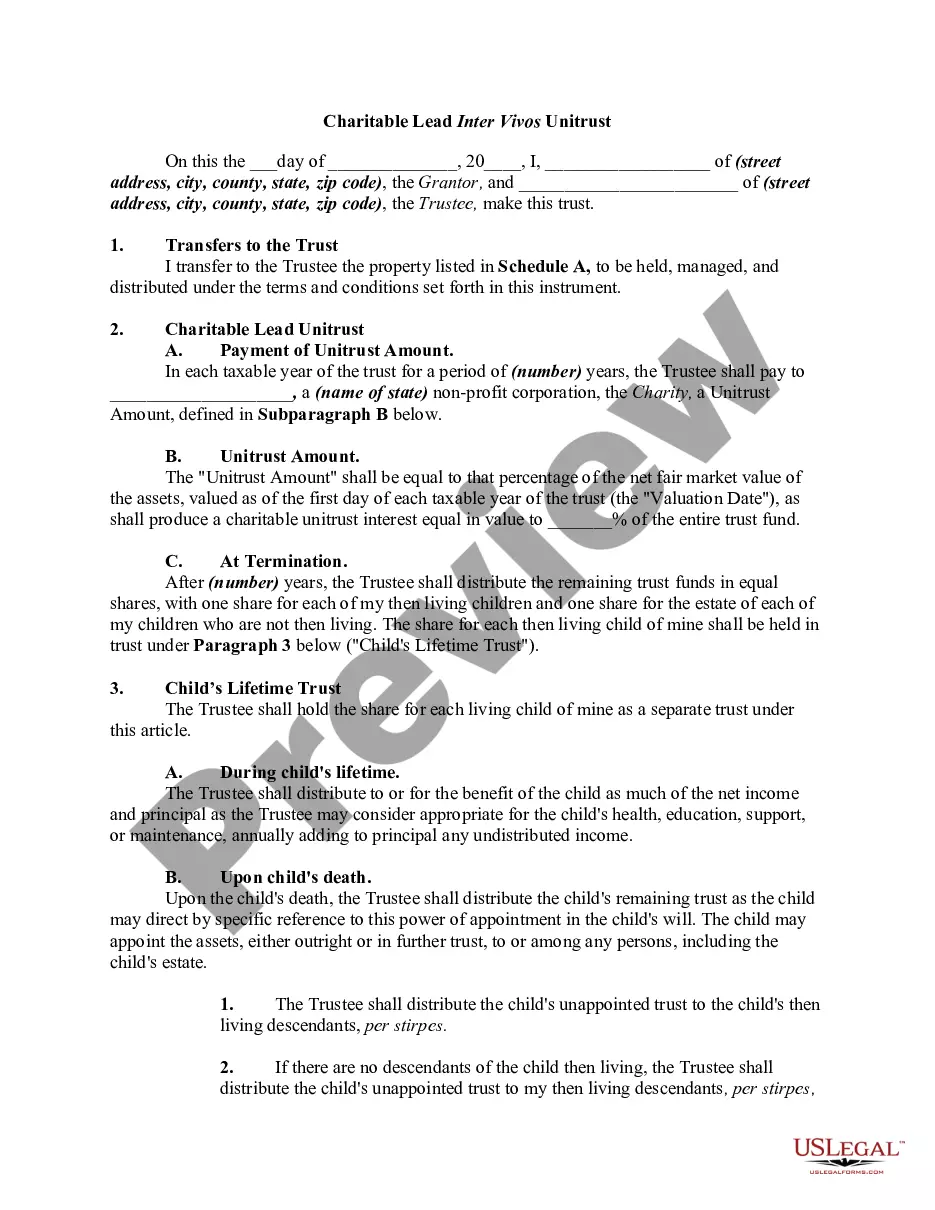
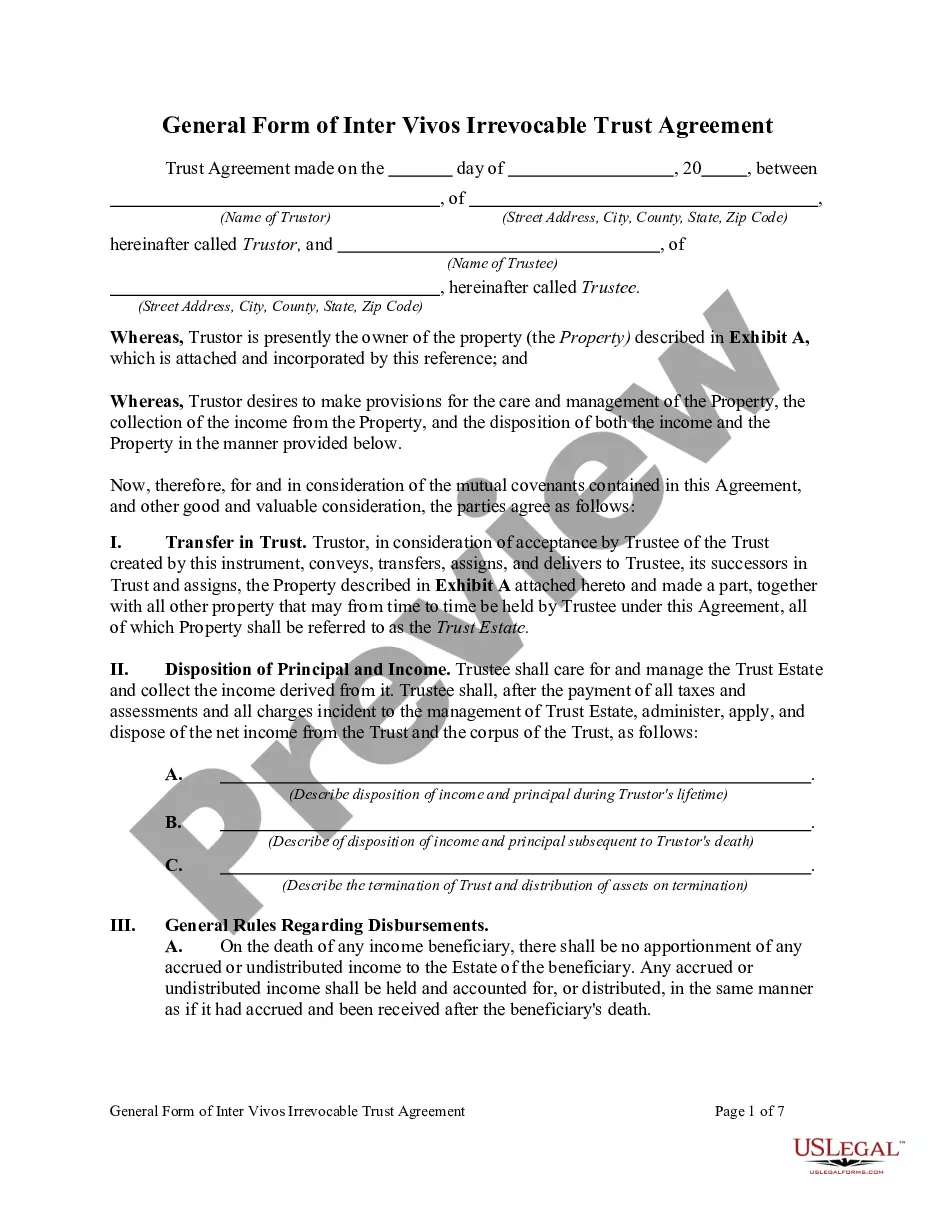
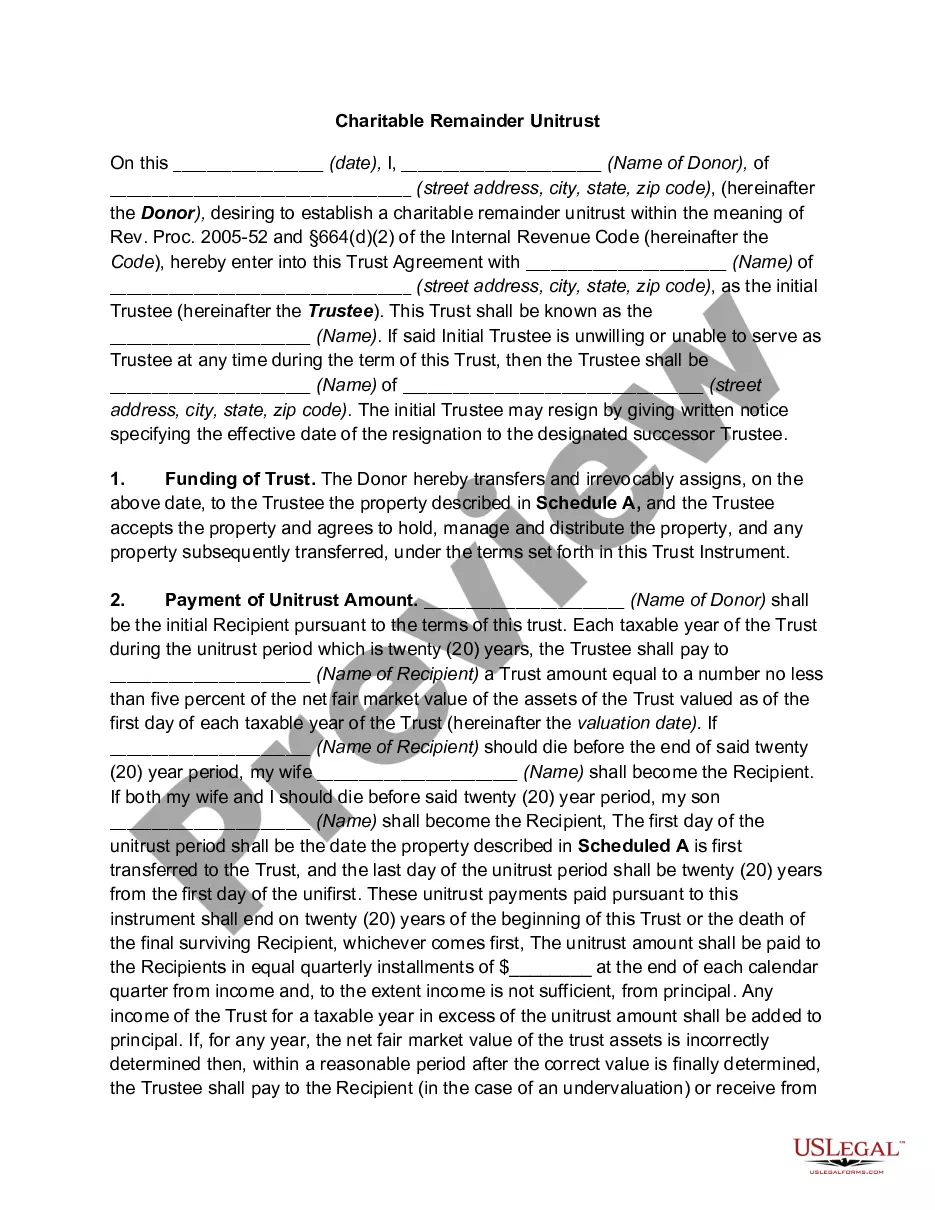
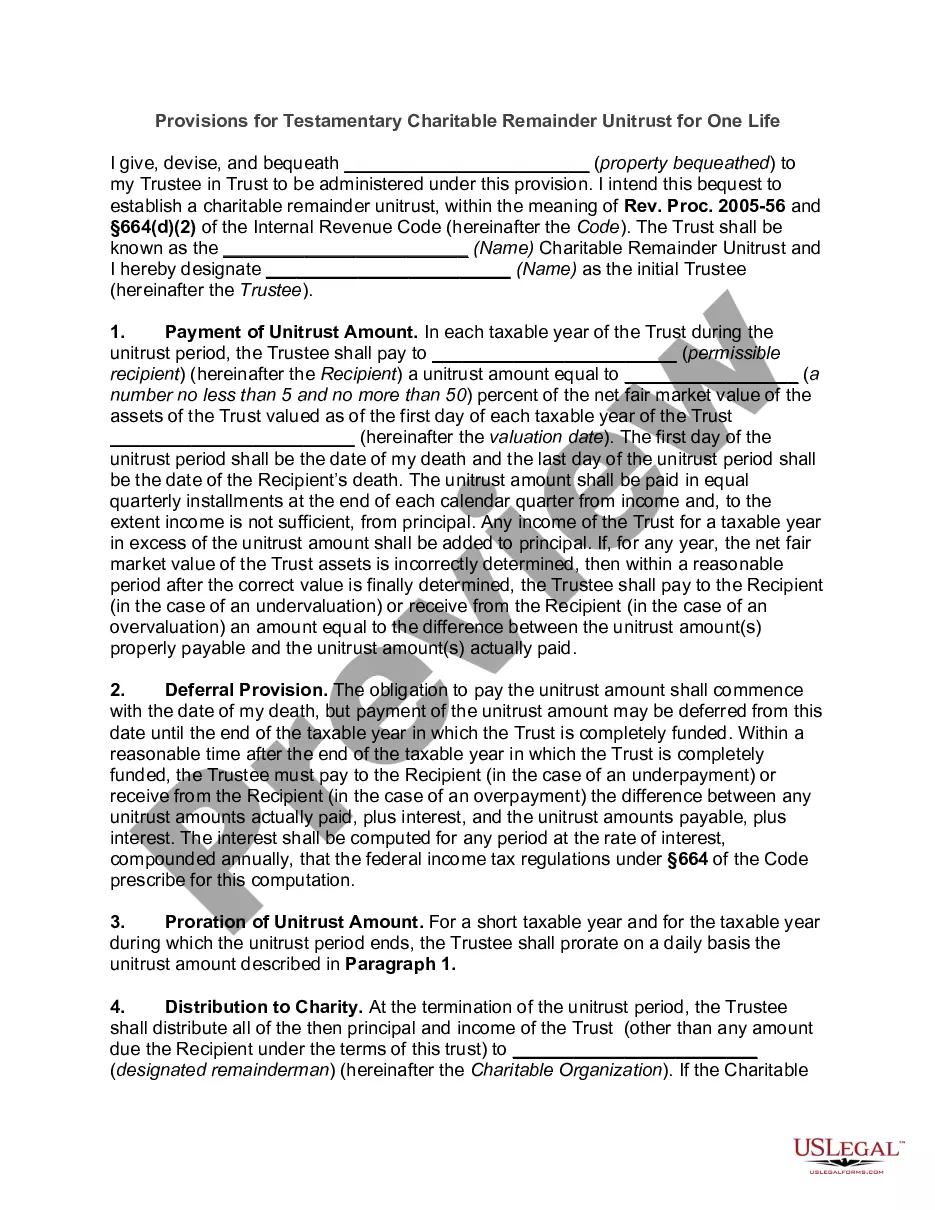
Get your form ready online
Our built-in tools help you complete, sign, share, and store your documents in one place.
Make edits, fill in missing information, and update formatting in US Legal Forms—just like you would in MS Word.
Download a copy, print it, send it by email, or mail it via USPS—whatever works best for your next step.
Sign and collect signatures with our SignNow integration. Send to multiple recipients, set reminders, and more. Go Premium to unlock E-Sign.
If this form requires notarization, complete it online through a secure video call—no need to meet a notary in person or wait for an appointment.
We protect your documents and personal data by following strict security and privacy standards.

Make edits, fill in missing information, and update formatting in US Legal Forms—just like you would in MS Word.

Download a copy, print it, send it by email, or mail it via USPS—whatever works best for your next step.

Sign and collect signatures with our SignNow integration. Send to multiple recipients, set reminders, and more. Go Premium to unlock E-Sign.

If this form requires notarization, complete it online through a secure video call—no need to meet a notary in person or wait for an appointment.

We protect your documents and personal data by following strict security and privacy standards.
Looking for another form?


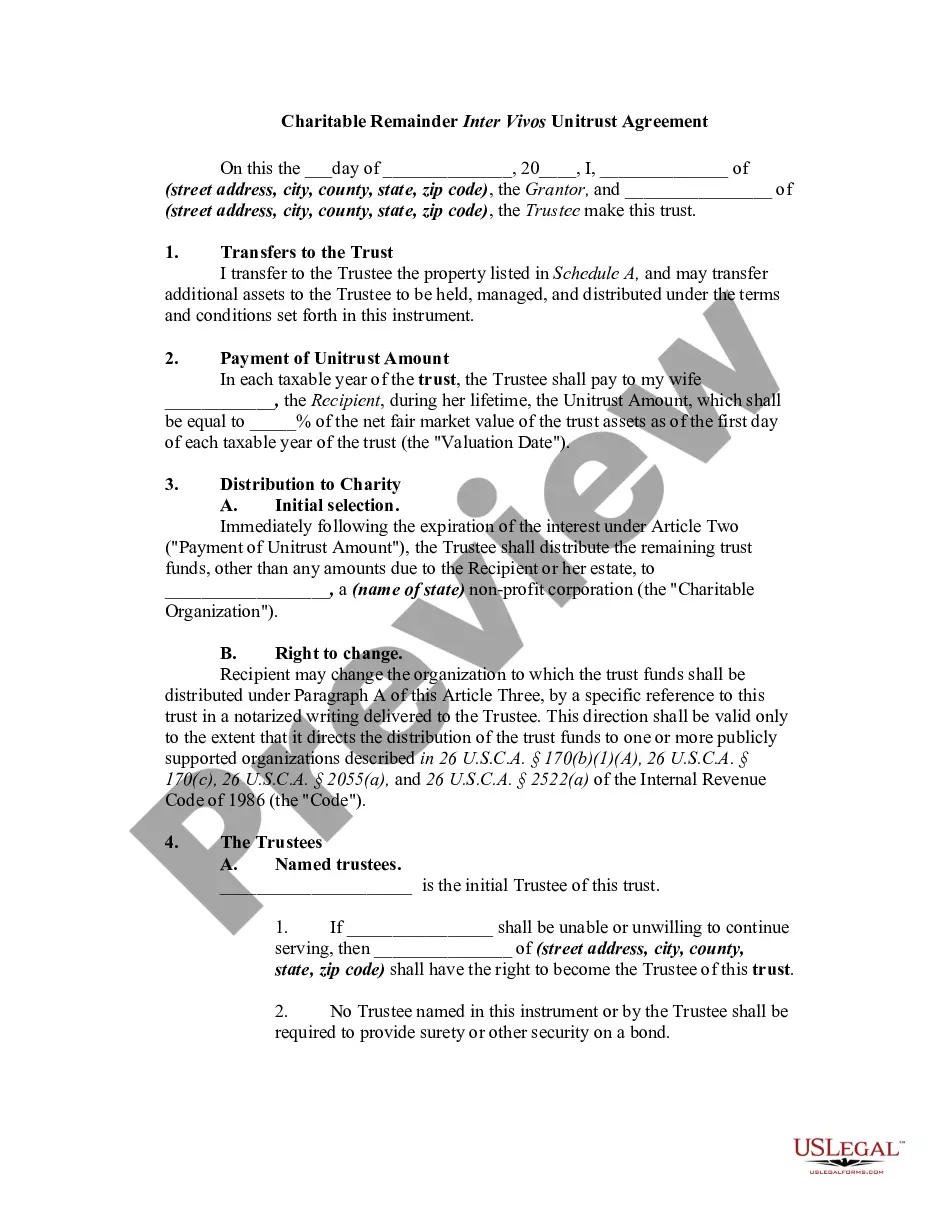
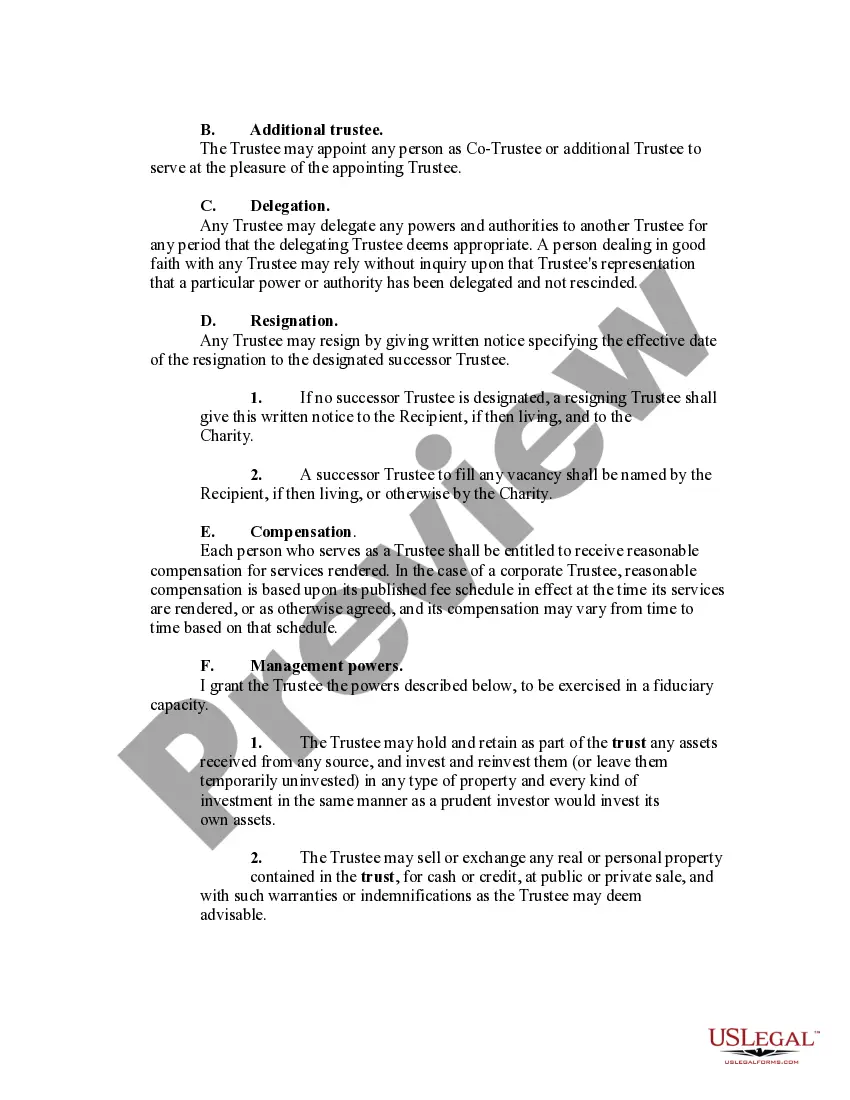
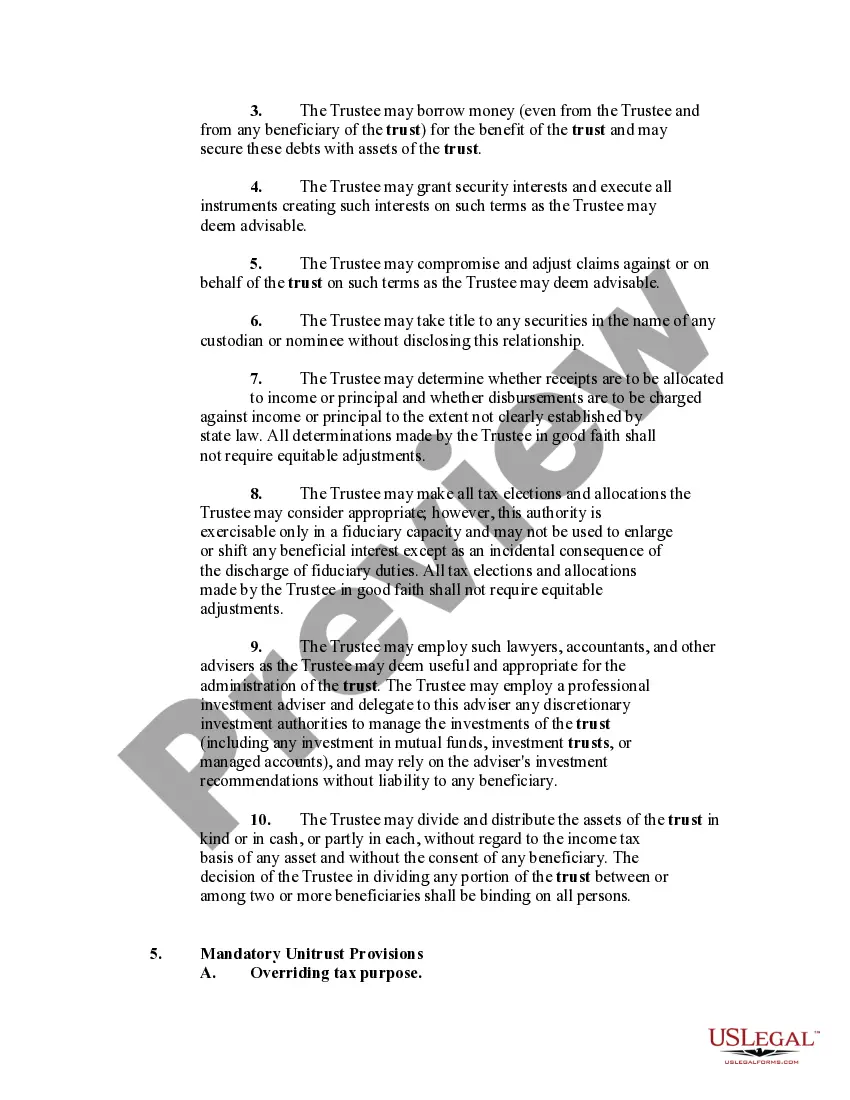
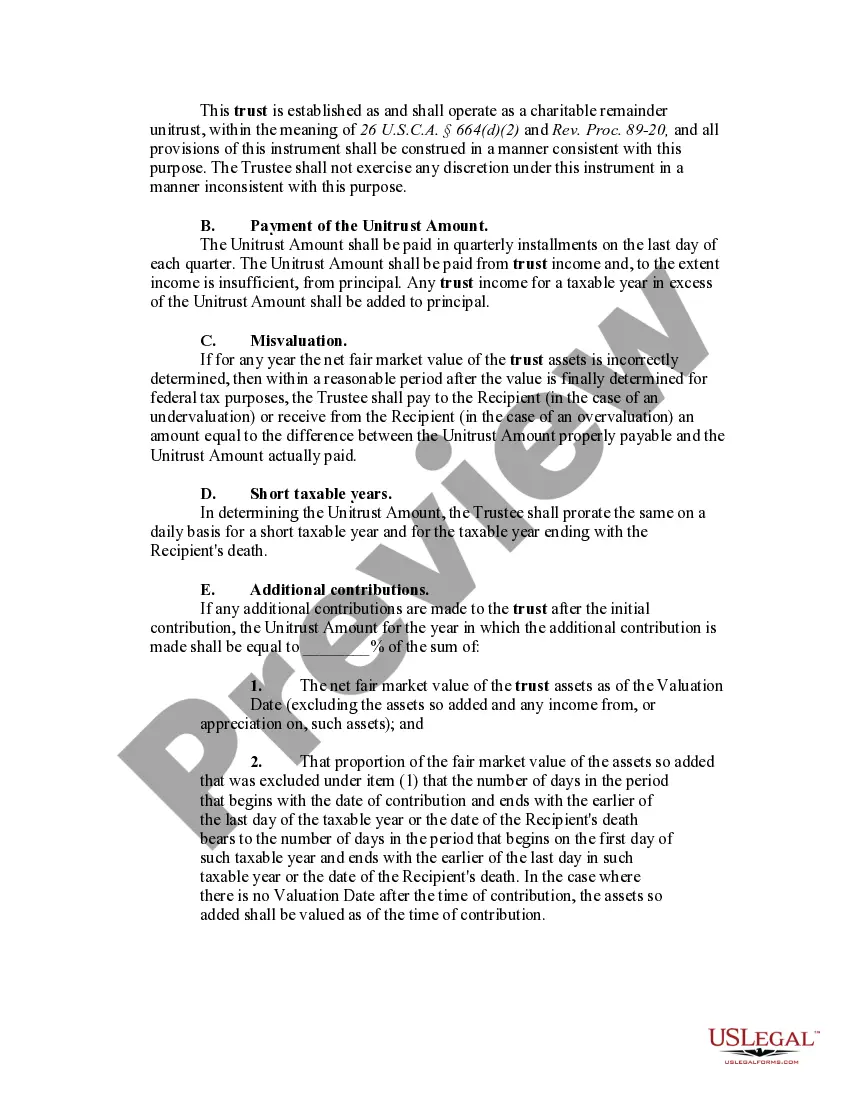
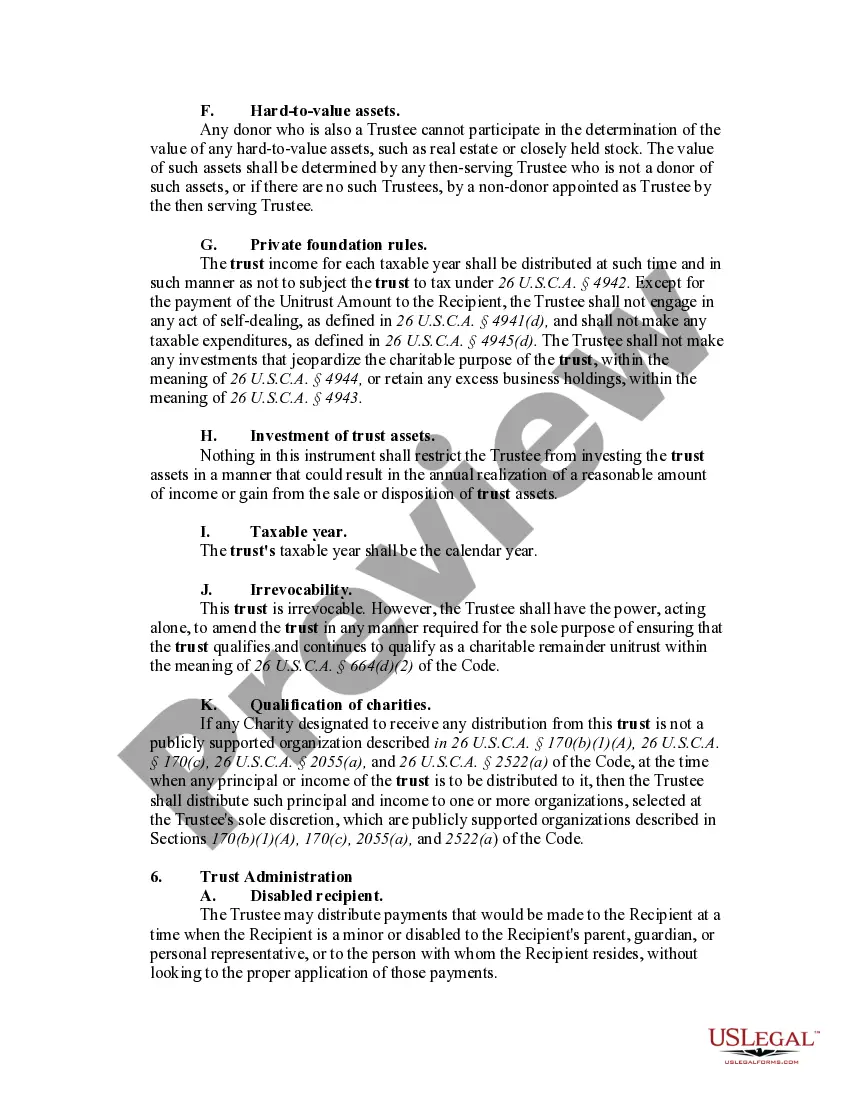
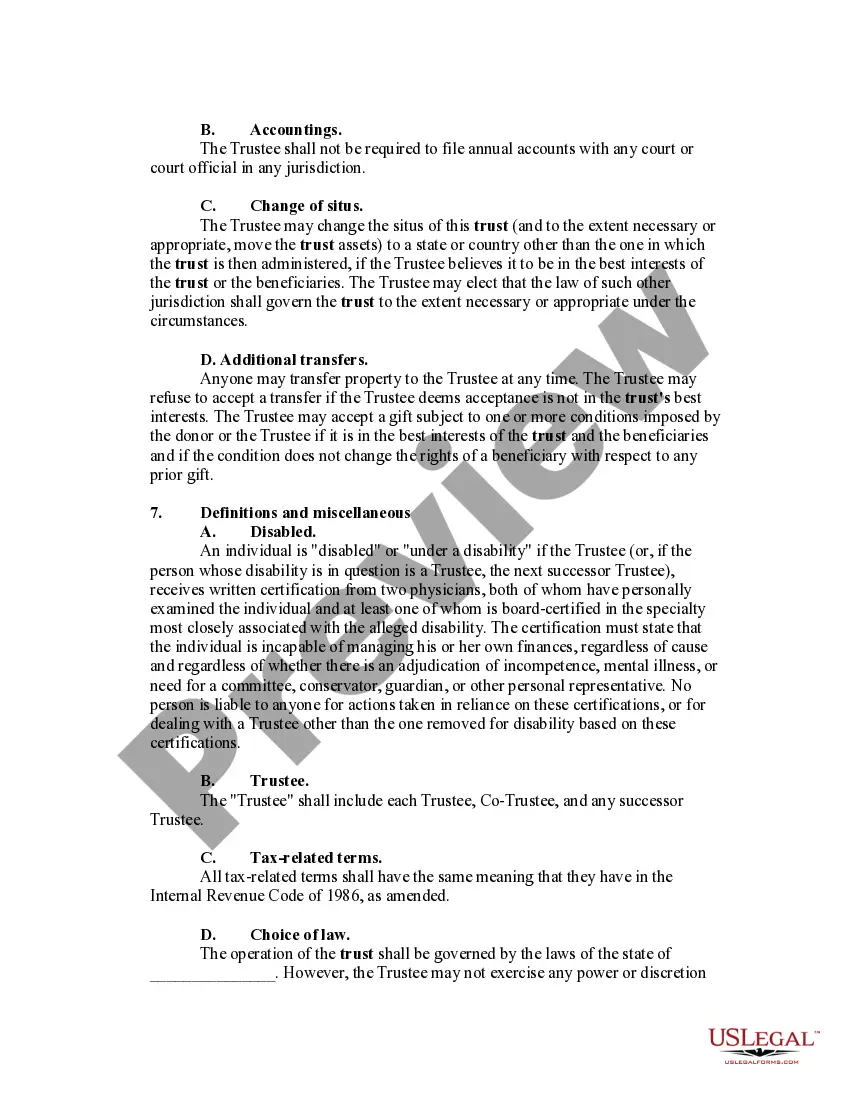
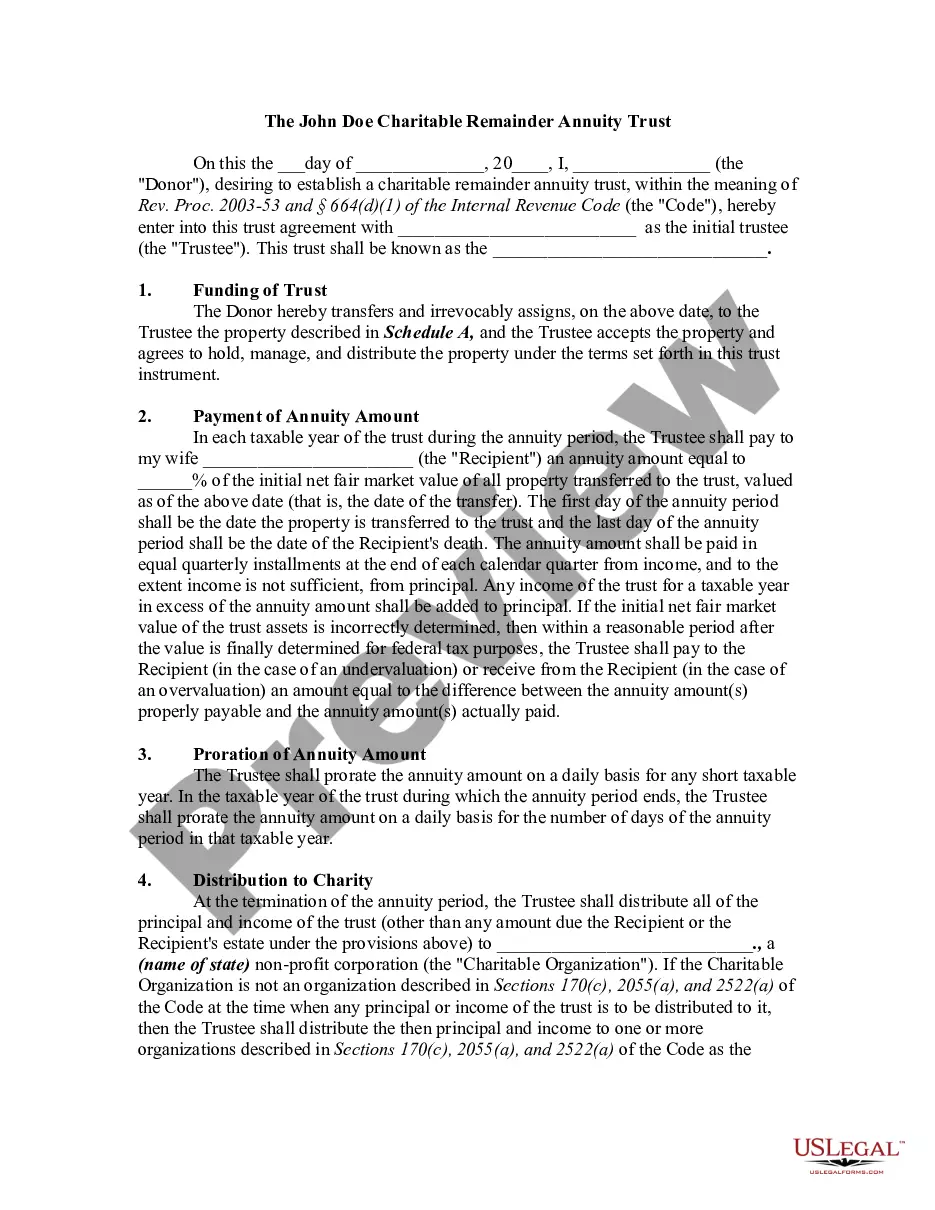
How to fill out Charitable Remainder Inter Vivos Unitrust Agreement?
- Visit the US Legal Forms website.
- If you are a returning user, log in to your account to access previous documents.
- In case of new registration, browse through our extensive collection of legal forms.
- Use the search feature to find the 'Charitable Unitrust Trust' form that aligns with your local jurisdiction.
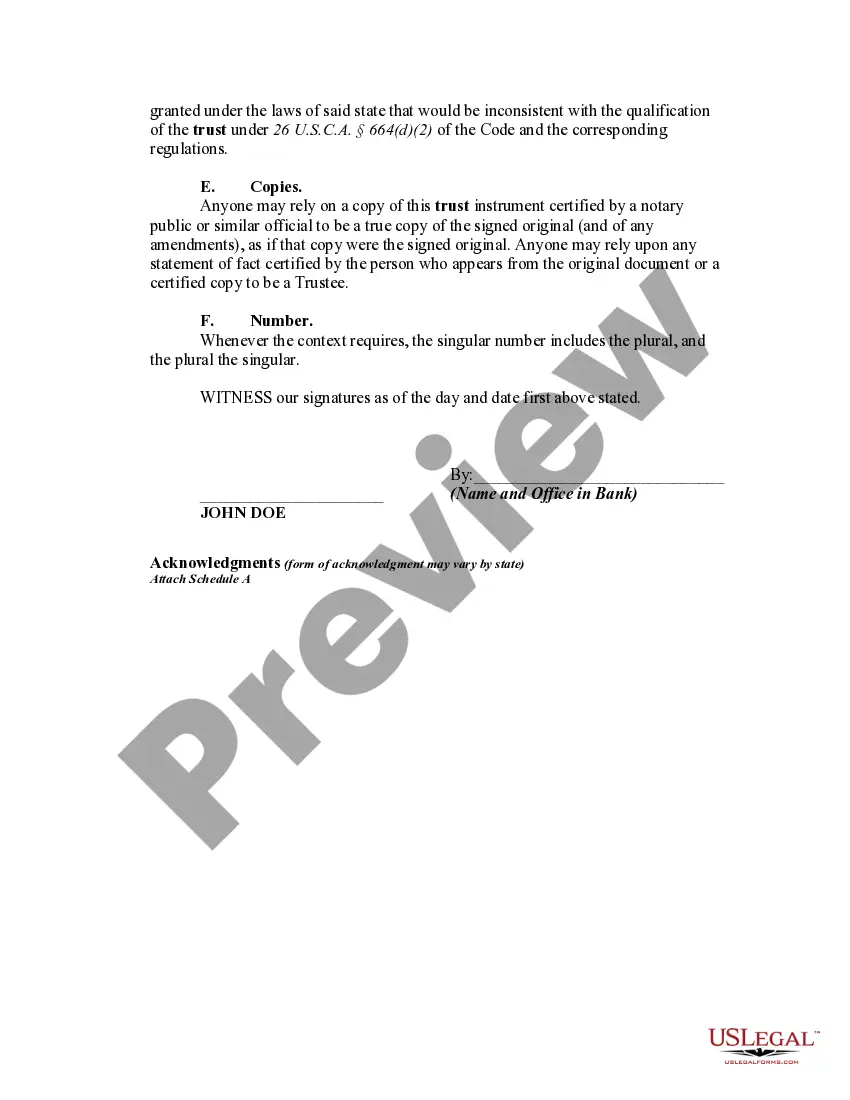
- Check the form preview to ensure it meets your specific needs before proceeding to purchase.
- Select the plan that fits you among various subscription options available.
- Complete your purchase by entering your payment details or using PayPal.
- Download the completed form directly to your device for future access. You can also find it under 'My Forms' in your profile.
US Legal Forms simplifies the process of acquiring legal documents with its extensive library of over 85,000 fillable and editable forms. Plus, the platform provides users access to premium support for accuracy and compliance.
Creating a charitable unitrust trust is a beneficial way to secure your philanthropic goals. Start utilizing US Legal Forms today to ensure you have the right templates for your future! Visit us now.
Form popularity
FAQ
Yes, you can file Form 5227 electronically, which is the annual information return for charitable remainder trusts, through the IRS e-file system. This streamlined process enables you to manage your paperwork efficiently and keeps your charitable unitrust trust blank for the future organized. Always verify you have the latest forms, as tax requirements may change.
Yes, you can create your own charitable remainder trust as long as you meet the legal requirements and guidelines set forth by the IRS. It is essential to carefully draft the trust document and define key aspects such as income beneficiaries and charitable organizations. Platforms like uslegalforms can provide valuable resources to help you create your charitable unitrust trust blank for the future.
To set up a charitable remainder unitrust, start by consulting legal and financial advisors familiar with trust laws. Choose the assets you will place into the trust, decide on the income percentage, and designate the charities that will benefit later. For an efficient process, uslegalforms offers templates and guidance to help you establish a charitable unitrust trust blank for the future.
Setting up a charitable remainder unitrust involves several steps, including selecting assets, determining income beneficiaries, and identifying charitable organizations for the remainder interest. You will also need to draft a trust agreement that outlines the terms and comply with IRS regulations. Utilizing platforms like uslegalforms can simplify the setup process for your charitable unitrust trust blank for the future.
A charitable remainder unitrust is a specific type of trust that provides income to beneficiaries while ultimately supporting a charitable cause. In contrast, a general trust may not have a charitable aspect and can serve various personal or financial purposes. Understanding this distinction helps you make informed decisions when setting up a charitable unitrust trust blank for the future.
Yes, charitable trusts can be designed to last indefinitely, making them perpetual in nature. This ensures that your charitable unitrust trust blank for the future continues to provide benefits for beneficiaries and charitable purposes over an extended period. However, state laws will vary, so understanding the legal framework is essential. Consulting legal resources, like those available on the uslegalforms platform, can guide you in structuring a lasting trust.
Exiting a charitable remainder trust can be complex, but there are options. You might consider transferring your interests to another individual or negotiating with the trustee. It is also wise to consult legal advice since navigating the terms of your trust can be challenging. Additionally, using the uslegalforms platform can provide you with the necessary resources to understand your options better.
A charitable remainder trust has potential downsides that you should consider. First, a charitable unitrust trust blank for the future requires you to give up control over the assets you place in the trust. Second, there are setup and management costs involved that may reduce the overall benefits. Finally, if the trust does not generate expected income, you could face financial strain.
The maximum term for a charitable lead trust is 20 years. This time frame allows for significant charitable contributions, while later providing assets to beneficiaries. Implementing a charitable unitrust trust blank for the future can maximize benefits for both charity and your heirs, ensuring proper legacy planning.
A charitable lead trust can last for a maximum of 20 years, as mandated by certain tax laws. This trust gives a fixed amount to charity for a set period before ending, at which point the remainder goes to heirs. To optimize this advantage, consider utilizing a charitable unitrust trust blank for the future that helps in planning and fulfilling your charitable goals.