Charitable Remainder Unitrust Blank With A
Description
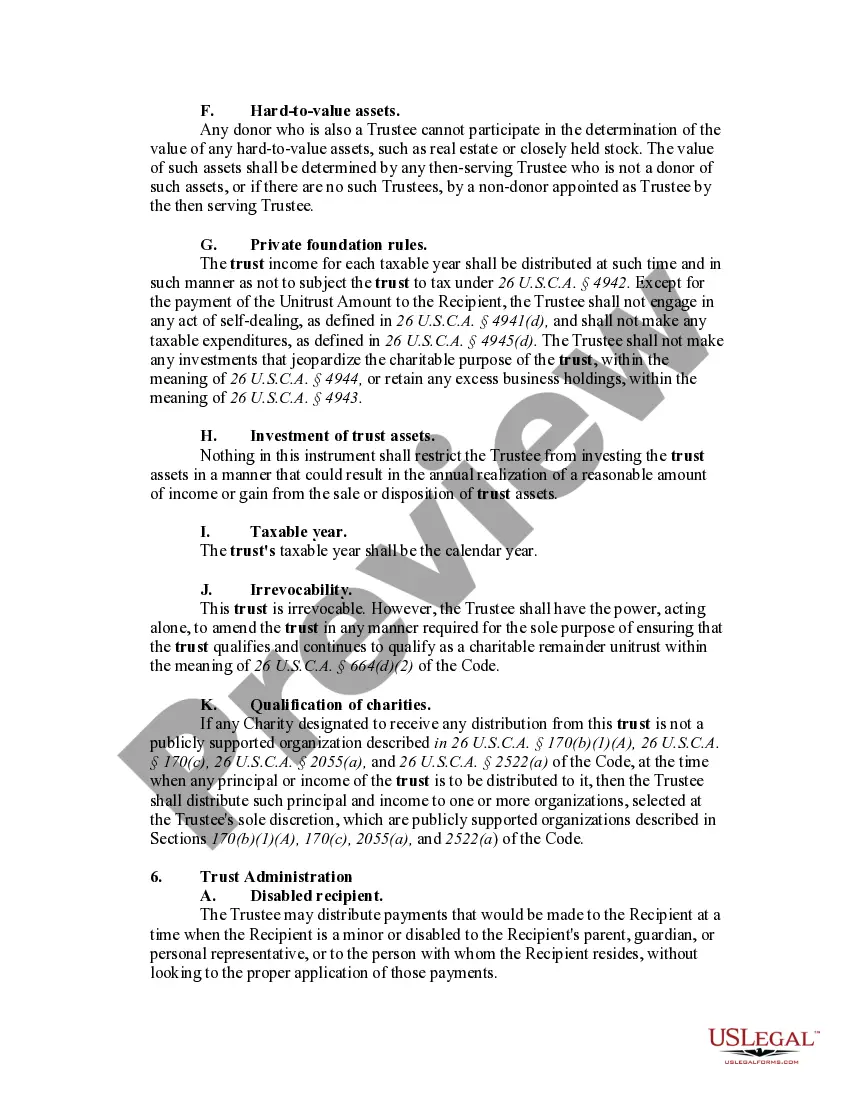
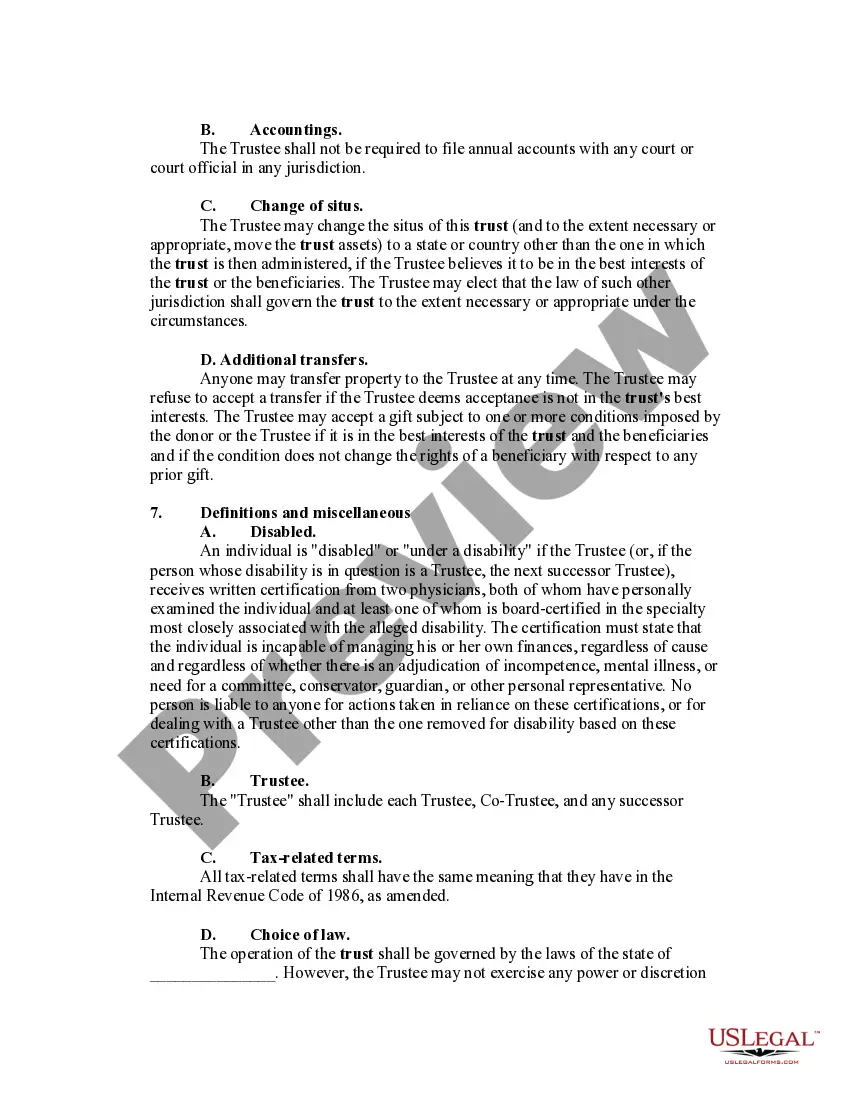
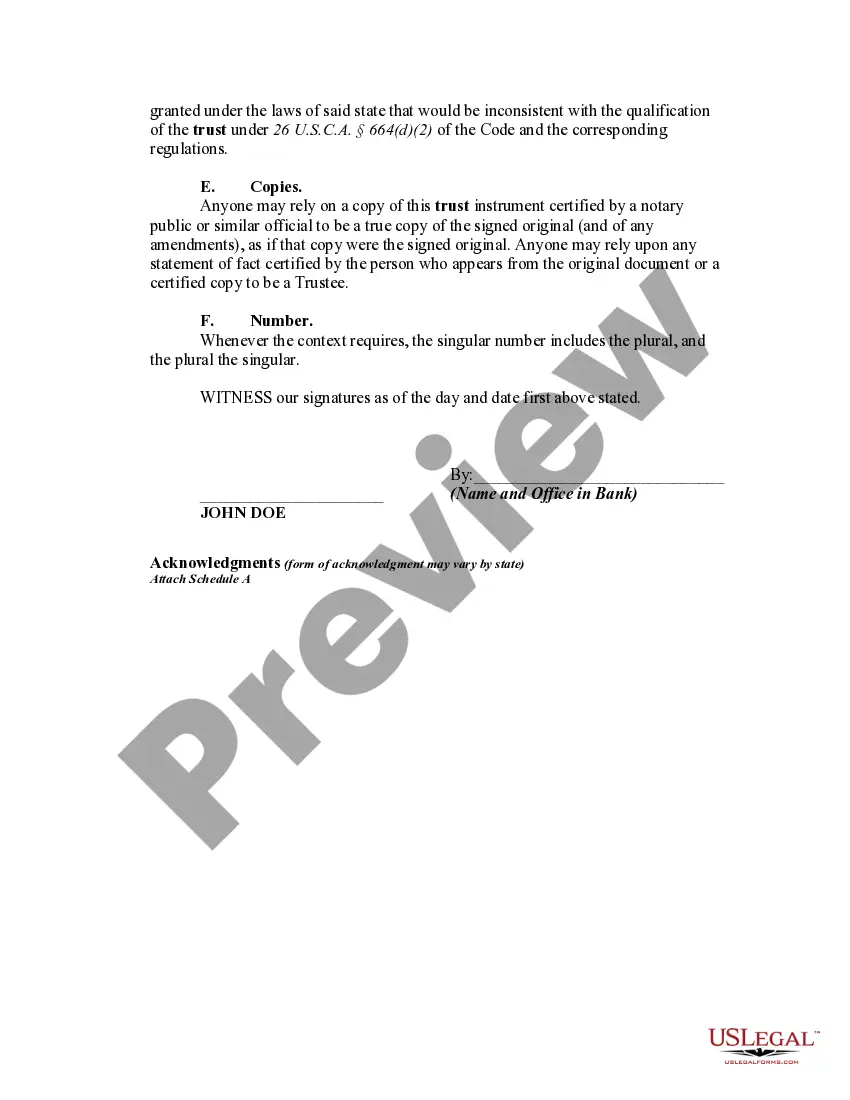
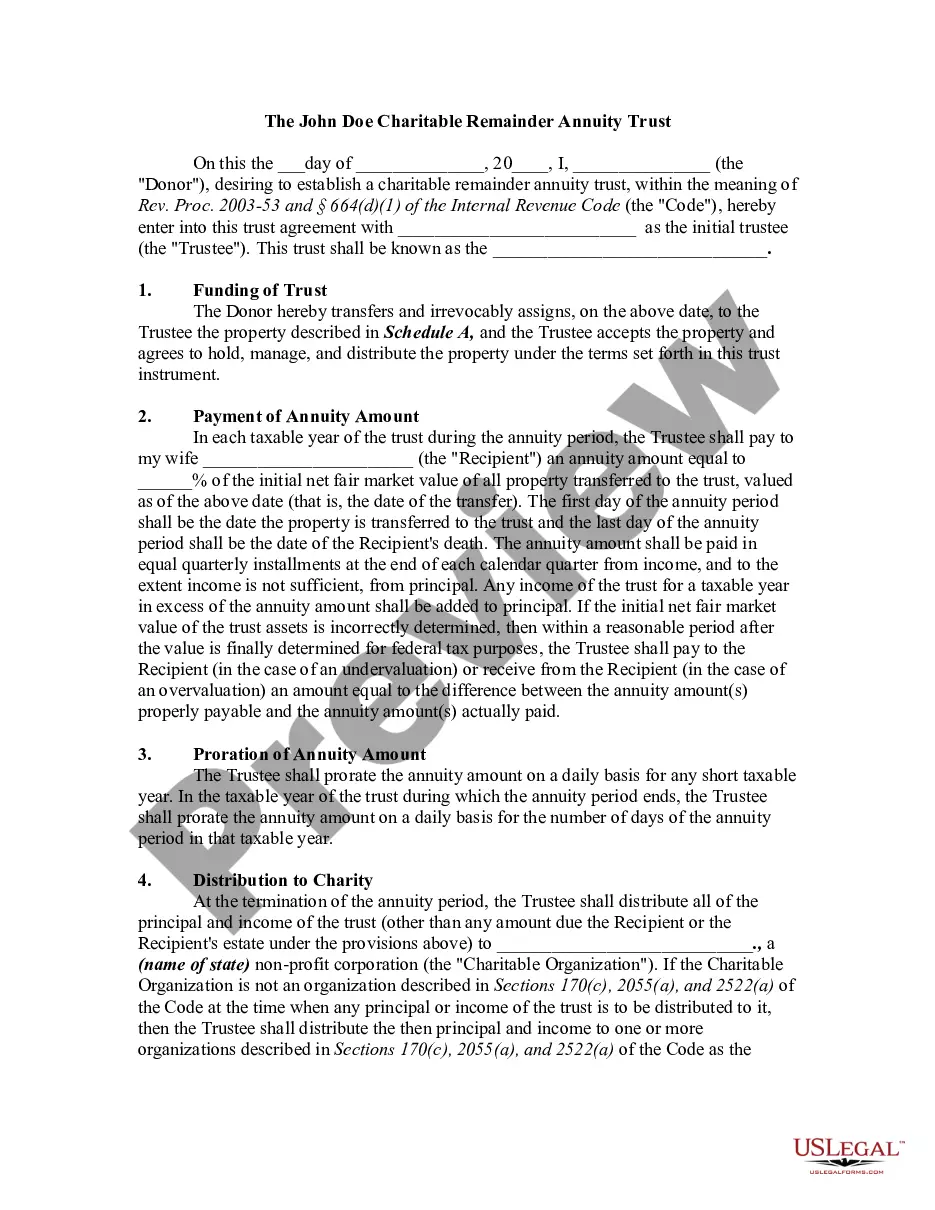
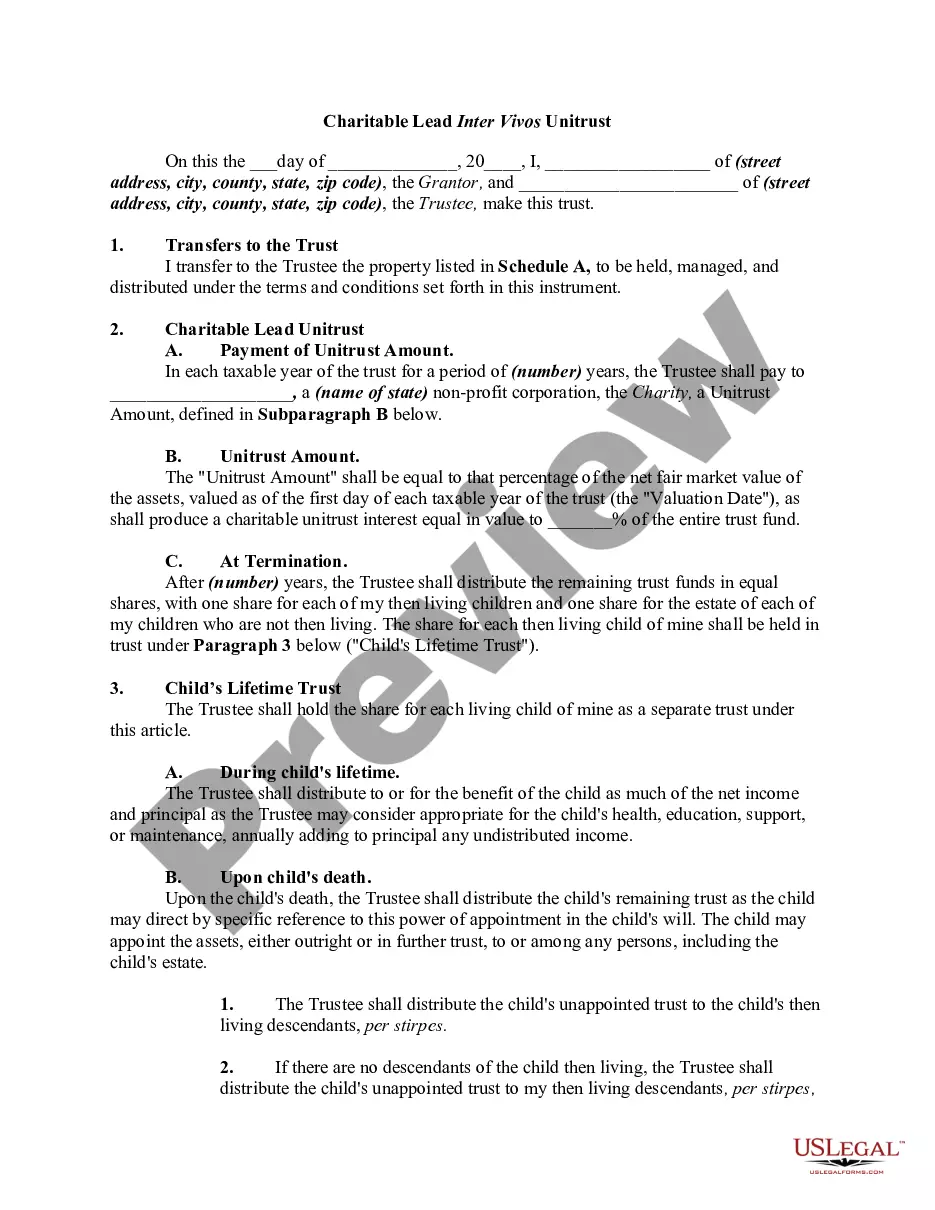
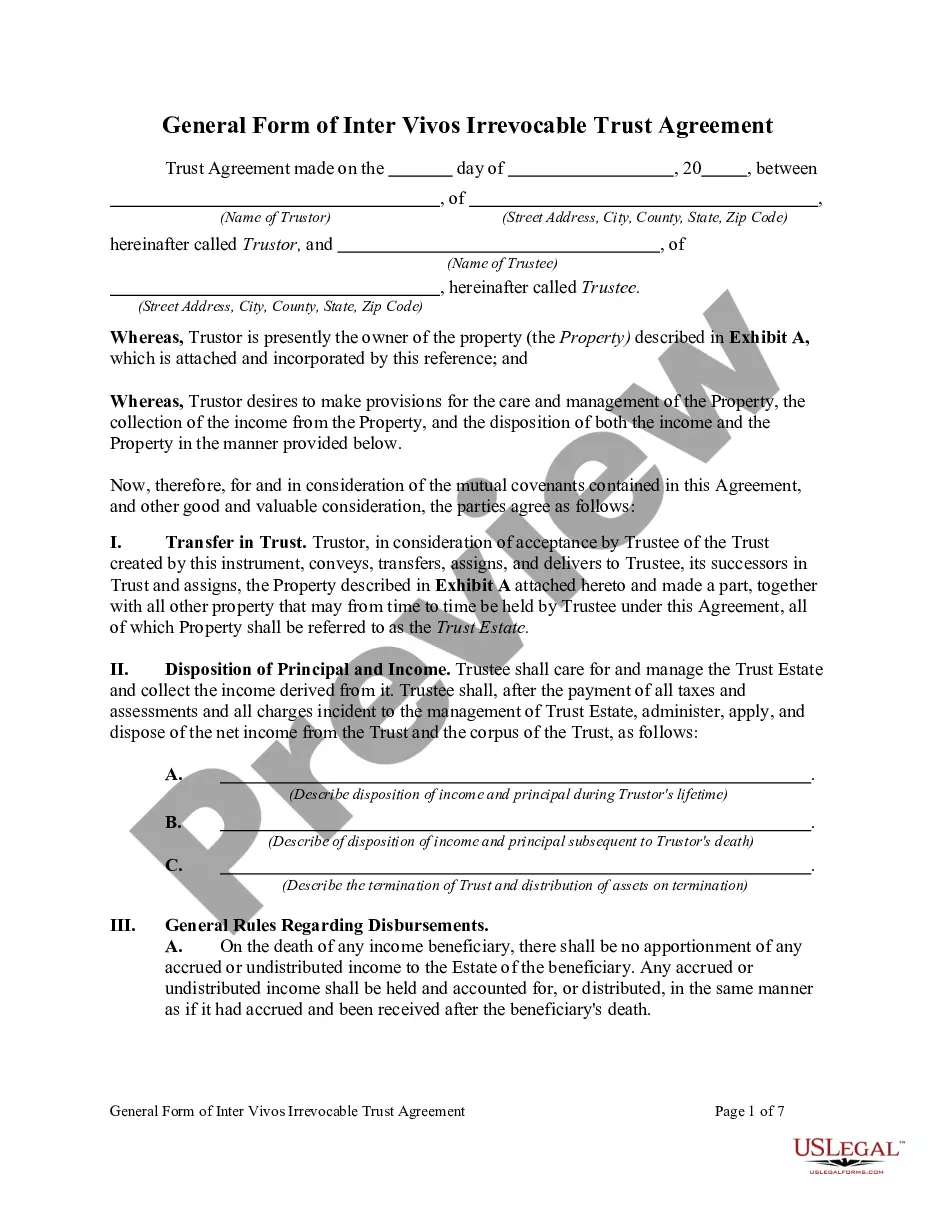
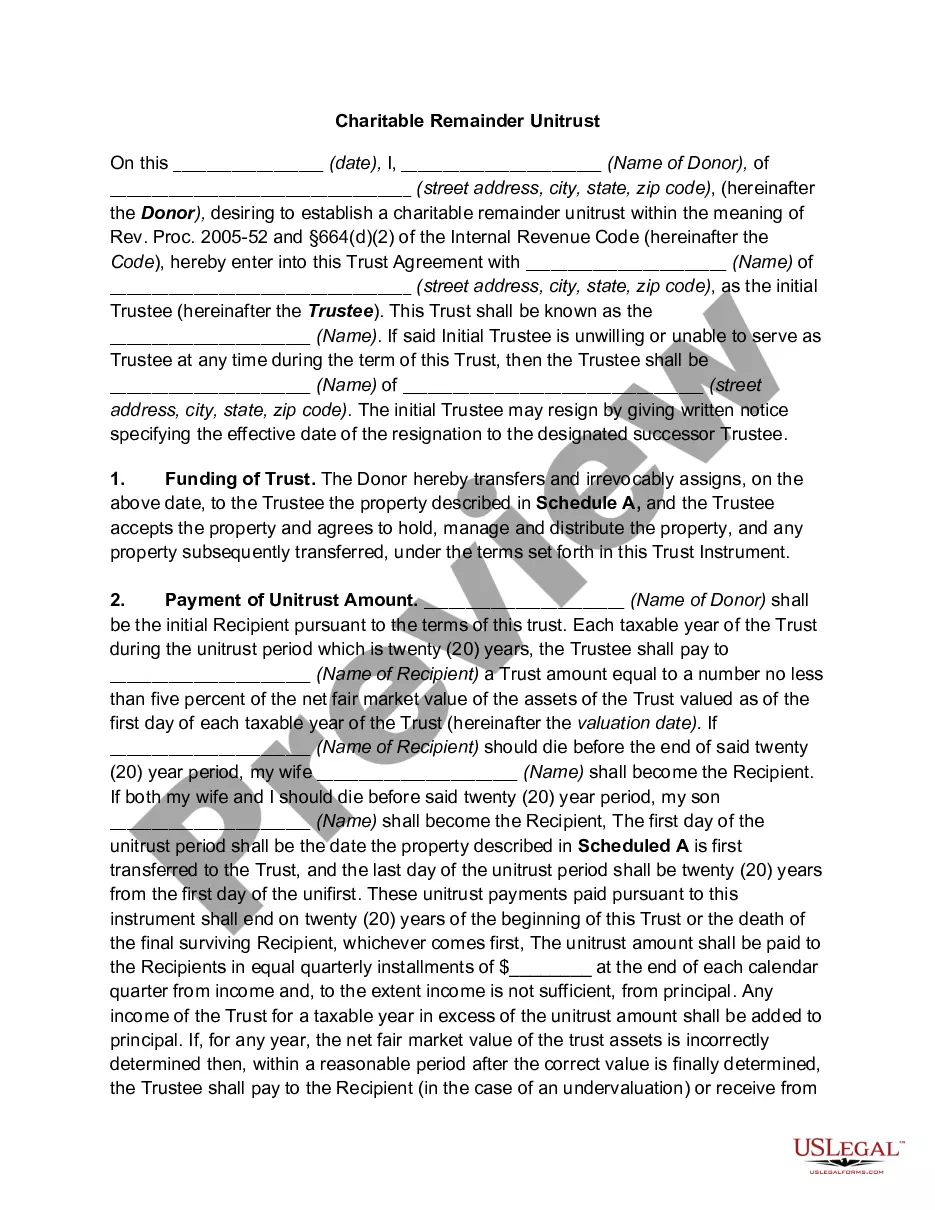
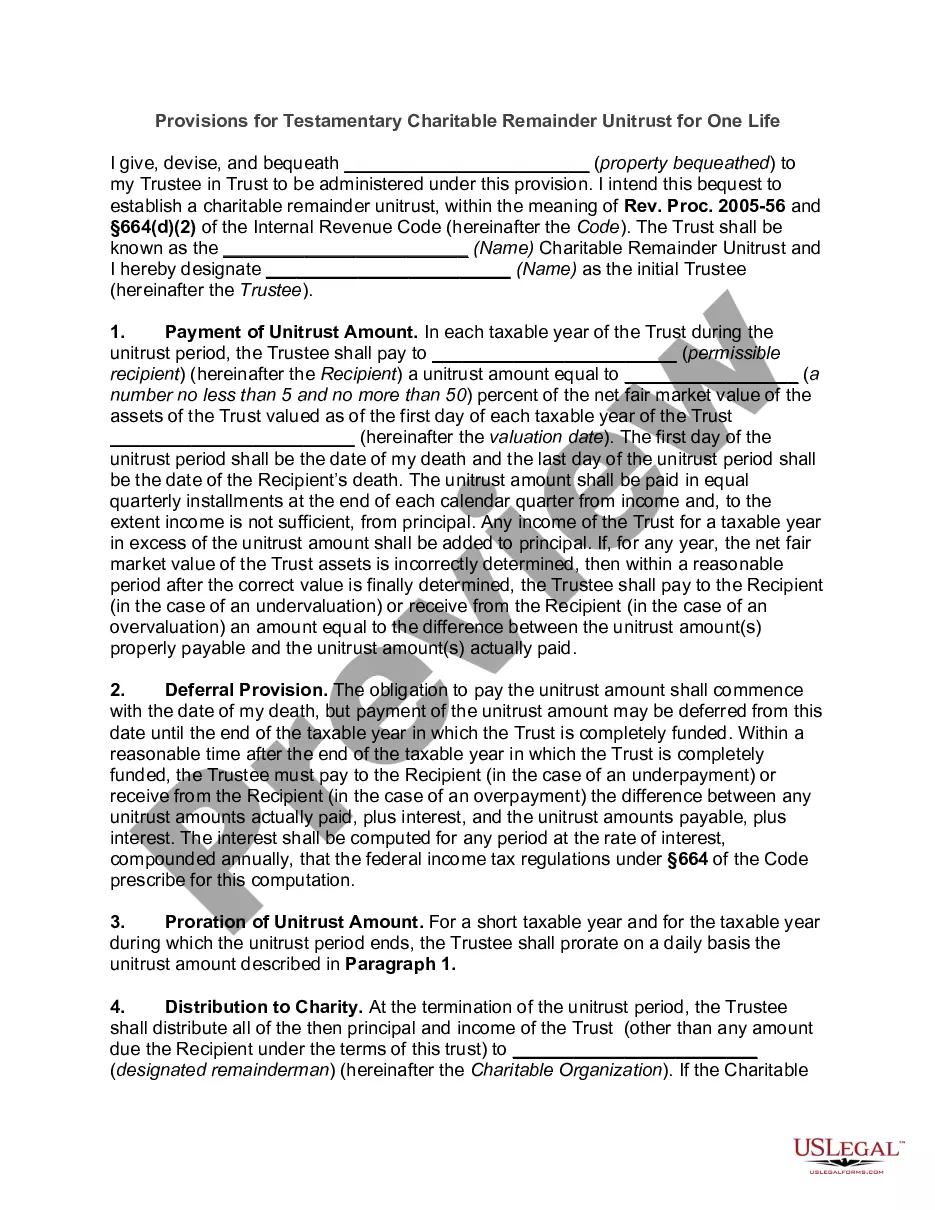
Get your form ready online
Our built-in tools help you complete, sign, share, and store your documents in one place.
Make edits, fill in missing information, and update formatting in US Legal Forms—just like you would in MS Word.
Download a copy, print it, send it by email, or mail it via USPS—whatever works best for your next step.
Sign and collect signatures with our SignNow integration. Send to multiple recipients, set reminders, and more. Go Premium to unlock E-Sign.
If this form requires notarization, complete it online through a secure video call—no need to meet a notary in person or wait for an appointment.
We protect your documents and personal data by following strict security and privacy standards.

Make edits, fill in missing information, and update formatting in US Legal Forms—just like you would in MS Word.

Download a copy, print it, send it by email, or mail it via USPS—whatever works best for your next step.

Sign and collect signatures with our SignNow integration. Send to multiple recipients, set reminders, and more. Go Premium to unlock E-Sign.

If this form requires notarization, complete it online through a secure video call—no need to meet a notary in person or wait for an appointment.

We protect your documents and personal data by following strict security and privacy standards.
Looking for another form?





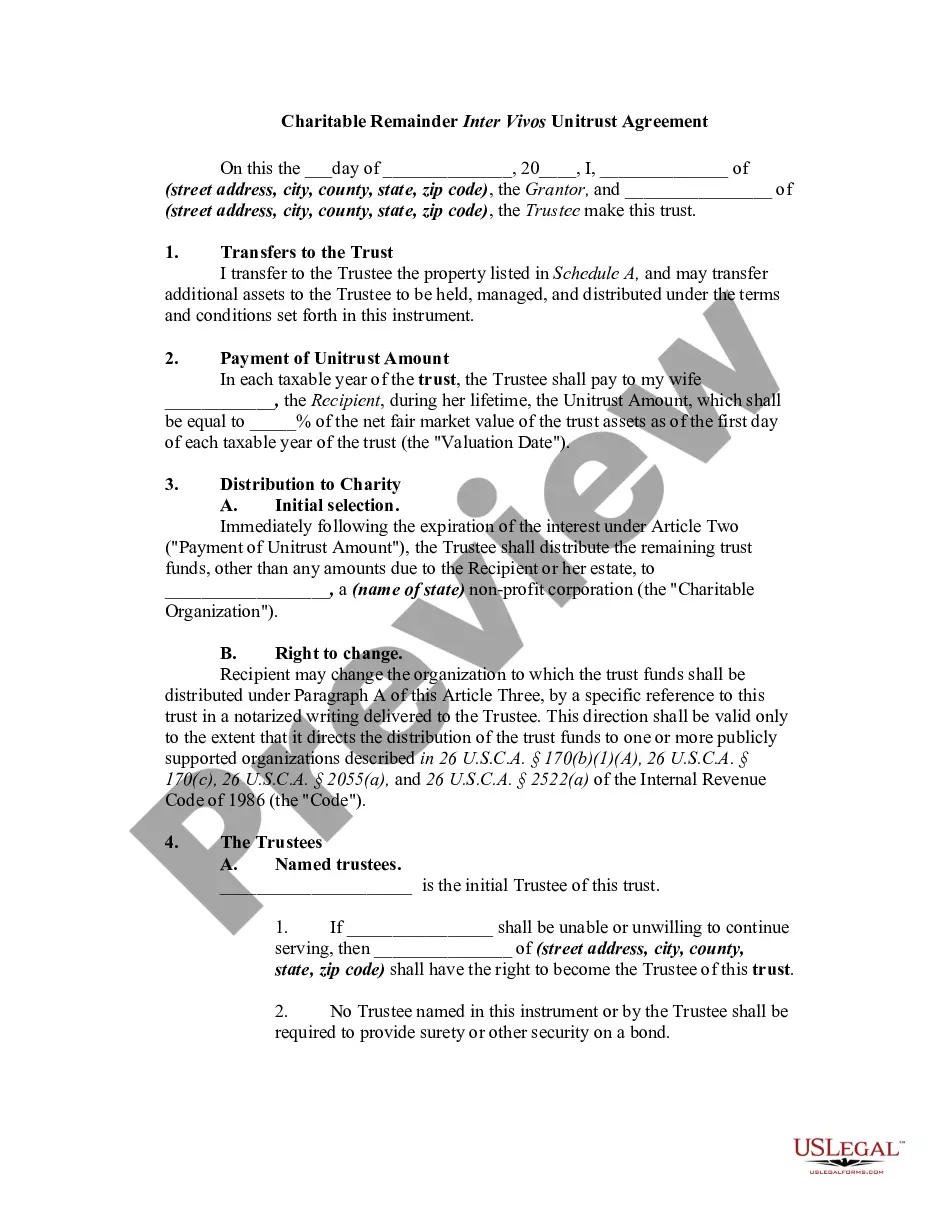
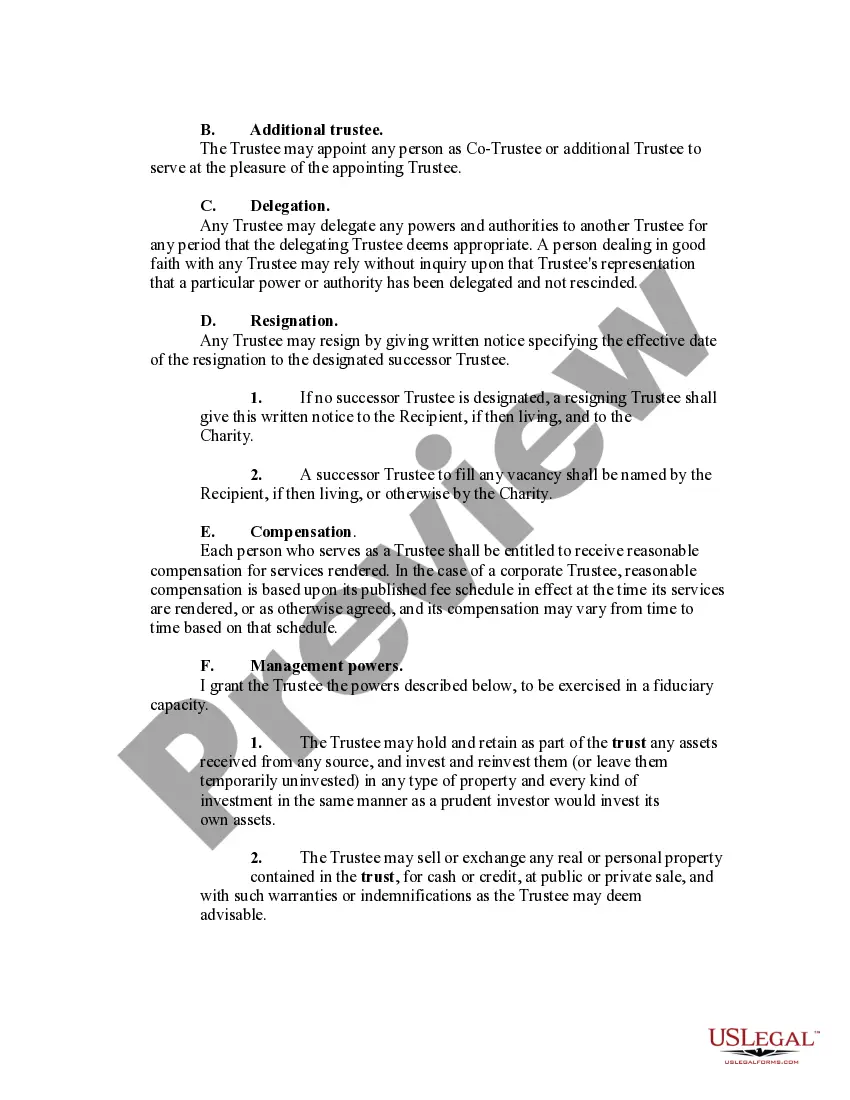
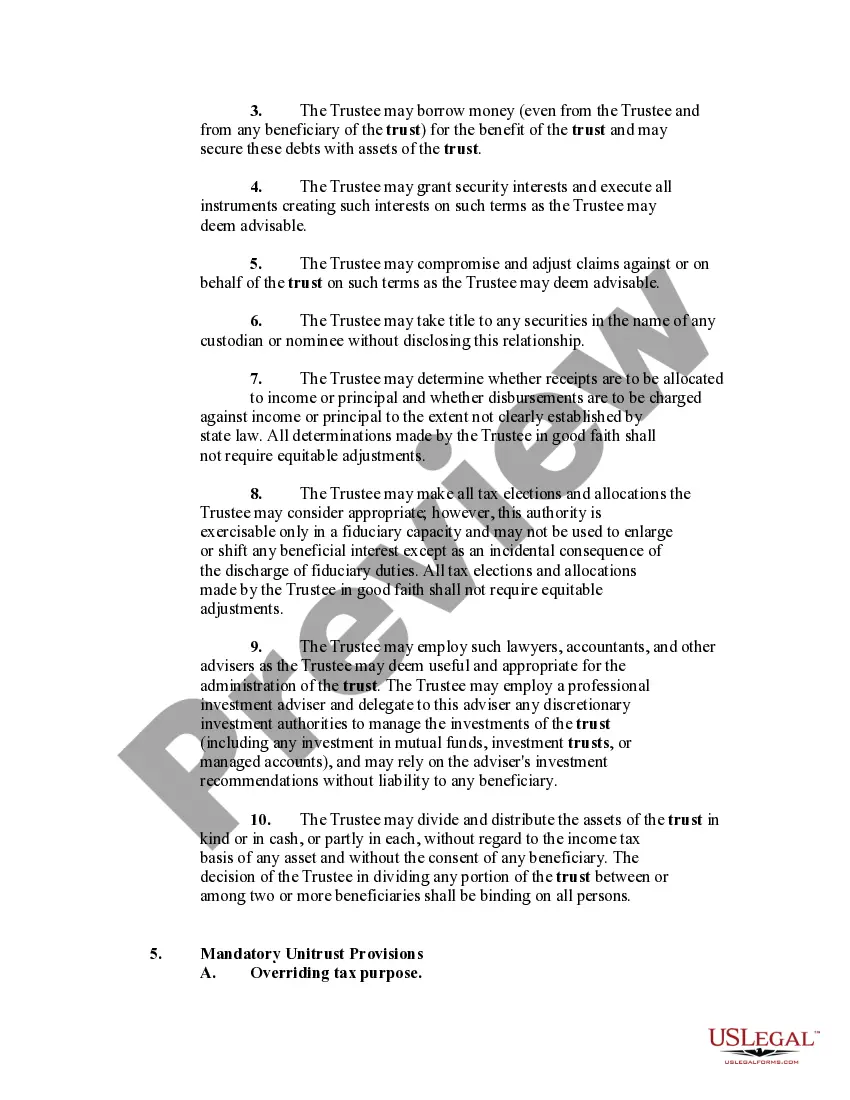
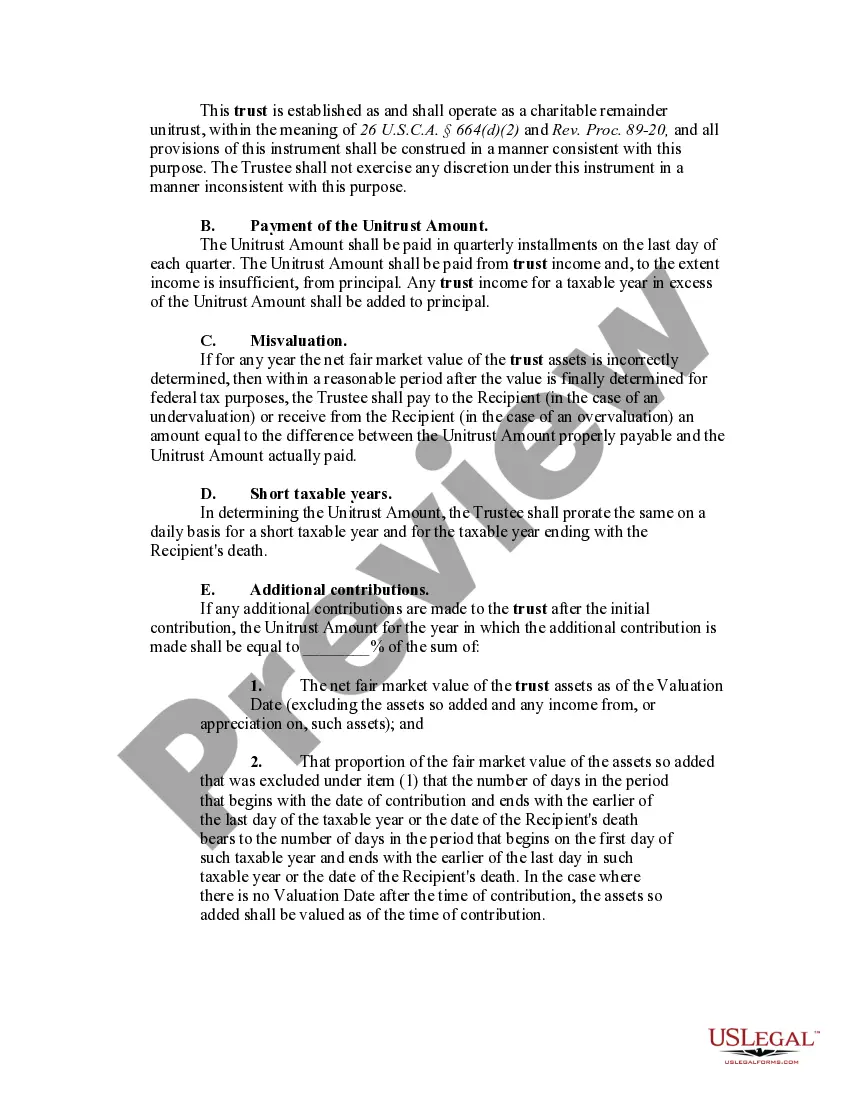
How to fill out Charitable Remainder Inter Vivos Unitrust Agreement?
- If you're a returning user, log in to your account and locate the form you need. Ensure your subscription is up-to-date, or renew if necessary.
- For first-time users, start by checking the Preview mode and form description. Ensure it aligns with your local jurisdiction requirements.
- If the current template doesn't fit your needs, utilize the Search tab above to explore other options.
- Once you find the right document, click on the Buy Now button and select your preferred subscription plan. A user account is required for access.
- Proceed with your purchase by entering your payment details, either via credit card or PayPal.
- Finally, download the form and save it on your device. Access it anytime through the My Forms section of your account.
US Legal Forms stands out with its vast collection of over 85,000 editable legal forms, exceeding competitors' offerings. The platform also connects users to legal experts for tailored assistance.
In conclusion, obtaining necessary legal documents doesn't have to be a daunting task. Start using US Legal Forms today for a streamlined experience!
Form popularity
FAQ
To calculate the charitable tax deduction for a charitable remainder trust, first determine the present value of the charity’s remainder interest. This involves assessing the expected income, the payout rate, and the term of the trust. The final deduction will be the difference between the total contributions and the value of the asset transferred to charity. Using a reliable resource like uslegalforms can simplify this calculation, especially while managing a charitable remainder unitrust blank with a structured approach.
The 10% rule for a Charitable Remainder Trust (CRT) ensures that the charitable remainder unitrust distributes at least 10% of its initial trust value to charity. This rule protects the charitable intent by confirming a minimum benefit for the charity. When establishing a charitable remainder unitrust, this rule helps assess the balance between income for the donor and the eventual gift to charity. Understanding this rule can guide your decisions when creating a charitable remainder unitrust blank with a focus on both income generation and charitable goals.
The acronym for a charitable remainder trust is CRT. This term encompasses various types of trusts, including the Charitable Remainder Annuity Trust (CRAT) and the Charitable Remainder Unitrust (CRUT). These trusts provide a way to support charitable causes while also receiving income and potential tax benefits. Utilizing platforms like uslegalforms can help streamline the process of creating a CRT to suit your needs.
The difference between a CRT and a CLT lies in their structure and purpose. A Charitable Remainder Trust (CRT) provides income to the donor for a specified period before the remainder goes to the charity. In contrast, a Charitable Lead Trust (CLT) sends income to a charity for a set period, and the remainder then goes to beneficiaries. Understanding these distinctions helps you make informed decisions about your charitable contributions.
The abbreviation for unitrust is CRUT, which stands for Charitable Remainder Unitrust. This type of trust allows you to receive a fixed percentage of the trust’s assets each year as income. It's a flexible option for donors because the income can vary with the value of the trust. This can be an effective tool in your charitable planning strategy.
CRAT stands for Charitable Remainder Annuity Trust, while CRUT refers to a Charitable Remainder Unitrust. Both are types of charitable remainder trusts that provide income for the donor during their lifetime. The key difference is that a CRAT pays a fixed amount annually, whereas a CRUT pays a variable amount based on a percentage of the trust’s value. These options allow you to tailor your charitable giving according to your financial goals.
An example of a charitable remainder trust is a trust where you donate assets to a charity while still receiving income from those assets during your lifetime. For instance, you could set up a charitable remainder unitrust (CRUT) that pays you a percentage of its value each year. When you pass away, the remaining assets in the trust go to the designated charity. This arrangement allows you to support a cause you care about while benefiting from tax advantages.
Charitable remainder unitrust investments must adhere to certain restrictions to maintain their tax-exempt status. Investments that could jeopardize the charity's income or lead to an excessive risk must be avoided. Therefore, careful planning and compliance are important, and consulting a financial or legal advisor is a wise move to ensure the investments align with IRS requirements.
To qualify as a charitable remainder unitrust, there are several key requirements you must meet. The trust must provide for a charitable distribution of at least 10% of its assets upon termination. Additionally, it must ensure that income beneficiaries receive a percentage of the trust's assets each year, which is determined at the trust's inception.
The 10 percent rule for a charitable remainder unitrust states that the present value of the charitable remainder must be at least 10% of the total initial trust assets. This rule ensures that the charitable cause benefits significantly from the trust. When planning your estate or charitable giving strategies, it is essential to adhere to this rule for your CRUT to remain compliant.