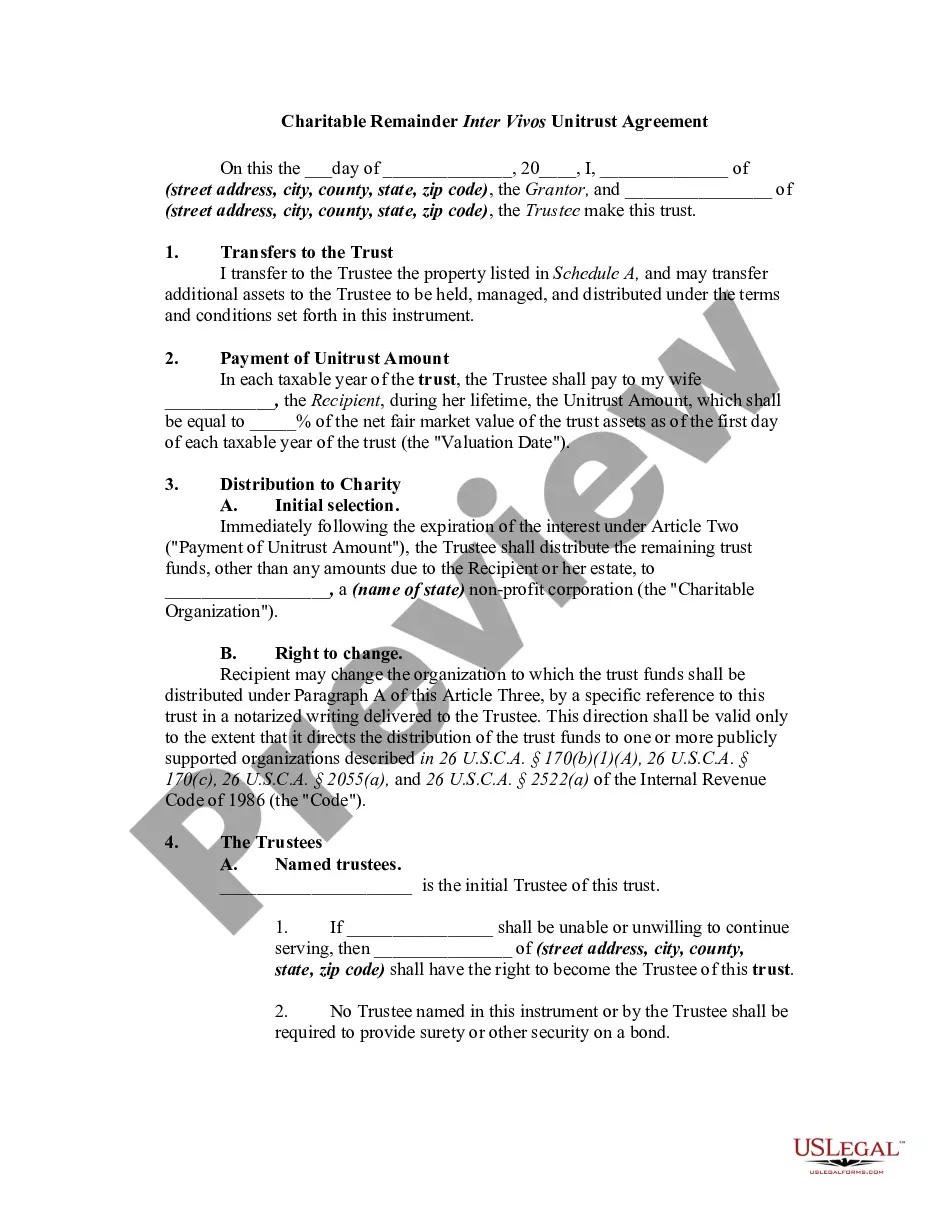
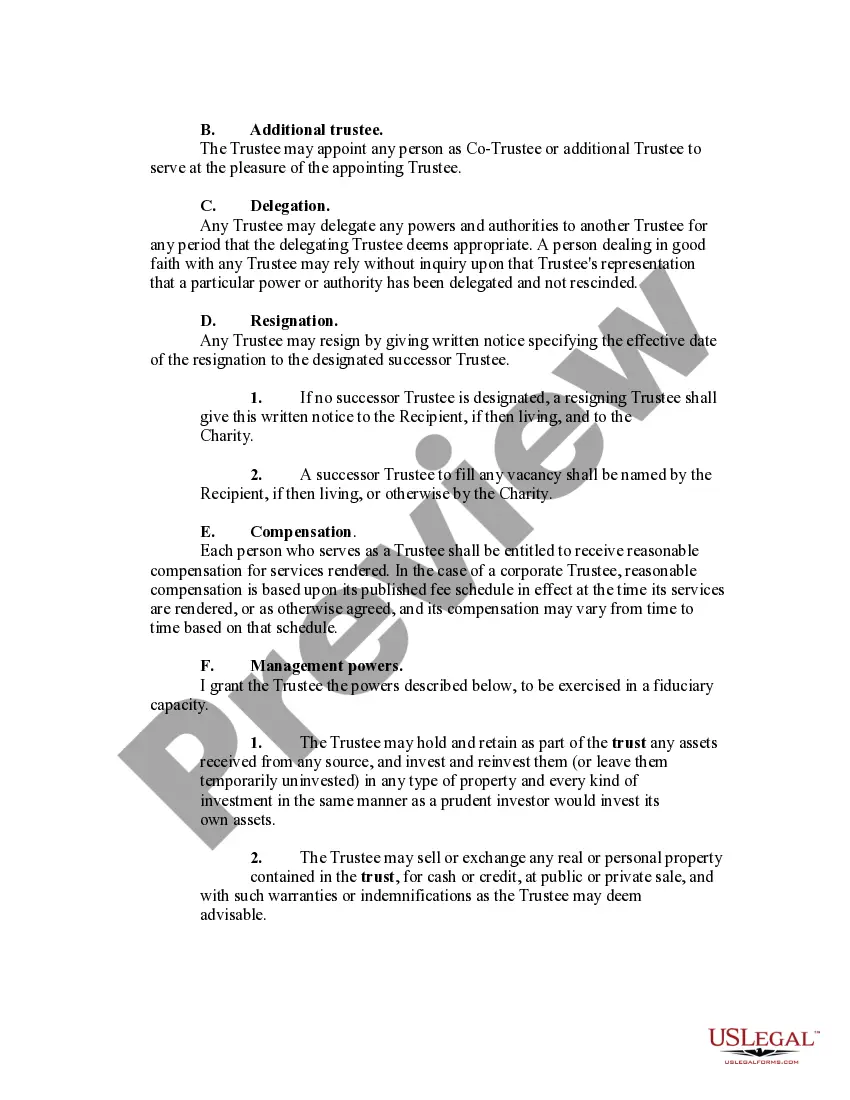
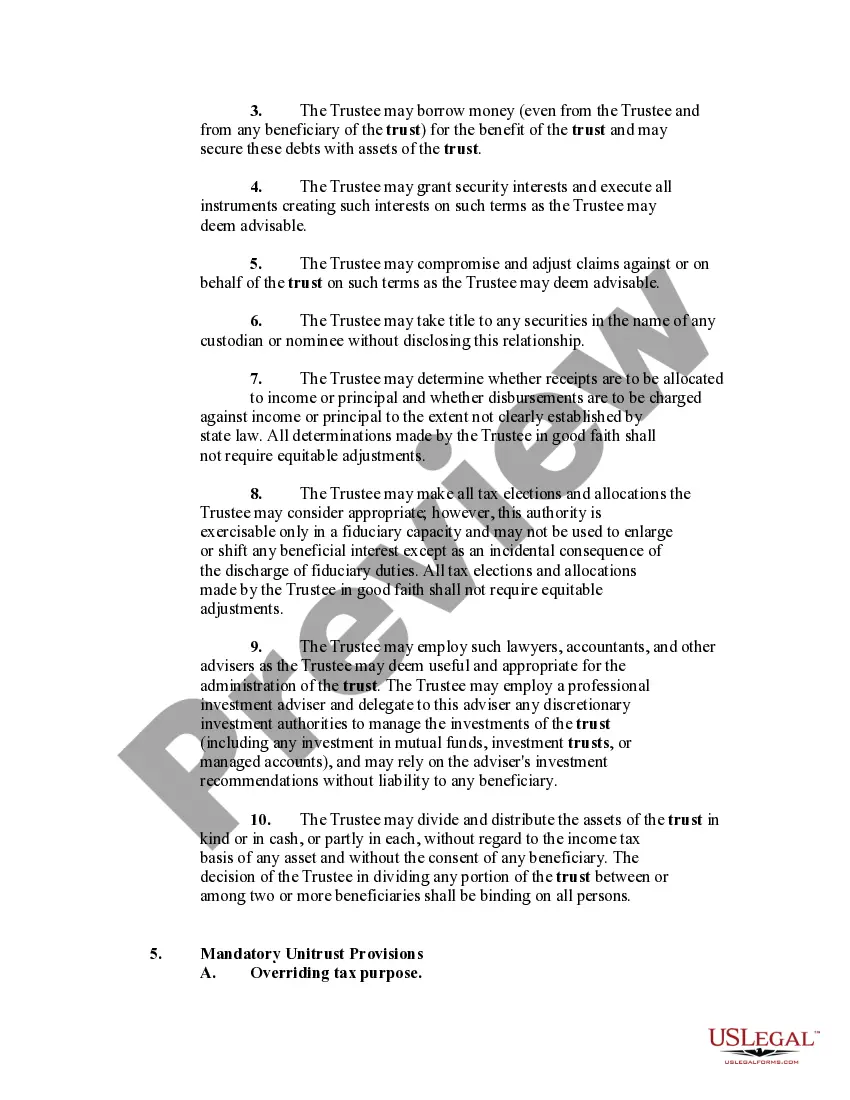
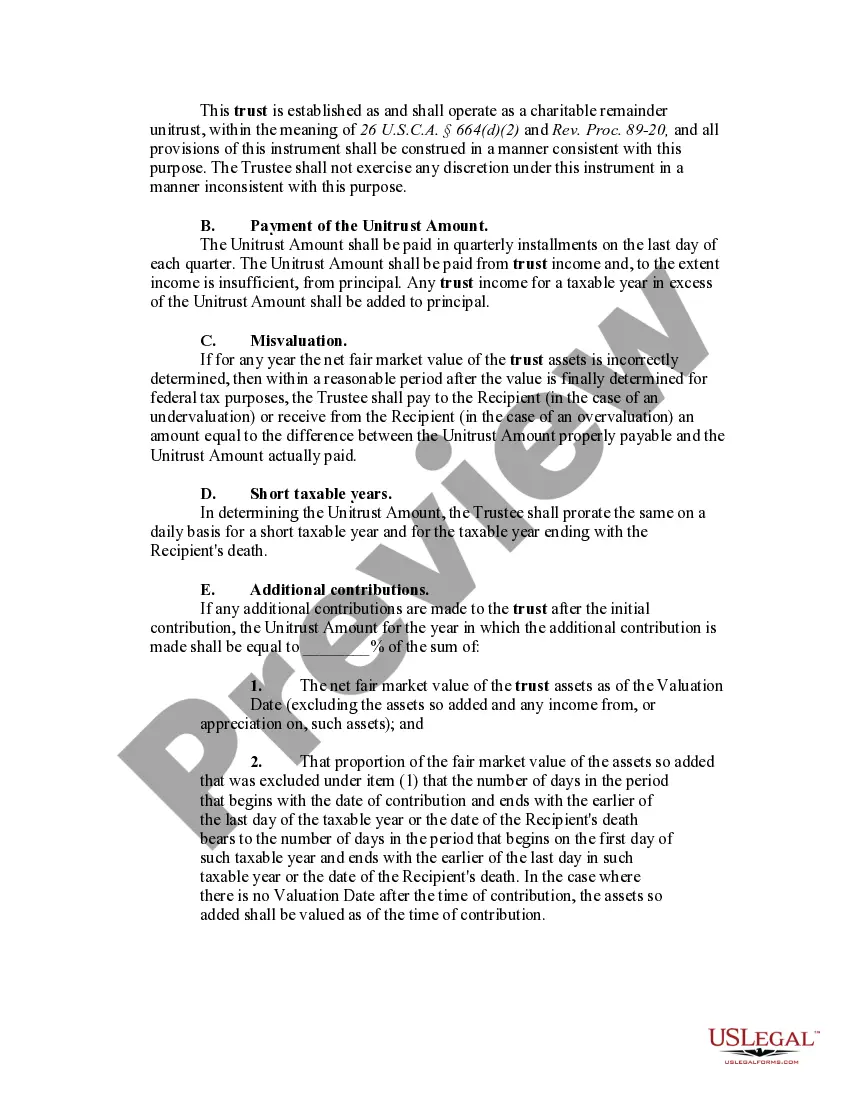
Charitable Remainder Unitrust Blank For A Loan
Description
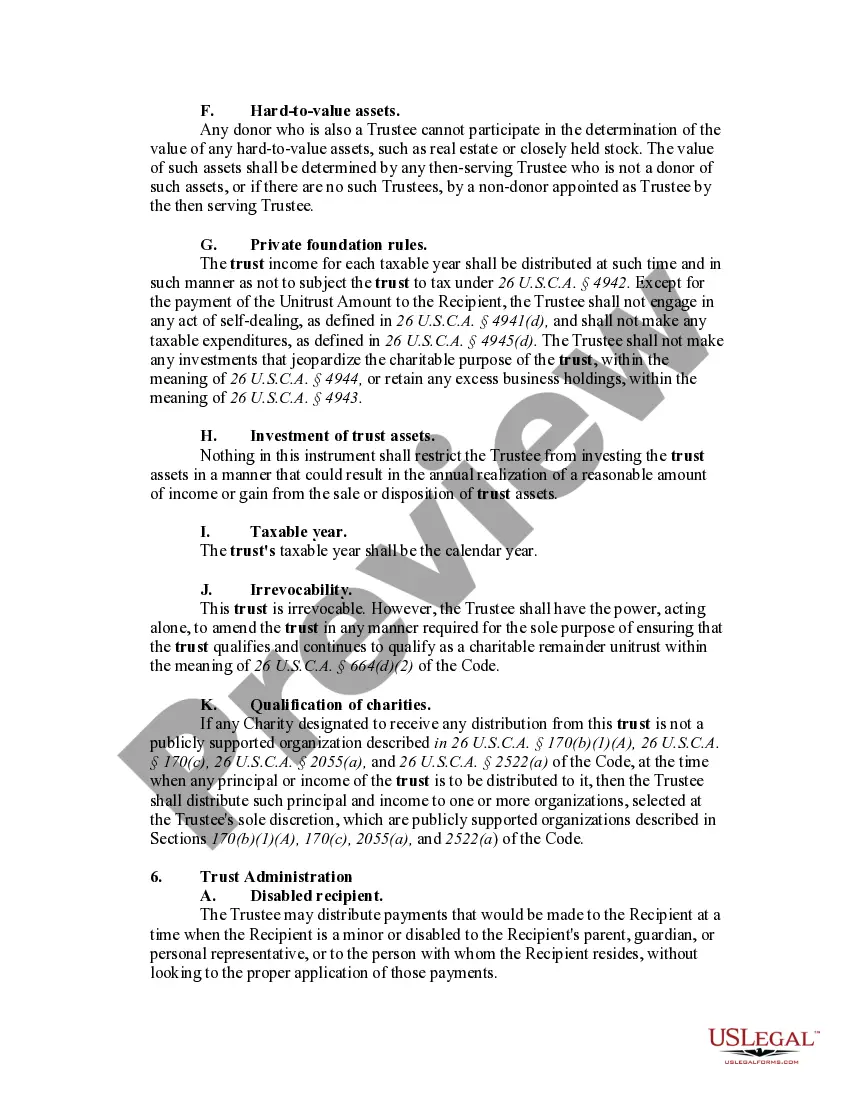
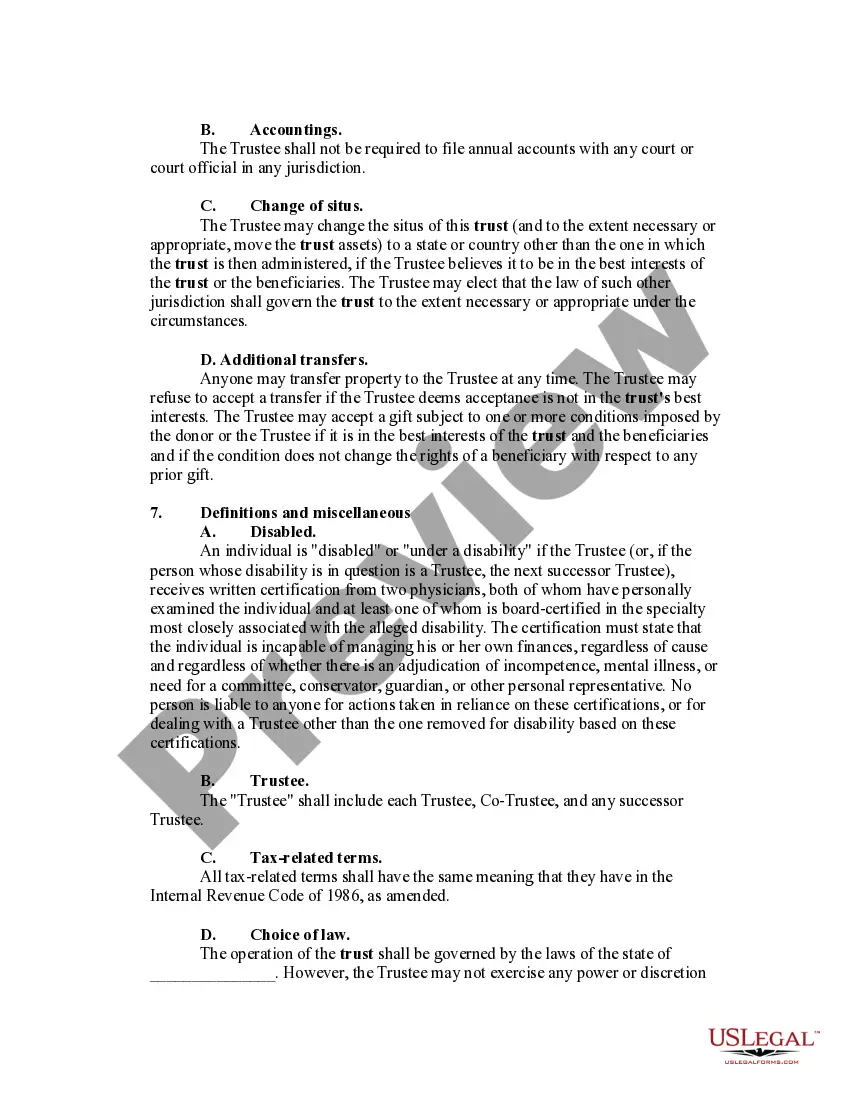
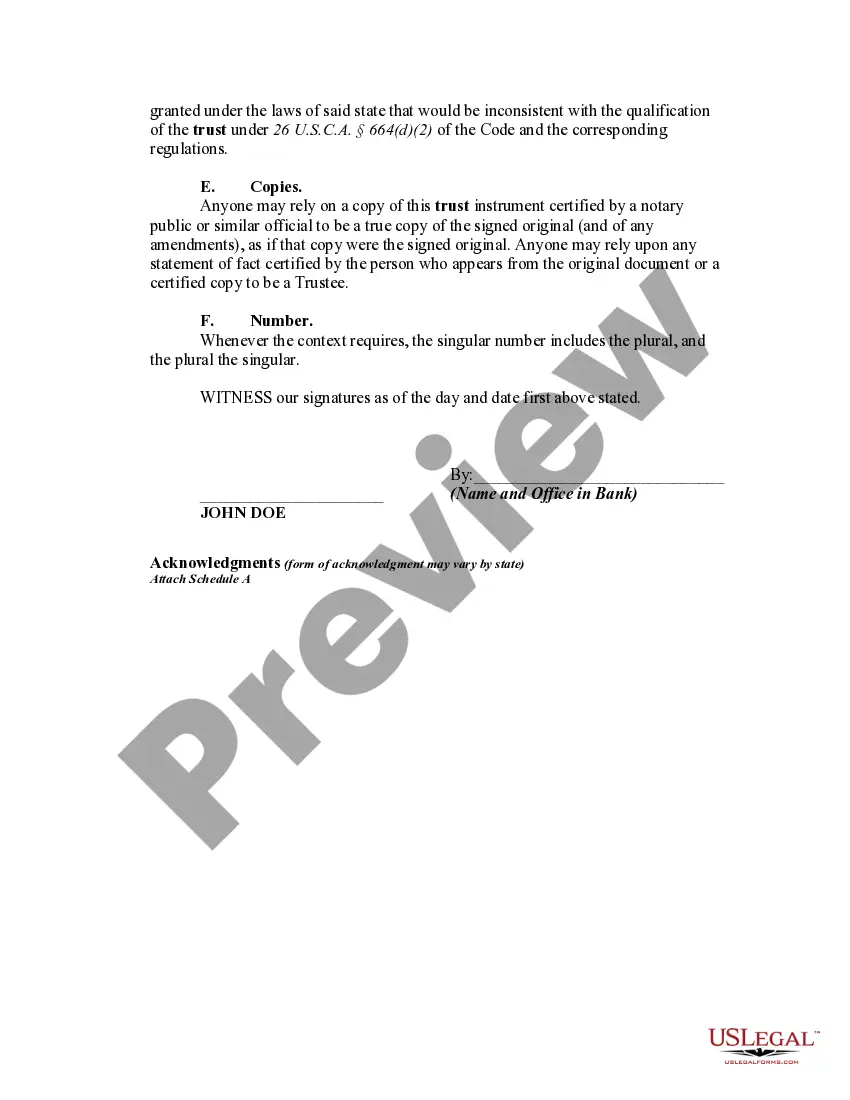
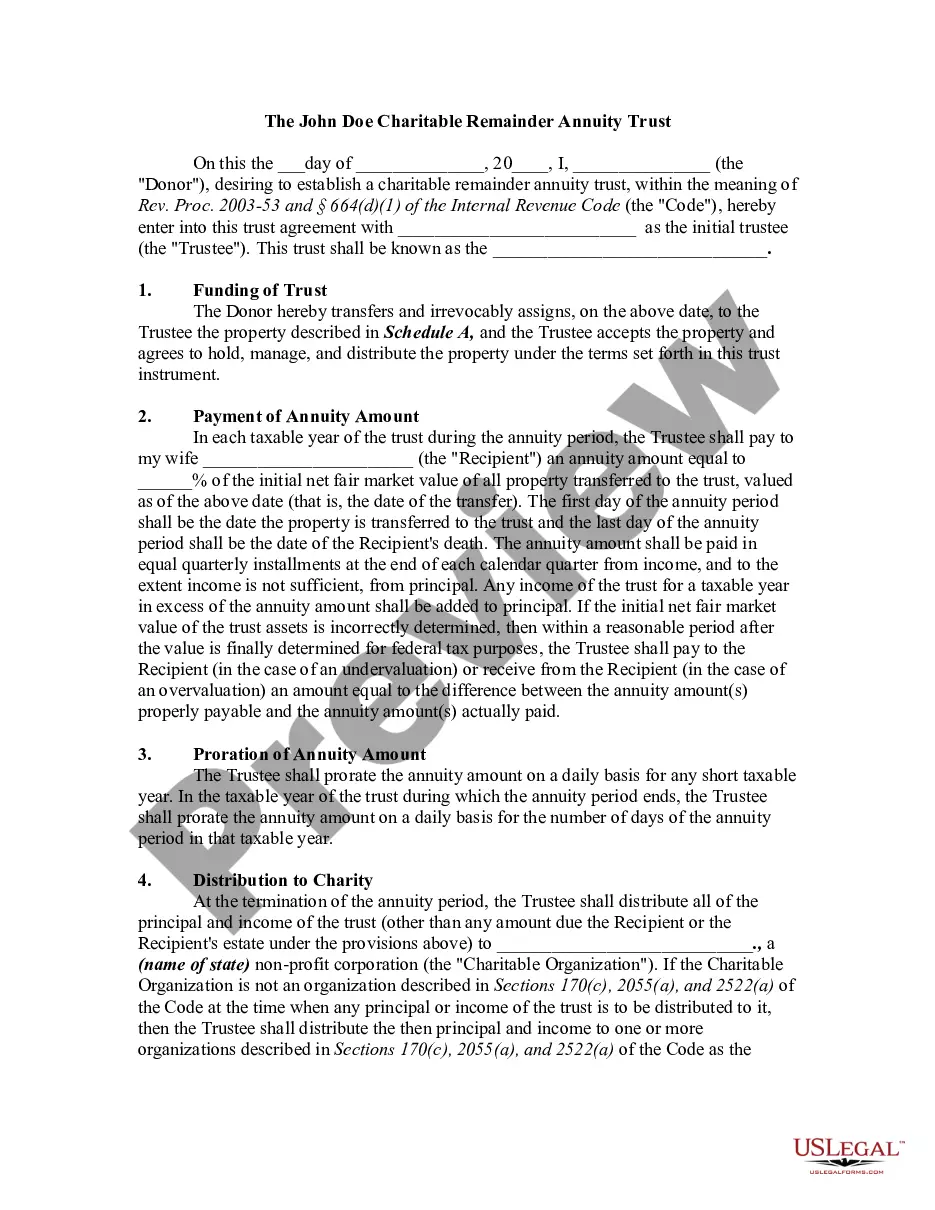
Get your form ready online
Our built-in tools help you complete, sign, share, and store your documents in one place.
Make edits, fill in missing information, and update formatting in US Legal Forms—just like you would in MS Word.
Download a copy, print it, send it by email, or mail it via USPS—whatever works best for your next step.
Sign and collect signatures with our SignNow integration. Send to multiple recipients, set reminders, and more. Go Premium to unlock E-Sign.
If this form requires notarization, complete it online through a secure video call—no need to meet a notary in person or wait for an appointment.
We protect your documents and personal data by following strict security and privacy standards.

Make edits, fill in missing information, and update formatting in US Legal Forms—just like you would in MS Word.

Download a copy, print it, send it by email, or mail it via USPS—whatever works best for your next step.

Sign and collect signatures with our SignNow integration. Send to multiple recipients, set reminders, and more. Go Premium to unlock E-Sign.

If this form requires notarization, complete it online through a secure video call—no need to meet a notary in person or wait for an appointment.

We protect your documents and personal data by following strict security and privacy standards.
Looking for another form?






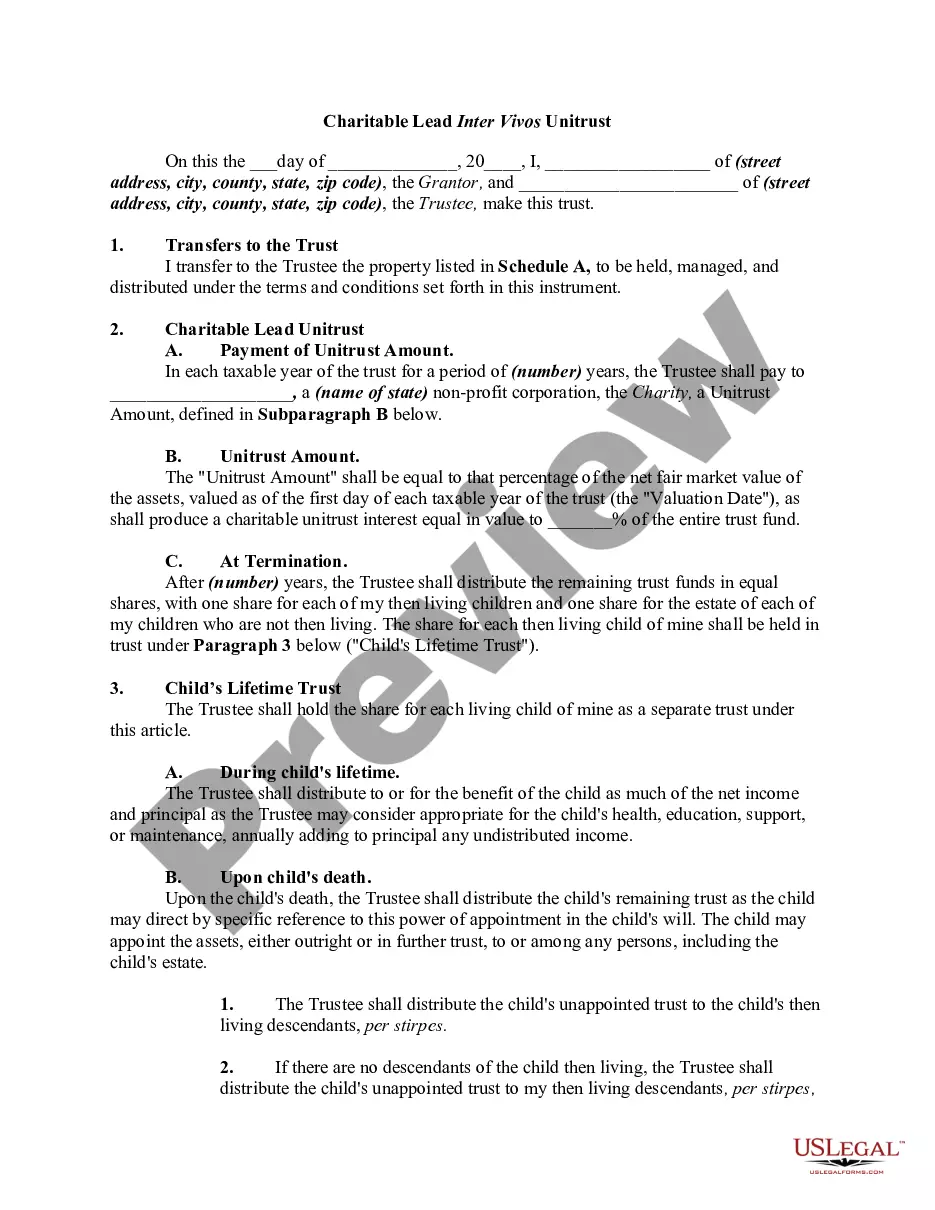
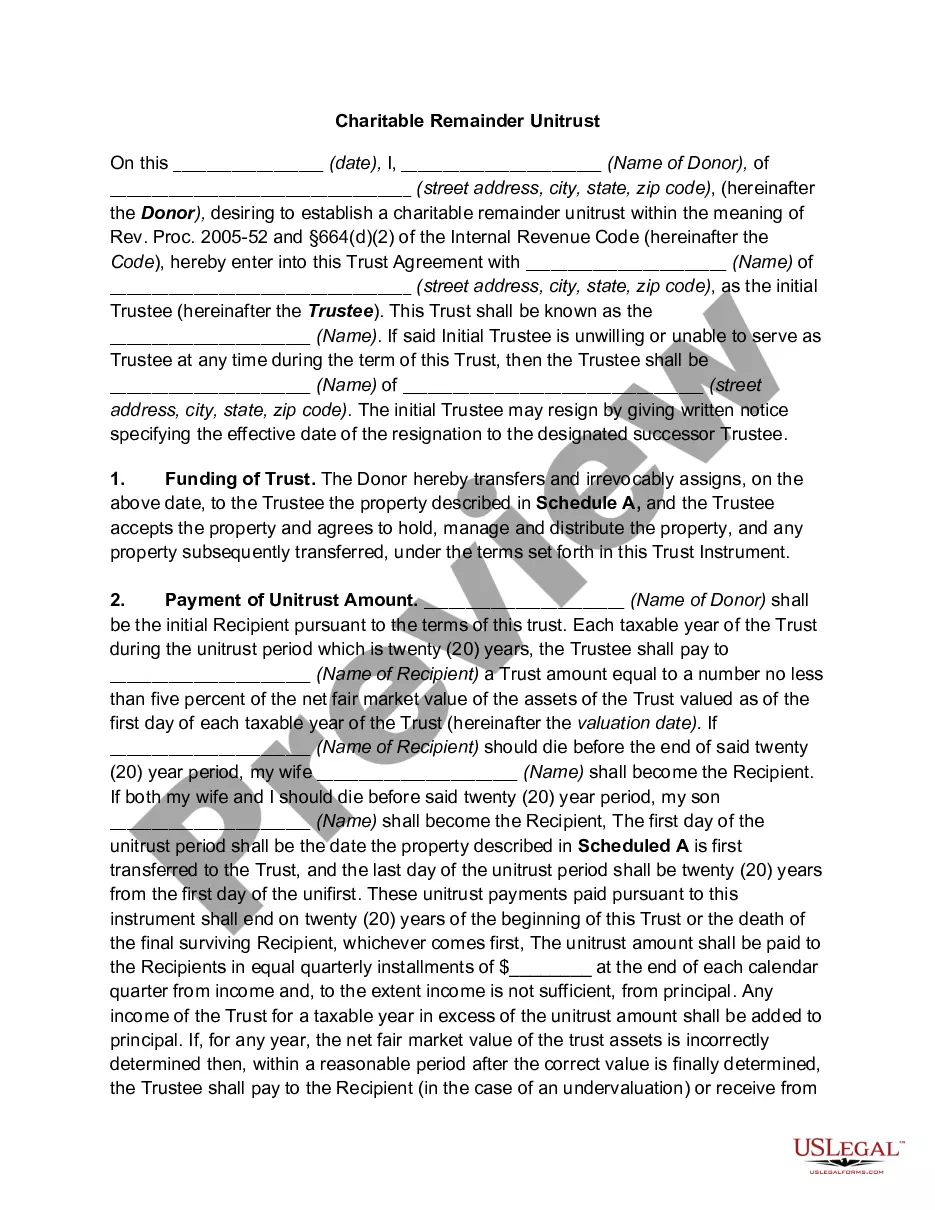
How to fill out Charitable Remainder Inter Vivos Unitrust Agreement?
- If you're a returning user, simply log in to your account and download your desired form by clicking the Download button. Ensure your subscription is active; renew it if necessary.
- For new users, begin by checking the Preview mode and form description carefully. Make sure you select the form that aligns perfectly with your legal needs and local jurisdiction guidelines.
- Should you find any discrepancies, leverage the Search tab to locate the right form. Once satisfied, you can proceed to the next step.
- Click the Buy Now button to purchase the document. You'll need to select a suitable subscription plan and create an account to access the vast library of resources.
- Complete your payment by entering your credit card information or utilizing your PayPal account to finalize the subscription.
- Download the form to your device and access it anytime from the My Forms section of your profile.
By following these straightforward steps, you can effectively acquire your Charitable Remainder Unitrust blank for a loan through US Legal Forms. This service not only hosts an extensive collection of over 85,000 legal documents but also offers access to expert assistance to ensure accuracy.
Start today to simplify your legal documentation process with US Legal Forms!
Form popularity
FAQ
As of now, Form 5227 cannot be filed electronically; it must be submitted in paper form to the IRS. Ensure you complete the form thoroughly and send it to the correct address to avoid delays. Keeping track of filing deadlines and providing the necessary documentation is crucial. For efficient form completion, visit uslegalforms, where we offer resources to simplify your filing process.
Yes, charitable remainder trusts must file a tax return annually using Form 5227. This form reports the trust's income, deductions, and distribution amounts. It's important to maintain accurate records and file on time to ensure compliance with tax regulations. If you need assistance with the filing process, our platform, uslegalforms, can provide the necessary forms and guidance.
A charitable remainder trust (CRT) is typically irrevocable, meaning it cannot be broken once established. However, if circumstances change, you may consider modifying the trust with a court's approval or creating a new trust. It's essential to consult with a legal expert to explore your options. If you face complications, using platforms like uslegalforms can help you navigate these situations.
A charitable remainder trust can be terminated early, but specific conditions must be met as outlined in the trust agreement. Typically, this process requires approval from the beneficiaries and the charitable organization involved. Engaging US Legal Forms can simplify this process by providing guidance and the necessary forms for early termination.
Exiting a charitable remainder trust can be complex, as the terms depend on the specific trust agreement. Generally, you may need to consult with a legal expert to assess any penalties or fees associated with termination. Engaging with US Legal Forms can help you navigate this process and determine the best course of action for your situation.
Setting up a charitable remainder unitrust (CRUT) involves several steps. First, consult with professionals who understand the complexities of such trusts to ensure proper setup. You will need to decide on the trust terms, including income distribution and charitable beneficiaries. Platforms like uslegalforms can provide valuable documents and resources to make the process smoother, ensuring you establish a compliant and effective CRUT.
A charitable remainder unitrust must meet specific requirements to qualify under IRS guidelines. Key requirements include having at least one charitable beneficiary and distributing a fixed percentage of the trust assets annually to the income beneficiaries. Moreover, the trust must remain operational for a certain period, often for the life of the income beneficiaries or a set term of years. These requirements ensure that the trust meets its charitable intent while benefiting the donor as well.
The rules for a charitable remainder unitrust are governed by IRS regulations, which specify how income distributions and charitable donations must be structured. For instance, the unitrust must make annual distributions that meet the minimum percentage requirement set by the IRS. Additionally, assets must be irrevocably transferred to the trust, reinforcing the commitment to charity. If you're looking for clarity on these rules, consider visiting US Legal Forms for reliable resources.