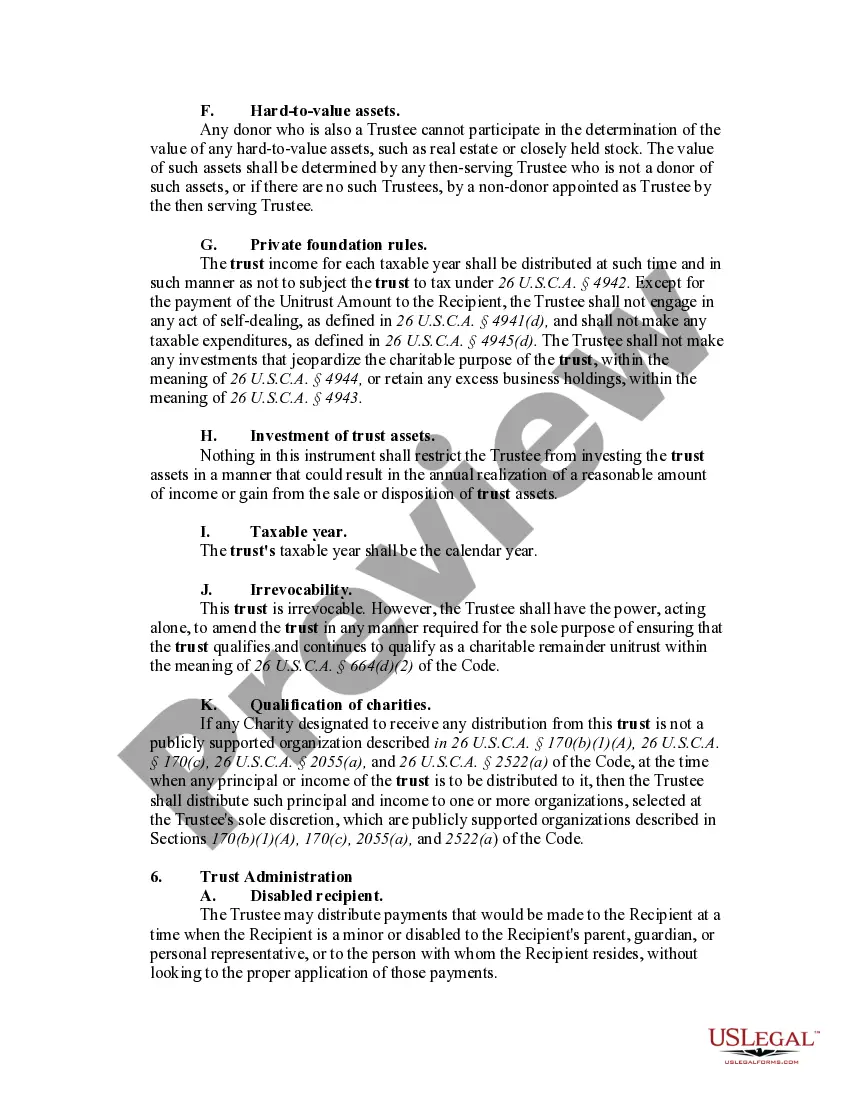
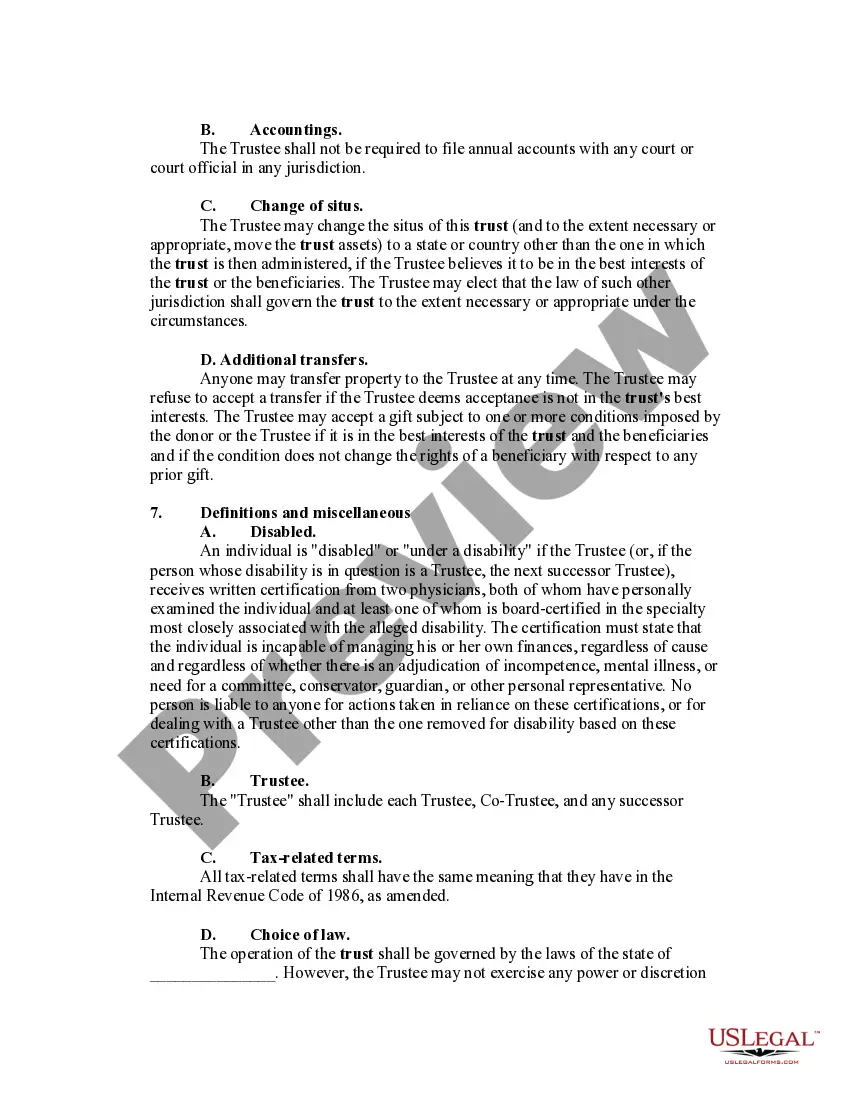
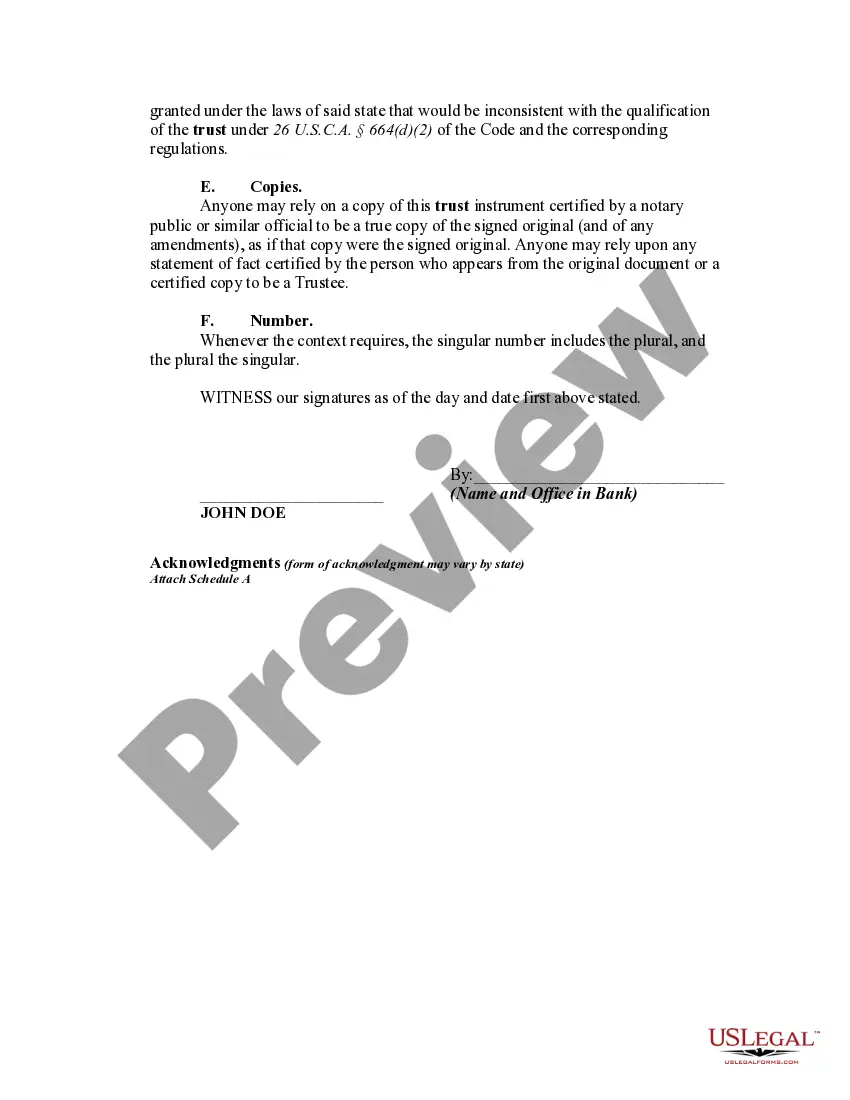
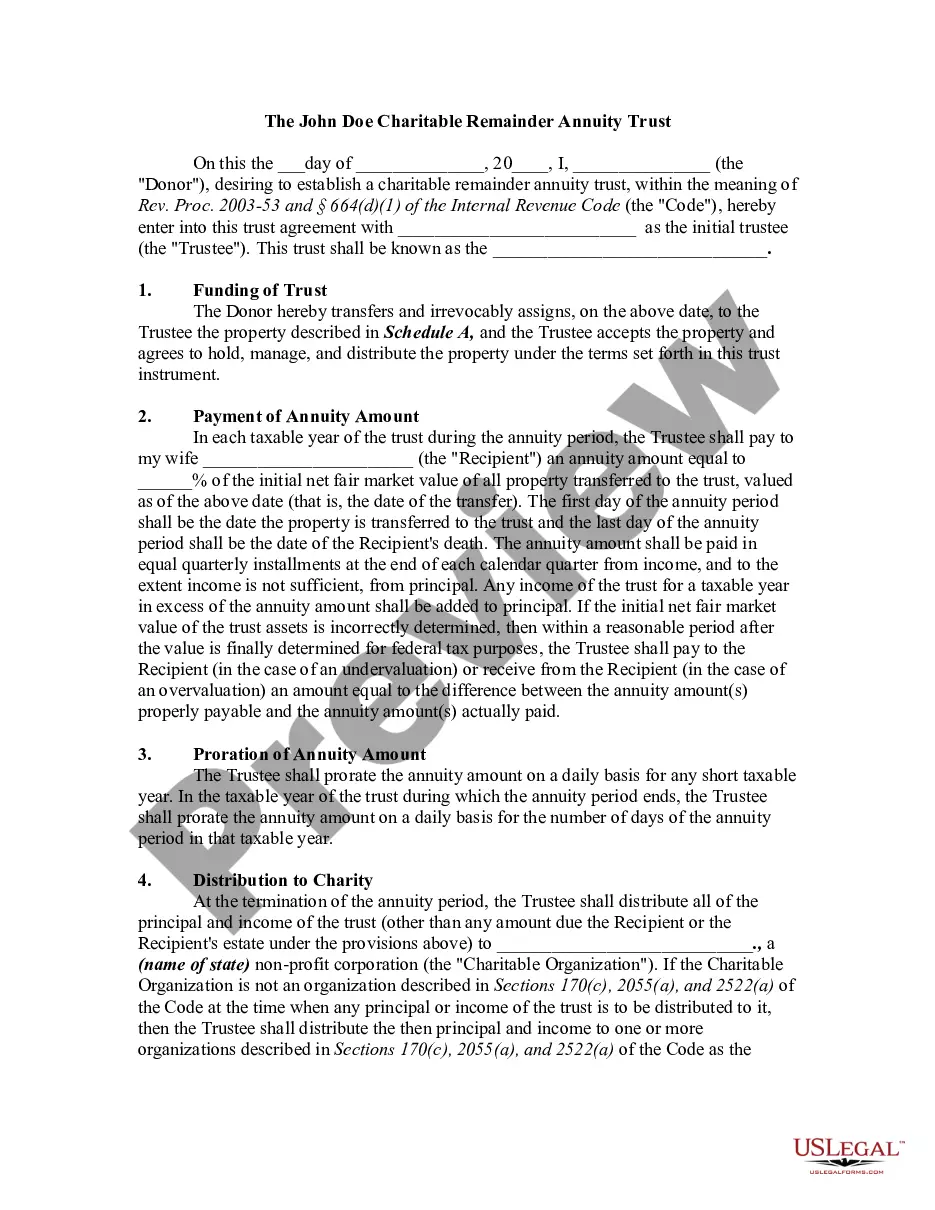
Charitable Remainder Trust With Real Estate
Description
Get your form ready online
Our built-in tools help you complete, sign, share, and store your documents in one place.
Make edits, fill in missing information, and update formatting in US Legal Forms—just like you would in MS Word.
Download a copy, print it, send it by email, or mail it via USPS—whatever works best for your next step.
Sign and collect signatures with our SignNow integration. Send to multiple recipients, set reminders, and more. Go Premium to unlock E-Sign.
If this form requires notarization, complete it online through a secure video call—no need to meet a notary in person or wait for an appointment.
We protect your documents and personal data by following strict security and privacy standards.

Make edits, fill in missing information, and update formatting in US Legal Forms—just like you would in MS Word.

Download a copy, print it, send it by email, or mail it via USPS—whatever works best for your next step.

Sign and collect signatures with our SignNow integration. Send to multiple recipients, set reminders, and more. Go Premium to unlock E-Sign.

If this form requires notarization, complete it online through a secure video call—no need to meet a notary in person or wait for an appointment.

We protect your documents and personal data by following strict security and privacy standards.
Looking for another form?








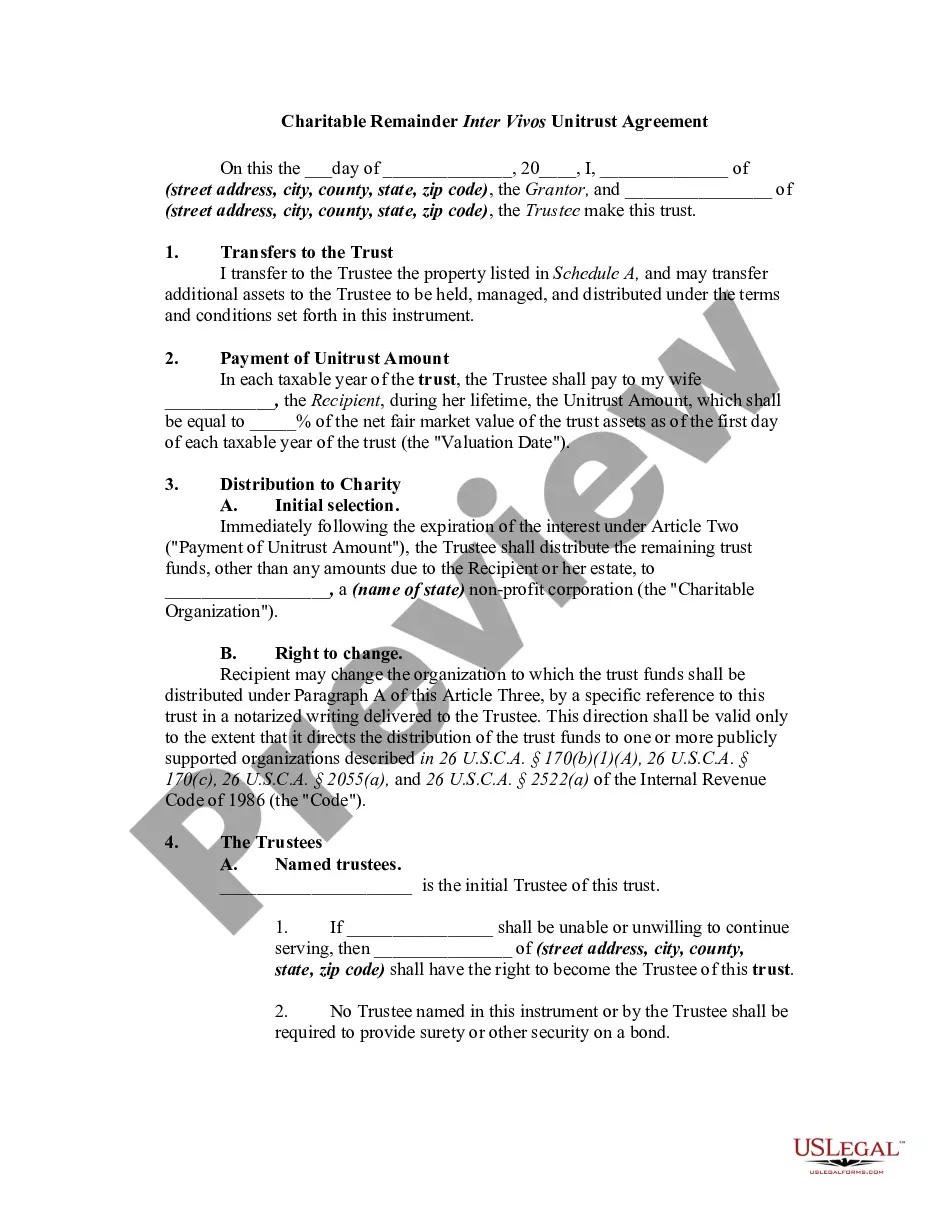
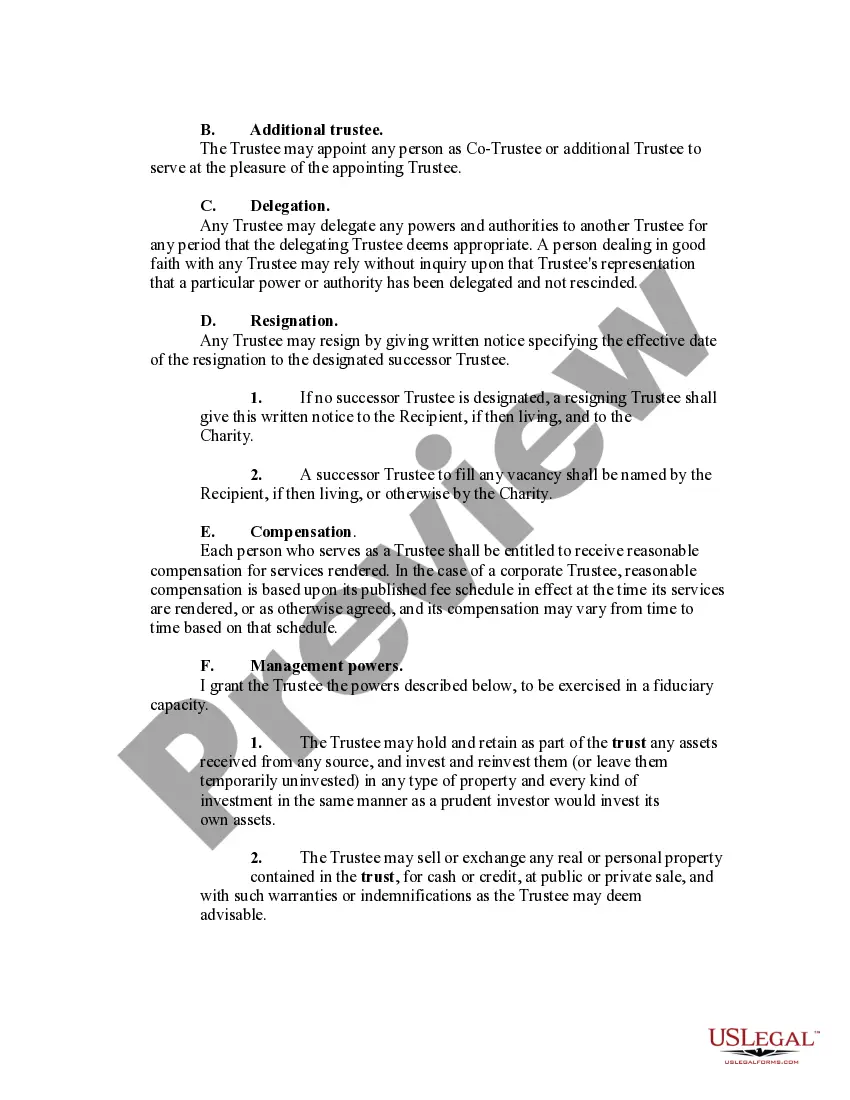
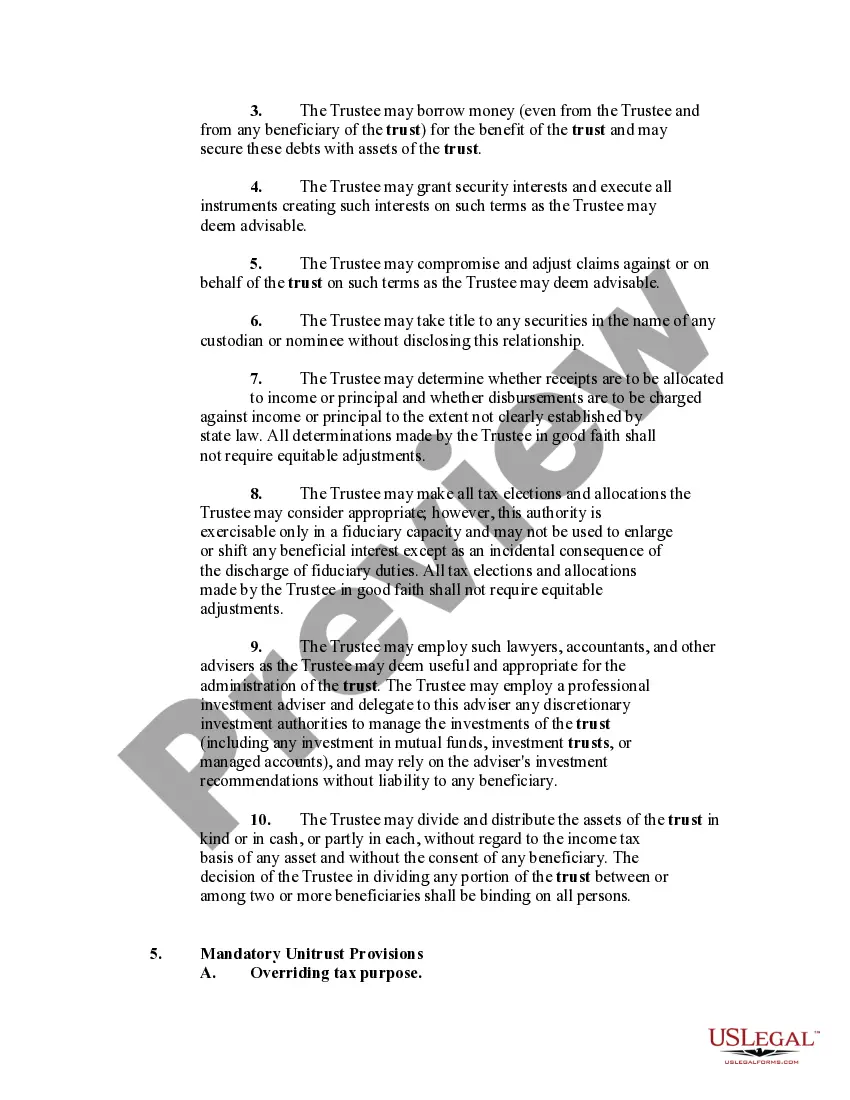
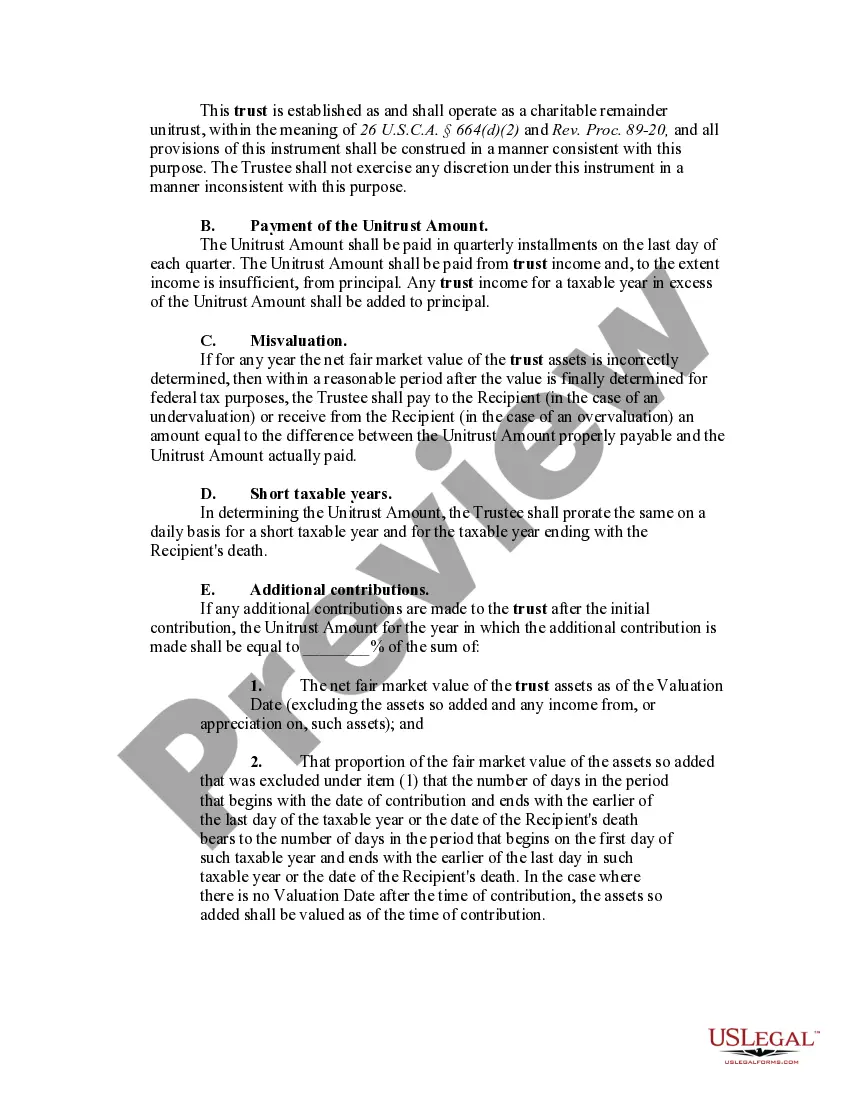
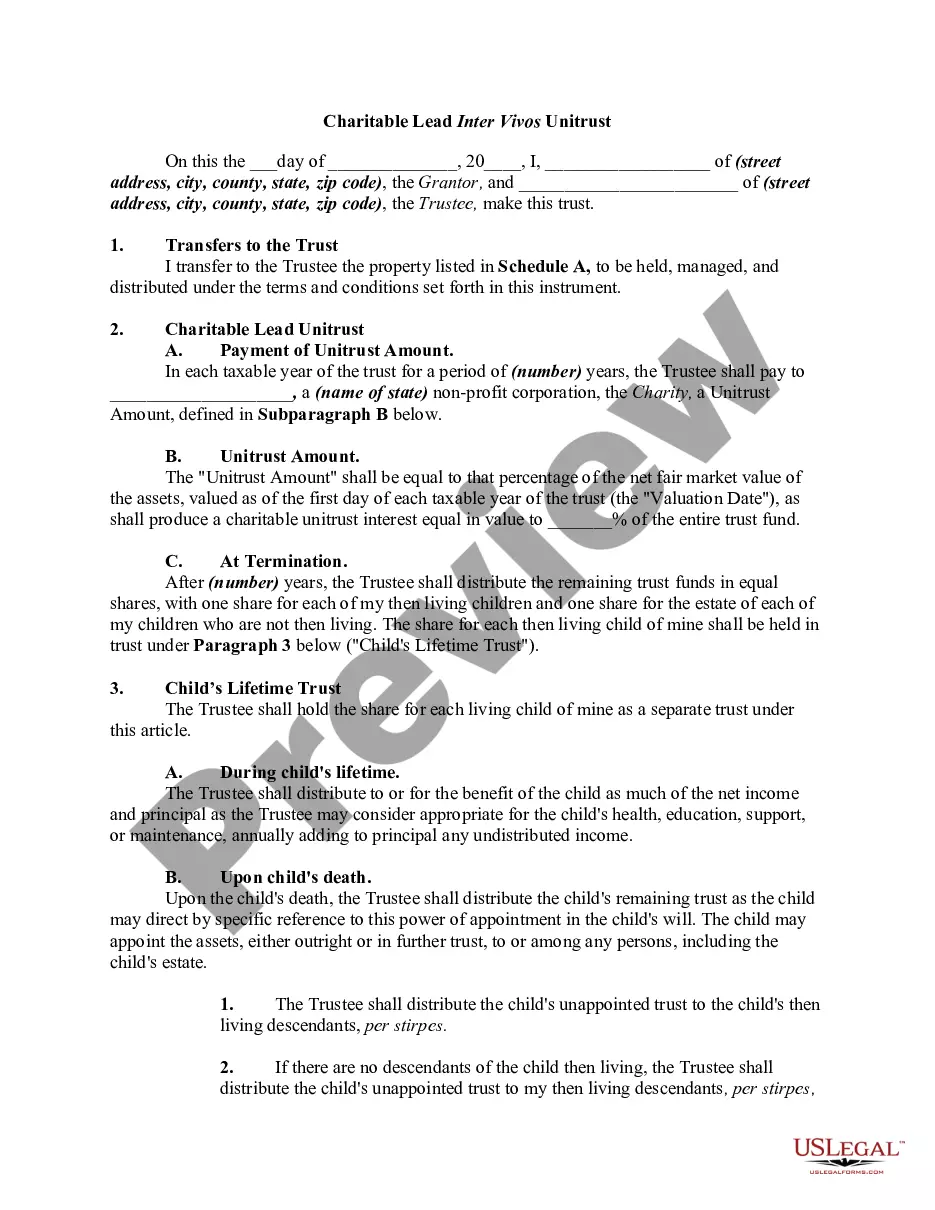
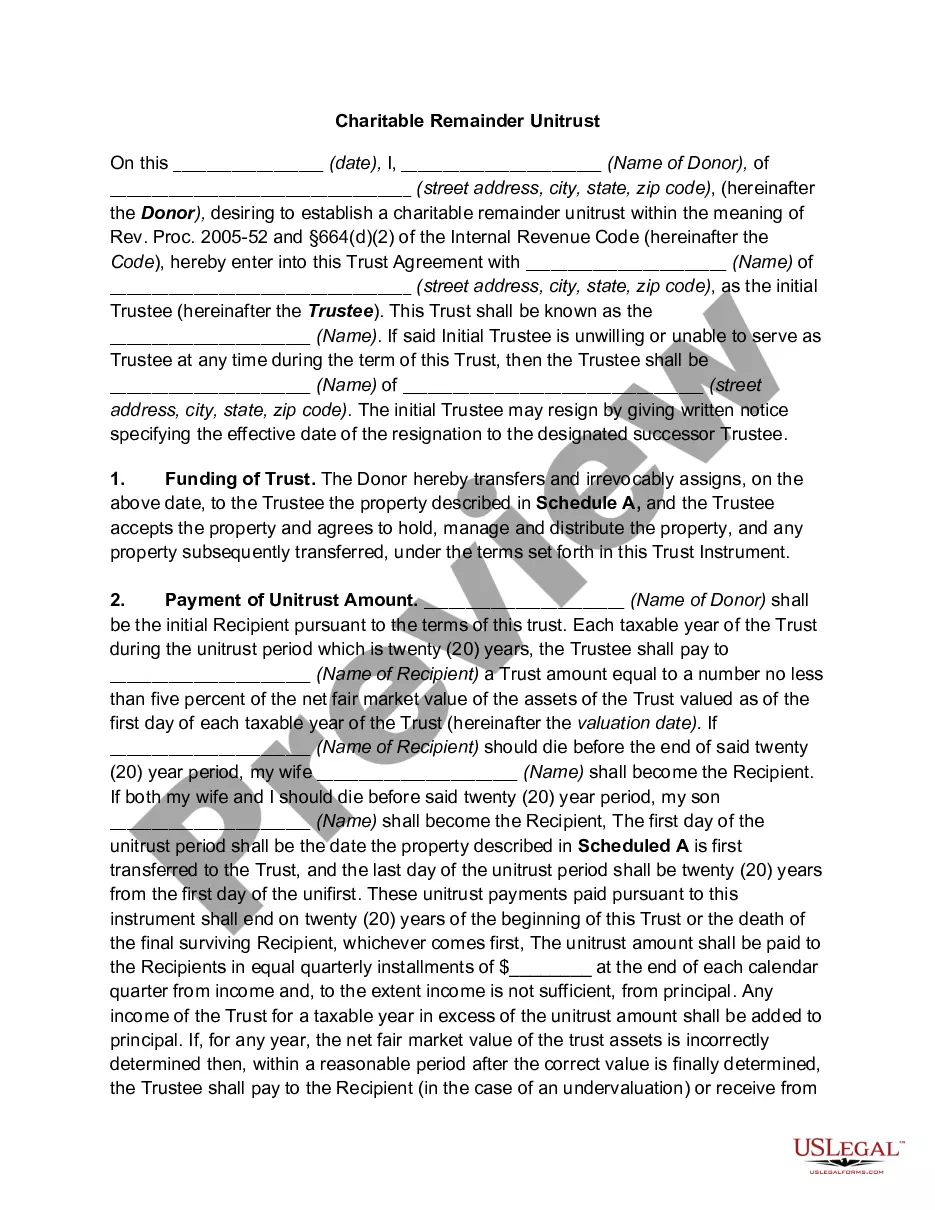
How to fill out Charitable Remainder Inter Vivos Unitrust Agreement?
- Log in to your US Legal Forms account if you're a returning user. Ensure your subscription is active; otherwise, opt to renew it based on your payment plan.
- Preview the available templates and their descriptions. Verify the one that aligns with your requirements and local jurisdiction laws.
- If adjustments are needed, utilize the search function to find a more suitable template that meets your needs.
- Proceed to purchase the document by clicking the 'Buy Now' button, selecting your preferred subscription plan, and creating an account for full access.
- Complete your purchase by entering your credit card information or using your PayPal account.
- Download the form and save it to your device for easy access. You can find it anytime in the 'My Forms' section of your profile.
By following these steps, you can easily obtain your charitable remainder trust with real estate documentation from US Legal Forms. The process is designed to be user-friendly and efficient, providing you with peace of mind during your legal transactions.
Take advantage of US Legal Forms' extensive library and expert resources today to ensure your documents are accurate and legally binding.
Form popularity
FAQ
A disqualified person in a charitable remainder trust with real estate typically includes individuals who significantly influence the trust, such as the creator of the trust or family members of the creator. This designation also covers any entity controlled by these individuals. Understanding who qualifies as a disqualified person is vital in maintaining the trust’s tax-exempt status and ensuring compliance with IRS regulations. Using the US Legal Forms platform can help clarify these definitions and guide you in creating a compliant trust.
The rules for a charitable remainder trust with real estate ensure that the trust operates within legal guidelines. The trust must distribute a fixed percentage of the trust assets each year to the beneficiaries, usually for a term of years or for the life of the beneficiaries. Also, the trust must comply with IRS regulations to maintain its tax-exempt status. By following these rules, you can benefit from potential tax deductions while supporting a charitable cause.
To establish a charitable remainder trust with real estate, you need to meet certain requirements. First, the trust must be irrevocable, meaning you cannot change or dissolve it once created. Additionally, the trust must specify a charitable organization to receive the remainder after the trust term ends. It's also essential that the trust provides for at least one non-charitable beneficiary during its term.
Donating real estate to a charity involves several steps, including identifying the property, assessing its value, and finding an appropriate charity. You can create a charitable remainder trust with real estate to facilitate this process, ensuring you get income from the property during your lifetime. Additionally, this strategy allows you to make a significant charitable contribution while enjoying tax advantages. Platforms like US Legal Forms can guide you through the necessary paperwork and legal requirements.
Yes, donating the use of property to a charity can be tax deductible, provided you meet specific requirements. When you contribute to a charitable remainder trust with real estate, you may claim a charitable deduction for the fair market value of the property. This leverage effectively reduces your taxable income while supporting a charitable cause. Always consult a tax professional when assessing the details of your donation.
The 5% rule for a charitable remainder trust ensures that the annual payout to the income beneficiary is at least 5% of the trust's initial fair market value. This rule helps maintain a steady income stream while allowing the donor to benefit from the tax advantages of a charitable remainder trust with real estate. The aim is to balance income for the beneficiary with a charity's eventual benefit. Therefore, it is essential to understand this rule when setting up a trust.
A charitable trust can indeed invest in various assets, including stocks, bonds, and real estate. These investments can potentially yield income that supports the trust's charitable activities. With thoughtful investment strategies, a charitable trust can maximize its resources for philanthropic purposes. If you're unsure how to proceed, US Legal Forms offers resources to assist in establishing and managing your charitable trust effectively.
Yes, a charitable foundation can own real estate as part of its assets. This allows the foundation to generate income from property rentals or appreciation, which can further support its charitable missions. Including real estate in a charitable foundation's portfolio can enhance its financial stability. If you need help with structuring such an arrangement, consider consulting with US Legal Forms for comprehensive solutions.
Indeed, a charitable remainder trust can own real estate, and this ownership can provide substantial advantages. By dedicating real estate to the trust, you can enjoy income generated from the property while ultimately contributing to a charitable cause. Managing real estate within a charitable remainder trust can allow you to balance your financial goals and philanthropic desires. For more assistance, check out US Legal Forms to set up your trust properly.
Absolutely, many types of trusts can invest in real estate, including a Charitable Remainder Trust (CRT). Investing in real estate can help diversify the trust's portfolio and potentially increase its value over time. This strategy allows you to fulfill your charitable aspirations while also growing the trust's assets. Utilizing resources like US Legal Forms can help you navigate the complex process of trust investments.