Charitable Remainder Trust Information With Life Insurance
Description
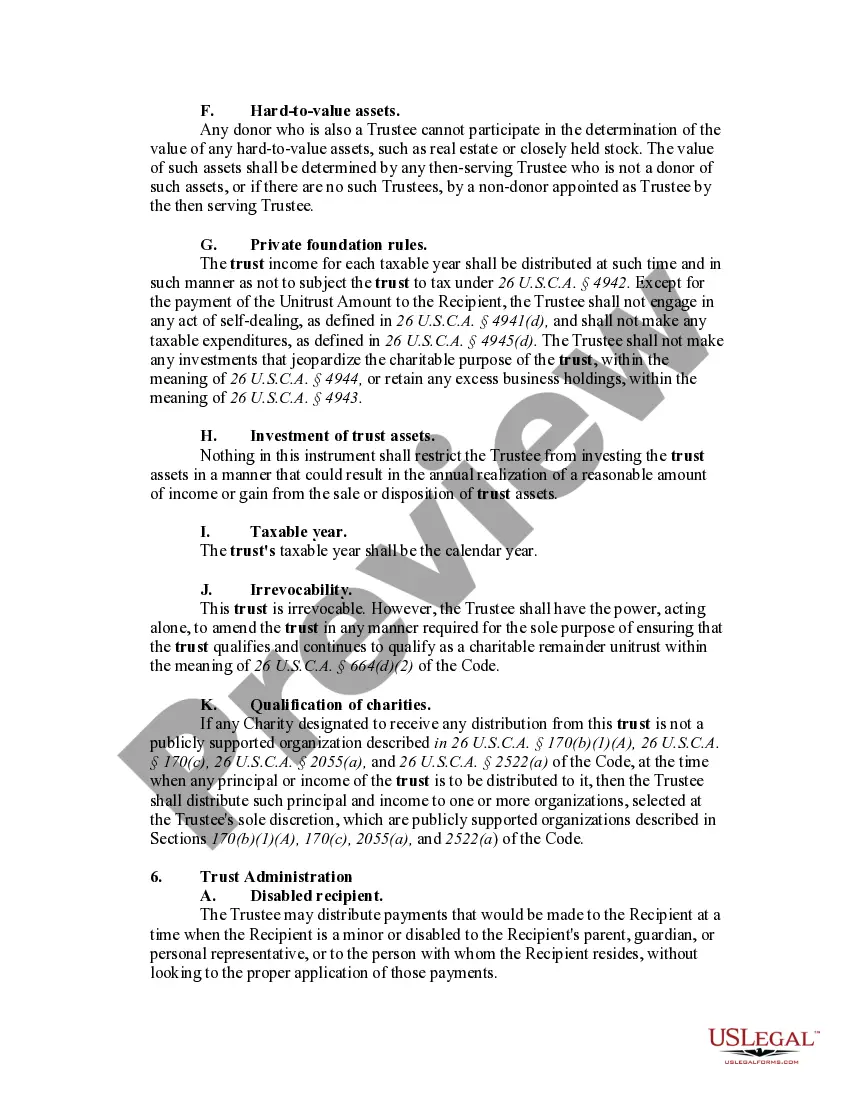
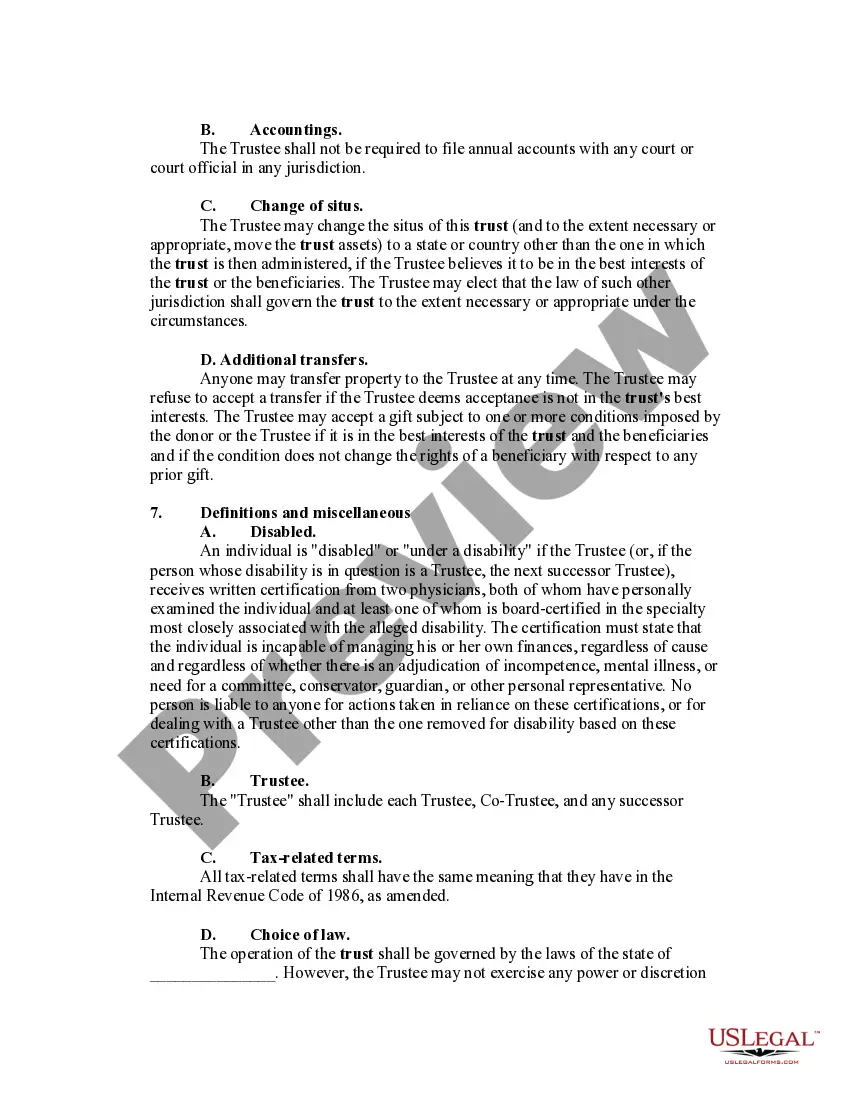
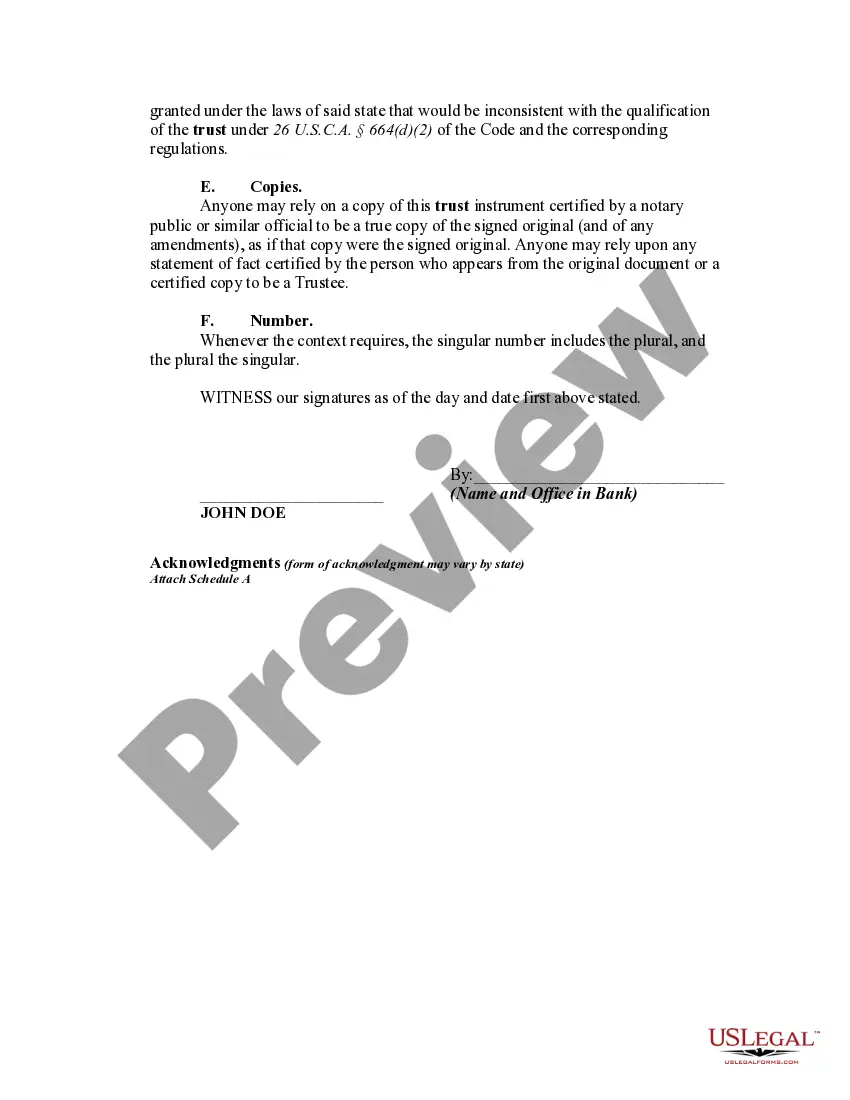
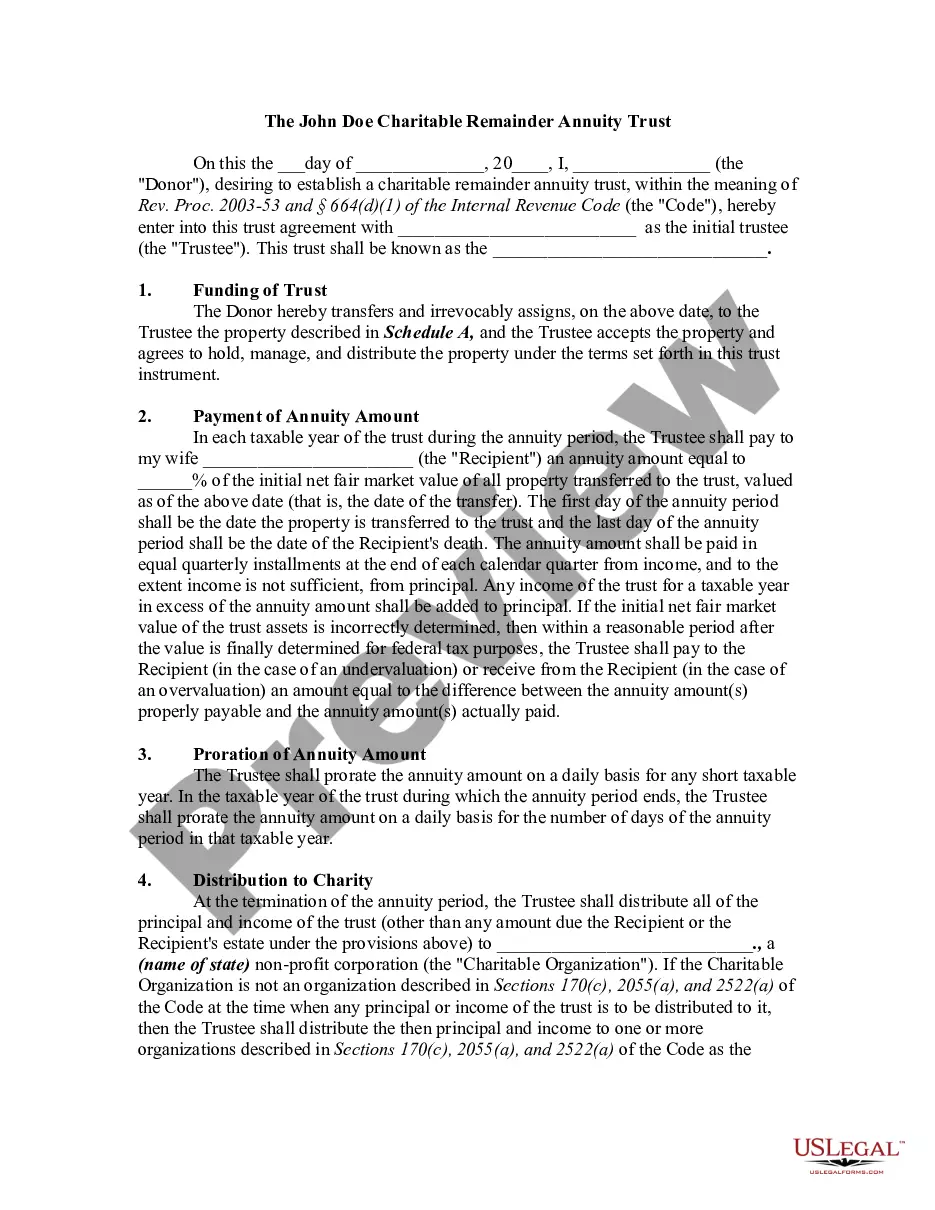
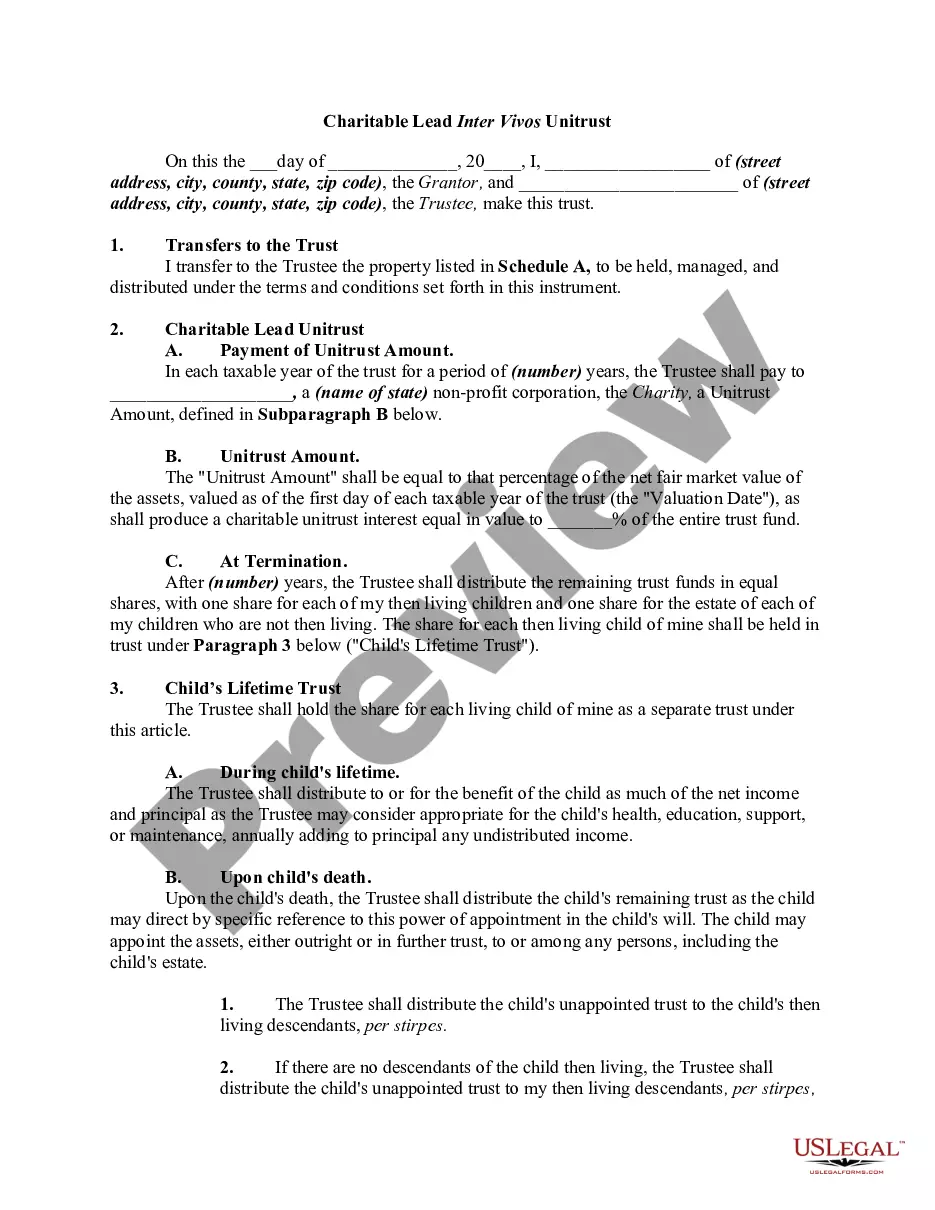
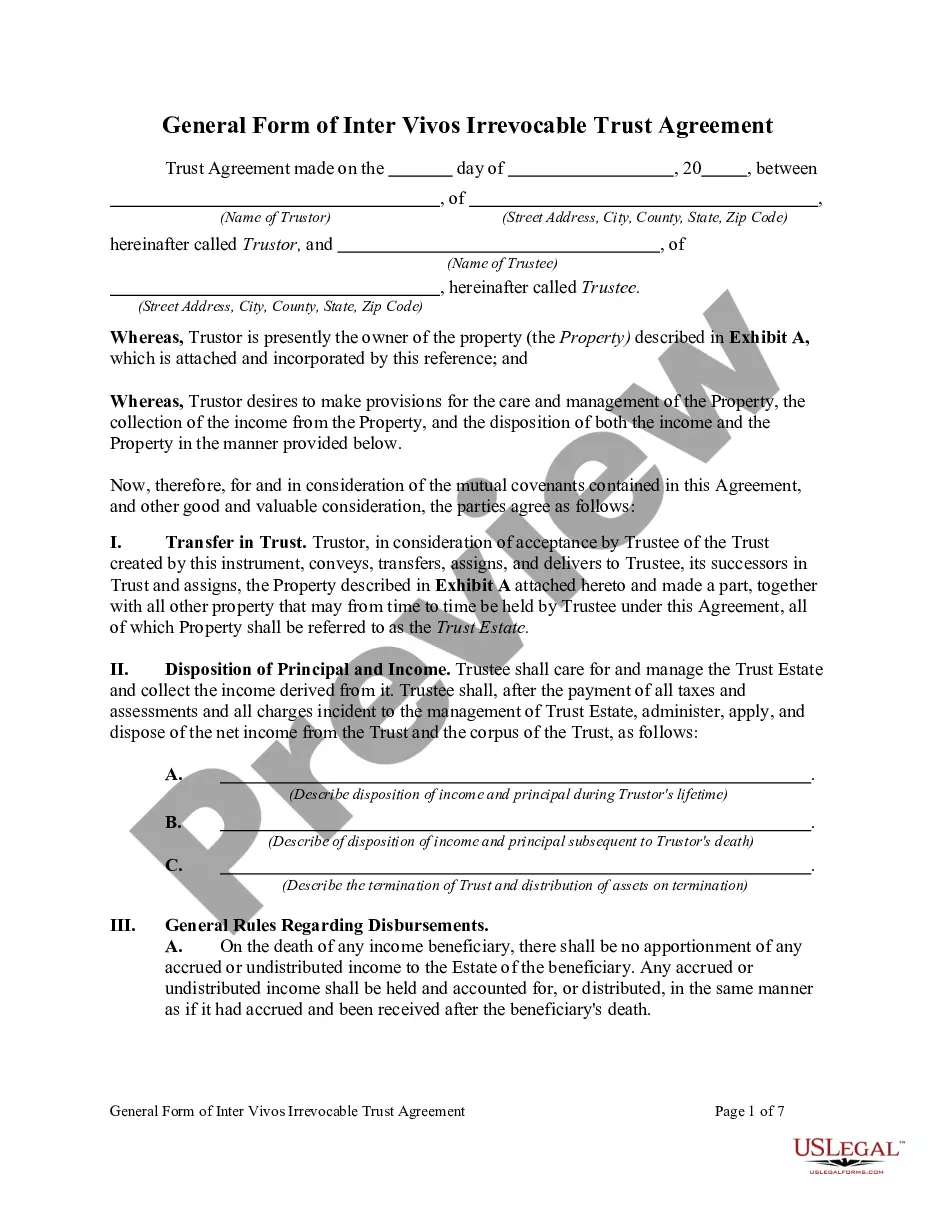
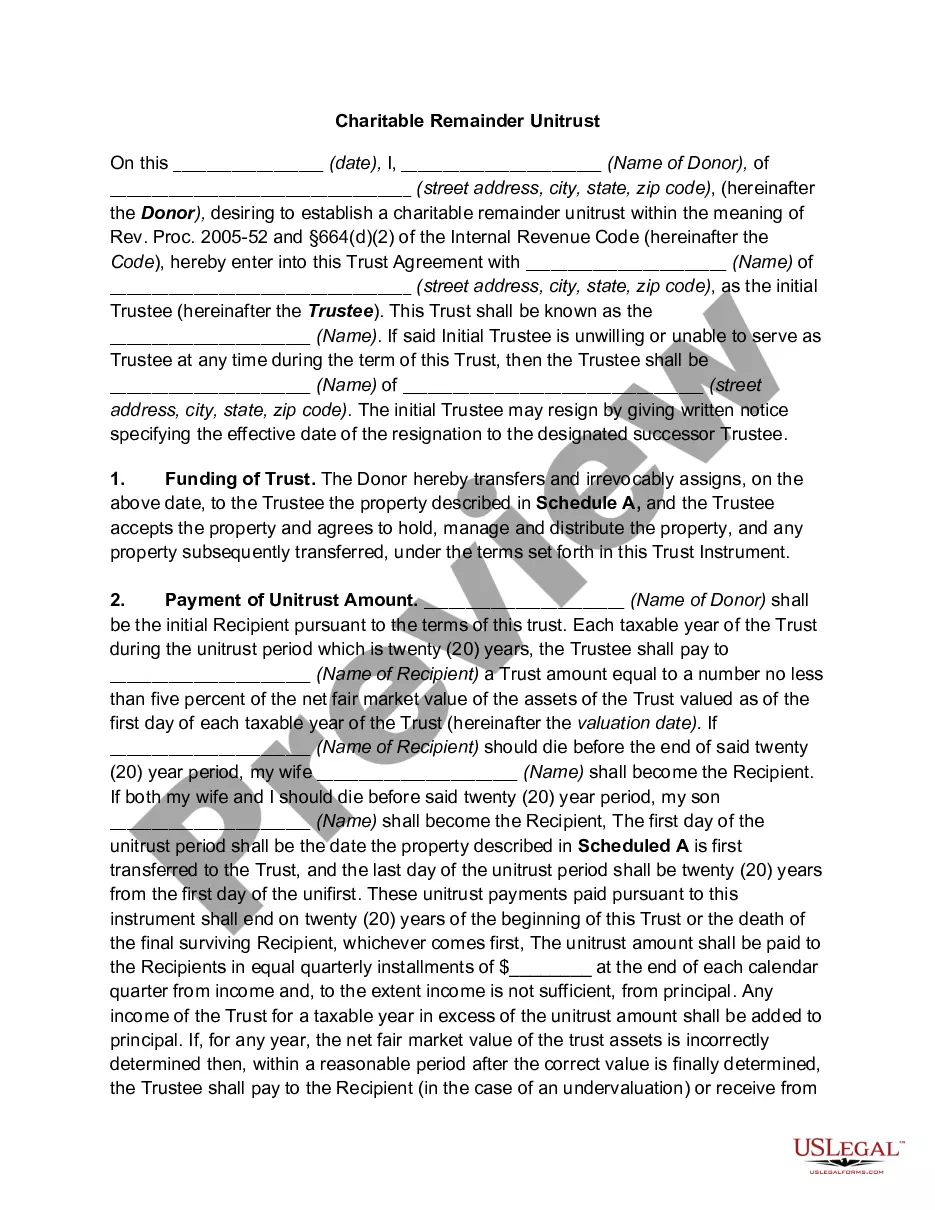
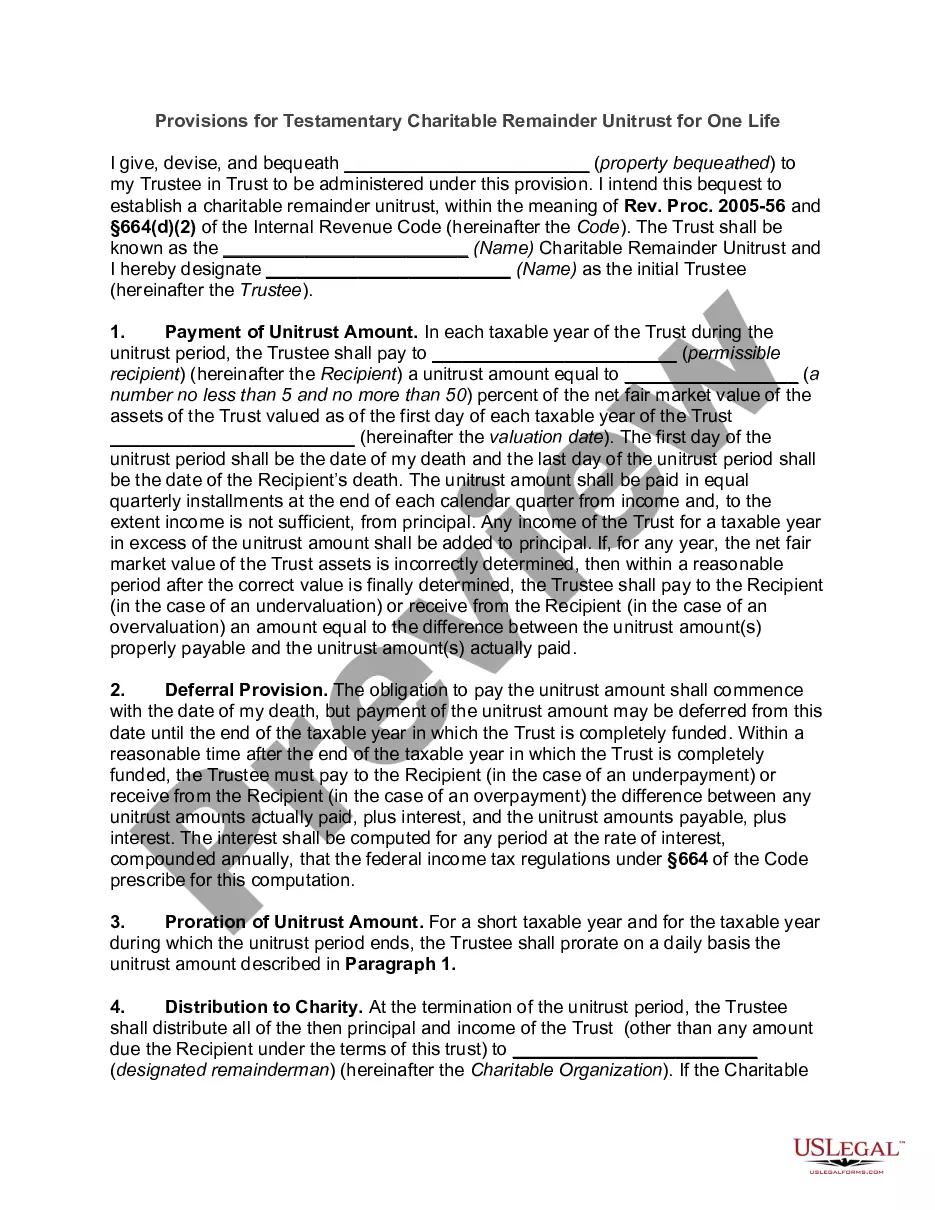
Get your form ready online
Our built-in tools help you complete, sign, share, and store your documents in one place.
Make edits, fill in missing information, and update formatting in US Legal Forms—just like you would in MS Word.
Download a copy, print it, send it by email, or mail it via USPS—whatever works best for your next step.
Sign and collect signatures with our SignNow integration. Send to multiple recipients, set reminders, and more. Go Premium to unlock E-Sign.
If this form requires notarization, complete it online through a secure video call—no need to meet a notary in person or wait for an appointment.
We protect your documents and personal data by following strict security and privacy standards.

Make edits, fill in missing information, and update formatting in US Legal Forms—just like you would in MS Word.

Download a copy, print it, send it by email, or mail it via USPS—whatever works best for your next step.

Sign and collect signatures with our SignNow integration. Send to multiple recipients, set reminders, and more. Go Premium to unlock E-Sign.

If this form requires notarization, complete it online through a secure video call—no need to meet a notary in person or wait for an appointment.

We protect your documents and personal data by following strict security and privacy standards.
Looking for another form?




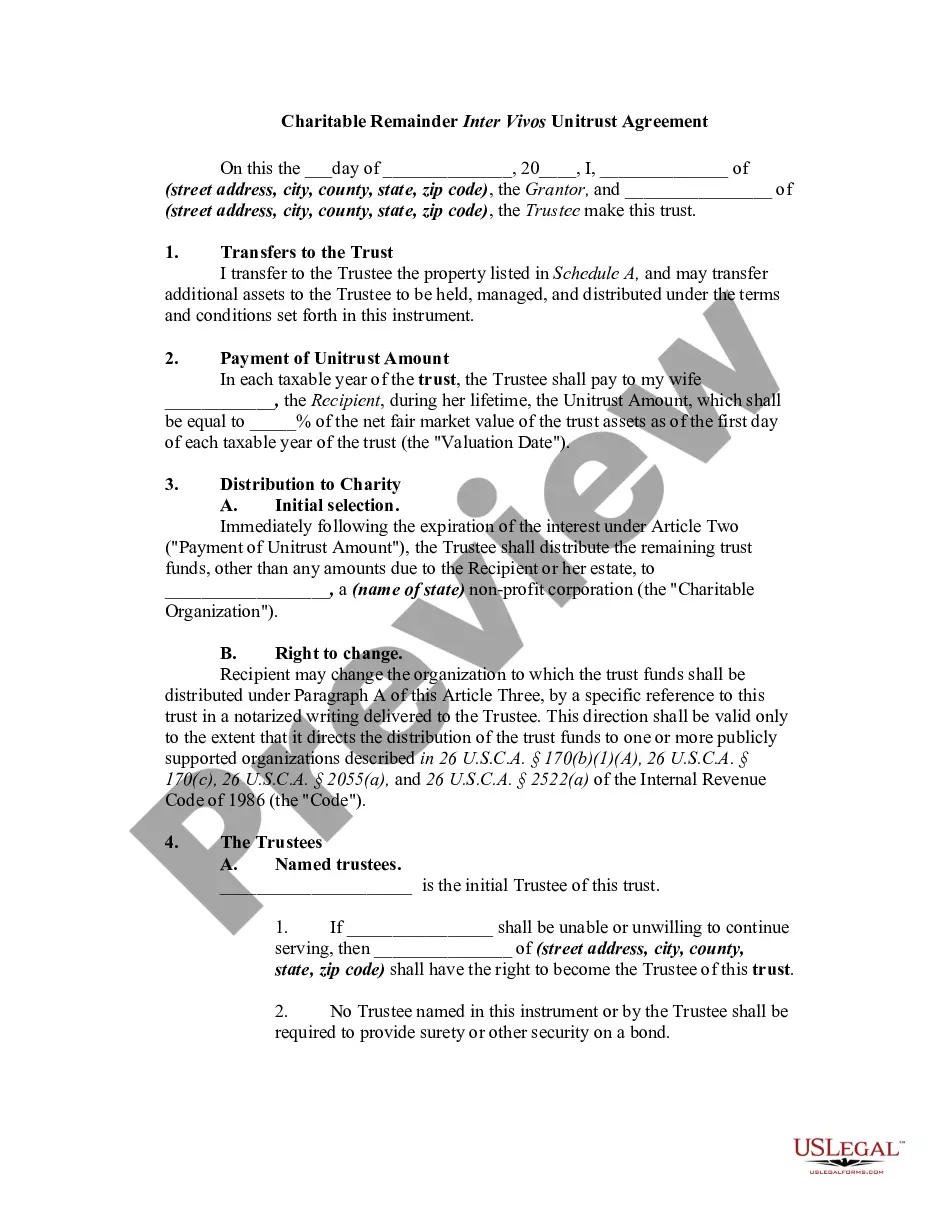
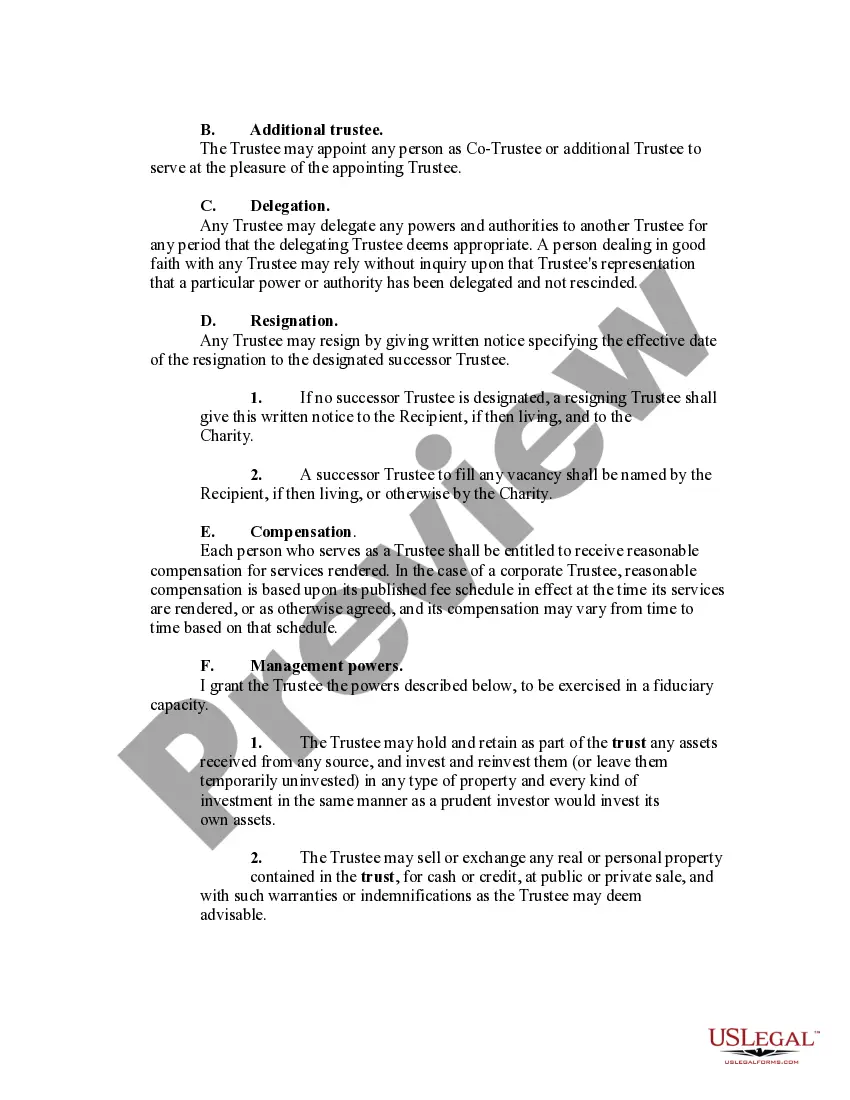
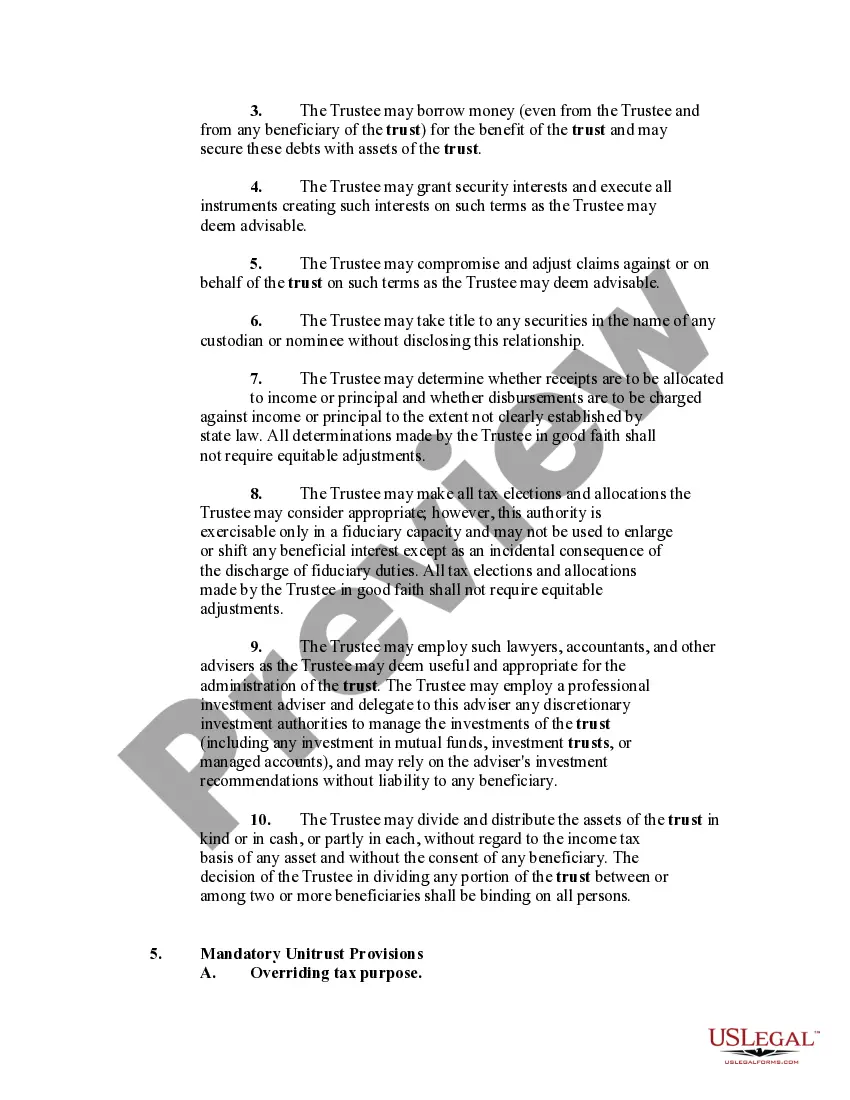
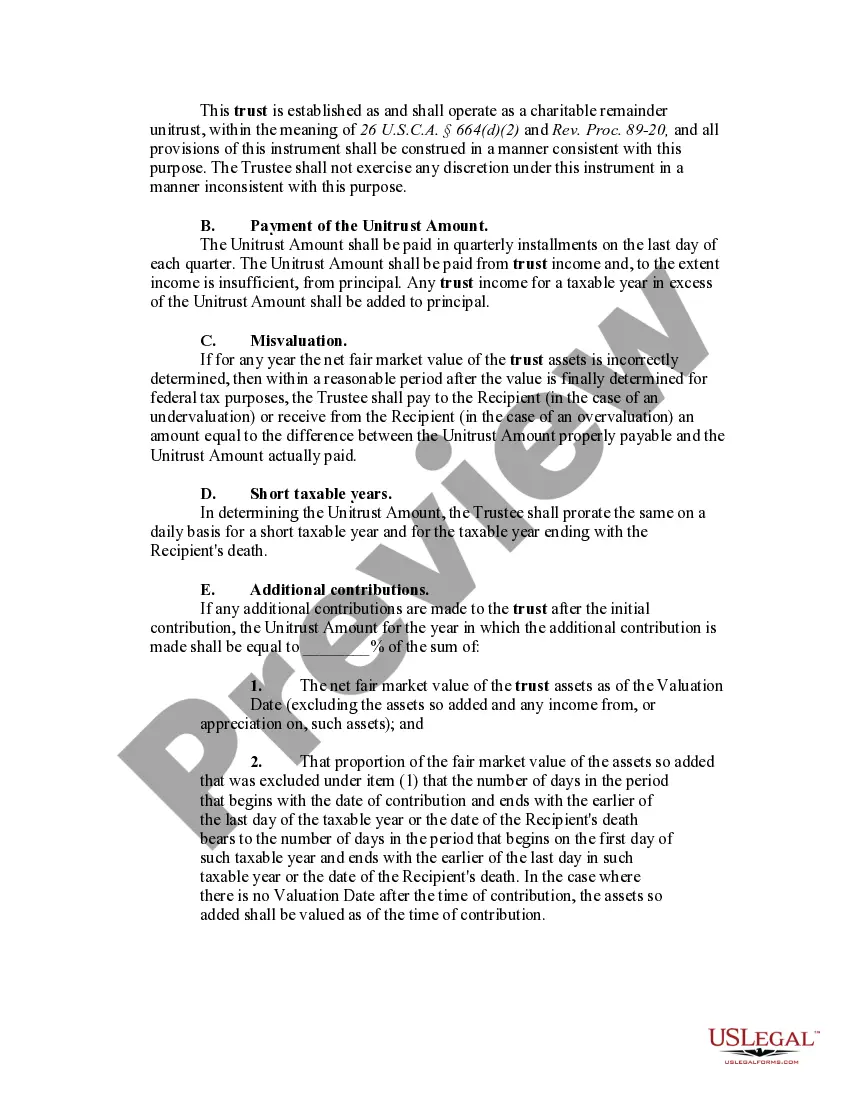
How to fill out Charitable Remainder Inter Vivos Unitrust Agreement?
Whether for corporate purposes or personal matters, everyone must confront legal scenarios at some point in their life.
Filling out legal paperwork requires meticulous attention, starting with choosing the correct form sample. For example, if you select an incorrect version of the Charitable Remainder Trust Information With Life Insurance, it will be rejected upon submission.
With an extensive catalog from US Legal Forms available, you no longer need to waste time hunting for the proper sample on the internet. Use the library’s straightforward navigation to find the suitable template for any occasion.
- Locate the sample you require using the search bar or catalog navigation.
- Review the form’s details to ensure it corresponds with your case, state, and county.
- Click on the form’s preview to view it.
- If it is the wrong document, return to the search function to find the Charitable Remainder Trust Information With Life Insurance sample you need.
- Obtain the template if it aligns with your needs.
- If you already possess a US Legal Forms account, simply click Log in to access previously saved templates in My documents.
- In case you do not have an account yet, you can acquire the form by clicking Buy now.
- Choose the appropriate pricing option.
- Complete the account registration form.
- Choose your payment method: either a credit card or PayPal account.
- Select the file format you desire and download the Charitable Remainder Trust Information With Life Insurance.
- Once downloaded, you can fill out the form using editing applications or print it out to complete it by hand.
Form popularity
FAQ
When a charitable remainder unitrust (CRUT) beneficiary passes away, the trust assets will typically continue to generate income for any remaining beneficiaries. After all beneficiaries have received their payments, the remaining assets are distributed to chosen charities. It's important to plan for this outcome and understand how life insurance might complement your estate plan.
The 5% rule in charitable remainder trusts (CRTs) refers to the requirement that the annual payout to the income beneficiaries must be at least 5% of the trust's assets. This rule ensures that beneficiaries receive fair compensation while also providing the charity with a viable future benefit. It's crucial to follow this guideline when drafting CRTs, as it affects both tax implications and the overall effectiveness of the charitable strategy.
How to Set up a Charitable Remainder Trust Create a Charitable Remainder Trust. Check with the IRS that the charity you want to benefit is approved. Transfer assets into the Trust. Name the charity as Trustee. Create a provision that states who the lead beneficiary is - remember, this can be yourself or someone else.
The donor uses the annual income from the CRT to make gifts to the ILIT to pay the insurance premiums. At the owner's death, the selected charity receives the remainder amount in the CRT, and the ILIT receives the policy death benefits. The trustee distributes policy proceeds to the donor's heirs.
You can name your donor-advised fund account as the beneficiary of an irrevocable Charitable Remainder Trust, so instead of being constrained by a limited number of charities identified in the trust document, the trust's assets can fund a multi-generational giving vehicle with considerable flexibility.
Naming the AEF DAF as the remainder beneficiary provides great flexibility to the donor and advisor in case the advisor or donor changes wealth management firms at some point. The donor can also use the DAF as the vehicle for their lifetime charitable giving by funding it through distributions from their CRT.
How a Charitable Remainder Unitrust (CRUT) Works. The donor also sets up a specified time in the future for the remainder of the trust's value to be donated to a chosen charity. If the last beneficiary dies before that date, the trust is terminated, and its value is donated to the charity.