Charitable Remainder Trust Document For Dummies
Description

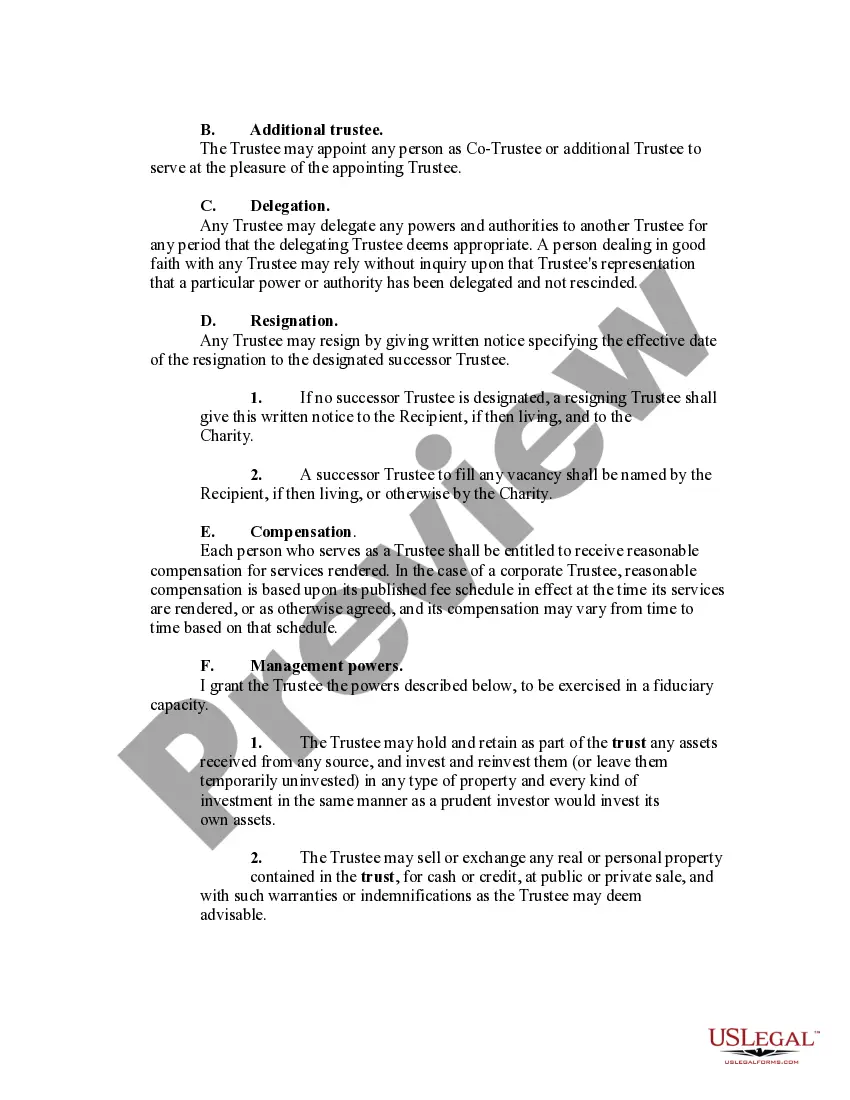
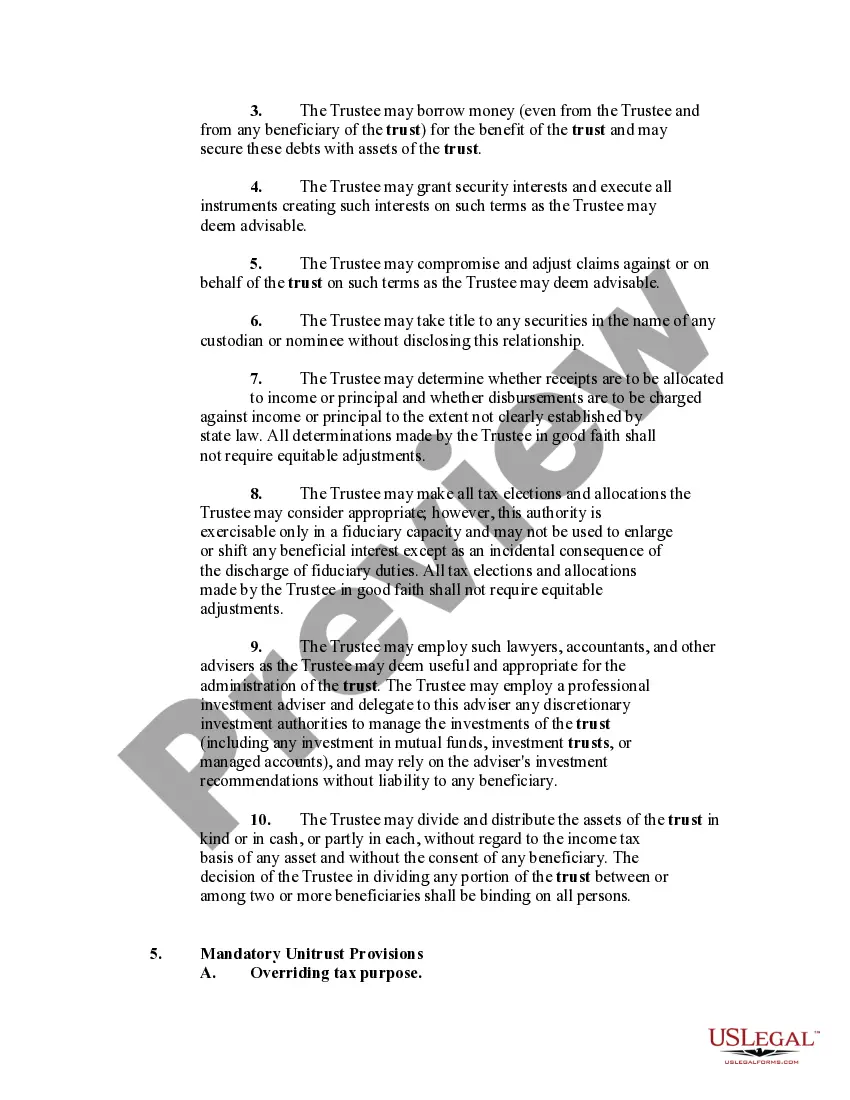
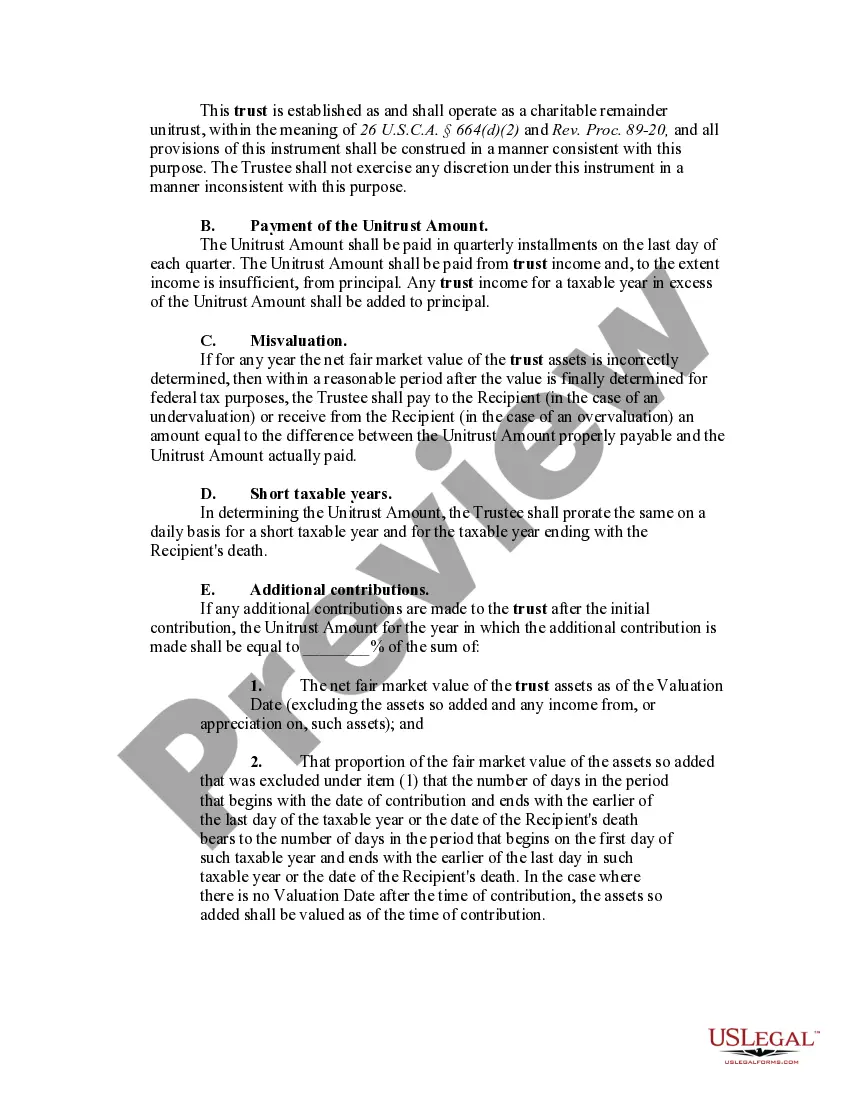
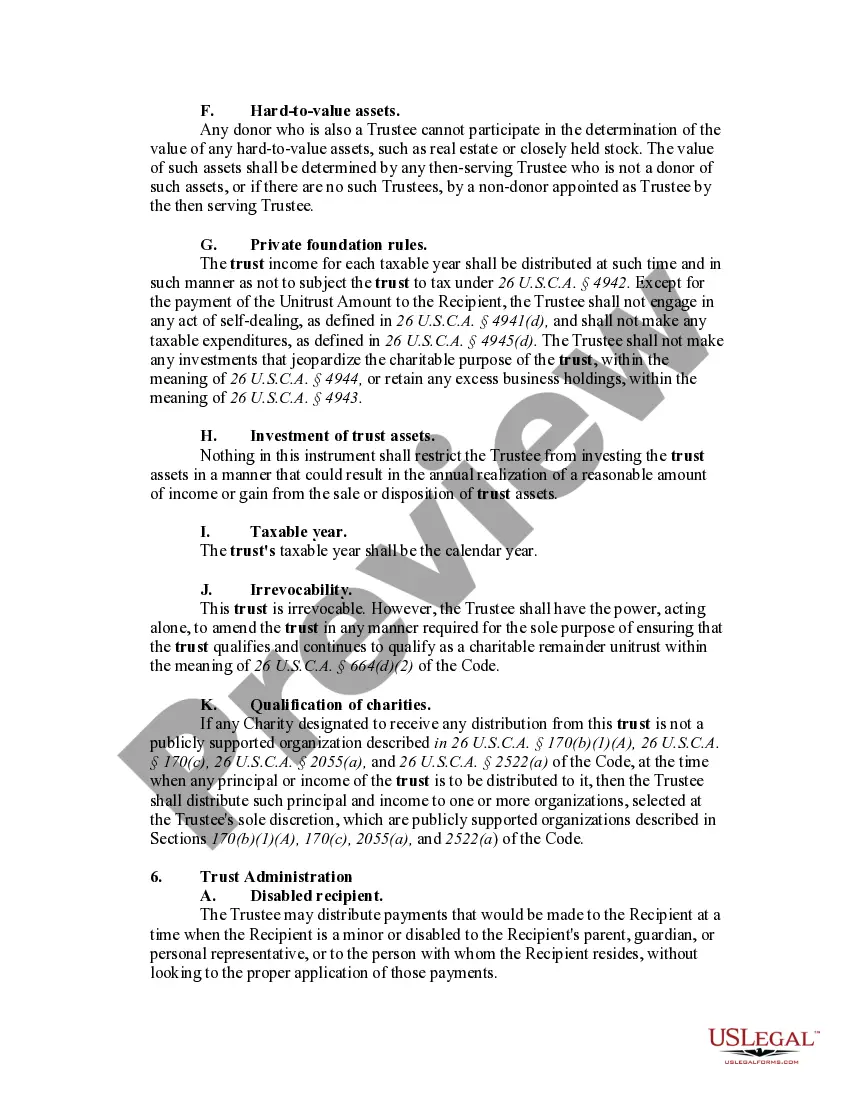
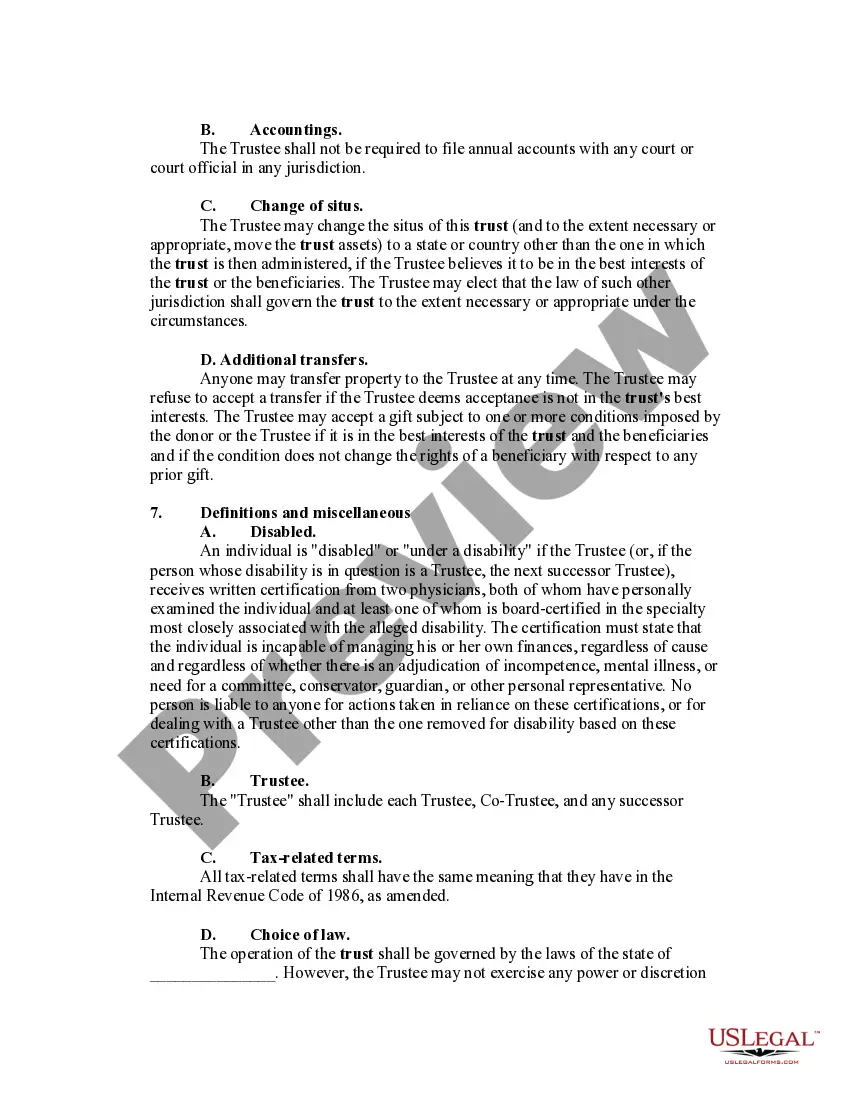
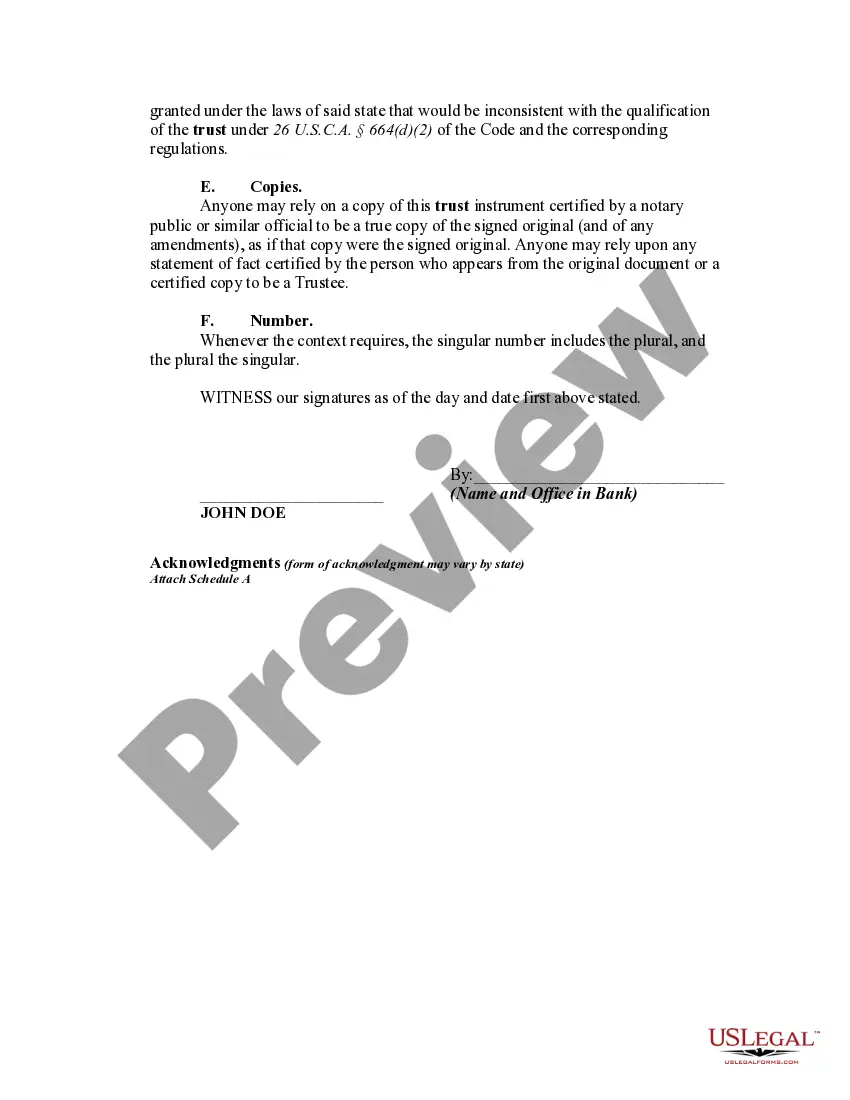
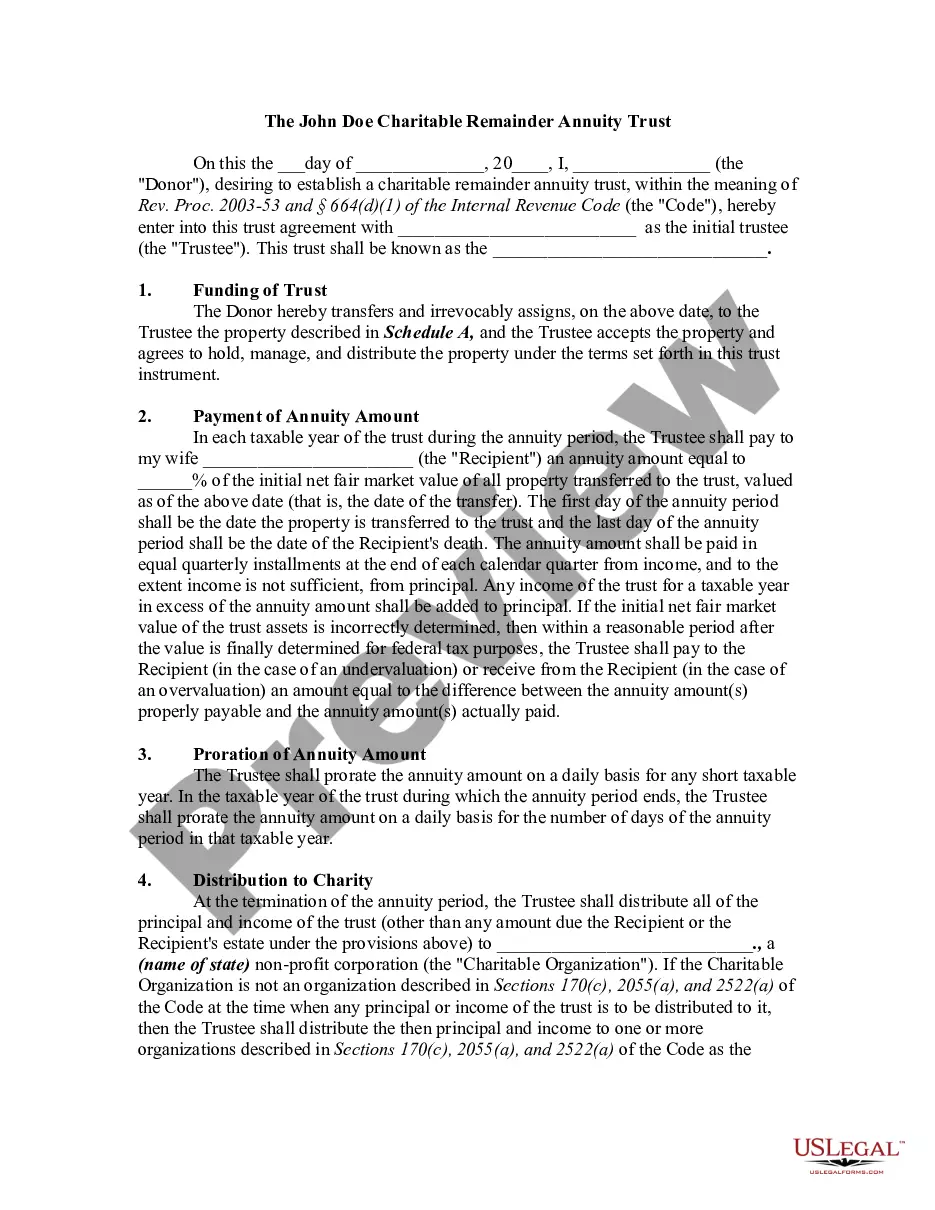
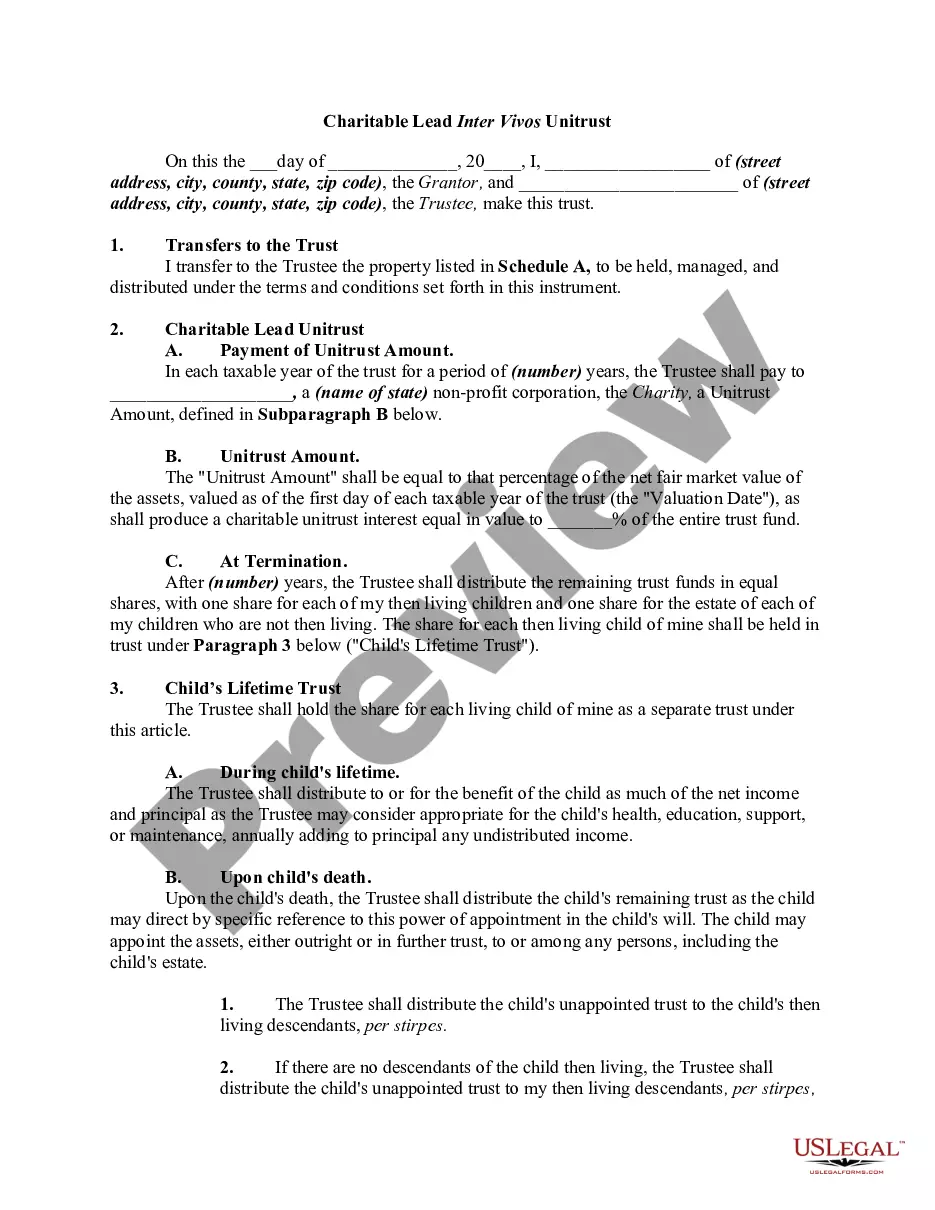
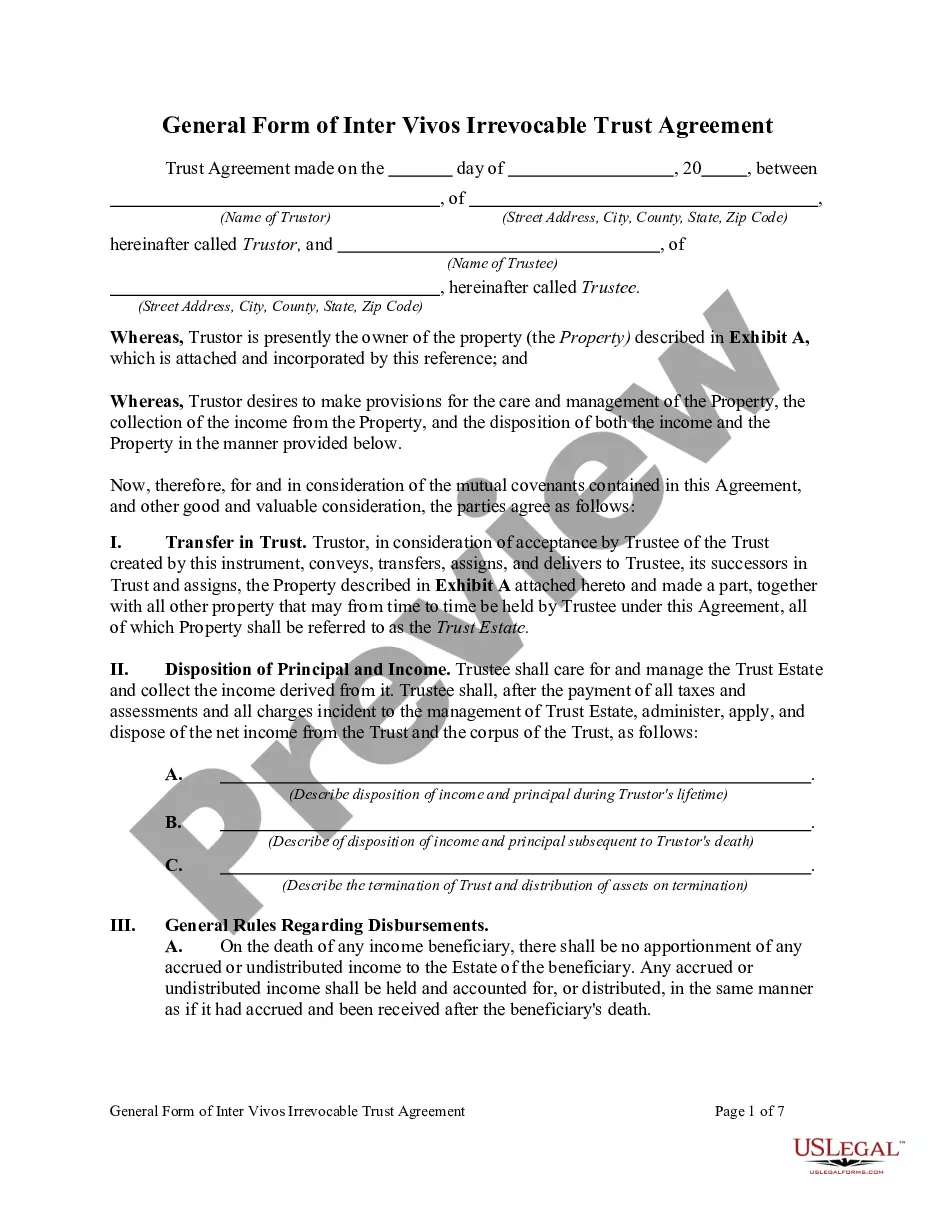
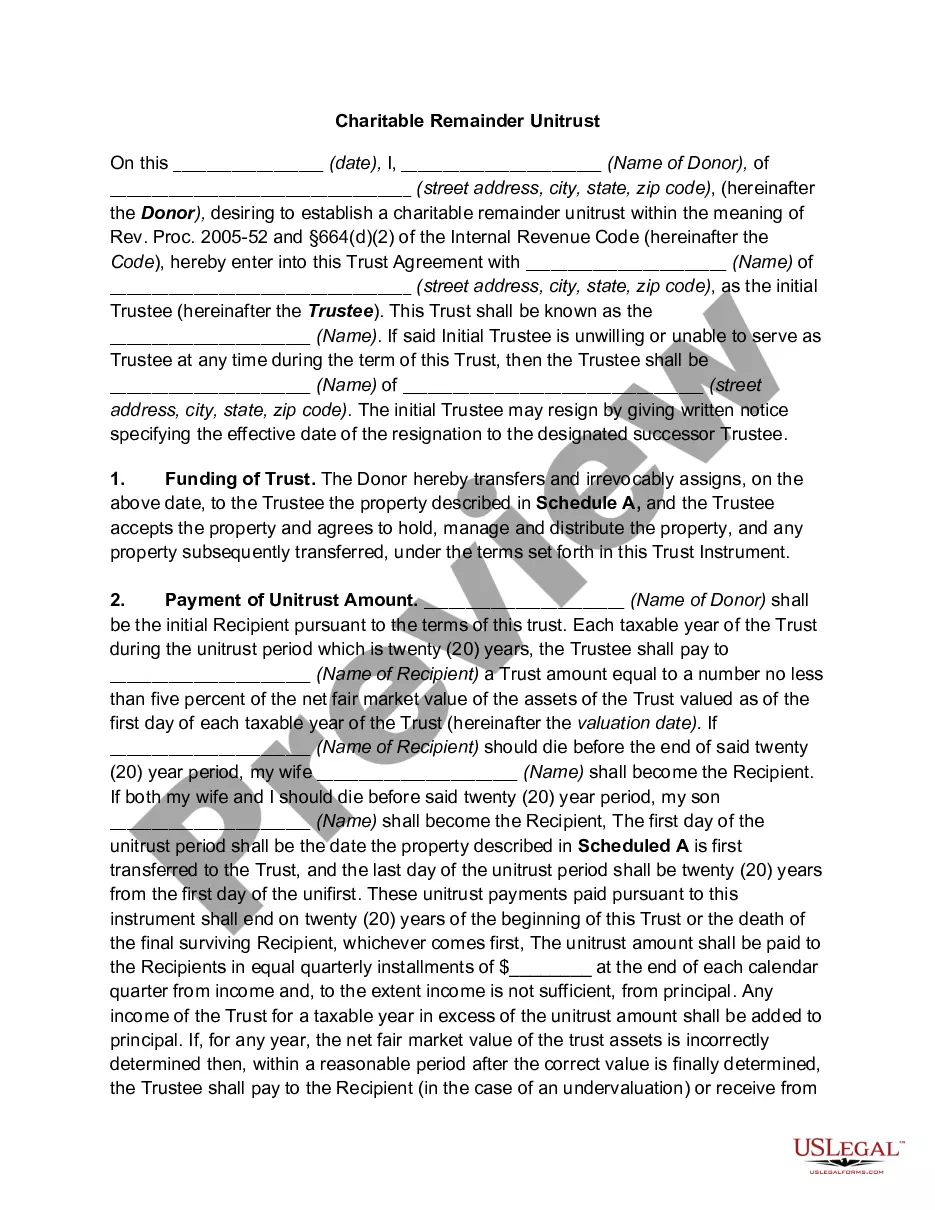
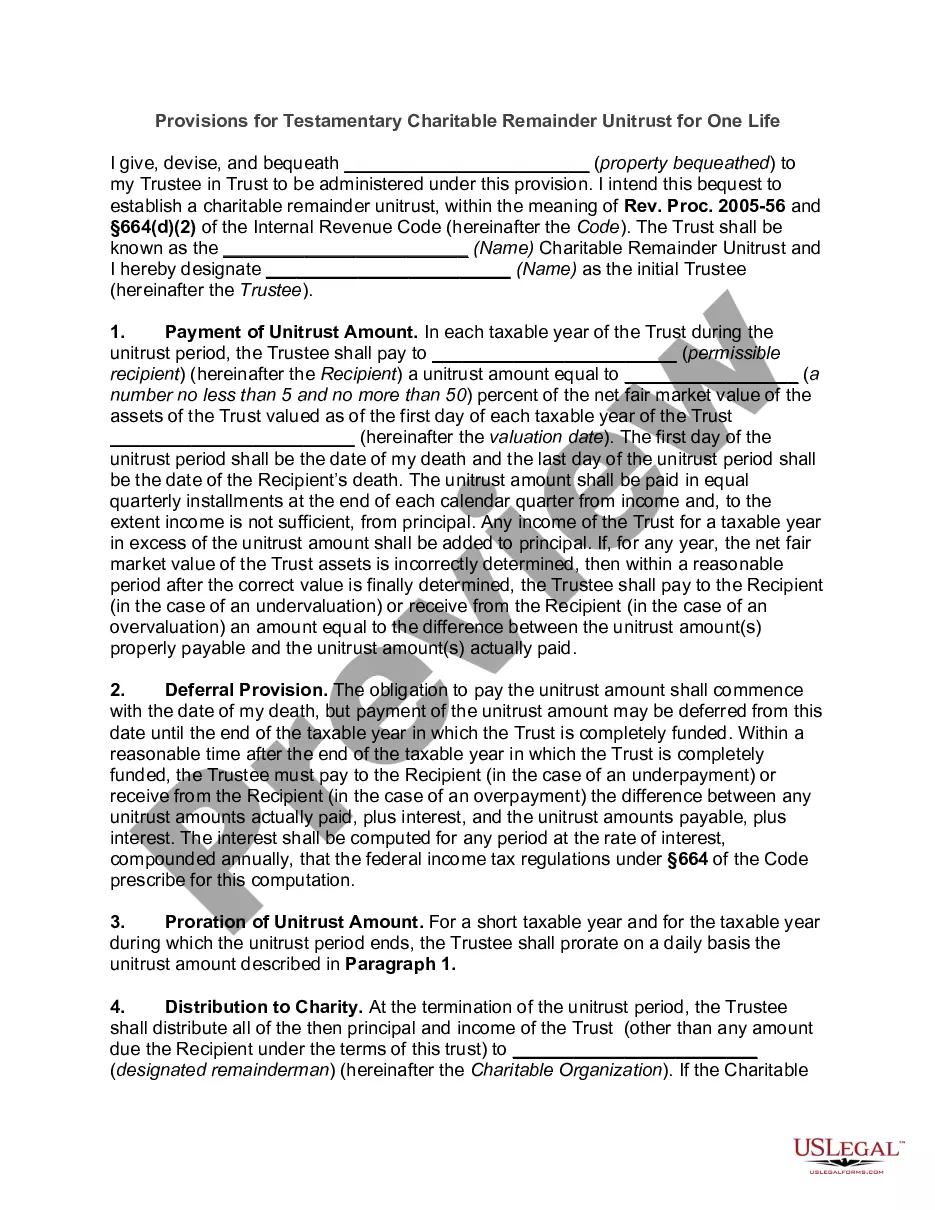
Get your form ready online
Our built-in tools help you complete, sign, share, and store your documents in one place.
Make edits, fill in missing information, and update formatting in US Legal Forms—just like you would in MS Word.
Download a copy, print it, send it by email, or mail it via USPS—whatever works best for your next step.
Sign and collect signatures with our SignNow integration. Send to multiple recipients, set reminders, and more. Go Premium to unlock E-Sign.
If this form requires notarization, complete it online through a secure video call—no need to meet a notary in person or wait for an appointment.
We protect your documents and personal data by following strict security and privacy standards.

Make edits, fill in missing information, and update formatting in US Legal Forms—just like you would in MS Word.

Download a copy, print it, send it by email, or mail it via USPS—whatever works best for your next step.

Sign and collect signatures with our SignNow integration. Send to multiple recipients, set reminders, and more. Go Premium to unlock E-Sign.

If this form requires notarization, complete it online through a secure video call—no need to meet a notary in person or wait for an appointment.

We protect your documents and personal data by following strict security and privacy standards.
Looking for another form?



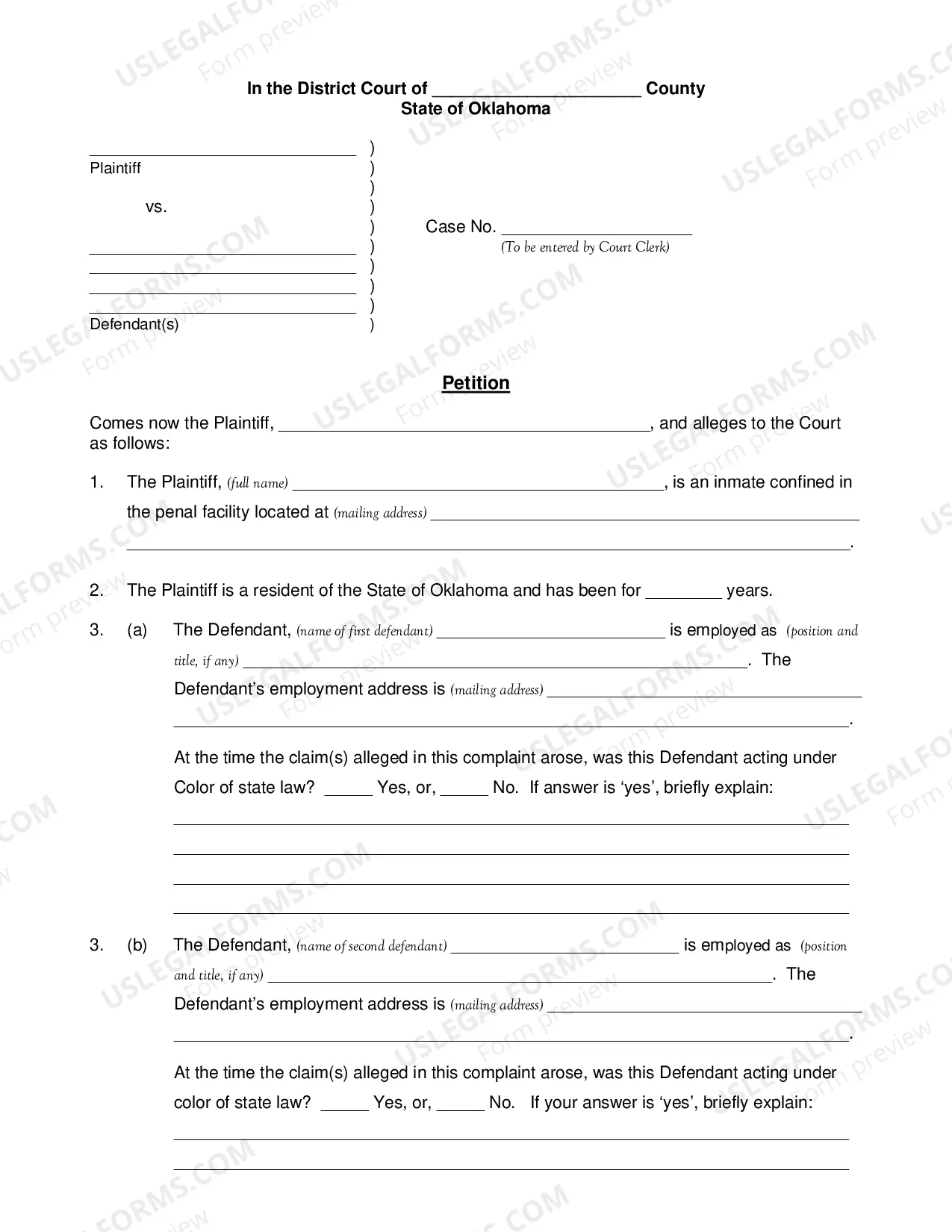




How to fill out Charitable Remainder Inter Vivos Unitrust Agreement?
Getting a go-to place to access the most recent and relevant legal templates is half the struggle of working with bureaucracy. Discovering the right legal files demands precision and attention to detail, which is why it is crucial to take samples of Charitable Remainder Trust Document For Dummies only from reliable sources, like US Legal Forms. A wrong template will waste your time and delay the situation you are in. With US Legal Forms, you have little to be concerned about. You can access and view all the information concerning the document’s use and relevance for your circumstances and in your state or region.
Consider the listed steps to complete your Charitable Remainder Trust Document For Dummies:
- Make use of the library navigation or search field to find your sample.
- View the form’s information to check if it matches the requirements of your state and area.
- View the form preview, if available, to ensure the form is definitely the one you are searching for.
- Resume the search and find the proper document if the Charitable Remainder Trust Document For Dummies does not fit your requirements.
- When you are positive regarding the form’s relevance, download it.
- If you are a registered user, click Log in to authenticate and gain access to your picked templates in My Forms.
- If you do not have a profile yet, click Buy now to get the form.
- Select the pricing plan that suits your preferences.
- Proceed to the registration to complete your purchase.
- Finalize your purchase by picking a transaction method (bank card or PayPal).
- Select the file format for downloading Charitable Remainder Trust Document For Dummies.
- Once you have the form on your gadget, you may modify it with the editor or print it and complete it manually.
Remove the hassle that comes with your legal documentation. Check out the extensive US Legal Forms library to find legal templates, check their relevance to your circumstances, and download them on the spot.
Form popularity
FAQ
The taxation of CRUTs is prescribed by the Internal Revenue Code and accompanying U.S. Treasury regulations. The trust itself is a tax-exempt entity, but the trust distributions to an income beneficiary will be taxable to that beneficiary ing to a four-tiered system.
How to Set up a Charitable Remainder Trust Create a Charitable Remainder Trust. Check with the IRS that the charity you want to benefit is approved. Transfer assets into the Trust. Name the charity as Trustee. Create a provision that states who the lead beneficiary is - remember, this can be yourself or someone else.
The taxation of CRUTs is prescribed by the Internal Revenue Code and accompanying U.S. Treasury regulations. The trust itself is a tax-exempt entity, but the trust distributions to an income beneficiary will be taxable to that beneficiary ing to a four-tiered system.
A Charitable Remainder Trust (CRT) is a gift of cash or other property to an irrevocable trust. The donor receives an income stream from the trust for a term of years or for life and the named charity receives the remaining trust assets at the end of the trust term.
Irrevocability: CRTs are irrevocable, which means that in many cases, changes cannot be made after one is formed. Ordinary Income Taxes: The income dispersed to your non-charitable beneficiaries may be taxed as ordinary income. Administrative Fees: CRTs can be complicated to manage.