Charitable Remainder Trust Document For Bank Account Number
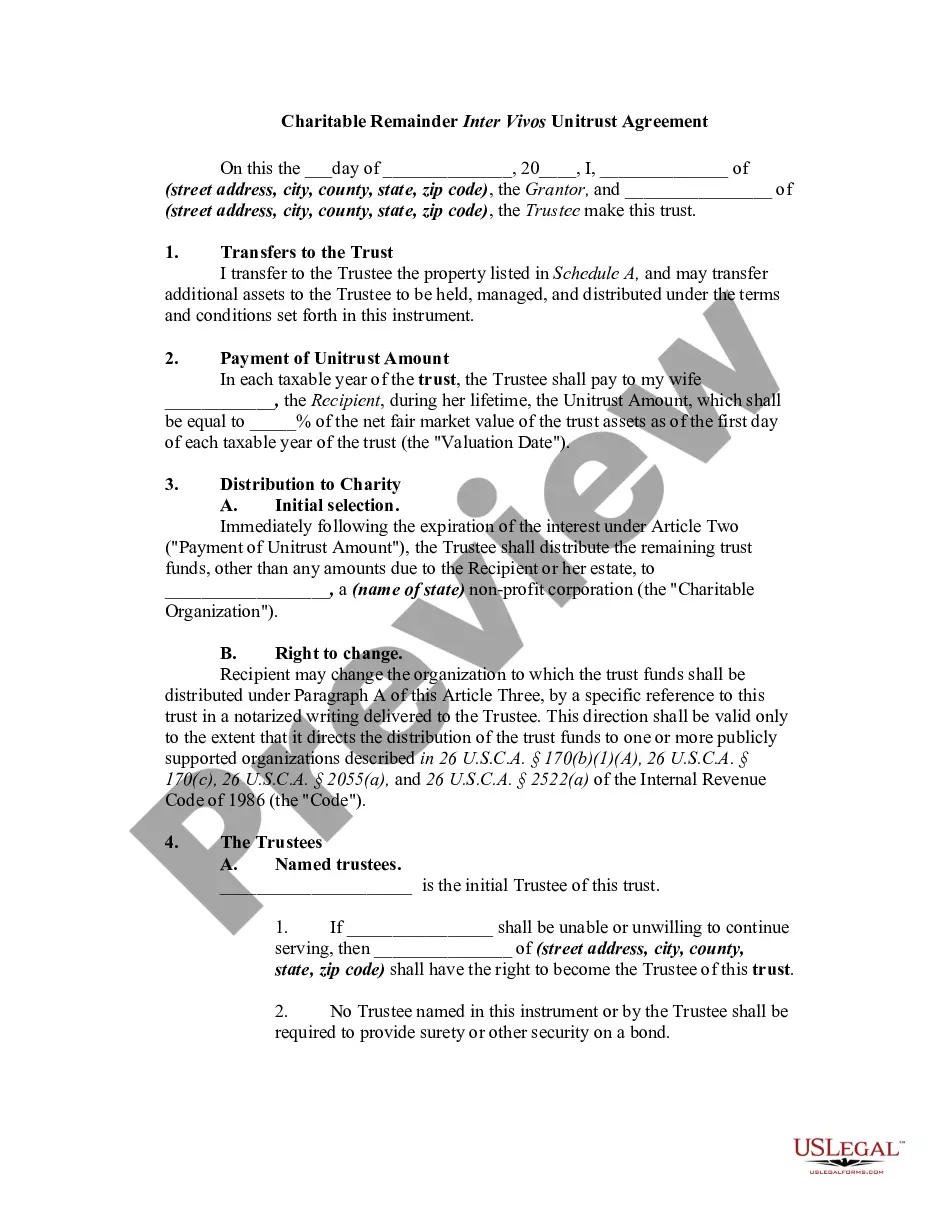
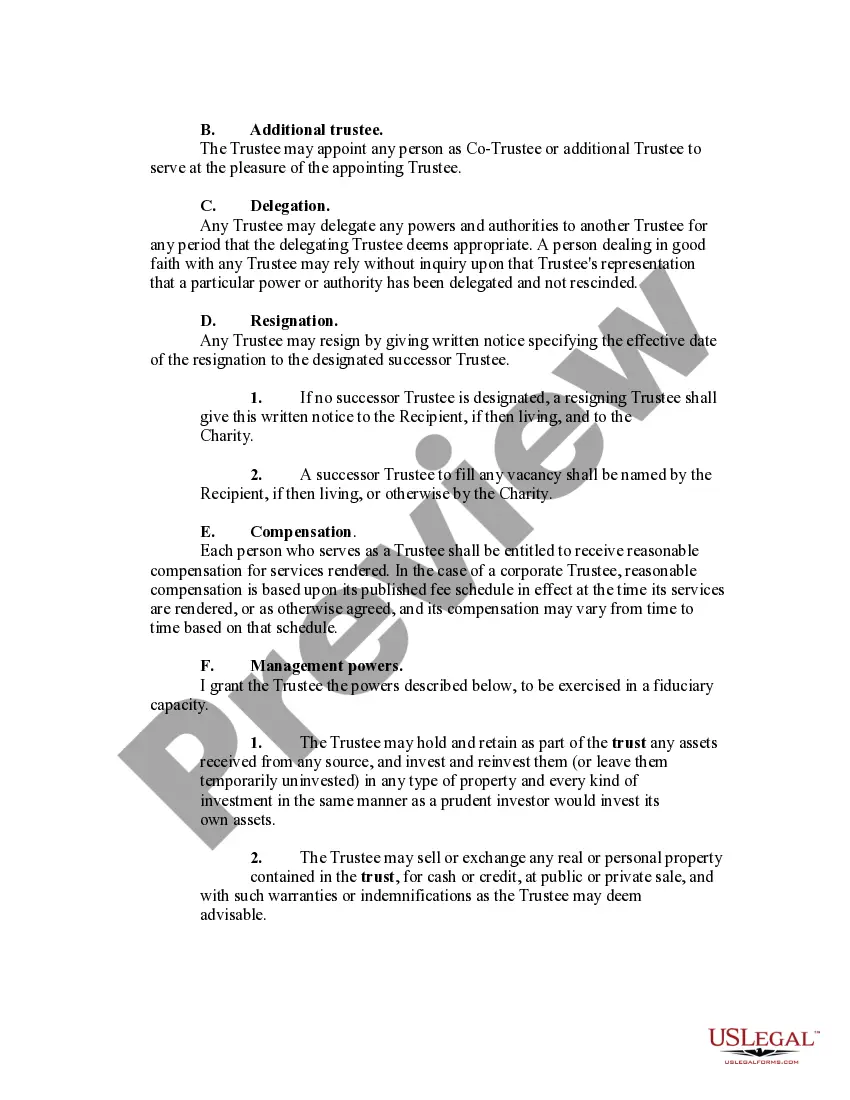
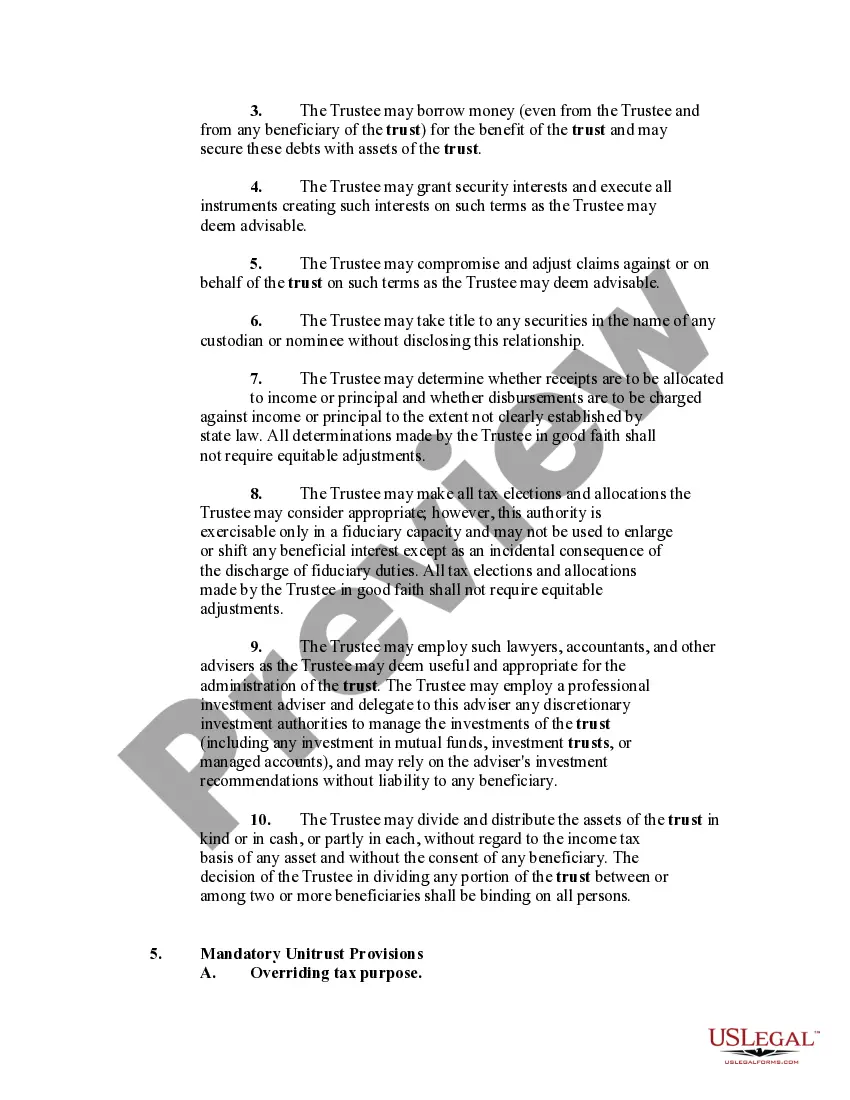
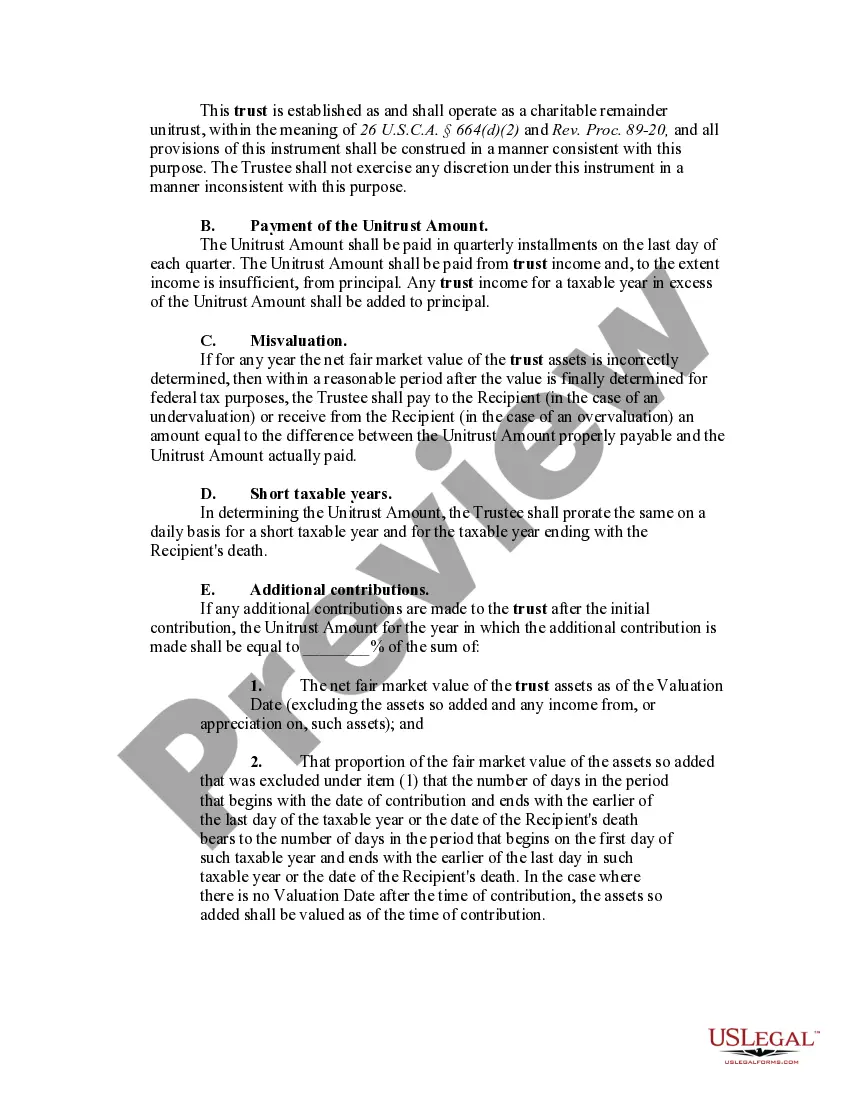
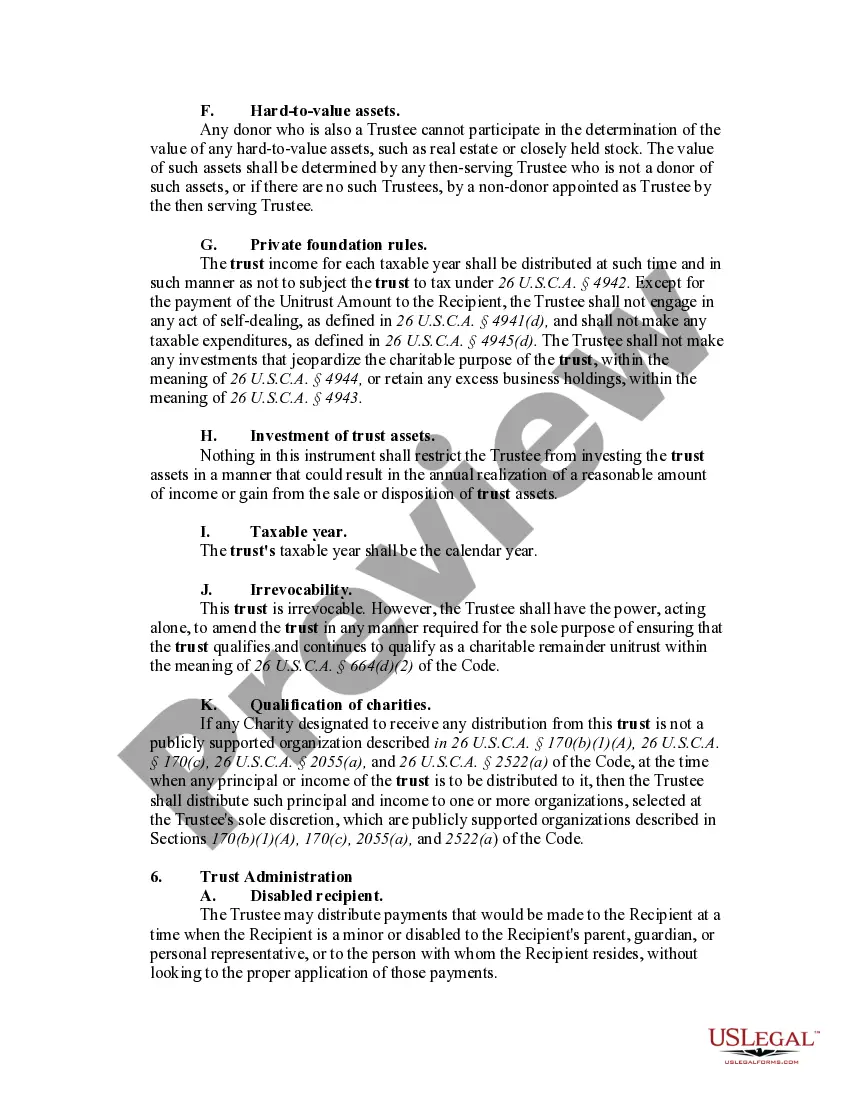
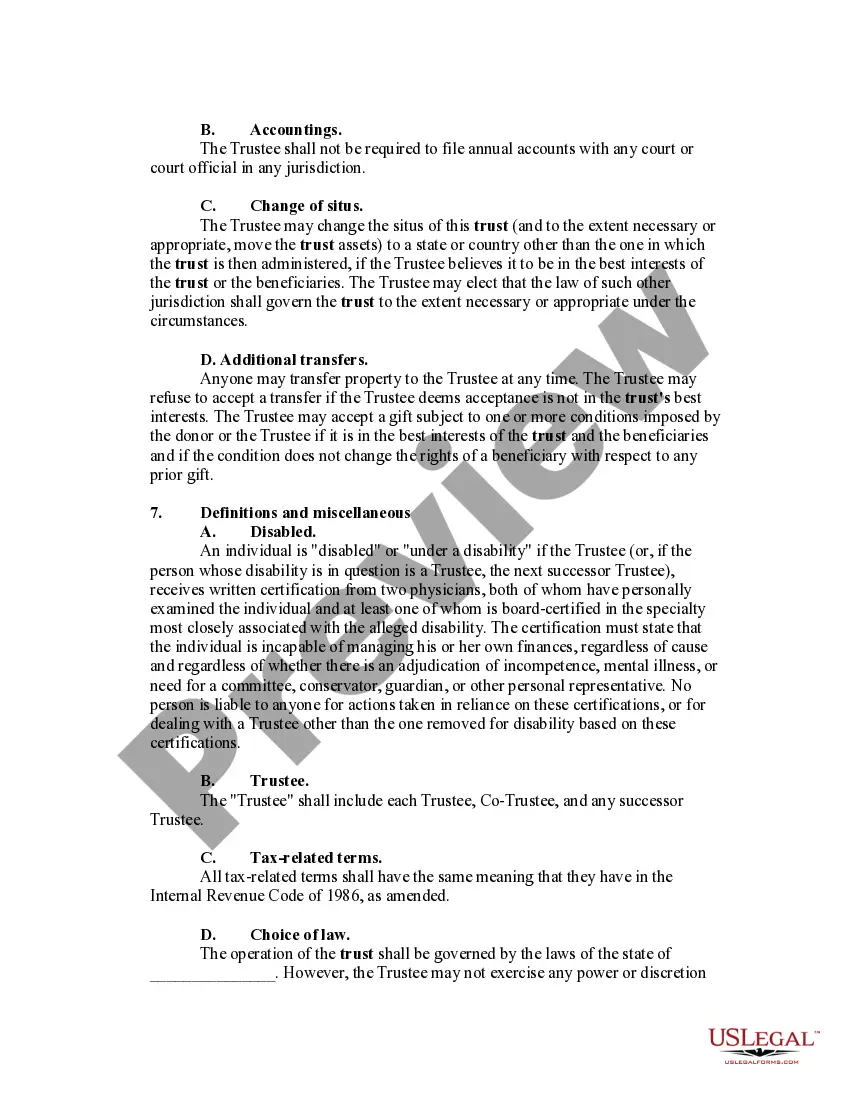
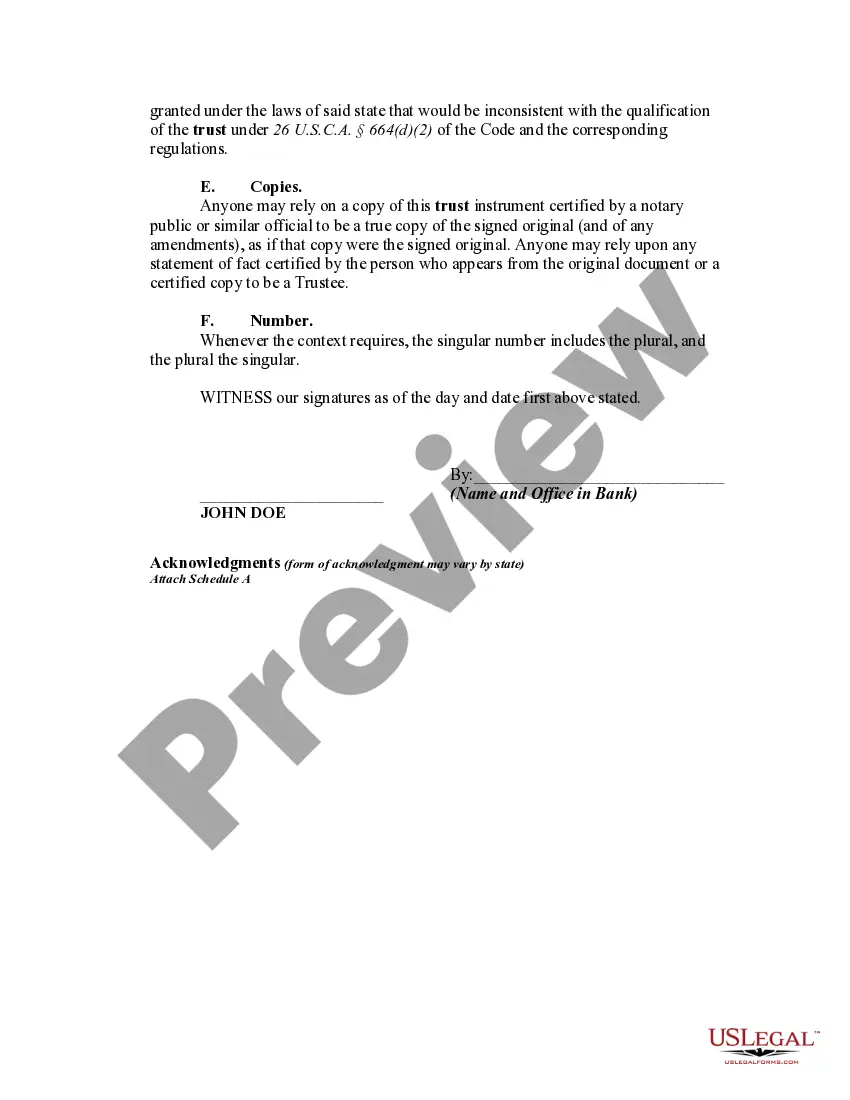
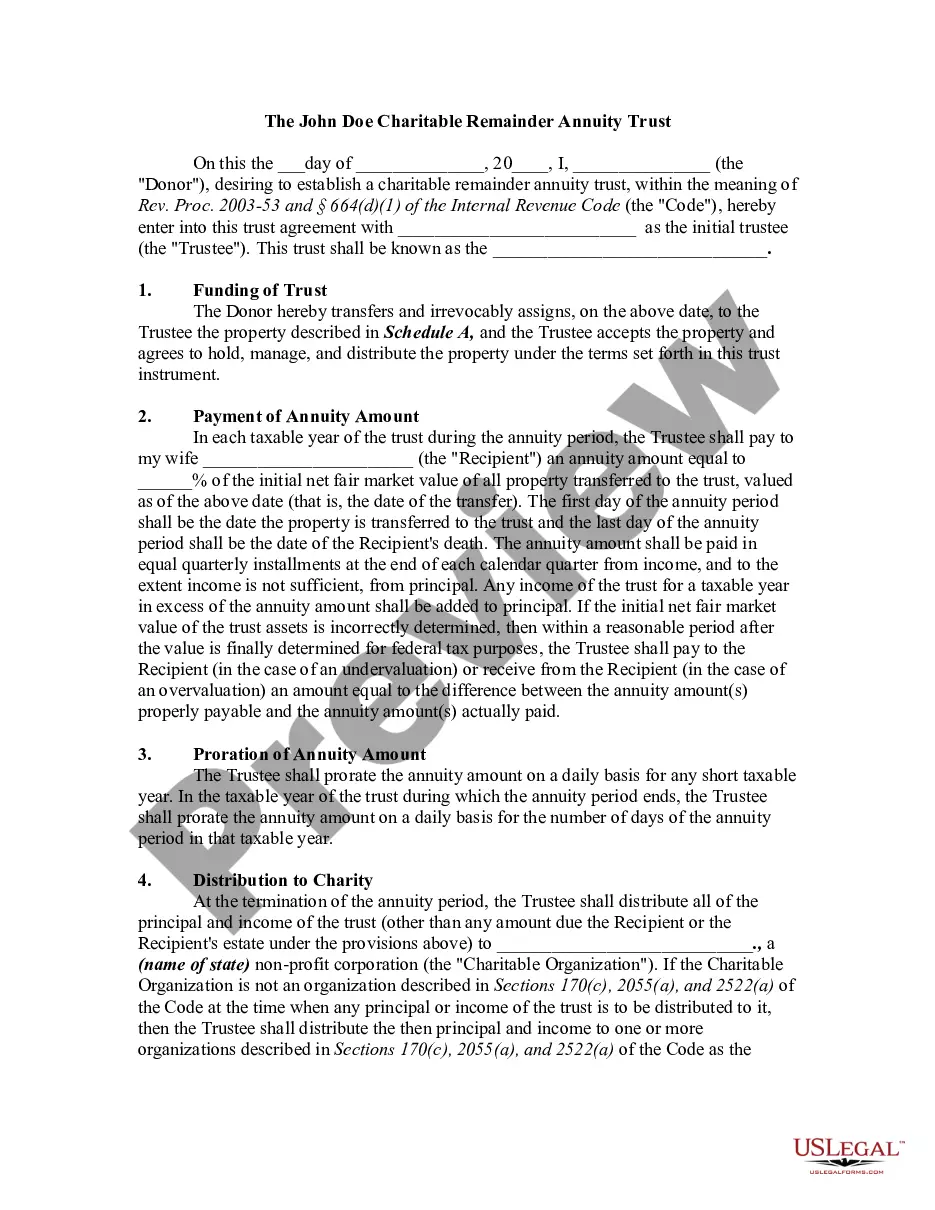
Description
Get your form ready online
Our built-in tools help you complete, sign, share, and store your documents in one place.
Make edits, fill in missing information, and update formatting in US Legal Forms—just like you would in MS Word.
Download a copy, print it, send it by email, or mail it via USPS—whatever works best for your next step.
Sign and collect signatures with our SignNow integration. Send to multiple recipients, set reminders, and more. Go Premium to unlock E-Sign.
If this form requires notarization, complete it online through a secure video call—no need to meet a notary in person or wait for an appointment.
We protect your documents and personal data by following strict security and privacy standards.

Make edits, fill in missing information, and update formatting in US Legal Forms—just like you would in MS Word.

Download a copy, print it, send it by email, or mail it via USPS—whatever works best for your next step.

Sign and collect signatures with our SignNow integration. Send to multiple recipients, set reminders, and more. Go Premium to unlock E-Sign.

If this form requires notarization, complete it online through a secure video call—no need to meet a notary in person or wait for an appointment.

We protect your documents and personal data by following strict security and privacy standards.
Looking for another form?


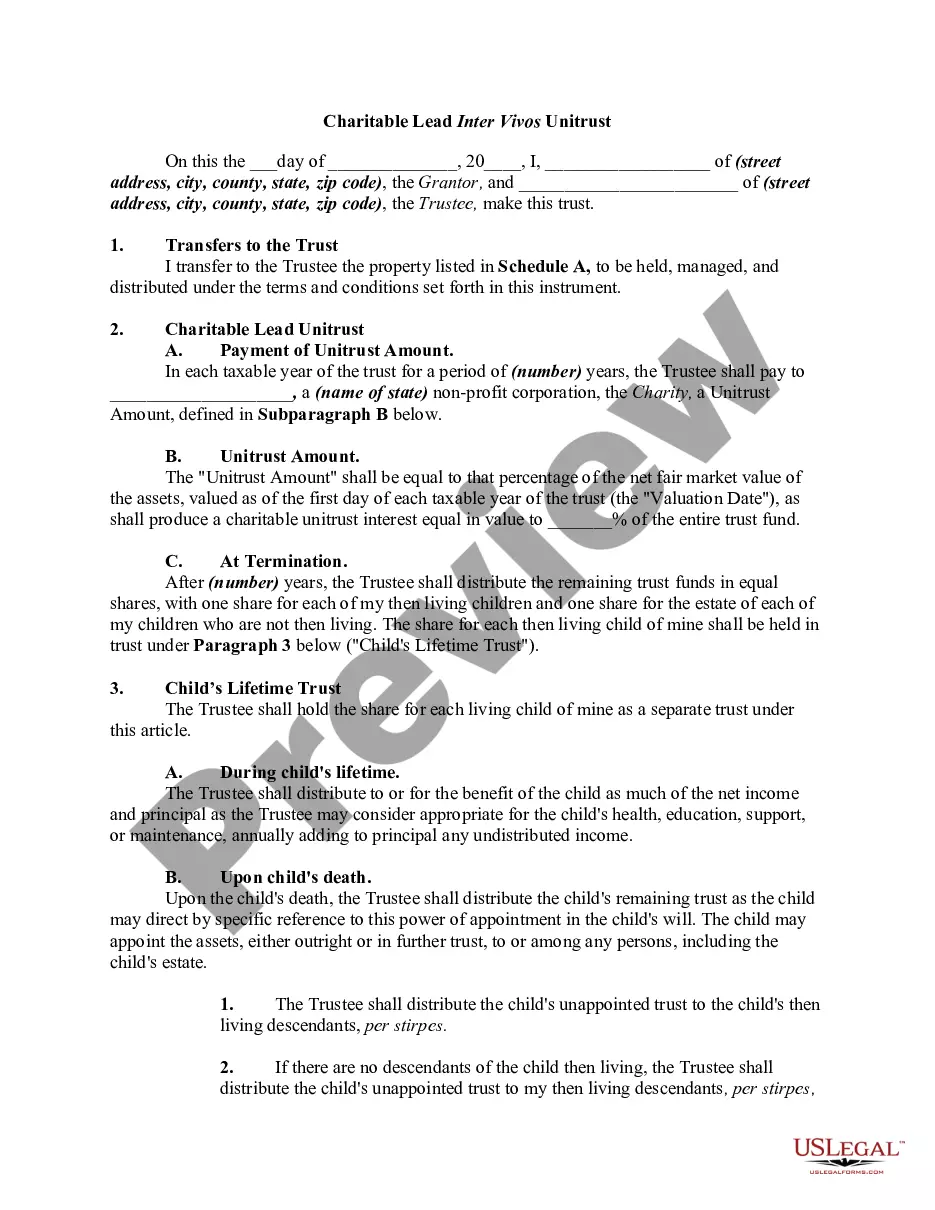
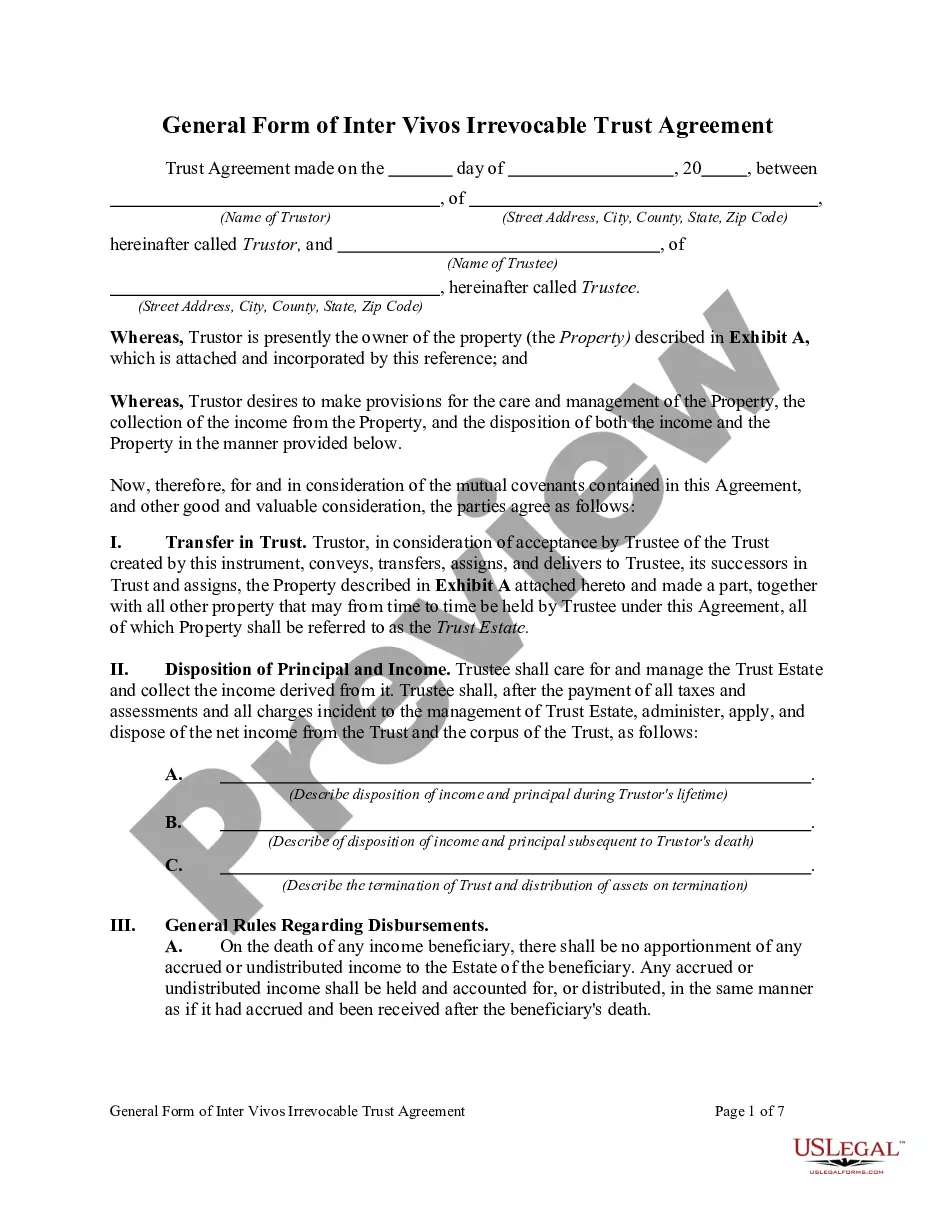
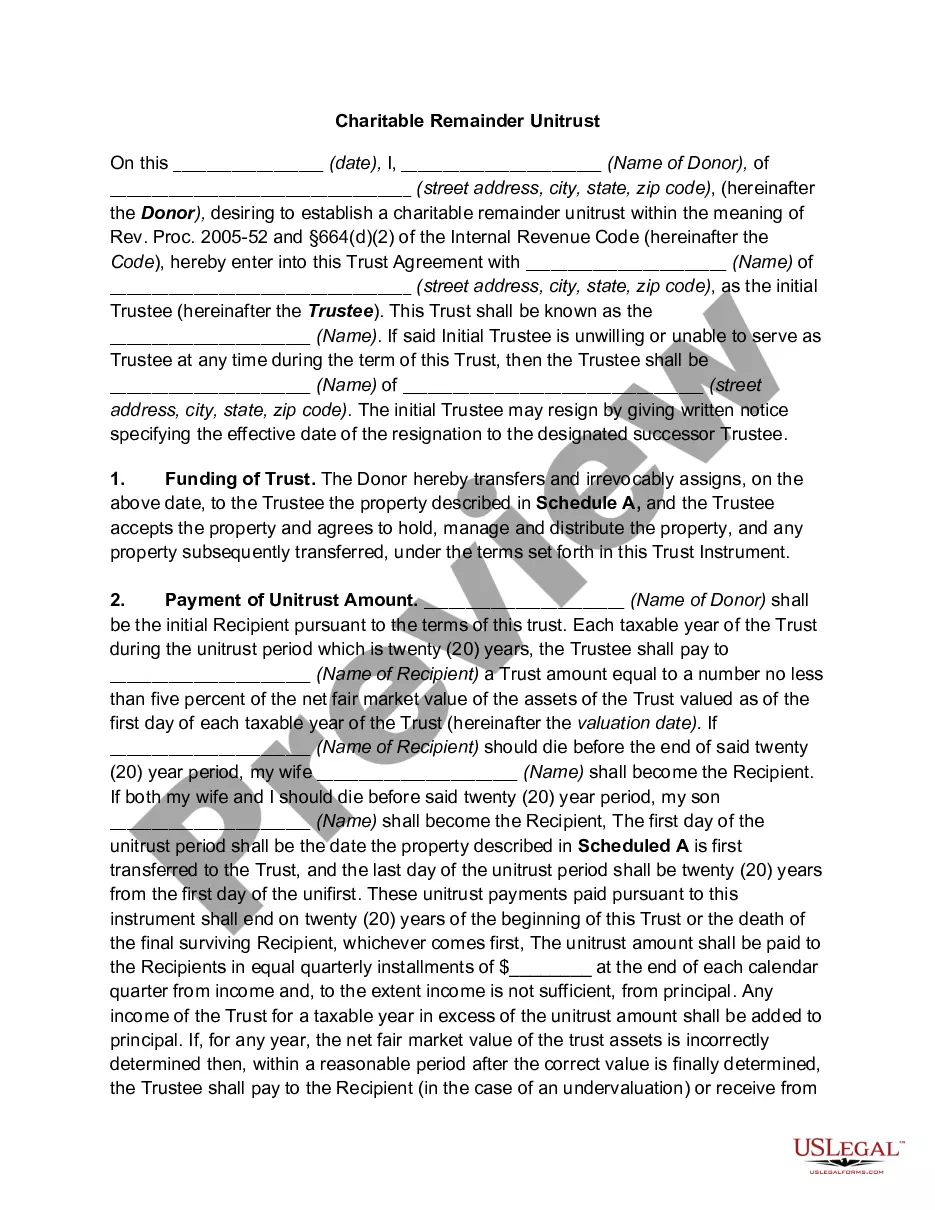
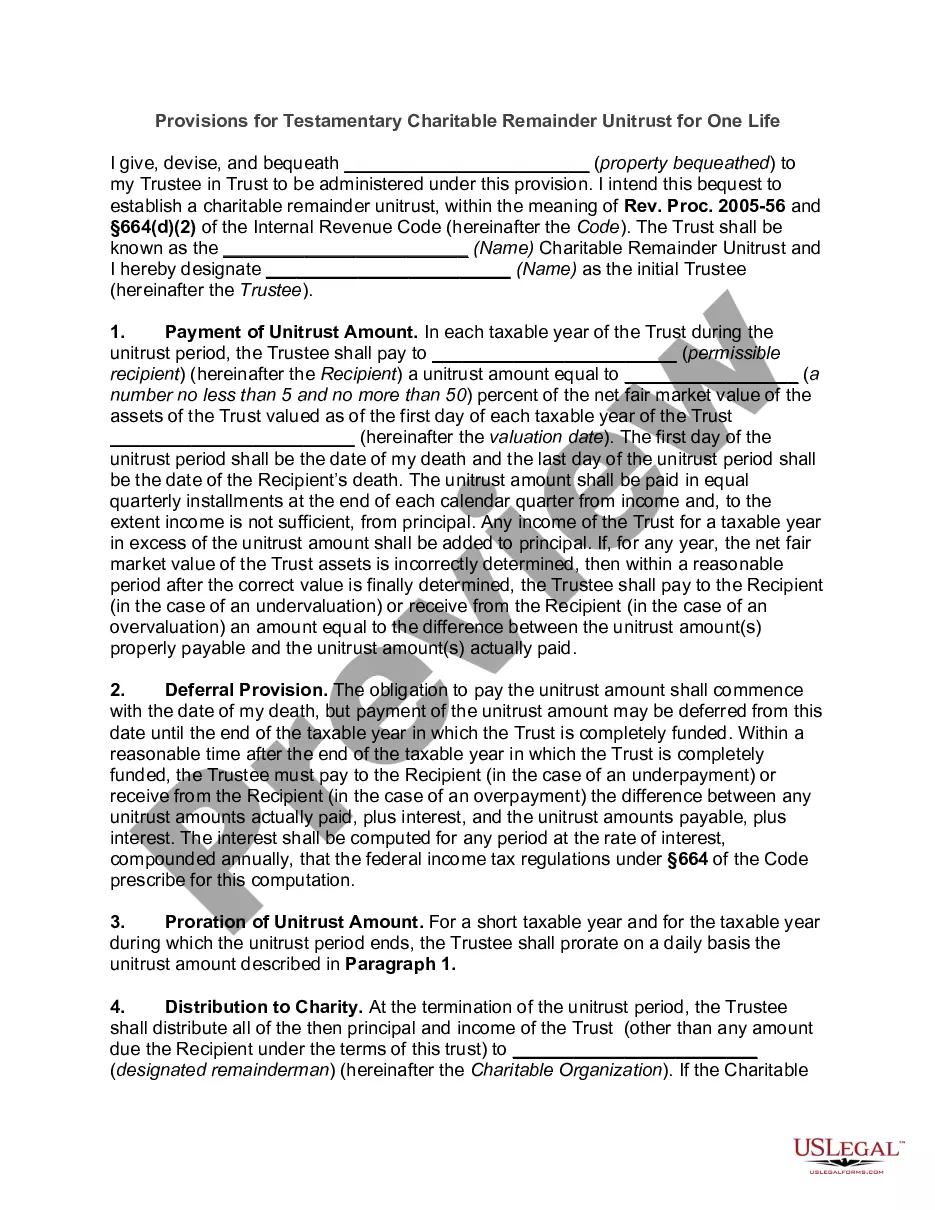
How to fill out Charitable Remainder Inter Vivos Unitrust Agreement?
Whether for business purposes or for individual matters, everybody has to handle legal situations sooner or later in their life. Filling out legal paperwork demands careful attention, beginning from selecting the correct form template. For instance, when you select a wrong edition of a Charitable Remainder Trust Document For Bank Account Number, it will be declined when you submit it. It is therefore crucial to get a reliable source of legal files like US Legal Forms.
If you have to obtain a Charitable Remainder Trust Document For Bank Account Number template, follow these easy steps:
- Find the sample you need by using the search field or catalog navigation.
- Check out the form’s information to make sure it fits your situation, state, and county.
- Click on the form’s preview to see it.
- If it is the incorrect document, go back to the search function to find the Charitable Remainder Trust Document For Bank Account Number sample you need.
- Download the template if it meets your requirements.
- If you already have a US Legal Forms profile, just click Log in to gain access to previously saved documents in My Forms.
- In the event you don’t have an account yet, you may download the form by clicking Buy now.
- Pick the correct pricing option.
- Finish the profile registration form.
- Select your transaction method: you can use a credit card or PayPal account.
- Pick the document format you want and download the Charitable Remainder Trust Document For Bank Account Number.
- Once it is saved, you are able to complete the form with the help of editing software or print it and finish it manually.
With a vast US Legal Forms catalog at hand, you never have to spend time seeking for the right sample across the web. Utilize the library’s straightforward navigation to get the right template for any situation.
Form popularity
FAQ
The taxation of CRUTs is prescribed by the Internal Revenue Code and accompanying U.S. Treasury regulations. The trust itself is a tax-exempt entity, but the trust distributions to an income beneficiary will be taxable to that beneficiary ing to a four-tiered system.
Charitable remainder trusts are irrevocable trusts that let you donate assets to charity and draw annual income for life or for a specific time period. We closely examine charitable remainder trusts to ensure they: Correctly report trust income and distributions to beneficiaries.
You can use the following types of assets to fund a charitable remainder trust. Cash. Publicly traded securities. Some types of closely held stock (Note that CRTs cannot hold S-Corp stock) Real estate. Certain other complex assets.
In either type of CRT (unitrust or annuity trust), the Internal Revenue Service (IRS) requires that the payout rate stated in the trust cannot be less than 5 percent or more than 50 percent of the initial fair market value of the trust's assets.
The payments generally must equal at least 5% and no more than 50% of the fair market value of the assets, valued annually.