Charitable Remainder Living Trust Fillable With Example
Description
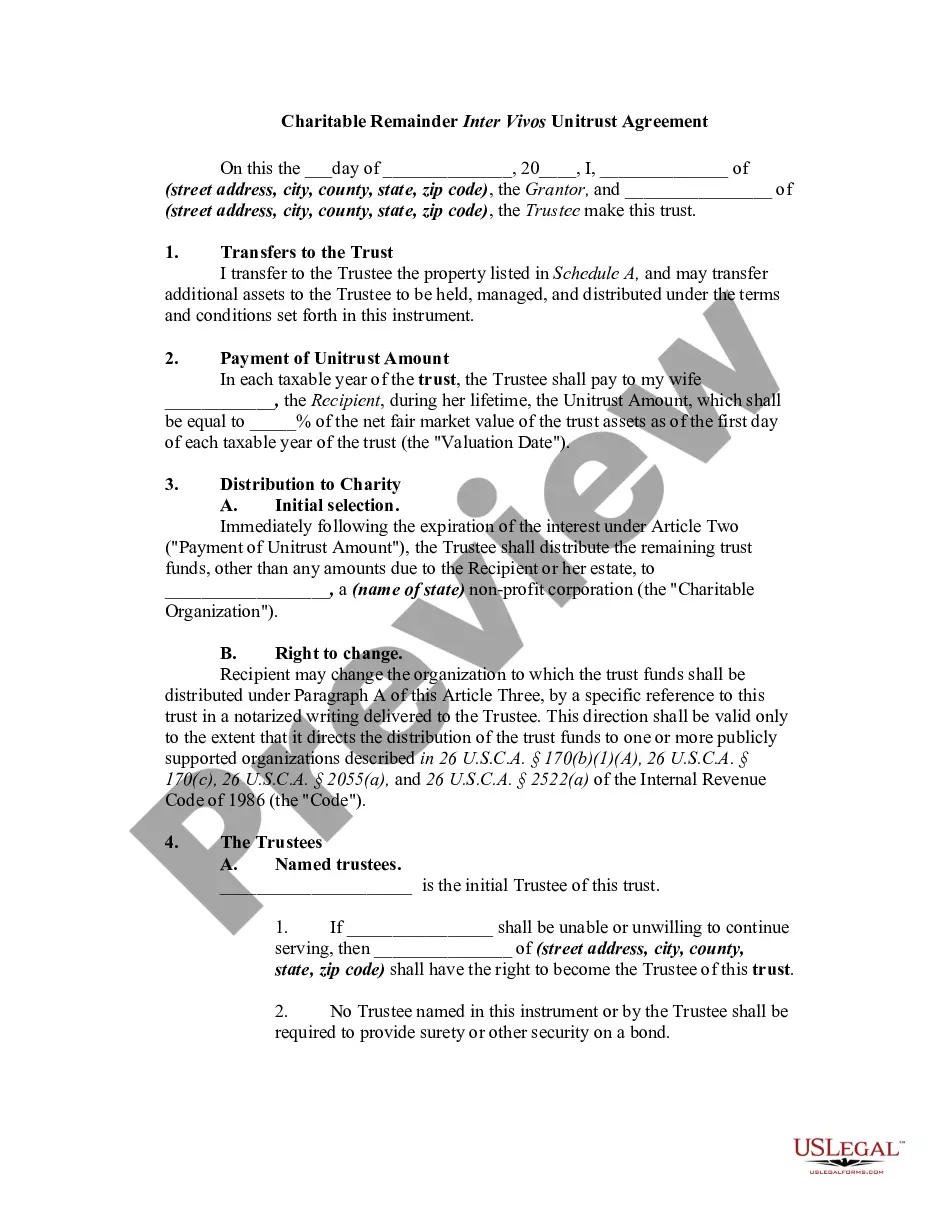
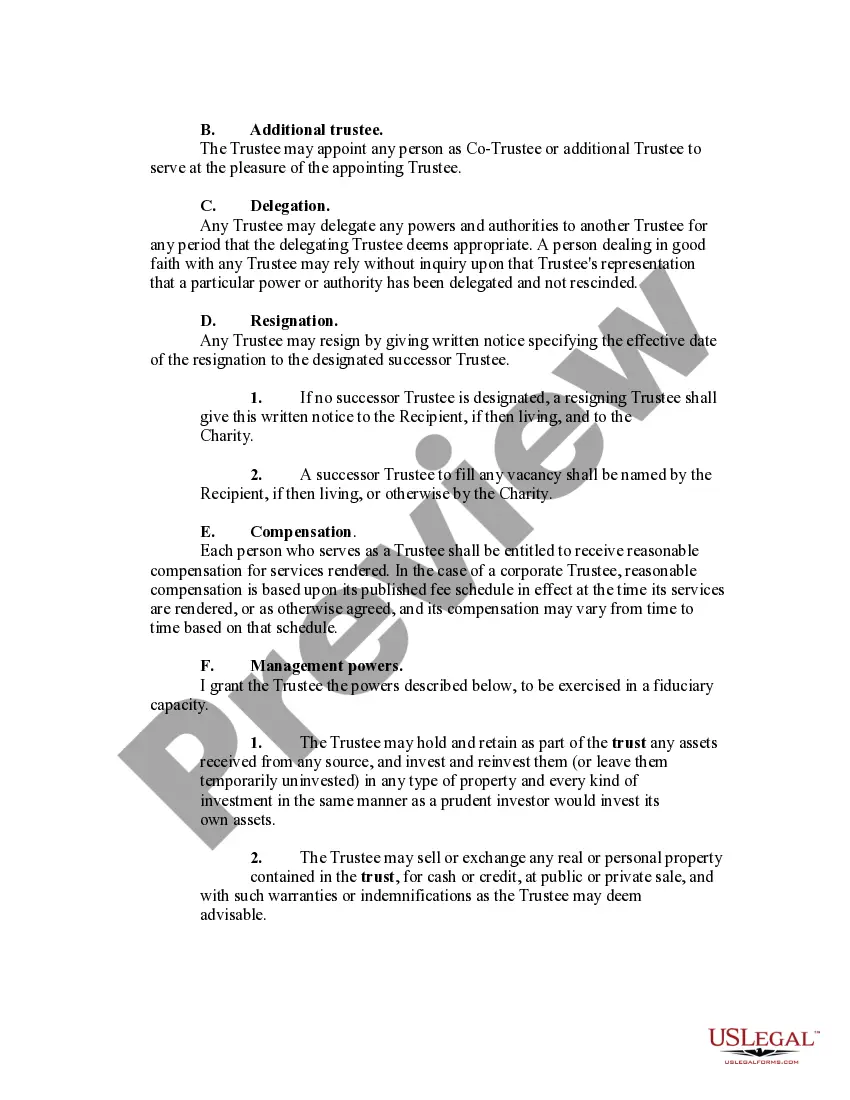
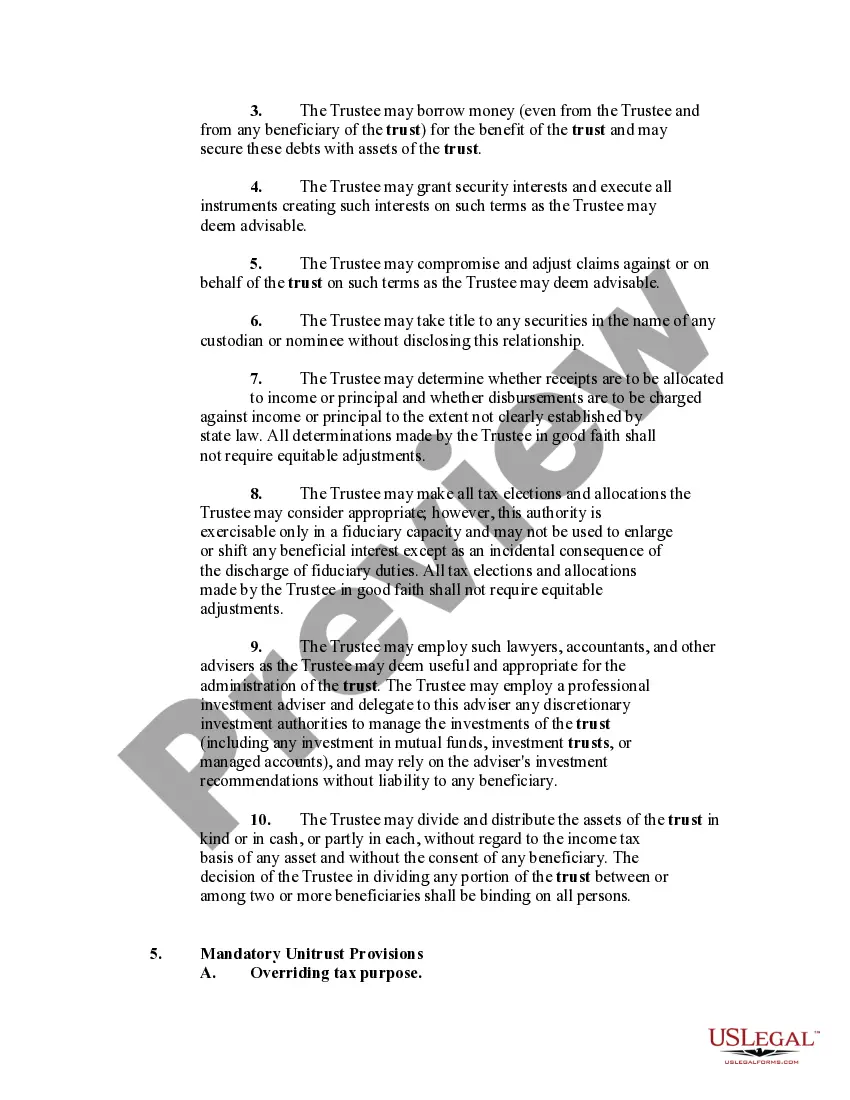
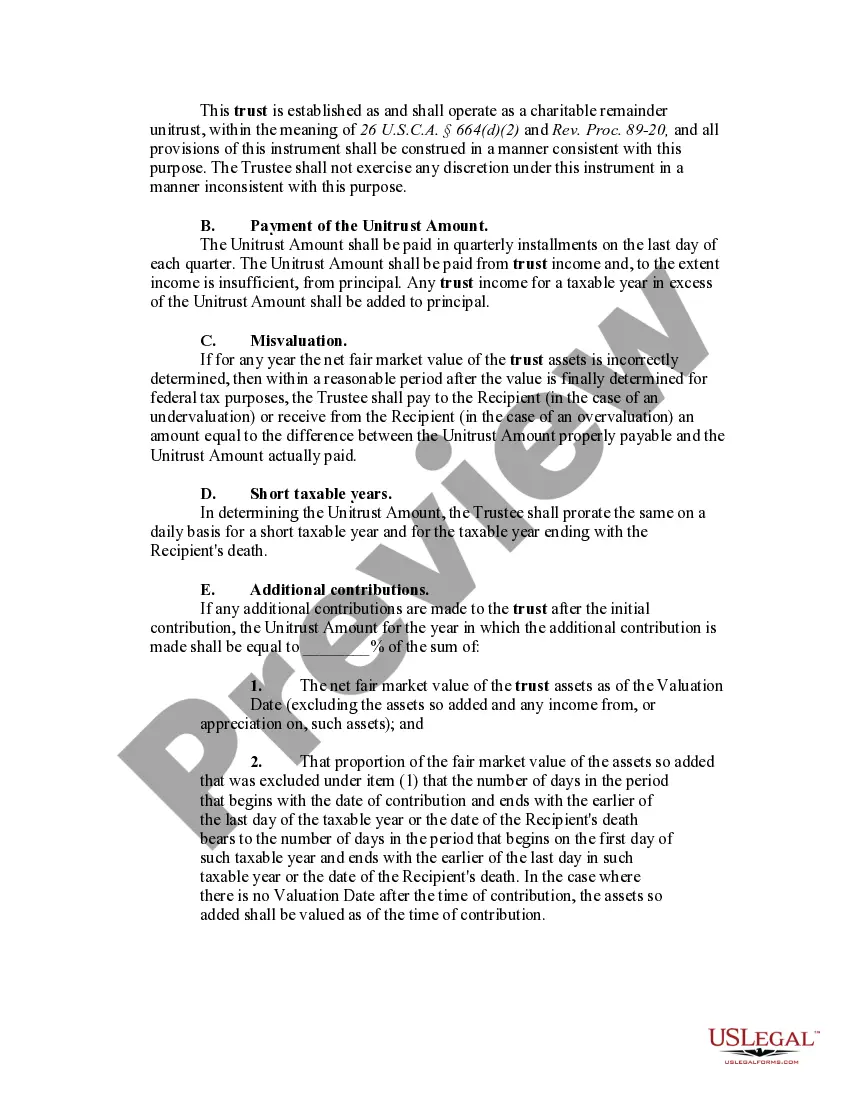
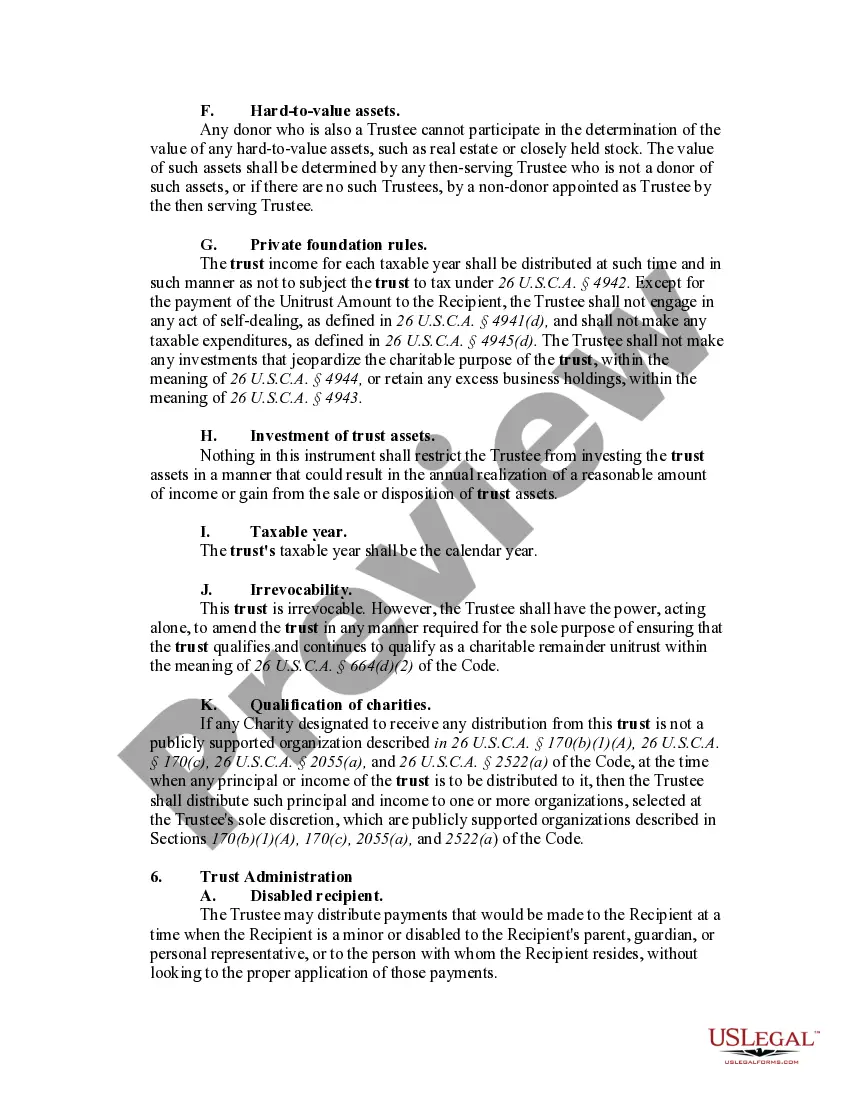
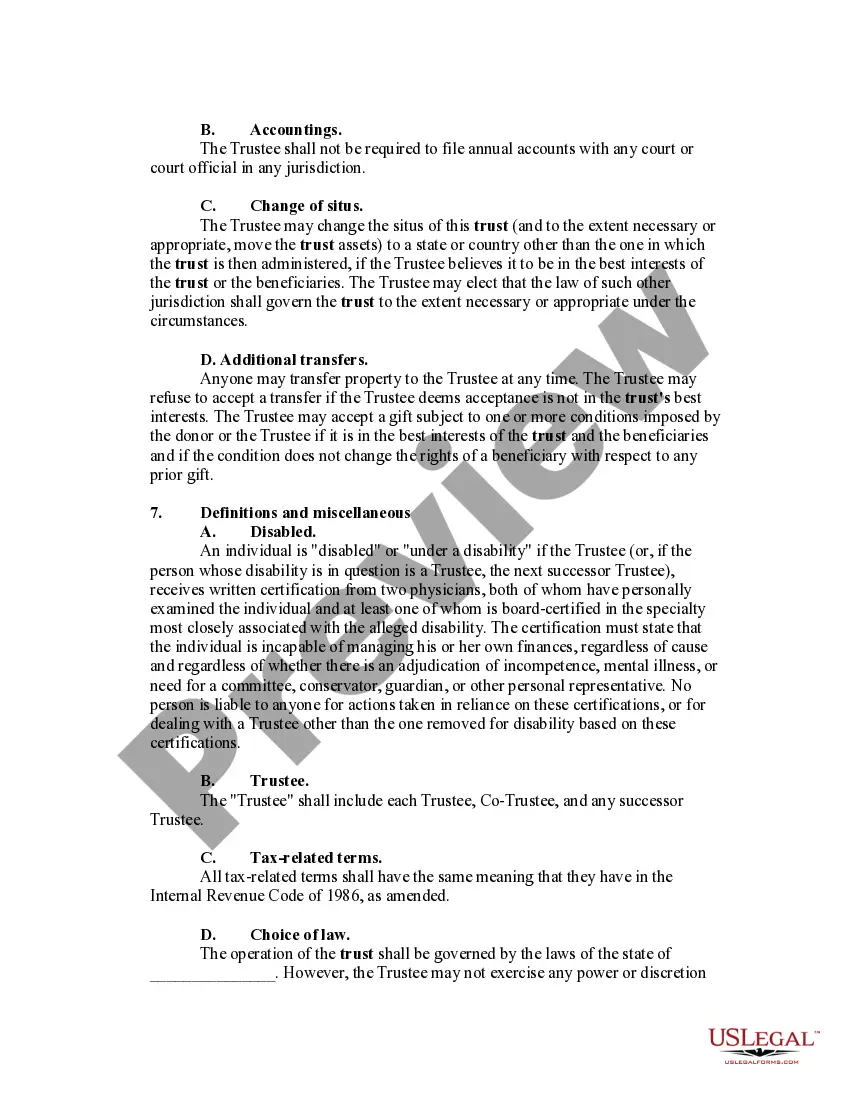
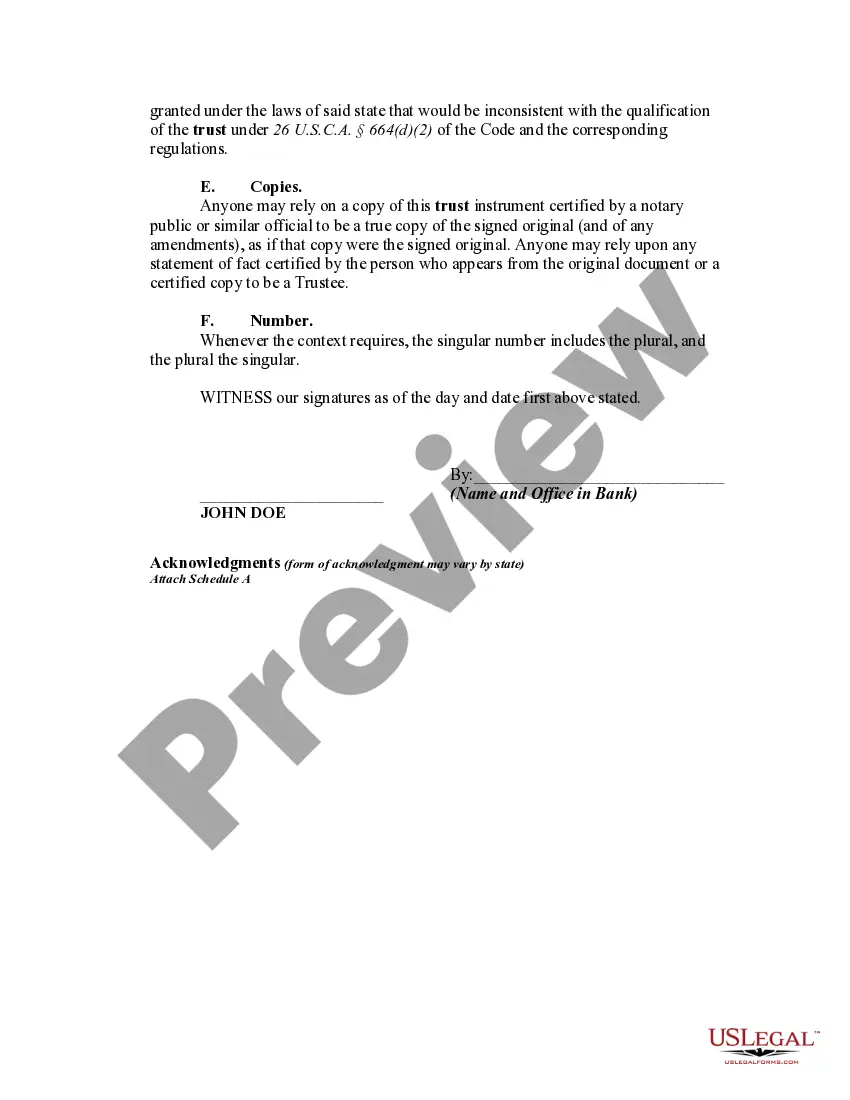
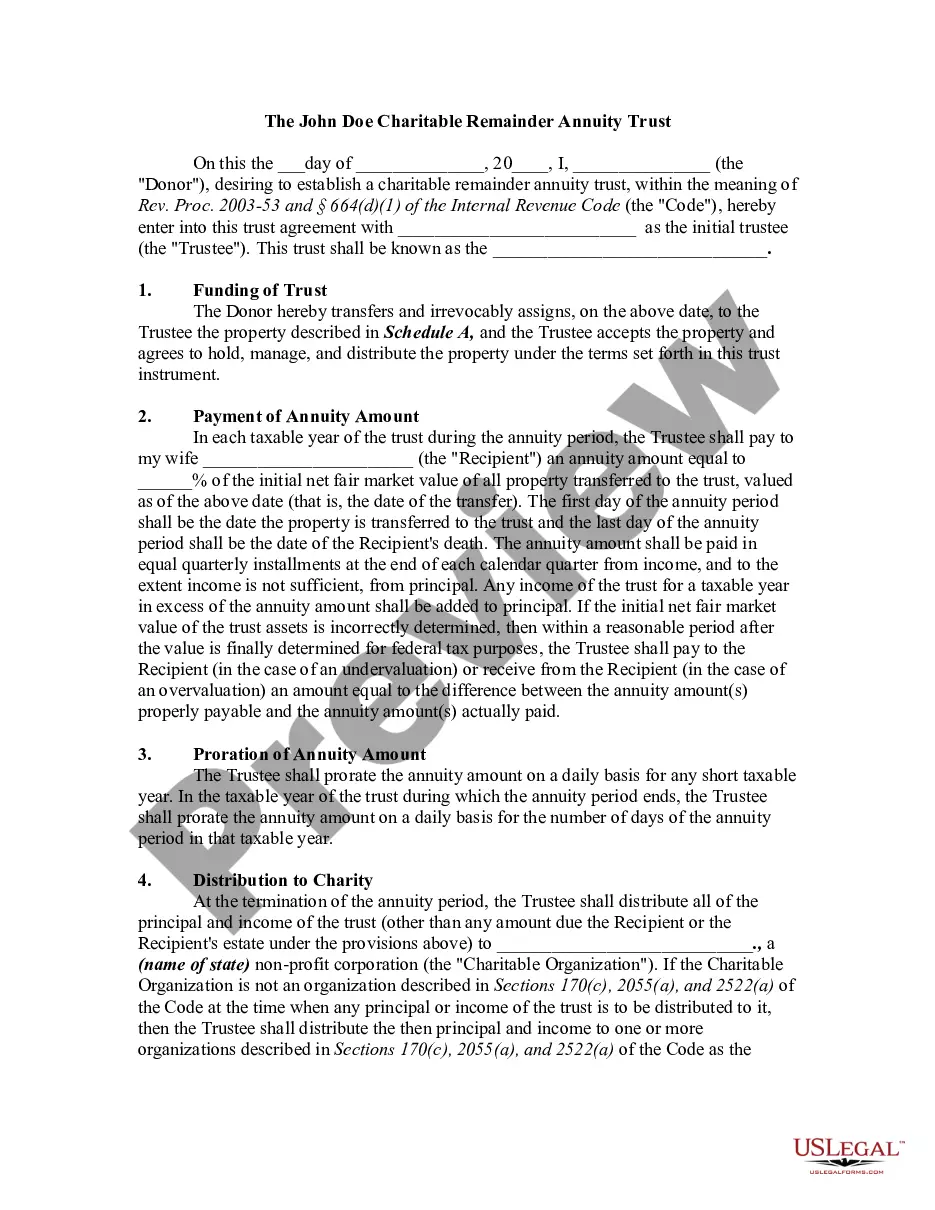
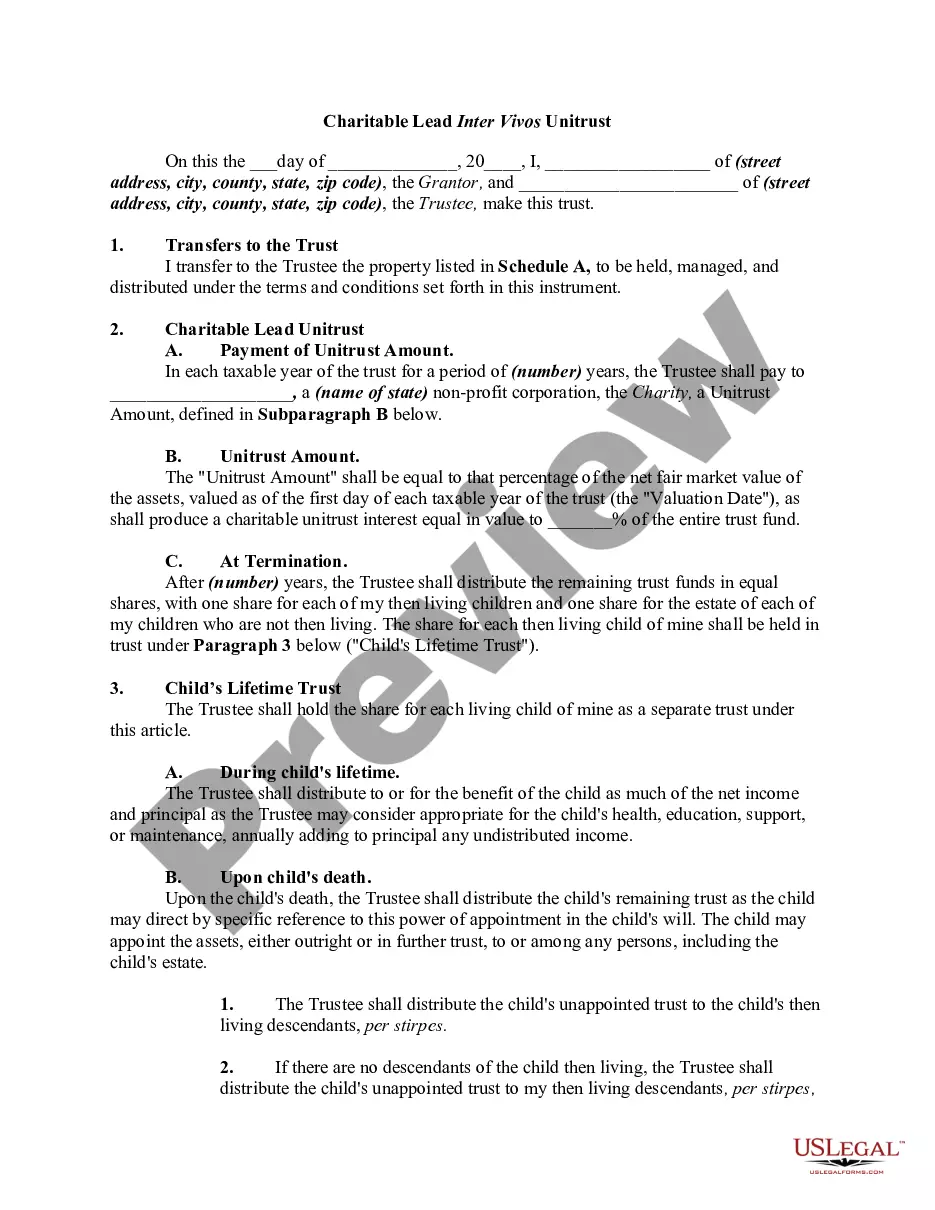
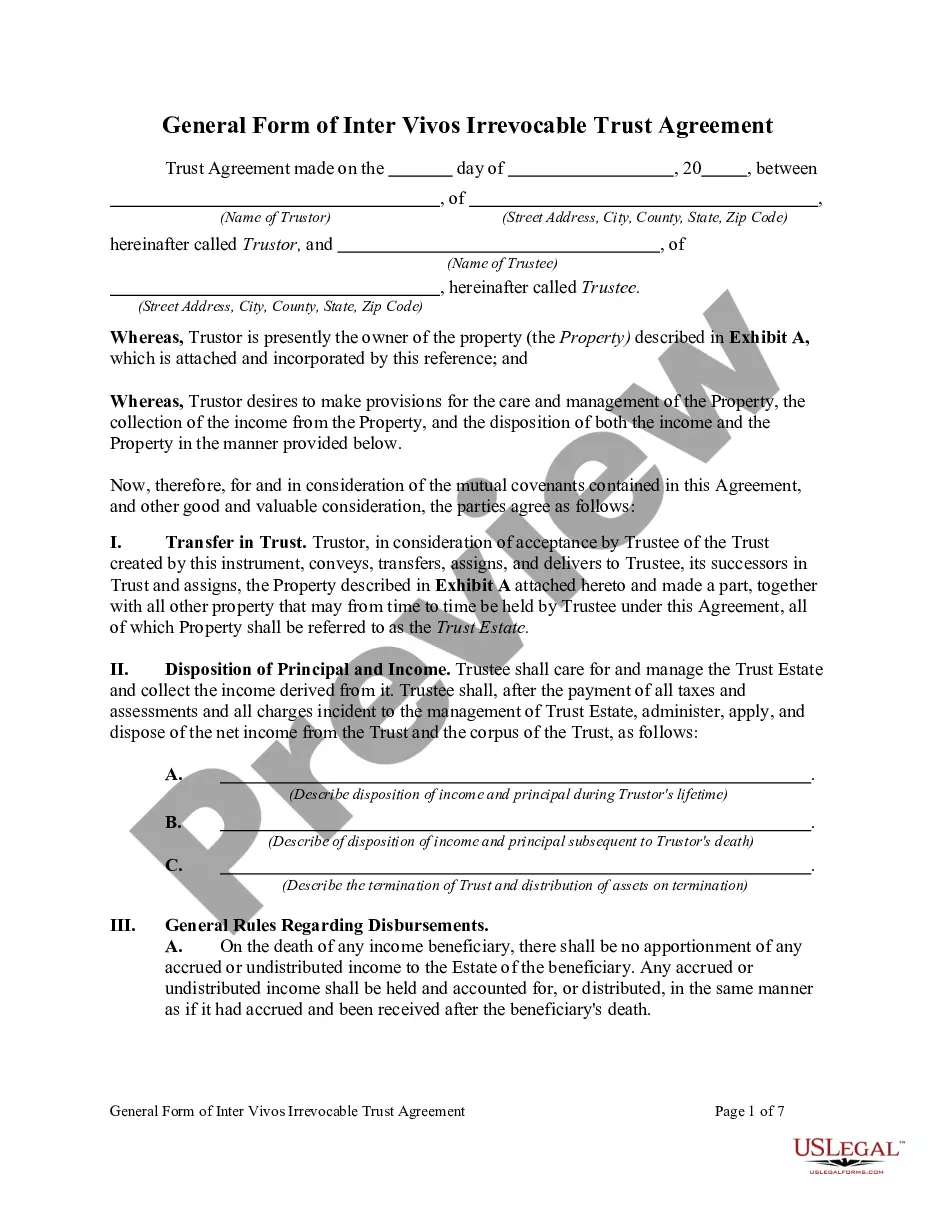
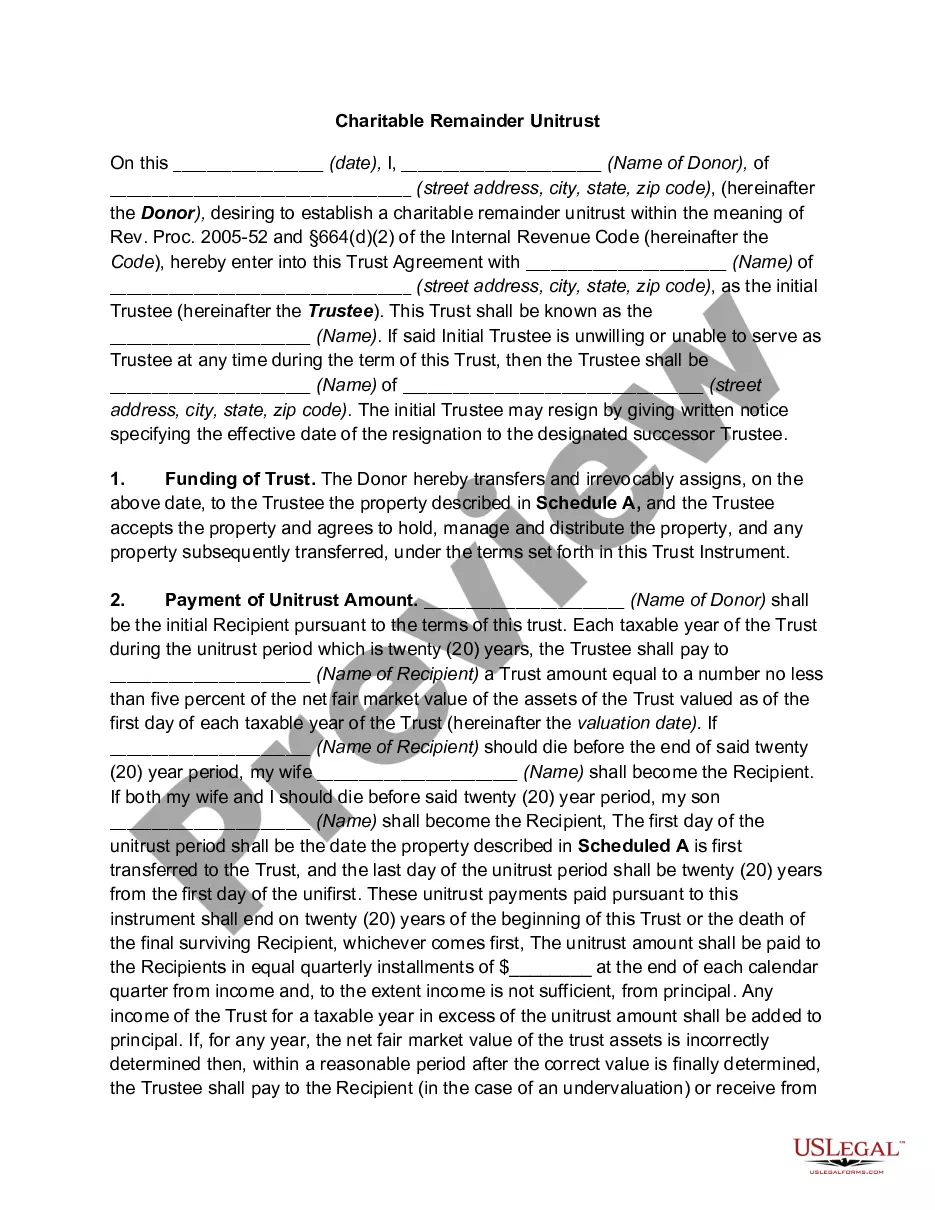
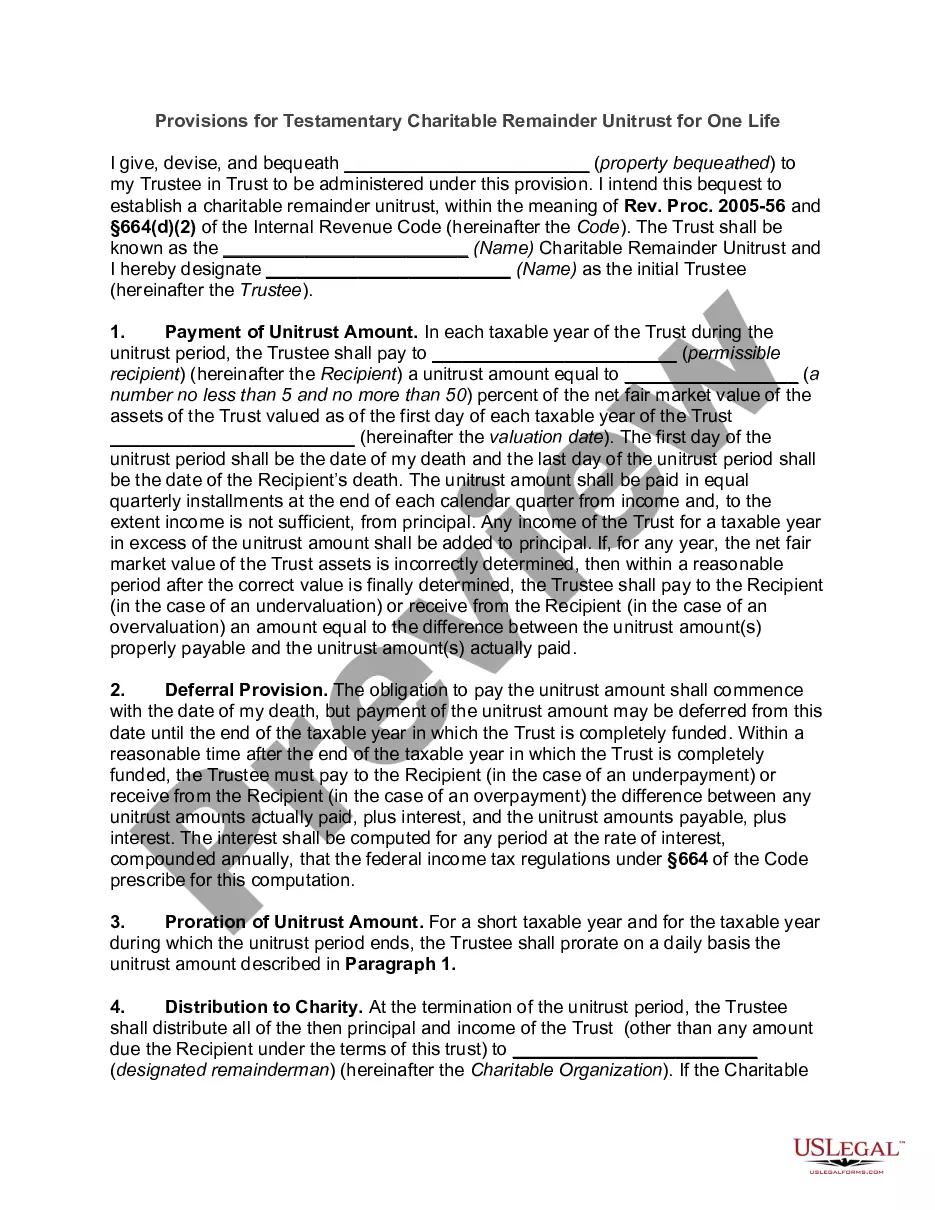
Get your form ready online
Our built-in tools help you complete, sign, share, and store your documents in one place.
Make edits, fill in missing information, and update formatting in US Legal Forms—just like you would in MS Word.
Download a copy, print it, send it by email, or mail it via USPS—whatever works best for your next step.
Sign and collect signatures with our SignNow integration. Send to multiple recipients, set reminders, and more. Go Premium to unlock E-Sign.
If this form requires notarization, complete it online through a secure video call—no need to meet a notary in person or wait for an appointment.
We protect your documents and personal data by following strict security and privacy standards.

Make edits, fill in missing information, and update formatting in US Legal Forms—just like you would in MS Word.

Download a copy, print it, send it by email, or mail it via USPS—whatever works best for your next step.

Sign and collect signatures with our SignNow integration. Send to multiple recipients, set reminders, and more. Go Premium to unlock E-Sign.

If this form requires notarization, complete it online through a secure video call—no need to meet a notary in person or wait for an appointment.

We protect your documents and personal data by following strict security and privacy standards.
Looking for another form?








How to fill out Charitable Remainder Inter Vivos Unitrust Agreement?
- Log in to your US Legal Forms account if you're a returning user. Ensure your subscription is up-to-date.
- If you're new, start by reviewing the form preview and description to confirm it meets your requirements and local laws.
- Search the template library for any other required documents if you find discrepancies. Use the search functionality for precision.
- Select the 'Buy Now' option and opt for a suitable subscription plan. Create an account for full access to the forms.
- Input your payment details to complete the purchase through credit card or PayPal.
- Download your customized Charitable Remainder Living Trust and save it for completion. Access it anytime via the 'My Forms' section in your profile.
In conclusion, using US Legal Forms not only simplifies the process of drafting legal documents but also provides access to expert support for accuracy and compliance. This enables individuals to confidently manage their estate planning and charitable contributions effectively.
Explore US Legal Forms today and take the first step toward securing your charitable legacy!
Form popularity
FAQ
Creating a charitable remainder trust involves several key steps. First, you need to define your charitable goals and select a qualified charity as a beneficiary. Next, utilize a charitable remainder living trust fillable with example to draft your trust document, ensuring all legal requirements are met. Once established, fund the trust with assets, and enjoy both income benefits and the satisfaction of supporting a cause you care about.
Yes, you can manage your own charitable remainder trust. With the right resources, you can create a charitable remainder living trust fillable with example forms that allow you to oversee its administration. This process involves making decisions about the trust's assets and distributions, ensuring it aligns with your financial and philanthropic goals. However, be aware that seeking professional guidance can help you navigate legal complexities.
A charitable remainder living trust fillable with example typically involves a donor placing assets into the trust, which generates income for them during their lifetime. For instance, if you place a property into the trust, it may sell, and the trust pays you a percentage of the proceeds annually. Upon your passing, the remaining assets go to the designated charity. This structure not only supports your philanthropic goals but also provides you with financial benefits during your lifetime.
While a charitable remainder living trust fillable with example offers significant tax benefits, it also comes with some downsides. You must contribute your assets to the trust, which means you cannot access them during your lifetime. Additionally, there may be complexities in managing the trust, and fees can decrease the overall value of your estate. Ensuring you understand these factors can help you make informed decisions.
A charitable trust is typically classified as a type of irrevocable trust, meaning it cannot be altered or revoked once established. This structure is designed specifically for charitable purposes, providing both benefits for the trust creator and for the designated charities. Using a charitable remainder living trust fillable with example can provide clarity and structure as you navigate this important aspect of your financial planning.
A common example of a charitable trust is a charitable remainder annuity trust, which pays a fixed amount to the donor for a set period or until death, after which the remainder goes to a specified charity. This type of trust can be established using a charitable remainder living trust fillable with example, allowing you to customize the terms according to your wishes while supporting your favorite charity.
People often set up charitable trusts to support causes they care about while maximizing tax benefits. A charitable remainder living trust fillable with example can provide you with an organized way to donate your assets and receive income throughout your lifetime. This structure not only helps charitable organizations but also benefits the donor's estate planning.
A charitable trust is a legal entity designed to benefit charitable organizations or causes. This trust allows individuals to allocate assets for specific charitable purposes while gaining tax benefits. By using a charitable remainder living trust fillable with example, you can easily set up this type of trust, ensuring your intentions are clear and legally binding.
The 5% rule states that the present value of the remainder interest in a charitable remainder trust should be at least 10% of the total trust assets. This rule ensures that a significant portion of the trust benefits the charity after paying out income to beneficiaries. Understanding this rule is crucial when structuring your charitable remainder living trust fillable with example.
Forming a charitable remainder trust involves several steps, starting with researching potential charitable organizations. Once you identify a charity, draft a trust document that includes specific details about the trust’s operation. Utilize resources like US Legal Forms to access fillable templates and legal guidance, simplifying the creation of your charitable remainder living trust fillable with example.