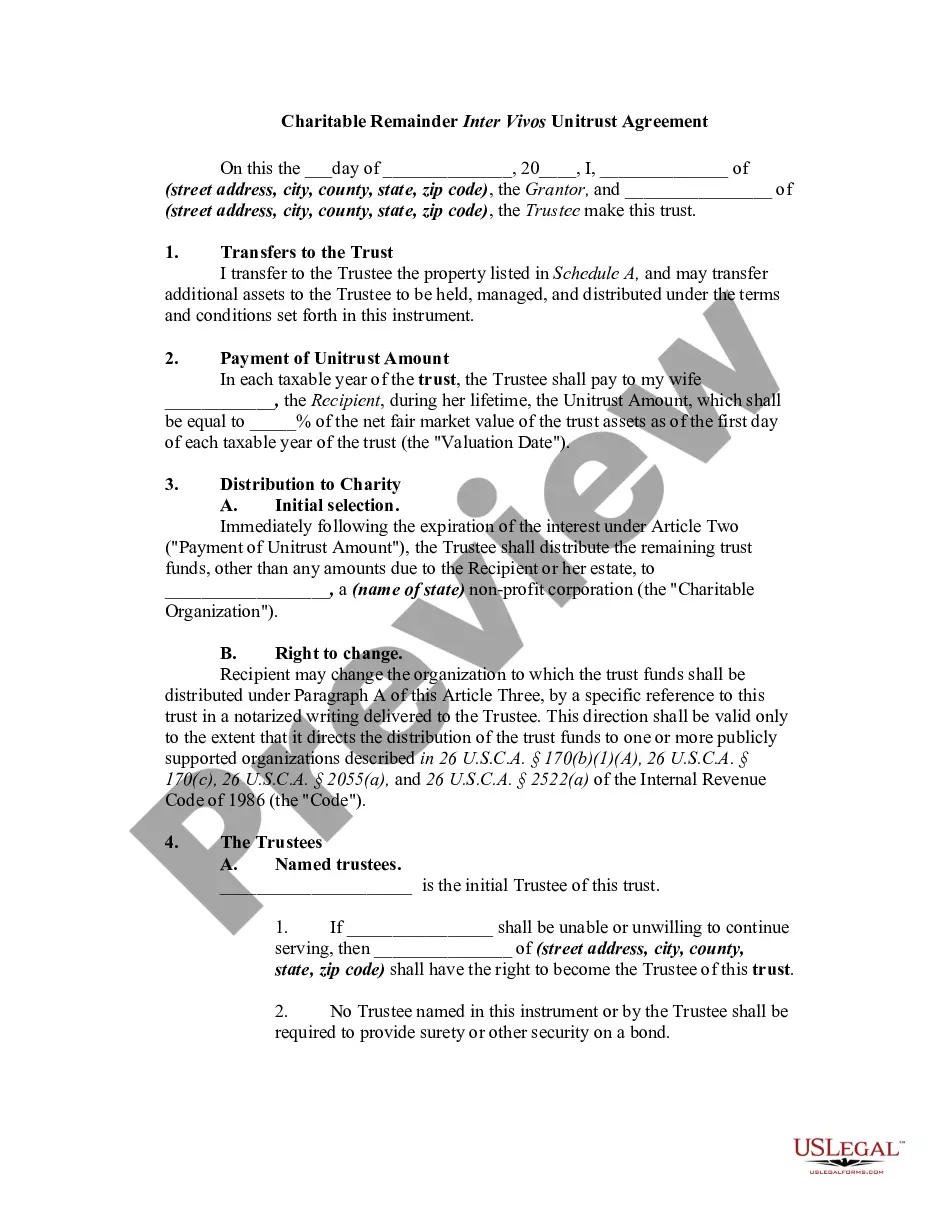
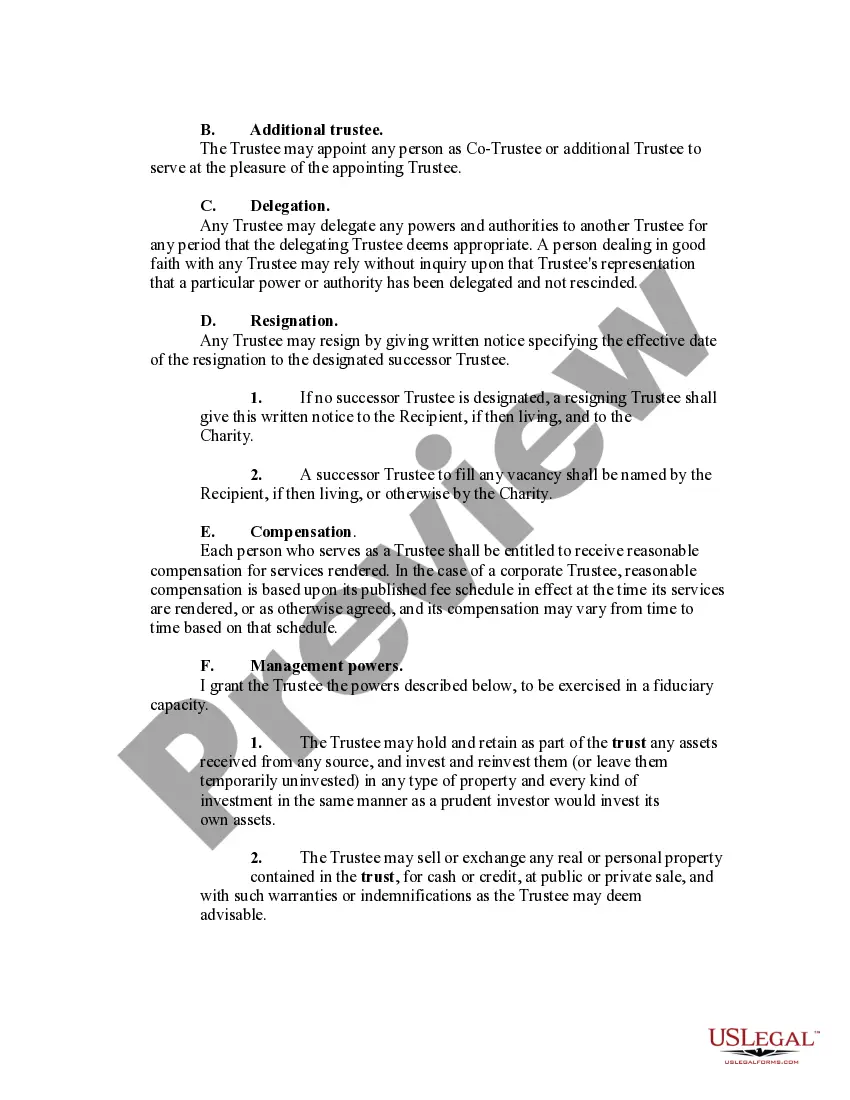
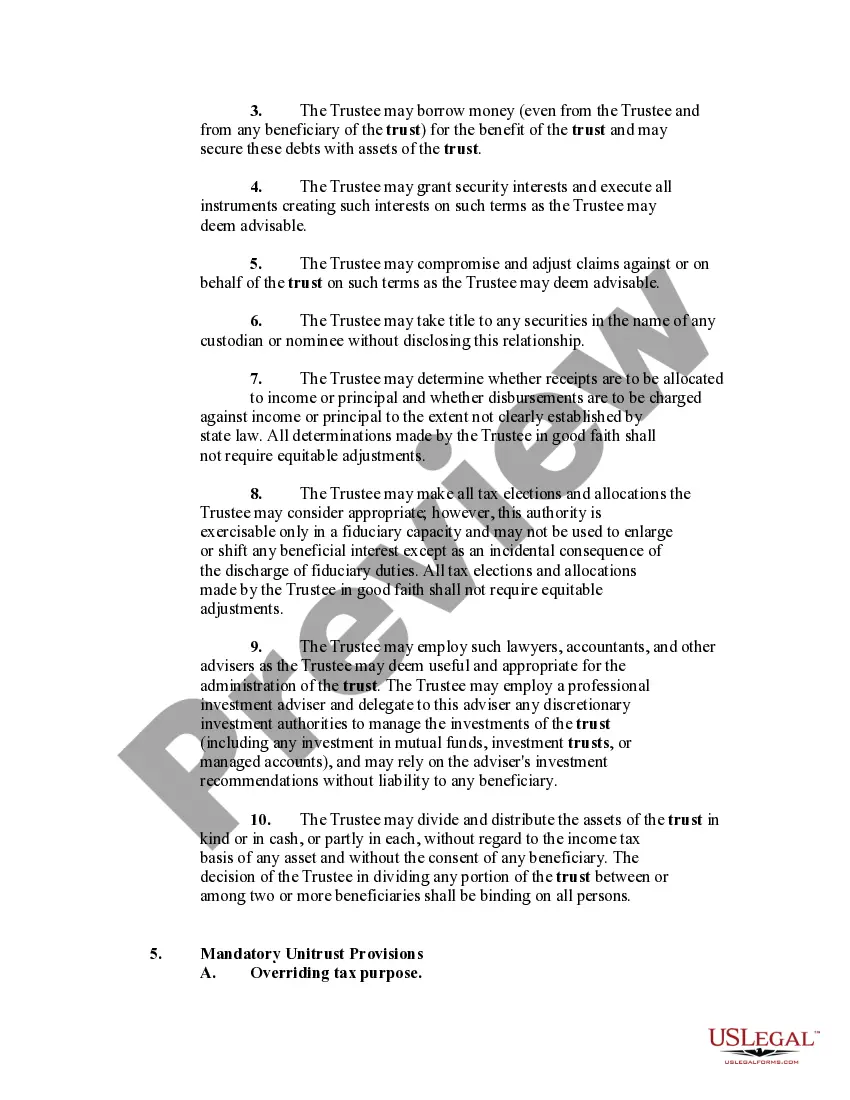
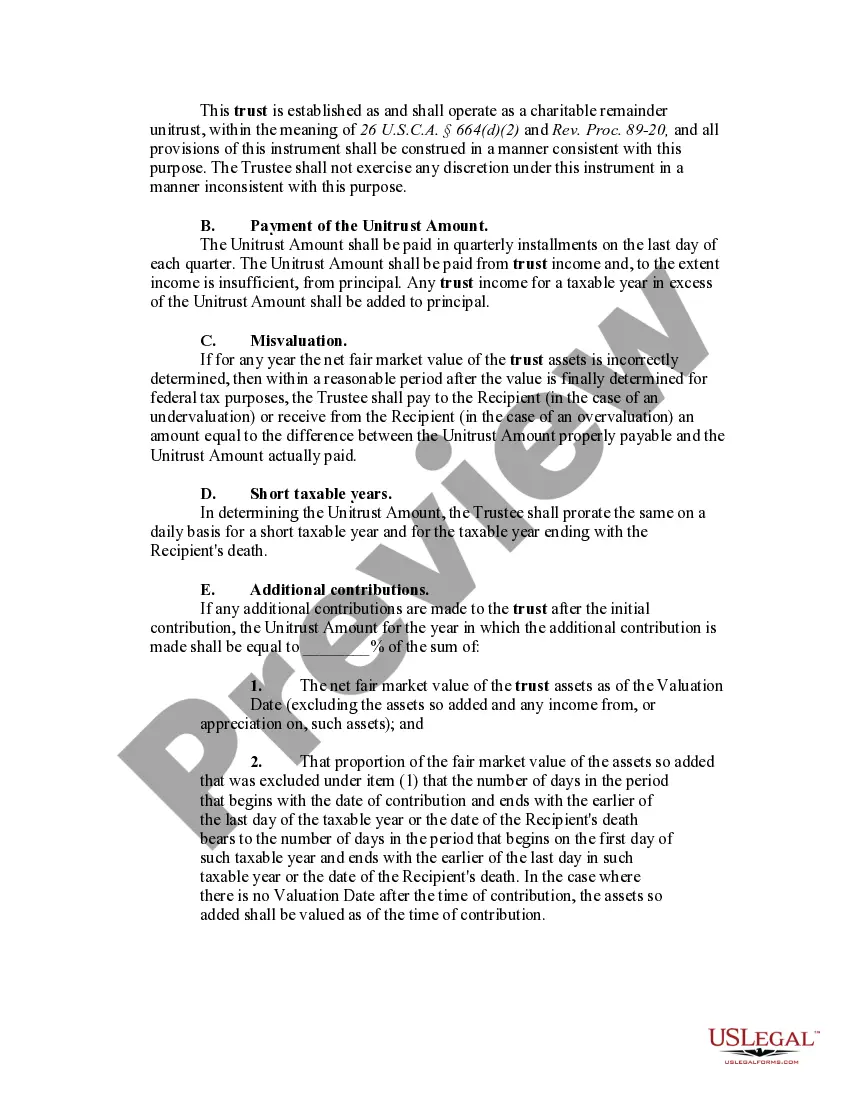
Charitable Remainder Living Trust Fillable For A Will
Description
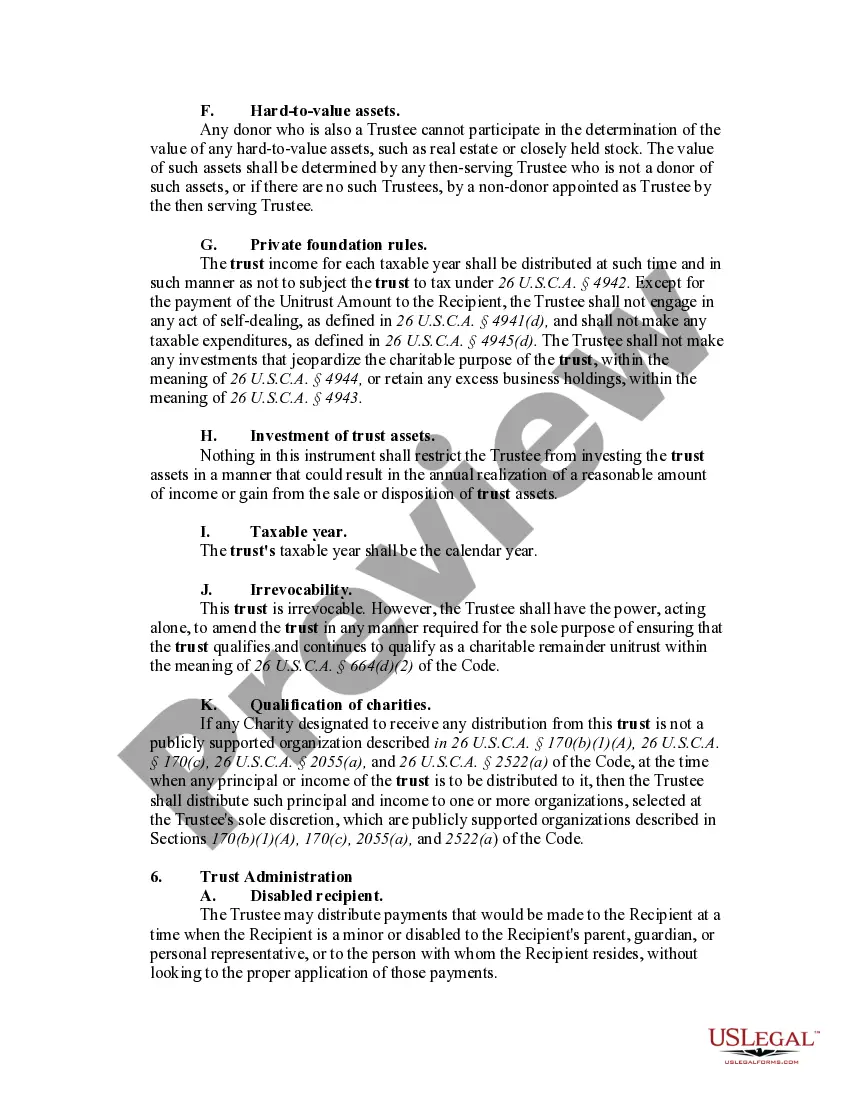
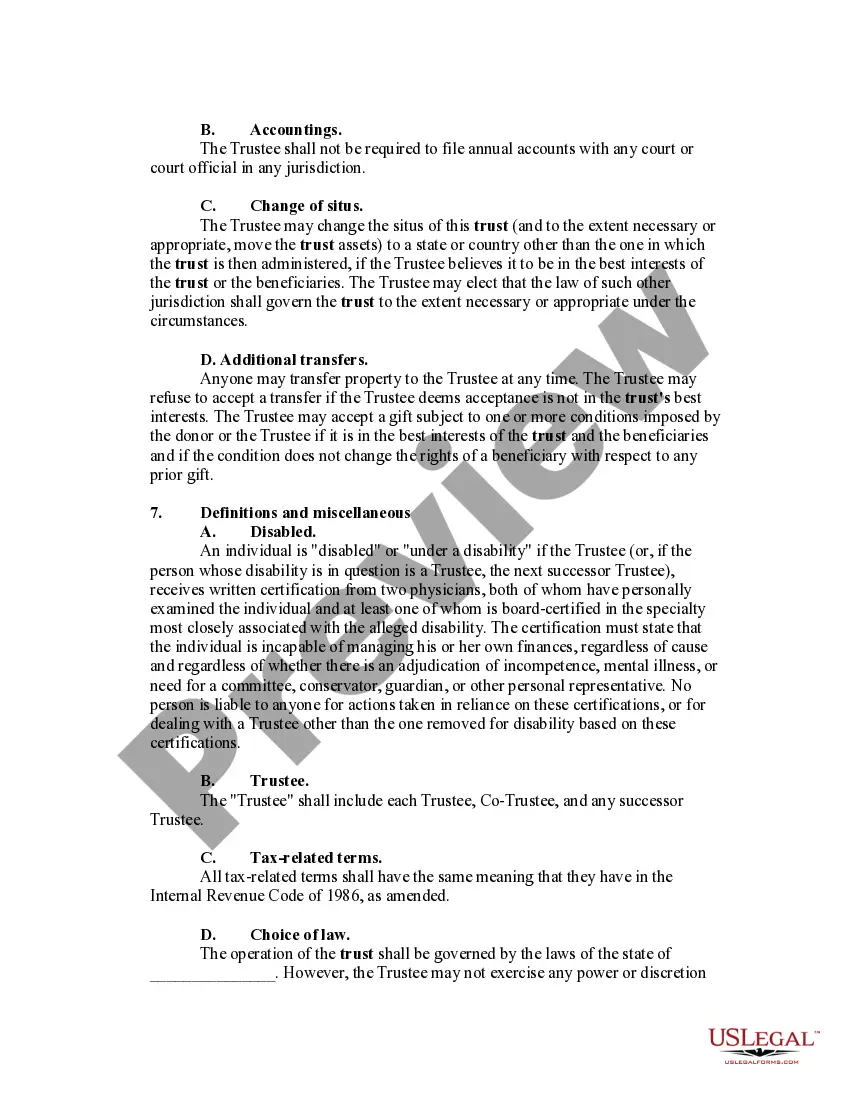
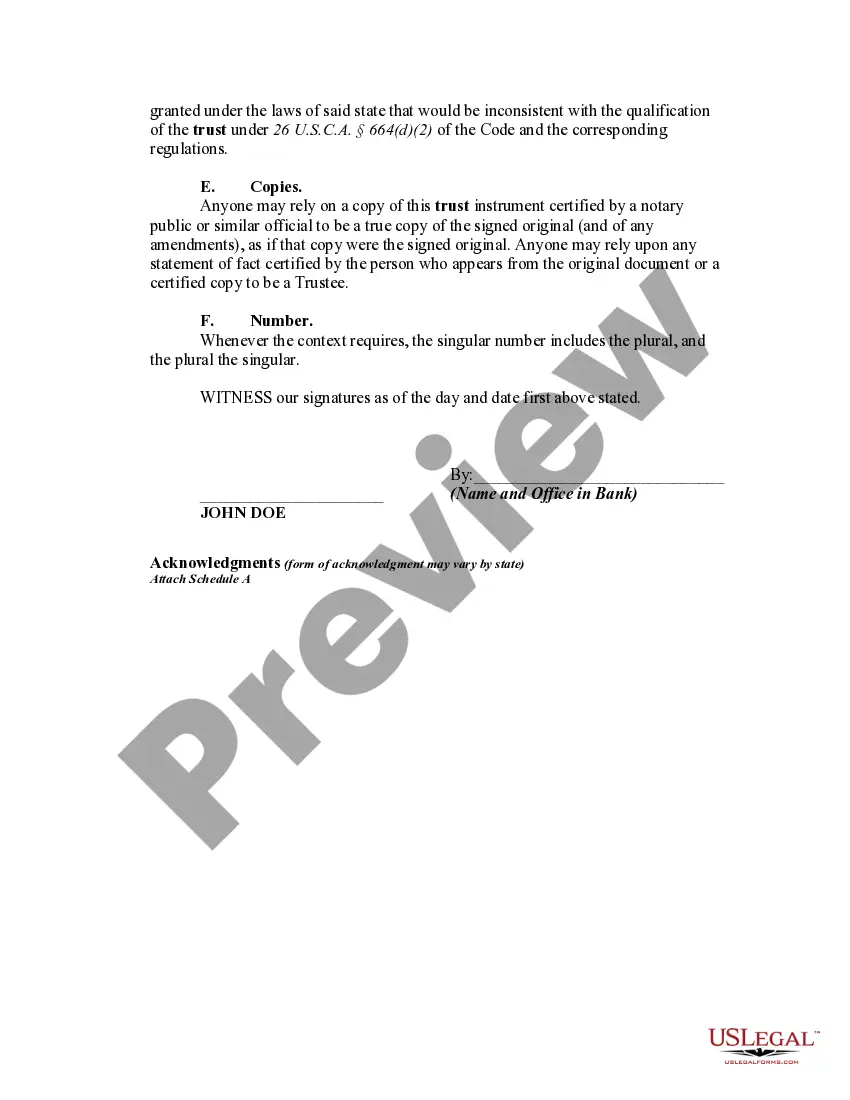
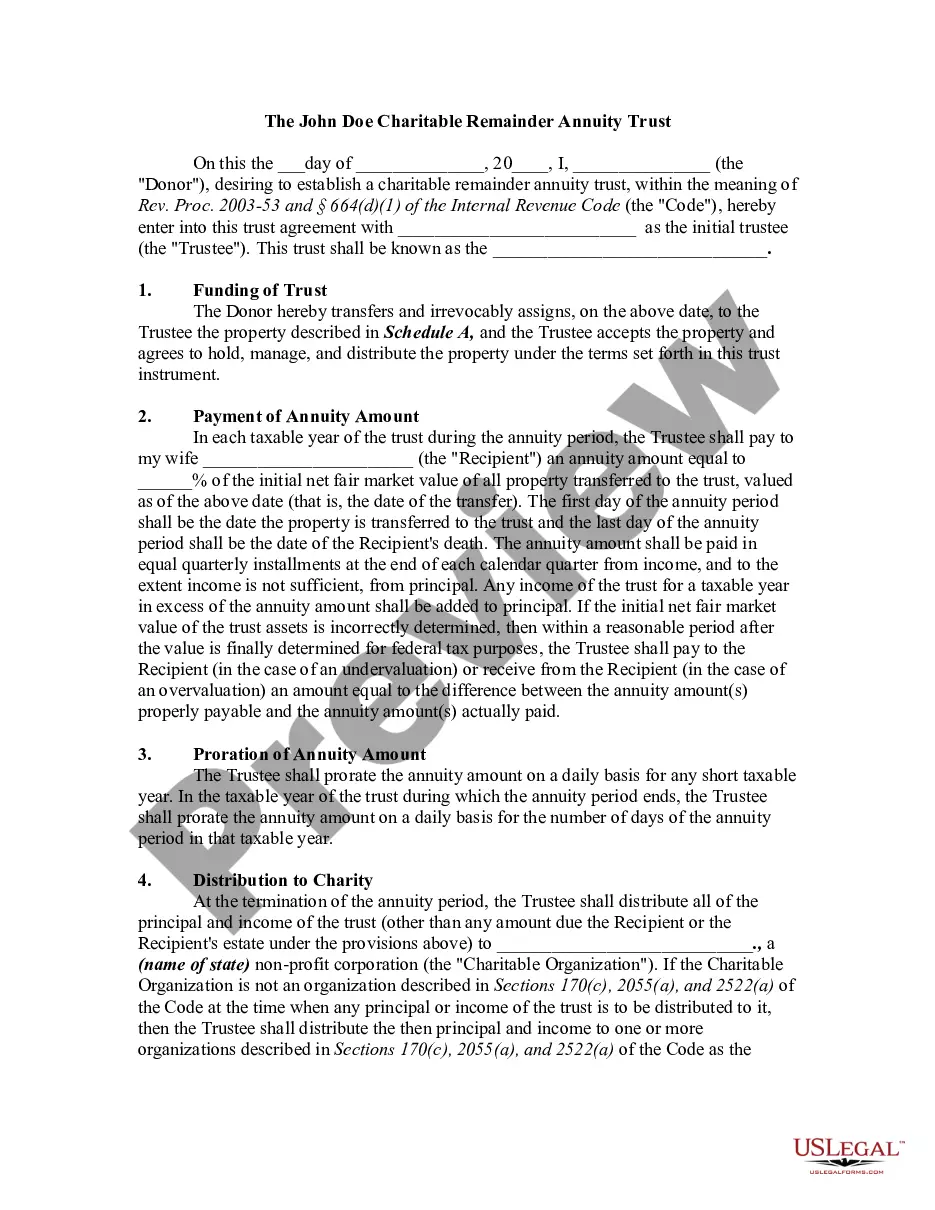
Get your form ready online
Our built-in tools help you complete, sign, share, and store your documents in one place.
Make edits, fill in missing information, and update formatting in US Legal Forms—just like you would in MS Word.
Download a copy, print it, send it by email, or mail it via USPS—whatever works best for your next step.
Sign and collect signatures with our SignNow integration. Send to multiple recipients, set reminders, and more. Go Premium to unlock E-Sign.
If this form requires notarization, complete it online through a secure video call—no need to meet a notary in person or wait for an appointment.
We protect your documents and personal data by following strict security and privacy standards.

Make edits, fill in missing information, and update formatting in US Legal Forms—just like you would in MS Word.

Download a copy, print it, send it by email, or mail it via USPS—whatever works best for your next step.

Sign and collect signatures with our SignNow integration. Send to multiple recipients, set reminders, and more. Go Premium to unlock E-Sign.

If this form requires notarization, complete it online through a secure video call—no need to meet a notary in person or wait for an appointment.

We protect your documents and personal data by following strict security and privacy standards.
Looking for another form?
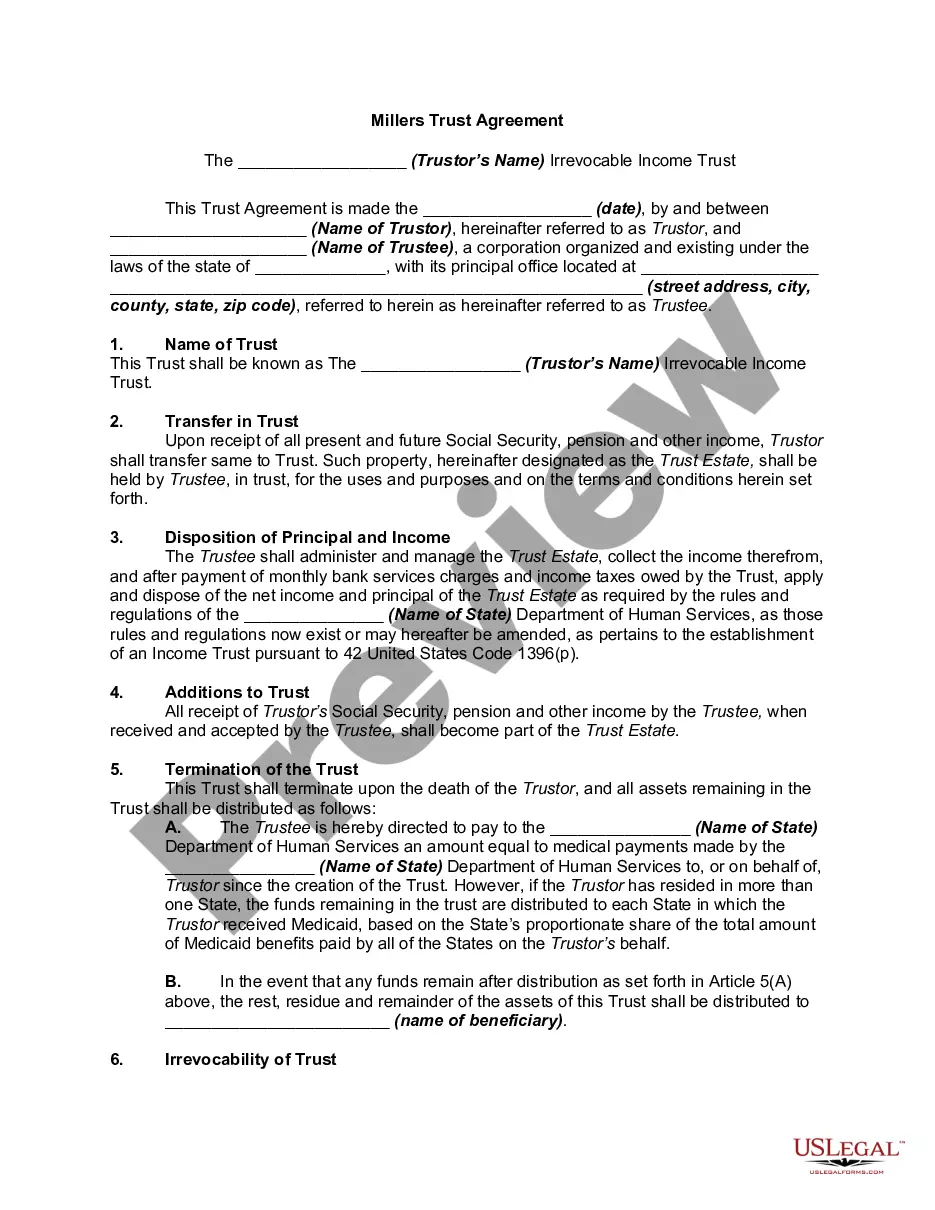

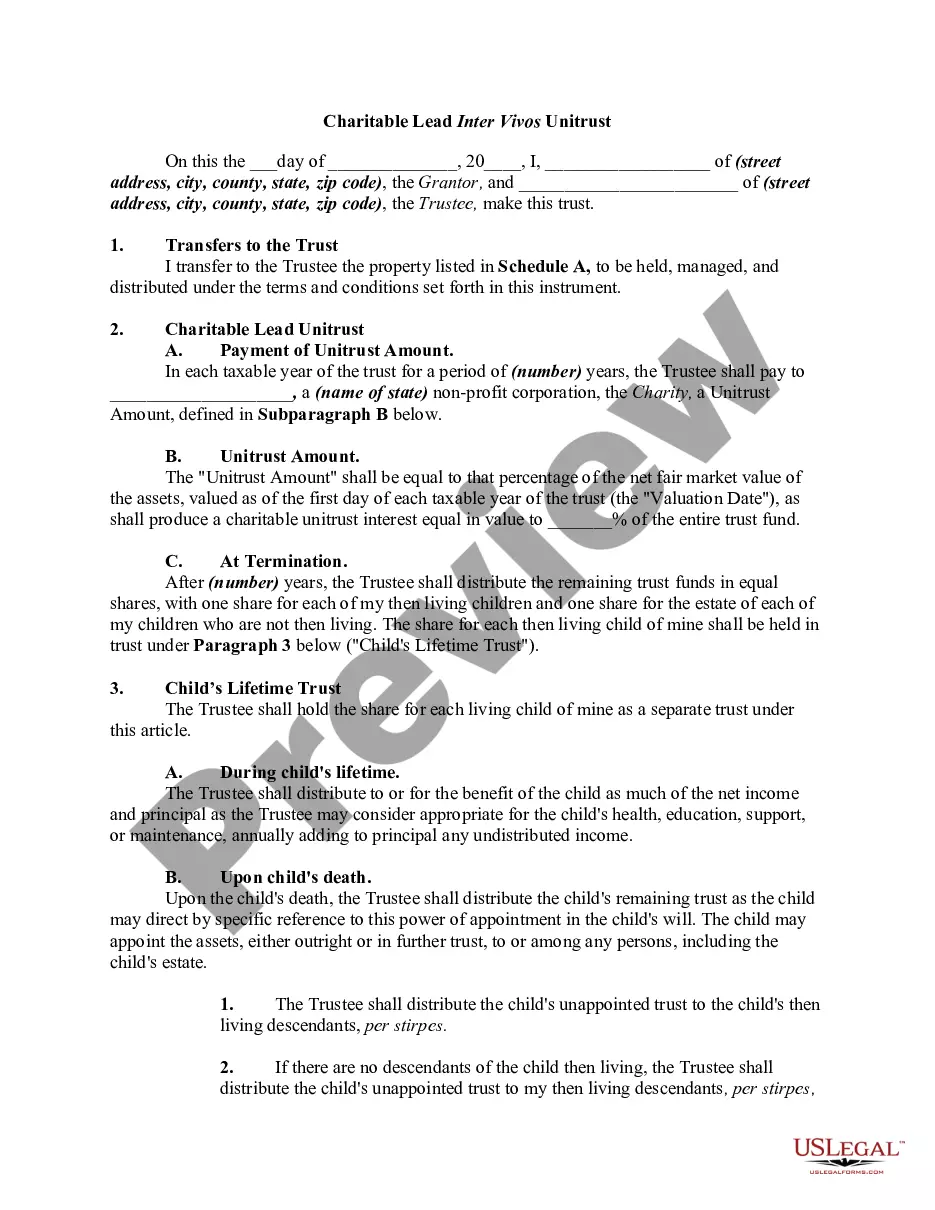
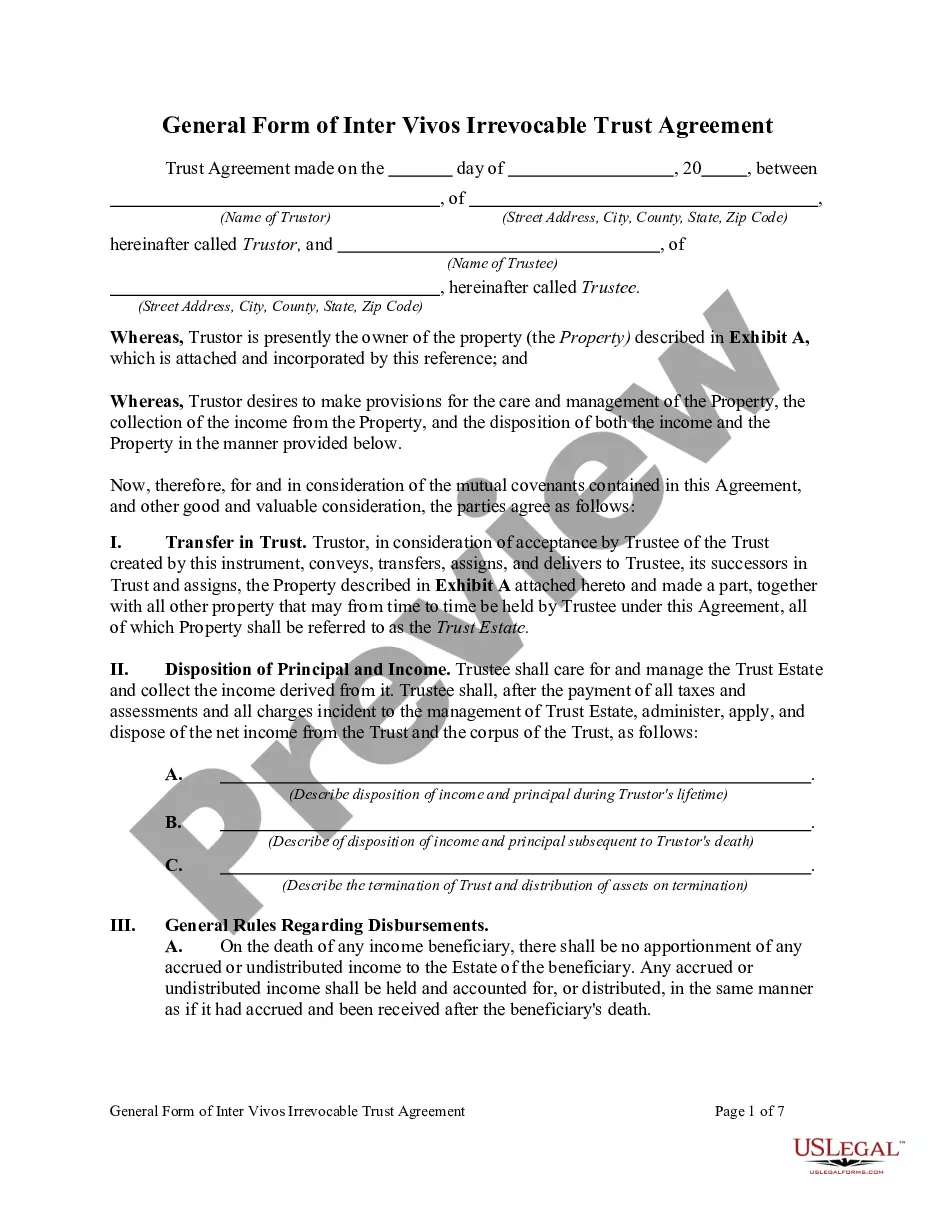
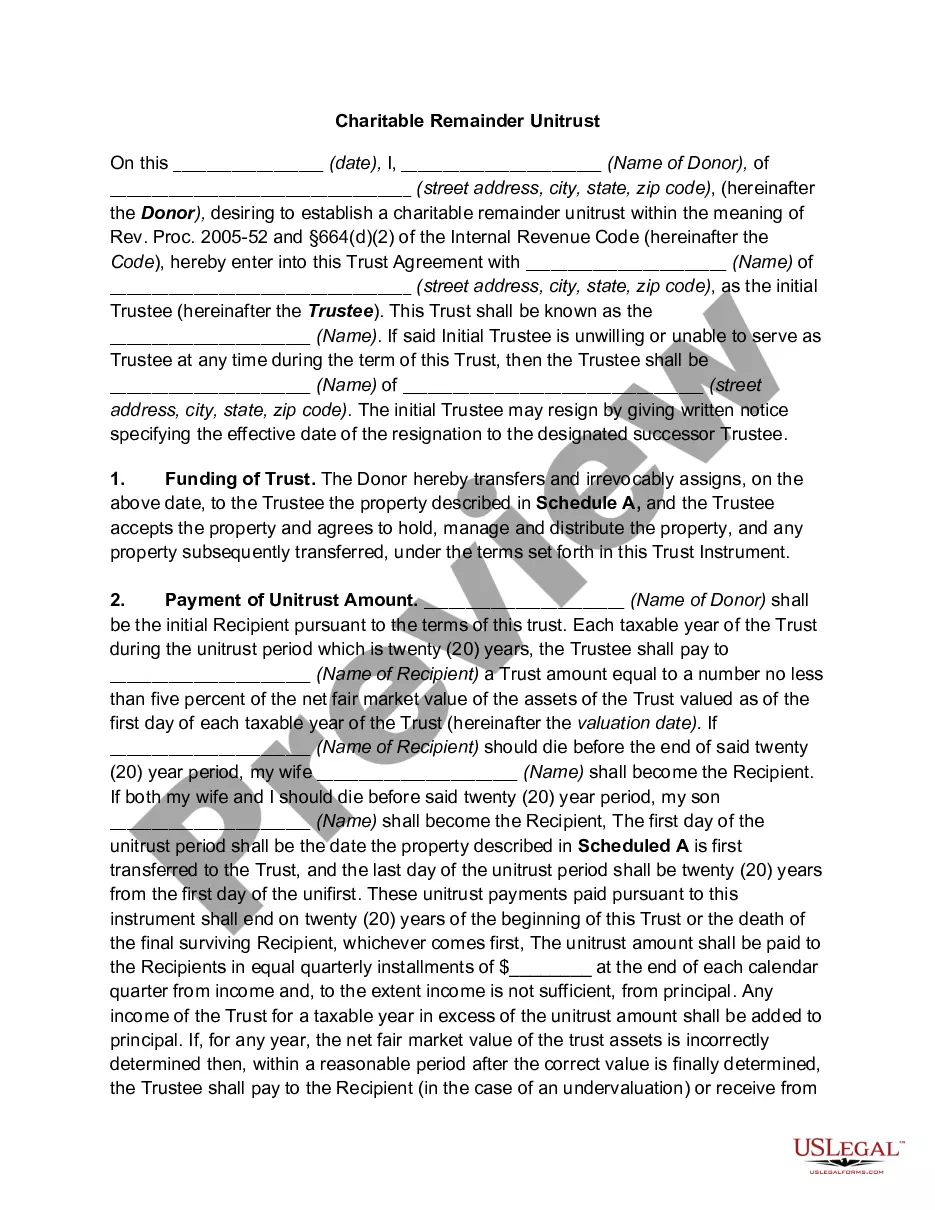
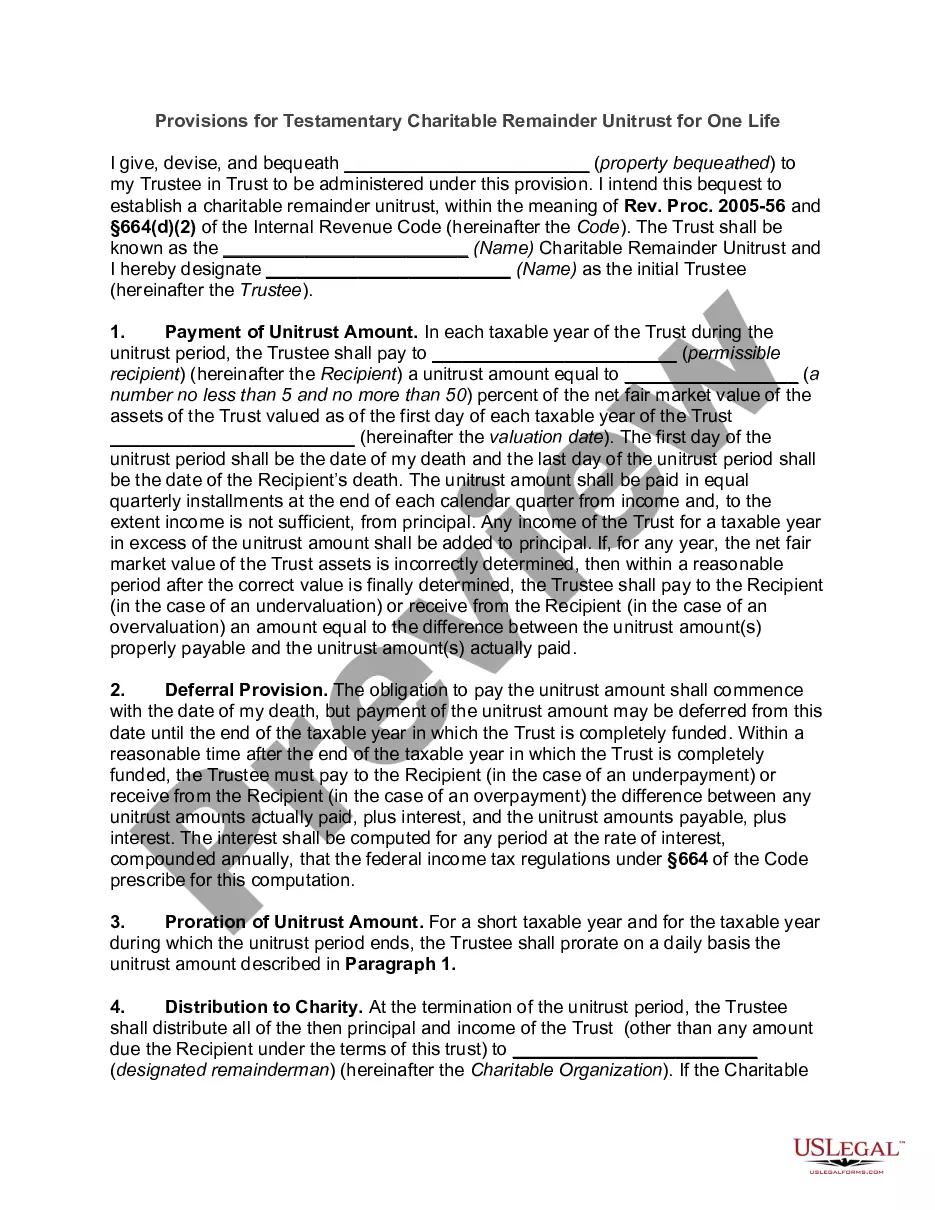
How to fill out Charitable Remainder Inter Vivos Unitrust Agreement?
- Sign in to your US Legal Forms account to download the desired template. Confirm that your subscription is active or renew it if necessary.
- Review the Preview mode and form description to ensure you select the correct form that complies with your local jurisdiction requirements.
- If the form doesn't meet your needs, utilize the Search tab to find another applicable template.
- Purchase the document by clicking the Buy Now button and select your preferred subscription plan. You will need to create an account to access the resources.
- Complete your purchase using either a credit card or PayPal for the subscription.
- Download your completed form and save it to your device. Access it later through the My Forms section in your profile.
By following these steps, you’ll efficiently create your Charitable Remainder Living Trust, ensuring your estate plan reflects your charitable intentions. US Legal Forms makes it hassle-free with its extensive library of legal forms.
Start your journey today and create your charitable remainder living trust with US Legal Forms – it’s the smart choice for secure estate planning!
Form popularity
FAQ
An example of a charitable trust is a charitable remainder trust, which allows individuals to donate assets while still receiving income from those assets for a specified time. For instance, you might establish a charitable remainder living trust fillable for a will to benefit a local nonprofit organization after providing income to your family for a certain number of years. This setup is beneficial for both the donor and the charity.
To form a charitable remainder living trust fillable for a will, start by deciding on the assets you wish to place in the trust. Next, determine the income beneficiaries and the charitable organization you want to support. It’s advisable to work with a legal professional or use online platforms like USLegalForms to help create the necessary documents and ensure compliance with applicable laws.
A charitable remainder living trust fillable for a will often includes an example where an individual transfers assets into the trust and specifies that a portion of the income will go to them or their beneficiaries for a set period. After this period ends, the remaining assets will go to a chosen charity. This not only supports the charity but also provides income during the lifetime of the grantor.
To calculate the charitable tax deduction for a charitable remainder living trust fillable for a will, you first need to determine the present value of the charitable interest. This involves assessing the total amount that will eventually go to the charity and discounting it based on the trust's term and expected rates of return. Consulting with a tax professional can provide guidance tailored to your specific situation and maximize your tax benefits.
Upon your death, a charitable remainder trust typically terminates, and the remaining assets are distributed according to the trust's terms. This means that, after fulfilling the income guarantees to the beneficiaries, any remaining funds go to the designated charitable organization. If you use a charitable remainder living trust fillable for a will, you can specify how these distributions occur. It is wise to plan these details with legal assistance to ensure your wishes are honored.
While a charitable remainder trust offers many benefits, there are some downsides to consider. One major concern is the loss of control over the assets once placed in trust, as they must be used for the specified charitable intent. Additionally, depending on how you structure it, you may face higher administrative costs. Understanding these aspects is crucial, and platforms like uslegalforms can guide you in creating a charitable remainder living trust fillable for a will with minimized risks.
The 5% rule for charitable remainder trust specifies that the payout to beneficiaries must be at least 5% of the trust's initial asset value. This ensures a balance between providing income to the beneficiaries and supporting charitable organizations. Utilizing a charitable remainder living trust fillable for a will can help clarify these conditions. As you plan, professional advice can add significant value to ensure your trust aligns with your goals.
Yes, you can create your own charitable remainder trust, allowing you to tailor its benefits to your specific needs. By using a charitable remainder living trust fillable for a will, you can easily establish the terms and designate beneficiaries. However, it's important to understand the legal requirements and implications of setting up such a trust. You may want to consult an estate planning professional to guide you through the process for optimal results.
The 5% rule for a charitable remainder trust states that the annual payout to the income beneficiary must be at least 5% of the fair market value of the trust’s assets at the time of the initial contribution. This rule ensures that the trust provides a reasonable income while preserving its charitable purpose. When creating a charitable remainder living trust fillable for a will, it's vital to consider this rule. Consultation with a legal professional may help you understand how this impacts your specific situation.
The income you can take from a charitable remainder trust is based on the trust's payout rate, which typically ranges from 5% to 7%. This means that if you establish a charitable remainder living trust fillable for a will, you can receive a predictable income stream for life or a set term. The actual amount can vary depending on the trust's value and the specific terms you set at creation. Additionally, this might benefit your financial situation and provide tax advantages.