Charitable Remainder Form Trust Contract With The Bank
Description
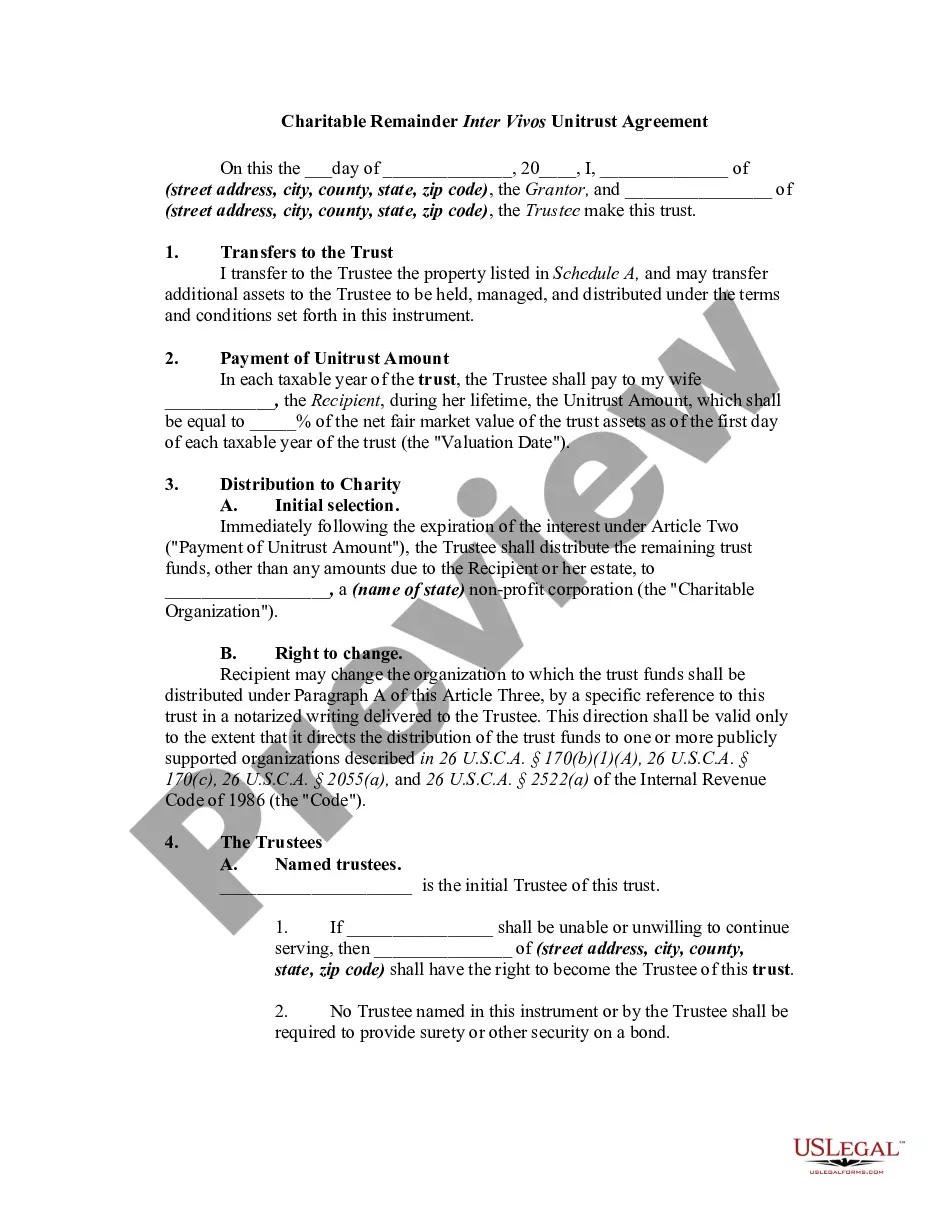
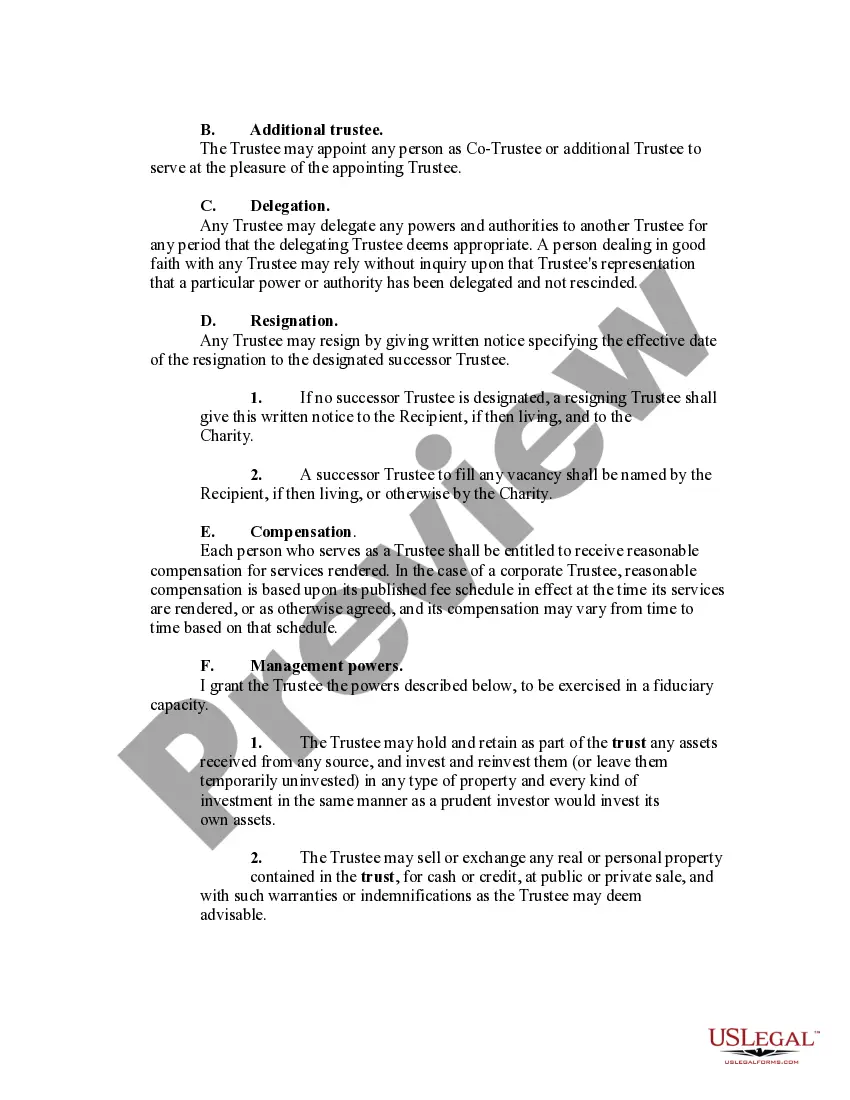
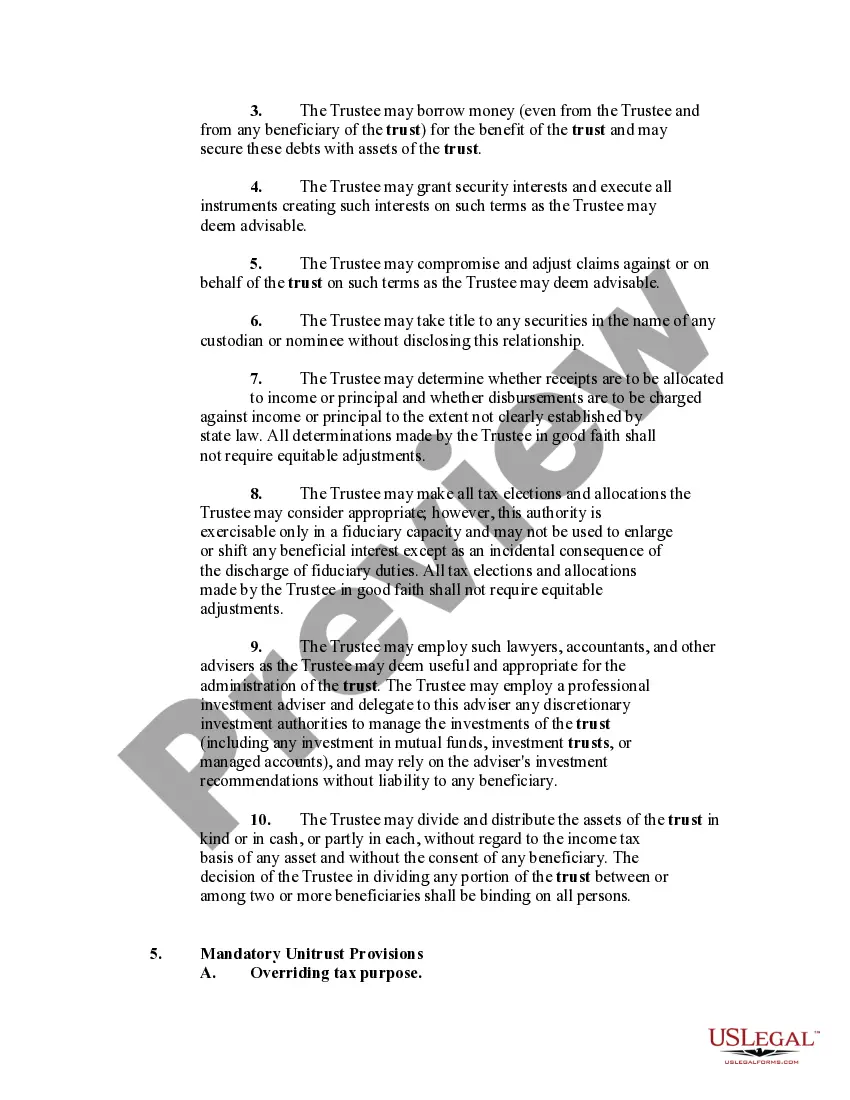
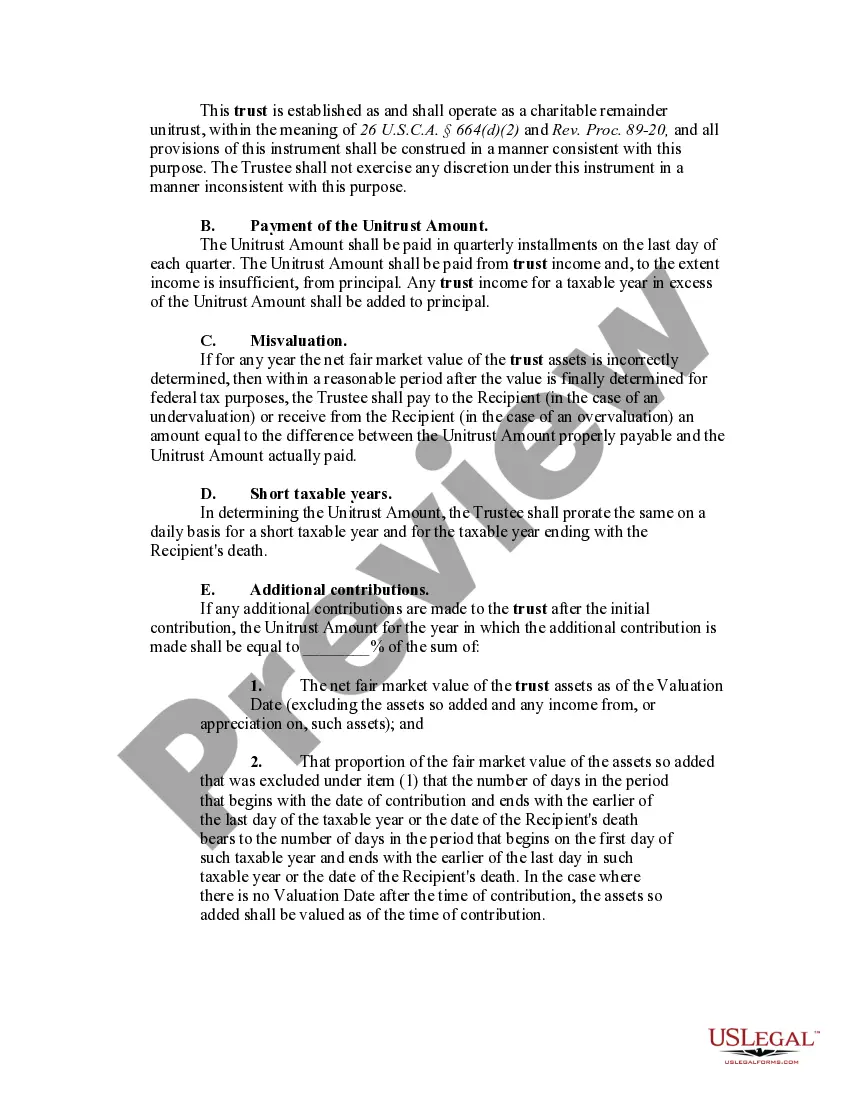
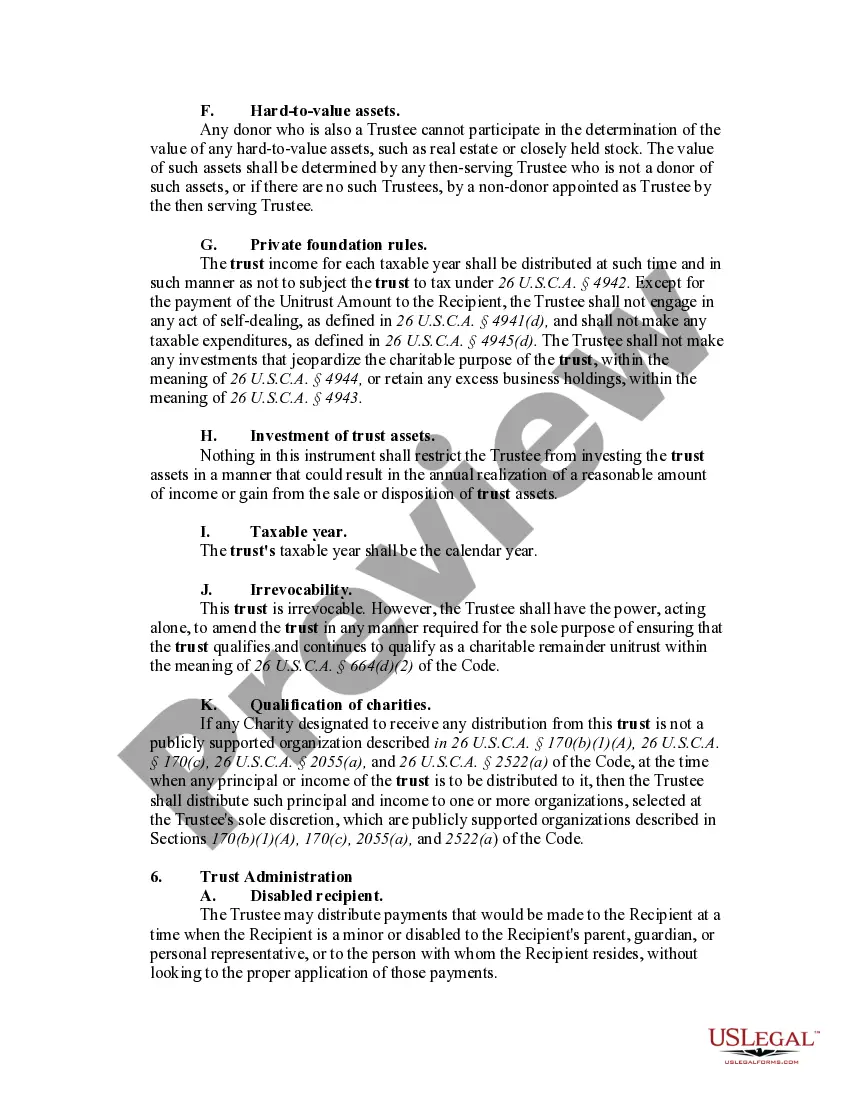
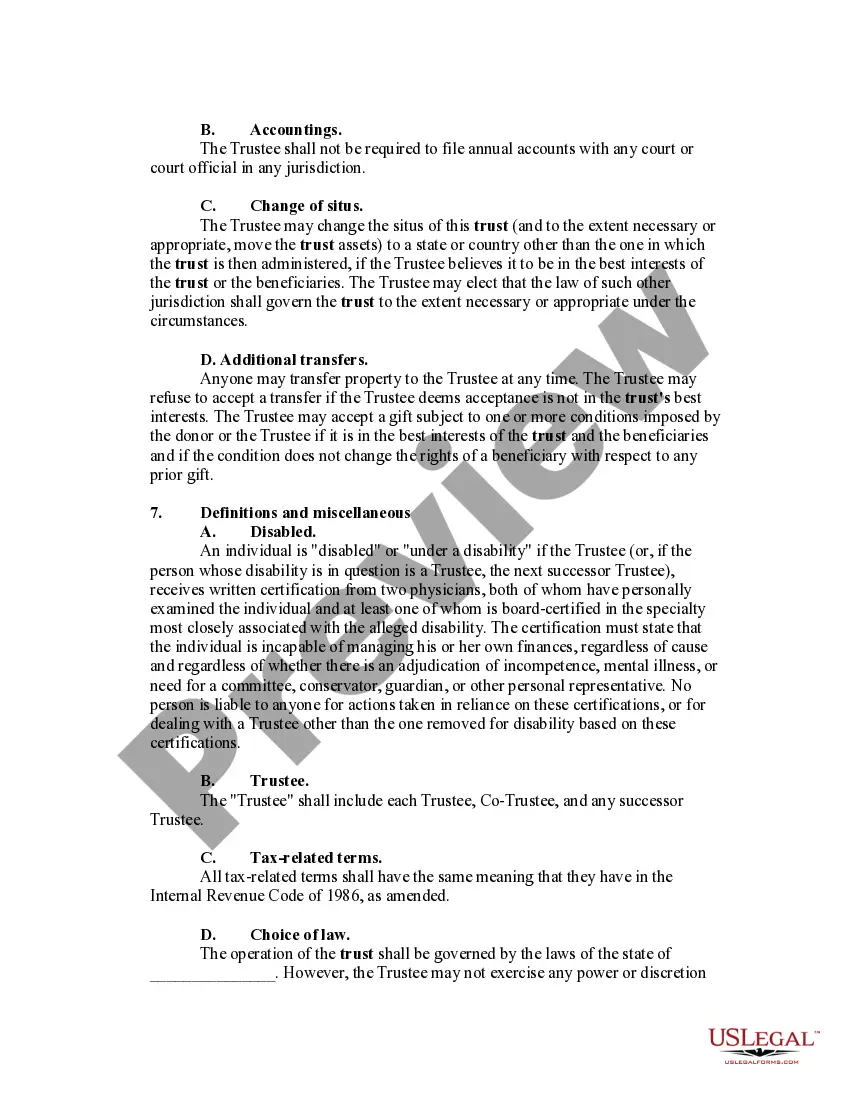
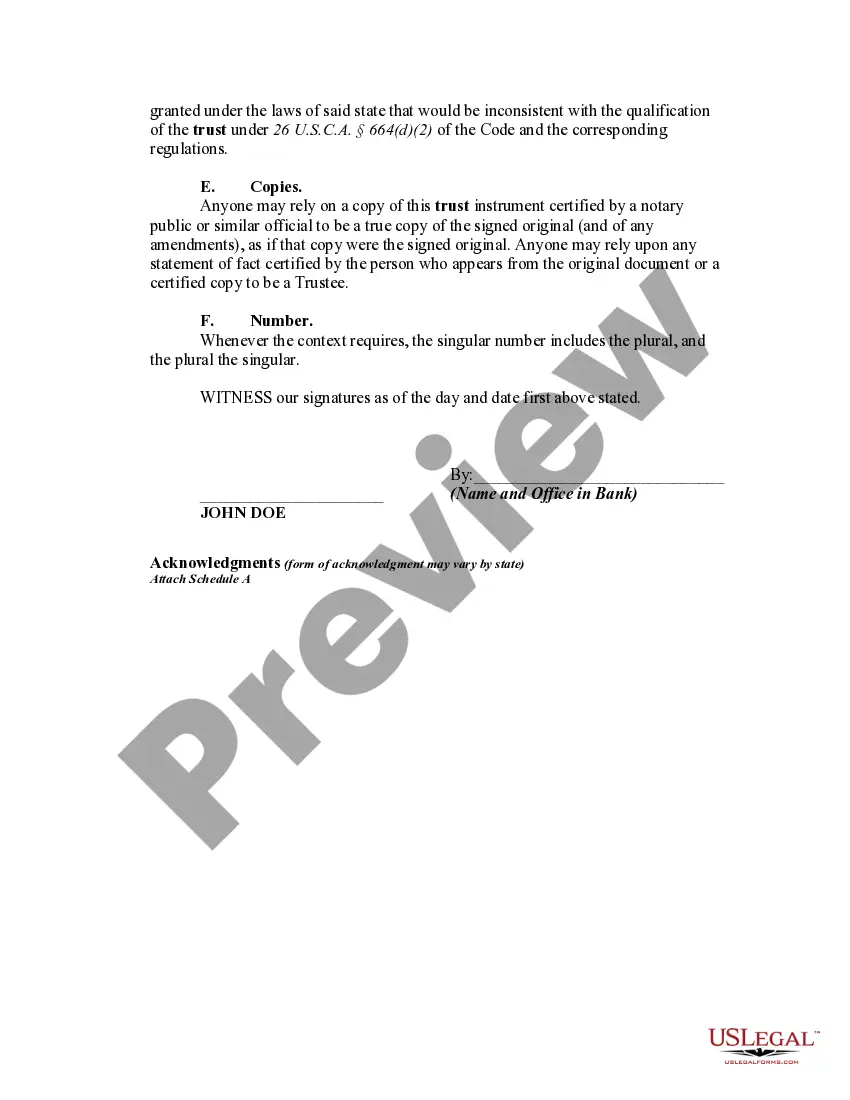
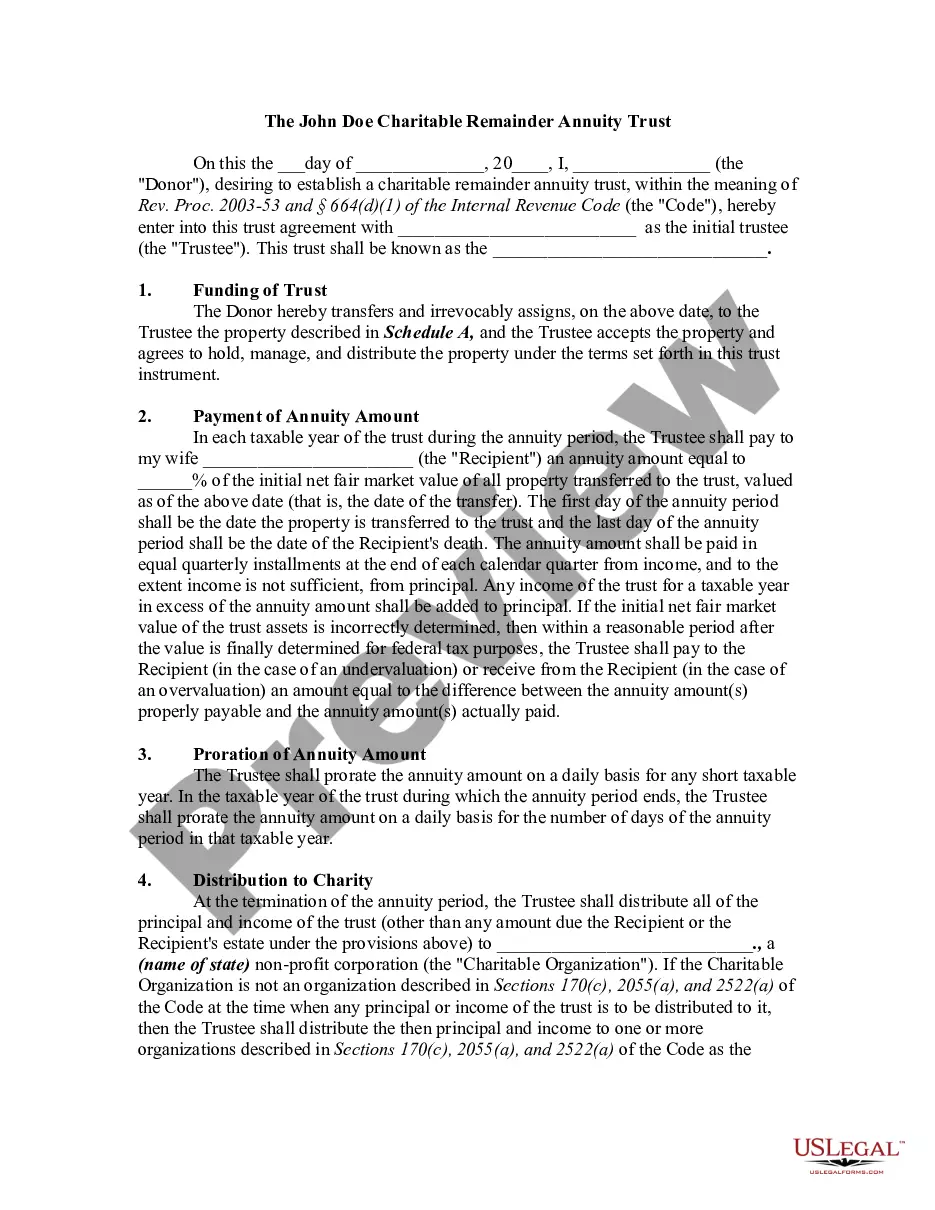
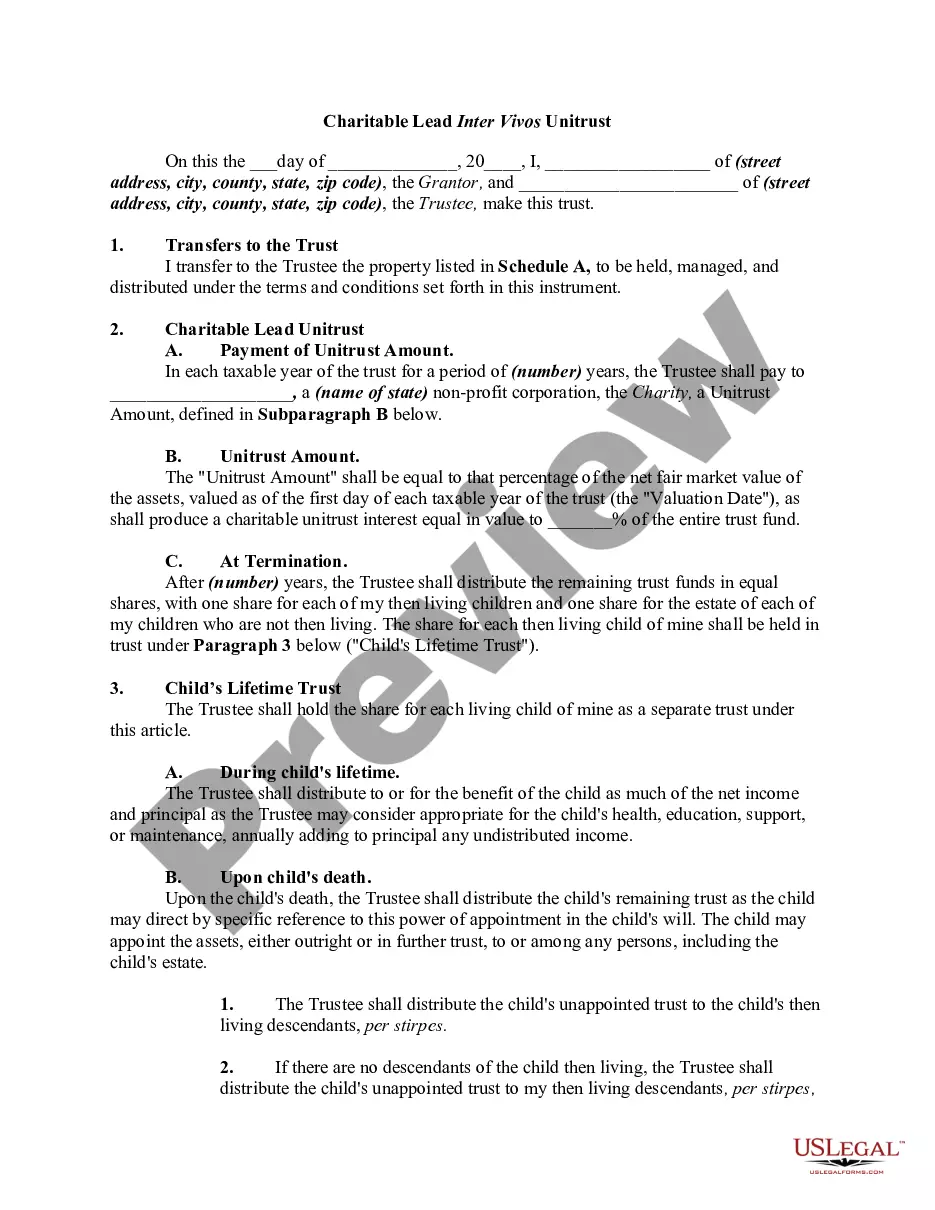
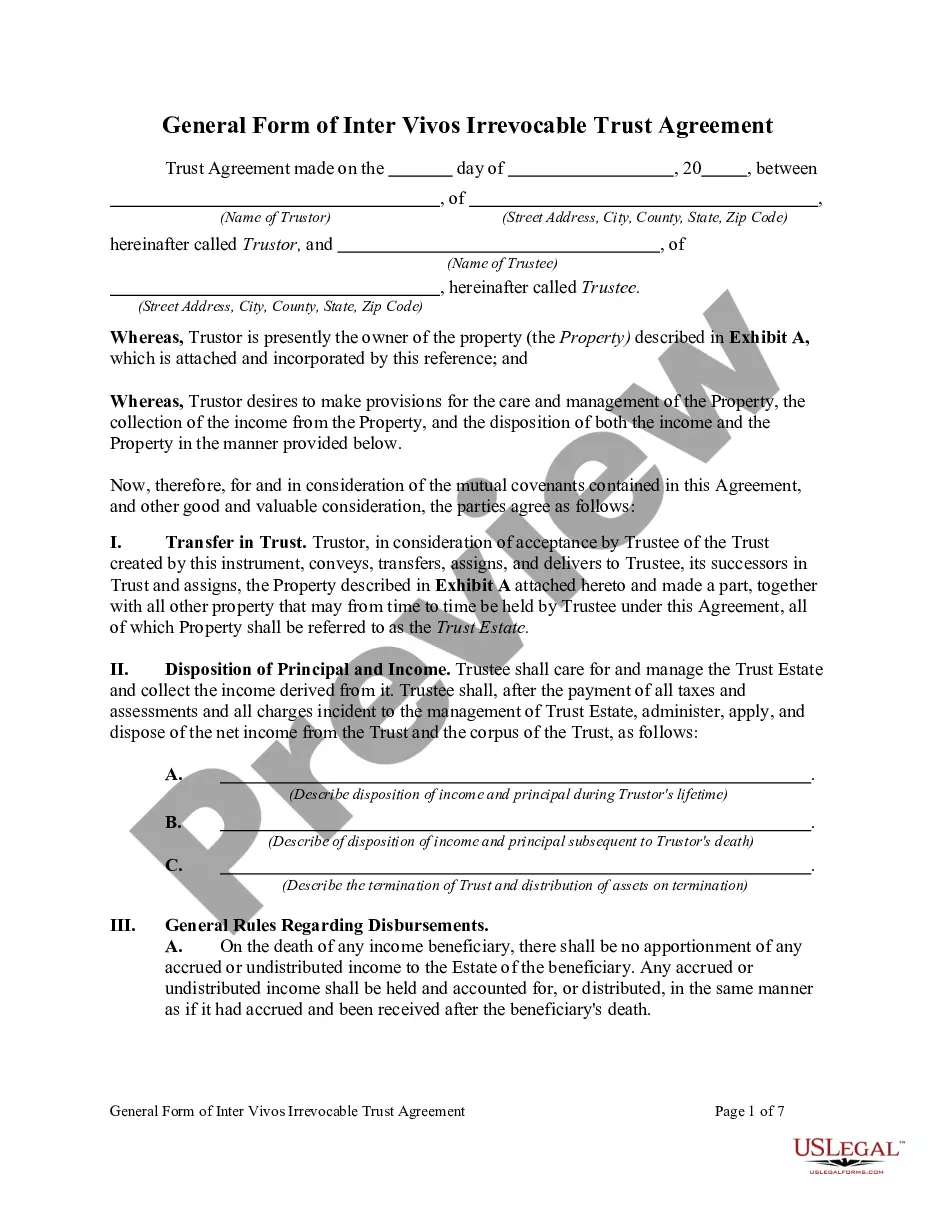
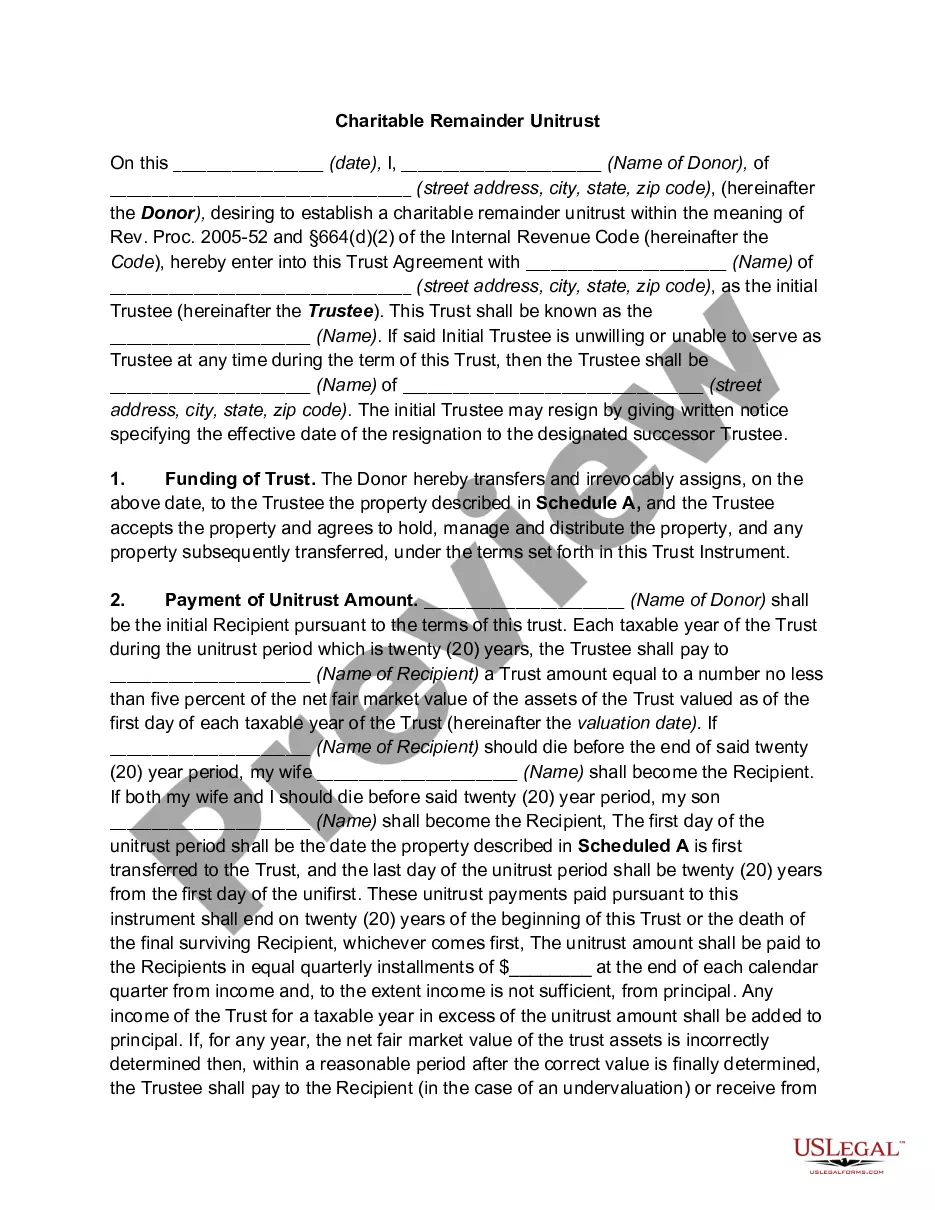
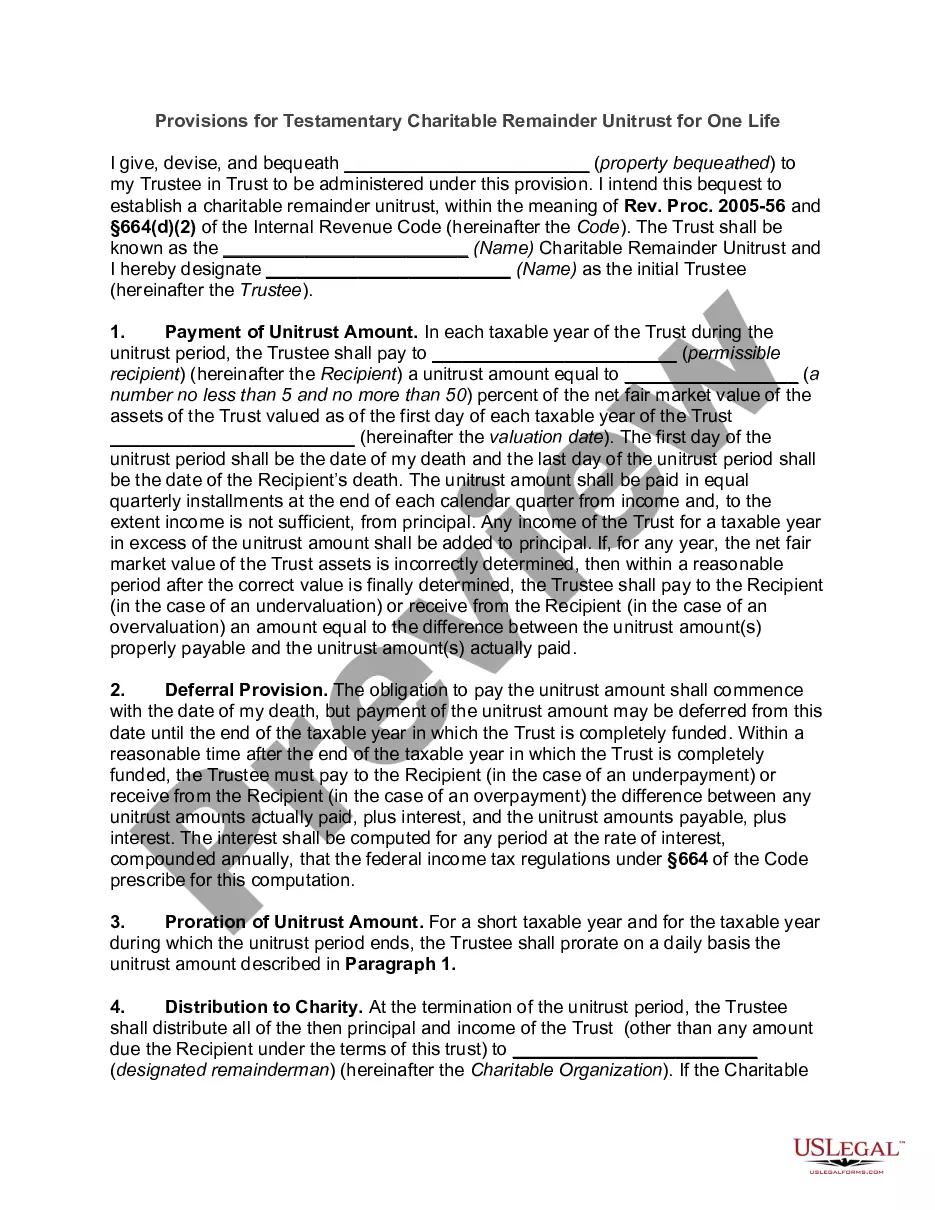
Get your form ready online
Our built-in tools help you complete, sign, share, and store your documents in one place.
Make edits, fill in missing information, and update formatting in US Legal Forms—just like you would in MS Word.
Download a copy, print it, send it by email, or mail it via USPS—whatever works best for your next step.
Sign and collect signatures with our SignNow integration. Send to multiple recipients, set reminders, and more. Go Premium to unlock E-Sign.
If this form requires notarization, complete it online through a secure video call—no need to meet a notary in person or wait for an appointment.
We protect your documents and personal data by following strict security and privacy standards.

Make edits, fill in missing information, and update formatting in US Legal Forms—just like you would in MS Word.

Download a copy, print it, send it by email, or mail it via USPS—whatever works best for your next step.

Sign and collect signatures with our SignNow integration. Send to multiple recipients, set reminders, and more. Go Premium to unlock E-Sign.

If this form requires notarization, complete it online through a secure video call—no need to meet a notary in person or wait for an appointment.

We protect your documents and personal data by following strict security and privacy standards.
Looking for another form?







How to fill out Charitable Remainder Inter Vivos Unitrust Agreement?
- Begin by checking the form preview and description on the US Legal Forms website to ensure it matches your specific requirements.
- If necessary, utilize the search function to explore alternative templates until you find the one that aligns with your needs.
- Select your desired document by clicking the Buy Now button and review available subscription options.
- Complete your registration for account access, if you are a new user, and proceed with purchasing the subscription.
- Enter your payment details via credit card or PayPal to complete your order.
- Download the completed document directly to your device and access it in the My Forms section of your profile whenever needed.
In conclusion, US Legal Forms simplifies the process of obtaining legal forms, including a Charitable Remainder Form Trust Contract with the Bank. With a vast library of over 85,000 forms and premium expert assistance available, you can be confident in creating precise and legally sound documents.
Start your legal documentation journey with US Legal Forms today and experience the benefits firsthand!
Form popularity
FAQ
The minimum distribution for a charitable trust varies depending on the type of trust established. For CRUTs, there is a mandated annual payment based on the trust's fair market value calculated as of the previous year. Understanding these distributions is crucial, and you can simplify the process with a Charitable remainder form trust contract with the bank that aligns with your financial goals.
The 10% rule states that the present value of the charitable remainder interest must be at least 10% of the total value of the trust assets at the time of creation. This rule ensures that a significant portion of the trust goes to charity, making it a vital aspect of any Charitable remainder form trust contract with the bank. By adhering to this rule, you maximize the benefits for both you and the charitable organization.
To establish a Charitable Remainder Unitrust (CRUT), you need to create a trust document that meets specific legal requirements. This includes naming a qualified charity as the remainder beneficiary, determining the payout rate, and ensuring the trust generates a minimum distribution. Additionally, you must be able to provide a Charitable remainder form trust contract with the bank that aligns with IRS guidelines.
Filing a charitable remainder trust involves several steps, starting with drafting a charitable remainder form trust contract with the bank. You'll need to gather relevant financial information and decide the terms of the trust. Once you've prepared the necessary documents, you should also file the required tax forms with the IRS. Using a trusted platform like UsLegalForms can guide you through the process, ensuring everything is completed correctly.
Yes, you can file form 5227 electronically, which simplifies the process significantly. This option allows you to handle your charitable remainder form trust contract with the bank more efficiently. Additionally, using electronic filing helps ensure your submission is accurate and timely. Always check the IRS website for the most current guidelines on electronic submissions.
Yes, charitable trusts, including those governed by a charitable remainder form trust contract with the bank, typically must file a tax return. This ensures transparency regarding income generated and distributions made from the trust. Specific filing requirements may depend on the trust's structure and tax status, so consult a tax advisor to clarify your exact obligations. Filing accurately is essential to maintain compliance with tax laws.
To generate form 5227 for a charitable trust, you can find the form on the IRS website or through tax preparation software. When filling it out, reference the data from your charitable remainder form trust contract with the bank, as this will provide essential information. Make sure to follow IRS instructions closely to avoid any errors. If in doubt, seek assistance from a tax professional who is familiar with charitable trusts.
The primary IRS form for a charitable trust is form 5227, which you must file to report the activities of the trust. This form provides detailed information about the charitable remainder form trust contract with the bank, including income, distributions, and charitable beneficiaries. Regularly filing this form helps maintain compliance with IRS requirements and ensures that your trust operates smoothly. Consulting with a tax professional is advisable for the accurate completion of this form.
While charitable remainder trusts offer many benefits, they also have some downsides. One significant drawback is the complexity involved in managing the trust, particularly regarding tax regulations and compliance. Additionally, the charitable remainder form trust contract with the bank ties up your assets for an extended period, which may limit your financial flexibility. Evaluating your financial situation with a trusted advisor can help weigh the pros and cons.
Form 5227 is required for any charitable remainder trust that generates annual income or distributions. If your trust fits under the charitable remainder form trust contract with the bank, you must file this form to inform the IRS of the financial activities. Additionally, if the trust has a tax-exempt status, you also need to ensure compliance with IRS filing requirements. Consulting a tax professional can clarify your specific filing obligations.