Charitable Remainder Agreement Withdrawals
Description
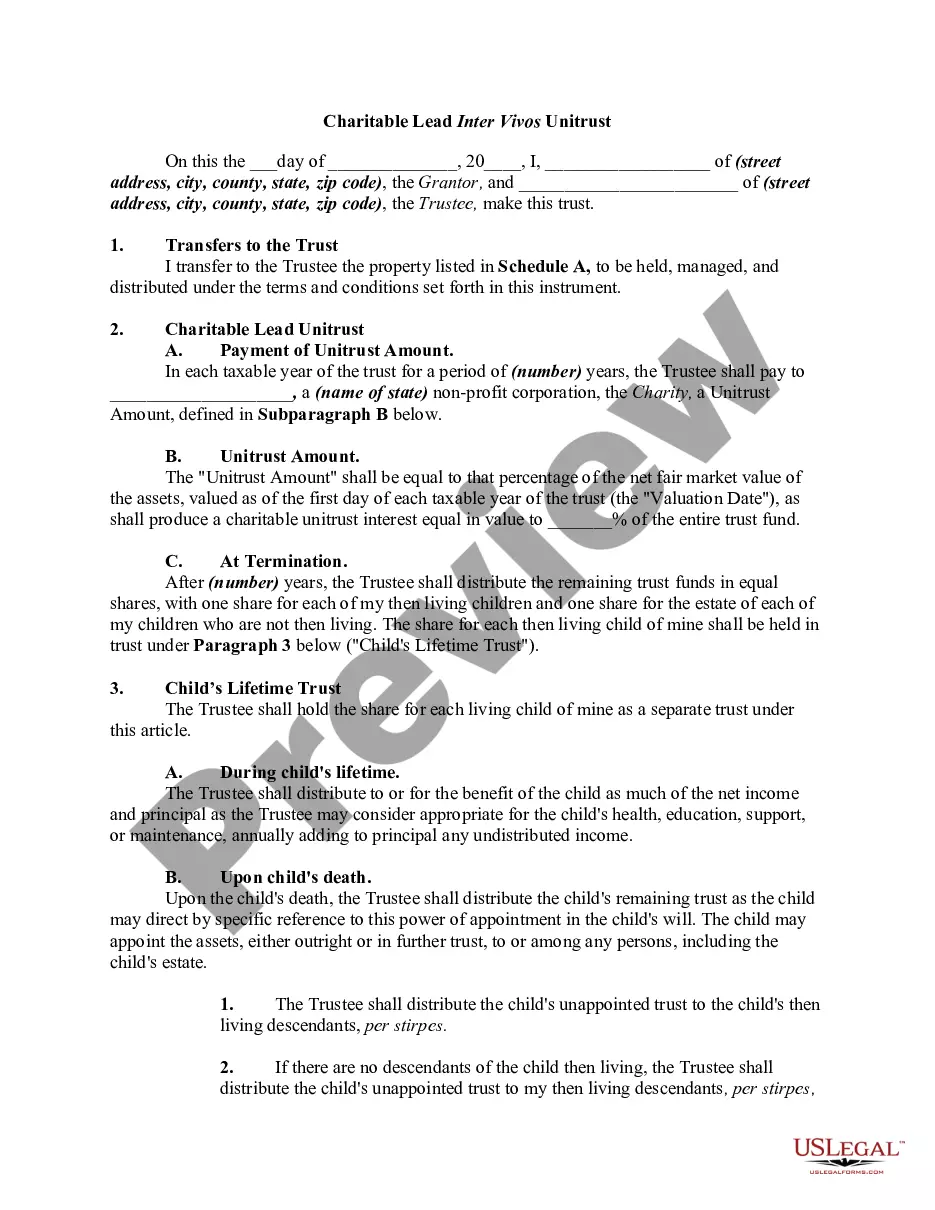
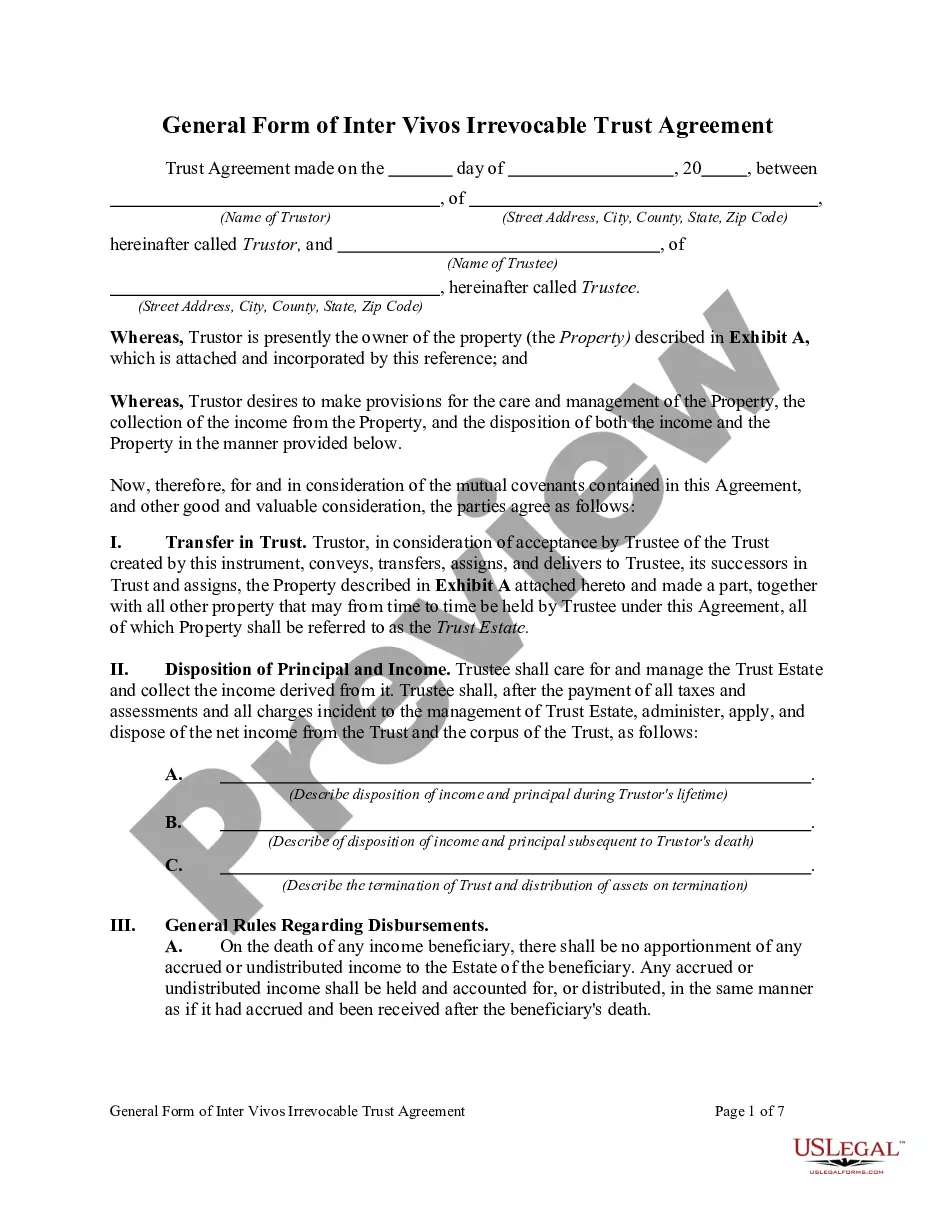
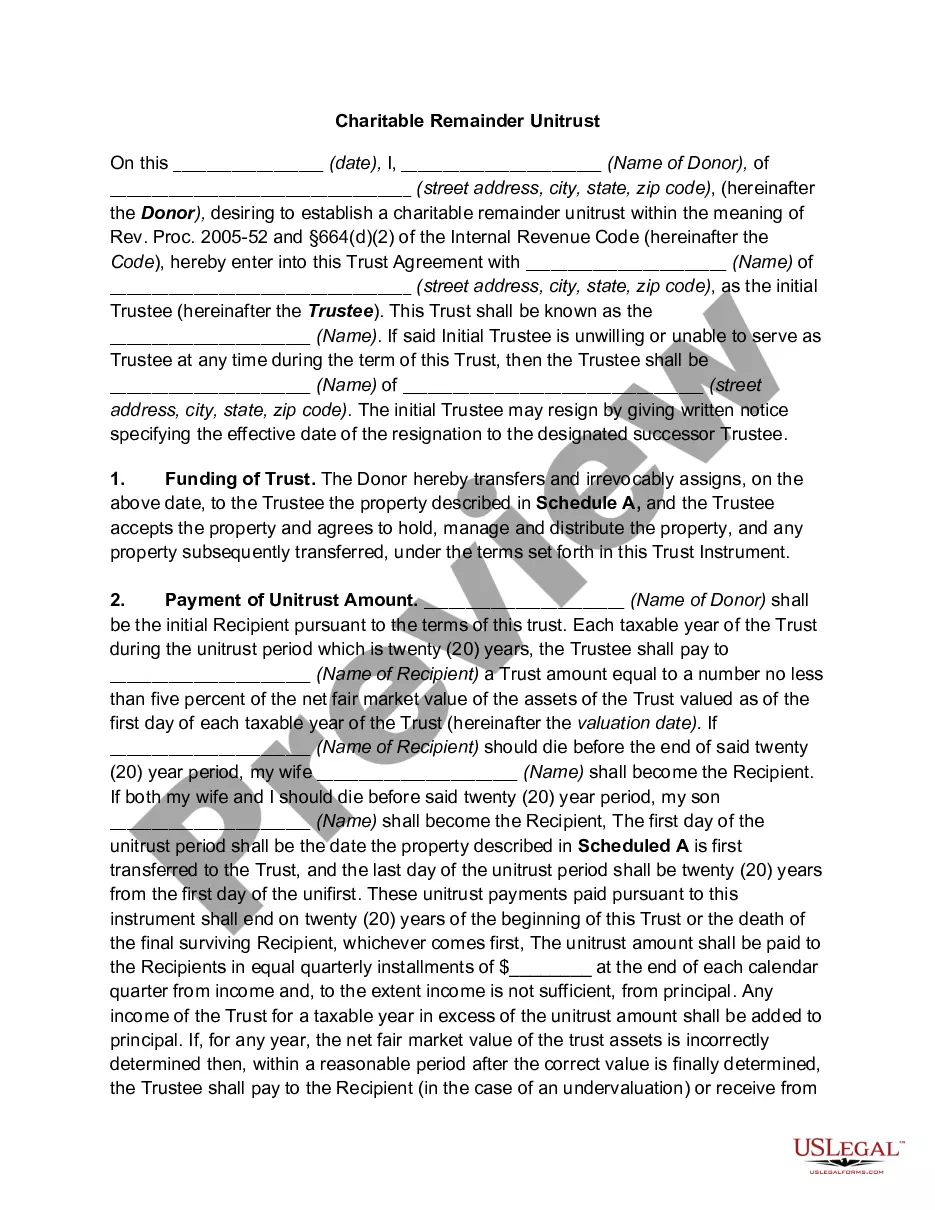
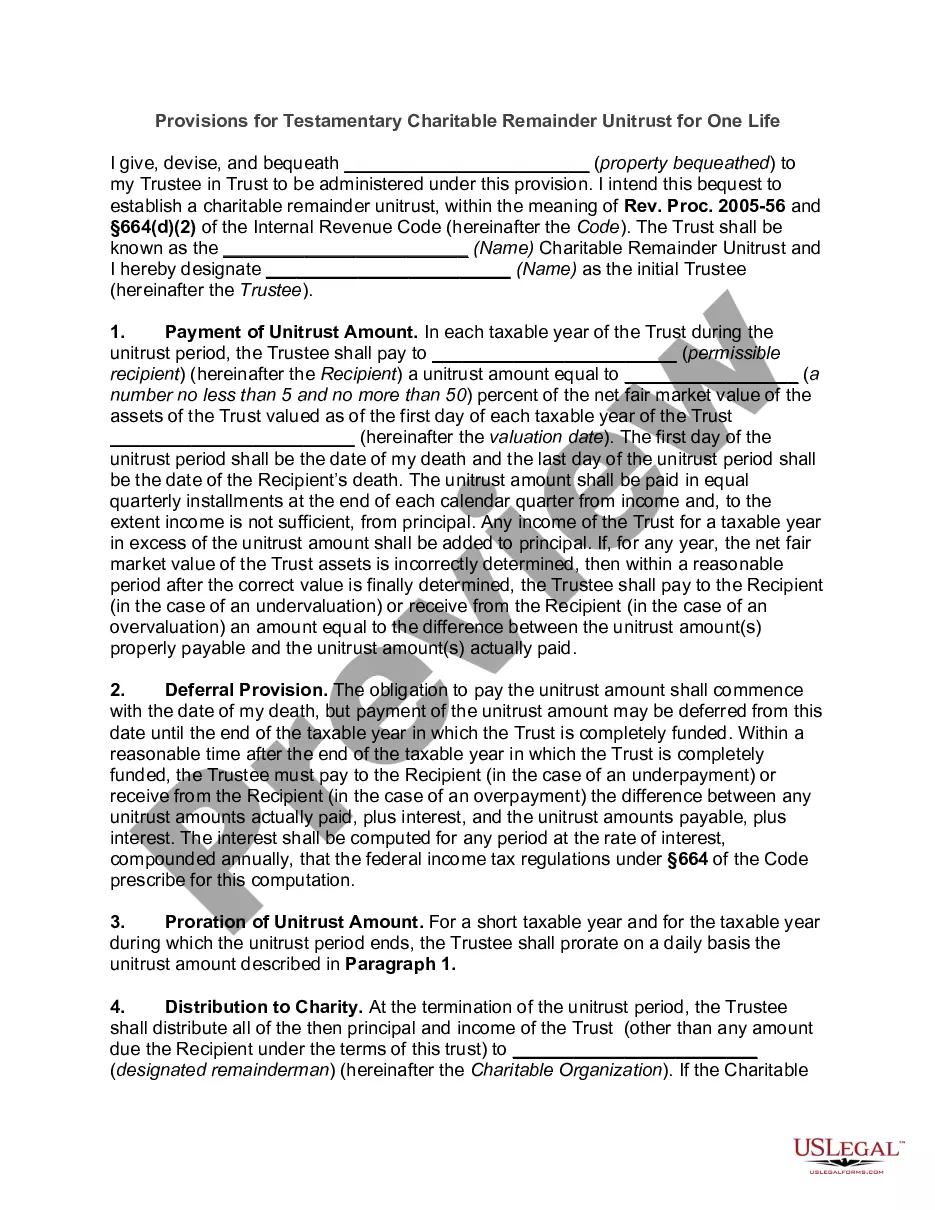
Get your form ready online
Our built-in tools help you complete, sign, share, and store your documents in one place.
Make edits, fill in missing information, and update formatting in US Legal Forms—just like you would in MS Word.
Download a copy, print it, send it by email, or mail it via USPS—whatever works best for your next step.
Sign and collect signatures with our SignNow integration. Send to multiple recipients, set reminders, and more. Go Premium to unlock E-Sign.
If this form requires notarization, complete it online through a secure video call—no need to meet a notary in person or wait for an appointment.
We protect your documents and personal data by following strict security and privacy standards.

Make edits, fill in missing information, and update formatting in US Legal Forms—just like you would in MS Word.

Download a copy, print it, send it by email, or mail it via USPS—whatever works best for your next step.

Sign and collect signatures with our SignNow integration. Send to multiple recipients, set reminders, and more. Go Premium to unlock E-Sign.

If this form requires notarization, complete it online through a secure video call—no need to meet a notary in person or wait for an appointment.

We protect your documents and personal data by following strict security and privacy standards.
Looking for another form?







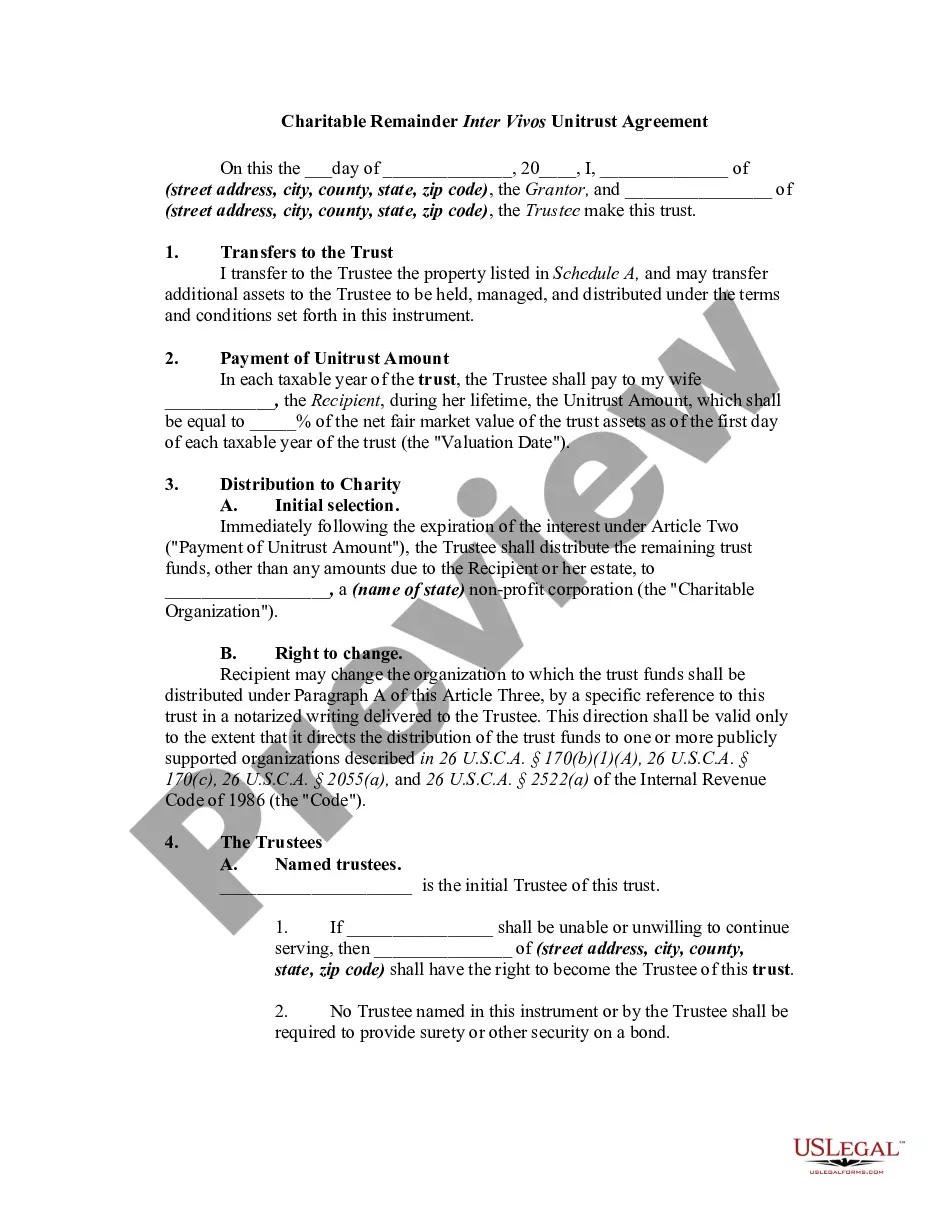
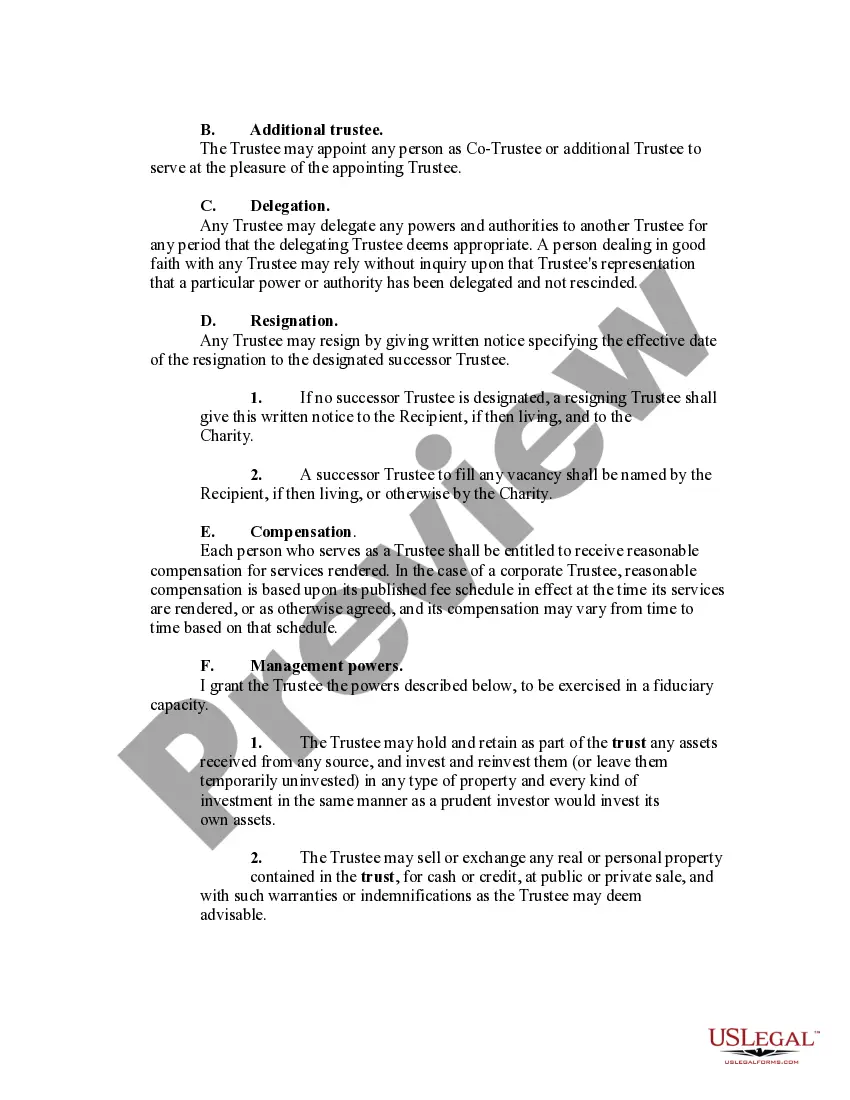
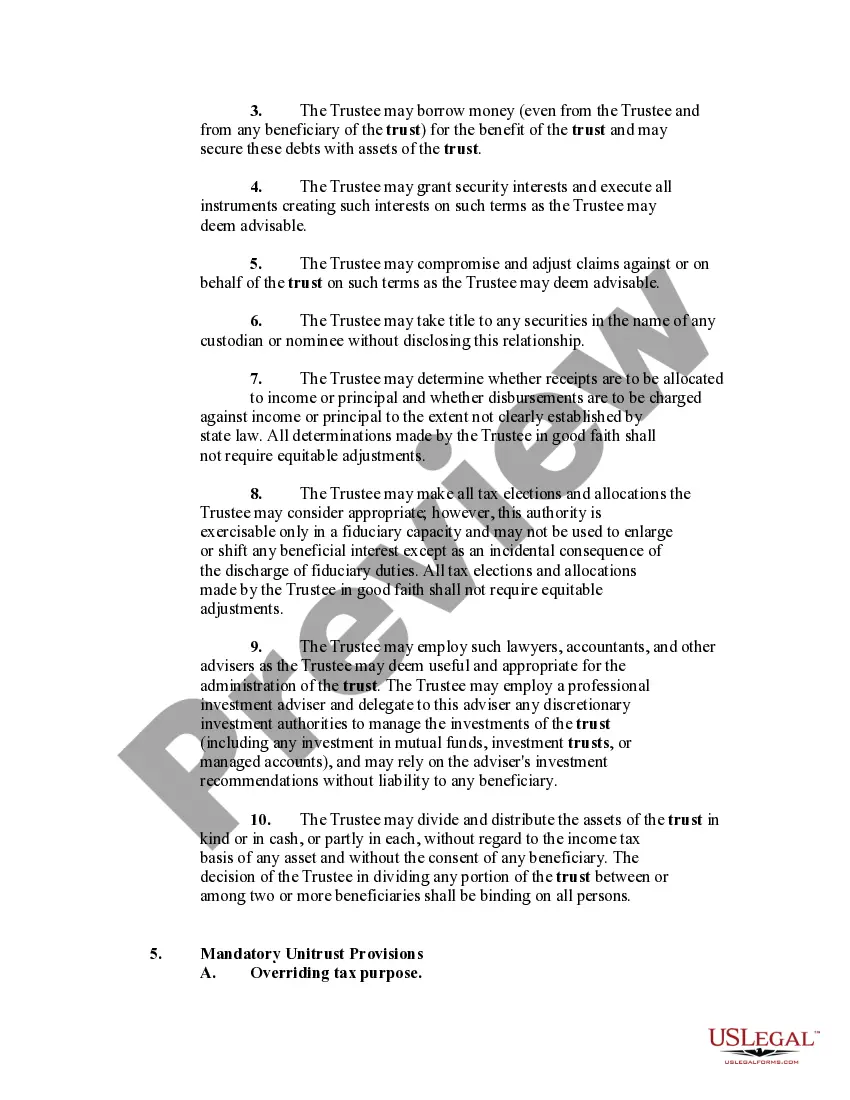
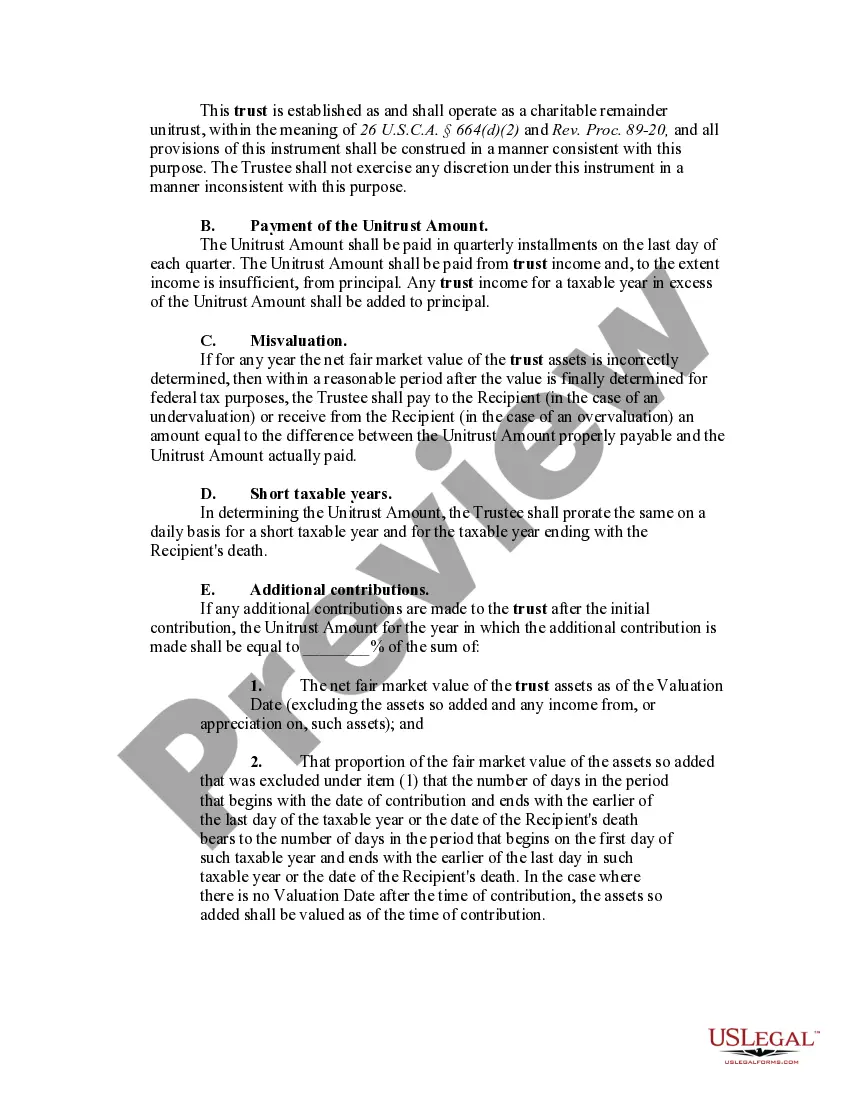
How to fill out Charitable Remainder Inter Vivos Unitrust Agreement?
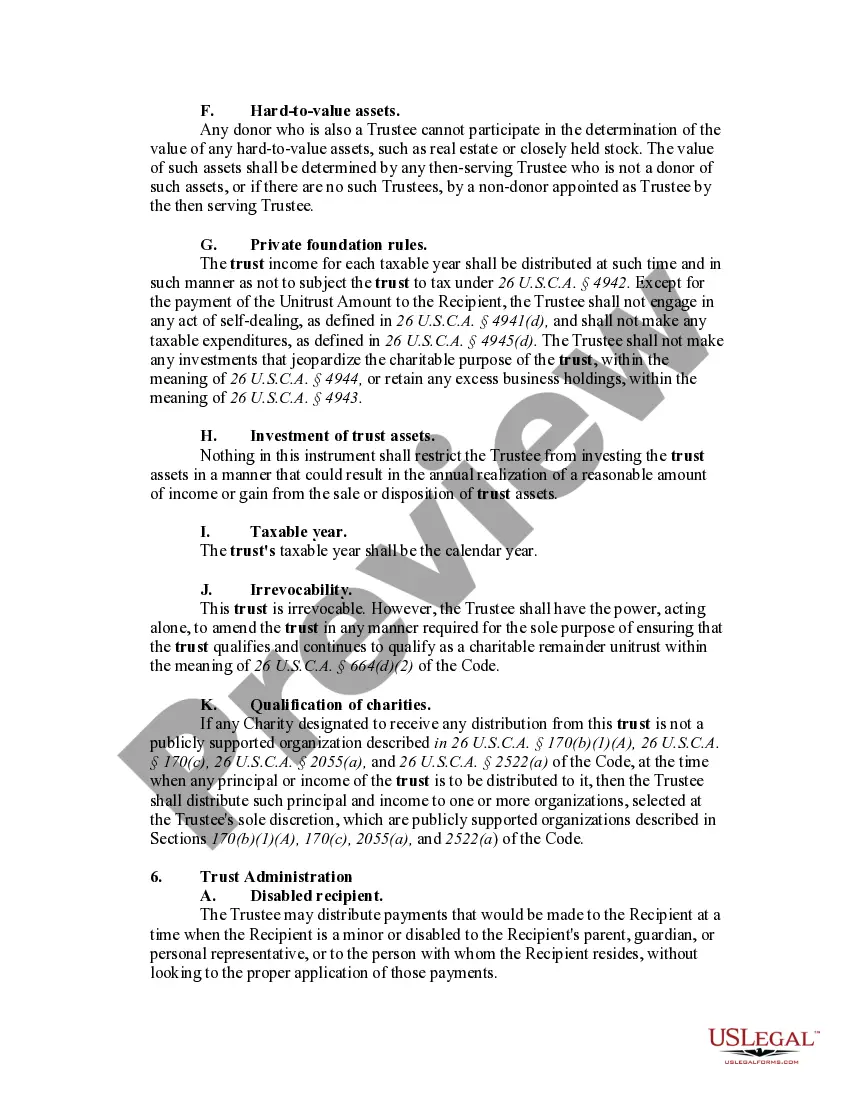
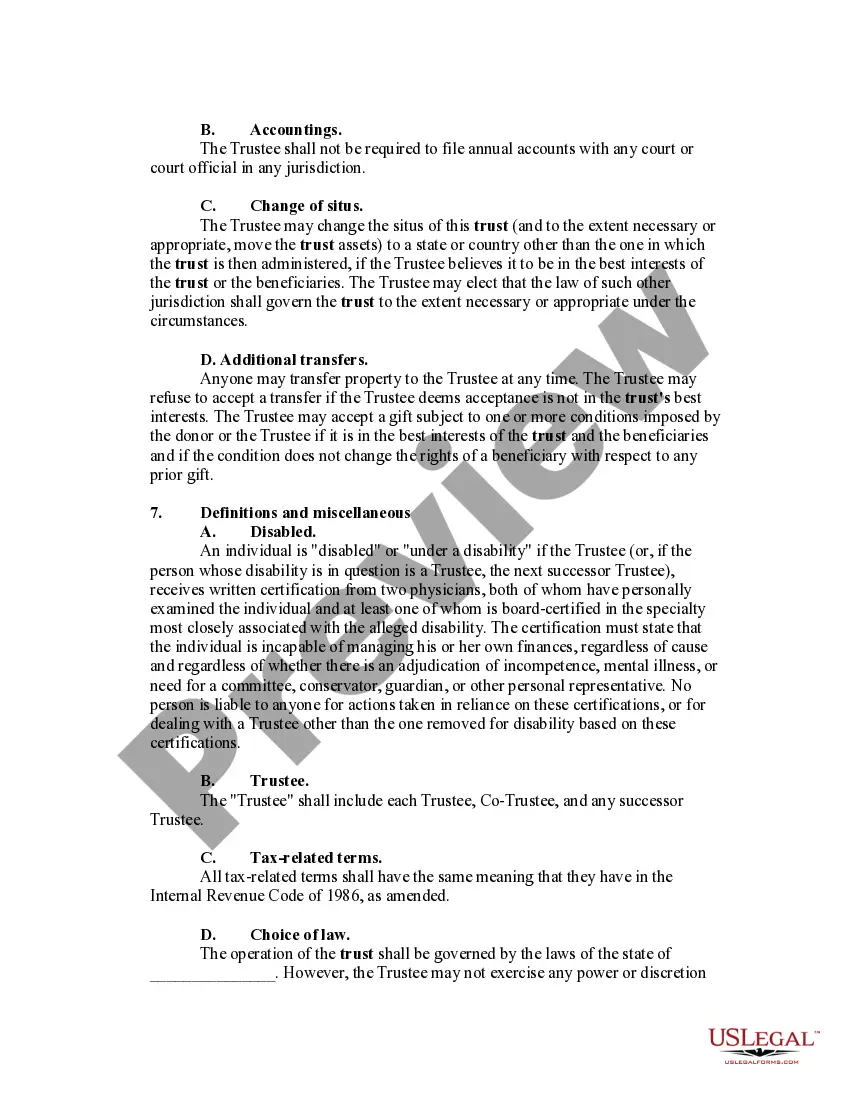
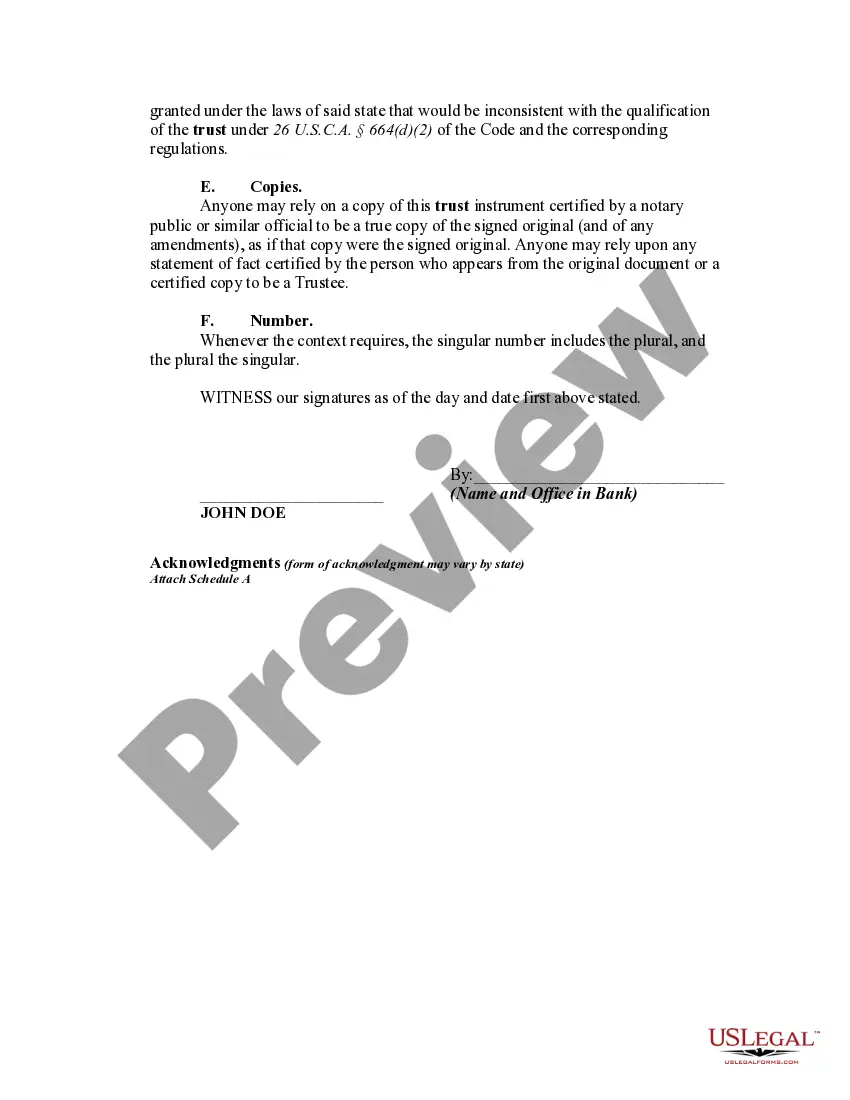
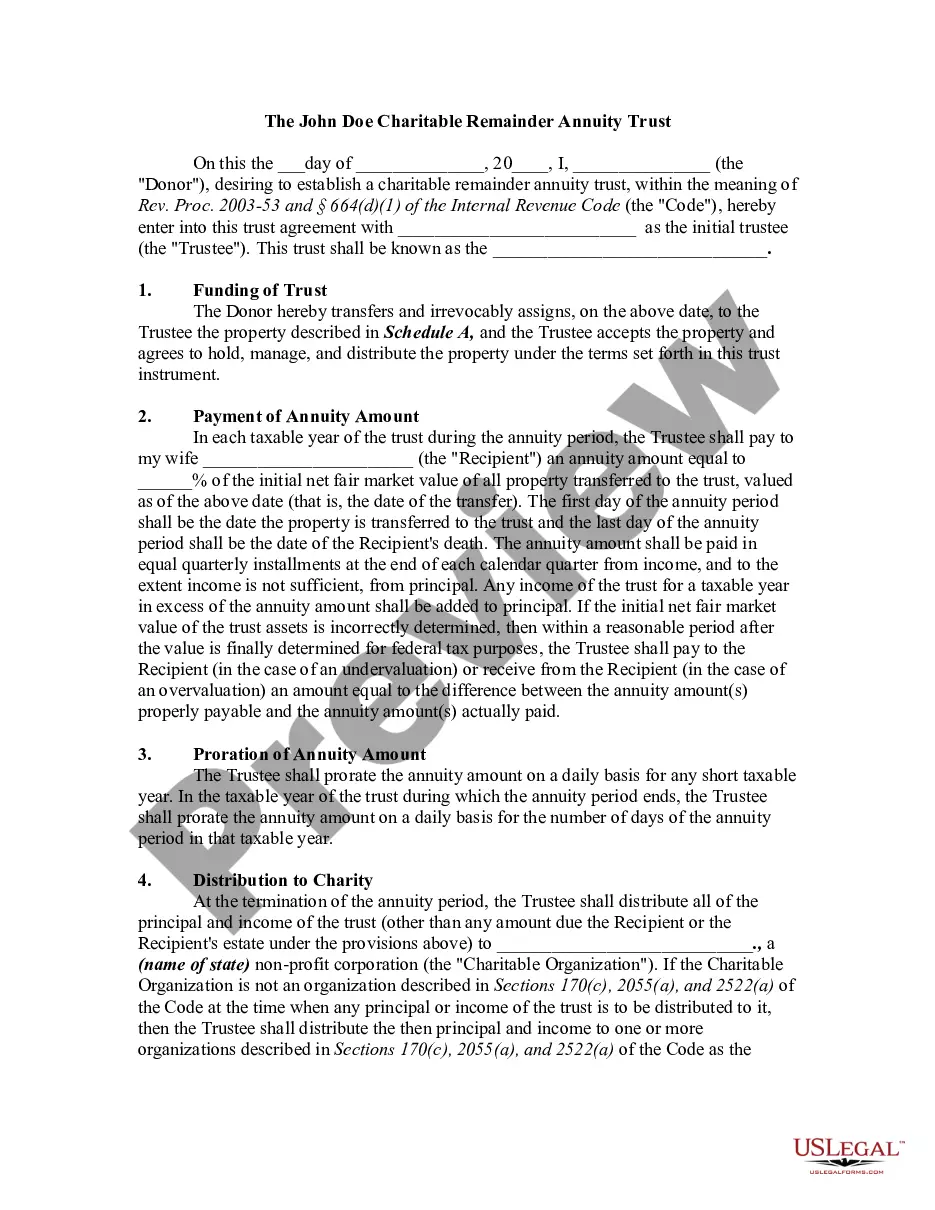
The Charitable Remainder Agreement Withdrawals displayed on this page is a versatile formal template created by skilled attorneys in compliance with national and local regulations.
For over 25 years, US Legal Forms has supplied individuals, organizations, and lawyers with more than 85,000 validated, state-specific documents for any business and personal needs. It’s the quickest, easiest, and most trustworthy method to acquire the documents you require, as the service ensures the utmost level of data protection and anti-malware security.
Sign up for US Legal Forms to have verified legal templates for every situation in life accessible at your convenience.
- Explore the document you require and examine it.
- Browse through the sample you found, preview it, or review the form description to confirm it meets your needs. If it doesn’t, use the search bar to locate the appropriate one. Click Buy Now once you’ve located the template you want.
- Register and Log In.
- Choose the pricing plan that fits you and create an account. Make a swift payment using PayPal or a credit card. If you already have an account, Log In and check your subscription to continue.
- Acquire the editable template.
- Select the format you prefer for your Charitable Remainder Agreement Withdrawals (PDF, Word, RTF) and download the sample to your device.
- Fill out and sign the document.
- Print the template to complete it by hand. Alternatively, use an online multifunctional PDF editor to quickly and accurately fill in and sign your form with a legally-binding electronic signature.
- Download your documents again.
- Utilize the same document multiple times as required. Visit the My documents tab in your profile to redownload any previously acquired forms.
Form popularity
FAQ
Distributions from a charitable remainder trust (CRT) can indeed be taxable. The taxation depends on the type of income the trust generates, such as ordinary income or capital gains. Charitable remainder agreement withdrawals may lead to different tax treatments based on how the trust's income is categorized. It is advisable to consult a tax expert to fully understand your individual tax implications.
The 5% rule for charitable remainder trusts (CRTs) refers to the minimum annual payout requirement of at least 5% of the trust's assets. This rule ensures that a significant portion of the trust is distributed to beneficiaries while allowing for charitable remainder agreement withdrawals. It promotes consistent income while fulfilling charitable intent. Understanding this rule can help you plan effectively for your financial and philanthropic goals.
Distributions from a Delaware Statutory Trust (DST) can be taxable under certain conditions. When you receive distributions from a DST, including charitable remainder agreement withdrawals, they may be treated as ordinary income. Factors like your tax bracket and the nature of the income can affect whether these distributions will incur additional taxes. For clarity, reach out to a tax advisor to navigate these rules.
Yes, a Charitable Remainder Unitrust (CRUT) can last longer than 20 years. There is no specific limit on the duration of a CRUT, as long as it follows IRS guidelines. However, when planning for Charitable Remainder Agreement withdrawals, it's crucial to consider the potential impact on your financial and charitable goals over time. Using US Legal Forms can help you create a clear and compliant CRUT that meets your long-term objectives.
The 10% rule for Charitable Remainder Trusts (CRT) requires that the present value of the charitable remainder interest must be at least 10% of the trust's total assets. This rule ensures that a significant portion of the trust goes to charity, aligning with IRS regulations. If you plan for Charitable Remainder Agreement withdrawals, it's essential to understand this requirement as it affects your trust's structure and benefits. Consulting a legal expert can help you navigate these rules effectively.
While charitable remainder trusts offer benefits like tax deductions and income streams, they also have downsides. For instance, once assets are placed in the trust, you relinquish control over them, which could limit your financial flexibility. Additionally, complexity in tax reporting, particularly concerning charitable remainder agreement withdrawals, can deter some individuals. We recommend using platforms like uslegalforms to simplify the process and guide you through the creation and management of the trust.
Yes, you must file a tax return for a charitable remainder trust if it has any taxable income. Form 1041 is necessary to report the income and distributions, which include those resulting from charitable remainder agreement withdrawals. Understanding this obligation helps you stay compliant and can also reduce any tax surprises. Consult a tax advisor if you have questions about your specific situation.
Yes, a charitable remainder trust must file a tax return, using Form 1041. This form reports income earned and distributions made to beneficiaries. As you engage with charitable remainder agreement withdrawals, ensure that your trust complies with IRS regulations for tax reporting. This helps in maintaining the trust's favorable tax treatment and avoids potential penalties.
Form 5227, which is the Split-Interest Trust Information Return, does not have a specific electronic filing requirement. However, you may choose to file it using e-file systems if your financial institution or tax professional recommends it. Keeping up with the filing requirements can be beneficial, especially if your charitable remainder trust involves substantial charitable remainder agreement withdrawals. Always check the IRS guidelines for the latest information on filing options.
Charitable trusts, including charitable remainder trusts, have distinct tax implications. Generally, these trusts provide donors with immediate tax deductions when assets are transferred, while also allowing for income distributions during the trust's term. Beneficiaries may face taxes on distributions received from charitable remainder agreement withdrawals, so understanding the specifics is crucial. Consulting a tax professional can provide clarity on your situation.