Charitable Form Trust Contract With The Government
Description
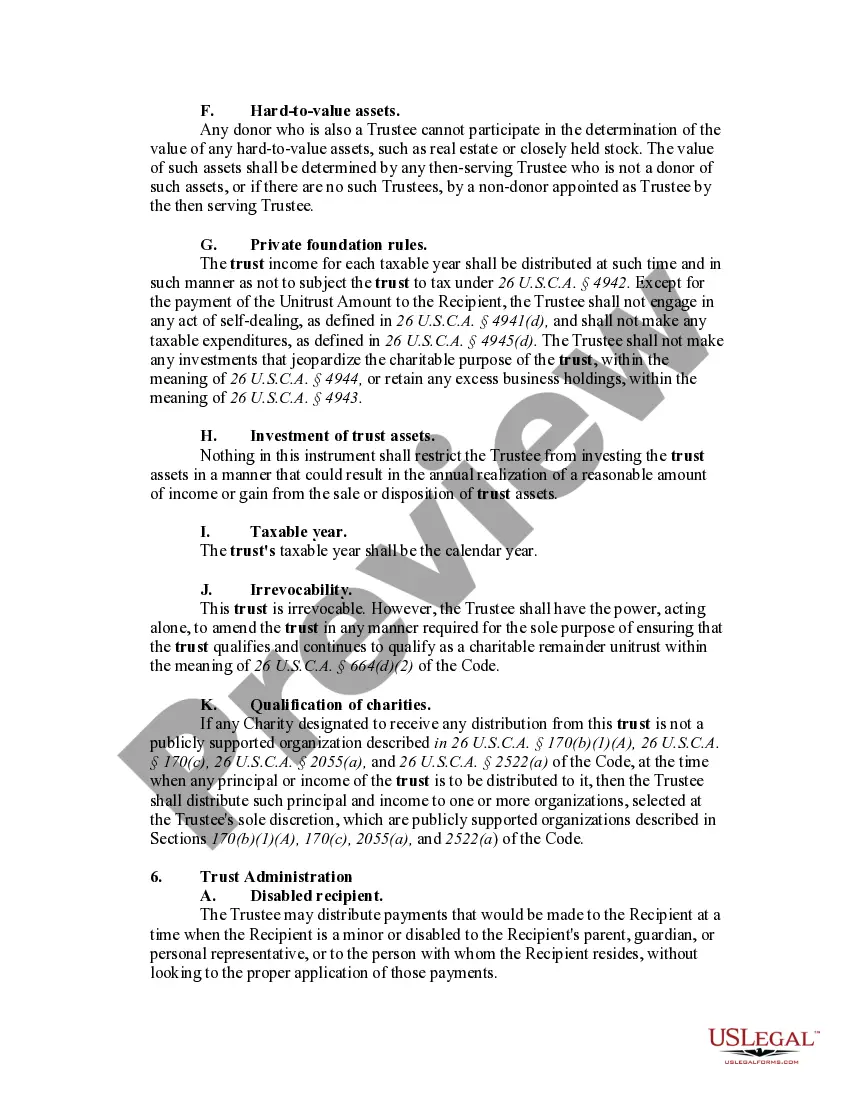
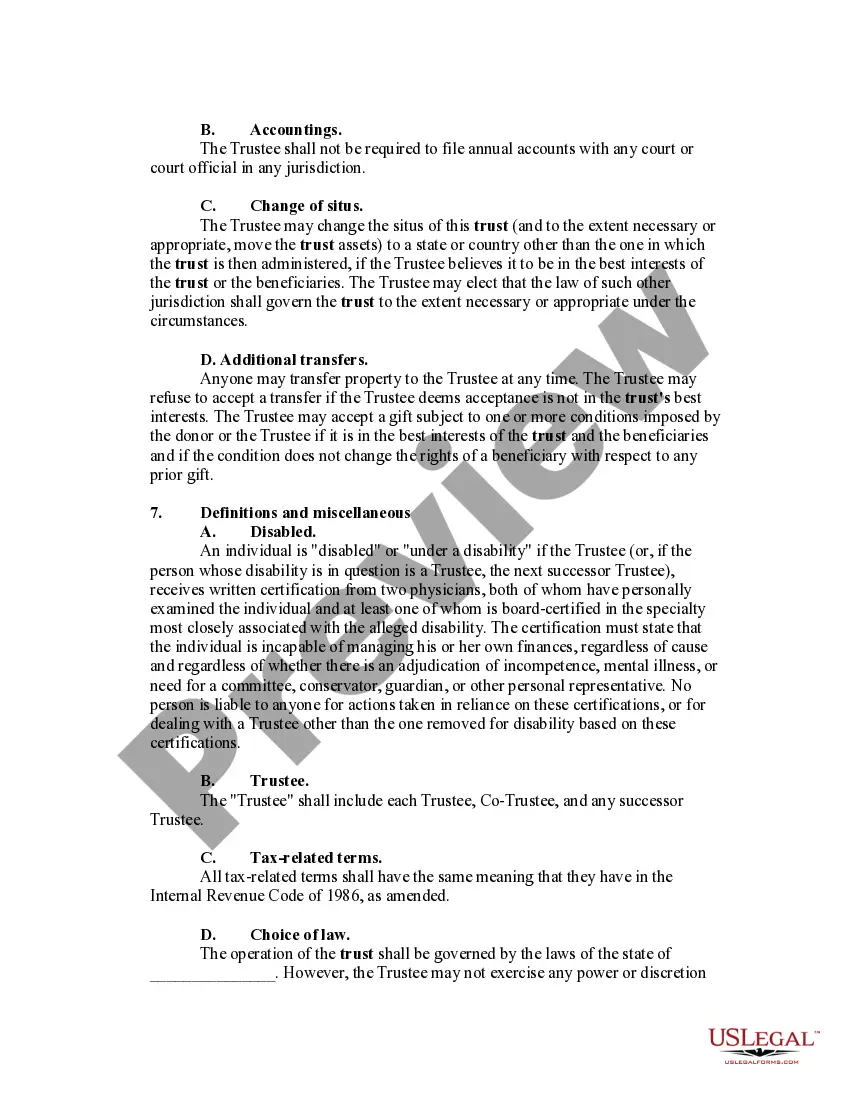
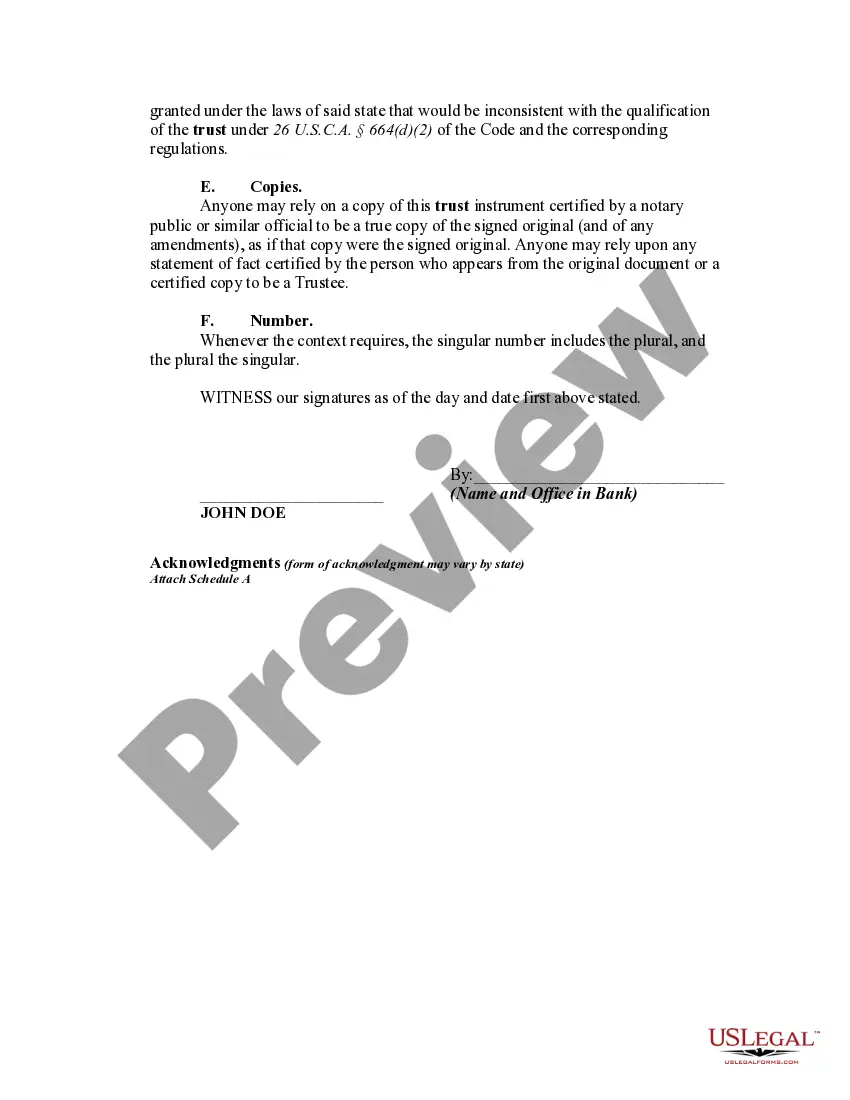
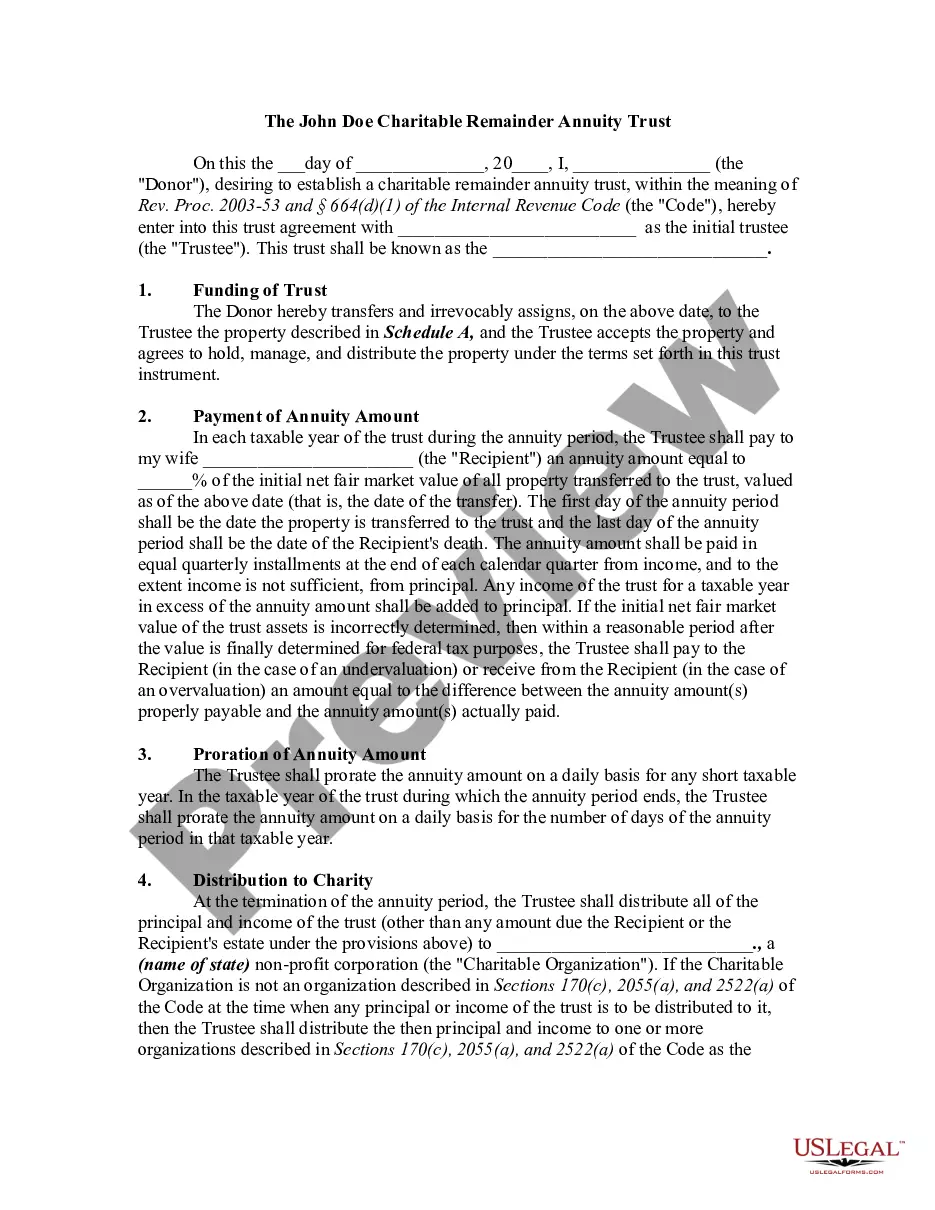
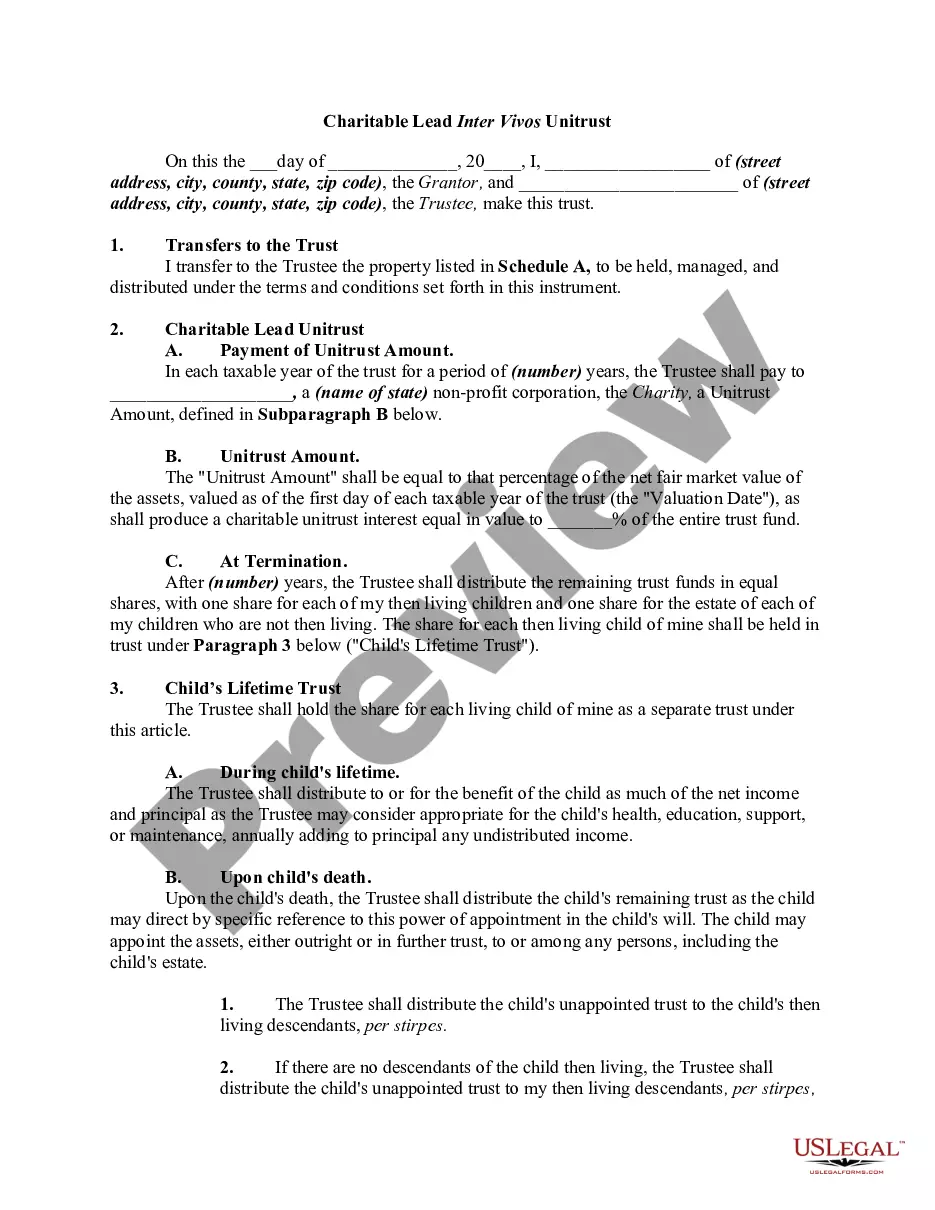
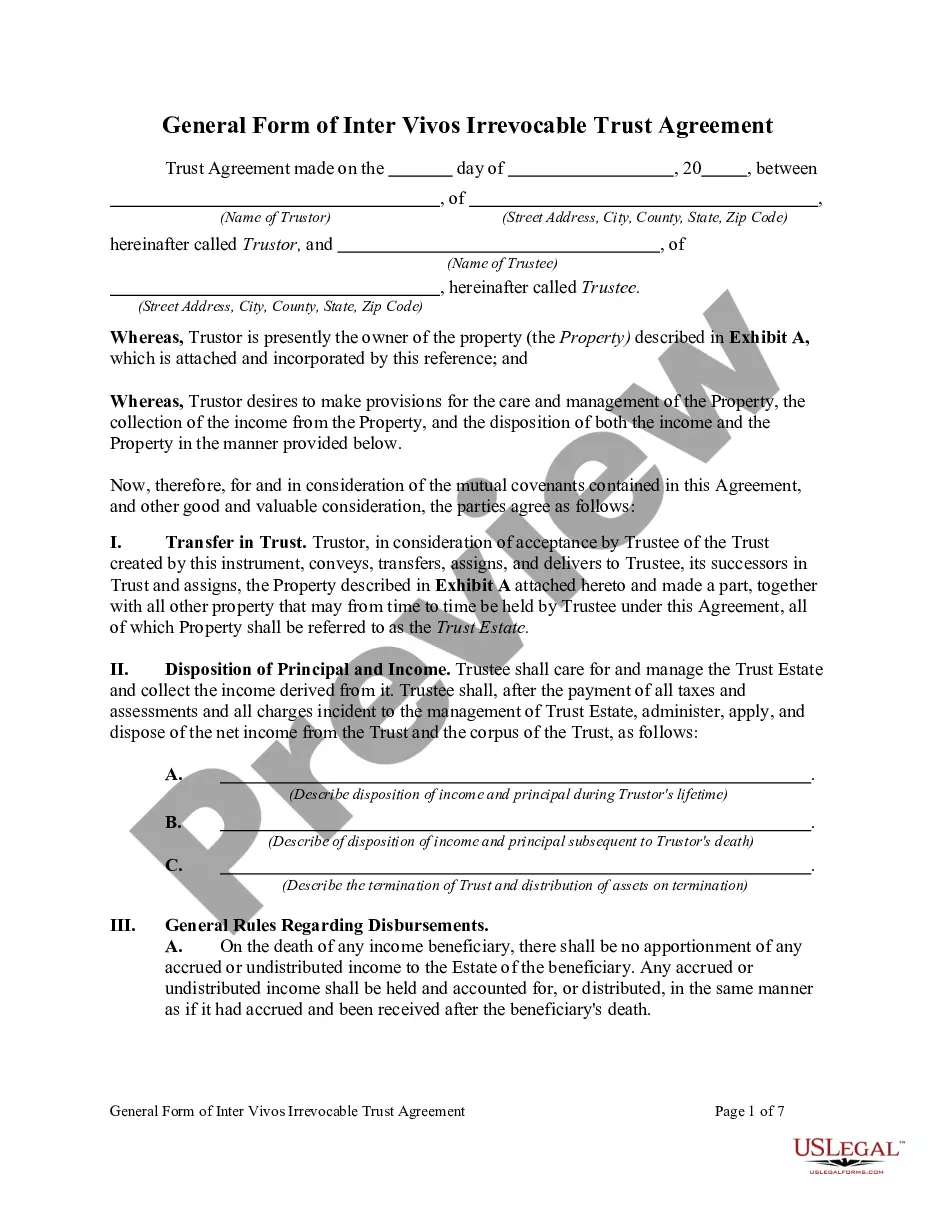
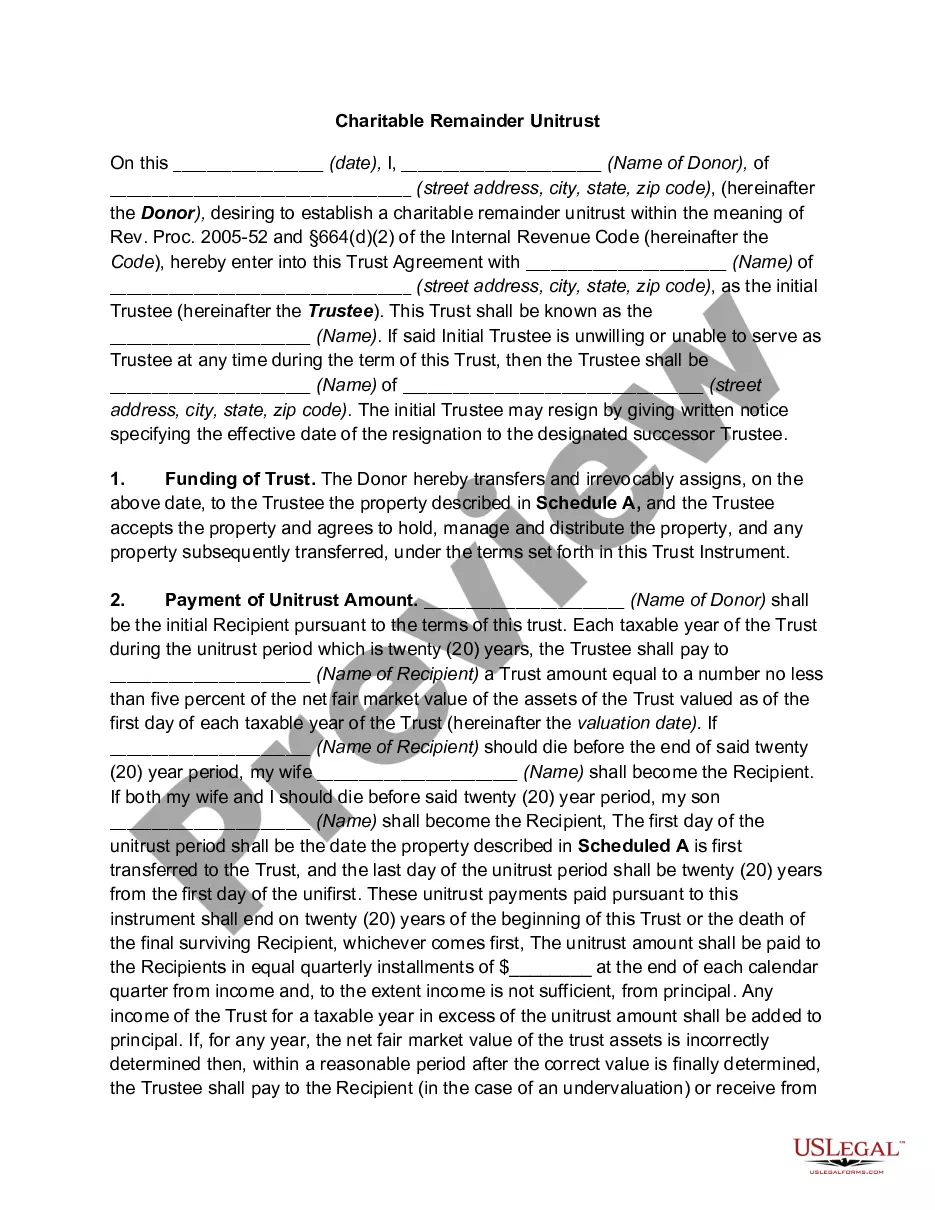
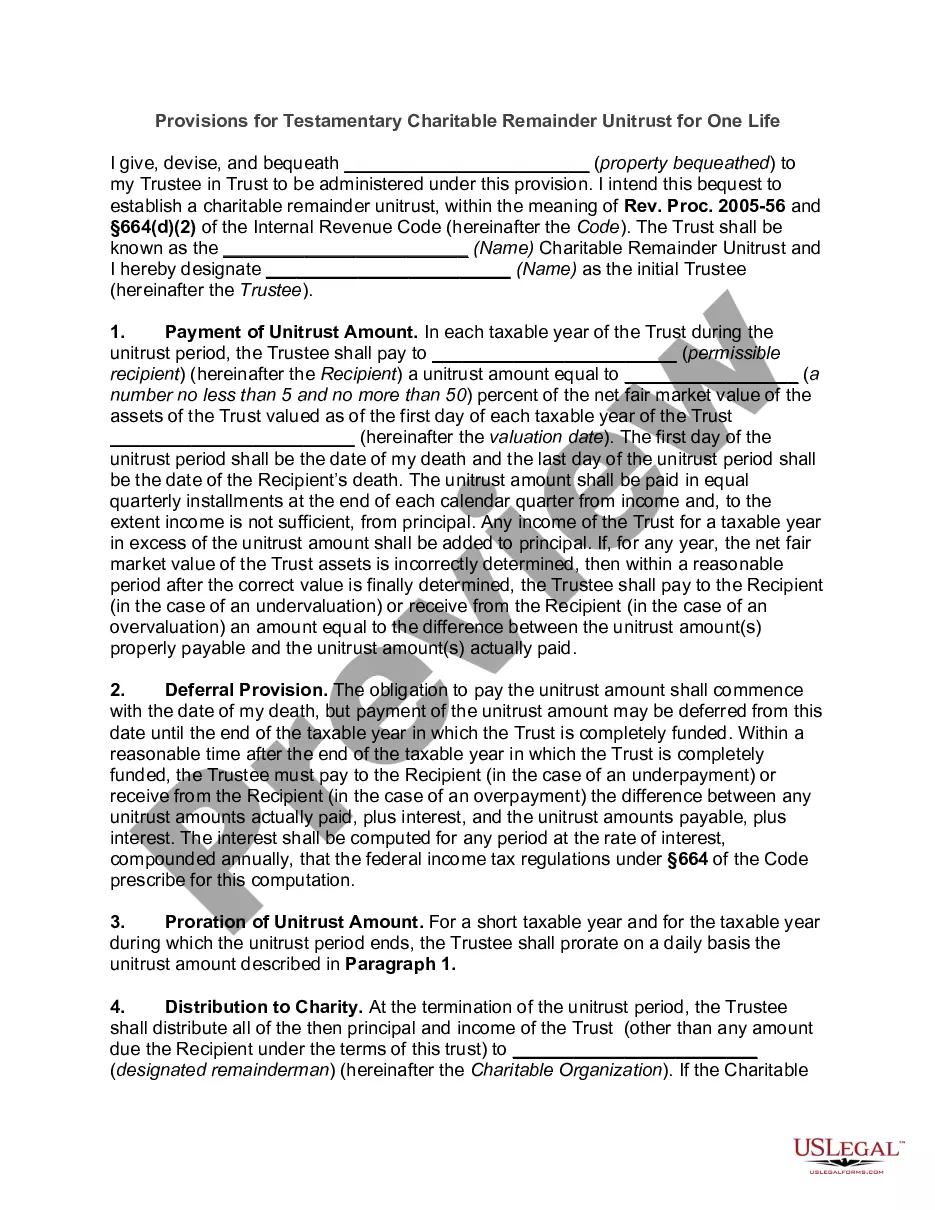
Get your form ready online
Our built-in tools help you complete, sign, share, and store your documents in one place.
Make edits, fill in missing information, and update formatting in US Legal Forms—just like you would in MS Word.
Download a copy, print it, send it by email, or mail it via USPS—whatever works best for your next step.
Sign and collect signatures with our SignNow integration. Send to multiple recipients, set reminders, and more. Go Premium to unlock E-Sign.
If this form requires notarization, complete it online through a secure video call—no need to meet a notary in person or wait for an appointment.
We protect your documents and personal data by following strict security and privacy standards.

Make edits, fill in missing information, and update formatting in US Legal Forms—just like you would in MS Word.

Download a copy, print it, send it by email, or mail it via USPS—whatever works best for your next step.

Sign and collect signatures with our SignNow integration. Send to multiple recipients, set reminders, and more. Go Premium to unlock E-Sign.

If this form requires notarization, complete it online through a secure video call—no need to meet a notary in person or wait for an appointment.

We protect your documents and personal data by following strict security and privacy standards.
Looking for another form?









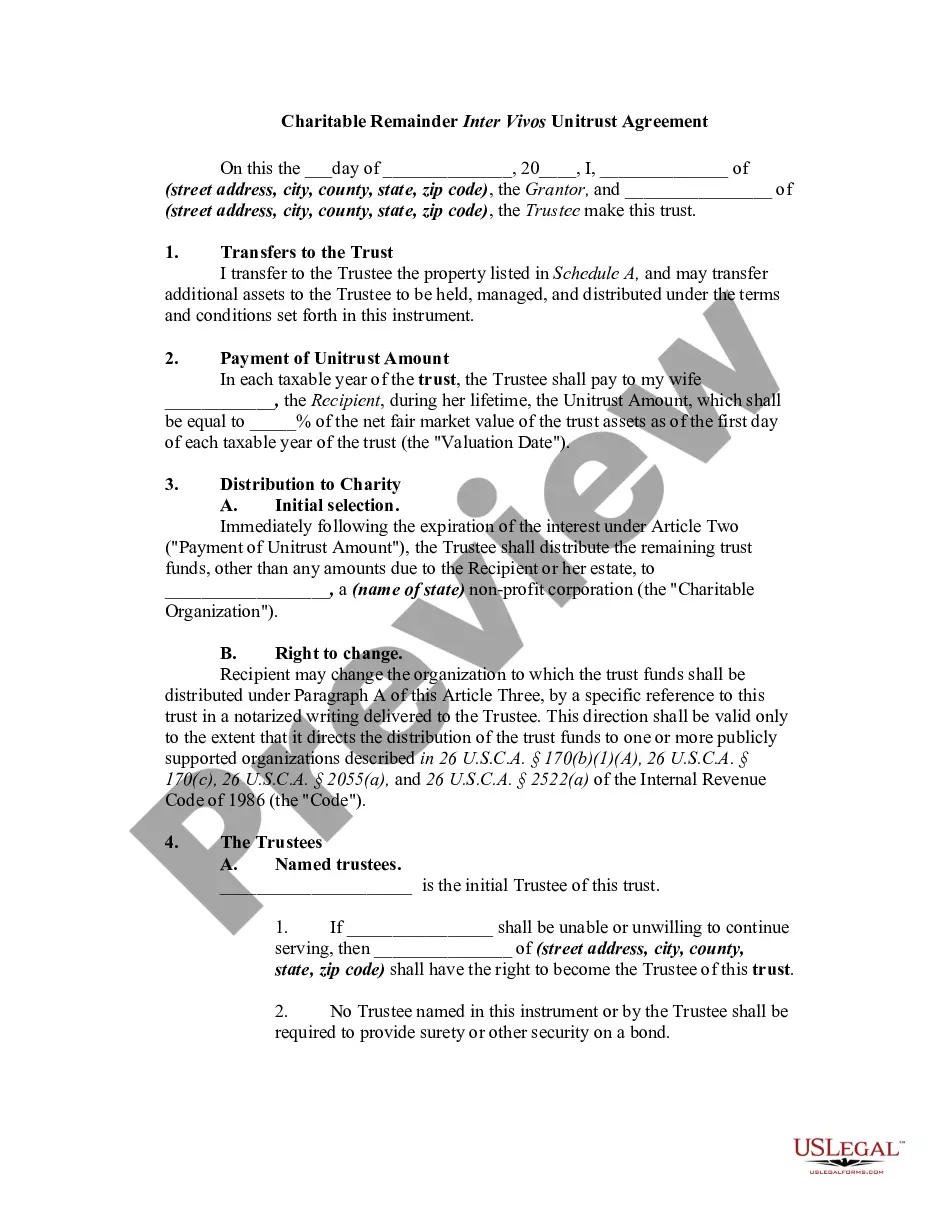
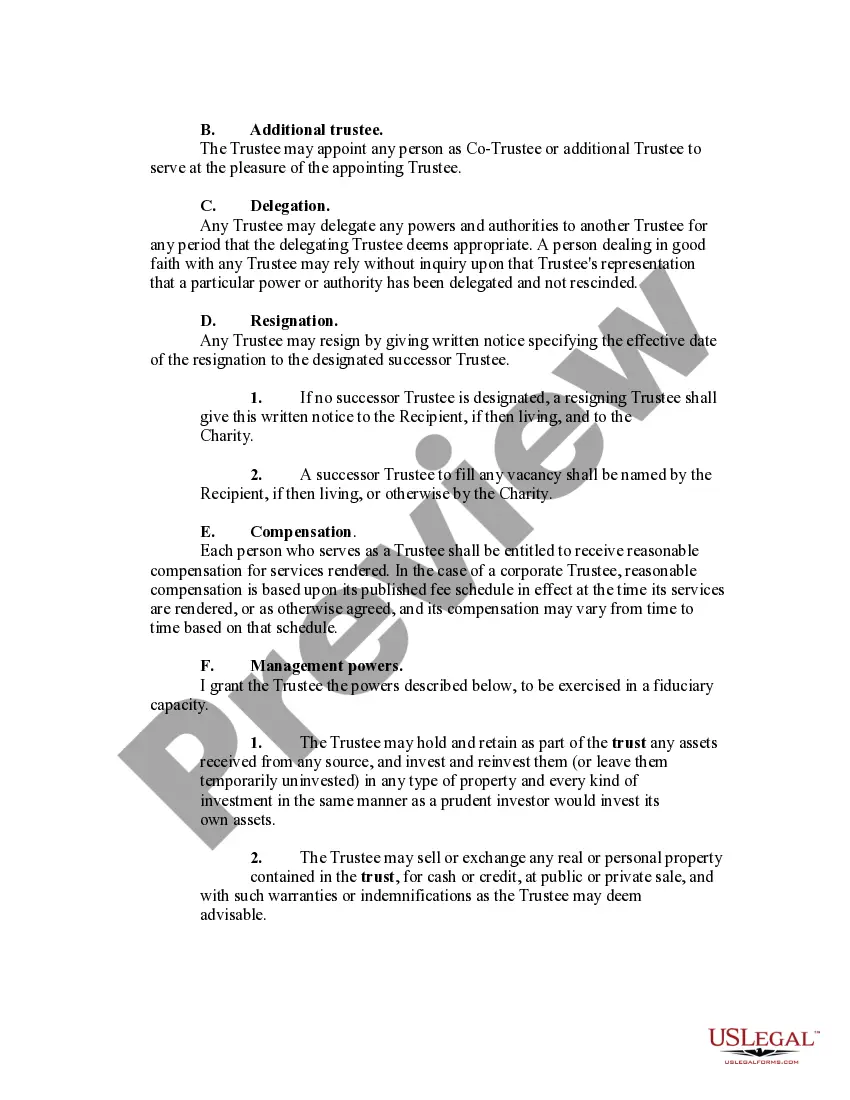
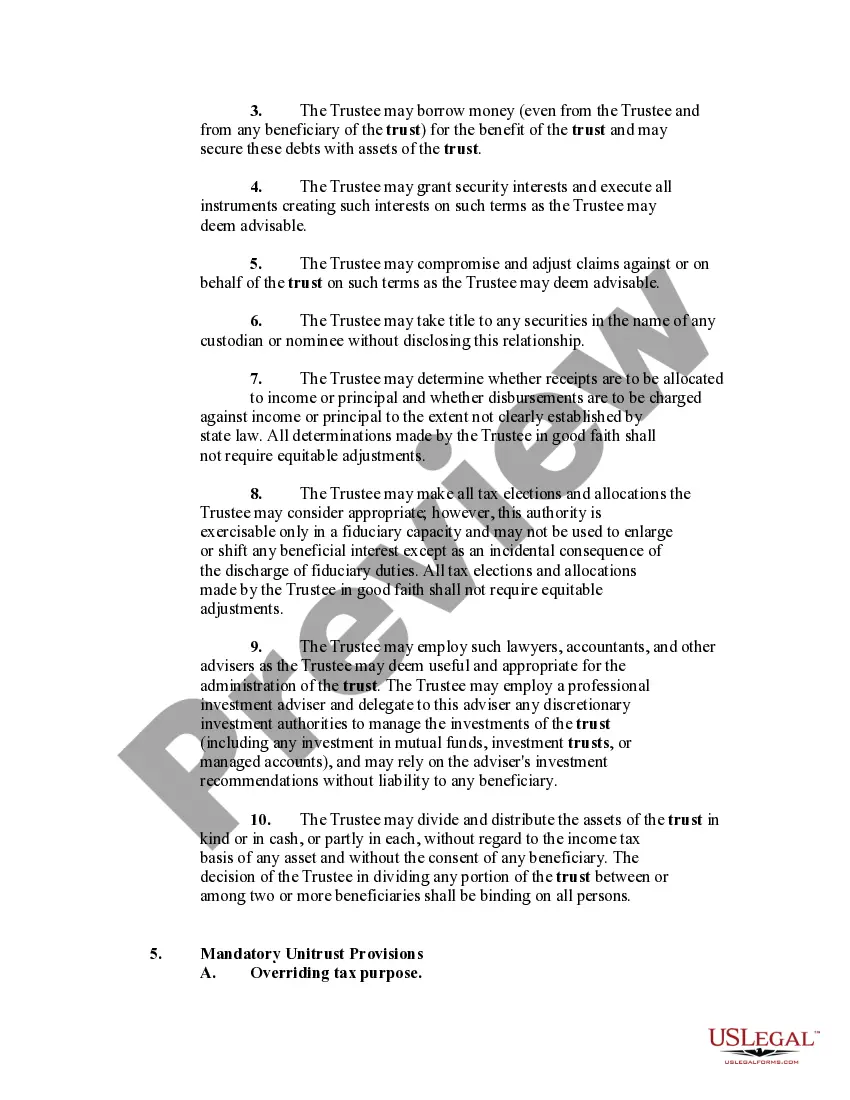
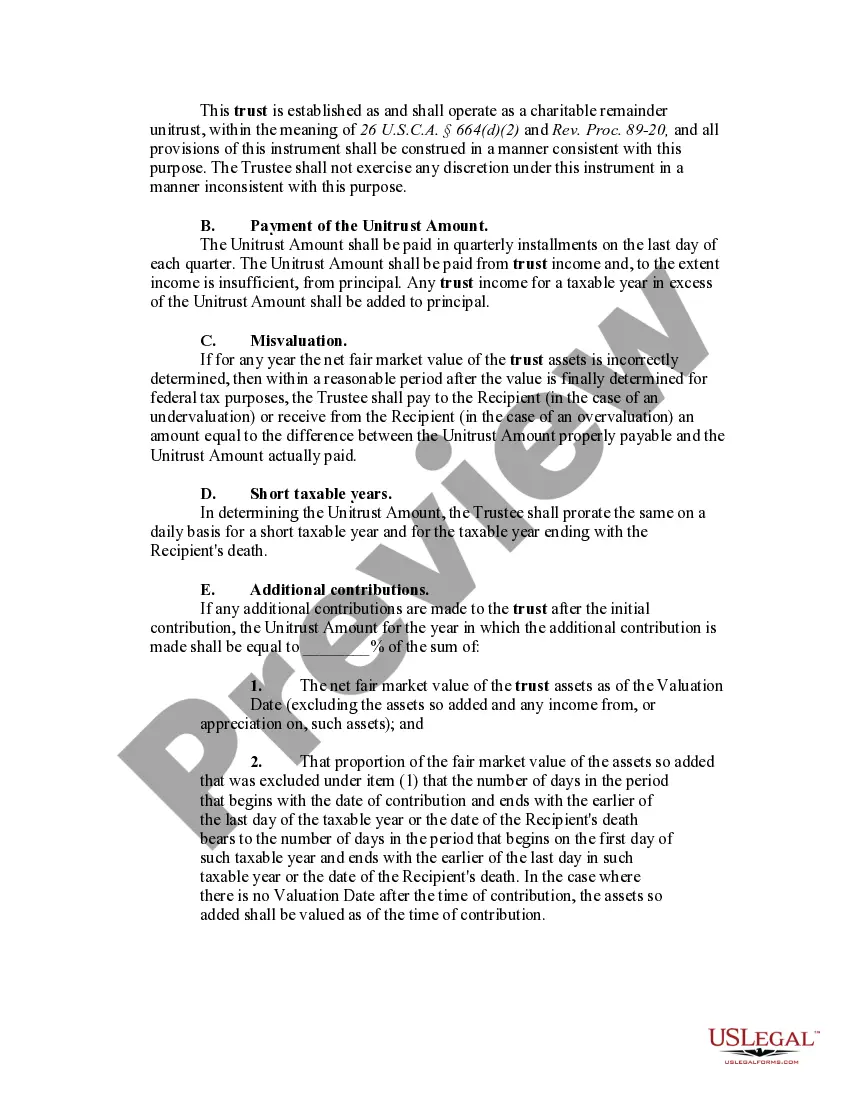
How to fill out Charitable Remainder Inter Vivos Unitrust Agreement?
- If you're a returning user, log in and access your account to download the required form template by hitting the Download button. Ensure that your subscription is active; if not, renew it as per your payment plan.
- For first-time users, start by previewing the form description. Verify that you've selected the right form tailored to your needs and compliant with local jurisdiction requirements.
- If you need a different template, utilize the Search tab above to locate the correct one. Proceed only if it meets your criteria.
- To purchase the document, click on the Buy Now button and select your preferred subscription plan. You will need to create an account to unlock access to the full library.
- Complete your purchase by entering your credit card information or using your PayPal account for a smooth transaction.
- Finally, download your form and save it on your device. You can access it anytime through the My Forms section of your profile.
In conclusion, US Legal Forms makes it easy to acquire and manage legal documentation, helping you navigate the intricacies of charitable form trusts with confidence. With a vast library and expert support, you can ensure your contracts are accurate and legally effective.
Ready to simplify your legal needs? Visit US Legal Forms today!
Form popularity
FAQ
Form 8868 does not necessarily need to be filed electronically but using electronic filing is preferred for efficiency. If your Charitable form trust contract with the government meets certain criteria, you can opt for paper filing. However, electronic submissions often speed up processing times and reduce errors. Consider your options carefully to determine the best method for your filing situation.
Yes, Form 8868 can be paper filed. This option is available if you prefer not to file electronically for your Charitable form trust contract with the government. Ensure that you fill out the form completely and mail it to the correct IRS address. Timely submission is essential to avoid any extensions being denied or penalties incurred.
A trust generally needs to file Form 1041, the U.S. Income Tax Return for Estates and Trusts. Additionally, if applicable, it may need to file Form 990 or Form 8868 for extensions, particularly for trusts associated with a Charitable form trust contract with the government. Keeping track of these filing requirements is crucial to ensure compliance and avoid penalties. Using a service like uslegalforms can simplify this process and help you navigate your obligations.
To electronically file Form 8868, you must use an IRS-approved e-file provider. The process is straightforward and typically involves submitting basic information about your Charitable form trust contract with the government. After filling out the required fields, you can submit your form securely online. Follow the provider's instructions carefully to ensure proper submission and timely processing.
In most cases, Form 990 must be filed electronically, especially for organizations with gross receipts of $200,000 or more. This format improves processing times and allows the IRS to handle filings related to charitable form trust contracts with the government more efficiently. It is essential to stay informed about the electronic filing requirements to remain compliant with tax laws. However, certain smaller organizations might qualify for paper filing.
If you choose not to file electronically, you would use Form 8868 to apply for an extension for your Charitable form trust contract with the government. This paper form allows you to request a six-month extension on filing your tax return. Be mindful of the deadlines to avoid penalties for your trust. Make sure you send it to the appropriate address based on your location.
Yes, a Charitable Remainder Unitrust (CRUT) must file a tax return. This obligation arises if the trust generates taxable income. Filing ensures compliance with regulations governing charitable form trust contracts with the government. By properly filing your CRUT, you maintain transparency and uphold your charitable intent.
Anyone responsible for a trust with taxable income needs to file Form 1041. This includes fiduciaries managing charitable trusts that meet income thresholds. If you're involved in a charitable form trust contract with the government, timely filing ensures you remain compliant and transparent.
The main forms for a charitable trust are Form 1041, a tax return for estates and trusts, and Form 5227 for split-interest trusts. Each form serves a unique purpose in maintaining accountability and transparency with the IRS. Utilizing these forms supports your charitable form trust contract with the government effectively.
The IRS forms primarily associated with charitable trusts include Form 1041 and Form 5227. These forms ensure it's clear how the trust operates and maintains compliance. If you're strategically managing a charitable form trust contract with the government, including filings on these forms is vital.