Charitable Form Trust Contract For Non Residents
Description
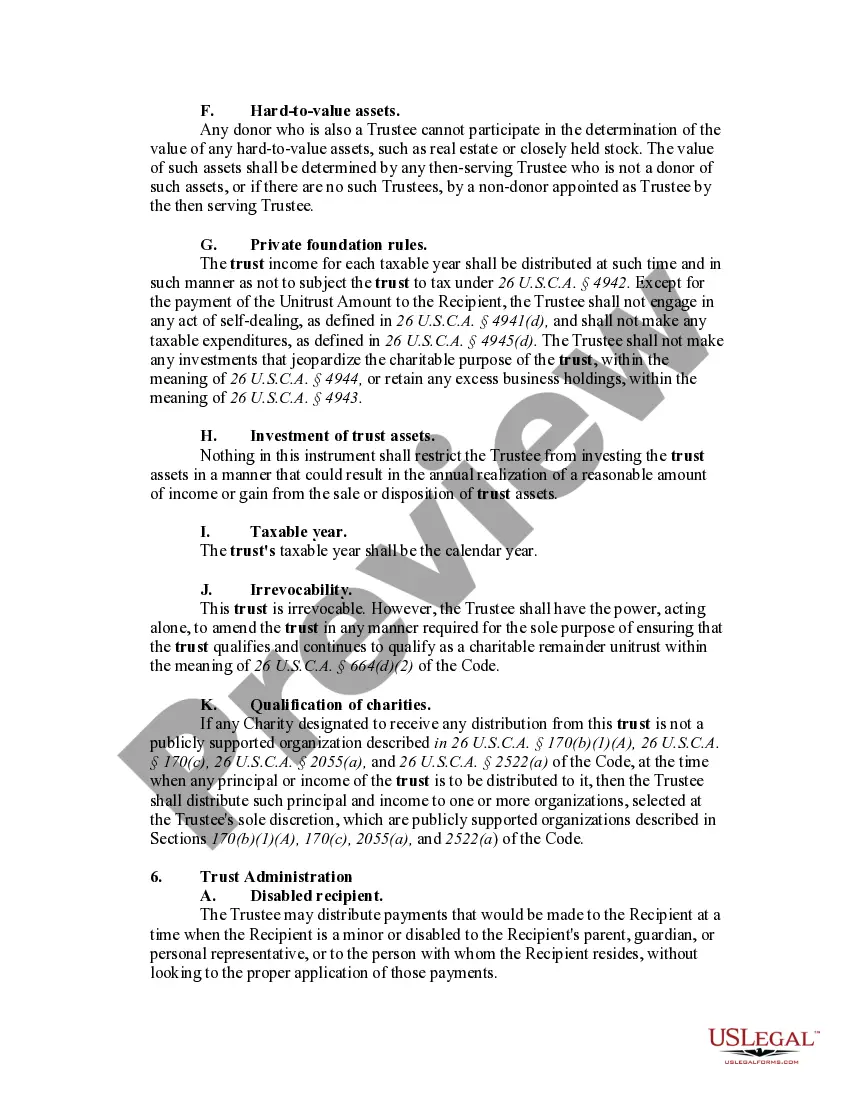
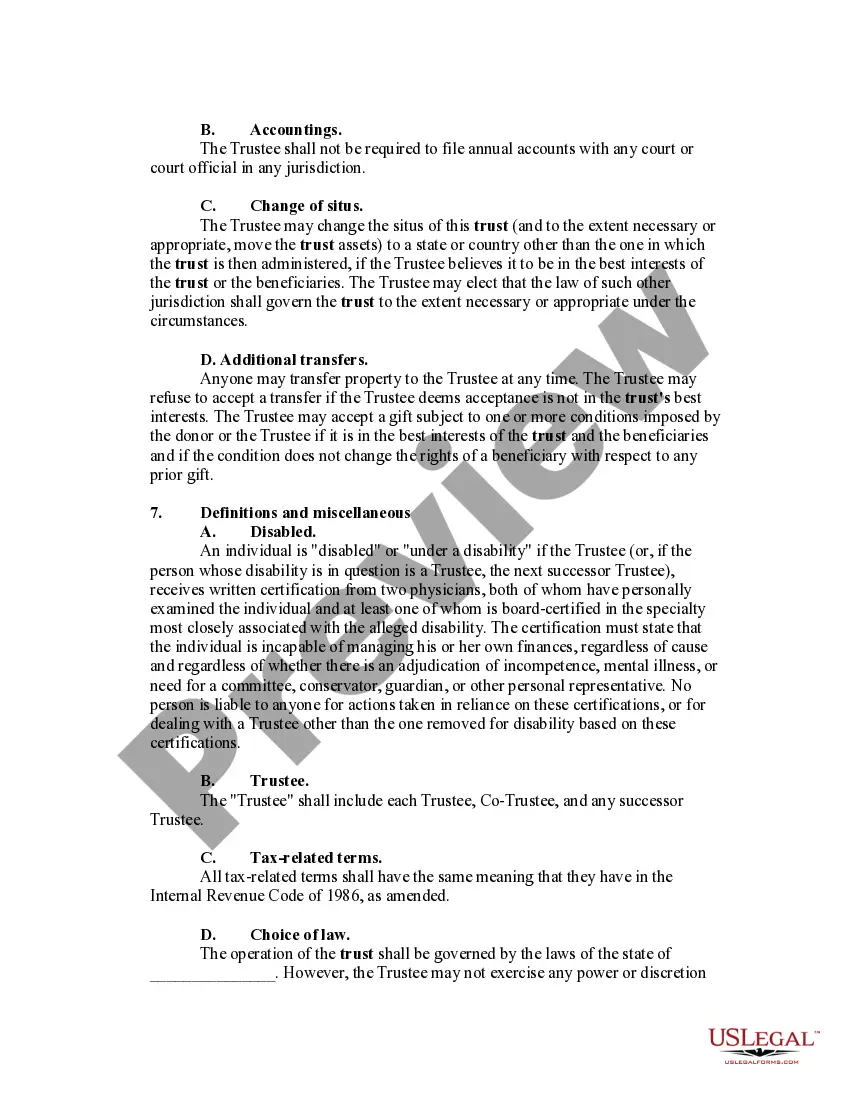
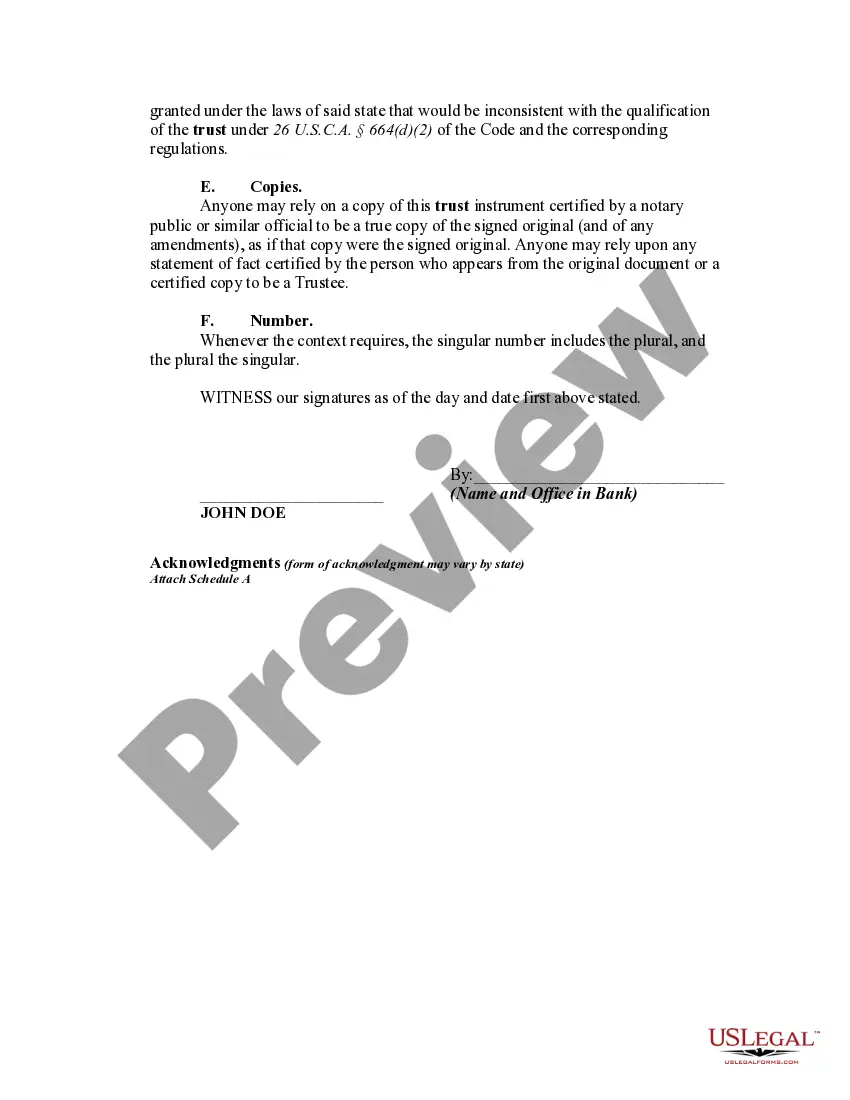
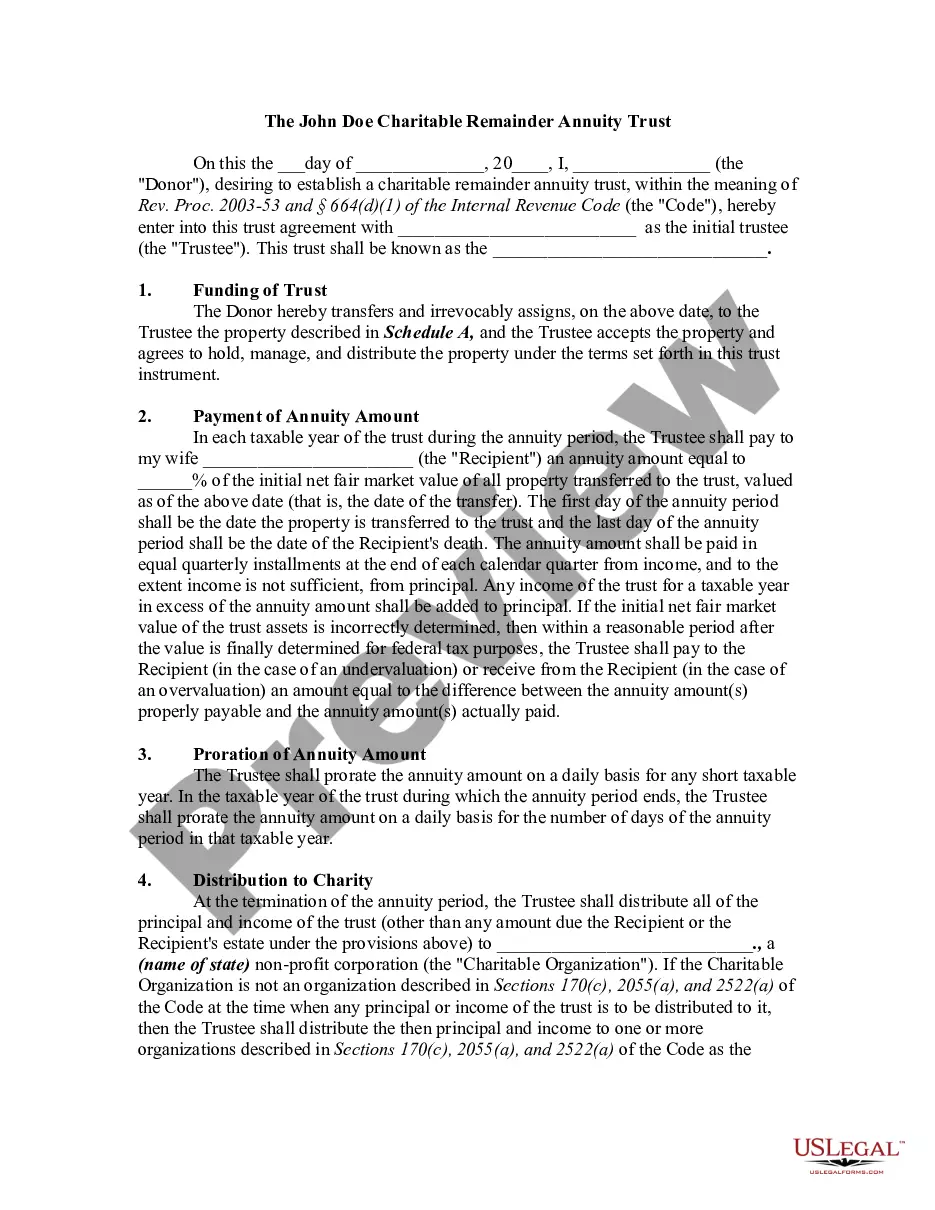
Get your form ready online
Our built-in tools help you complete, sign, share, and store your documents in one place.
Make edits, fill in missing information, and update formatting in US Legal Forms—just like you would in MS Word.
Download a copy, print it, send it by email, or mail it via USPS—whatever works best for your next step.
Sign and collect signatures with our SignNow integration. Send to multiple recipients, set reminders, and more. Go Premium to unlock E-Sign.
If this form requires notarization, complete it online through a secure video call—no need to meet a notary in person or wait for an appointment.
We protect your documents and personal data by following strict security and privacy standards.

Make edits, fill in missing information, and update formatting in US Legal Forms—just like you would in MS Word.

Download a copy, print it, send it by email, or mail it via USPS—whatever works best for your next step.

Sign and collect signatures with our SignNow integration. Send to multiple recipients, set reminders, and more. Go Premium to unlock E-Sign.

If this form requires notarization, complete it online through a secure video call—no need to meet a notary in person or wait for an appointment.

We protect your documents and personal data by following strict security and privacy standards.
Looking for another form?








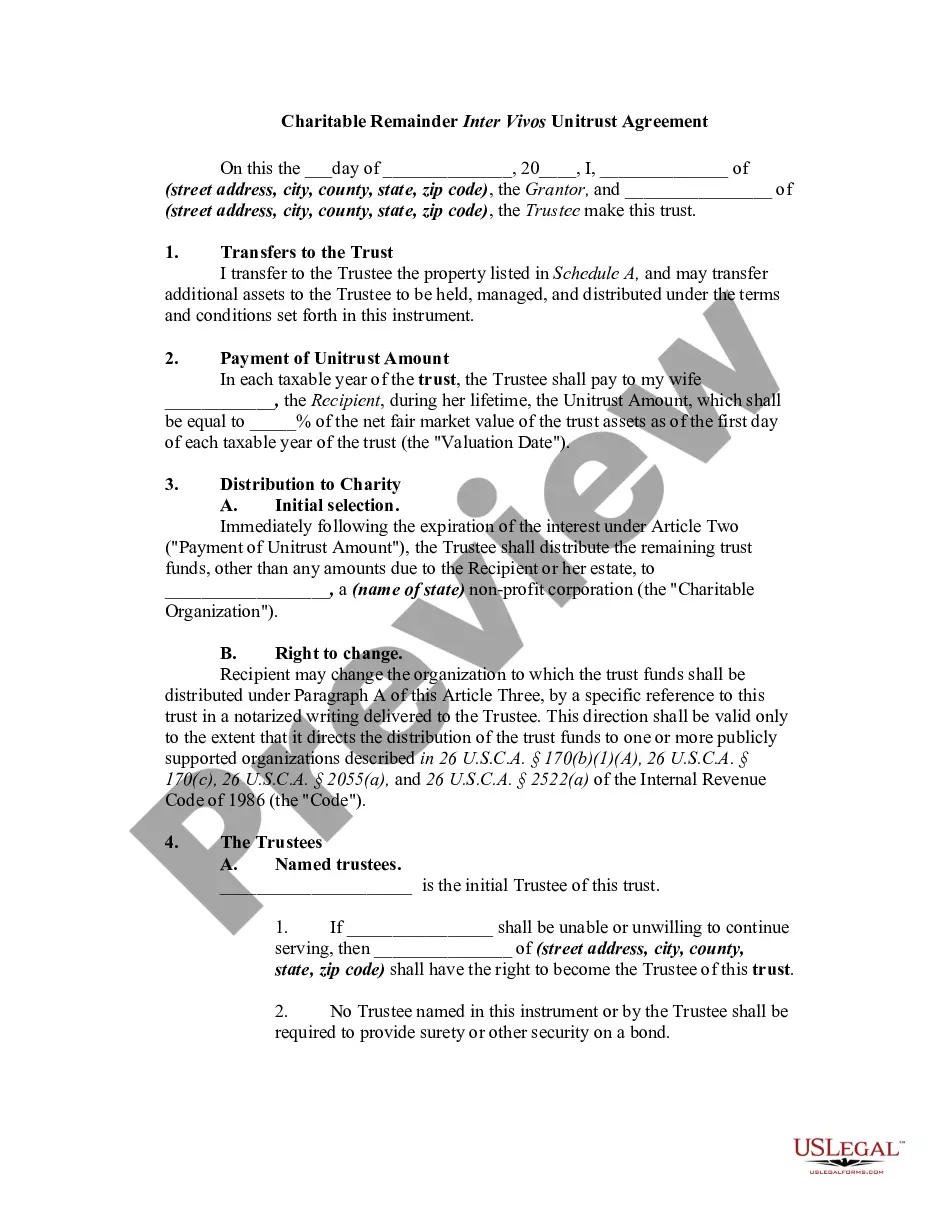
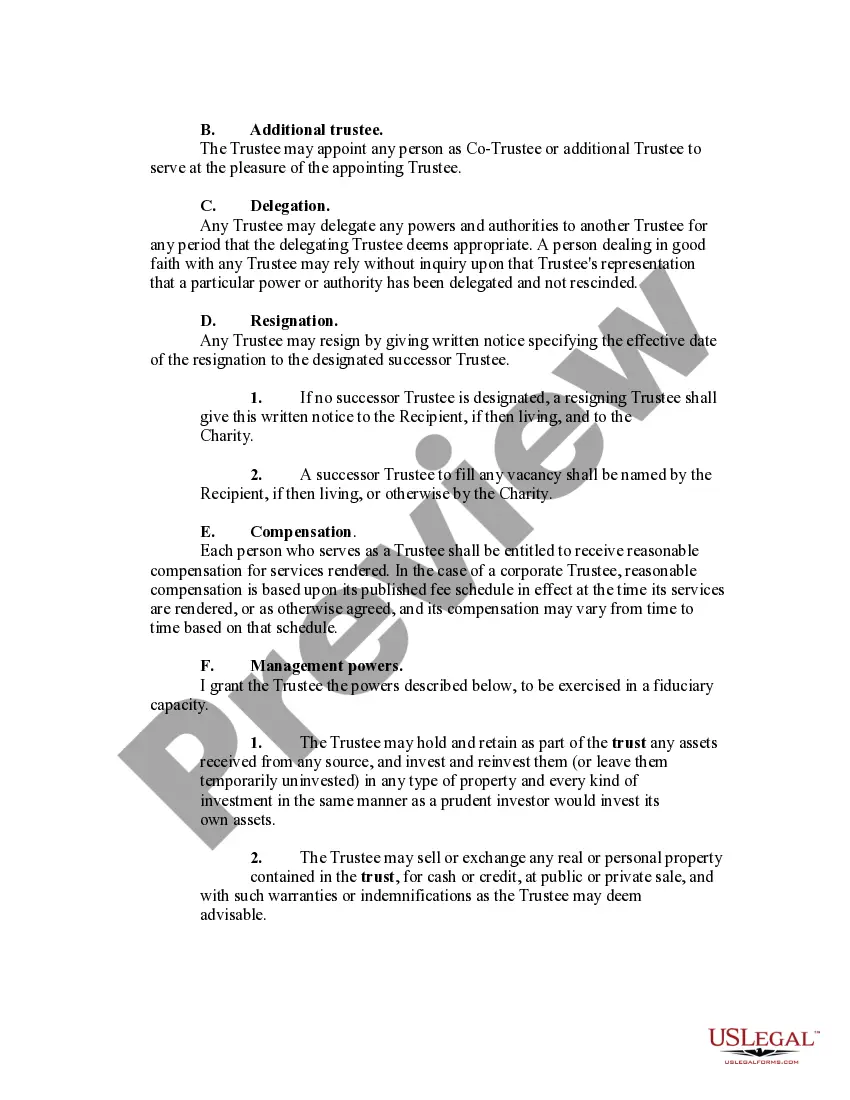
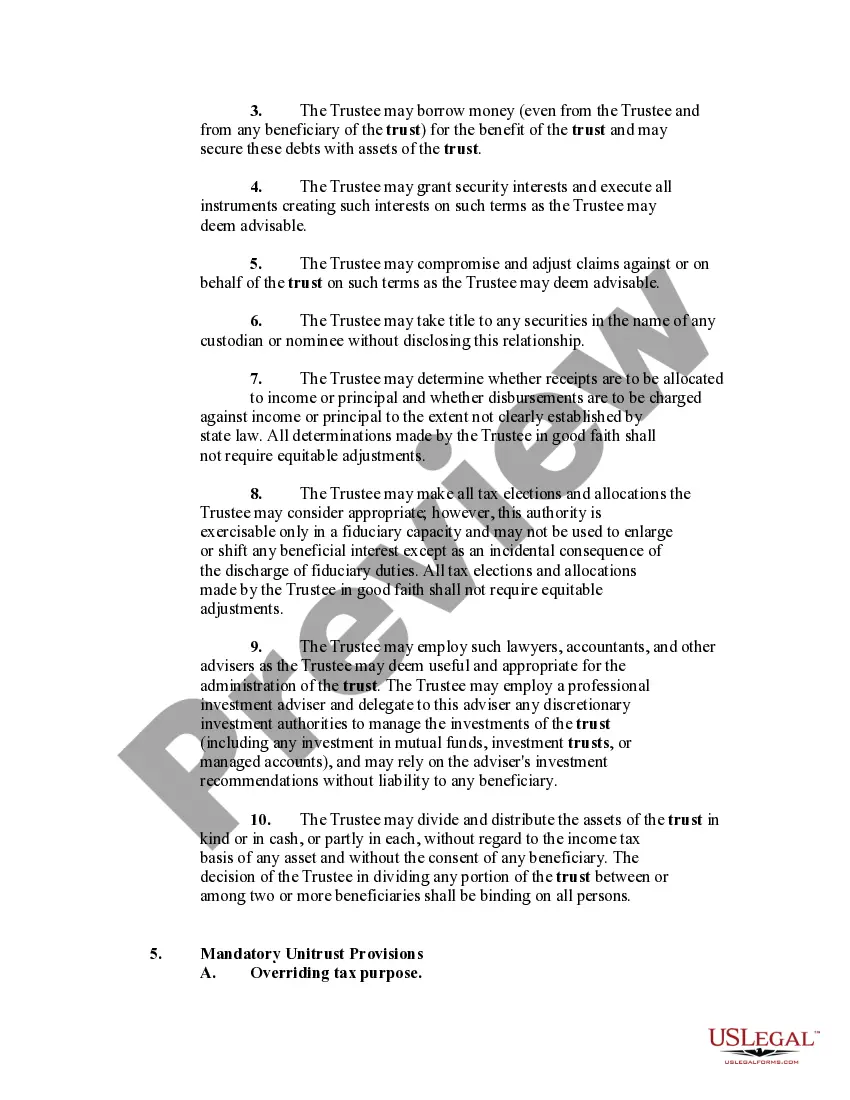
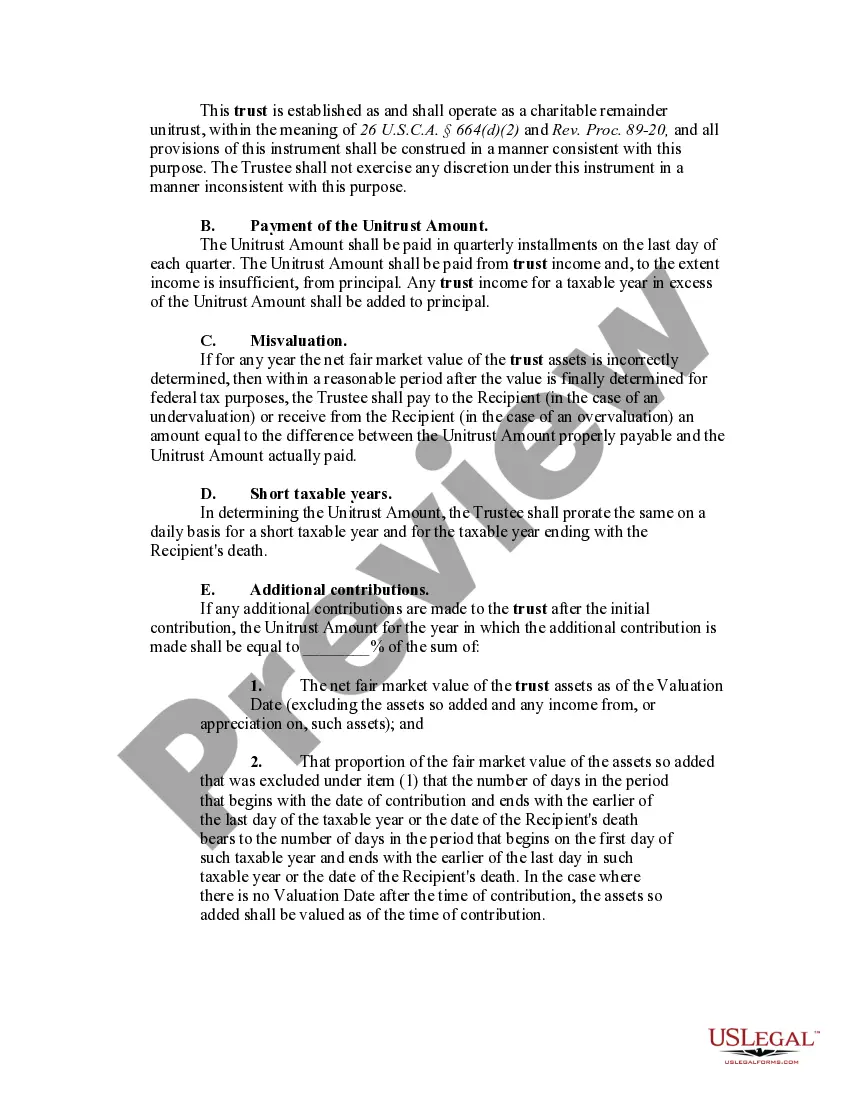
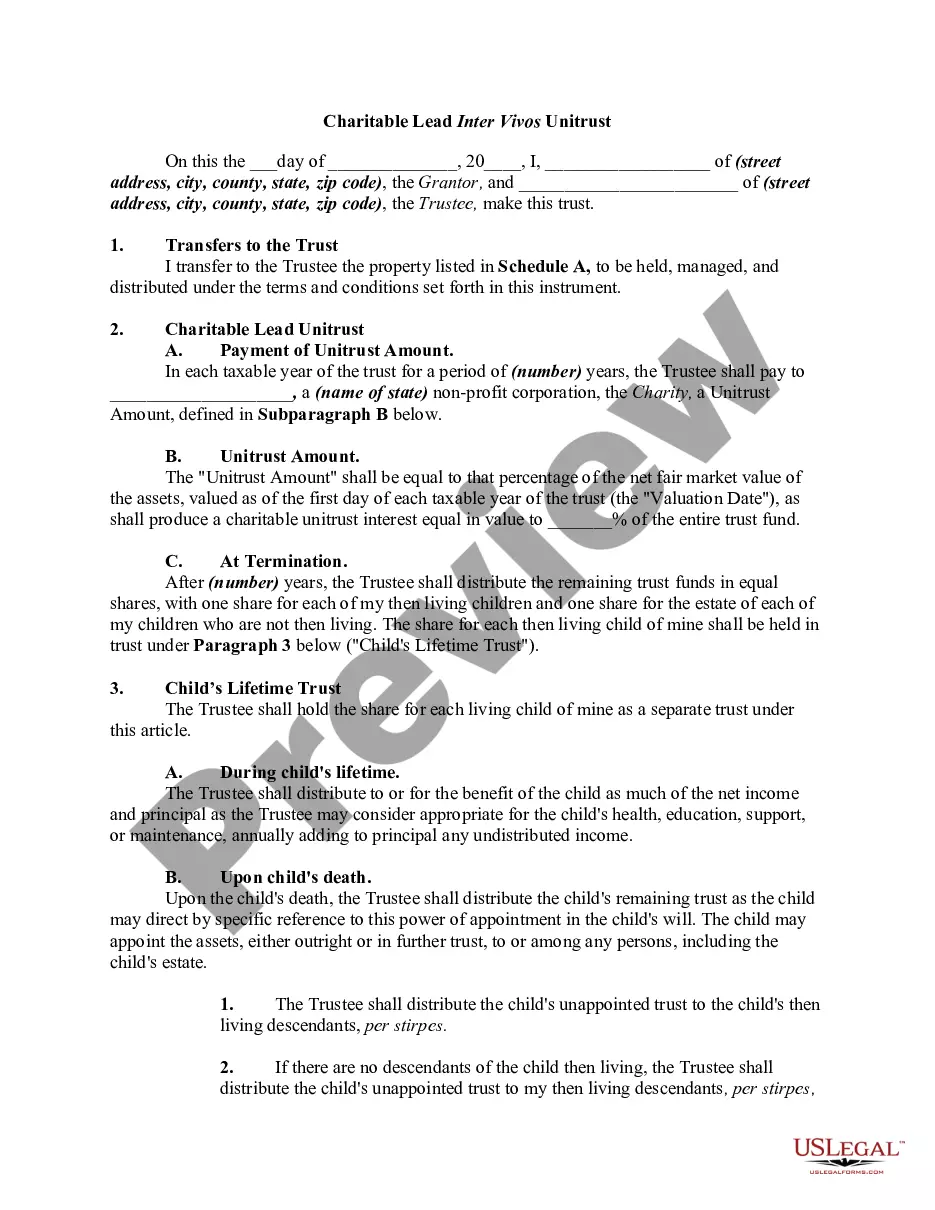
How to fill out Charitable Remainder Inter Vivos Unitrust Agreement?
- If you are an existing user, log in to your US Legal Forms account and select the desired document to download by clicking the Download button. Ensure your subscription is active; if it's expired, renew it as per your chosen plan.
- For first-time users, begin by reviewing the form preview and description to confirm it meets your needs and complies with local regulations.
- If the form doesn't meet your criteria, utilize the Search tab to find a more suitable template. Once you locate an appropriate form, proceed to the next step.
- Purchase the document by clicking on the Buy Now button and selecting your preferred subscription plan. You will need to create an account to access the library's resources.
- Complete your purchase by entering your credit card information or using your PayPal account for payment.
- Finally, download the form to your device and save it for completion. You can access your documents anytime from the My Forms section in your account.
By utilizing US Legal Forms, you gain access to an extensive library of over 85,000 legally compliant forms designed for ease of use. Their robust collection ensures you find the right documents at a competitive price.
Empower yourself with the tools you need to create legally sound documentation. Start your journey today by visiting US Legal Forms for reliable legal templates.
Form popularity
FAQ
Trusts that have any taxable income, regardless of whether they are foreign or domestic, must file Form 1041. This includes those established under a Charitable form trust contract for non residents. Understanding your obligations can help maintain compliance and promote effective management of your trust.
Yes, foreign trusts can be subject to U.S. estate tax if the trust holds U.S. assets. Utilizing a Charitable form trust contract for non residents can help navigate these complexities. Proper estate planning can minimize tax liabilities and secure compliance with U.S. laws.
The 5 year rule for foreign trusts refers to the time frame in which distributions to beneficiaries may be taxed under U.S. law. If you structure your trust with a Charitable form trust contract for non residents, understanding this rule is critical. It helps avoid unintended tax consequences and ensures better financial planning.
Currently, Form 5227, which is used for reporting certain charitable trusts, cannot be filed electronically. However, if you are managing a Charitable form trust contract for non residents, ensure that you prepare this form meticulously. Completing it accurately is crucial for compliance, even if the submission process is manual.
Form 3520-A must be filed by foreign trusts that have U.S. beneficiaries or that are treated as owned by U.S. persons. When dealing with a Charitable form trust contract for non residents, it is vital to ensure that you meet this filing requirement. Filing this form accurately helps maintain good standing with the IRS and supports compliance.
To report a foreign trust, you must provide specific information related to the trust's income, assets, and distributions. The Charitable form trust contract for non residents can help organize this information accurately. Essential documents include Form 3520 and any required supporting information that outlines the trust's activities.
Form 8960 must be filed by individuals, estates, and trusts that owe the net investment income tax. If you are using a Charitable form trust contract for non residents, this may apply to you if your investment income exceeds certain thresholds. Ensure that you evaluate your income sources and consult with a tax professional to determine your filing obligations.
Yes, a foreign trust may need to file Form 1041 if it has income that is subject to U.S. tax. The Charitable form trust contract for non residents is a critical tool for managing reporting obligations effectively. When establishing a foreign trust, it is essential to understand the implications of Form 1041 to ensure compliance and avoid penalties.
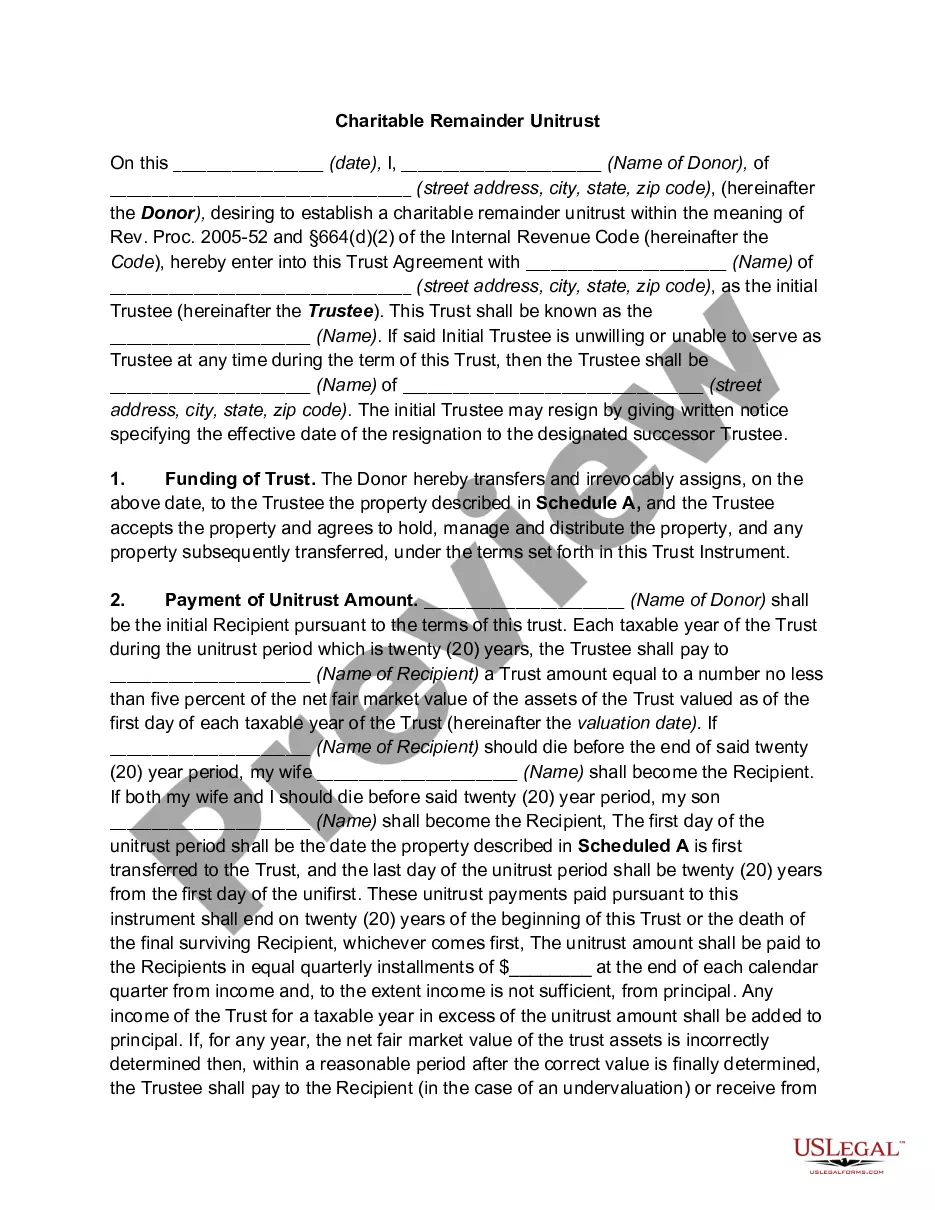
A CRAT, or Charitable Remainder Annuity Trust, provides fixed annual payments to beneficiaries, while a CRUT, or Charitable Remainder Unitrust, offers variable payments based on the trust's annual valuation. If you are exploring a charitable form trust contract for non residents, understanding these differences is vital for effectively planning your charitable giving strategy. Seek assistance from professionals or resources that can provide detailed insights into these trusts.
Yes, you can file Form 5227 electronically. This option simplifies the submission process and can help save time. If you are managing a charitable form trust contract for non residents, take advantage of e-filing to ensure your forms are submitted accurately and promptly. Utilize user-friendly platforms like uslegalforms to guide you through electronic filing.