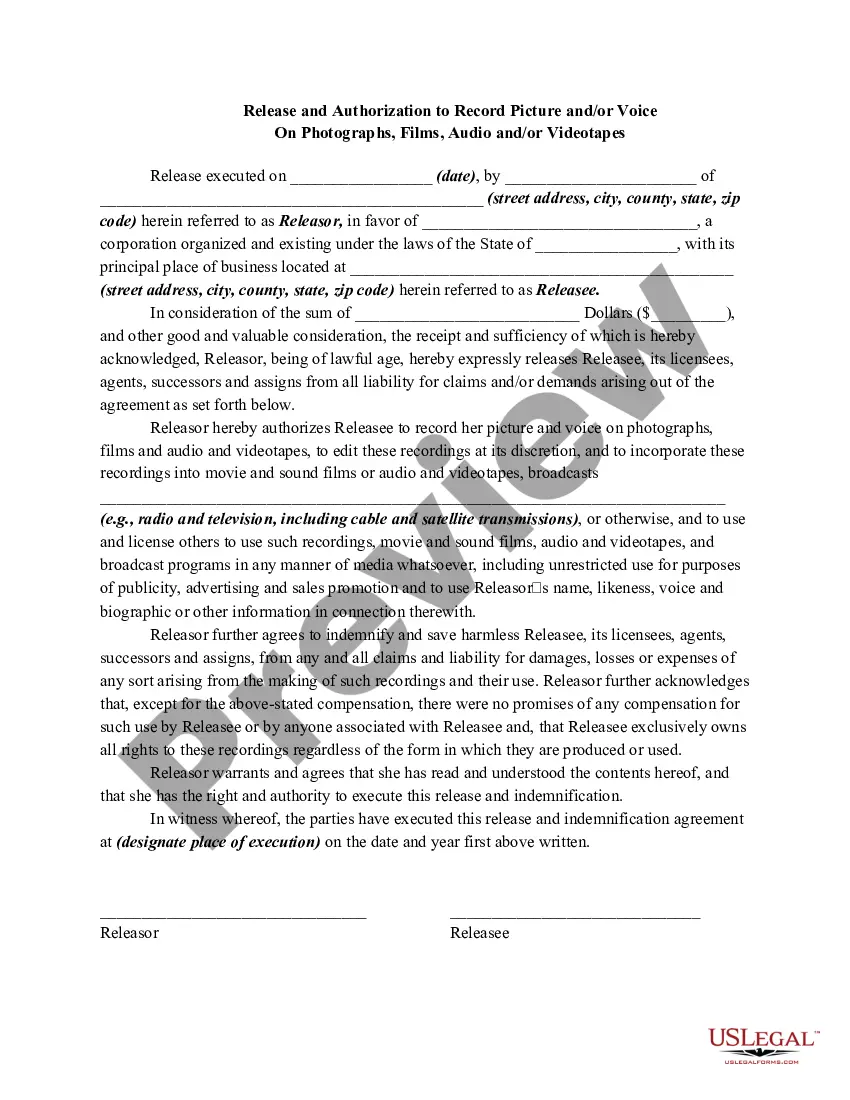
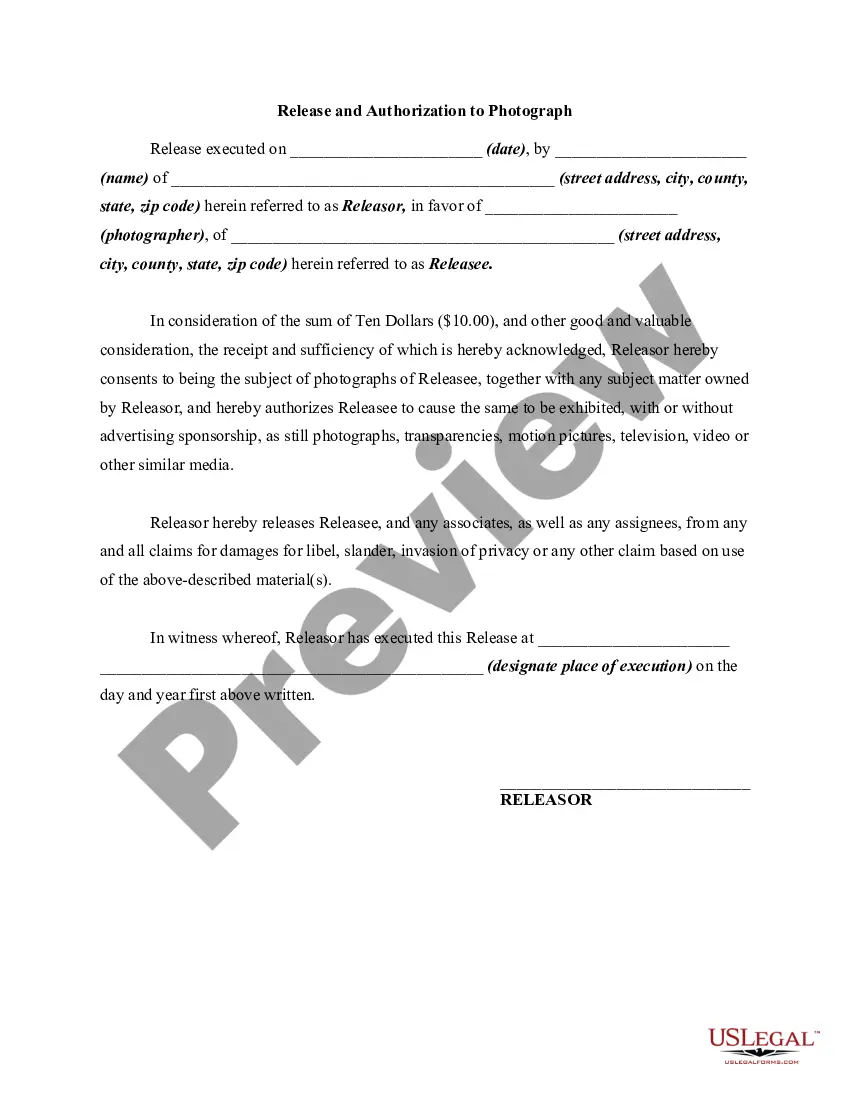
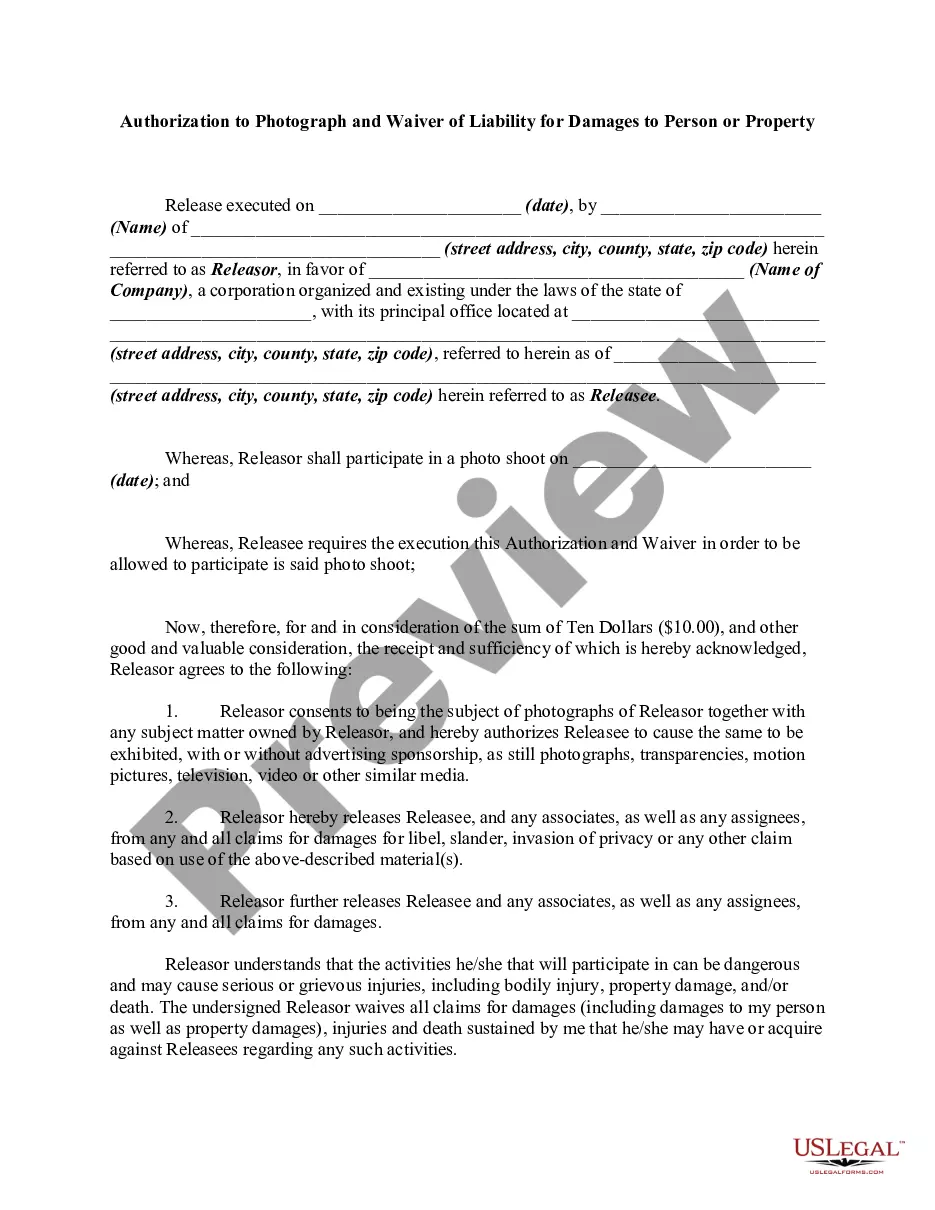
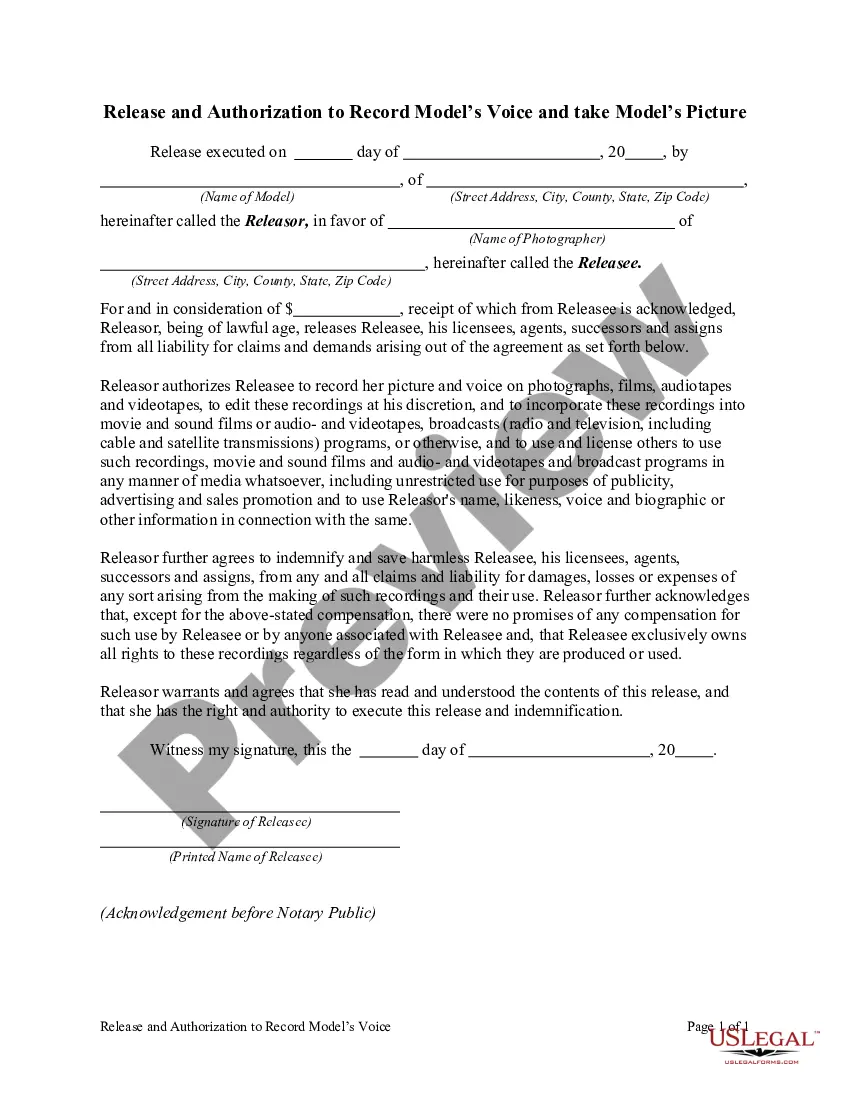
Release Record Form For Podcast
Description
Get your form ready online
Our built-in tools help you complete, sign, share, and store your documents in one place.
Make edits, fill in missing information, and update formatting in US Legal Forms—just like you would in MS Word.
Download a copy, print it, send it by email, or mail it via USPS—whatever works best for your next step.
Sign and collect signatures with our SignNow integration. Send to multiple recipients, set reminders, and more. Go Premium to unlock E-Sign.
If this form requires notarization, complete it online through a secure video call—no need to meet a notary in person or wait for an appointment.
We protect your documents and personal data by following strict security and privacy standards.

Make edits, fill in missing information, and update formatting in US Legal Forms—just like you would in MS Word.

Download a copy, print it, send it by email, or mail it via USPS—whatever works best for your next step.

Sign and collect signatures with our SignNow integration. Send to multiple recipients, set reminders, and more. Go Premium to unlock E-Sign.

If this form requires notarization, complete it online through a secure video call—no need to meet a notary in person or wait for an appointment.

We protect your documents and personal data by following strict security and privacy standards.
Looking for another form?

How to fill out Release And Authorization To Record Picture And / Or Voice On Photographs, Films, Audio And / Or Videotapes?
Regardless of whether it's for professional reasons or personal matters, everyone must handle legal issues at some point in their lives.
Completing legal documents requires meticulous focus, starting from selecting the appropriate form template.
Once saved, you can fill out the form using editing software or print it out and complete it manually. With an extensive US Legal Forms collection available, you won’t need to waste time searching for the correct template online. Take advantage of the library’s straightforward navigation to discover the suitable form for any situation.
- For instance, if you select an incorrect version of the Release Record Form For Podcast, it will be rejected upon submission.
- Thus, it is essential to find a trustworthy source of legal documents such as US Legal Forms.
- If you wish to acquire a Release Record Form For Podcast template, follow these simple instructions.
- Access the template you require through the search bar or catalog browsing.
- Review the form’s details to confirm it aligns with your circumstances, state, and county.
- Click on the form’s preview to view it.
- If it’s the incorrect document, return to the search tool to find the Release Record Form For Podcast template you need.
- Obtain the file when it suits your specifications.
- If you have a US Legal Forms account, click Log in to access previously stored templates in My documents.
- If you haven’t created an account yet, you can download the form by clicking Buy now.
- Select the appropriate pricing option.
- Complete the profile registration form.
- Choose your payment method: either use a credit card or a PayPal account.
- Select the document format you prefer and download the Release Record Form For Podcast.
Form popularity
FAQ
Some people might overlook this essential part of running your podcast, convinced that they already know their target audience and understand what they like and know. However, having podcast disclaimers is important for any podcaster, regardless of who your audience is or how well you know them.
Not having a signed release form puts you at risk of guests demanding you remove content further down the line. Not to mention it leaves you vulnerable to specific editing demands, claims of exploitation, copyright infringements, and other legal action. It's rare. But it does happen.
How to Publish a Podcast: A Complete Guide Do the pre-production legwork. Choose a podcast hosting site. Write, record and edit your podcast. Upload your podcast to the hosting site and ensure it's available on as many directories as possible. Promote, promote, promote. In conclusion.
A podcast release form (also referred to as a talent release form in other industries) is a document that you get guests to sign BEFORE coming on your podcast that essentially releases the interview or content you produce of or with them, to you to use with your podcast as you wish.
You can record a podcast with only a microphone, a computer, headphones and a well-soundproofed room. But if you want to take it a step further and go for an even better sound, a mixer console might be a good idea. A mixing console is useful if you want to: Use an XLR microphone.