Photography Release With A
Description
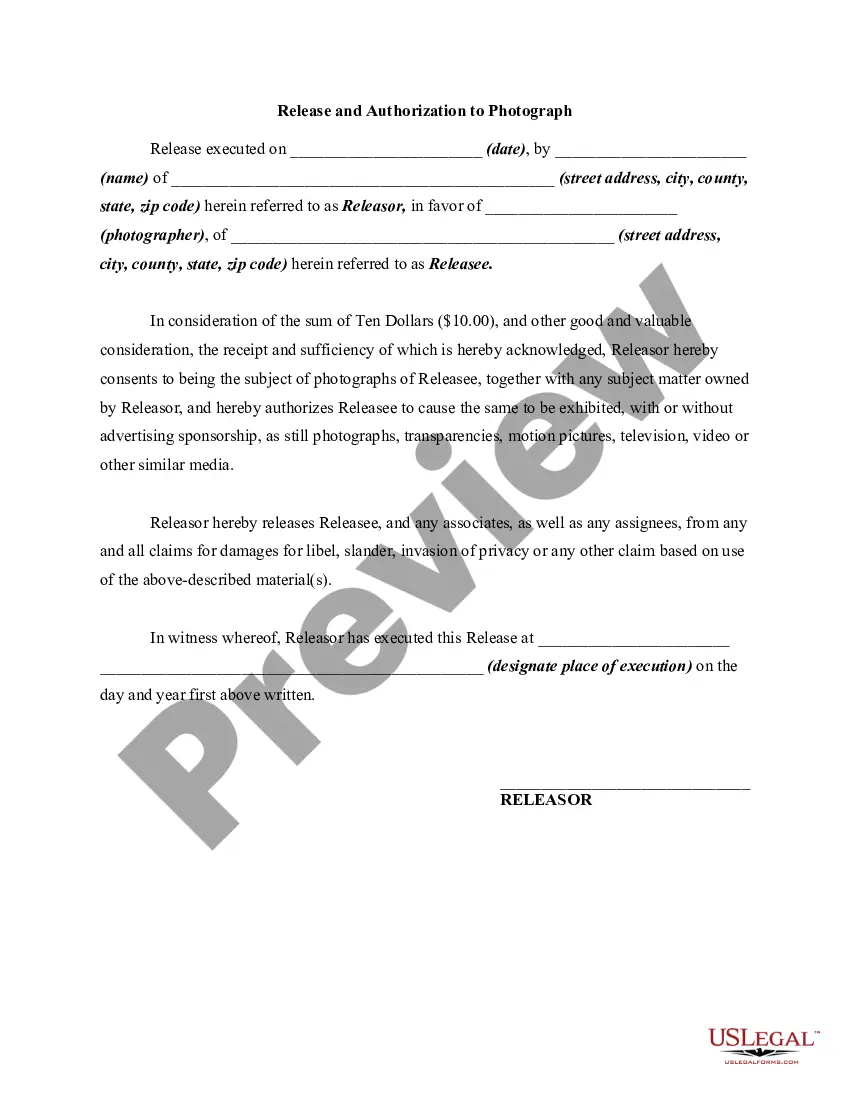
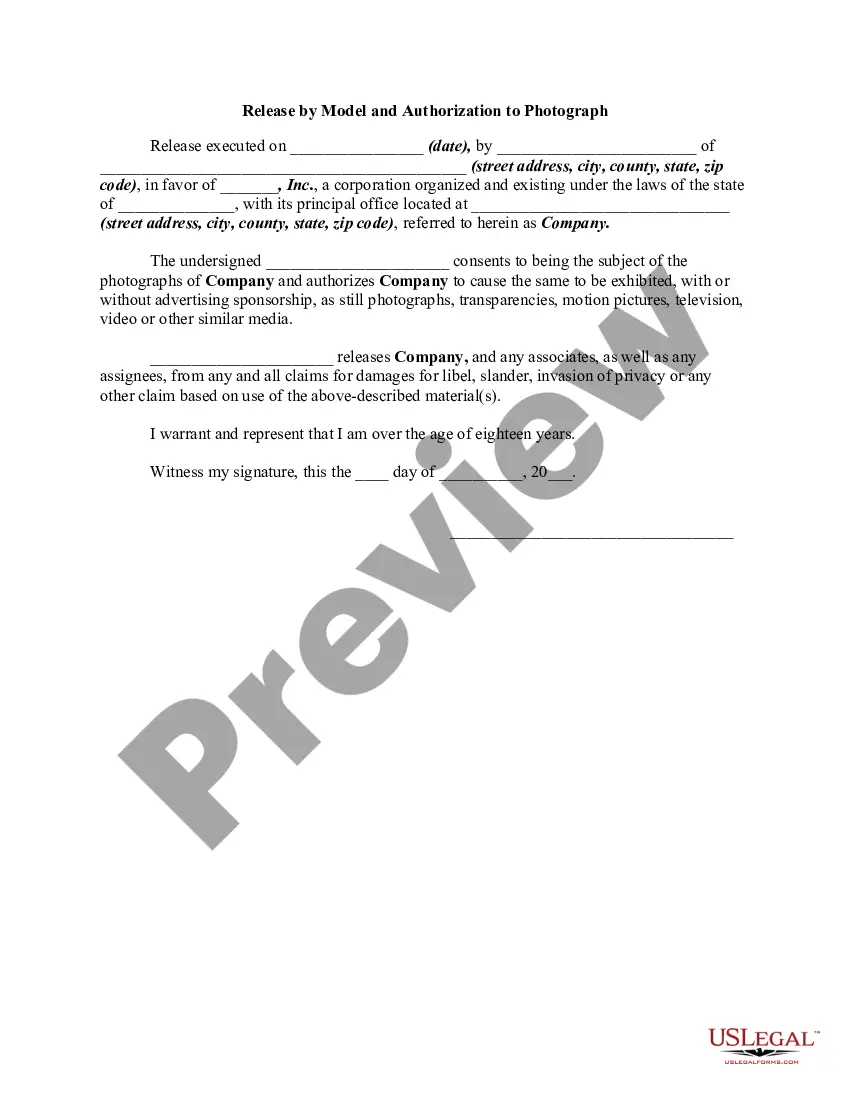
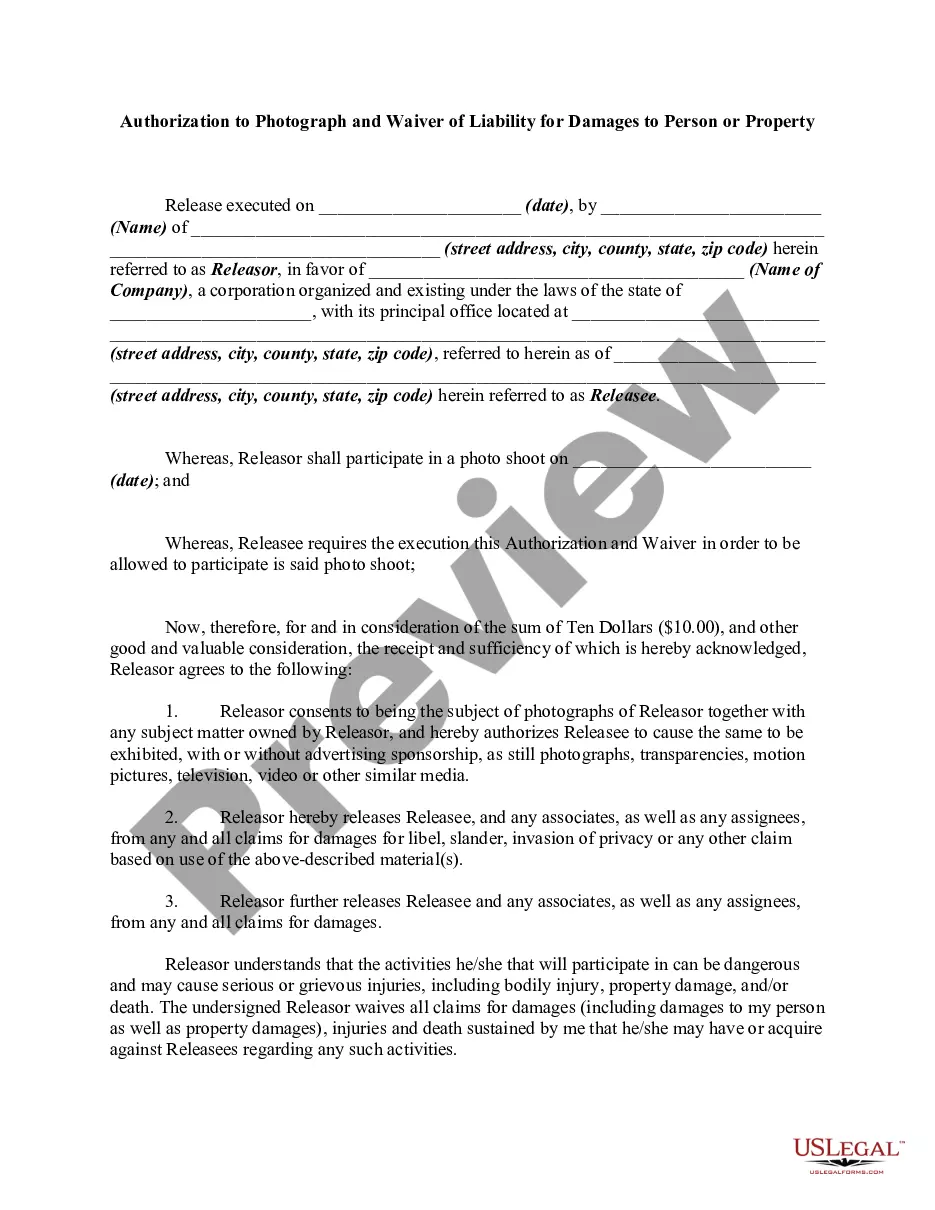


How to fill out Photography Release And Authorization To Photograph?
- Log in to your account on US Legal Forms if you're a returning user. Download the desired template by clicking the Download button. Confirm that your subscription is active; if not, renew it according to your chosen payment plan.
- If you're new to US Legal Forms, start by browsing the available form templates. Check the Preview mode and form description to ensure you select the right one per your jurisdiction requirements.
- Should you need another template, utilize the Search tab to find the appropriate form. Make sure it fits your requirements before proceeding.
- Purchase your selected document by clicking on the Buy Now button. Choose the subscription plan that suits you, and create an account for access to all resources.
- Complete your purchase by entering your payment information, either via credit card or PayPal. Once confirmed, you can download your photography release form.
- After download, save the document to your device and access it anytime from the My Forms section in your profile for easy retrieval.
In conclusion, using US Legal Forms not only provides a broad selection of legal templates but also ensures your documents are compliant and executed properly. Take advantage of this service to protect your creative rights.
Visit US Legal Forms today to start your journey in securing your photography release!
Form popularity
FAQ
The wording for a photo consent form should state, "I, Name, give permission to Photographer's Name to use my likeness in photographs taken on Date. I understand that these images may be used for promotional purposes." This concise statement clearly communicates consent while enhancing your photography release with essential legal protection.
To write a copyright release for photography, begin by indicating the photographer's name and the specific images involved. State the permission granted for use, clearly specifying the limitations and duration of the release. This well-structured photography release with a copyright component secures your interests and informs the user.
An effective photo disclaimer example might state: "The images on this website are the property of Your Name. Unauthorized use is prohibited without permission." A clear disclaimer assures viewers of your rights and protects your work. Reinforcing this statement gives your photography release with a solid protective layer.
An example of a photo release statement is: "I, Name, hereby grant permission to Photographer's Name to use my photograph for promotional purposes. I understand that this photo may appear in print or online materials." This brief statement effectively communicates consent while reinforcing your photography release with explicit permission.
A photo release contract for photographers is a legal document that grants permission to use or publish photographs of individuals or property. This contract outlines the rights you retain as a photographer and the rights granted to the person or entity using your images. Utilizing a structured photography release with a detailed contract helps avoid legal disputes in the future.
You can protect your photography copyright by registering your work with the U.S. Copyright Office. This formal registration provides legal benefits, including the right to sue for infringement. Always include a copyright notice on your images, as it reinforces your claim and strengthens your photography release with a strong legal basis.
An example of a copyright disclaimer for photography could be: "© Your Name Year. All rights reserved. No part of this image may be reproduced without explicit permission." This simple statement asserts your ownership and serves as a reminder that your work is legally protected. Remember, crafting this disclaimer enhances your photography release with a clear message.
To write a copyright disclaimer for photography, clearly state that the images are protected under copyright law. Include the copyright symbol, your name, and the year the photos were taken. You might also specify that permission is required for any reproduction or use of the images, ensuring your photography release with a comprehensive disclaimer.
To get your photography published, start by identifying niche magazines, blogs, or websites that align with your style. Create tailor-made proposals for each outlet and include a photography release with a for any contributors, ensuring transparency and legal protection. This approach not only enhances your chances of publication but also establishes professional integrity.
Yes, a photographer can use your photos without a release, but this can lead to legal complications. To protect your rights, always require a photography release with a before any use of your images, ensuring that your intentions and permissions are clearly documented. This step not only safeguards your work but also clarifies expectations for both parties.