Photography For Real Estate
Description
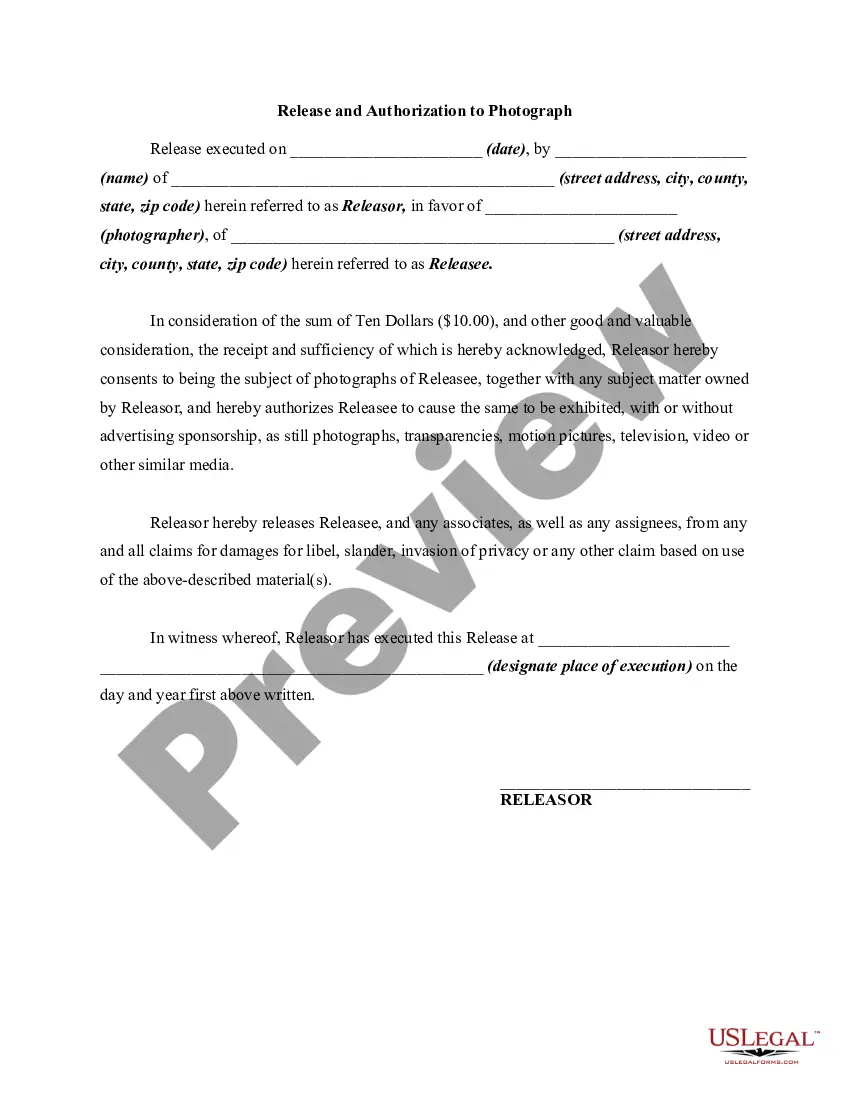
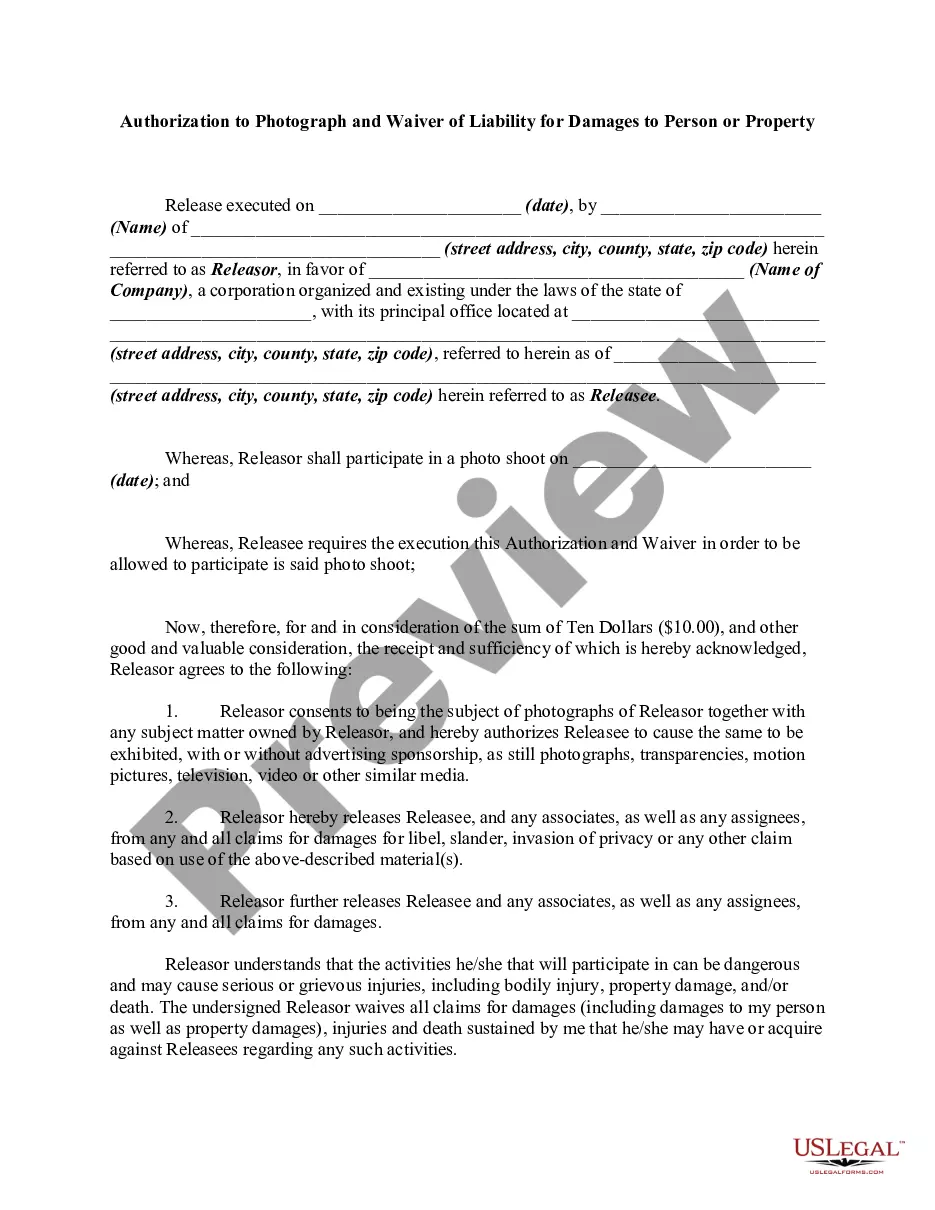

How to fill out Photography Release And Authorization To Photograph?
- If you're a returning user, log in to your account and select the necessary form template to download by clicking the 'Download' button. Confirm that your subscription is active; if it's expired, renew it per your plan.
- For first-time users, begin by exploring the Preview mode and reviewing the form description. Ensure you've selected the template that aligns with your local jurisdiction requirements.
- If the form isn't quite right, utilize the Search tab at the top to find a more suitable option. Once satisfied, proceed to the next step.
- To purchase the document, click the 'Buy Now' button and select your preferred subscription plan. You will need to create an account to access the library.
- Complete your purchase by entering your credit card information or using your PayPal account for payment.
- Finally, download the form to your device and you can always revisit it anytime in the My Forms section of your profile.
Using US Legal Forms provides a robust collection of templates, enabling both individuals and attorneys to easily create legally compliant documents tailored to their needs. The service stands out with more forms than competitors and access to premium expert assistance.
In conclusion, by following these straightforward steps, you'll leverage the power of US Legal Forms for your real estate needs. Start today and ensure your documentation is seamless and effective!
Form popularity
FAQ
To start photography for real estate, begin by investing in quality camera equipment and learning essential photography techniques. Create a portfolio showcasing your best work to attract clients. Additionally, leveraging platforms like US Legal Forms can help you handle contracts and agreements efficiently, simplifying your business operations.
A good real estate photographer combines technical skills with a keen eye for detail. They understand the importance of lighting, composition, and staging to create compelling images. Additionally, excellent communication with clients helps ensure their vision is realized, further enhancing the photography experience.
Starting a business in photography for real estate can be an excellent choice for creative individuals. The combination of visual storytelling and a growing market makes it appealing. Moreover, with the right marketing strategies and high-quality service, your business can thrive.
Real estate photography can be quite profitable if you establish a solid client base. With many real estate agents and homeowners looking for outstanding images to market properties, there is ample opportunity to earn a good income. Additionally, offering packages that include drone photography and virtual tours can further boost your revenue.
Yes, there is a strong demand for photography for real estate. As the real estate market continues to grow, homeowners and agents seek high-quality images to attract potential buyers. Effective photography helps properties stand out in listings, making it essential for successful sales.
Breaking into photography for real estate requires a mix of skill and marketing. Start by building a portfolio that showcases your best work. Reach out to real estate agents and offer your services. Networking within local communities, and using platforms like US Legal Forms can help streamline your contracts and agreements, making it easier to establish professional relationships.
If you plan to use a drone for photography for real estate, you will need to obtain a Part 107 license from the FAA. This license allows you to legally conduct commercial drone operations. Without it, you risk facing penalties and fines. Obtaining this license can enhance your credibility as a real estate photographer.
The best ISO setting for real estate photography depends on your lighting conditions. Generally, a lower ISO of around 100 to 400 is ideal in well-lit environments, providing detail and reducing graininess in your photos. However, in dim conditions, you may need to increase the ISO but be cautious, as higher settings can introduce noise. Striking the right balance ensures your photography for real estate looks professional and appealing.
The best format for real estate photos often depends on how you plan to use them. For online listings, JPEG is widely accepted due to its balance of quality and compression. If high-quality prints are your goal, consider using TIFF or PNG formats as they provide superior quality without losing detail. Understanding the needs of your audience will guide you in selecting the best format for your photography for real estate.
The best quality format for real estate photos is usually a high-resolution JPEG or TIFF. JPEG files offer a good compromise of quality and file size, making them suitable for most online platforms. TIFF files, however, provide even higher quality with no compression but lead to larger file sizes. When preparing your photography for real estate, choose the format based on its intended use to maximize visual appeal.