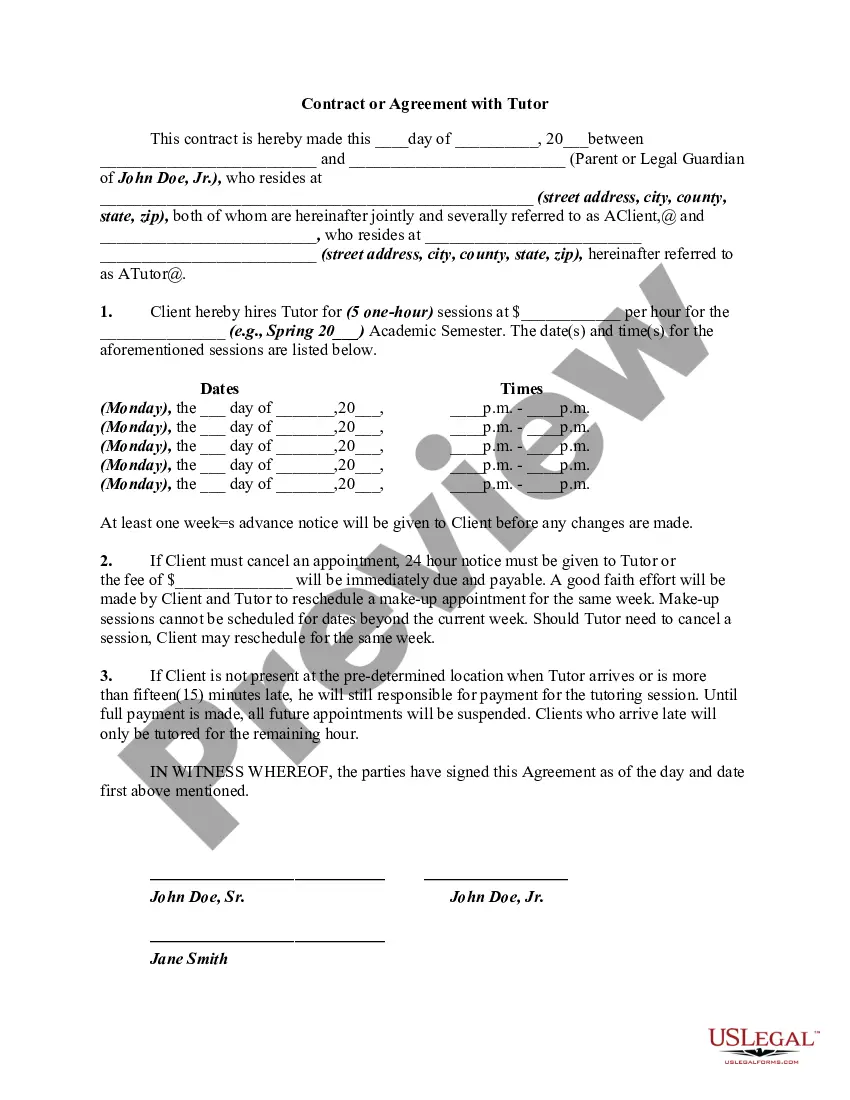
Tutor Agreement
Description
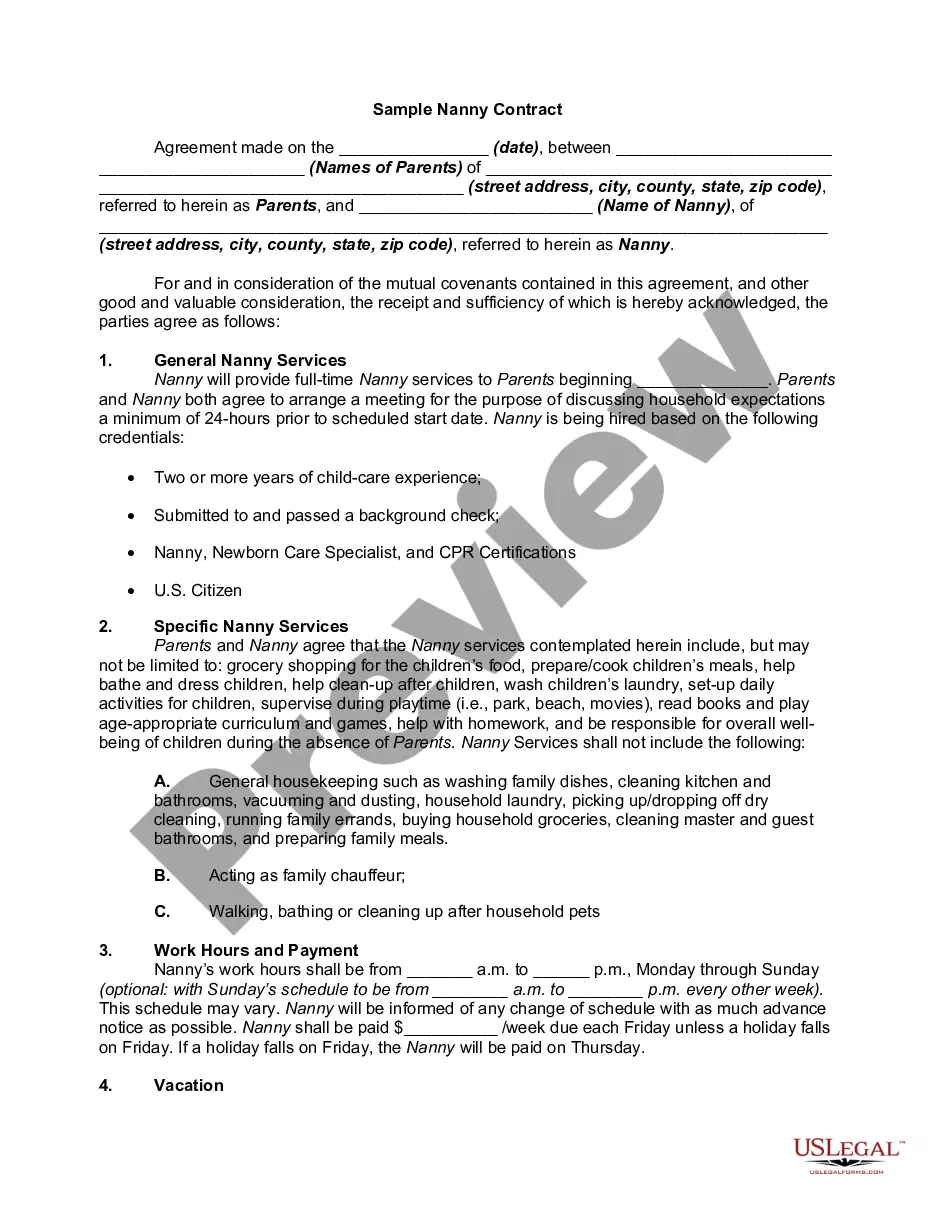
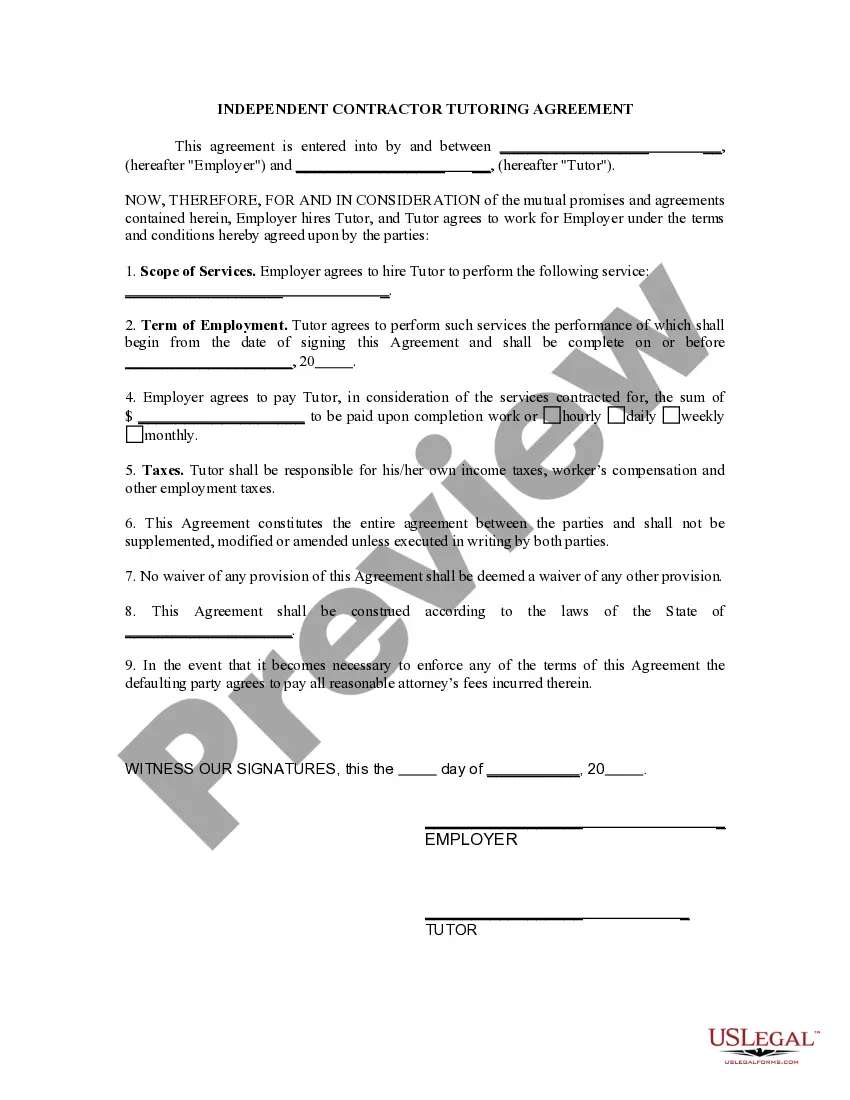
Get your form ready online
Our built-in tools help you complete, sign, share, and store your documents in one place.
Make edits, fill in missing information, and update formatting in US Legal Forms—just like you would in MS Word.
Download a copy, print it, send it by email, or mail it via USPS—whatever works best for your next step.
Sign and collect signatures with our SignNow integration. Send to multiple recipients, set reminders, and more. Go Premium to unlock E-Sign.
If this form requires notarization, complete it online through a secure video call—no need to meet a notary in person or wait for an appointment.
We protect your documents and personal data by following strict security and privacy standards.

Make edits, fill in missing information, and update formatting in US Legal Forms—just like you would in MS Word.

Download a copy, print it, send it by email, or mail it via USPS—whatever works best for your next step.

Sign and collect signatures with our SignNow integration. Send to multiple recipients, set reminders, and more. Go Premium to unlock E-Sign.

If this form requires notarization, complete it online through a secure video call—no need to meet a notary in person or wait for an appointment.

We protect your documents and personal data by following strict security and privacy standards.
Looking for another form?
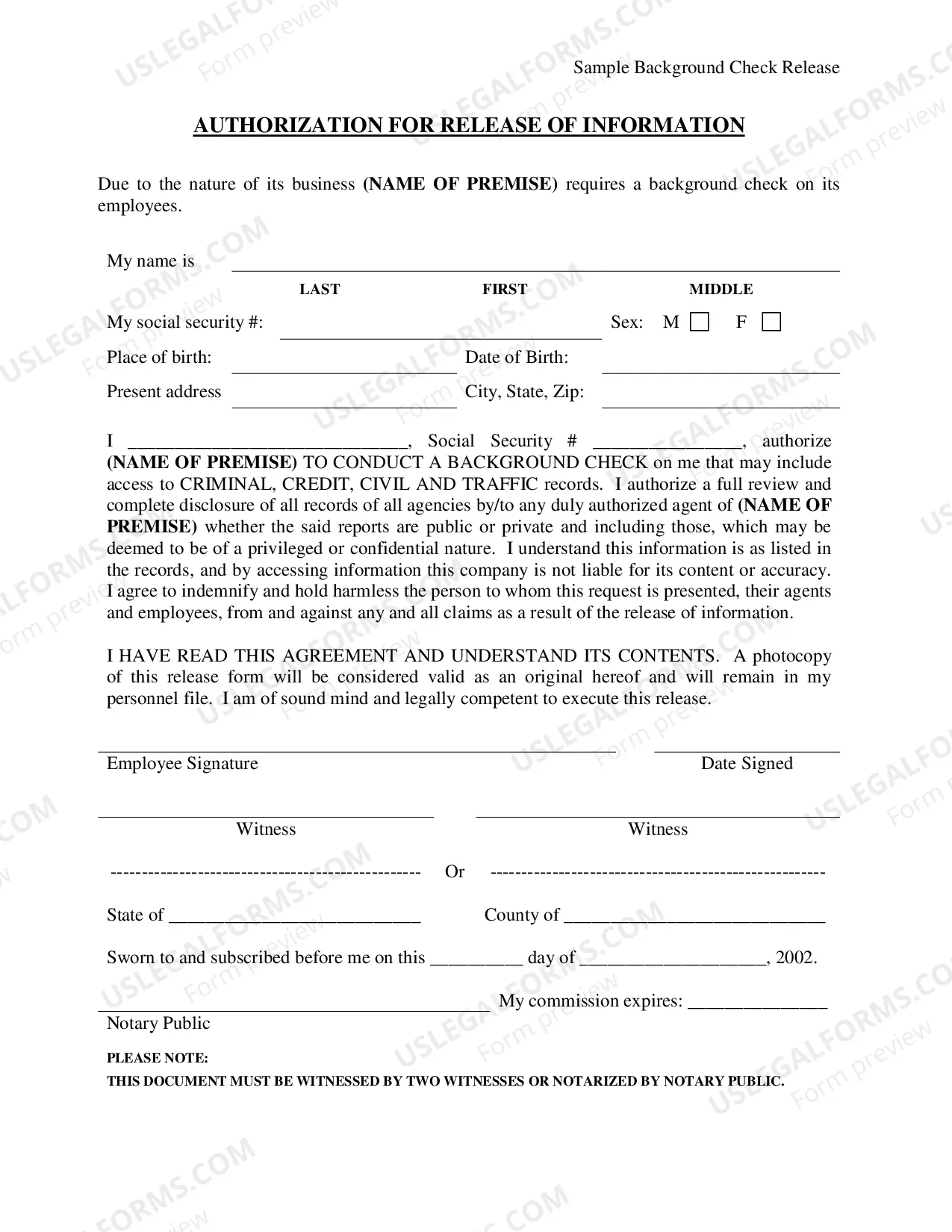





How to fill out Contract Or Agreement With Tutor?
- Log in to your US Legal Forms account if you're a returning user, or create an account if you're new.
- In the library, browse or search for 'tutor agreement' to find the appropriate form that meets your local jurisdiction requirements.
- Preview the form details to ensure it aligns with your needs, adjusting if necessary by searching for alternate templates.
- Choose a subscription plan by clicking the 'Buy Now' button, giving you access to the extensive library of over 85,000 forms.
- Complete your payment process using a credit card or PayPal to finalize your purchase.
- Download the completed form directly onto your device for easy access and future reference in the 'My Forms' section.
Upon following these steps, you will obtain a comprehensive and legally sound tutor agreement that fits your educational needs.
Don't miss out on streamlined legal assistance—start your journey with US Legal Forms today!
Form popularity
FAQ
Whether $30 an hour is a good rate for tutoring depends on various factors, including the subject, the tutor's qualifications, and your location. Many consider it a reasonable starting point for elementary or middle school subjects. To ensure you're getting fair value, think about creating a tutor agreement that outlines expectations and outcomes. This can help ensure you receive quality tutoring that justifies the investment.
Writing a tutoring contract involves outlining key details such as the scope of tutoring services, payment terms, and cancellation policies. Begin by clearly stating the responsibilities of both parties, including session frequency and duration. To streamline the process, consider using a tutor agreement template, which can help ensure you don’t miss important elements. Ensuring clarity and agreement from the start can lead to a more productive tutoring experience.
In many states, you may require a business license to operate as a tutor, particularly if you provide services privately. It’s important to check local regulations regarding tutoring services. Having a tutor agreement can clarify your business operations and reassure clients of your professionalism.
To be an effective tutor, you need to know your subject well, possess strong communication skills, and be patient. Additionally, creating a tutor agreement can help set expectations for both you and your students, outlining goals, responsibilities, and payment terms.
As mentioned earlier, an LLC is not a requirement to start tutoring. While many tutors operate without one, incorporating can shield your personal assets from business liabilities. It's beneficial to incorporate a tutor agreement specifying your services, rates, and liabilities.
The appropriate tutoring rate often depends on your expertise, location, and subject matter. In many areas, $30 an hour is quite reasonable, especially for specialized subjects. Consider drafting a tutor agreement that outlines your rates and the value you provide to students.
You do not necessarily need an LLC to be a tutor. However, forming an LLC can provide personal liability protection and may enhance your professionalism. Many tutors operate as sole proprietors, but a tutor agreement can help clarify your business structure, whether or not you choose to establish an LLC.
Creating a tutoring contract involves outlining the terms of your tutoring services clearly. You should include details such as session times, payment rates, and cancellation policies in your Tutor agreement. Using a template can simplify this process, ensuring your contract covers all essential aspects. A well-written tutoring contract protects both you and your student, fostering a professional relationship.
When you file taxes as a tutor, you need to report your income from tutoring services. You should keep accurate records of your earnings and expenses related to your tutoring work. Consider using a Tutor agreement to clarify your income sources and expenses. Consulting a tax professional can also help ensure you meet all tax obligations correctly.
Writing a tutoring contract involves clearly outlining the terms of the tutoring relationship. Begin by specifying your services, fees, and session schedules. It is crucial to include provisions for cancellations, client responsibilities, and any materials needed. A solid tutor agreement ensures that both you and your client are aligned on expectations and can help prevent misunderstandings down the line.