Employee Stock Incentive Plan For Dummies
Description


Get your form ready online
Our built-in tools help you complete, sign, share, and store your documents in one place.
Make edits, fill in missing information, and update formatting in US Legal Forms—just like you would in MS Word.
Download a copy, print it, send it by email, or mail it via USPS—whatever works best for your next step.
Sign and collect signatures with our SignNow integration. Send to multiple recipients, set reminders, and more. Go Premium to unlock E-Sign.
If this form requires notarization, complete it online through a secure video call—no need to meet a notary in person or wait for an appointment.
We protect your documents and personal data by following strict security and privacy standards.

Make edits, fill in missing information, and update formatting in US Legal Forms—just like you would in MS Word.

Download a copy, print it, send it by email, or mail it via USPS—whatever works best for your next step.

Sign and collect signatures with our SignNow integration. Send to multiple recipients, set reminders, and more. Go Premium to unlock E-Sign.

If this form requires notarization, complete it online through a secure video call—no need to meet a notary in person or wait for an appointment.

We protect your documents and personal data by following strict security and privacy standards.
Looking for another form?



How to fill out Executive Employee Stock Incentive Plan?
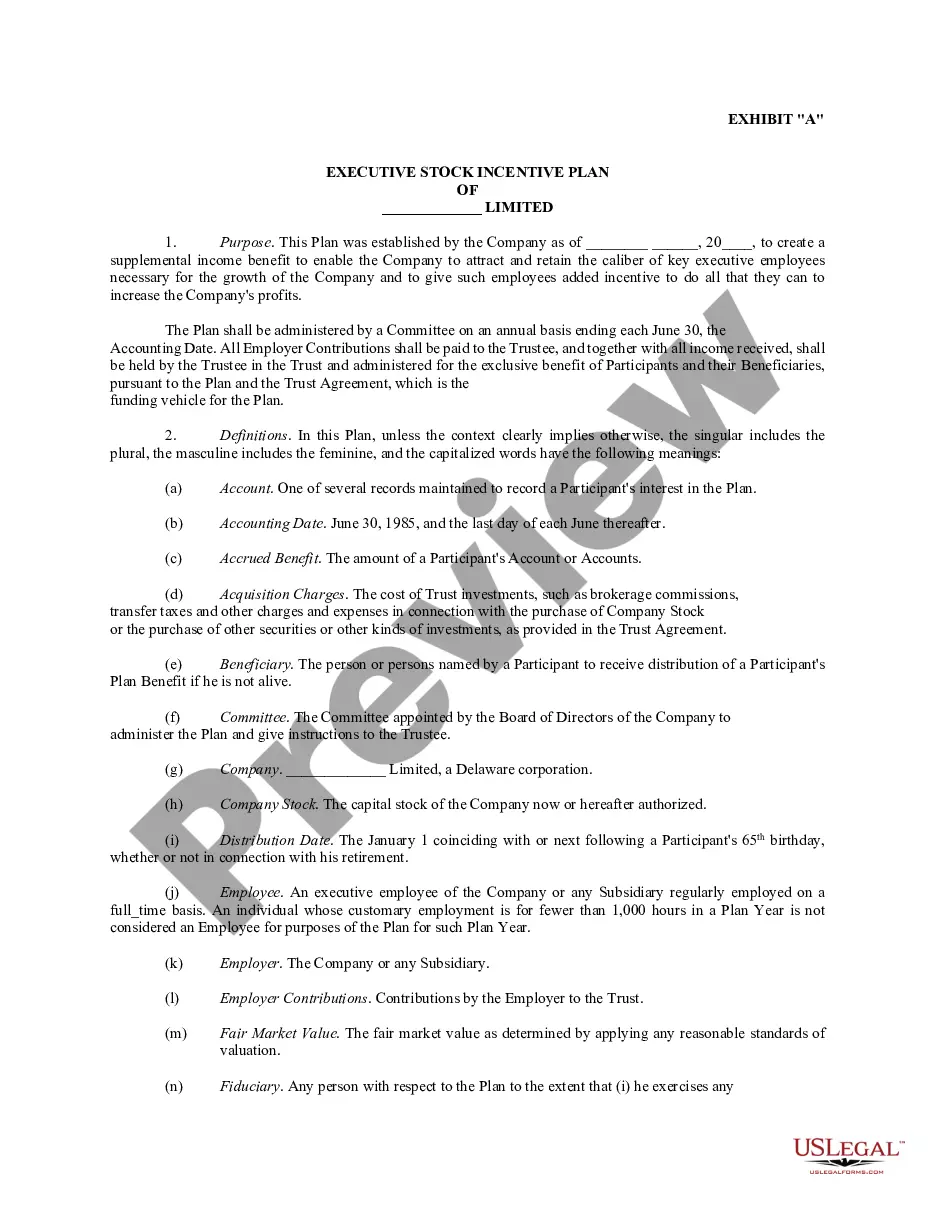
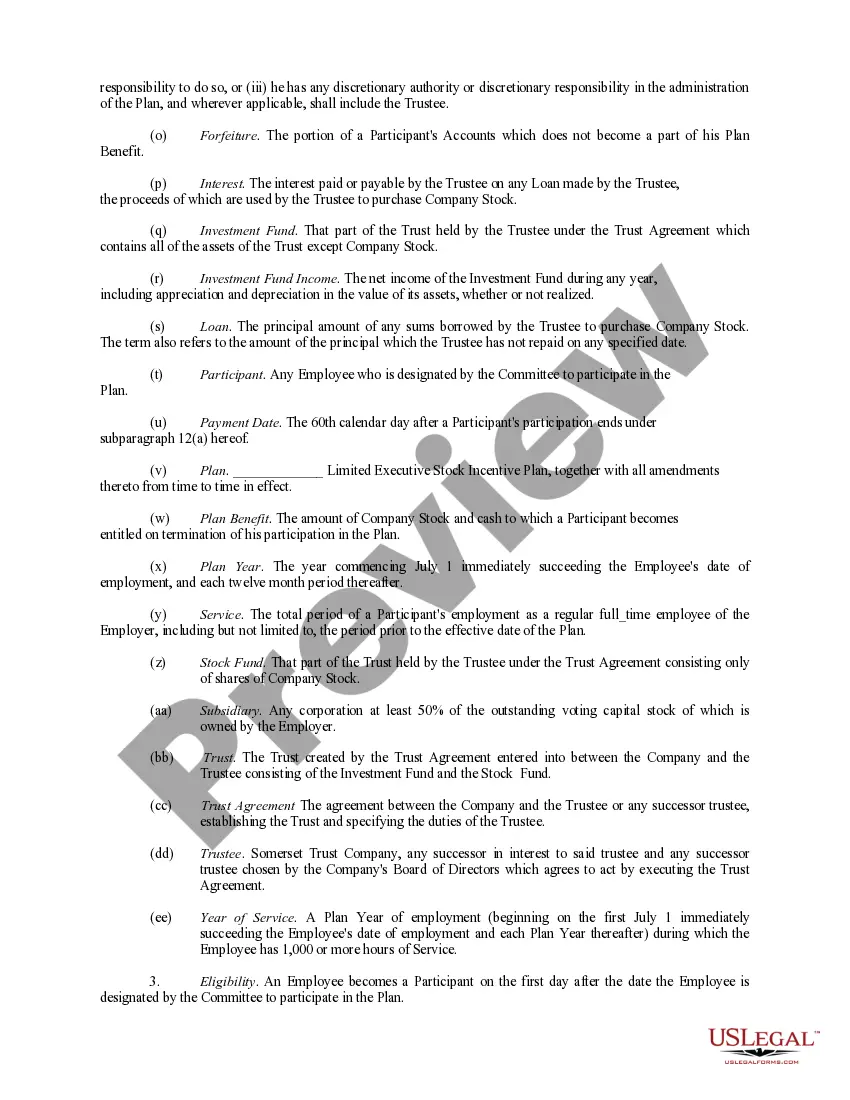
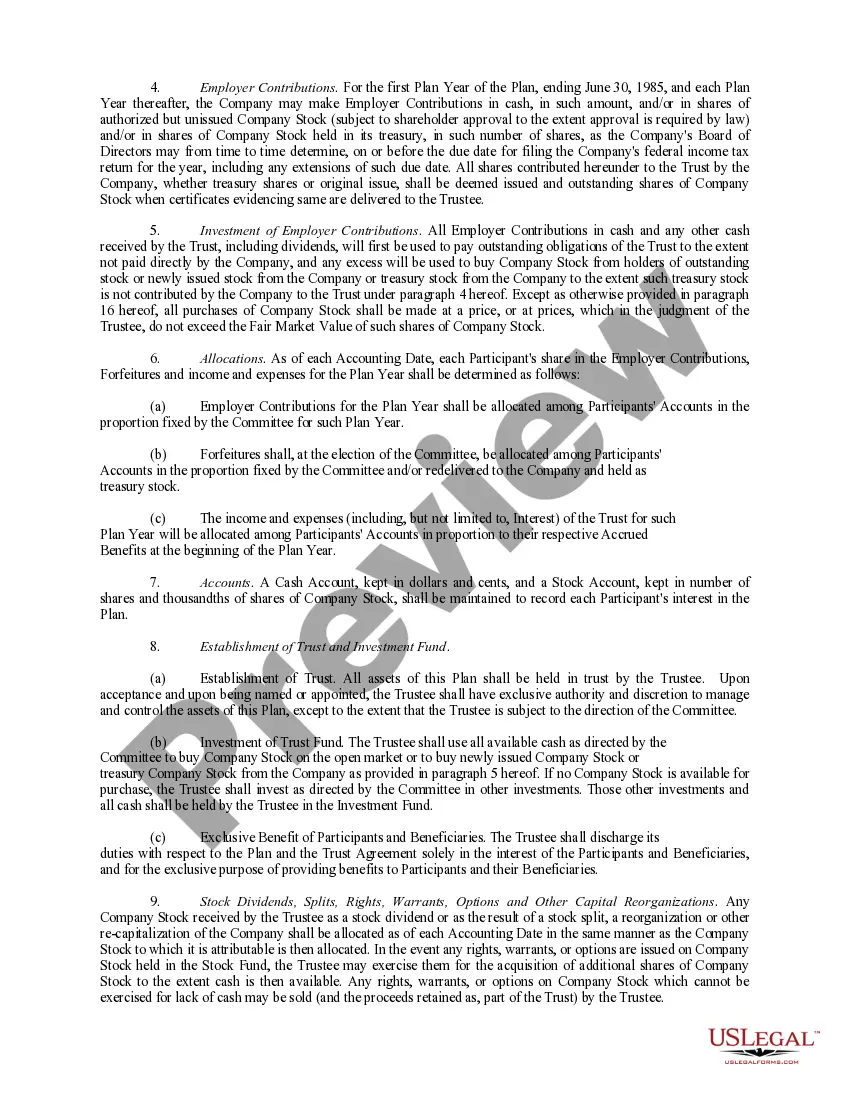
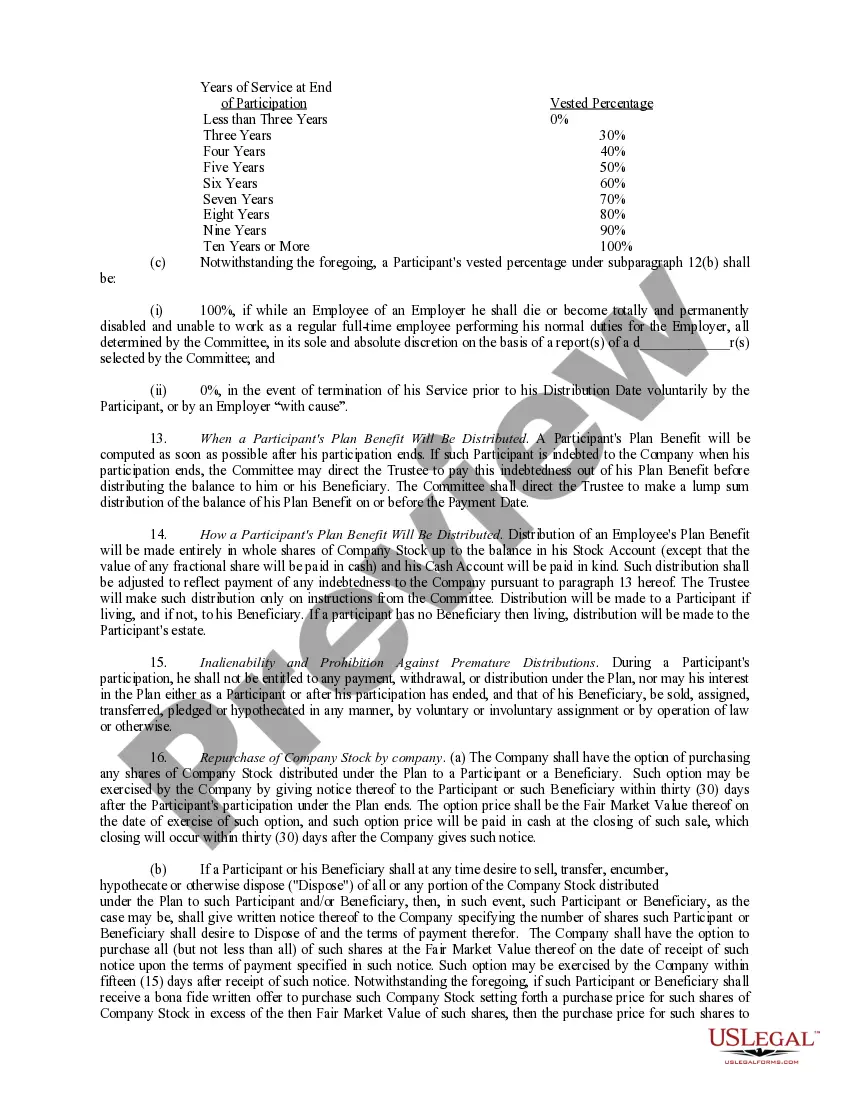
The Employee Stock Incentive Plan For Dummies displayed on this page is a versatile official template created by skilled attorneys in accordance with national and local regulations.
For over 25 years, US Legal Forms has been offering individuals, companies, and legal experts more than 85,000 validated, state-centric forms for any business and personal need. It’s the fastest, simplest, and most trustworthy method to secure the documentation you require, as the service ensures the utmost level of data safety and anti-malware safeguards.
Register with US Legal Forms to have authenticated legal templates for every aspect of life readily available.
- Search for the document you require and examine it.
- Browse through the searched file and pre-view it or review the form description to verify it fits your requirements. If it doesn’t, utilize the search feature to find the correct one. Click Buy Now when you have identified the template needed.
- Register and Log In.
- Select the payment plan that works best for you and create an account. Use PayPal or a credit card to make a swift payment. If you already possess an account, Log In and check your subscription to continue.
- Access the editable template.
- Choose the format you desire for your Employee Stock Incentive Plan For Dummies (PDF, Word, RTF) and save the document on your device.
- Fill out and sign the document.
- Print the template to fill it out manually. Alternatively, use an online multifunctional PDF editor to quickly and accurately complete and sign your form with a valid signature.
- Download your documents again.
- Reuse the same document as often as needed. Access the My documents tab in your profile to redownload any forms acquired previously.
Form popularity
FAQ
The $100,000 limit refers to the maximum value of incentive stock options (ISOs) that an employee can exercise in a calendar year without tax penalties. If you exceed this limit, the excess options convert to non-qualified stock options (NSOs), which have different tax implications. Understanding this limit is crucial for anyone looking to manage their employee stock incentive plan for dummies effectively.
Stock options aren't actual shares of stock?they're the right to buy a set number of company shares at a fixed price, usually called a grant price, strike price, or exercise price. Because your purchase price stays the same, if the value of the stock goes up, you could make money on the difference.
There are two main types of plans ? qualified and non-qualified plans. In order to enroll in an ESPP, it is beneficial to first educate yourself on eligibility, deduction, and taxation.
Incentive stock options (ISOs) are popular measures of employee compensation received as rights to company stock. These are a particular type of employee stock purchase plan intended to retain key employees or managers. ISOs often have more favorable tax treatment than other types of employee stock purchase plan.
Companies set up ESOPs to compensate and incentivise employees, and to align everyone in the business behind the same mission and vision. Most ESOPs give employees share options in the business. A share option is the right to buy a stake in the business at a certain point in the future.
An employee stock purchase plan allows you to buy company stock at a bargain price. Discounts usually range from 5% to 15%. For example, if you work and participate in Hilton's ESPP, you can buy Hilton stock at a 15% discount. If Hilton's stock is trading at $130/share, they'll buy it at $110.50/share for you.