Public Easement Parking
Description
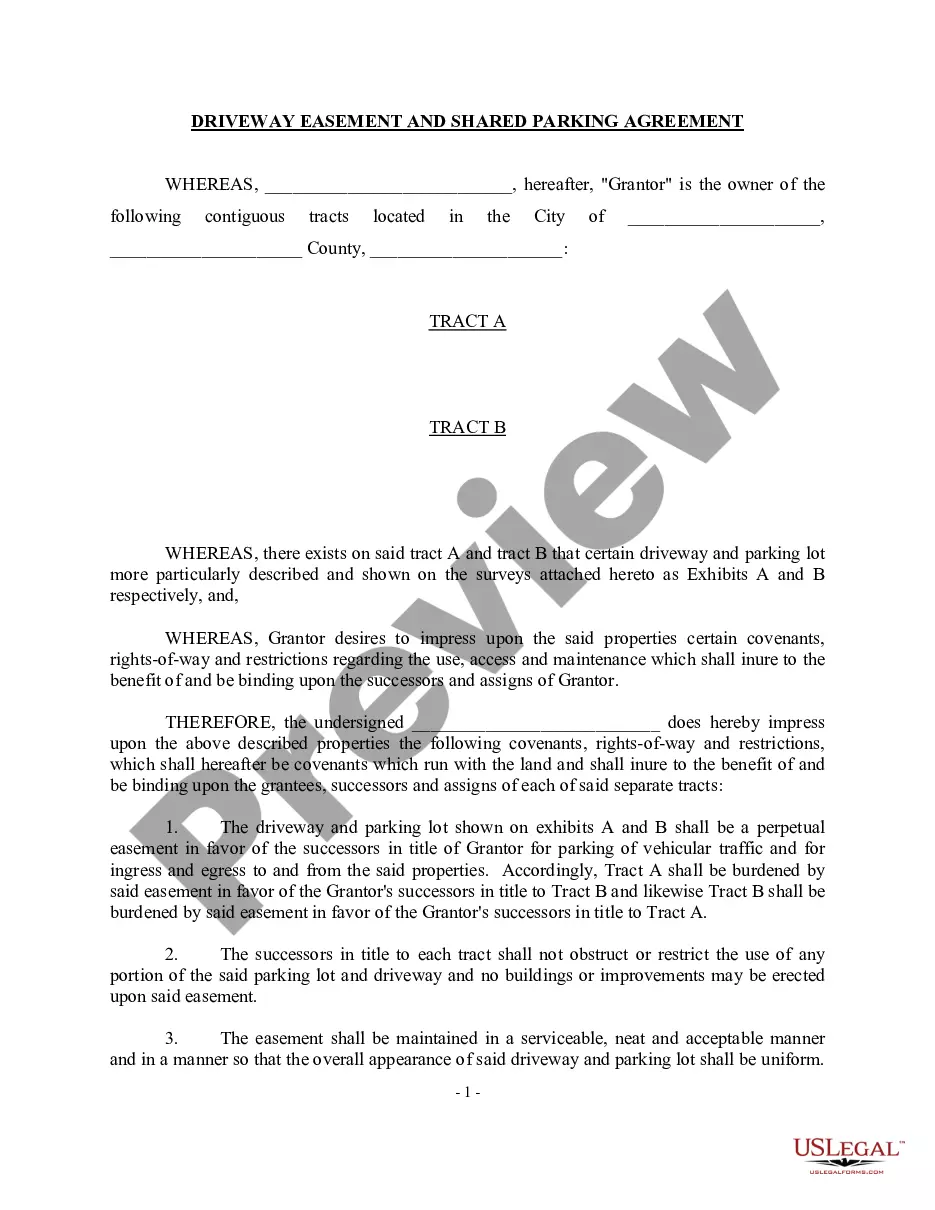
Get your form ready online
Our built-in tools help you complete, sign, share, and store your documents in one place.
Make edits, fill in missing information, and update formatting in US Legal Forms—just like you would in MS Word.
Download a copy, print it, send it by email, or mail it via USPS—whatever works best for your next step.
Sign and collect signatures with our SignNow integration. Send to multiple recipients, set reminders, and more. Go Premium to unlock E-Sign.
If this form requires notarization, complete it online through a secure video call—no need to meet a notary in person or wait for an appointment.
We protect your documents and personal data by following strict security and privacy standards.

Make edits, fill in missing information, and update formatting in US Legal Forms—just like you would in MS Word.

Download a copy, print it, send it by email, or mail it via USPS—whatever works best for your next step.

Sign and collect signatures with our SignNow integration. Send to multiple recipients, set reminders, and more. Go Premium to unlock E-Sign.

If this form requires notarization, complete it online through a secure video call—no need to meet a notary in person or wait for an appointment.

We protect your documents and personal data by following strict security and privacy standards.
Looking for another form?







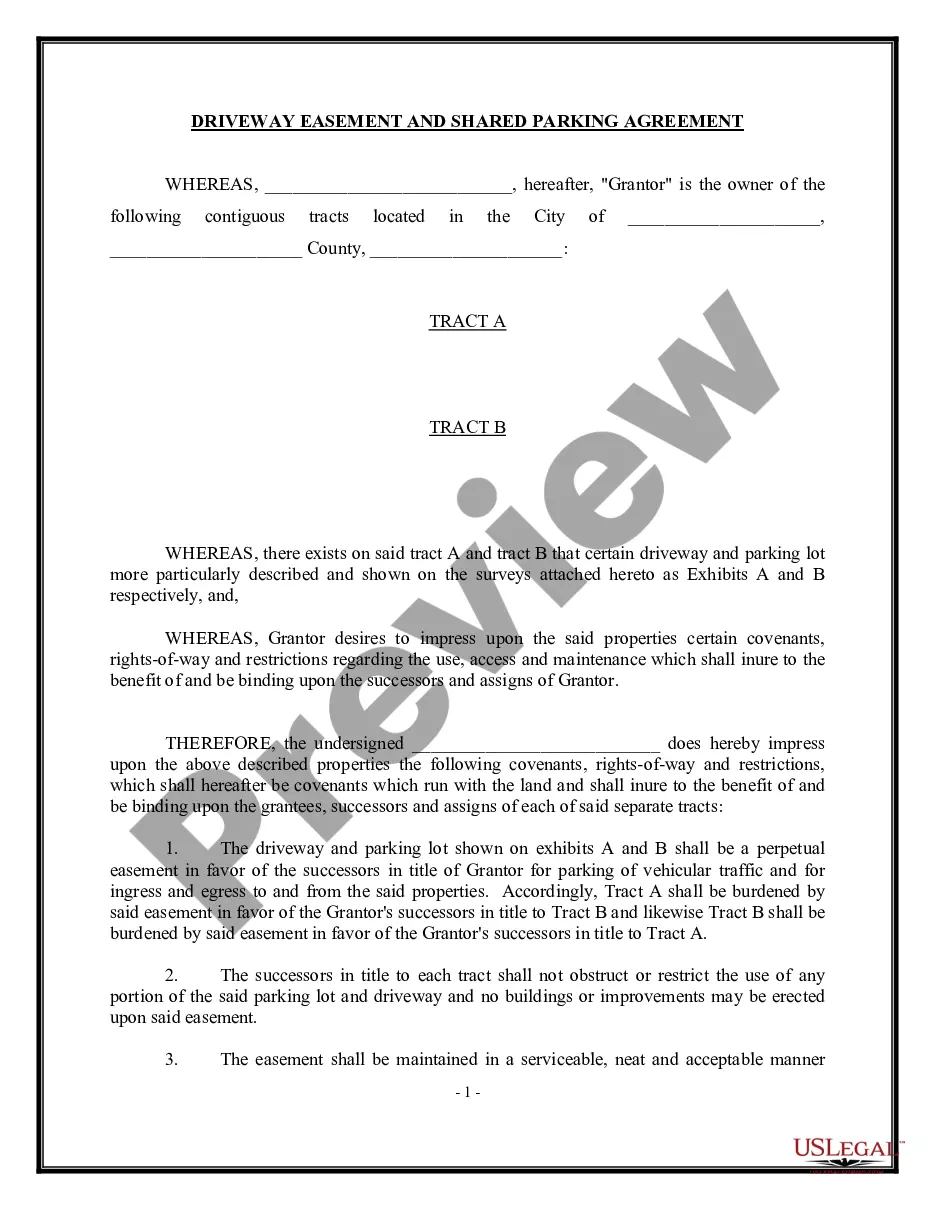
How to fill out Easement - Shared Parking?
Whether for corporate reasons or personal affairs, everyone must handle legal situations at some point in their life.
Completing legal documents requires careful consideration, beginning with choosing the correct form template.
With an extensive US Legal Forms library available, you don't have to waste time searching for the correct sample across the internet. Utilize the library’s user-friendly navigation to find the right template for any occasion.
- Locate the sample you need using the search bar or catalog navigation.
- Review the form’s details to ensure it aligns with your situation, state, and region.
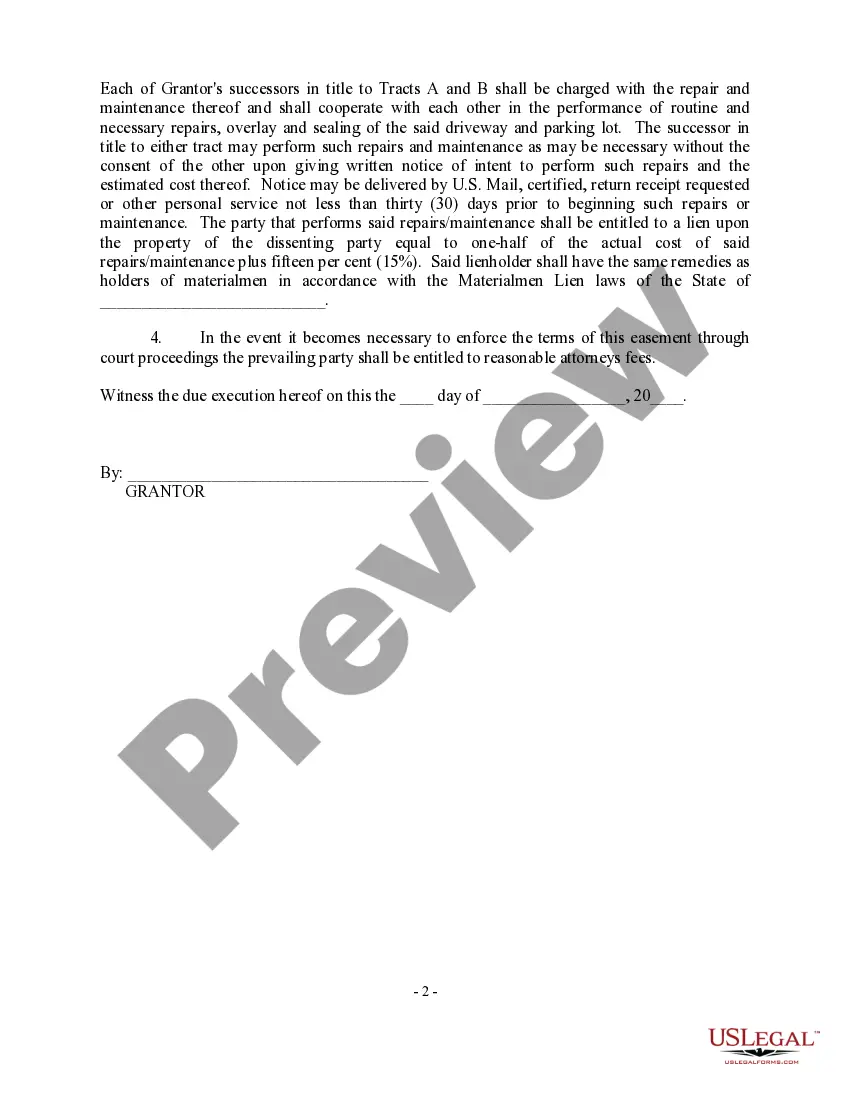
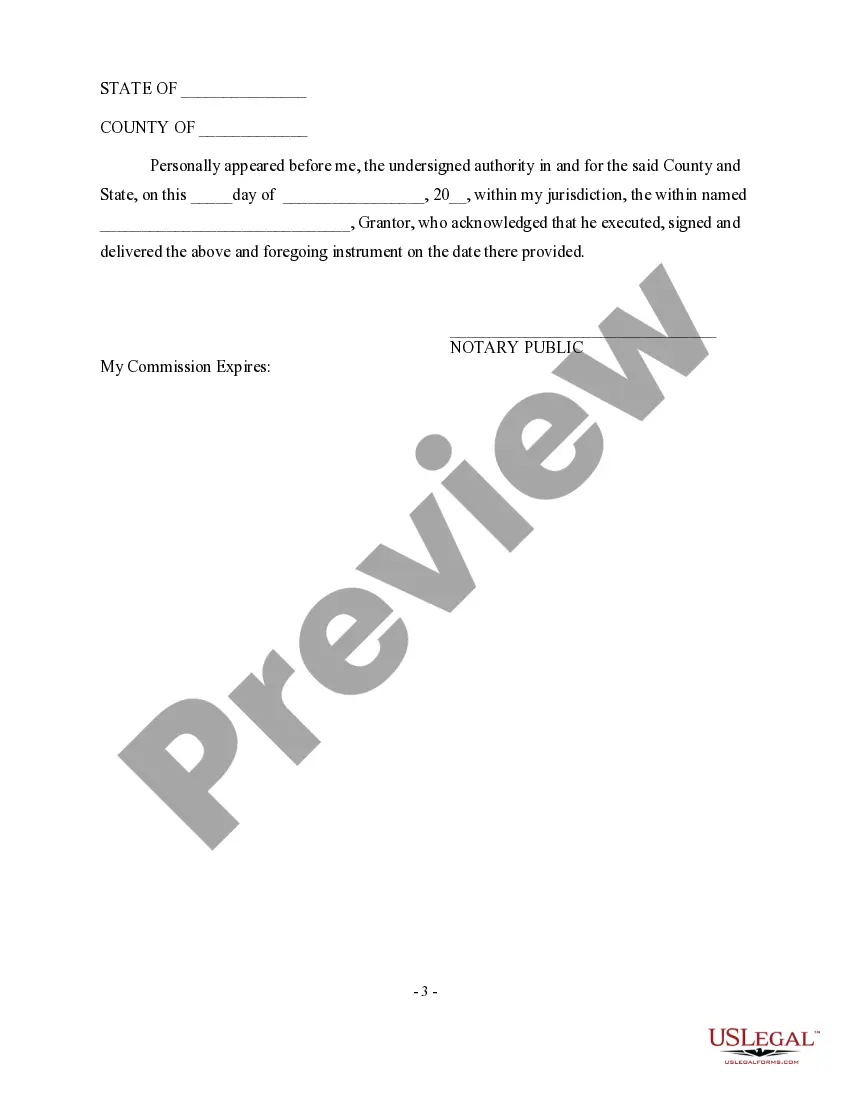
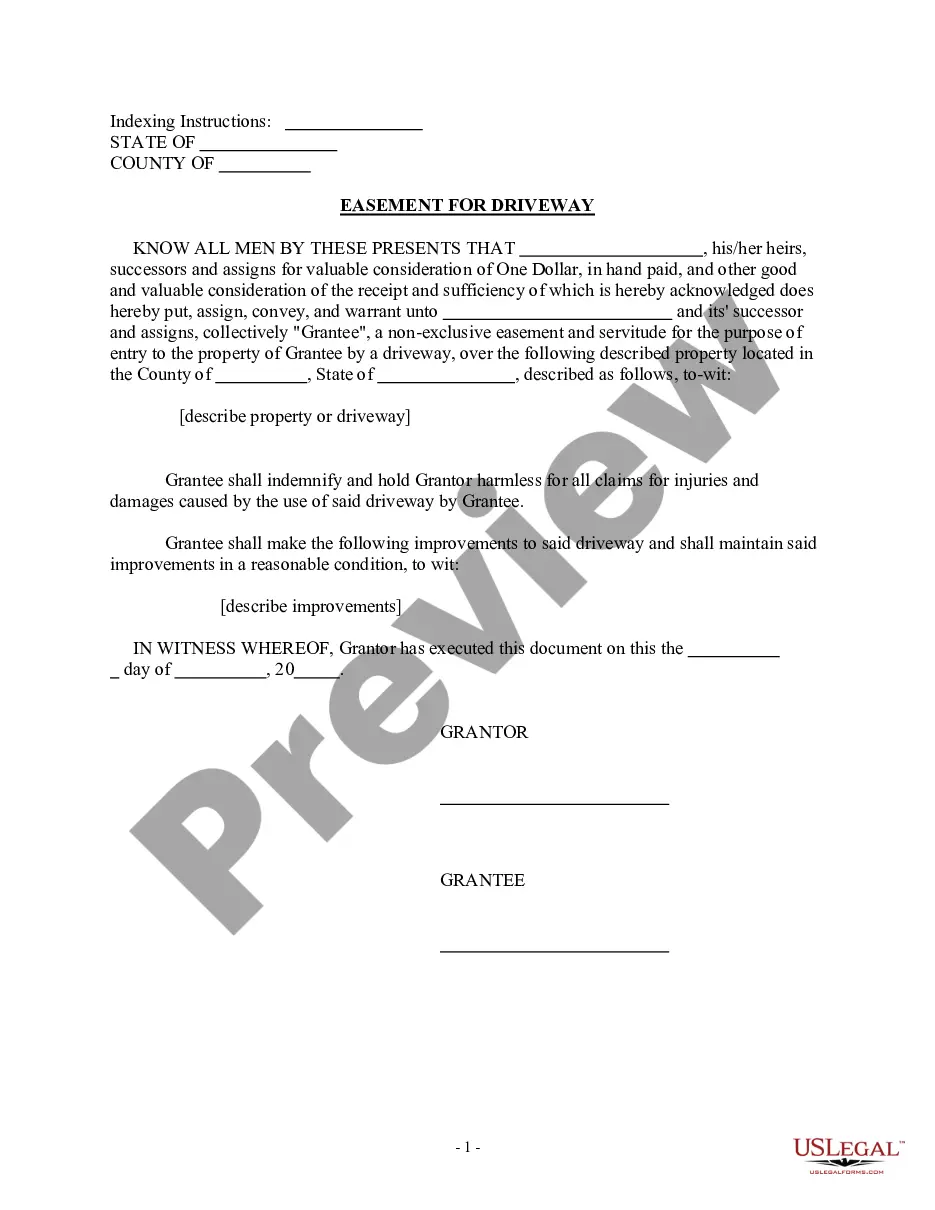
- Click on the form’s preview to view it.
- If it is not the right form, return to the search feature to find the Public Easement Parking template you require.
- Acquire the template if it meets your needs.
- If you already possess a US Legal Forms account, simply click Log in to access previously saved documents in My documents.
- If you do not yet have an account, you can obtain the form by clicking Buy now.
- Select the suitable pricing option.
- Complete the account registration form.
- Choose your payment method: use a credit card or PayPal account.
- Select the document format you prefer and download the Public Easement Parking.
- Once saved, you can fill out the form using editing software or print it out and complete it by hand.
Form popularity
FAQ
Ingress/egress rights are generally obtained via an easement, which is the right to use someone else's property for a specific purpose. For example, ingress and egress easements may govern the use of a shared driveway or the use of a private road to reach one's property.
An easement grants the owner of the dominant estate the right to use the land for a particular purpose, and such use may be on, under or above the land. Generally, the duty to maintain an easement rests with the owner of the dominant estate.
With an easement, a landowner, without sharing profits, has the right to use and enjoy another landowner's land. Easements are created either by a written contract or by implication in situations such as streets, parks, or alleyways.
The rights to store, park, plant, and construct on the non-roadway portions of the easement remain with the servient owner.
The North Carolina courts have defined an easement as ?a non-possessory right to make limited use of land owned by another without taking a part thereof.?