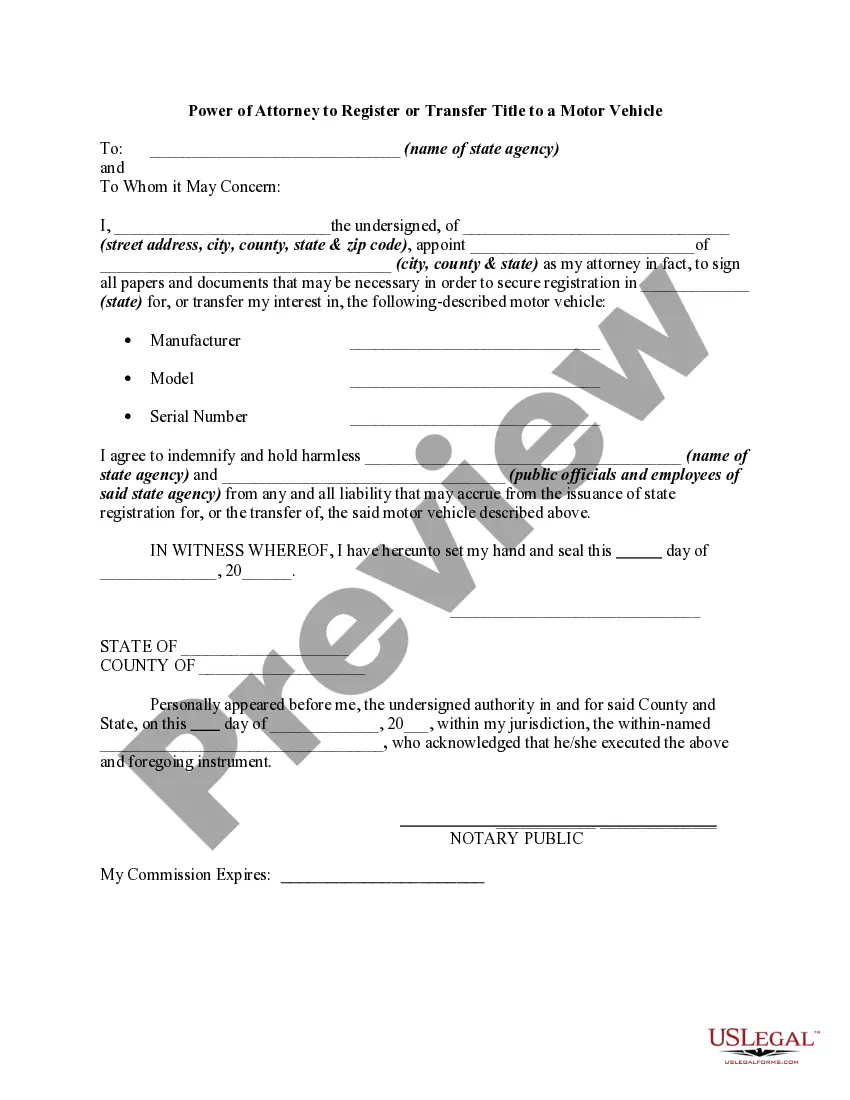
Transfer Car Title From Llc To Personal
Description
Get your form ready online
Our built-in tools help you complete, sign, share, and store your documents in one place.
Make edits, fill in missing information, and update formatting in US Legal Forms—just like you would in MS Word.
Download a copy, print it, send it by email, or mail it via USPS—whatever works best for your next step.
Sign and collect signatures with our SignNow integration. Send to multiple recipients, set reminders, and more. Go Premium to unlock E-Sign.
If this form requires notarization, complete it online through a secure video call—no need to meet a notary in person or wait for an appointment.
We protect your documents and personal data by following strict security and privacy standards.

Make edits, fill in missing information, and update formatting in US Legal Forms—just like you would in MS Word.

Download a copy, print it, send it by email, or mail it via USPS—whatever works best for your next step.

Sign and collect signatures with our SignNow integration. Send to multiple recipients, set reminders, and more. Go Premium to unlock E-Sign.

If this form requires notarization, complete it online through a secure video call—no need to meet a notary in person or wait for an appointment.

We protect your documents and personal data by following strict security and privacy standards.
Looking for another form?
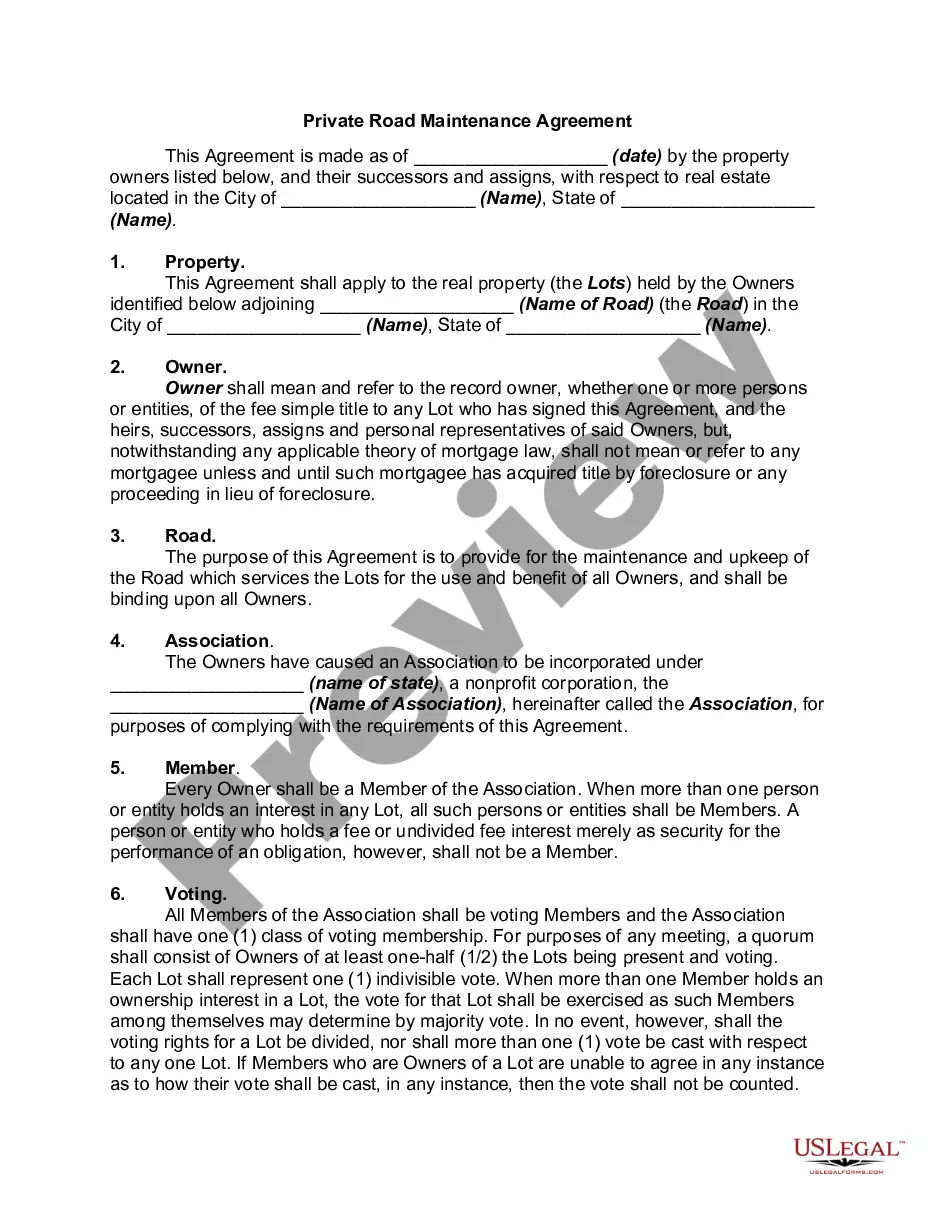


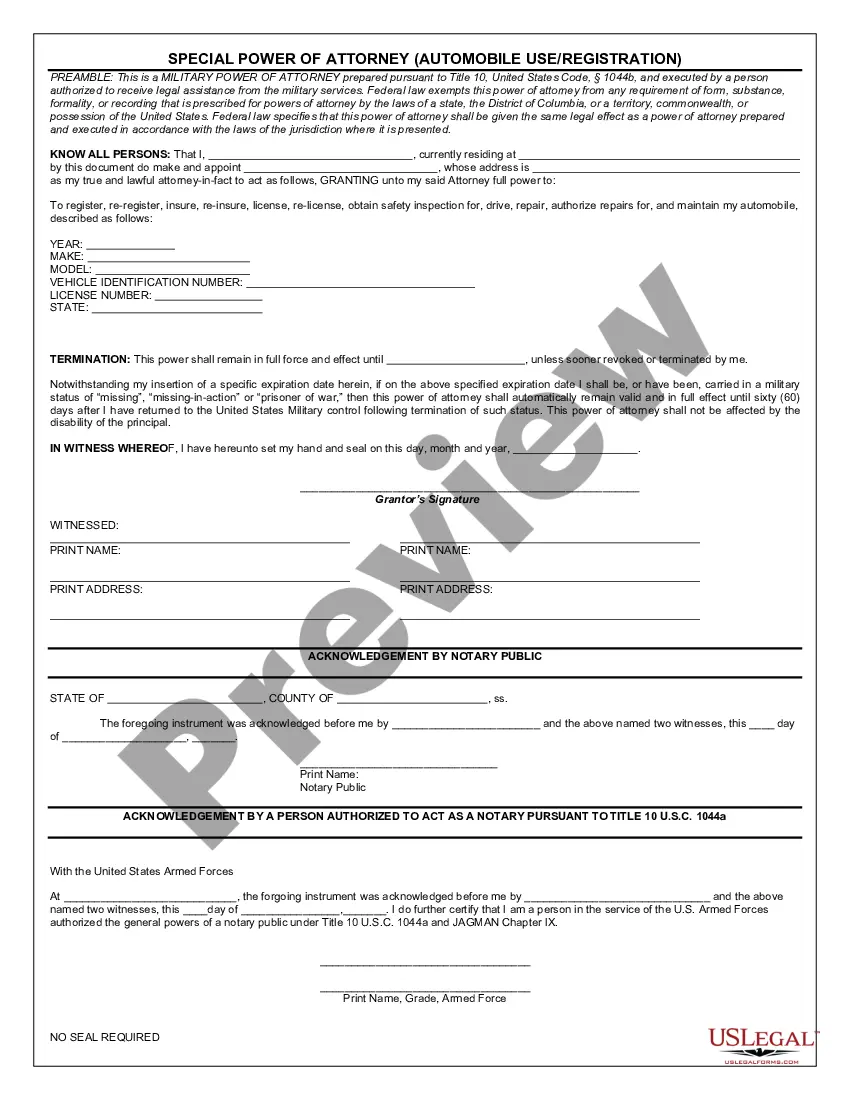
How to fill out Power Of Attorney To Register Or Transfer Title To A Motor Vehicle?
The Transfer Vehicle Title From LLC To Personal you observe on this webpage is a reusable official template created by experienced attorneys in accordance with federal and local statutes and regulations.
For over 25 years, US Legal Forms has offered individuals, businesses, and legal experts more than 85,000 authenticated, state-specific forms for any business and personal situation. It's the fastest, most direct, and most reliable method to acquire the documents you require, as the service ensures bank-level data protection and malware defense.
Register for US Legal Forms to access verified legal templates for all of life’s circumstances at your fingertips.
- Search for the document you require and examine it.
- Browse the file you sought and preview it or read the form description to confirm it meets your needs. If it doesn't, utilize the search bar to discover the appropriate one. Click Buy Now once you have located the template you need.
- Choose a subscription and Log In.
- Select the pricing plan that fits you and establish an account. Use PayPal or a credit card for immediate payment. If you already have an account, Log In and review your subscription to proceed.
- Acquire the editable template.
- Select the format you desire for your Transfer Vehicle Title From LLC To Personal (PDF, DOCX, RTF) and download the example onto your device.
- Complete and sign the documents.
- Print the template to finish it manually. Alternatively, use an online multi-functional PDF editor to swiftly and accurately complete and sign your form.
- Download your documents once again.
- Access the same document anytime needed. Open the My documents tab in your profile to redownload any previously acquired forms.
Form popularity
FAQ
In selling a home in Maine, it's the seller's responsibility to disclose property defects that help protect both parties. Although this can be a daunting process, this could help avoid serious defects and legal issues in the long run.
If your home has mold growth, you must disclose it to interested buyers. This includes visible mold and any known defects that could lead to mold contamination, such as water damage or issues with the HVAC system.
Generally disclosure must take place within 28 days of the close of pleadings (rule 214(2)(c)). The close of pleadings occurs: When a pleading (usually a Reply) is served after a Defence or an answer to Counterclaim. If the Defence is the final pleading in the matter, 14 days after the Defence is filed (rule 169).
When you sell a home in Maine, you are required to disclose any damages or problems regarding the property, to the best of your knowledge. Sellers must write a formal disclosure to the buyer accounting for any known issues. These problems could be as small as a faulty window lock or as large as damaged roof shingles.
Disclosure Law in Maine for Home Sales Title 33, § 173 requires sellers of residential real estate (with a few narrow exceptions) to give purchasers a "property disclosure statement," covering issues including: the water supply system. the insulation. the heating system.
Massachusetts has a relatively light disclosure requirement. It is often referred to as a 'caveat emptor' regime, or in plain English 'buyer beware'. The two main disclosure requirements are confined to whether there has been lead paint used anywhere in the property and whether there is a septic system installed.