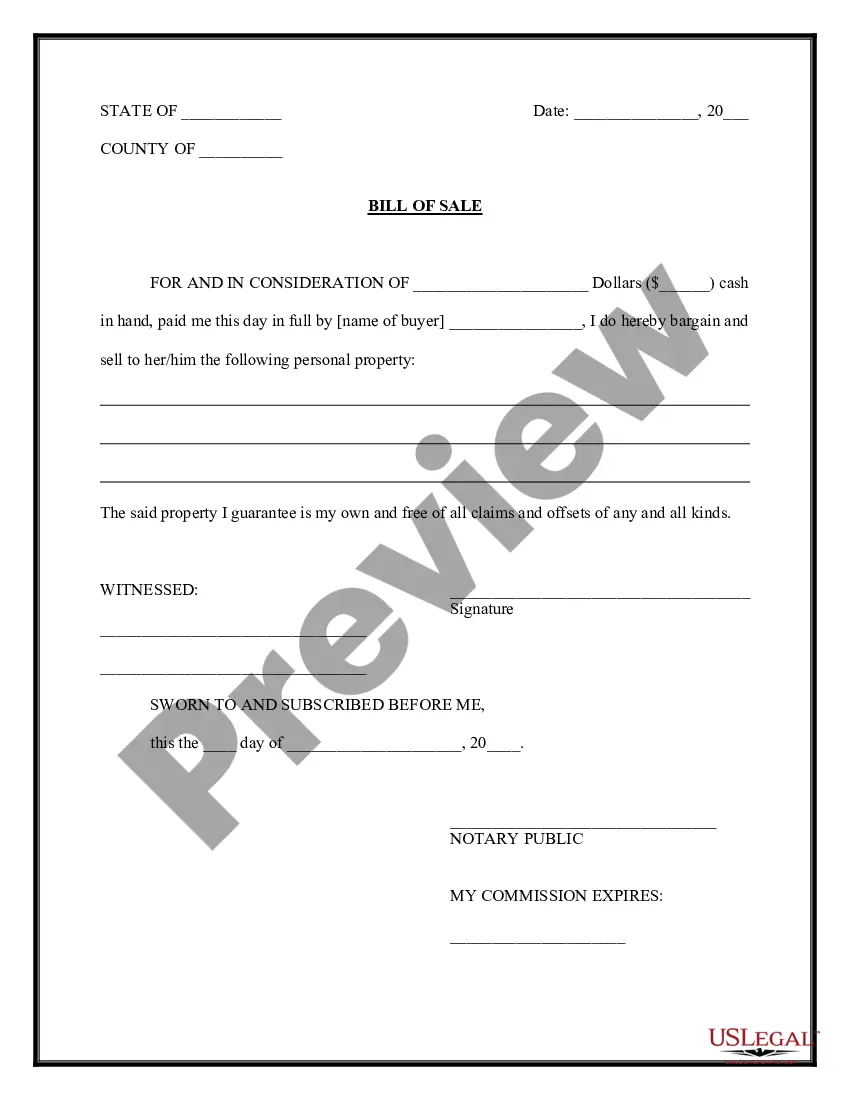
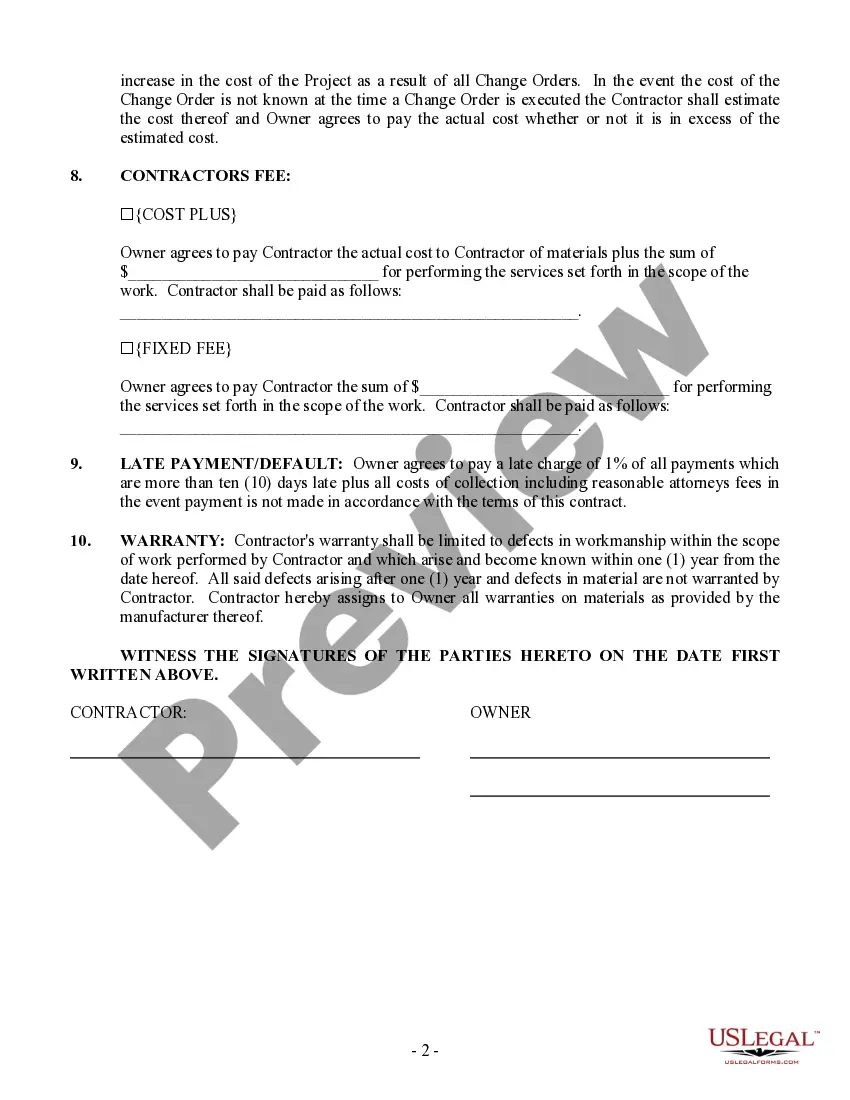
Cost Plus Contract Types In Minnesota
Description

Get your form ready online
Our built-in tools help you complete, sign, share, and store your documents in one place.
Make edits, fill in missing information, and update formatting in US Legal Forms—just like you would in MS Word.
Download a copy, print it, send it by email, or mail it via USPS—whatever works best for your next step.
Sign and collect signatures with our SignNow integration. Send to multiple recipients, set reminders, and more. Go Premium to unlock E-Sign.
If this form requires notarization, complete it online through a secure video call—no need to meet a notary in person or wait for an appointment.
We protect your documents and personal data by following strict security and privacy standards.

Make edits, fill in missing information, and update formatting in US Legal Forms—just like you would in MS Word.

Download a copy, print it, send it by email, or mail it via USPS—whatever works best for your next step.

Sign and collect signatures with our SignNow integration. Send to multiple recipients, set reminders, and more. Go Premium to unlock E-Sign.

If this form requires notarization, complete it online through a secure video call—no need to meet a notary in person or wait for an appointment.

We protect your documents and personal data by following strict security and privacy standards.
Looking for another form?
Form popularity
FAQ
10 Different Types of Contracts Type of ContractEveryday Use Implied Contracts Common in everyday transactions like dining out. Express Contracts Standard in formal business agreements. Simple Contracts Used for straightforward services or transactions. Unconscionable Contracts Often challenged in court for fairness.10 more rows •
How to draft a contract between two parties: A step-by-step checklist Know your parties. Agree on the terms. Set clear boundaries. Spell out the consequences. Specify how you will resolve disputes. Cover confidentiality. Check the legality of the contract. Open it up to negotiation.
It is a legal framework for the agreement between the parties, which is both certain and enforceable. However, to be legally binding, a contract must include four key elements: an offer, acceptance, consideration, and an intention to create legal relations.
This is Part 1 of a beginning lesson on Contracts for the legal studies, business law, prelaw or paralegal student. It discusses the first 2 Cs of any Contract: Consent and Capacity. This lesson should be done with Part 2, which discusses the other C's: Consideration and Complies with the Law and/or Public Policy.
A valid contract is built on these cornerstones: Offer, Acceptance, Consideration, and Intention to Create Legal Relations. Here's a quick look: Offer: A clear proposal to make a deal. Acceptance: A definite agreement to the terms of the offer.