Construction Agreement With Material In Massachusetts
Description

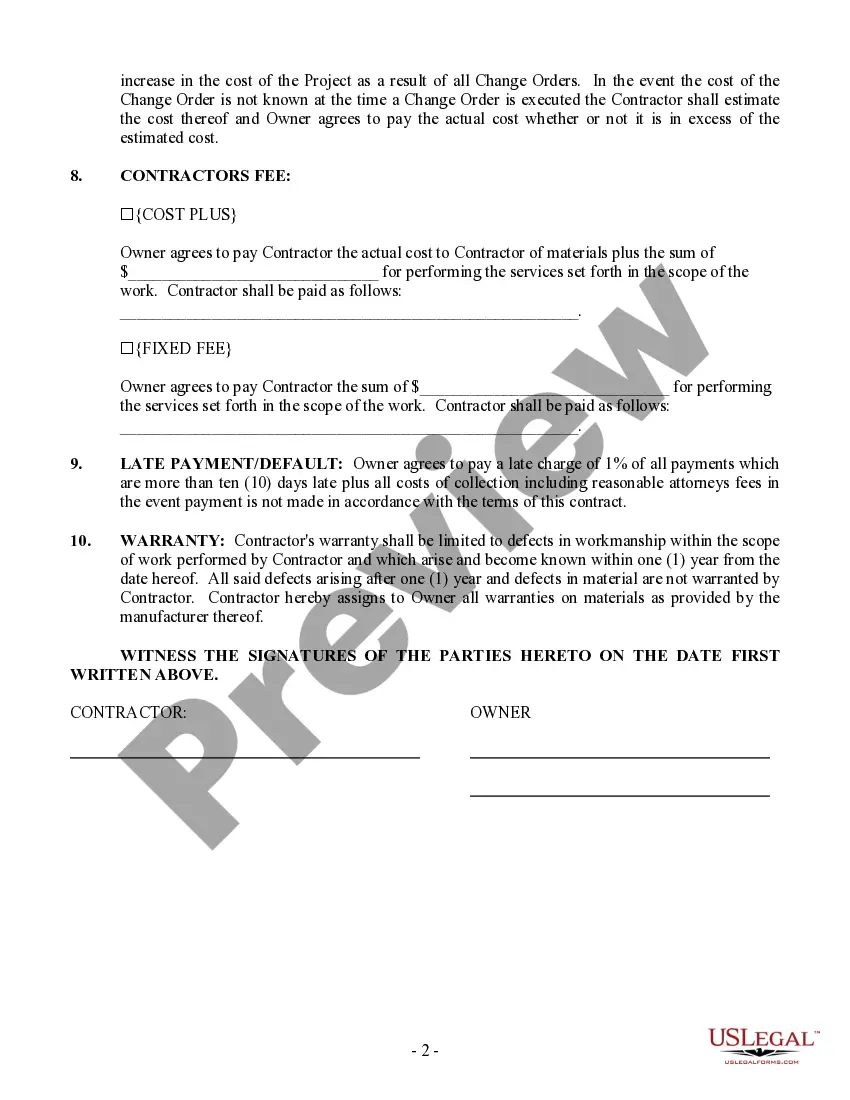
Get your form ready online
Our built-in tools help you complete, sign, share, and store your documents in one place.
Make edits, fill in missing information, and update formatting in US Legal Forms—just like you would in MS Word.
Download a copy, print it, send it by email, or mail it via USPS—whatever works best for your next step.
Sign and collect signatures with our SignNow integration. Send to multiple recipients, set reminders, and more. Go Premium to unlock E-Sign.
If this form requires notarization, complete it online through a secure video call—no need to meet a notary in person or wait for an appointment.
We protect your documents and personal data by following strict security and privacy standards.

Make edits, fill in missing information, and update formatting in US Legal Forms—just like you would in MS Word.

Download a copy, print it, send it by email, or mail it via USPS—whatever works best for your next step.

Sign and collect signatures with our SignNow integration. Send to multiple recipients, set reminders, and more. Go Premium to unlock E-Sign.

If this form requires notarization, complete it online through a secure video call—no need to meet a notary in person or wait for an appointment.

We protect your documents and personal data by following strict security and privacy standards.
Looking for another form?



Form popularity
FAQ
A holder of a Construction Supervisor License (CSL) is required to have passed an examination which demonstrates knowledge of the state building code. A CSL is generally required for any work that involves a building's structural elements. A holder of an HIC registration is not required to pass an examination.
How to draft a contract in 13 simple steps Start with a contract template. Understand the purpose and requirements. Identify all parties involved. Outline key terms and conditions. Define deliverables and milestones. Establish payment terms. Add termination conditions. Incorporate dispute resolution.
When writing a contract, you should include an introductory section that lists and defines all of the interested parties. A well-constructed contract will cover its duration and the specifics regarding the terms of the agreement between the parties. The tone of a contract should be formal and concise.
How To Write A Construction Contract With 7 Steps Step 1: Define the Parties Involved. Step 2: Outline the Scope of Work. Step 3: Establish the Timeline. Step 4: Determine the Payment Terms. Step 5: Include Necessary Legal Clauses. Step 6: Address Change Orders and Modifications. Step 7: Sign and Execute the Contract.
Most construction projects will require both a licensed and registered contractor. However, if your contractor does not hold a valid CSL but the work he/she contracts to perform requires it, he/she must obtain a CSL or hire an active Construction Supervisor Licensee to supervise the project.
How To Write A Construction Contract With 7 Steps Step 1: Define the Parties Involved. Step 2: Outline the Scope of Work. Step 3: Establish the Timeline. Step 4: Determine the Payment Terms. Step 5: Include Necessary Legal Clauses. Step 6: Address Change Orders and Modifications. Step 7: Sign and Execute the Contract.
All contractors, partnerships, and corporations that solicit, bid on, or perform residential contracting as a contractor or subcontractor on an existing one to four unit owner occupied residential property in Massachusetts must be registered as a Home Improvement Contractor (HIC).
A binding contract requires both an offer and acceptance of that offer. A party makes an offer by expressing a willingness or desire to enter into an agreement with the intent that, if the other party accepts the terms of the offer, then there is a binding contract.
A homeowner may apply for their own permit and act as a general contractor. By doing so, they would be taking on any and all responsibility for code and zoning compliance. Also, anyone who performs work on an owner occupied one-to-four-family home must possess a Home Improvement Contractor's Registration (HIC).
Do you need a license to be a general contractor in MA? Massachusetts general contractors who work on buildings of less than 35,000 cubic feet must have a license issued by the state. In some cases, you may also need to register as a home improvement contractor through the Office of Public Safety and Inspections.
