Building Contract For Homeowners In Dallas
Description

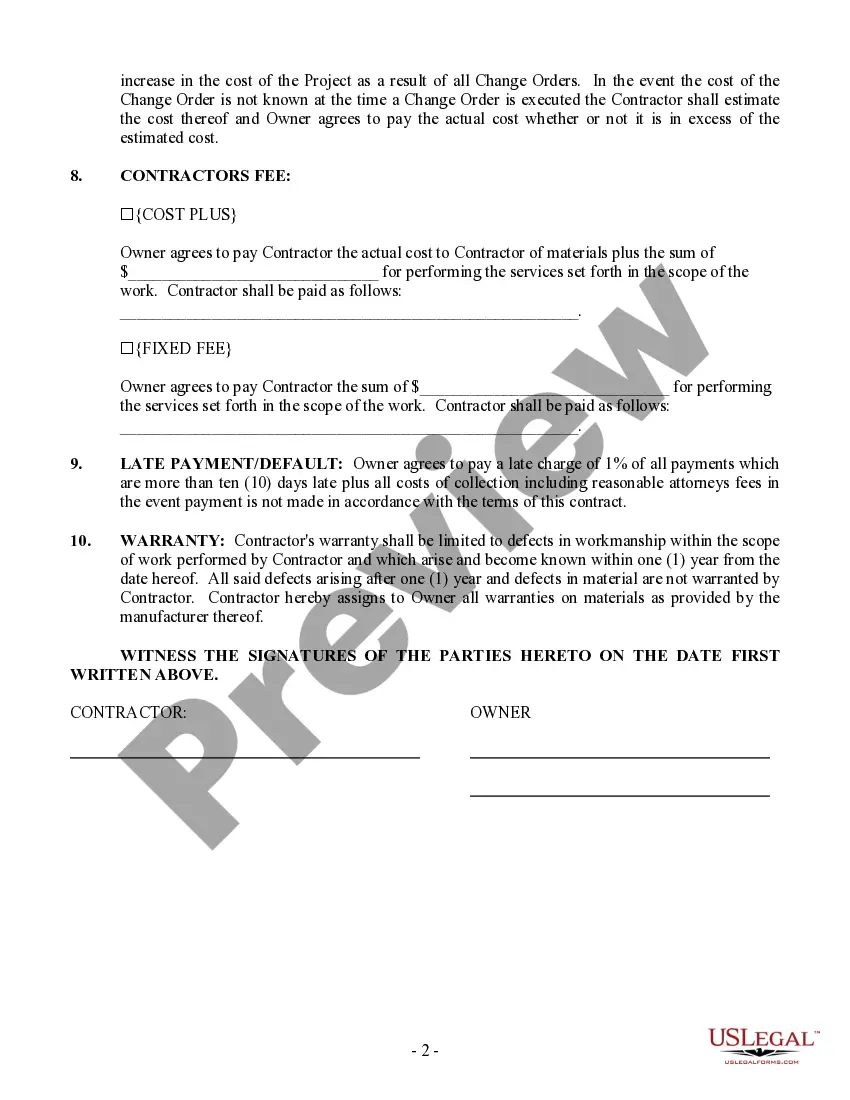
Get your form ready online
Our built-in tools help you complete, sign, share, and store your documents in one place.
Make edits, fill in missing information, and update formatting in US Legal Forms—just like you would in MS Word.
Download a copy, print it, send it by email, or mail it via USPS—whatever works best for your next step.
Sign and collect signatures with our SignNow integration. Send to multiple recipients, set reminders, and more. Go Premium to unlock E-Sign.
If this form requires notarization, complete it online through a secure video call—no need to meet a notary in person or wait for an appointment.
We protect your documents and personal data by following strict security and privacy standards.

Make edits, fill in missing information, and update formatting in US Legal Forms—just like you would in MS Word.

Download a copy, print it, send it by email, or mail it via USPS—whatever works best for your next step.

Sign and collect signatures with our SignNow integration. Send to multiple recipients, set reminders, and more. Go Premium to unlock E-Sign.

If this form requires notarization, complete it online through a secure video call—no need to meet a notary in person or wait for an appointment.

We protect your documents and personal data by following strict security and privacy standards.
Looking for another form?










Form popularity
FAQ
Contracts don't need to be in legal language, but they do need to outline exactly who is responsible for what from obtaining various permissions (such as building control approval) to timings, tidying up, materials, insurance and how payments will be made. A written contract will protect you and reduce risks.
3 Ways To Contract With A Builder Negotiated bid / collaborative design. Here you have a stated budget and interest in working with a specific builder. Traditional bidding. A package of information goes out to three contractors. Hybrid.
Unlike many states, Texas does not require a state license for general contractors. However, local requirements may apply depending on the city or county you plan to work in.
Here are average Dallas building permit costs for some common types of projects: New single-family home construction: $1,500. Addition to an existing single-family home: $1,000. Addition and remodeling for an existing commercial building: $9,000.
Can I write my own contract? Yes, you can write your own contract. However, including all necessary elements is crucial to make it legally binding.
What should I include in a construction contract template? Name and contact information of the project owner. Name and contact information of the contractor. Legal description of the property being worked on. Detailed description of the work to be completed. Completion date and date of final payment.
To draft a contract from scratch, start by identifying the parties involved and clearly outlining the agreement. Include consideration (what is exchanged), define the terms and conditions, ensure all parties are legally competent, and finalise it with signatures. These essential elements make the contract enforceable.
Replacing and repairing damaged siding, sheetrock or windows typically does not require a permit. Minor repairs to roofing or roof vents does not require a permit. Replacing large areas of a roof or an entire roof would require a re-roof permit.
Most buildings in Texas need a permit; exceptions include sheds <200 sqft, decks <30 inches, and fences <7 feet. Permit is required for plumbing, electrical work, residential additions, pools, and concrete pouring. Non-permit projects can include landscaping and temporary structures, but must comply with zoning laws.
Dallas. The City of Dallas requires you to file an application for contractor registration based on the license type you need. General contractor work includes residential and commercial general contracting, roofing, fencing, foundation, demolition, and pool contracting.
