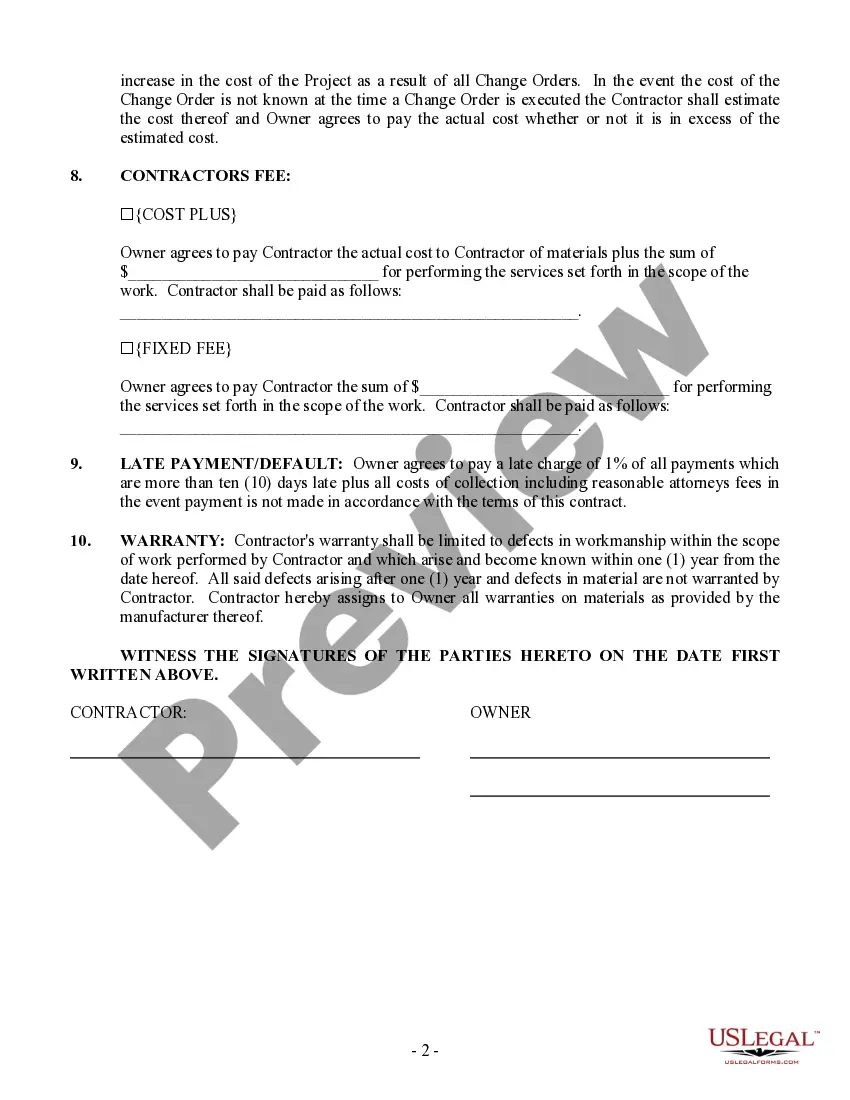
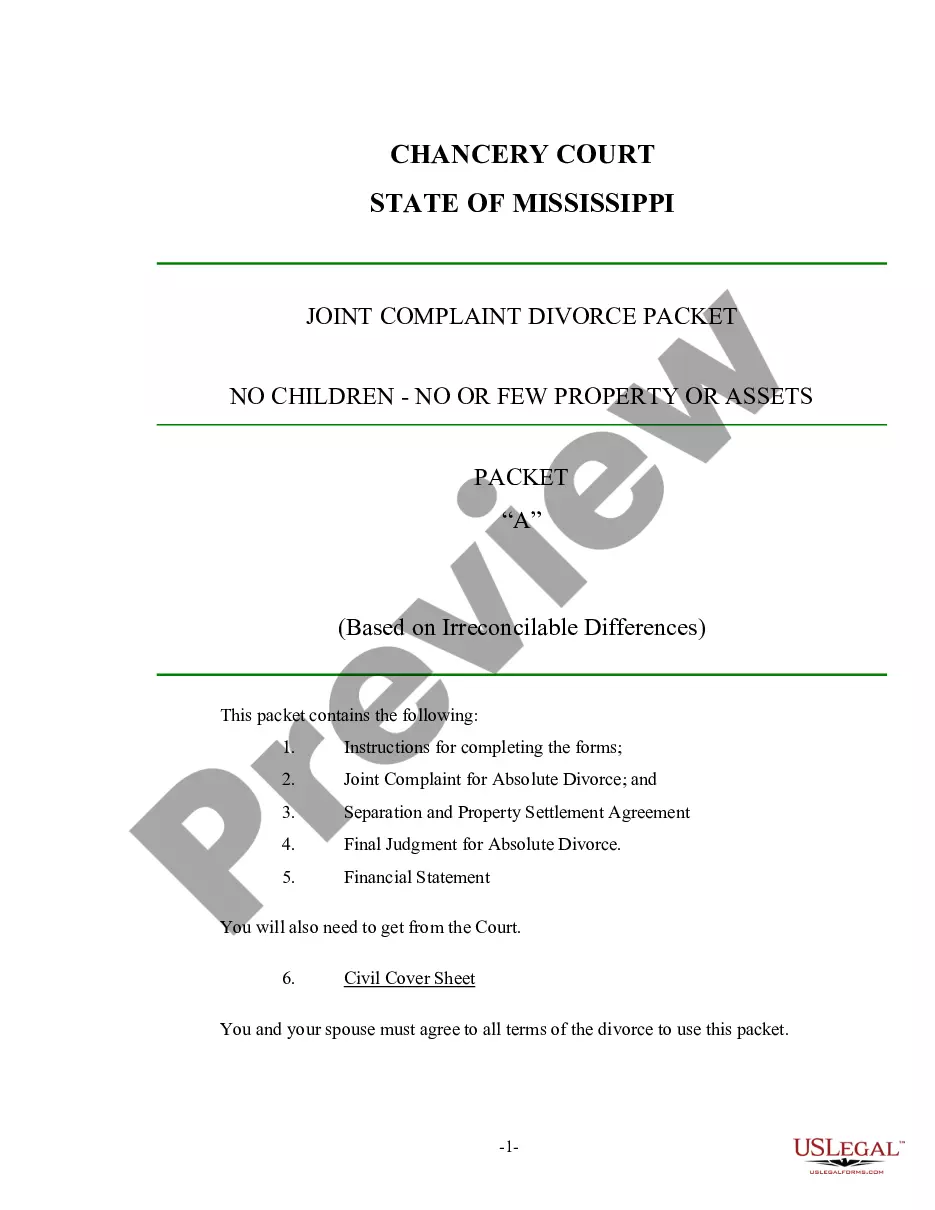
Construction Agreement With Builder In Contra Costa
Description

Get your form ready online
Our built-in tools help you complete, sign, share, and store your documents in one place.
Make edits, fill in missing information, and update formatting in US Legal Forms—just like you would in MS Word.
Download a copy, print it, send it by email, or mail it via USPS—whatever works best for your next step.
Sign and collect signatures with our SignNow integration. Send to multiple recipients, set reminders, and more. Go Premium to unlock E-Sign.
If this form requires notarization, complete it online through a secure video call—no need to meet a notary in person or wait for an appointment.
We protect your documents and personal data by following strict security and privacy standards.

Make edits, fill in missing information, and update formatting in US Legal Forms—just like you would in MS Word.

Download a copy, print it, send it by email, or mail it via USPS—whatever works best for your next step.

Sign and collect signatures with our SignNow integration. Send to multiple recipients, set reminders, and more. Go Premium to unlock E-Sign.

If this form requires notarization, complete it online through a secure video call—no need to meet a notary in person or wait for an appointment.

We protect your documents and personal data by following strict security and privacy standards.
Looking for another form?






Form popularity
FAQ
Types of Projects That May Be Exempt From a Building Permit in California Painting. Floor upgrades. Kitchen remodels. Small drywall projects. Common electrical work. Small outbuildings. Bathroom fixes. Fences.
Do You Need A Permit To Remodel A Bathroom In California? Yes, permits are required for all aspects of remodeling a bathroom. This includes making any additions or modifications that involve construction, electrical wiring, plumbing structures, and other mechanical processes.
These include, but are not limited to, new structures, demolitions, additions, alterations, interior/exterior remodels, running new electrical, water or gas lines, repairs, outdoor kitchens, pergolas, pavilions, decks, carports, garages, docks, pools, foundation repairs, ADUs, and Junior ADUs, solar, energy storage ...
How To Write A Construction Contract With 7 Steps Step 1: Define the Parties Involved. Step 2: Outline the Scope of Work. Step 3: Establish the Timeline. Step 4: Determine the Payment Terms. Step 5: Include Necessary Legal Clauses. Step 6: Address Change Orders and Modifications. Step 7: Sign and Execute the Contract.
Per the California Residential Code detached accessory structure not exceeding 120 square feet does not require a building permit if there is no plumbing, electrical, and or mechanical equipment. Please note, Sheds and/or Structures under 120 square feet do require a Planning Permit.
Projects that DO NOT need a building permit are simple surface (cosmetic) projects; minor repairs and replacements; and minor site improvements or small structures.
How To Write A Construction Contract With 7 Steps Step 1: Define the Parties Involved. Step 2: Outline the Scope of Work. Step 3: Establish the Timeline. Step 4: Determine the Payment Terms. Step 5: Include Necessary Legal Clauses. Step 6: Address Change Orders and Modifications. Step 7: Sign and Execute the Contract.
