Construction Contract Form Document Without Quantities 2006
Description


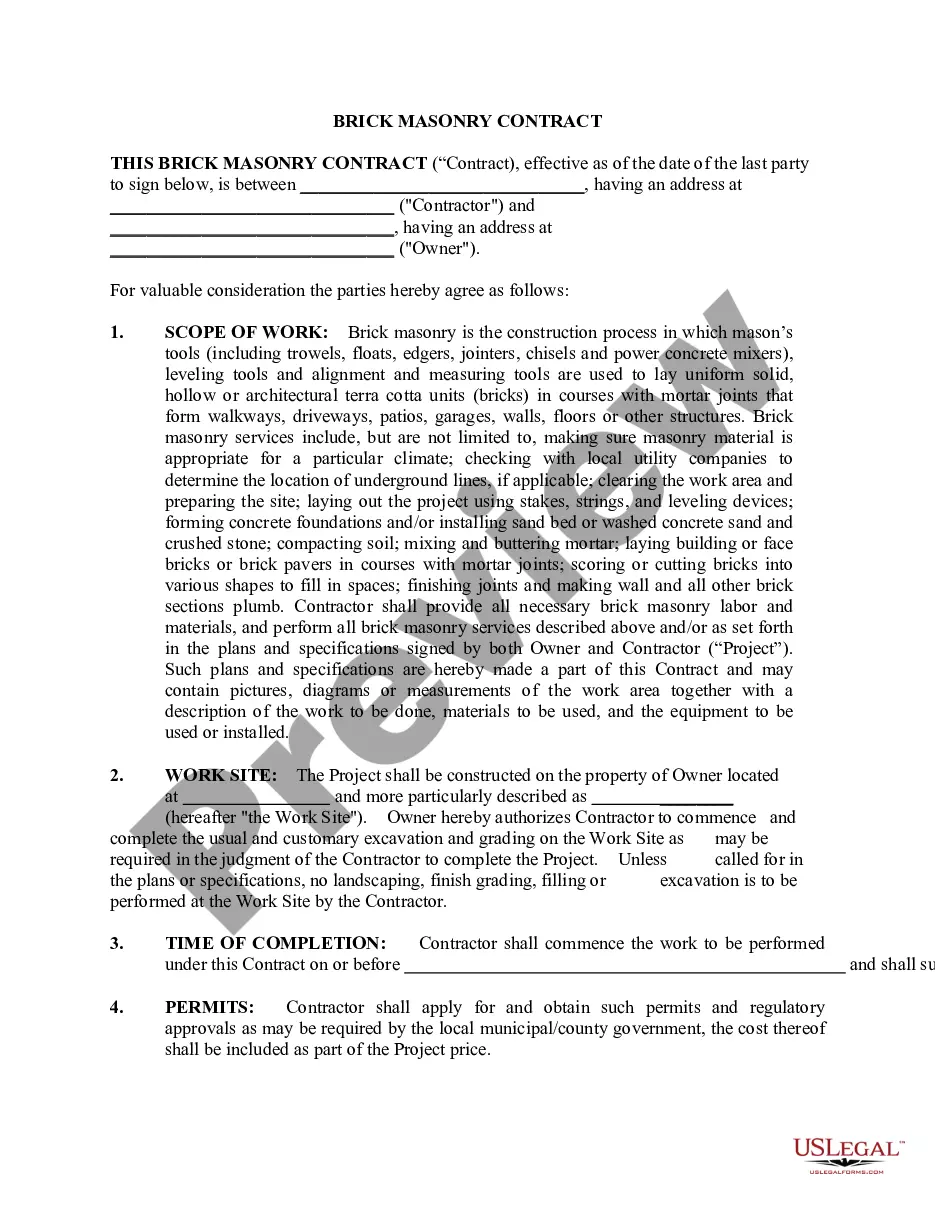
How to fill out Construction Contract For Home - Fixed Fee Or Cost Plus?
It’s clear that you cannot transform into a legal expert instantly, nor can you swiftly acquire the ability to draft the Construction Contract Form Document Without Quantities 2006 without a specialized education.
Assembling legal documents is an extensive endeavor that necessitates specific knowledge and expertise. Thus, why not entrust the development of the Construction Contract Form Document Without Quantities 2006 to the professionals.
With US Legal Forms, one of the most comprehensive legal document repositories, you can discover everything from court filings to templates for in-office correspondence. We recognize the importance of compliance and adherence to federal and state regulations.
You can revisit your documents from the My documents tab at any point. If you’re a returning client, simply Log In, and find and download the template from the same section.
Regardless of the intended use of your forms—be it financial, legal, or personal—our platform has everything you need. Explore US Legal Forms today!
- Locate the document you require using the search bar at the top of the site.
- Preview it (if this feature is available) and review the accompanying description to verify if the Construction Contract Form Document Without Quantities 2006 corresponds to your needs.
- Initiate your search again if you require any additional templates.
- Create a complimentary account and select a subscription plan to acquire the form.
- Click on Buy now. After completing the purchase, you can download the Construction Contract Form Document Without Quantities 2006, complete it, print it, and forward it by email or send it via postal service to the appropriate recipients.
Form popularity
FAQ
The four key contract documents typically include the owner-contractor agreement, the general conditions, the supplementary conditions, and the specifications. Together, these documents create a complete framework for managing a construction project efficiently. They ensure clear communication and help prevent disputes by defining each party's responsibilities. By utilizing a construction contract form document without quantities 2006, you can simplify the management and organization of these critical documents.
A contract with quantities specifies exact measurements and amounts of materials needed for construction, providing clarity for both parties. In contrast, a contract without quantities allows for broader estimates, which can be beneficial in certain situations. This flexibility may help accommodate unforeseen changes during the project, fostering collaboration. To effectively manage these options, using a construction contract form document without quantities 2006 can be advantageous.
The primary difference lies in the level of detail provided concerning materials and labor. A contract with quantities outlines specific amounts needed for the project, while a contract without quantities offers more flexibility regarding these details. This can be particularly useful in projects where estimates might change or are difficult to predict. Choosing a construction contract form document without quantities 2006 can help you adapt as your project evolves.
The three basic types of documents in construction contracts include the contract agreement, the general conditions, and the specifications. These documents outline the responsibilities, expectations, and terms of the project. They play a vital role in ensuring that everyone involved has a clear understanding of the tasks and deliverables. Utilizing a construction contract form document without quantities 2006 can streamline the creation of these essential documents.
Filling out a construction contract involves providing clear information about the project, including terms, scope, payment schedules, and timelines. Using a construction contract form document without quantities 2006 can streamline this process by guiding you through necessary sections. Ensure all parties review and understand the terms before signing. This step is crucial for avoiding potential misunderstandings later.
The two main types of contracts are express contracts and implied contracts. An express contract is explicitly stated in writing or verbally, while an implied contract is formed by the actions or conduct of the parties. When using a construction contract form document without quantities 2006, you typically engage in an express contract to define clear terms. This reduces the likelihood of disputes.
The five essential elements of a construction contract include offer, acceptance, consideration, mutual assent, and capacity. Each element must be present for the contract to be legally enforceable. A solid construction contract form document without quantities 2006 provides clarity on these elements. It ensures all parties understand their obligations and rights.