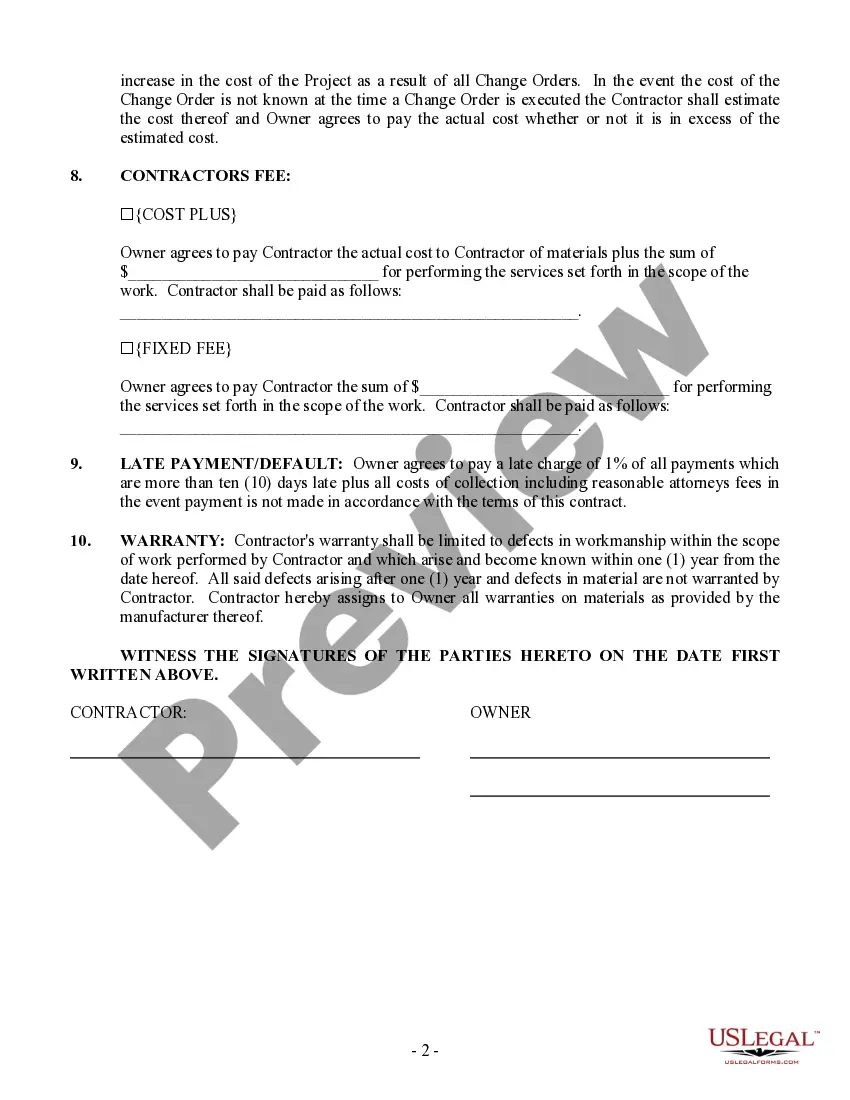
Cost Plus For Construction In Alameda
Description

Get your form ready online
Our built-in tools help you complete, sign, share, and store your documents in one place.
Make edits, fill in missing information, and update formatting in US Legal Forms—just like you would in MS Word.
Download a copy, print it, send it by email, or mail it via USPS—whatever works best for your next step.
Sign and collect signatures with our SignNow integration. Send to multiple recipients, set reminders, and more. Go Premium to unlock E-Sign.
If this form requires notarization, complete it online through a secure video call—no need to meet a notary in person or wait for an appointment.
We protect your documents and personal data by following strict security and privacy standards.

Make edits, fill in missing information, and update formatting in US Legal Forms—just like you would in MS Word.

Download a copy, print it, send it by email, or mail it via USPS—whatever works best for your next step.

Sign and collect signatures with our SignNow integration. Send to multiple recipients, set reminders, and more. Go Premium to unlock E-Sign.

If this form requires notarization, complete it online through a secure video call—no need to meet a notary in person or wait for an appointment.

We protect your documents and personal data by following strict security and privacy standards.
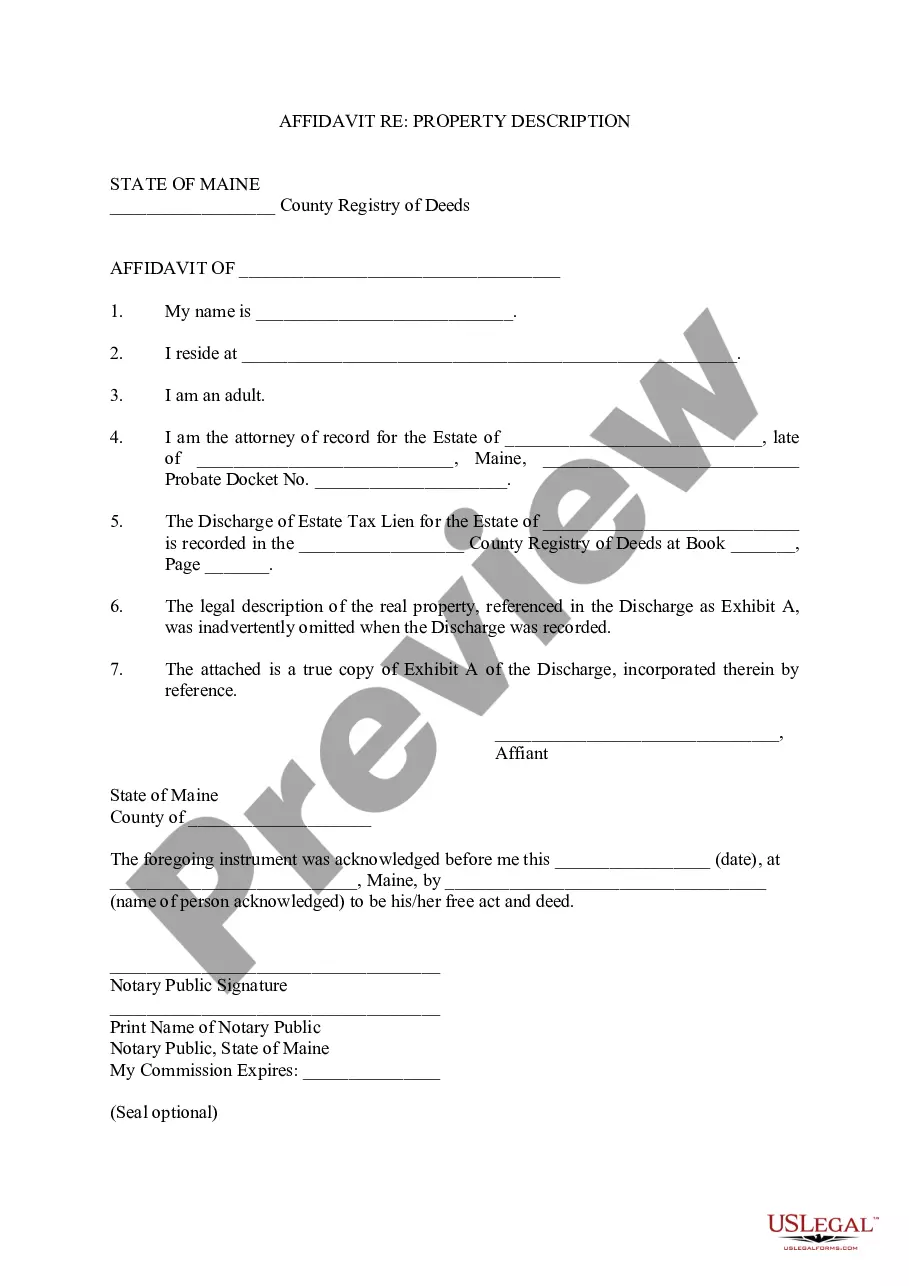
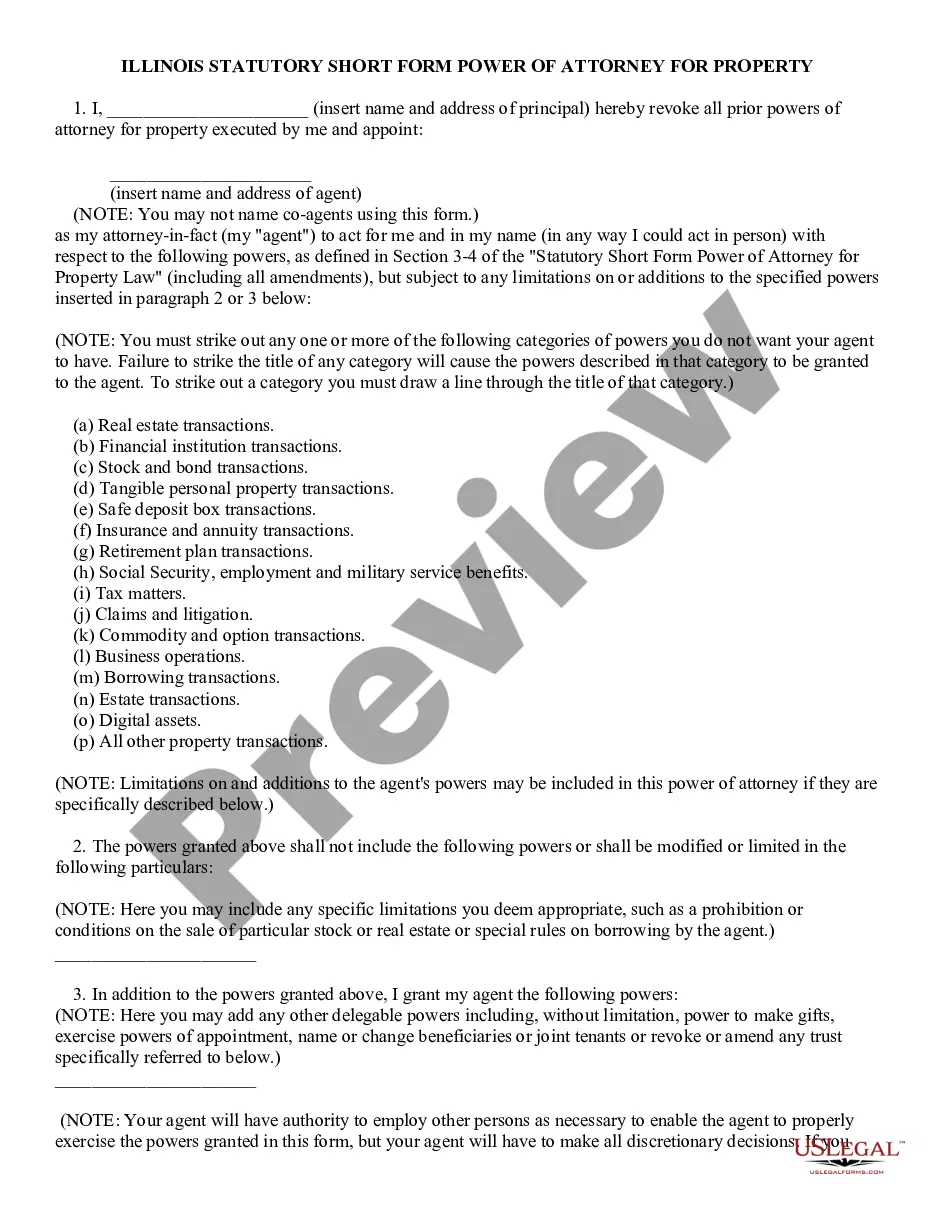
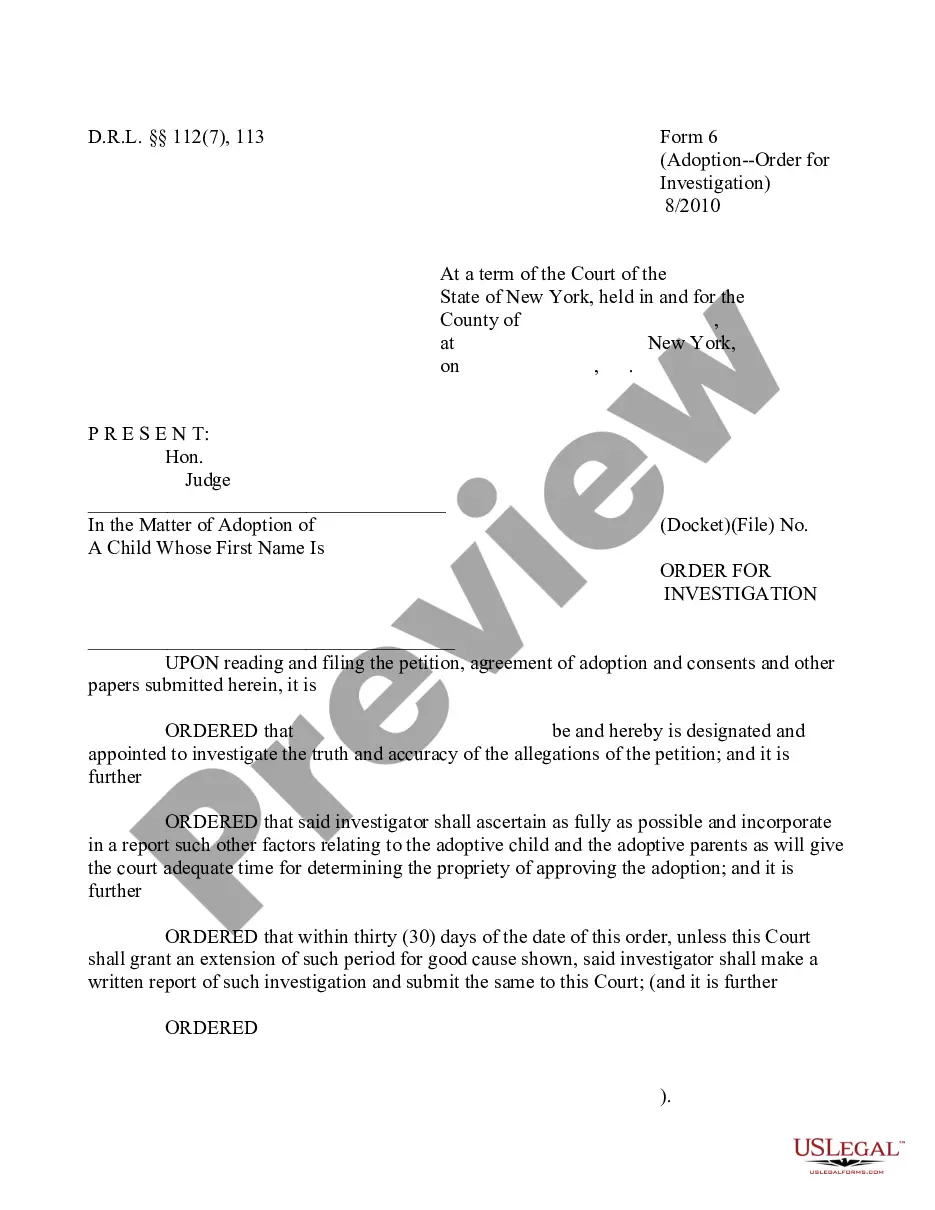
Looking for another form?







Form popularity
FAQ
Retaining walls that are not part of a building shall have a maximum height of 6 feet. Retaining walls with a height greater than 4 feet shall not have a horizontal measurement of greater than 20 feet per retaining wall, and 40 cumulative feet for all such walls.
Historical Data Benchmarks The process typically includes the following steps: Analyzing Past Project Data: Estimators gather data from completed projects of similar scope, size, and complexity. This data may include material costs, labor hours, equipment expenses, subcontractor rates, and overall project durations.
The percentage of completion method is a revenue recognition accounting concept that evaluates how to realize revenue periodically over a long-term project or contract. Revenue, expenses, and gross profit are recognized each period based on the percentage of work completed or costs incurred.
Generally, labor accounts for anywhere from 20-35% of total construction expenses, while materials account for 65-80%.
