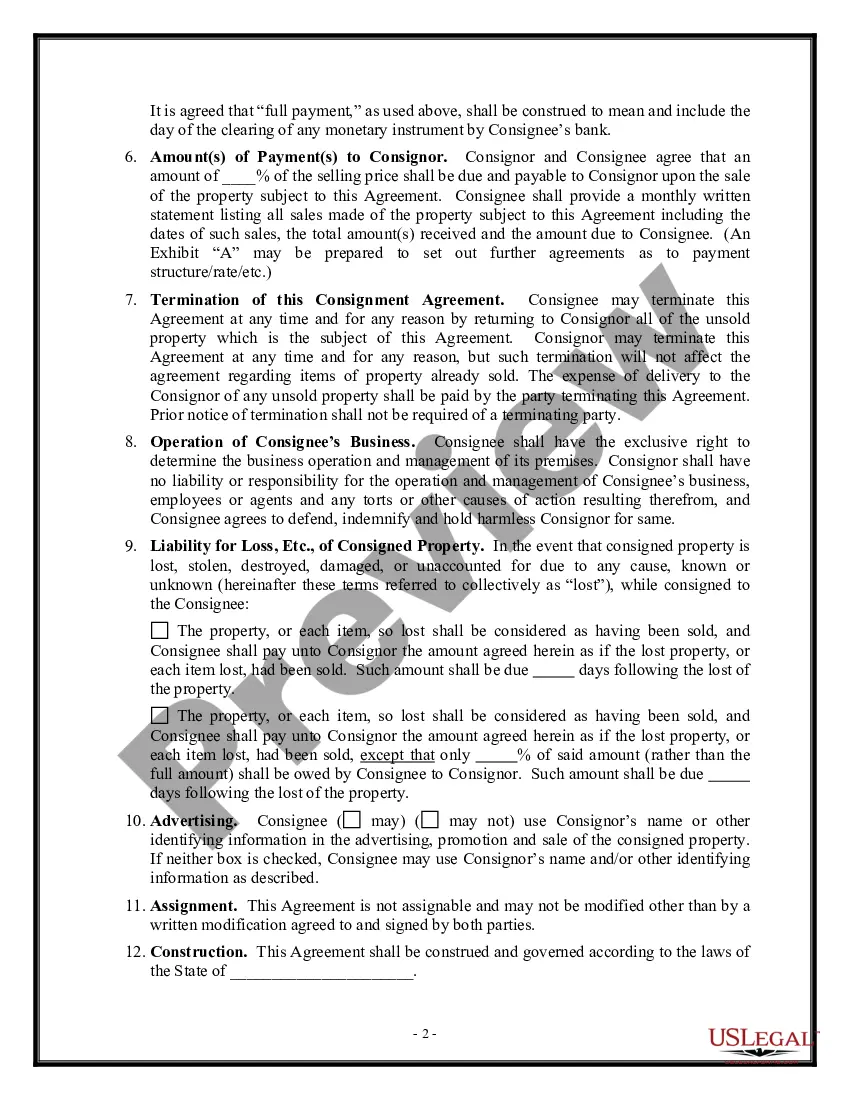
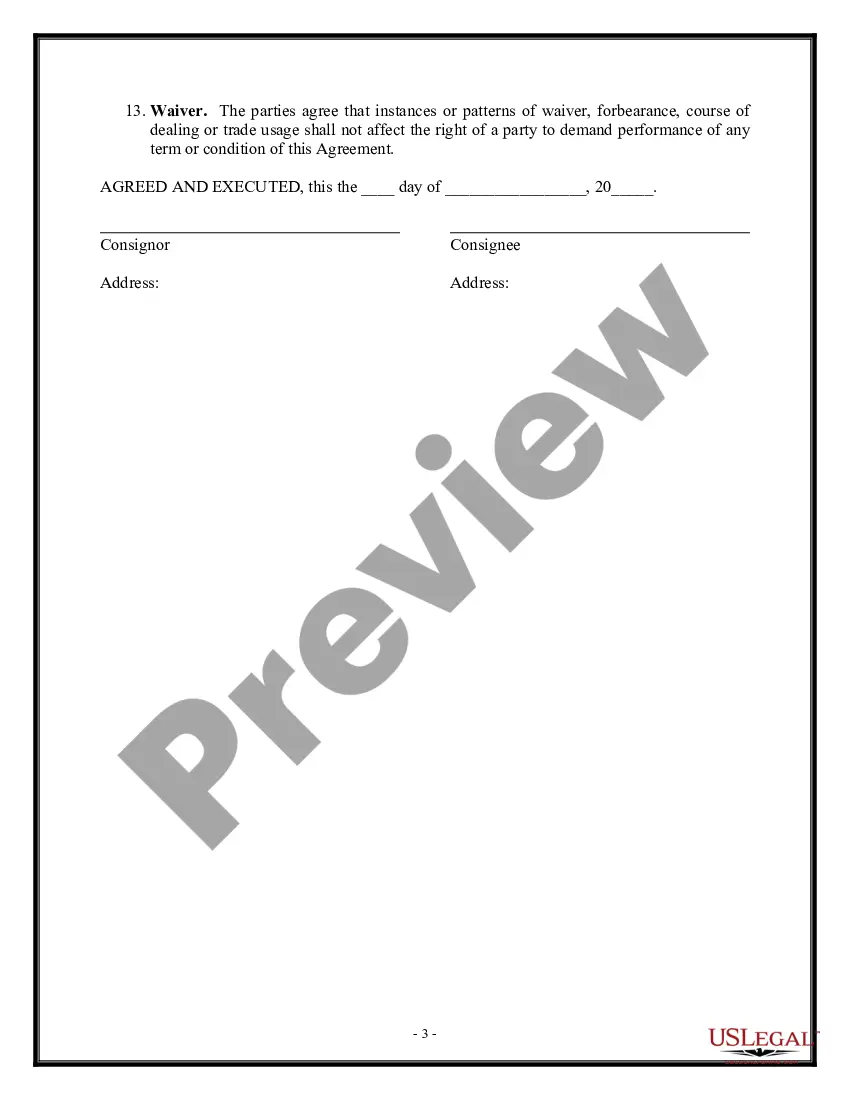
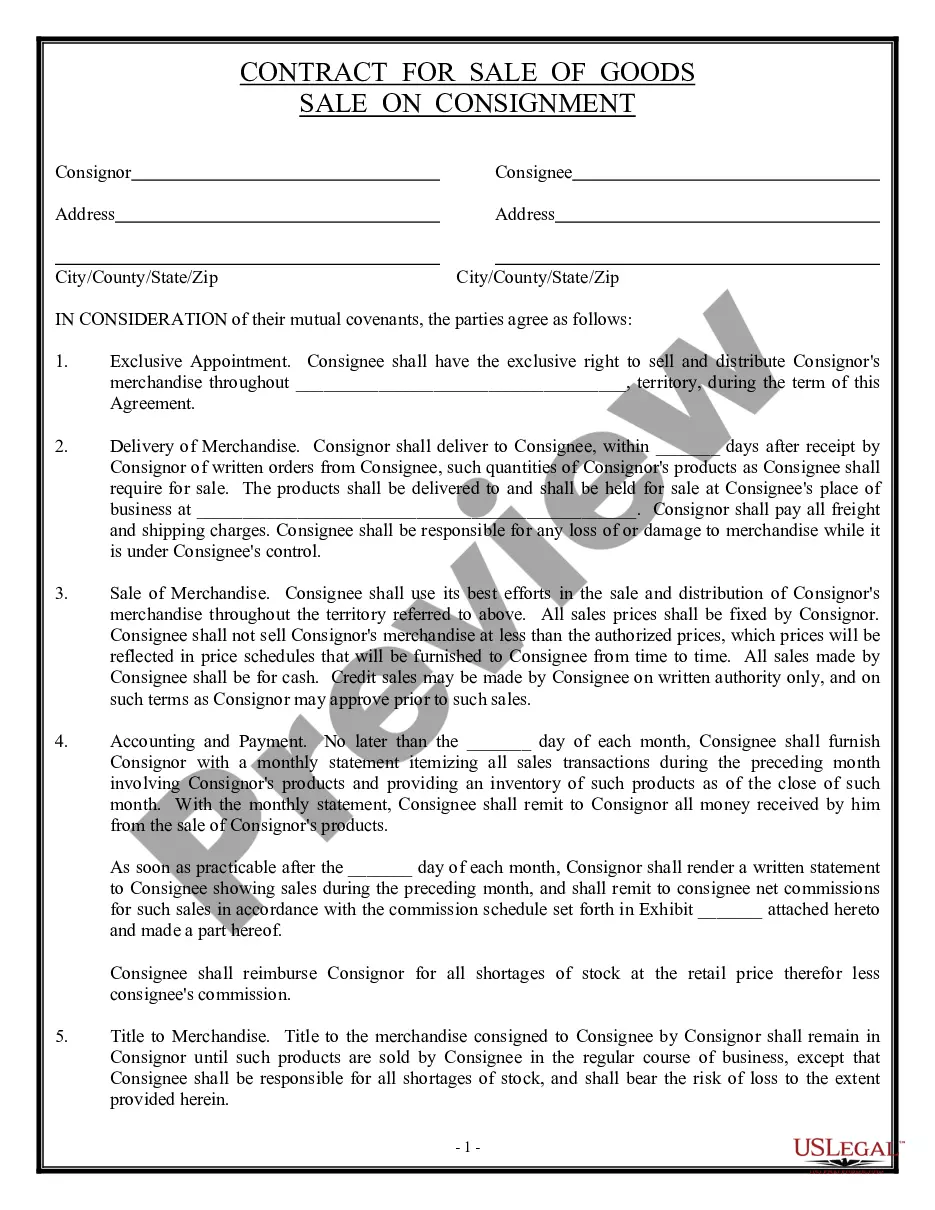
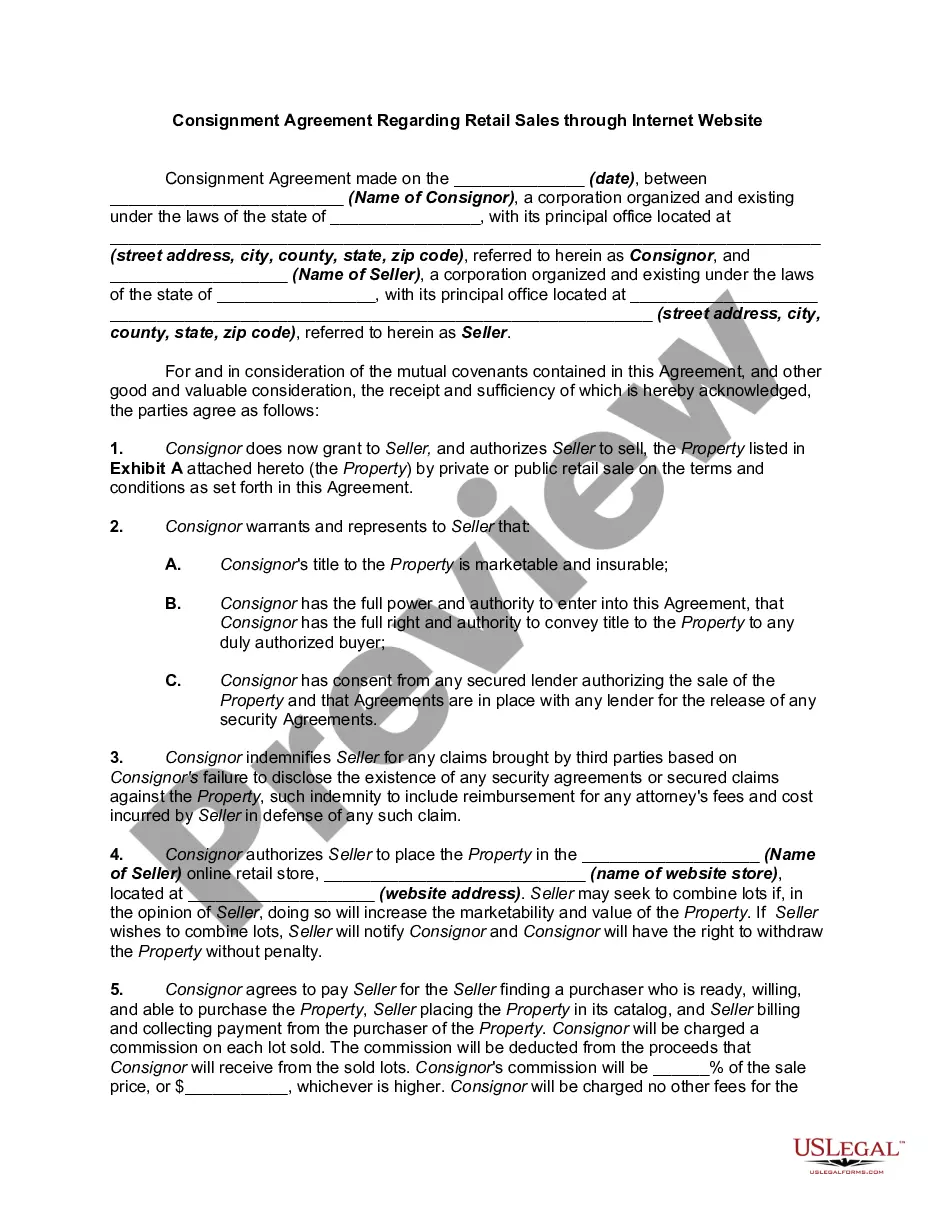
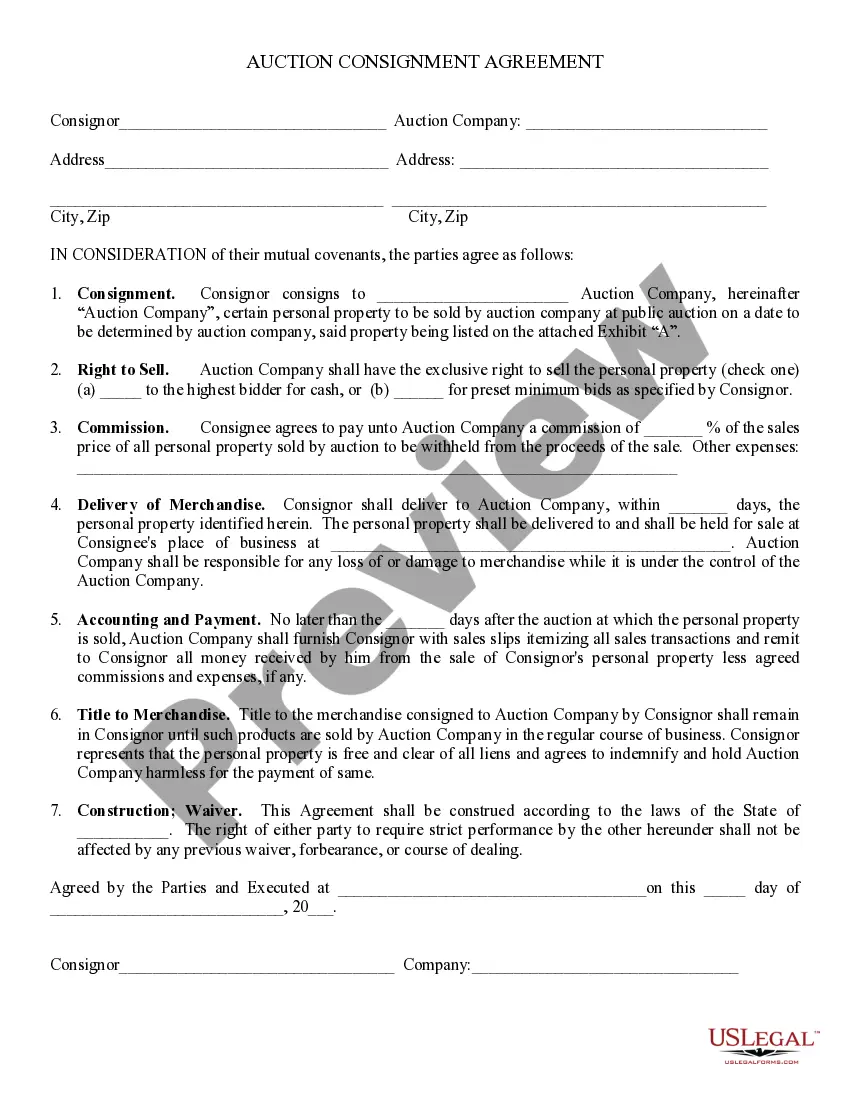
Consignment Contract Sample For Car In Pima
Description

Get your form ready online
Our built-in tools help you complete, sign, share, and store your documents in one place.
Make edits, fill in missing information, and update formatting in US Legal Forms—just like you would in MS Word.
Download a copy, print it, send it by email, or mail it via USPS—whatever works best for your next step.
Sign and collect signatures with our SignNow integration. Send to multiple recipients, set reminders, and more. Go Premium to unlock E-Sign.
If this form requires notarization, complete it online through a secure video call—no need to meet a notary in person or wait for an appointment.
We protect your documents and personal data by following strict security and privacy standards.

Make edits, fill in missing information, and update formatting in US Legal Forms—just like you would in MS Word.

Download a copy, print it, send it by email, or mail it via USPS—whatever works best for your next step.

Sign and collect signatures with our SignNow integration. Send to multiple recipients, set reminders, and more. Go Premium to unlock E-Sign.

If this form requires notarization, complete it online through a secure video call—no need to meet a notary in person or wait for an appointment.

We protect your documents and personal data by following strict security and privacy standards.
Looking for another form?



Form popularity
FAQ
In a consignment agreement, a consignor supplies goods to a consignee, who sells them on the consignor's behalf. The consignee earns a commission from each sale and sends the remaining sales revenue to the consignor. The consignor retains ownership of the goods until they are sold.
A consignment stock arrangement is one where a seller of goods (the consignor) consigns a stock of goods to a buyer (the consignee) and in doing so retains ownership of those goods pending the moment when they are taken/appropriated for use by the buyer.
Following the auction consignment company's receipt of your items, they will begin to photograph and catalog them. With your items organized, the marketing process can begin. Item Viewing: Through the marketing efforts of the auction consignment company, interest will grow in your items.
The one who delegates their products to be sold by the retailer is the consignor. The person who is entrusted with the responsibility of selling the products is the consignee and the products do not belong to them. The merchandise belongs to the consignor until it is sold.
Since we know the importance of consignment, it is currently vital to comprehend that there are two parties to a consignment exchange: Principal or Consignor: This is the party that sends the merchandise. He is the genuine proprietor of the merchandise. Agent or Consignee: This is the party that gets the merchandise.
A: A consignment agreement is a contract between two parties (a consignor and a consignee) that governs the relationship between those parties when goods are transferred.
How to Write a Consignment Agreement Parties Involved: Names and contact information of the consignor and the consignee. Consigned Goods: Detailed description of the goods being consigned, including quantities and specifications. Consignment Period: Duration of the consignment arrangement.
Please provide full description of goods, number of packages, gross weight and consignment dimensions. Customer reference. You can enter any internal reference code that you would like to be printed on the invoice, with a maximum of 24 characters. Delivery address. Dutiable shipment details.