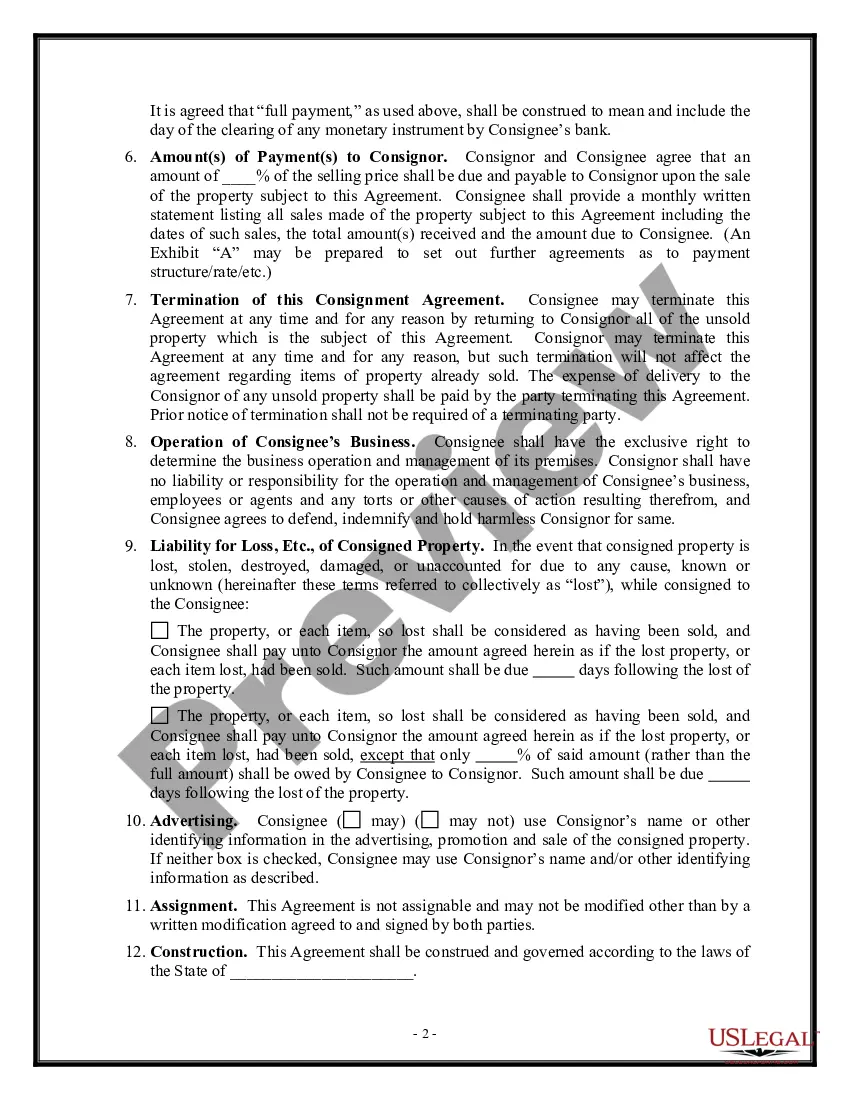
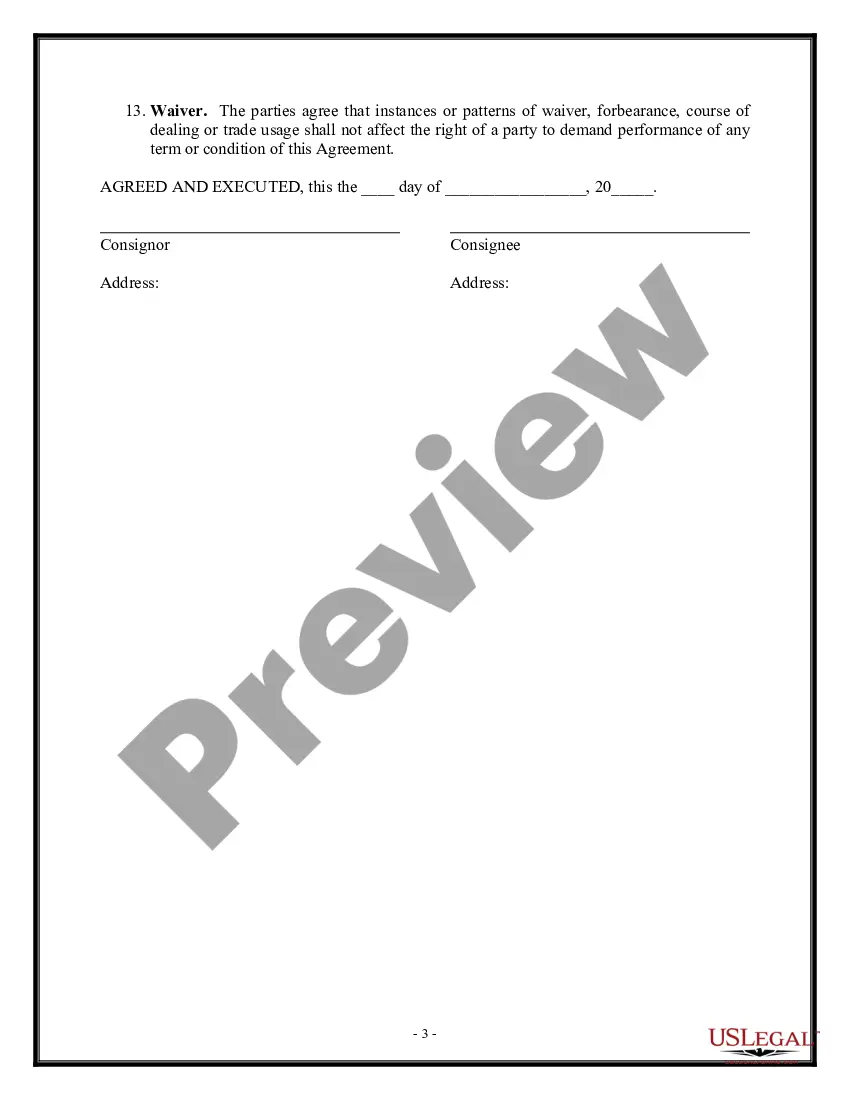
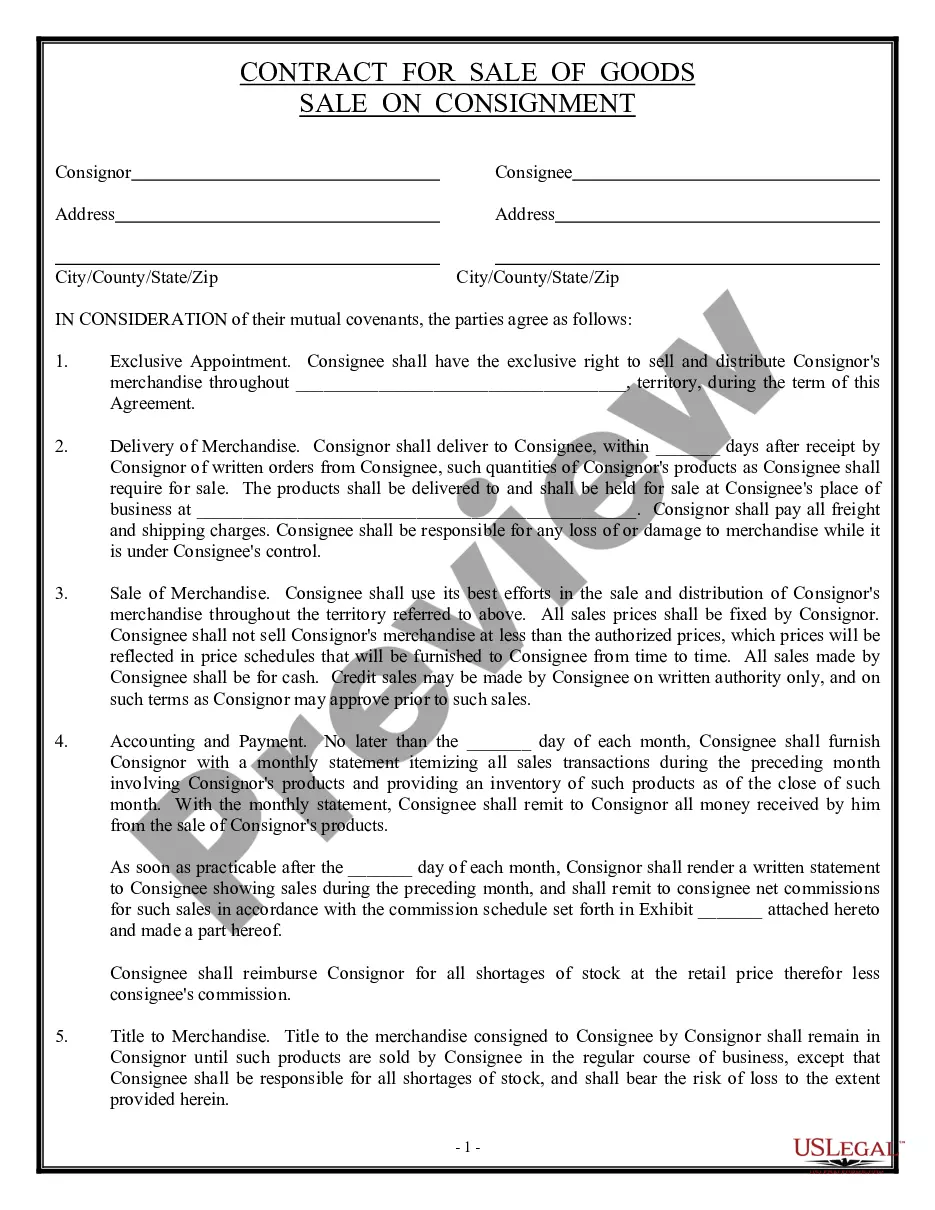
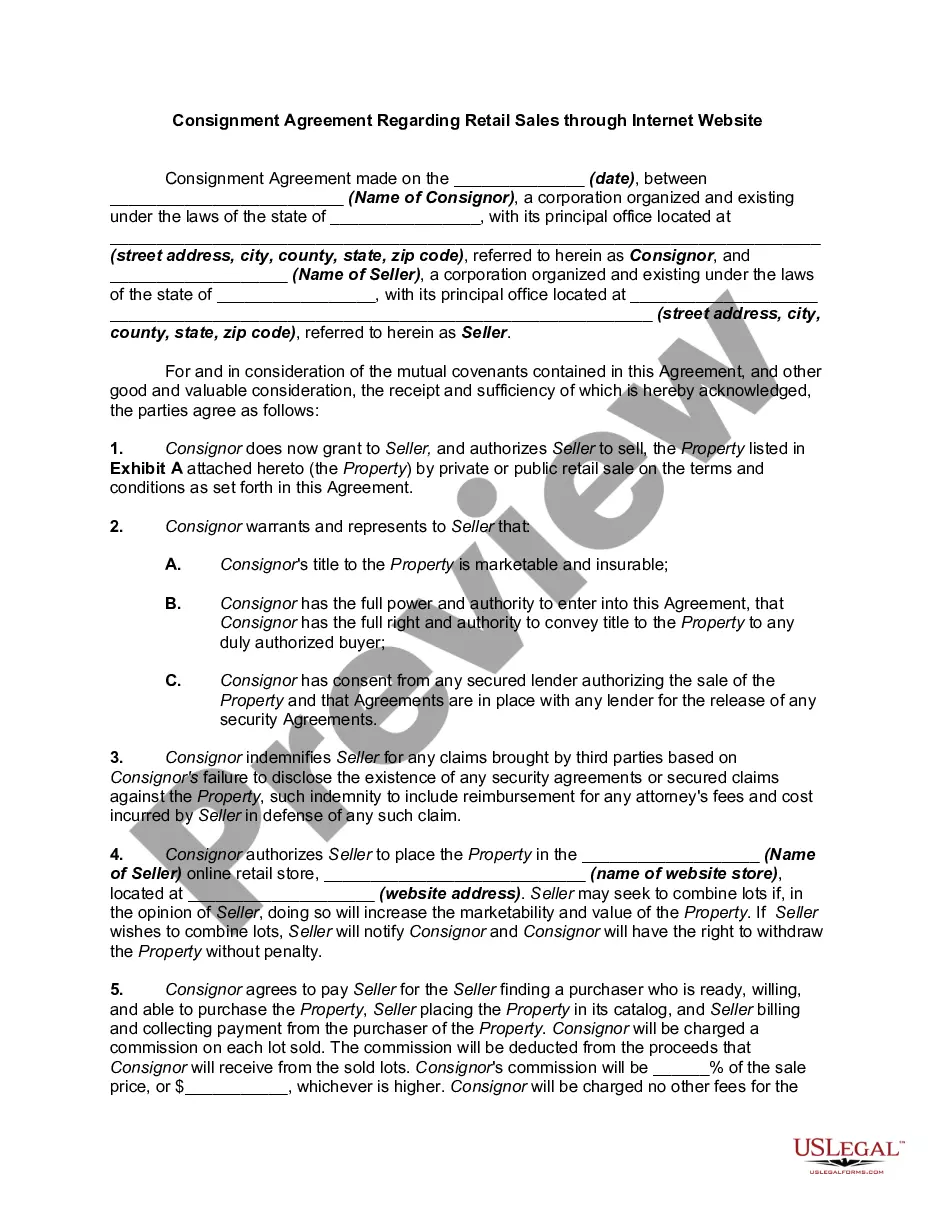
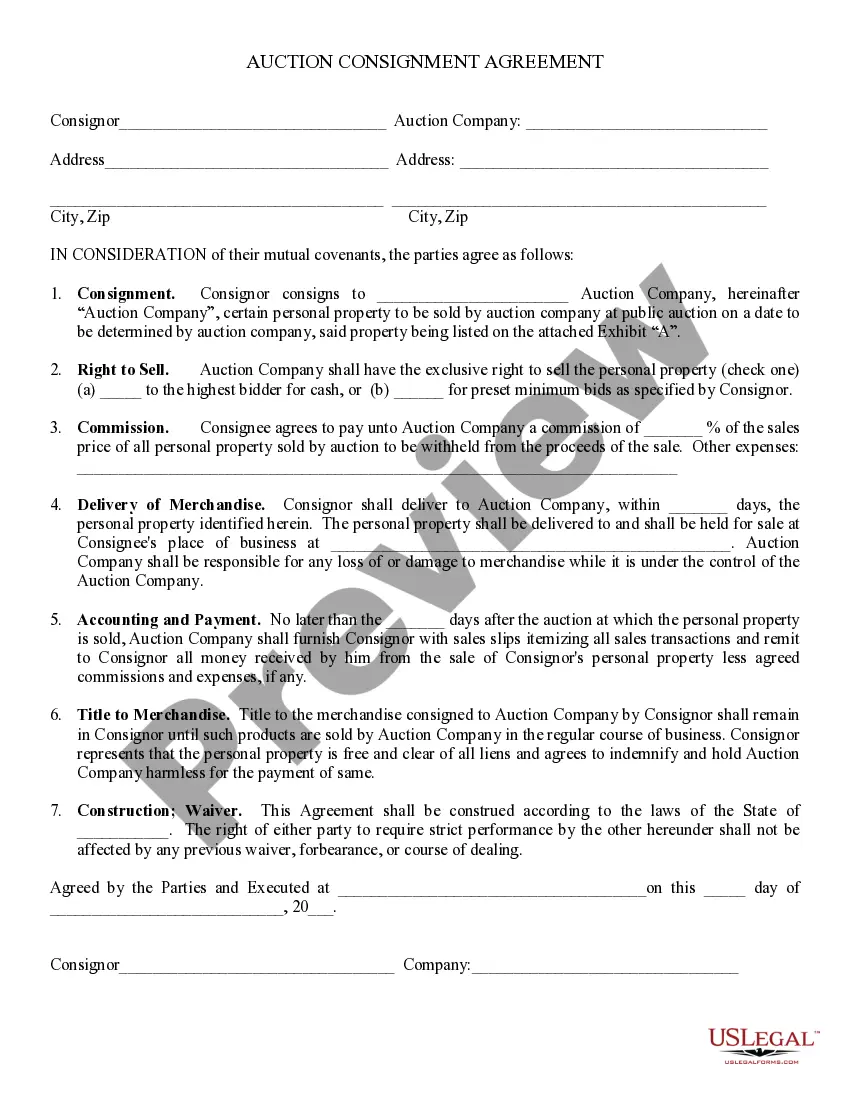
Consignment Agreement For Art In Georgia
Description

Get your form ready online
Our built-in tools help you complete, sign, share, and store your documents in one place.
Make edits, fill in missing information, and update formatting in US Legal Forms—just like you would in MS Word.
Download a copy, print it, send it by email, or mail it via USPS—whatever works best for your next step.
Sign and collect signatures with our SignNow integration. Send to multiple recipients, set reminders, and more. Go Premium to unlock E-Sign.
If this form requires notarization, complete it online through a secure video call—no need to meet a notary in person or wait for an appointment.
We protect your documents and personal data by following strict security and privacy standards.

Make edits, fill in missing information, and update formatting in US Legal Forms—just like you would in MS Word.

Download a copy, print it, send it by email, or mail it via USPS—whatever works best for your next step.

Sign and collect signatures with our SignNow integration. Send to multiple recipients, set reminders, and more. Go Premium to unlock E-Sign.

If this form requires notarization, complete it online through a secure video call—no need to meet a notary in person or wait for an appointment.

We protect your documents and personal data by following strict security and privacy standards.
Looking for another form?






Form popularity
FAQ
What is artwork consignment, exactly? Put simply, it's the professional method for reselling art that involves a collector giving their work to resale art dealers or auction houses to sell on their behalf, with the ultimate objective of making a sale.
Art consignment: 13 important tips (and the right questions to ask) Attend a few sales. Before you enter a consignment agreement, document. Know the season you're selling in, and sell what's in demand. Choose an auction house: ask key questions. Follow drop-off rules. Ask about reserve prices.
Art consignment: 13 important tips (and the right questions to ask) Attend a few sales. Before you enter a consignment agreement, document. Know the season you're selling in, and sell what's in demand. Choose an auction house: ask key questions. Follow drop-off rules. Ask about reserve prices.
Some types of product are commonly sold through consignment. These include clothing, athletic equipment, furniture, musical instruments, art, and jewelry. For example, an artist might have five large pieces of artwork to sell but has no place to showcase the work for prospective buyers.
Consignment Agreement. Consignment is a more accurate term than 'sale or return', because it makes dear to both sides that the artist does not intend to sell the works to the gallery at any stage, but merely intends to leave them for sale by the gallery as artist's agent or consignee on a commission basis.
'Consigning' an artwork means to give it to a gallery or auction house to sell on your behalf. Traditionally, consignments involve sending the artwork away to the seller for the duration of the consignment period.
If you are selling any artwork yourself, it is a legal requirement to have a business license. It allows you to file for a DBA (Doing Business As) so that you can operate under the business name of your choice. You can also operate a business under your own name.
Georgia. For any painting project over $2,500, you'll need the Georgia Residential Basic Contractor License. You'll need to pass the Georgia Business and Law exam, secure a Georgia certificate of business insurance, and have two years of working experience.
