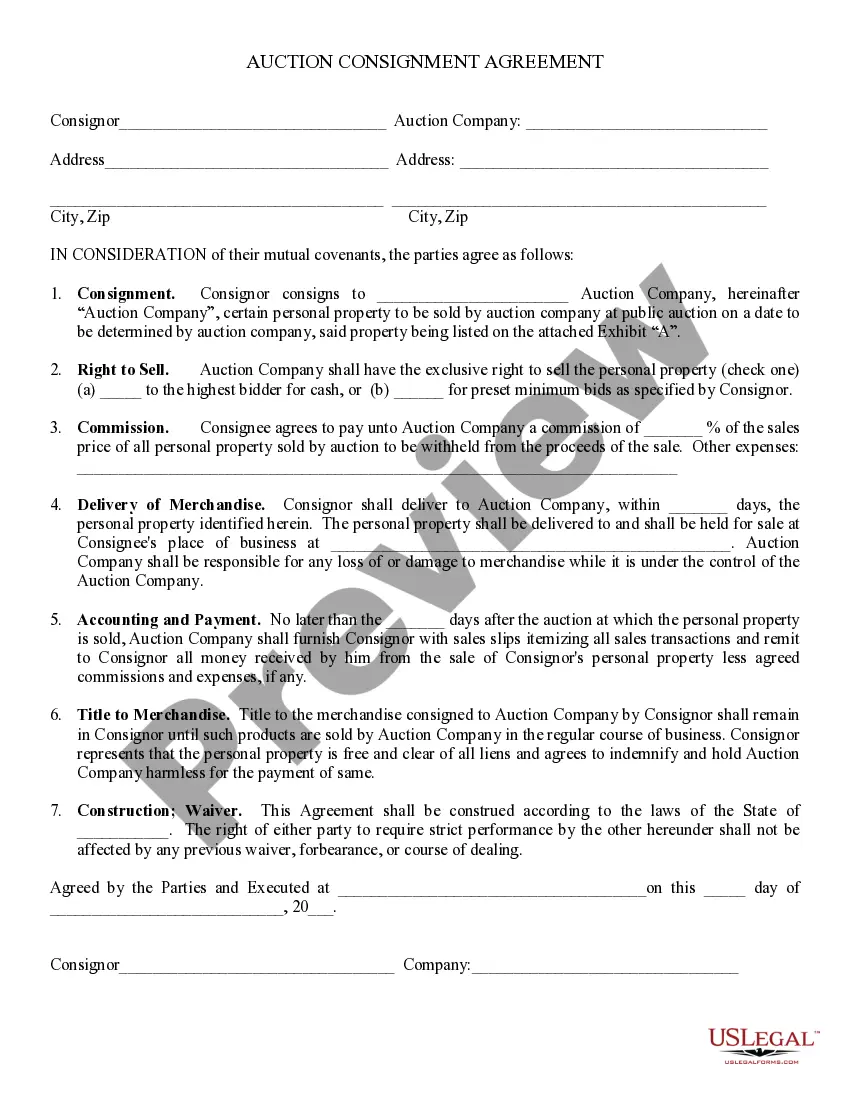
Consignment Contract Sample With Replacement In Cook
Description

Get your form ready online
Our built-in tools help you complete, sign, share, and store your documents in one place.
Make edits, fill in missing information, and update formatting in US Legal Forms—just like you would in MS Word.
Download a copy, print it, send it by email, or mail it via USPS—whatever works best for your next step.
Sign and collect signatures with our SignNow integration. Send to multiple recipients, set reminders, and more. Go Premium to unlock E-Sign.
If this form requires notarization, complete it online through a secure video call—no need to meet a notary in person or wait for an appointment.
We protect your documents and personal data by following strict security and privacy standards.

Make edits, fill in missing information, and update formatting in US Legal Forms—just like you would in MS Word.

Download a copy, print it, send it by email, or mail it via USPS—whatever works best for your next step.

Sign and collect signatures with our SignNow integration. Send to multiple recipients, set reminders, and more. Go Premium to unlock E-Sign.

If this form requires notarization, complete it online through a secure video call—no need to meet a notary in person or wait for an appointment.

We protect your documents and personal data by following strict security and privacy standards.
Looking for another form?


Form popularity
FAQ
How do you account for consigned inventory? Consigned inventory is typically not recorded as an asset on the consignee's balance sheet until it is sold. Instead, it is often disclosed in the financial statements' footnotes or the inventory disclosure section.
This kind of arrangement is called Consignment. Definition. The contract or an agreement of sending several goods by the producers or manufacturers of a place to their agents for the sale is known as a consignment. Types of Consignment. Outward Consignment. Inward Consignment. Consignment Processing. Sale. Features of a Sale.
Risk of loss Risk of loss shifts from seller to buyer at the time that seller completes its delivery obligations. If it is a destination contract (FOB (buyer's city)), then risk of loss is on the seller. If it is a delivery contract (standard, or FOB (seller's city)), then the risk of loss is on the buyer.
Risk of loss and title remains with the seller until the buyer indicates his or her approval of the goods (or after a reasonable time)., risk of loss (and title) remains with the seller until the buyer accepts, and the buyer's trial use of the goods does not in itself constitute acceptance.
Example of Consignment Sales On January 1st, Company A sends 100,000 copies of its magazines to retailers to sell on consignment. The company specifies that the deadline to return unsold goods is January 31st. In this scenario, Company A is the consignor, while the retailers are the consignee.
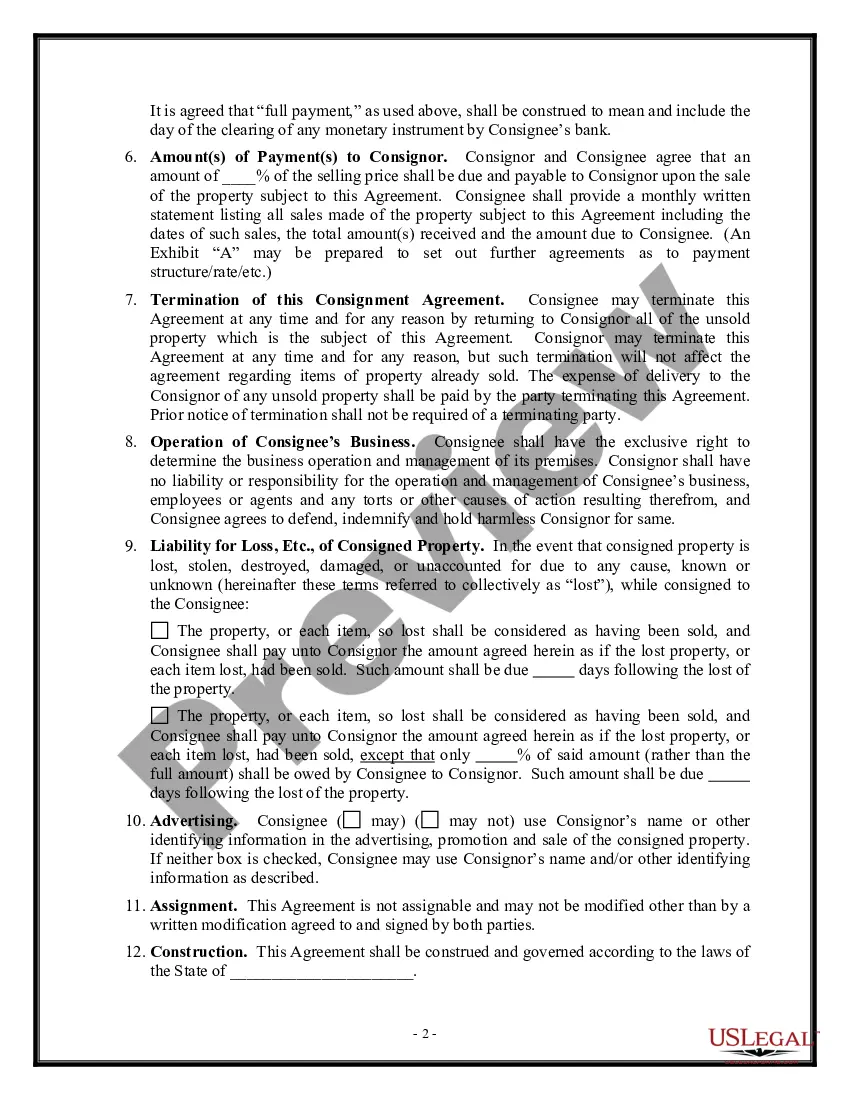
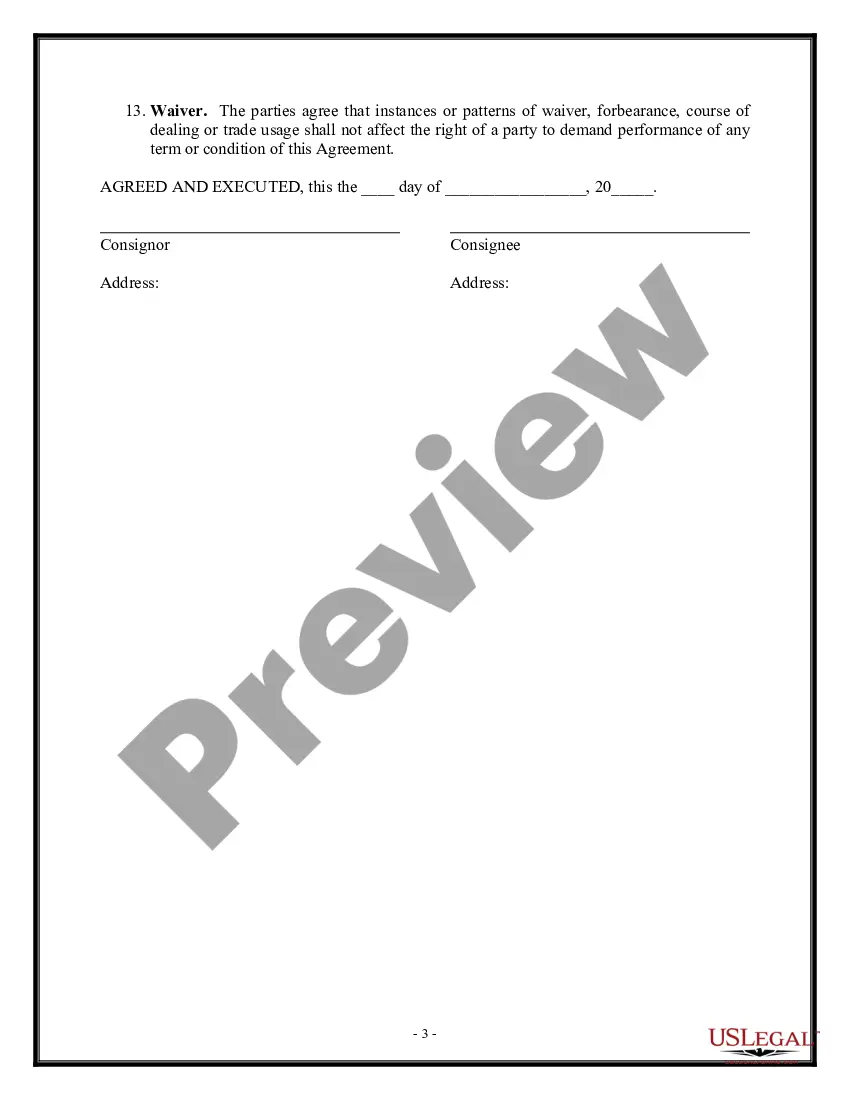
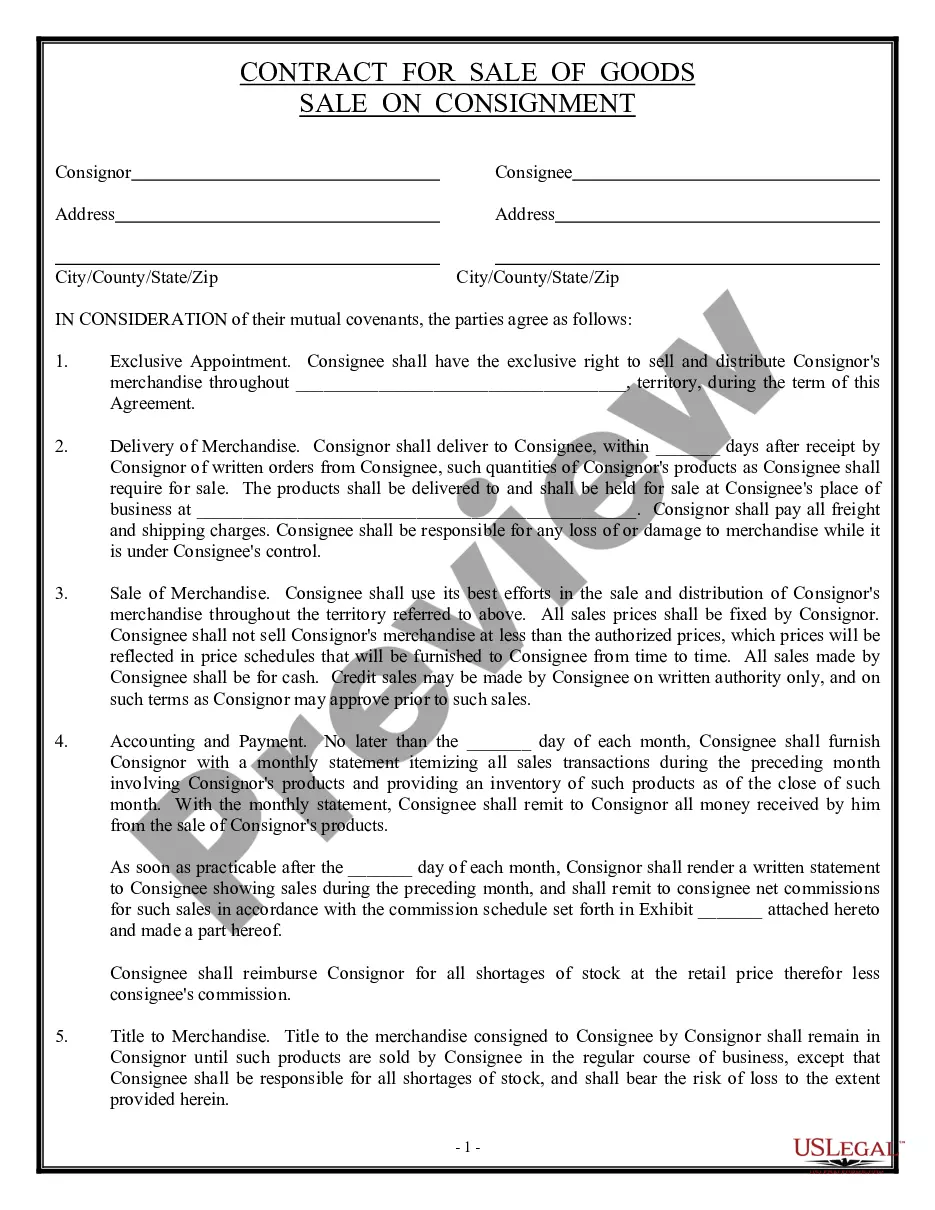
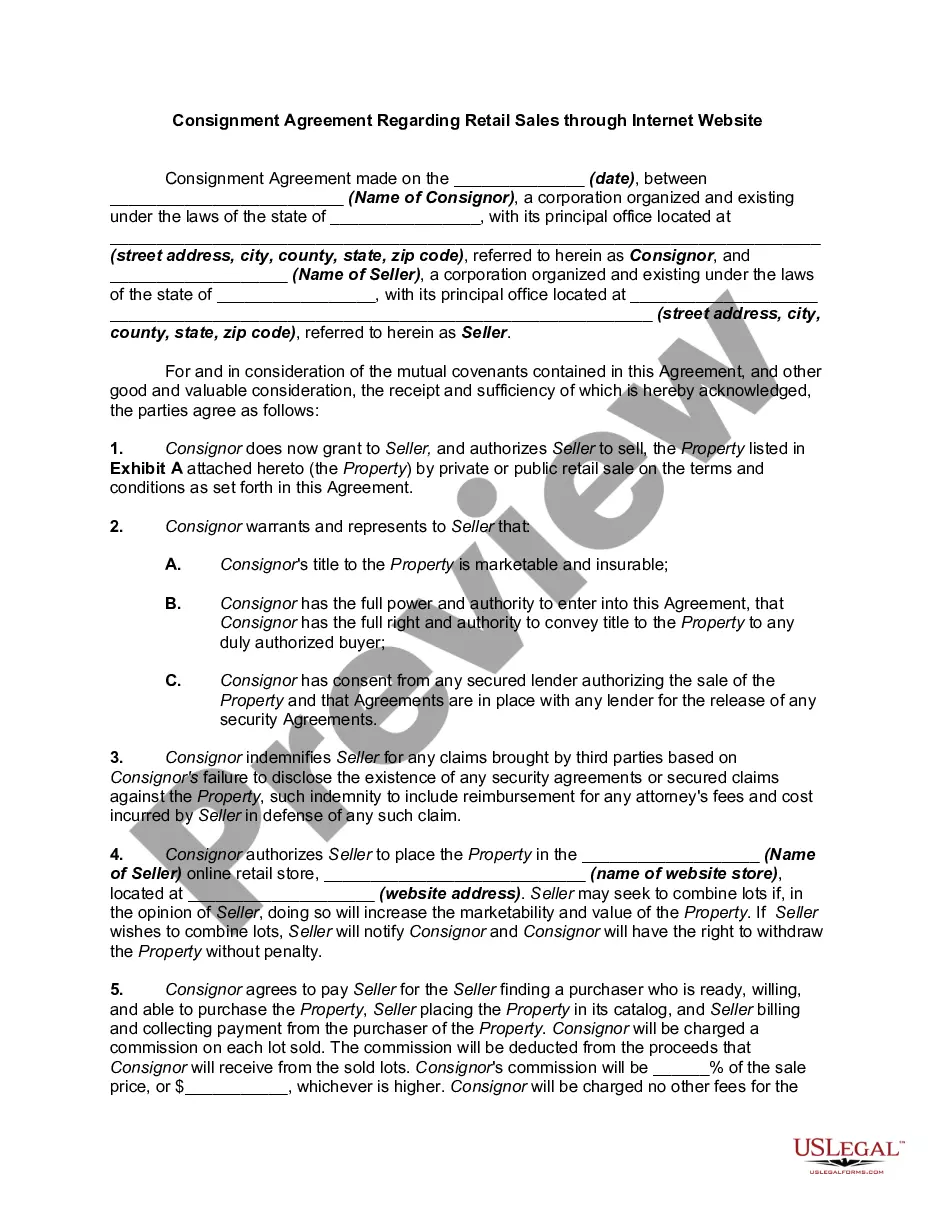
Consignment is a type of contract in which the consignor delivers the goods to the consignee for sale . The consignee takes care of the goods and sells them. Until the goods are sold, the consignor does not lose ownership of the goods.
A consignment agreement, to be used where the seller (consignor) wishes to place goods on consignment before they are resold or used by the buyer (consignee). Goods will be stored at a facility or warehouse, under the control of the consignor, the consignee, or a third party.