Consignment Account Example In California
Description

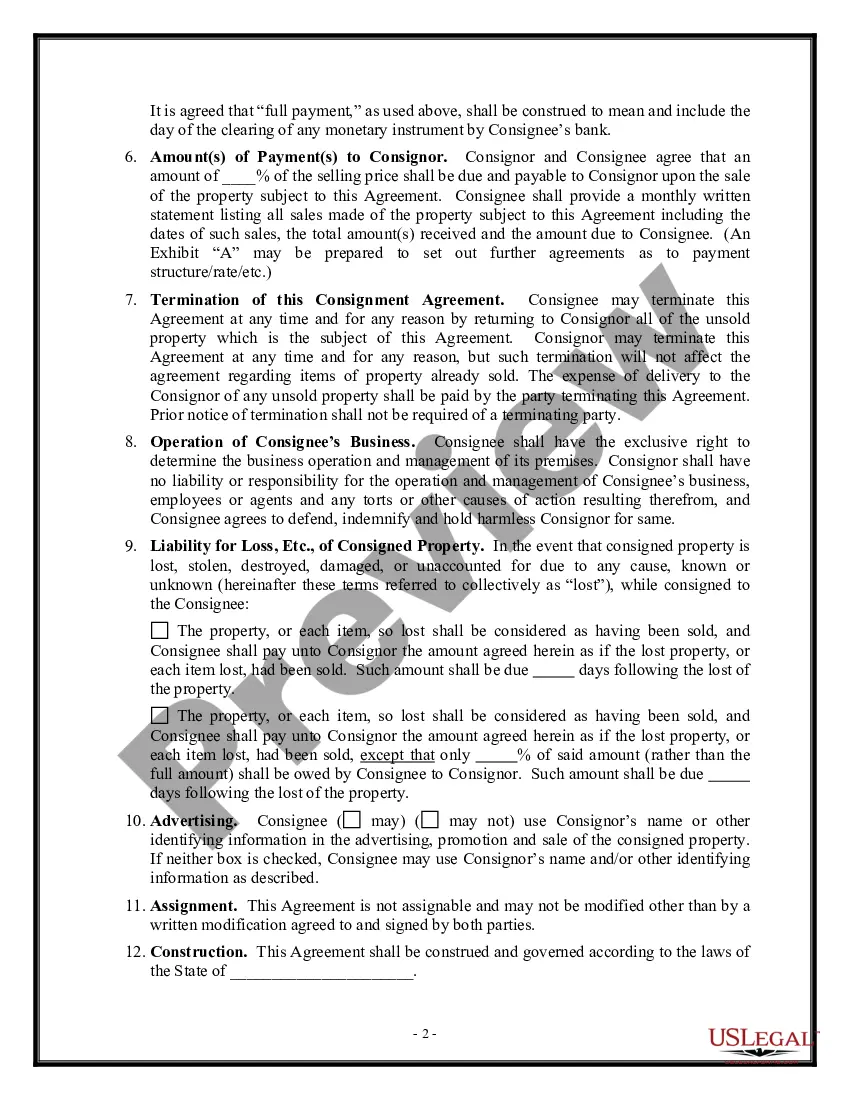

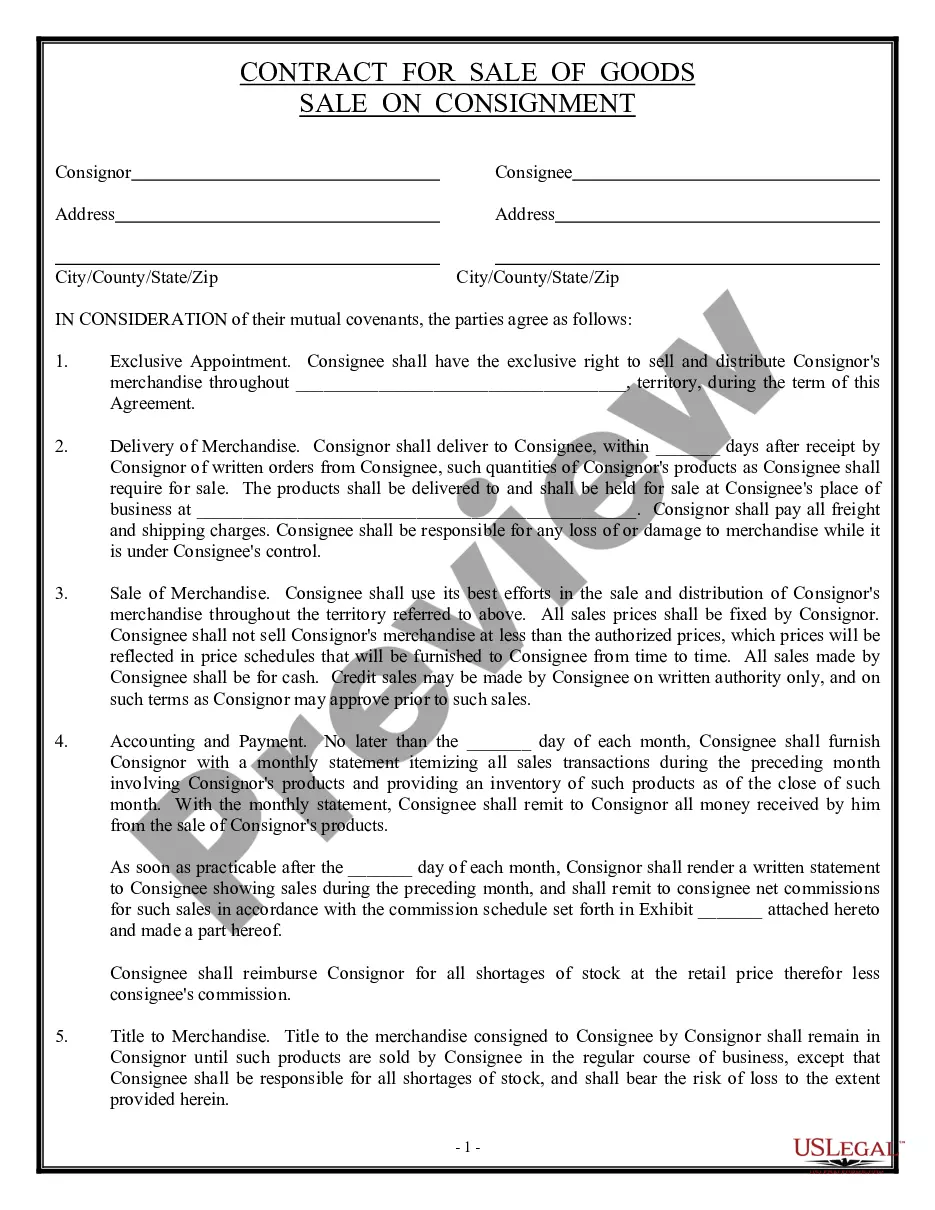
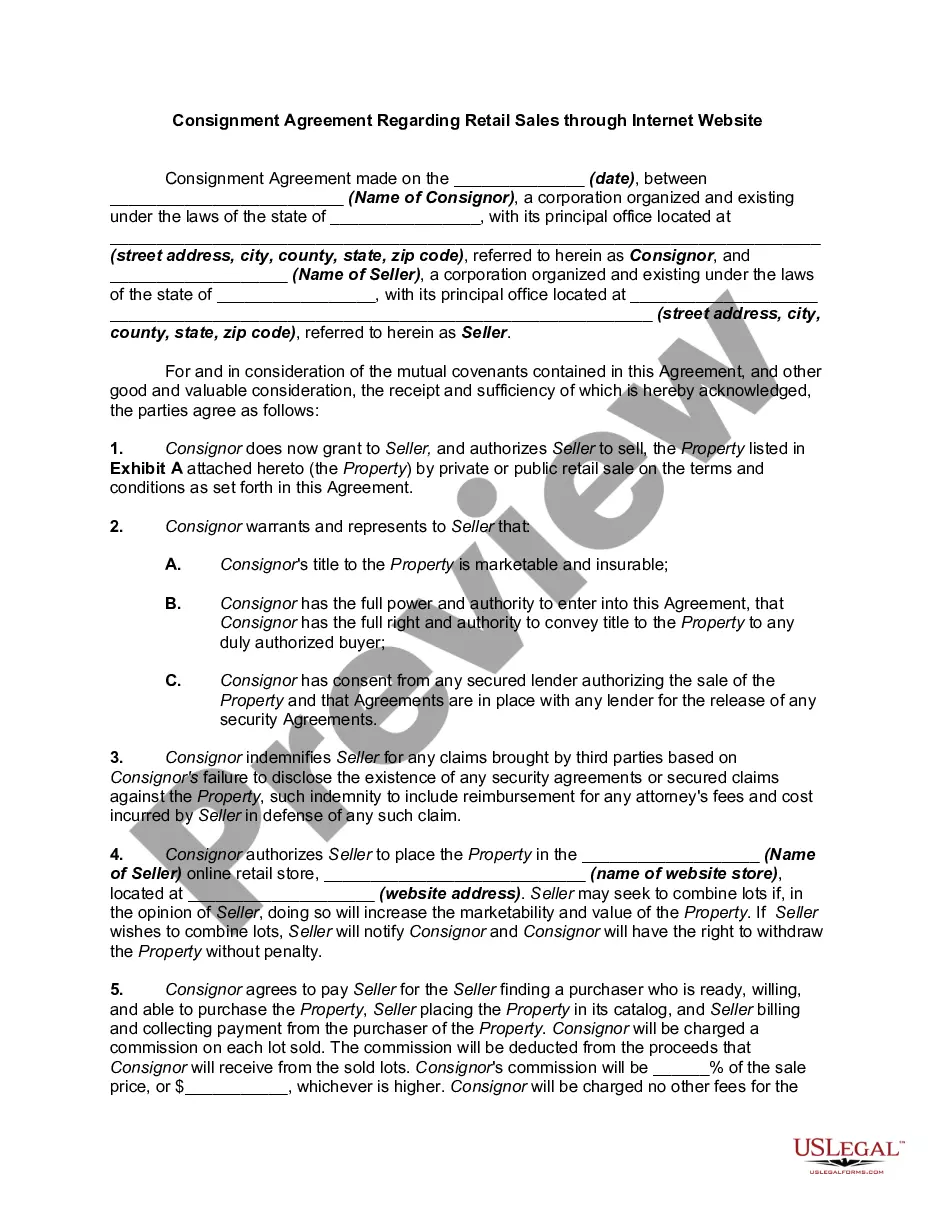
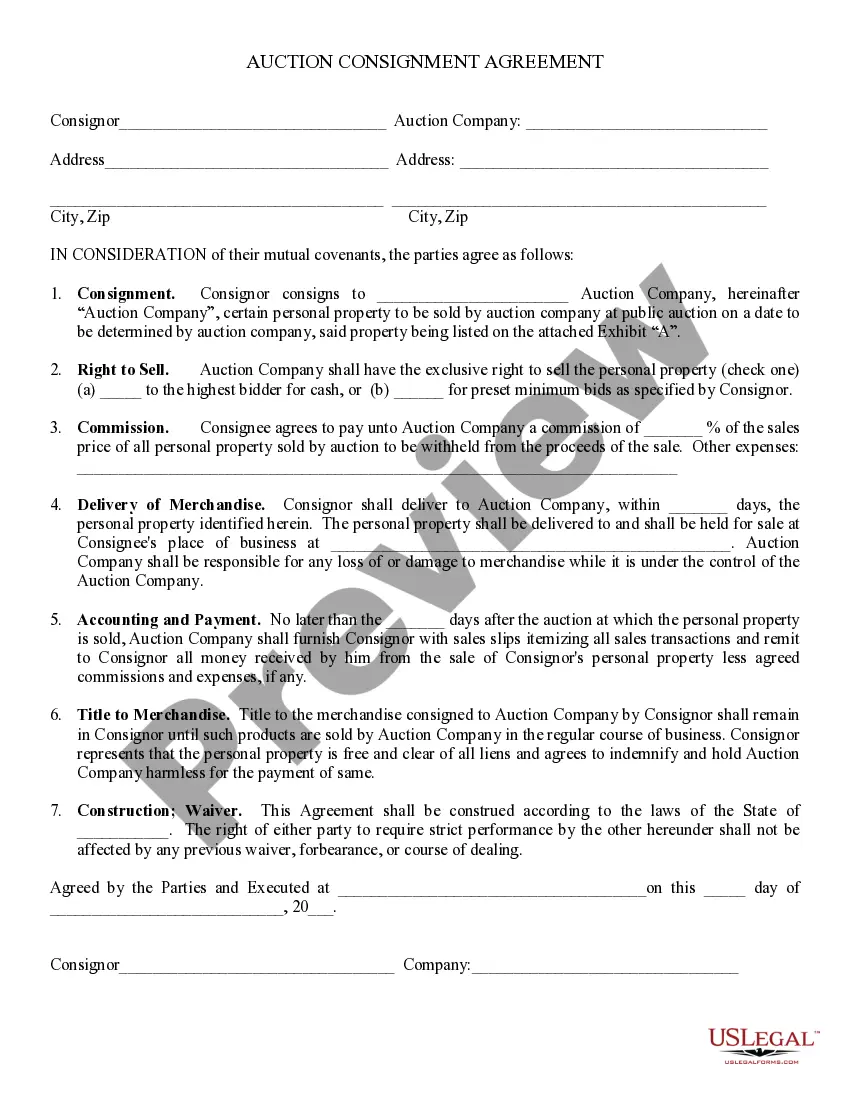
Get your form ready online
Our built-in tools help you complete, sign, share, and store your documents in one place.
Make edits, fill in missing information, and update formatting in US Legal Forms—just like you would in MS Word.
Download a copy, print it, send it by email, or mail it via USPS—whatever works best for your next step.
Sign and collect signatures with our SignNow integration. Send to multiple recipients, set reminders, and more. Go Premium to unlock E-Sign.
If this form requires notarization, complete it online through a secure video call—no need to meet a notary in person or wait for an appointment.
We protect your documents and personal data by following strict security and privacy standards.

Make edits, fill in missing information, and update formatting in US Legal Forms—just like you would in MS Word.

Download a copy, print it, send it by email, or mail it via USPS—whatever works best for your next step.

Sign and collect signatures with our SignNow integration. Send to multiple recipients, set reminders, and more. Go Premium to unlock E-Sign.

If this form requires notarization, complete it online through a secure video call—no need to meet a notary in person or wait for an appointment.

We protect your documents and personal data by following strict security and privacy standards.
Looking for another form?





Form popularity
FAQ
Some types of product are commonly sold through consignment. These include clothing, athletic equipment, furniture, musical instruments, art, and jewelry. For example, an artist might have five large pieces of artwork to sell but has no place to showcase the work for prospective buyers.
How to Write a Consignment Agreement Parties Involved: Names and contact information of the consignor and the consignee. Consigned Goods: Detailed description of the goods being consigned, including quantities and specifications. Consignment Period: Duration of the consignment arrangement.
Consignment accounting is a type of business arrangement in which one person send goods to another person for sale on his behalf and the person who sends goods is called consignor and another person who receives the goods is called consignee, where consignee sells the goods on behalf of consignor on consideration of ...
The journal entry accounts for the sales and expenses of the consignment inventory. No entry is made by the consignee. It's important to note that the import duty of 200 is debited to the consignment inventory account.
Instead, the supplier records them in their books under consignment inventory, keeping them separate from their regular stock. The supplier should enter into their journal: Debit: Consignment inventory (to track the value of goods sent out) Credit: Inventory (to reduce their regular stock)
There are several types of consignees in logistics: Ultimate consignee. The final recipient of the goods, often the buyer or end-user. Intermediate consignee. An entity that receives the shipment temporarily before forwarding it to the ultimate consignee. Notify party.
Some types of product are commonly sold through consignment. These include clothing, athletic equipment, furniture, musical instruments, art, and jewelry. For example, an artist might have five large pieces of artwork to sell but has no place to showcase the work for prospective buyers.
Example of Consignment Sales On January 1st, Company A sends 100,000 copies of its magazines to retailers to sell on consignment. The company specifies that the deadline to return unsold goods is January 31st. In this scenario, Company A is the consignor, while the retailers are the consignee.
This kind of arrangement is called Consignment. Definition. The contract or an agreement of sending several goods by the producers or manufacturers of a place to their agents for the sale is known as a consignment. Types of Consignment. Outward Consignment. Inward Consignment. Consignment Processing. Sale. Features of a Sale.
Consignment accounting is a type of business arrangement in which one person send goods to another person for sale on his behalf and the person who sends goods is called consignor and another person who receives the goods is called consignee, where consignee sells the goods on behalf of consignor on consideration of ...