Waiver Form For Motorcycle Rides In Travis
Description
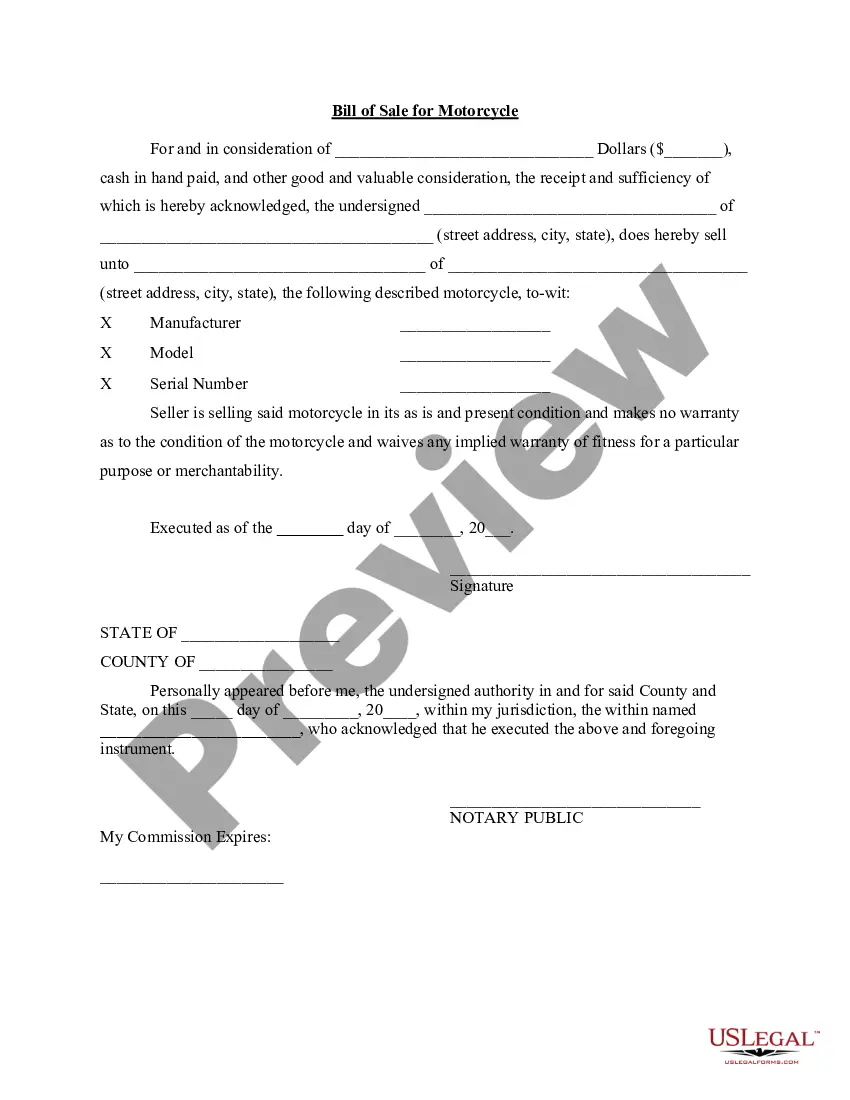
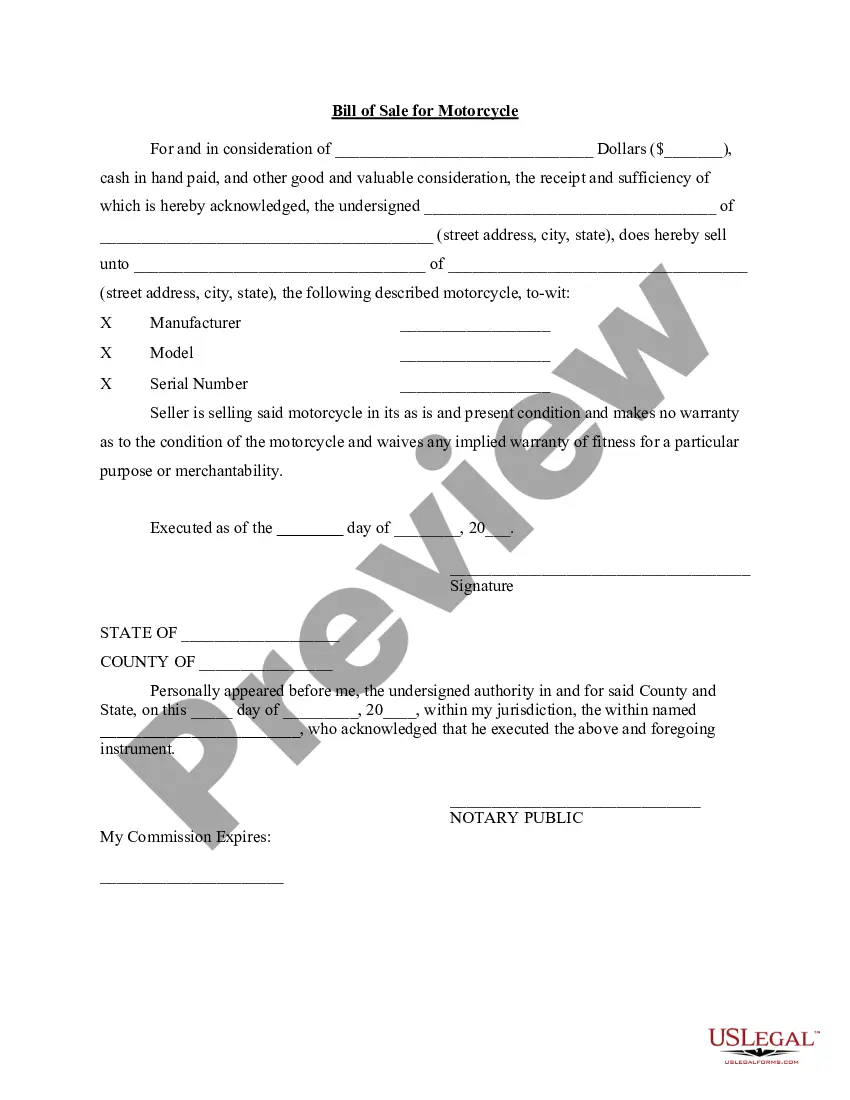
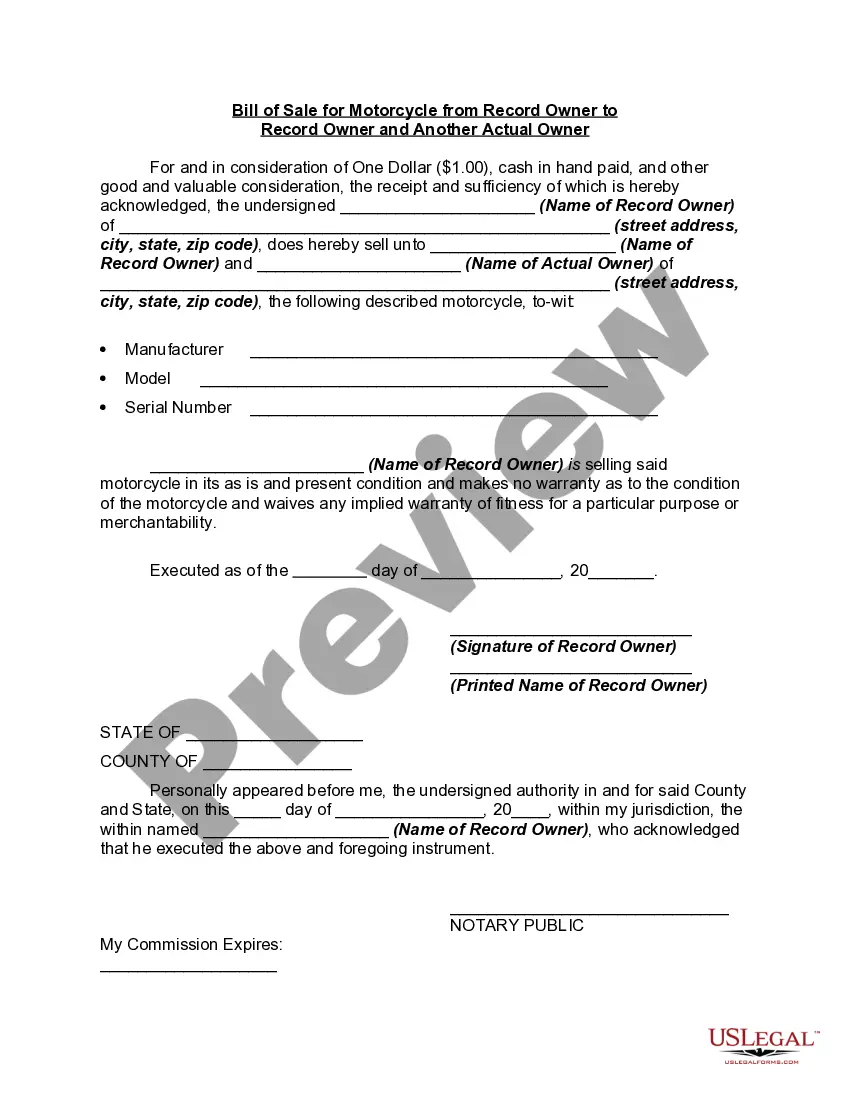
Get your form ready online
Our built-in tools help you complete, sign, share, and store your documents in one place.
Make edits, fill in missing information, and update formatting in US Legal Forms—just like you would in MS Word.
Download a copy, print it, send it by email, or mail it via USPS—whatever works best for your next step.
Sign and collect signatures with our SignNow integration. Send to multiple recipients, set reminders, and more. Go Premium to unlock E-Sign.
If this form requires notarization, complete it online through a secure video call—no need to meet a notary in person or wait for an appointment.
We protect your documents and personal data by following strict security and privacy standards.

Make edits, fill in missing information, and update formatting in US Legal Forms—just like you would in MS Word.

Download a copy, print it, send it by email, or mail it via USPS—whatever works best for your next step.

Sign and collect signatures with our SignNow integration. Send to multiple recipients, set reminders, and more. Go Premium to unlock E-Sign.

If this form requires notarization, complete it online through a secure video call—no need to meet a notary in person or wait for an appointment.

We protect your documents and personal data by following strict security and privacy standards.
Looking for another form?







Form popularity
FAQ
A waiver is generally a voluntary relinquishment of a known right and is executed prior to the activity. Basically, a participant surrenders their negligence-based personal injury claim against a business or company. This means the participant agrees to “hold harmless” the organization if they are injured.
601, Application for Waiver of Grounds of nadmissibility. f you are inadmissible to the United States and are seeking an immigrant visa, adjustment of status, certain nonimmigrant statuses, or certain other immigration benefits, you must file this form to seek a waiver of certain grounds of inadmissibility.
A waiver is a binding agreement between a customer and a company that serves to release the company from liability for certain actions or risks. If a customer refuses to sign a waiver, the company may refuse to provide services. A waiver can be used to: Protect your business from potential lawsuits.
Key Takeaways On How To Write A Waiver Choose a waiver template. Determine the type of activity or service. State the purpose of the waiver. Identify the risks. Include a title. Include customer information. Include waiver terms. Include a statement of understanding.
Online waiver forms typically include fields for the participant's name, contact information, and an electronic signature to confirm their agreement with the terms and conditions.
A waiver is a demonstration, usually in written form, of a party's intent to relinquish a legal right or claim. The key point to note is that the relinquishment is voluntary, and can apply to a variety of legal situations. Essentially, a waiver removes a real or potential liability for the other party in the agreement.
You can file an I-601 Waiver application by yourself. However, you are very strongly advised against doing so. You should hire an experienced immigration lawyer to assist and represent you in the preparation and filing of your application for an I-601 Waiver.
How to write a waiver Introductory statement. The introductory statement of a waiver serves to clarify its purpose and the parties involved. Summary of risks. Assumption of risks. Release clause. Indemnification clause. Governing law. Consent and signature.
