Contract For Caregiver Agreement In Santa Clara
Description



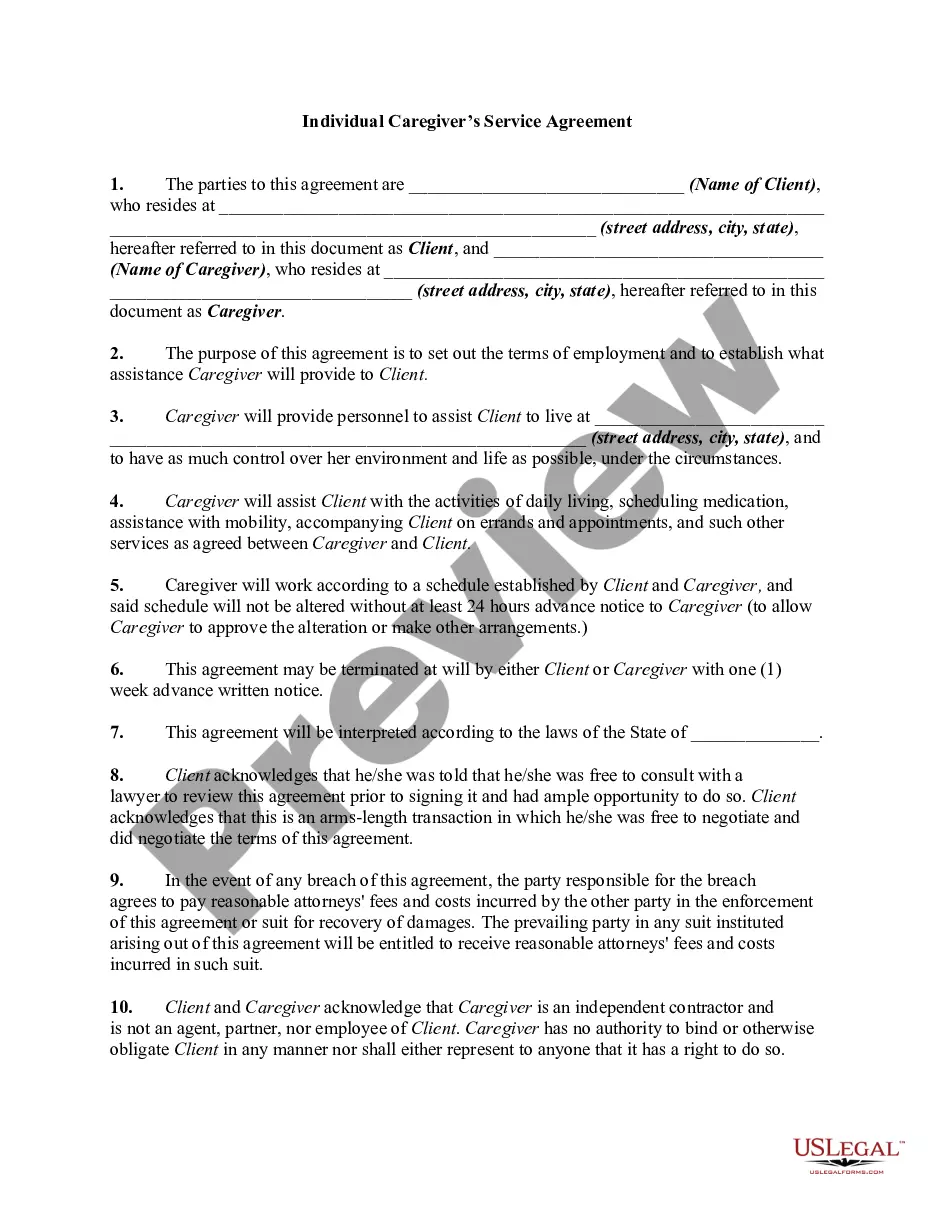


Get your form ready online
Our built-in tools help you complete, sign, share, and store your documents in one place.
Make edits, fill in missing information, and update formatting in US Legal Forms—just like you would in MS Word.
Download a copy, print it, send it by email, or mail it via USPS—whatever works best for your next step.
Sign and collect signatures with our SignNow integration. Send to multiple recipients, set reminders, and more. Go Premium to unlock E-Sign.
If this form requires notarization, complete it online through a secure video call—no need to meet a notary in person or wait for an appointment.
We protect your documents and personal data by following strict security and privacy standards.

Make edits, fill in missing information, and update formatting in US Legal Forms—just like you would in MS Word.

Download a copy, print it, send it by email, or mail it via USPS—whatever works best for your next step.

Sign and collect signatures with our SignNow integration. Send to multiple recipients, set reminders, and more. Go Premium to unlock E-Sign.

If this form requires notarization, complete it online through a secure video call—no need to meet a notary in person or wait for an appointment.

We protect your documents and personal data by following strict security and privacy standards.
Looking for another form?





Form popularity
FAQ
A caregiver agreement should include: Service start date. List of caregiving services. Frequency of service. A legal and financial plan. A termination clause. Backup plan for caretaker absence.
The caregiver agreement should be notarized at the time of signing. It should have a contract date and it should be signed not only by the recipient of care (if this is not possible, a power of attorney could sign on their behalf), but also by the caregiver who will be performing the services.
This is a binding agreement, also called a long-term care personal support services agreement, elder care contract, or family care or caregiver contract. Most often, it is called a personal care agreement. This agreement can offer family caregivers security that they will not suffer undue financial consequences.
Join professional associations and organizations that focus on home care services to expand your network further. Building relationships with healthcare providers, hospitals, and clinics can also lead to contract opportunities. Reach out to these organizations and express your interest in providing home care services.
California Family Rights Act (CFRA) is a law that allows family caregivers to take job-protected leave away from work to provide care for a loved one. This law covers employed Californians who meet the following criteria: Be employed by a company with at least 5 employees.
To become a caregiver in California, meet state requirements (work authorization, background check, good health), complete a Home Care Aide certification course and provide proof of vaccinations and a negative TB test.
10 Different Types of Contracts Type of ContractEveryday Use Implied Contracts Common in everyday transactions like dining out. Express Contracts Standard in formal business agreements. Simple Contracts Used for straightforward services or transactions. Unconscionable Contracts Often challenged in court for fairness.10 more rows •
