Caregiver Form Sample For Employer In Queens
Description



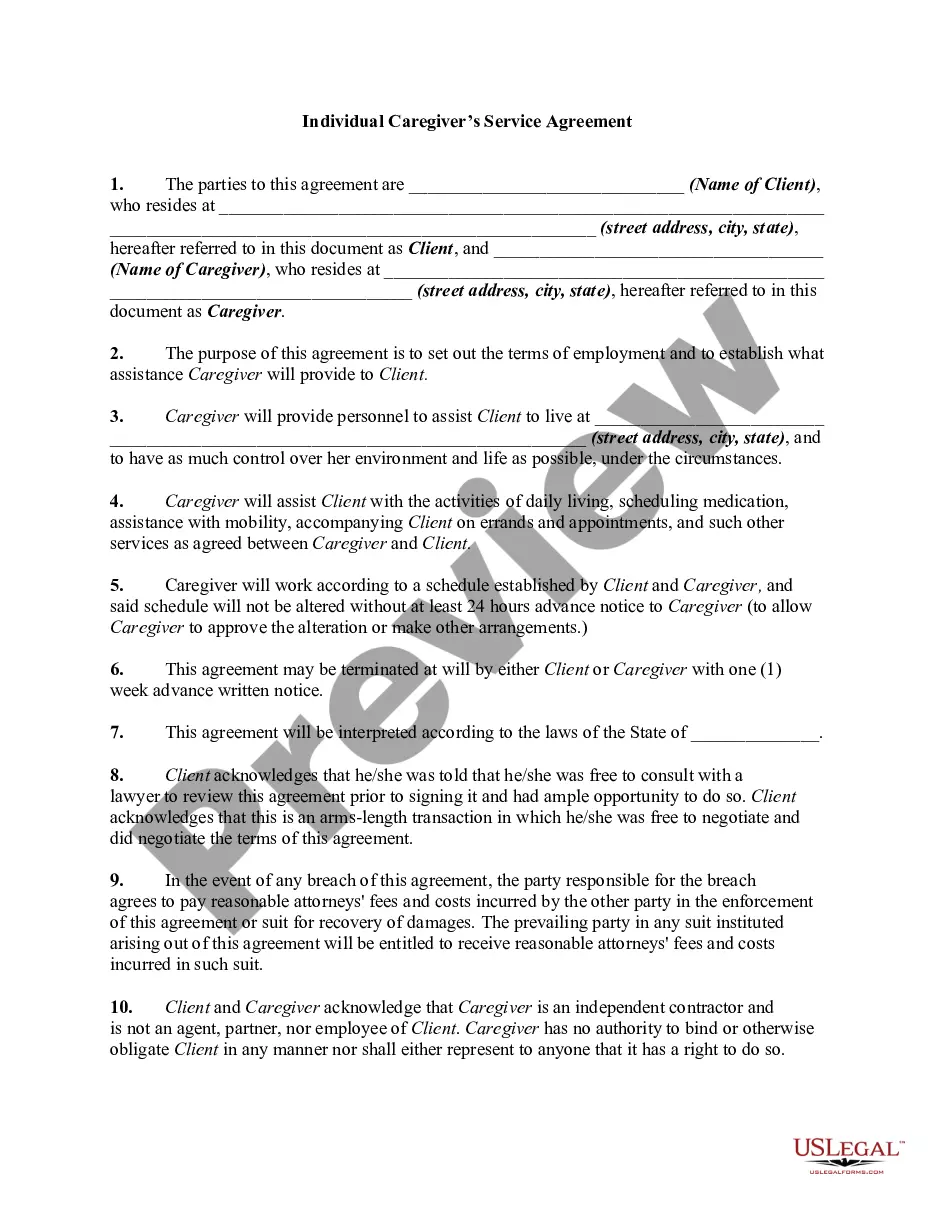


Get your form ready online
Our built-in tools help you complete, sign, share, and store your documents in one place.
Make edits, fill in missing information, and update formatting in US Legal Forms—just like you would in MS Word.
Download a copy, print it, send it by email, or mail it via USPS—whatever works best for your next step.
Sign and collect signatures with our SignNow integration. Send to multiple recipients, set reminders, and more. Go Premium to unlock E-Sign.
If this form requires notarization, complete it online through a secure video call—no need to meet a notary in person or wait for an appointment.
We protect your documents and personal data by following strict security and privacy standards.

Make edits, fill in missing information, and update formatting in US Legal Forms—just like you would in MS Word.

Download a copy, print it, send it by email, or mail it via USPS—whatever works best for your next step.

Sign and collect signatures with our SignNow integration. Send to multiple recipients, set reminders, and more. Go Premium to unlock E-Sign.

If this form requires notarization, complete it online through a secure video call—no need to meet a notary in person or wait for an appointment.

We protect your documents and personal data by following strict security and privacy standards.
Looking for another form?









Form popularity
FAQ
Carter famously said, 'there are only four kinds of people in the world: those who have been caregivers, those who are currently caregivers, those who will be caregivers and those who will need caregivers. ' Her point was that caregiving is a nearly universal experience.
4 legal documents every family caregiver needs A Will. A will is one of the most important legal documents that family caregivers should have. Advance Health Care Plan. Durable Power of Attorney for Health Care. Durable Power of Attorney for Finances.
The most common type of caregiver is often the most accessible one: the family caregiver. This is because they are typically the individuals who love an aging individual the most and are closest in both emotional care and physical proximity.
In conclusion, there are 4 types of caregivers: family caregivers, professional caregivers, volunteer caregivers, and informal caregivers. Each caregiver faces unique challenges, including physical and emotional exhaustion, financial strain, and balancing personal and caregiving responsibilities.
In conclusion, there are 4 types of caregivers: family caregivers, professional caregivers, volunteer caregivers, and informal caregivers. Each caregiver faces unique challenges, including physical and emotional exhaustion, financial strain, and balancing personal and caregiving responsibilities.
Start with a warm, friendly greeting to create a positive first impression. For example: ``Hello, my name is (Your Name). It's nice to meet you.'' Clearly explain your role as a caregiver, so the person understands your purpose.
These five principles are safety, dignity, independence, privacy, and communication. Nurse assistants keep these five principles in mind as they perform all of their duties and actions for the patients in their care.
Information about the care recipient and their signature are also required. For bonding claims, you must provide documentation showing proof of relationship between you and the child (e.g., a copy of the child's birth certificate, adoptive placement agreement, or foster care placement record).
Claimants who have received PFL benefits from NYSIF will receive a 1099-G form by January 31 each year. Box 1 of the 1099-G will provide the claimant's total PFL benefit payments for the previous year.
FMLA: Forms Employee's serious health condition, form WH-380-E - Use when a leave request is due to the medical condition of the employee. Family member's serious health condition, form WH-380-F - Use when a leave request is due to the medical condition of the employee's family member.
