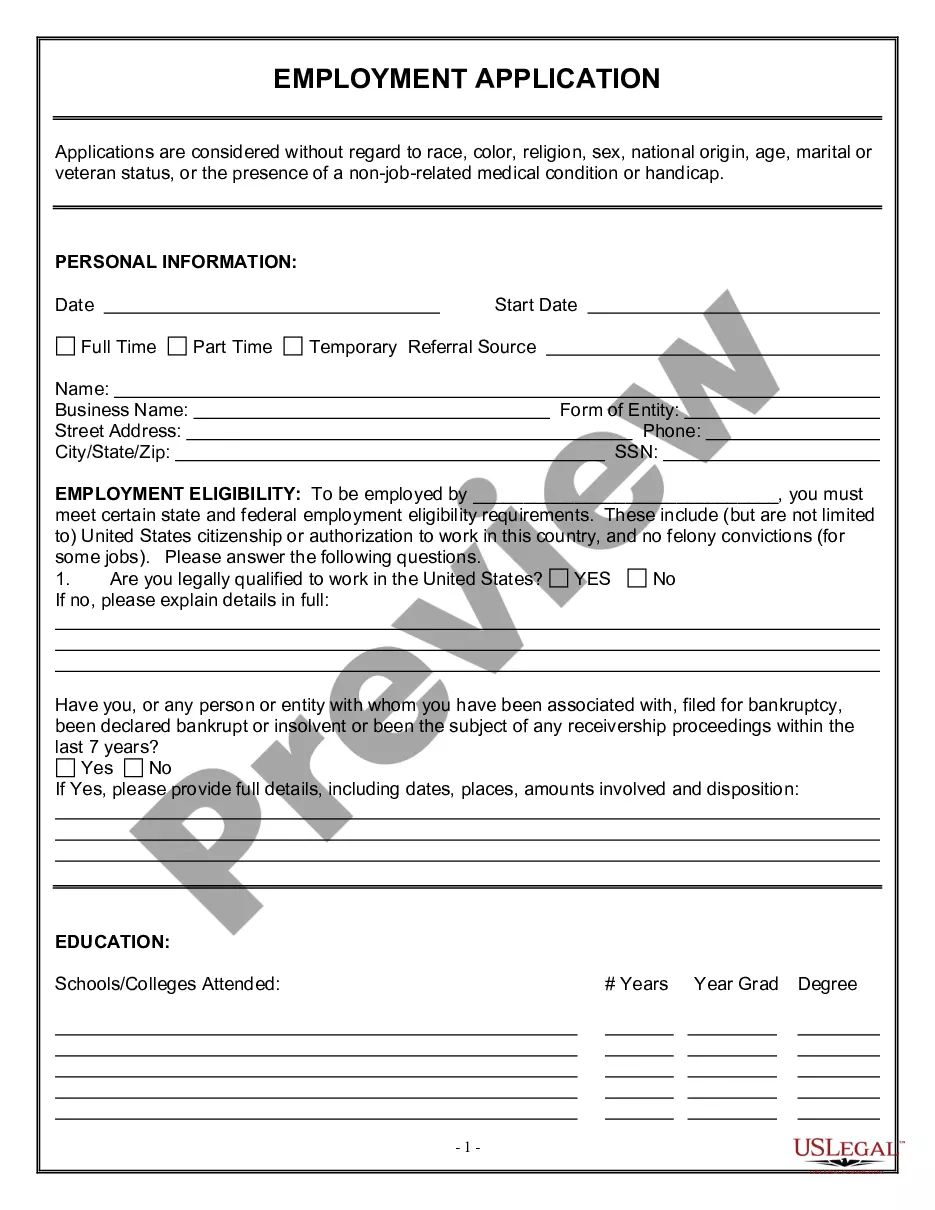
Employee Consent Form Personal Information In California
Description
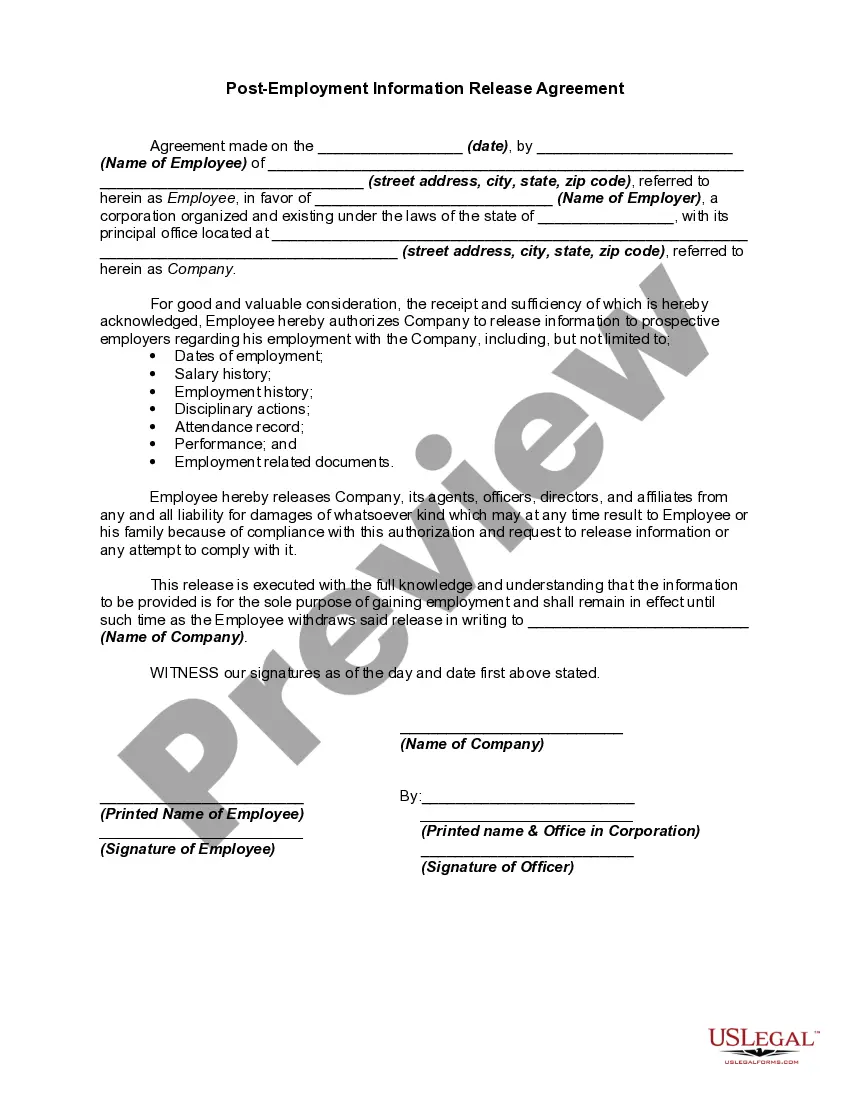
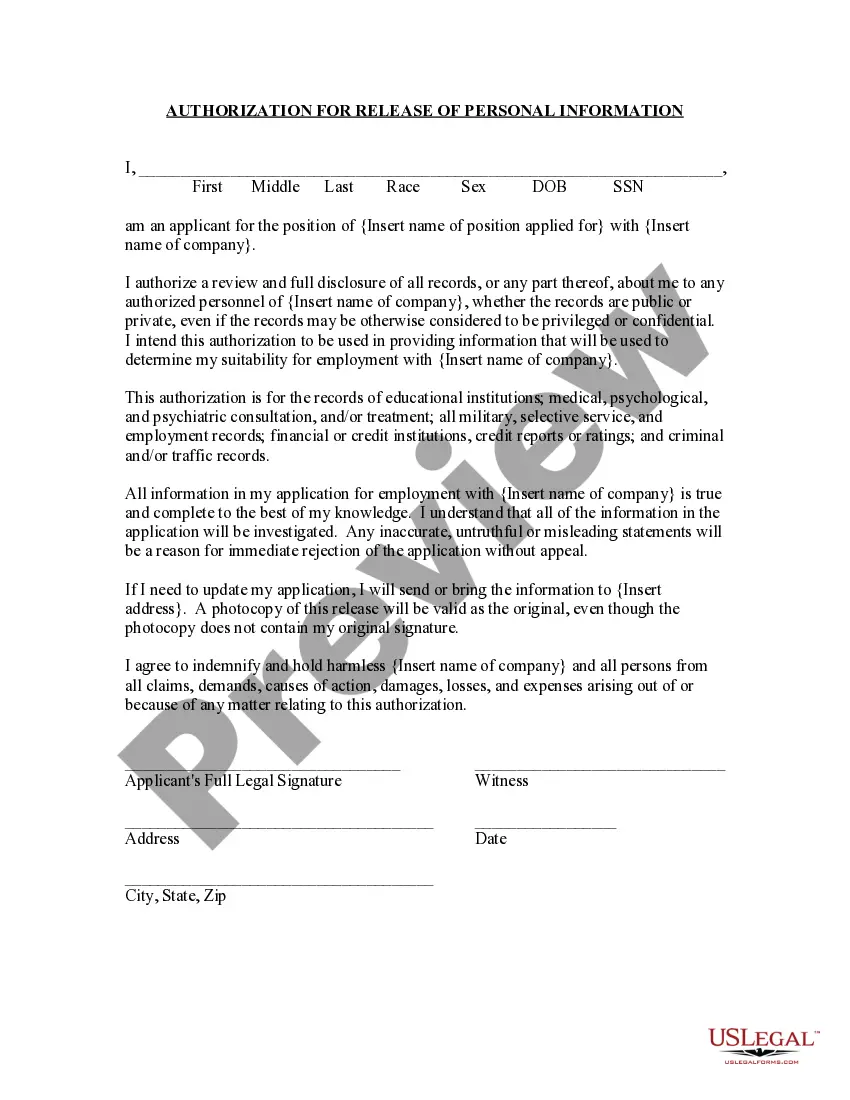
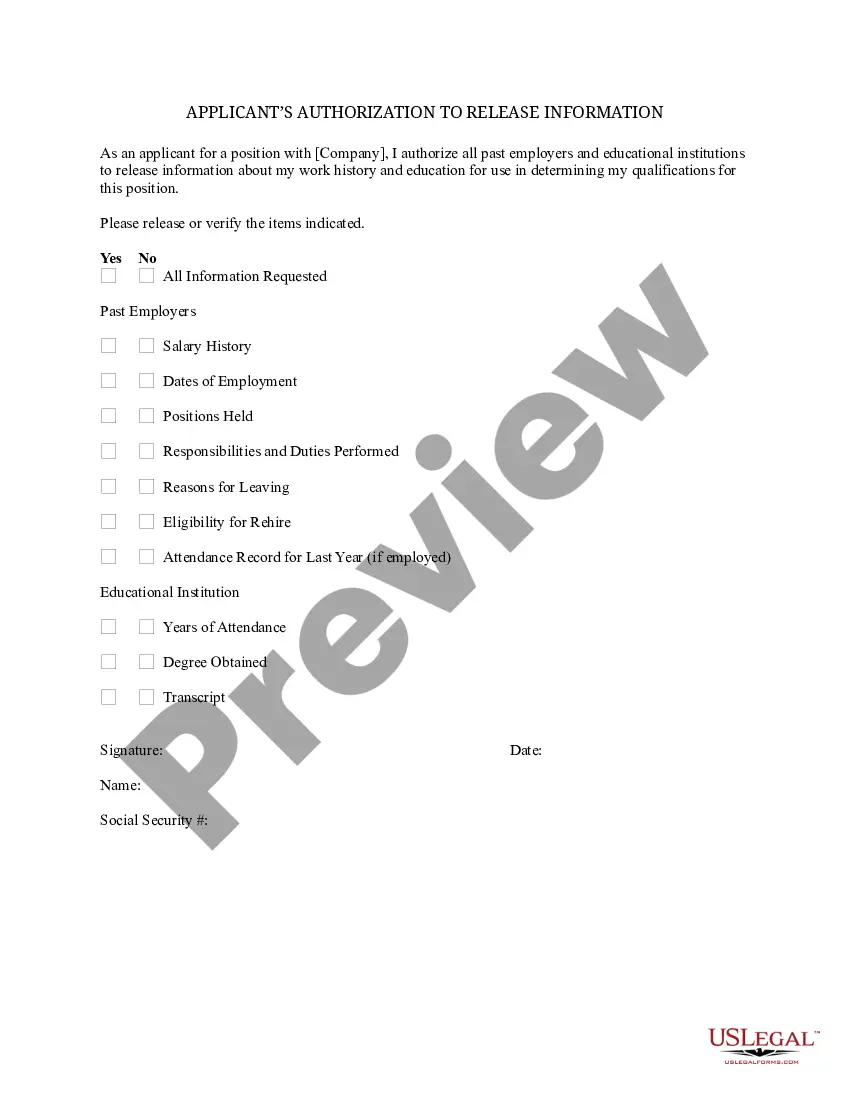
Get your form ready online
Our built-in tools help you complete, sign, share, and store your documents in one place.
Make edits, fill in missing information, and update formatting in US Legal Forms—just like you would in MS Word.
Download a copy, print it, send it by email, or mail it via USPS—whatever works best for your next step.
Sign and collect signatures with our SignNow integration. Send to multiple recipients, set reminders, and more. Go Premium to unlock E-Sign.
If this form requires notarization, complete it online through a secure video call—no need to meet a notary in person or wait for an appointment.
We protect your documents and personal data by following strict security and privacy standards.

Make edits, fill in missing information, and update formatting in US Legal Forms—just like you would in MS Word.

Download a copy, print it, send it by email, or mail it via USPS—whatever works best for your next step.

Sign and collect signatures with our SignNow integration. Send to multiple recipients, set reminders, and more. Go Premium to unlock E-Sign.

If this form requires notarization, complete it online through a secure video call—no need to meet a notary in person or wait for an appointment.

We protect your documents and personal data by following strict security and privacy standards.
Looking for another form?

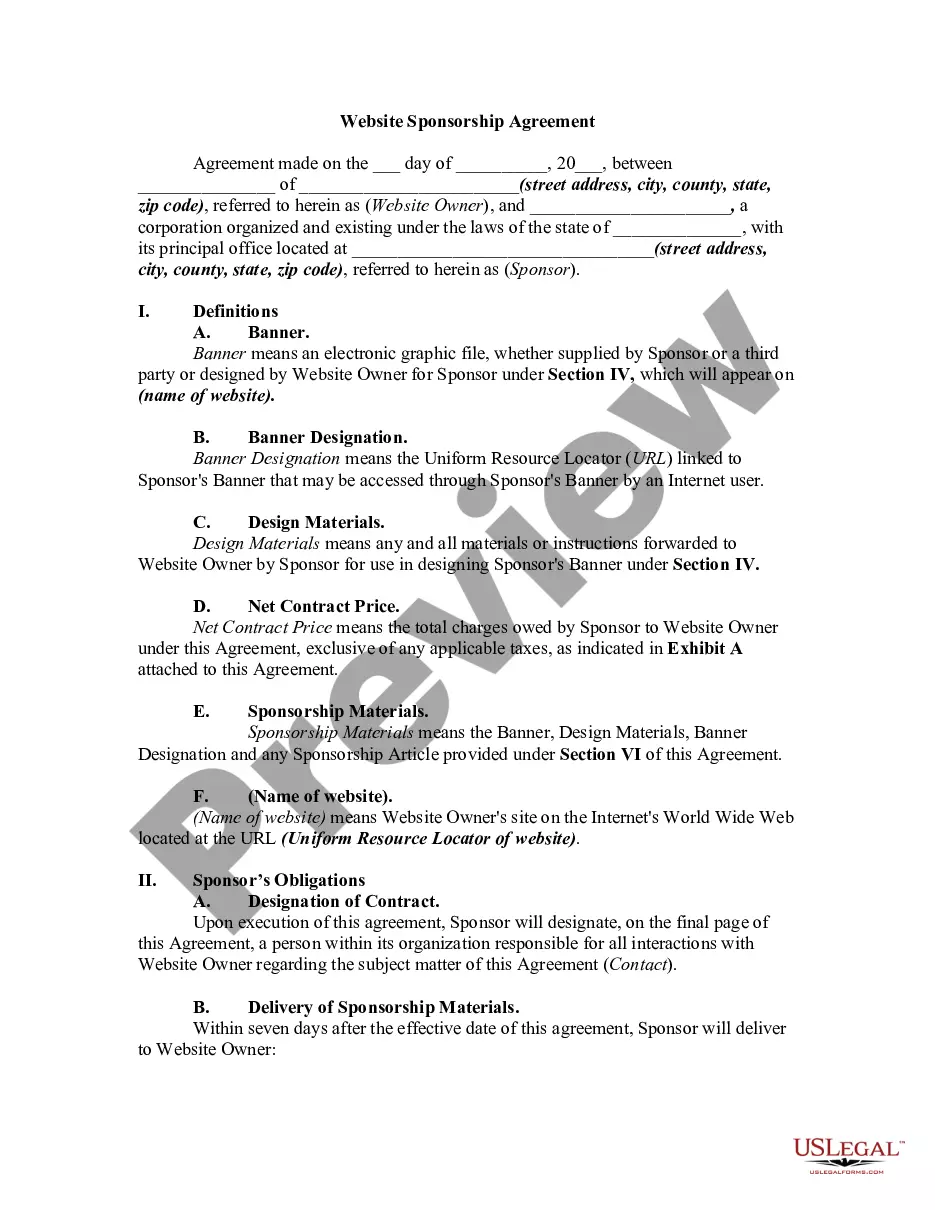




Form popularity
FAQ
A "Confidential" employee is defined by California Government Code §3540.1(c) as any employee who is required to develop or present management positions with respect to employer-employee relations or whose duties normally require access to confidential information that is used to contribute significantly to the ...
“Personal information” is information about a natural person that identifies or describes an individual, including, but not limited to, the individual's name, social security number, physical description, home address, home telephone number, education, financial matters, and medical or employment history, readily ...
The CCPA applies to a worker's personal information, meaning any data that can be linked to an individual worker, like personal IDs, demographics, employment-related data, biometric data, social media data, geolocation data, audio data, and inferences made about the worker's characteristics and abilities.
May I voluntarily disclose my salary history information to a prospective employer? Pursuant to Labor Code section 432.3, an applicant may voluntarily disclose his or her salary history information to a prospective employer, as long as it is being done without prompting from the prospective employer.
An employer is required to comply with only one request per year by a former employee to inspect or receive a copy of his or her personnel records. A former employee may receive a copy by mail if he or she reimburses the employer for actual postal expenses.
The California Privacy Rights Act (CPRA) is a US data privacy law targeted at businesses based or operating in the state of California. It was adopted via referendum and went into effect on January 1, 2023. At its core, it aims to protect data privacy rights, including those of employees and consumers.
GC section 6254(c), Civil Code section 1798, and Penal Code section 832.7 an 502 protect the confidentiality of personnel records and strictly limit their disclosure.
The California Employee Privacy Notice is a critical document that outlines how a company manages the PI of its California-based employees, contractors, former employees, and job applicants—sometimes called “HR subjects.” This notice serves as a resource for informing individuals about their rights under California law ...
Right to limit use and disclosure of sensitive personal information: You can direct businesses to only use your sensitive personal information (for example, your social security number, financial account information, your precise geolocation data, or your genetic data) for limited purposes, such as providing you with ...