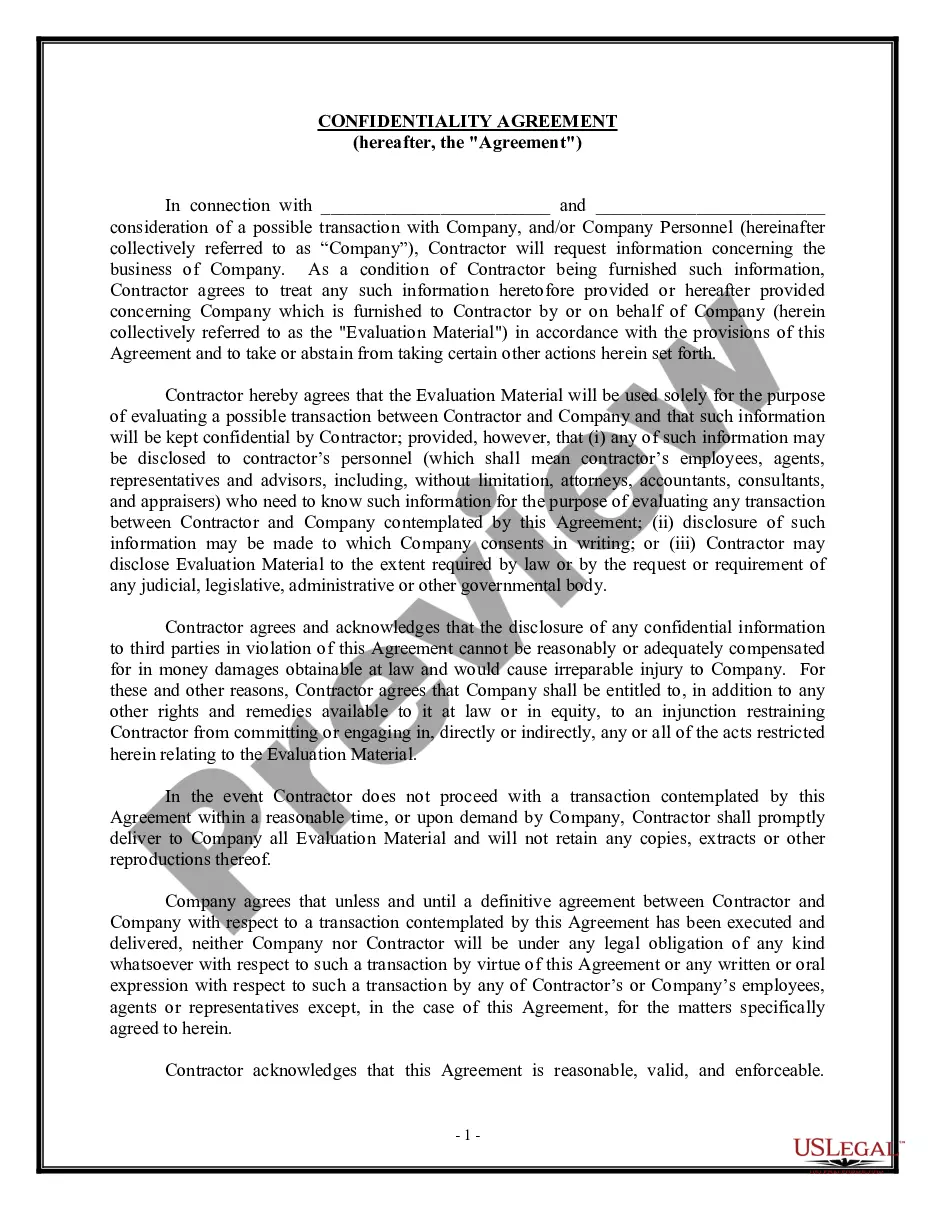
Non Disclosure Agreement Vs Confidentiality Agreement In Los Angeles
Description
Get your form ready online
Our built-in tools help you complete, sign, share, and store your documents in one place.
Make edits, fill in missing information, and update formatting in US Legal Forms—just like you would in MS Word.
Download a copy, print it, send it by email, or mail it via USPS—whatever works best for your next step.
Sign and collect signatures with our SignNow integration. Send to multiple recipients, set reminders, and more. Go Premium to unlock E-Sign.
If this form requires notarization, complete it online through a secure video call—no need to meet a notary in person or wait for an appointment.
We protect your documents and personal data by following strict security and privacy standards.

Make edits, fill in missing information, and update formatting in US Legal Forms—just like you would in MS Word.

Download a copy, print it, send it by email, or mail it via USPS—whatever works best for your next step.

Sign and collect signatures with our SignNow integration. Send to multiple recipients, set reminders, and more. Go Premium to unlock E-Sign.

If this form requires notarization, complete it online through a secure video call—no need to meet a notary in person or wait for an appointment.

We protect your documents and personal data by following strict security and privacy standards.
Looking for another form?


Form popularity
FAQ
As a general concept, non-disclosure agreements, often referred to as NDAs, are agreements between parties that are used to ensure that certain information will remain confidential.
NDA vs confidentiality agreement: What is the difference? A confidentiality agreement binds all parties to keep secret information confidential, while an NDA upholds secrecy by creating a confidential relationship between the parties who sign it.
A confidentiality agreement (CA) (also known as Nondisclosure Agreement) is used when the owner of confidential information plans to disclose that information to another party and wishes the information to remain confidential.
An NDA that prevents an employee from working in their profession or field of trade may be considered a non-compete agreement. In California, non-compete agreements are more rarely enforceable. NDAs can also not be used to prevent the reporting of illegal activity or to silence whistleblowers.
Confidentiality Agreement is used when more secrecy is required. Non-disclosure implies you must not disclose personal or private information. However, keeping confidential implies you should be more proactive in making sure information is kept secret.
Completing the Confidentiality Agreement The "Receiving Party" is the person or company who receives the confidential information and is obligated to keep it secret. You'll need to fill in information specific to your circumstances in the spaces provided, such as the parties' names and addresses.
What is the difference between a DPA and a NDA? A DPA (Data Processing Agreement) outlines terms for data processing, focusing on ensuring data protection and privacy compliance. An NDA (Non-Disclosure Agreement) is a contract where parties agree not to disclose confidential information they've shared with each other.
Whereas confidentiality agreements are typically devised in employment or personal situations to protect sensitive information, NDAs are often used in business and legal settings to protect trade secrets, client lists, and financial data.
circumvention agreement ensures that the intermediaries who brought the buyer and seller together are not excluded from future negotiations, whilst a nondisclosure agreement is a contract by which a party receiving information from another party agrees to keep such information confidential.
A DPA outlines how you plan to use personal data and is especially important for clarifying the purpose and use of data as well as roles and responsibilities with an external organization or contractor. The workflow on this page will lead you through the process.
