Nondisclosure Agreement For In Wake
Description

Get your form ready online
Our built-in tools help you complete, sign, share, and store your documents in one place.
Make edits, fill in missing information, and update formatting in US Legal Forms—just like you would in MS Word.
Download a copy, print it, send it by email, or mail it via USPS—whatever works best for your next step.
Sign and collect signatures with our SignNow integration. Send to multiple recipients, set reminders, and more. Go Premium to unlock E-Sign.
If this form requires notarization, complete it online through a secure video call—no need to meet a notary in person or wait for an appointment.
We protect your documents and personal data by following strict security and privacy standards.

Make edits, fill in missing information, and update formatting in US Legal Forms—just like you would in MS Word.

Download a copy, print it, send it by email, or mail it via USPS—whatever works best for your next step.

Sign and collect signatures with our SignNow integration. Send to multiple recipients, set reminders, and more. Go Premium to unlock E-Sign.

If this form requires notarization, complete it online through a secure video call—no need to meet a notary in person or wait for an appointment.

We protect your documents and personal data by following strict security and privacy standards.
Looking for another form?







Form popularity
FAQ
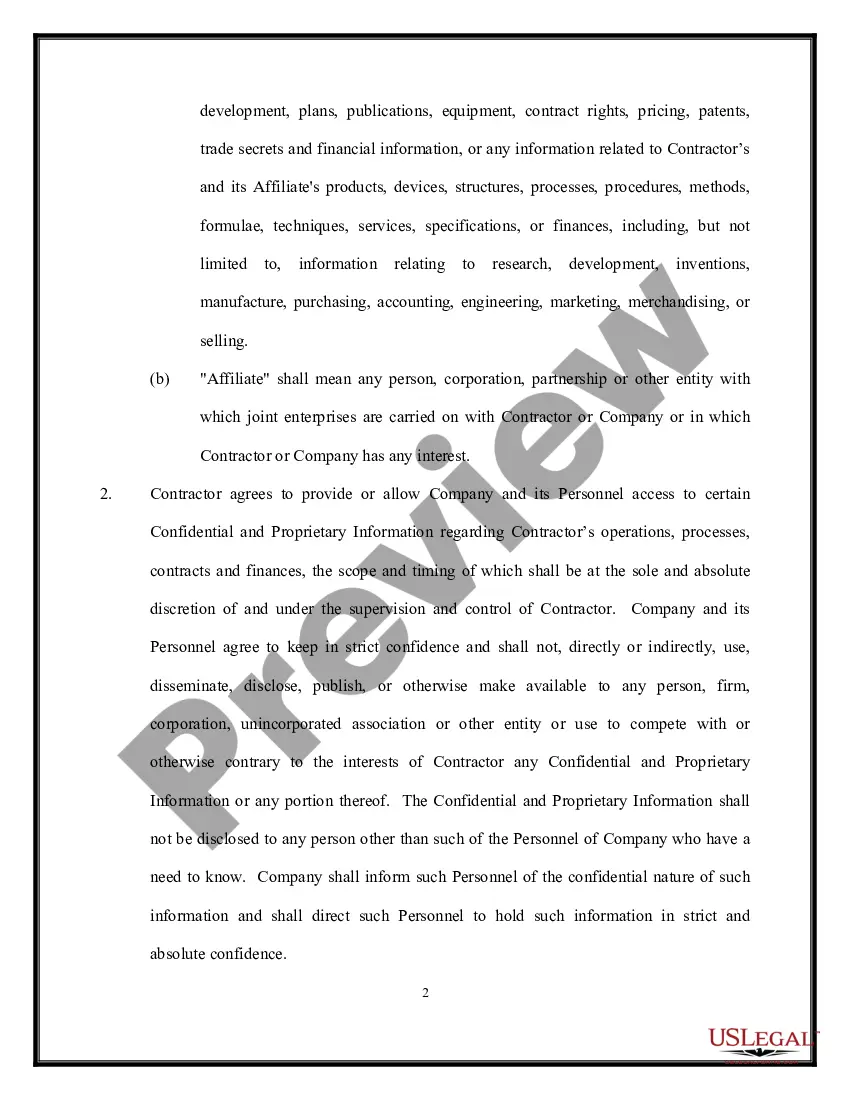
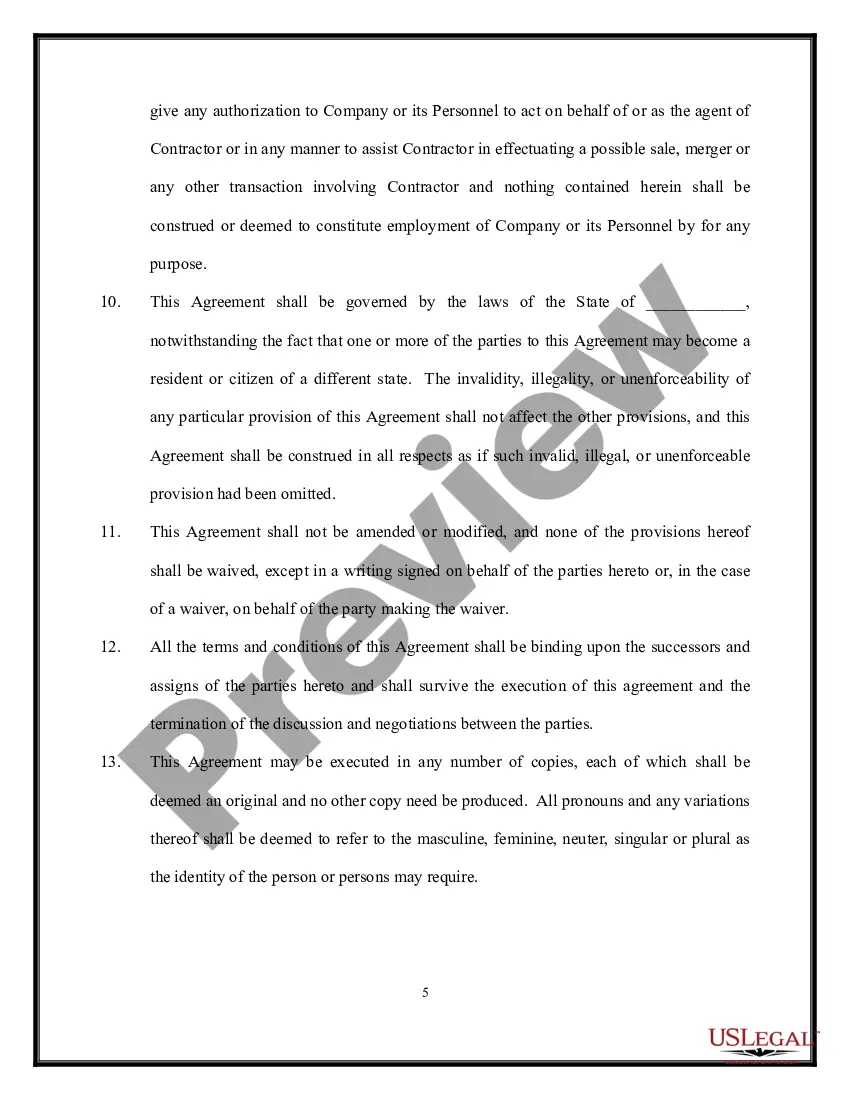
An NDA could be unenforceable if it is too broad, is not for a defined time period, covers information that is not confidential, or asks for illegal conduct.
There are three types of NDAs: unilateral, bilateral, and multilateral. Read on to learn when you should use each type. You'll also learn how to use a contract management tool like Ironclad to draft and manage them.
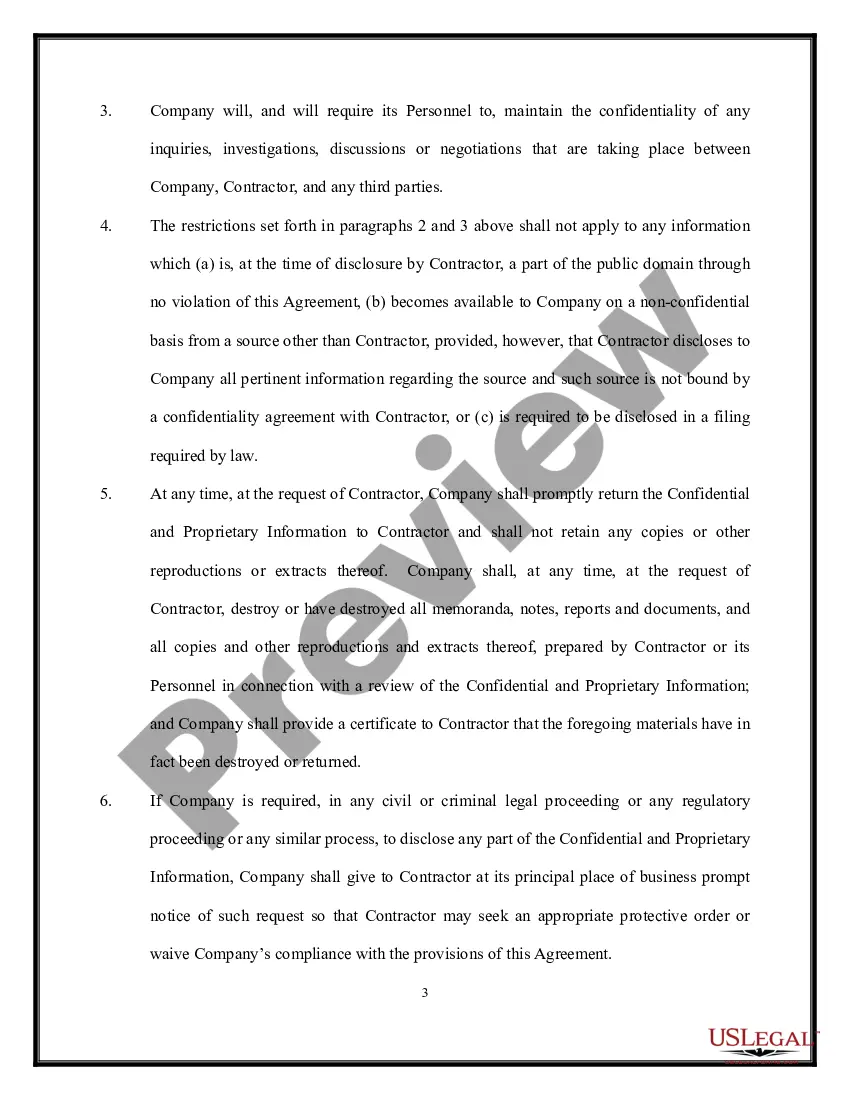
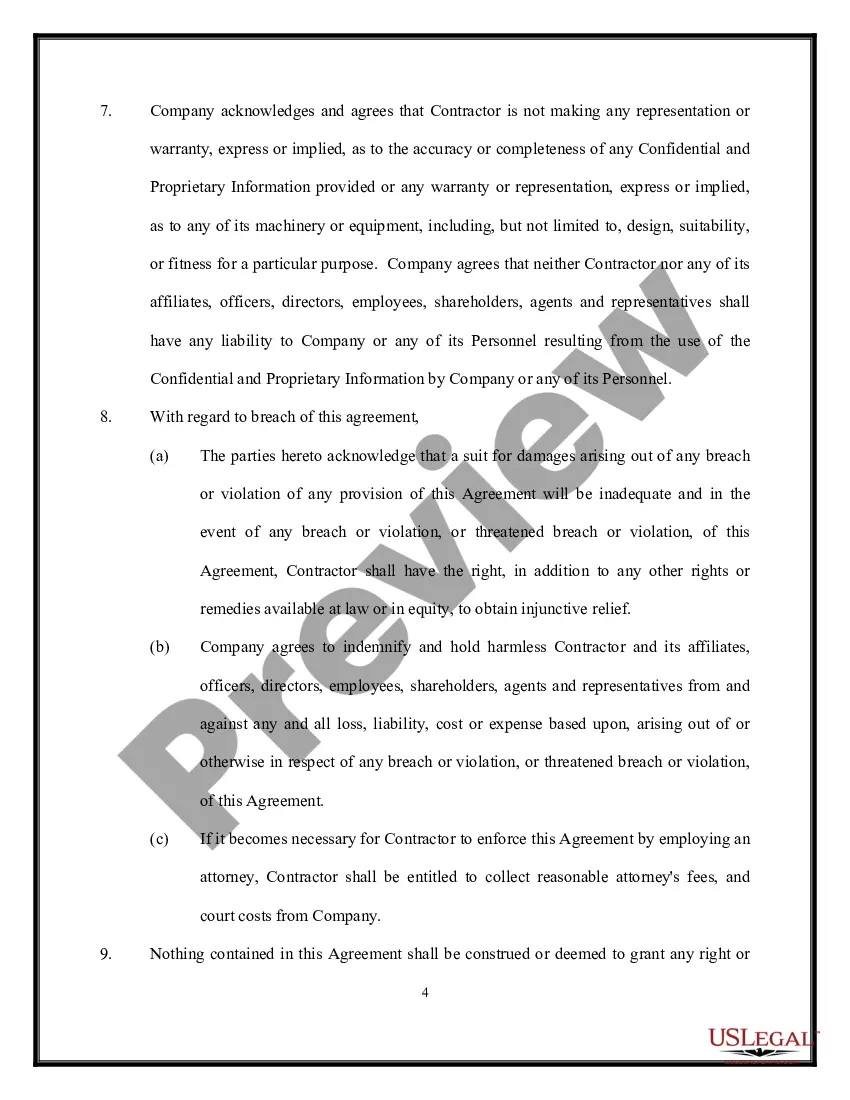
The key elements of Non-Disclosure Agreements: Identification of the parties. Definition of what is deemed to be confidential. The scope of the confidentiality obligation by the receiving party. The exclusions from confidential treatment. The term of the agreement.
Inevitably, there will be times when you or someone within the business needs to share private information with another individual or company. An NDA is a good idea any time you share something valuable about your business that you don't want the other person to disclose or outright steal.
Some commonly employed exceptions are information that the recipient can demonstrate that they had prior to receipt of information from the discloser, information that becomes known to the public through no fault of the recipient, information that becomes known to the recipient from a third party that has a lawful ...
Exclusions: These are the types of information which do not need to be kept confidential. This might include public knowledge, previously disclosed details, or information someone knew before entering a business or financial relationship with a company or firm.
1. You are a danger to yourself and threaten to harm yourself (e.g., suicidal). 2. You threaten to harm another specific person (e.g., assault, ).
There are instances where the law requires an individual to disclose information that would otherwise be protected under the seal of their NDA. For example, during litigation or an investigation, a court may order someone to speak on certain experiences or observations they have had when at work.
How to get out of an NDA. Check for a termination clause. Check the language. Determine if your content is “public domain.” If the content your NDA covers is now known by the public, you may be able to make a case to nullify your NDA from any specific issuer.
