Nondisclosure Confidentiality Agreement With Attorney In California
Description



Form popularity
FAQ
California Laws on Non-Disclosure Agreements Additionally, an NDA must be reasonable in scope and duration to be enforceable, and it must not be contrary to public policy or violate any laws. The California Uniform Trade Secrets Act (CUTSA) also provides specific requirements for NDAs that protect trade secrets.
Various whistleblower laws protect employees who have signed non-disclosure agreements and find whistleblowing necessary to right the wrongs of their employers. For instance, California law deems unenforceable NDAs that require employees to keep quiet about harassment, discrimination, or unlawful workplace activity.
NDAs should have a clear description of the purpose, parties, and duration they cover. Specifying time limits or periods that your employees are subject to confidentiality is particularly important to ensure your NDA is enforceable in California. The typical time period is one to five years.
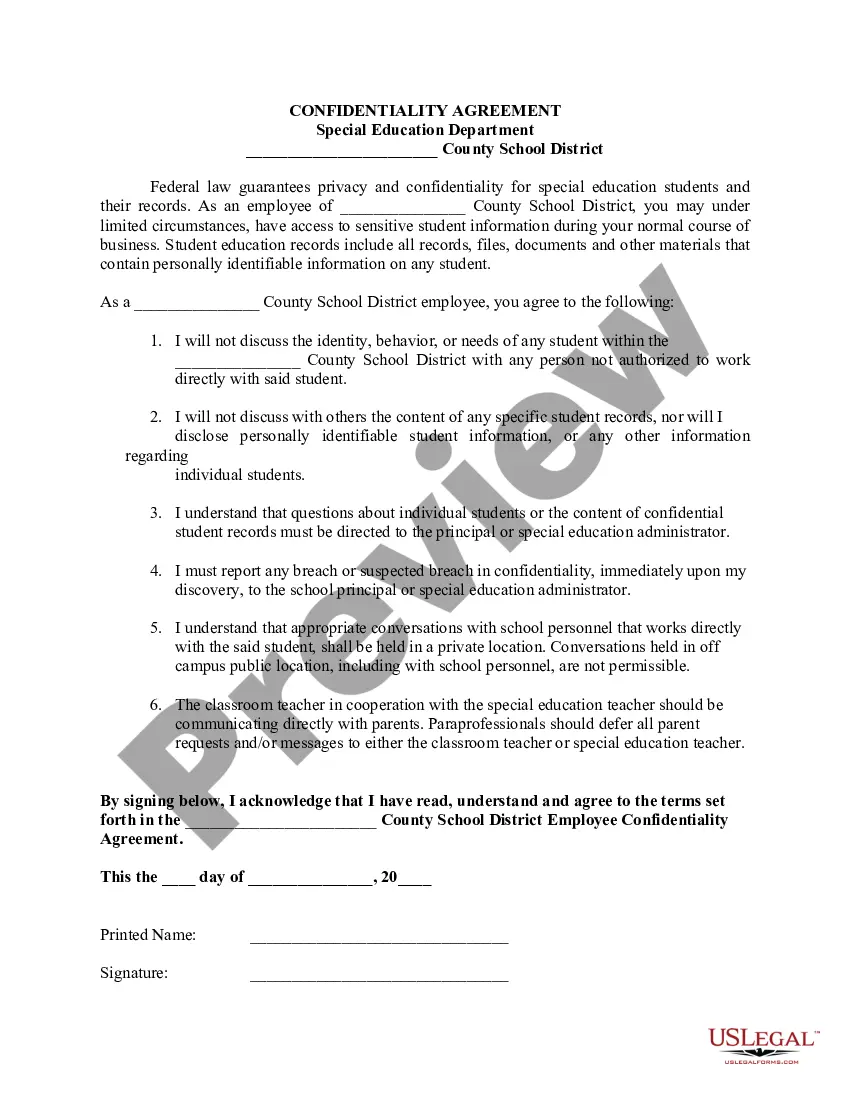
Five other key features must be included in your NDA to ensure it's legally binding, including a description of confidential information, obligations of the parties involved, any exclusions, the term of the agreement and consequences of a breach.
Starting January 1, 2025, businesses settling disputes with consumers cannot condition any refund or other consideration on a consumer agreeing not to make statements about the business, regardless of the sentiment or accuracy of those statements. The text of the new Cal. Civ. Code § 1748.50 can be found here.
Typically, a legal professional writing the NDA will complete these steps: Step 1 - Describe the scope. Which information is considered confidential? ... Step 2 - Detail party obligations. Step 3 - Note potential exclusions. Step 4 - Set the term. Step 5 - Spell out consequences.
The key elements of Non-Disclosure Agreements: Identification of the parties. Definition of what is deemed to be confidential. The scope of the confidentiality obligation by the receiving party. The exclusions from confidential treatment. The term of the agreement.
Typically, a legal professional writing the NDA will complete these steps: Step 1 - Describe the scope. Which information is considered confidential? ... Step 2 - Detail party obligations. Step 3 - Note potential exclusions. Step 4 - Set the term. Step 5 - Spell out consequences.
You do not need a lawyer to create and sign a non-disclosure agreement. However, if the information you are trying to protect is important enough to warrant an NDA, you may want to have the document reviewed by someone with legal expertise.
