Roommate Form Contract With Landlord In Queens
Description

Get your form ready online
Our built-in tools help you complete, sign, share, and store your documents in one place.
Make edits, fill in missing information, and update formatting in US Legal Forms—just like you would in MS Word.
Download a copy, print it, send it by email, or mail it via USPS—whatever works best for your next step.
Sign and collect signatures with our SignNow integration. Send to multiple recipients, set reminders, and more. Go Premium to unlock E-Sign.
If this form requires notarization, complete it online through a secure video call—no need to meet a notary in person or wait for an appointment.
We protect your documents and personal data by following strict security and privacy standards.

Make edits, fill in missing information, and update formatting in US Legal Forms—just like you would in MS Word.

Download a copy, print it, send it by email, or mail it via USPS—whatever works best for your next step.

Sign and collect signatures with our SignNow integration. Send to multiple recipients, set reminders, and more. Go Premium to unlock E-Sign.

If this form requires notarization, complete it online through a secure video call—no need to meet a notary in person or wait for an appointment.

We protect your documents and personal data by following strict security and privacy standards.
Looking for another form?



Form popularity
FAQ
The eviction process can take 30 - 45 days, or longer. The time starts from when you have eviction court forms delivered to your tenant to the time they must move out. Choose any box, below, to learn more about the eviction process and get step-by-step instructions.
It takes about 14 to 90 days from the issuance of the Notice to Vacate, depending on the reason for eviction and the lease agreement.
When only one tenant is named on a lease, the tenant has the right to take in a roommate and the roommate's dependent children. When two or more tenants are named on the lease, the number of tenants and roommates cannot exceed the number of tenants named in the lease.
Overview. In New York State, an eviction of a tenant is lawful only if an owner has brought a court proceeding and obtained a judgment of possession from the court. A sheriff, marshal or constable can carry out a court ordered eviction. An owner may not evict a tenant by use of force or unlawful means.
New York law (RPL 235-f) allows a tenant of any private residential apartment to share their apartment with their immediate family members, one additional occupant and any dependent children of that occupant so long as the apartment is the tenant's primary residence, so long as there is only one tenant on the lease.
New York State law protects the right of tenants in privately-owned buildings to have a roommate under certain conditions. If those conditions are met, tenants do not need the permission of the landlord to have an additional occupant, and are legally allowed to have a roommate even if their lease prohibits it.
If the roommate has been there more than two years, you must give 90 days notice termination. This means your notice must be given to your roommate at least the required number of days before the termination date in the notice. Extra time is ok. A shorter time is not.
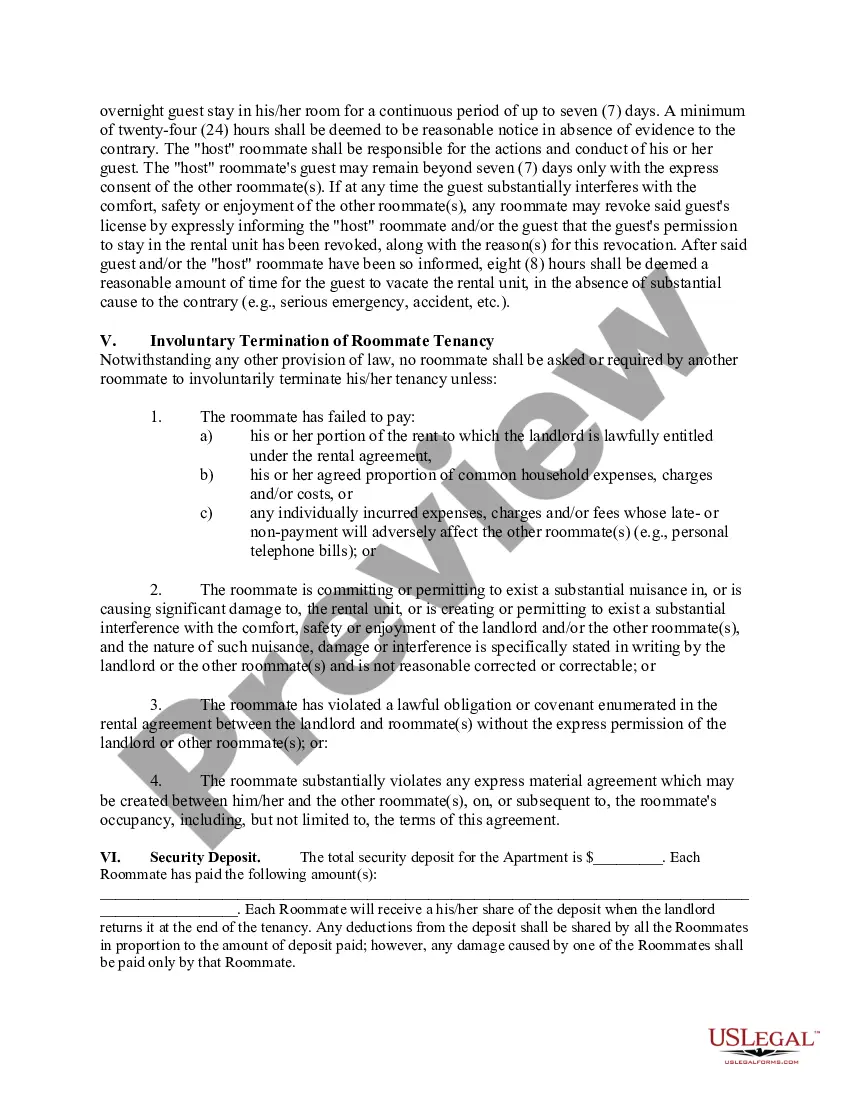
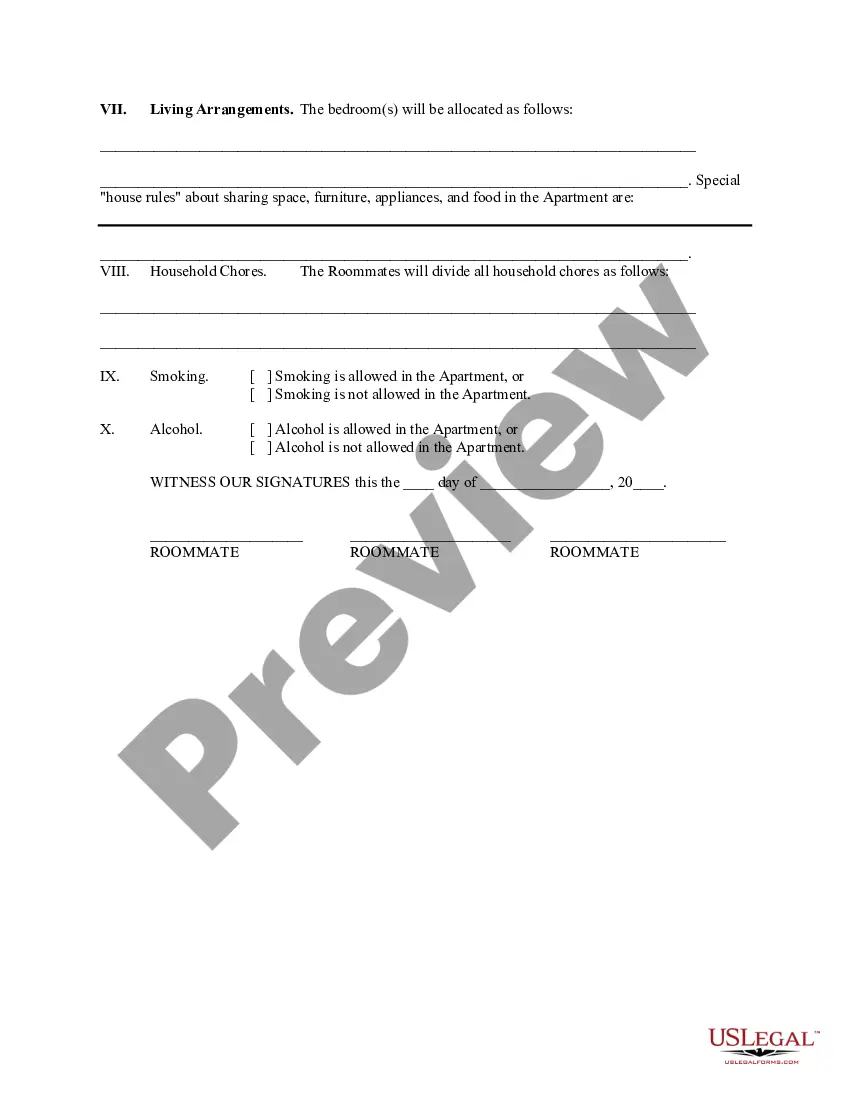
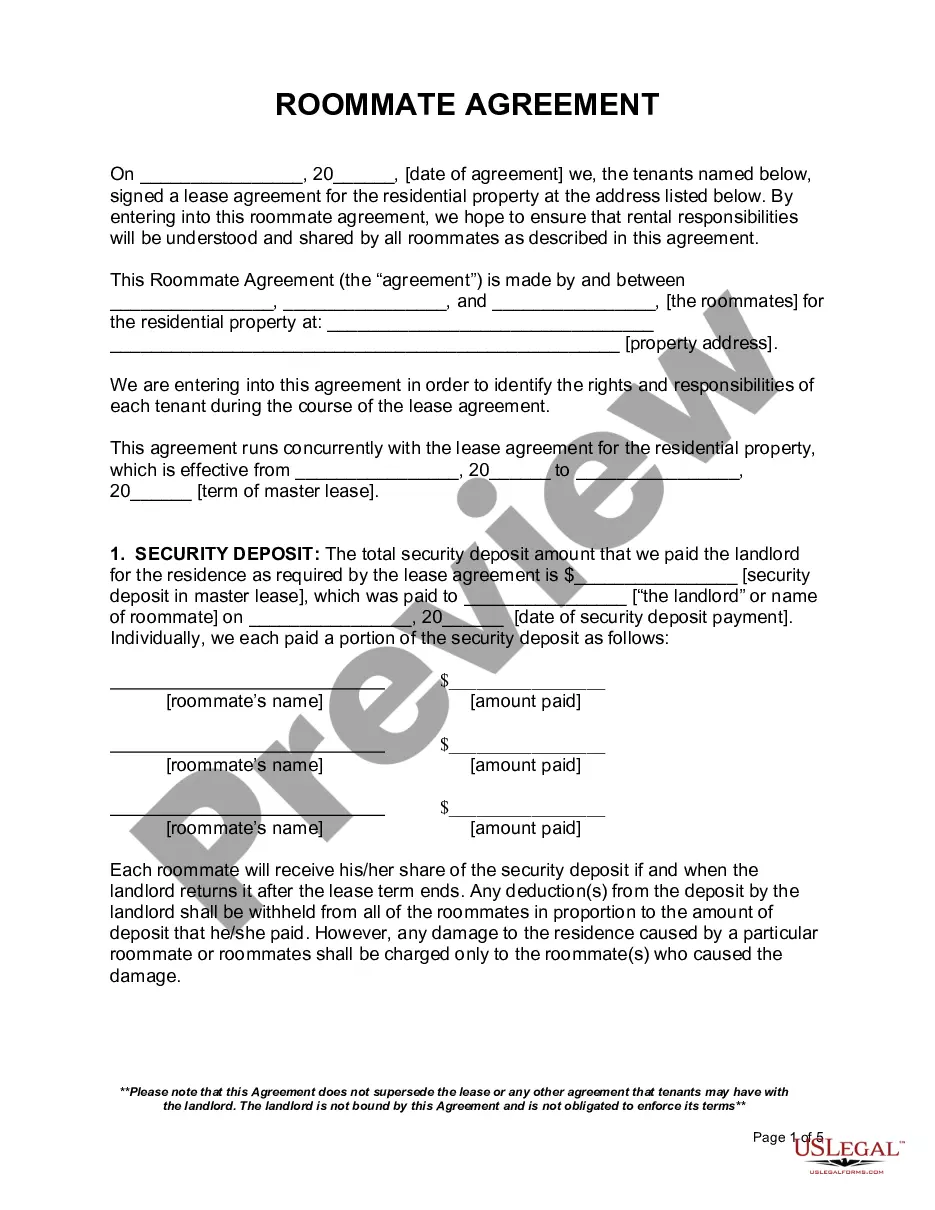
A Roommate Agreement is a written contract between roommates that outlines their rights and obligations while living together. This agreement includes house rules, maintenance duties, restricted behaviors, and more. For a Roommate Agreement to be useful, everyone sharing the household must agree to it.
Overview. In New York State, an eviction of a tenant is lawful only if an owner has brought a court proceeding and obtained a judgment of possession from the court. A sheriff, marshal or constable can carry out a court ordered eviction. An owner may not evict a tenant by use of force or unlawful means.
