Roommate Agreement Rules In Phoenix
Description

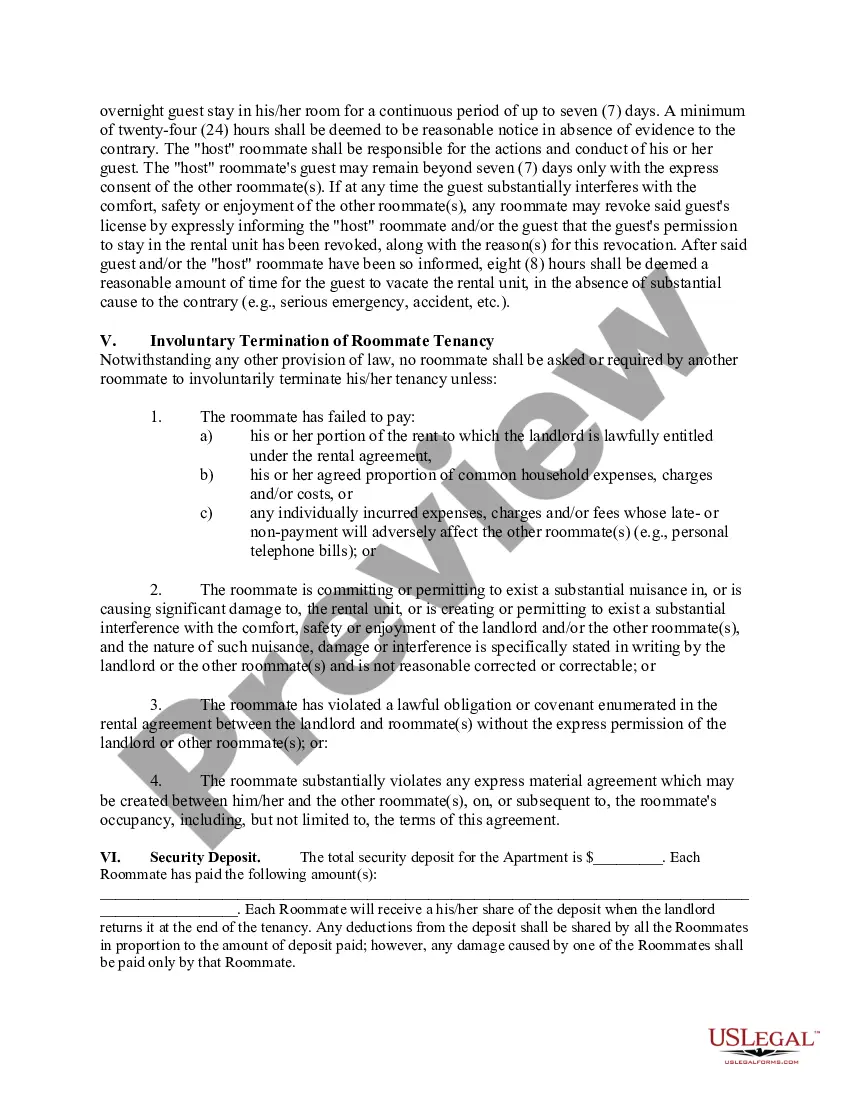
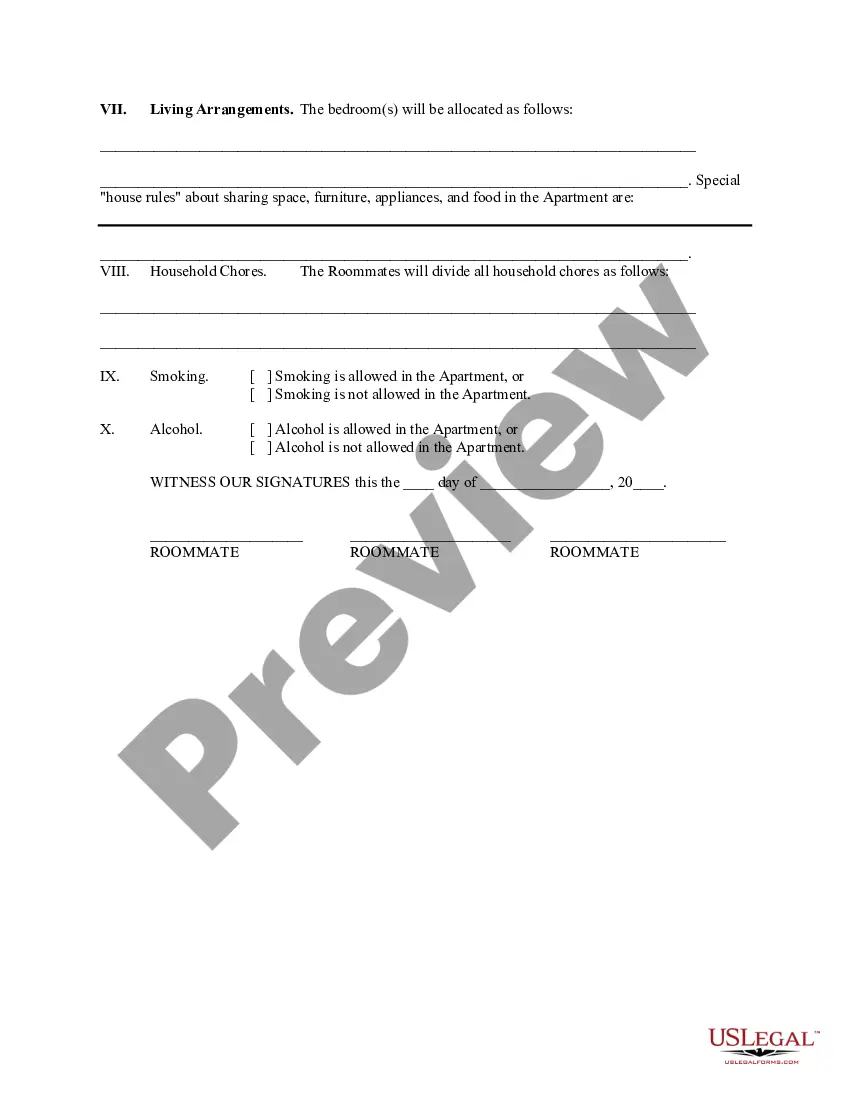
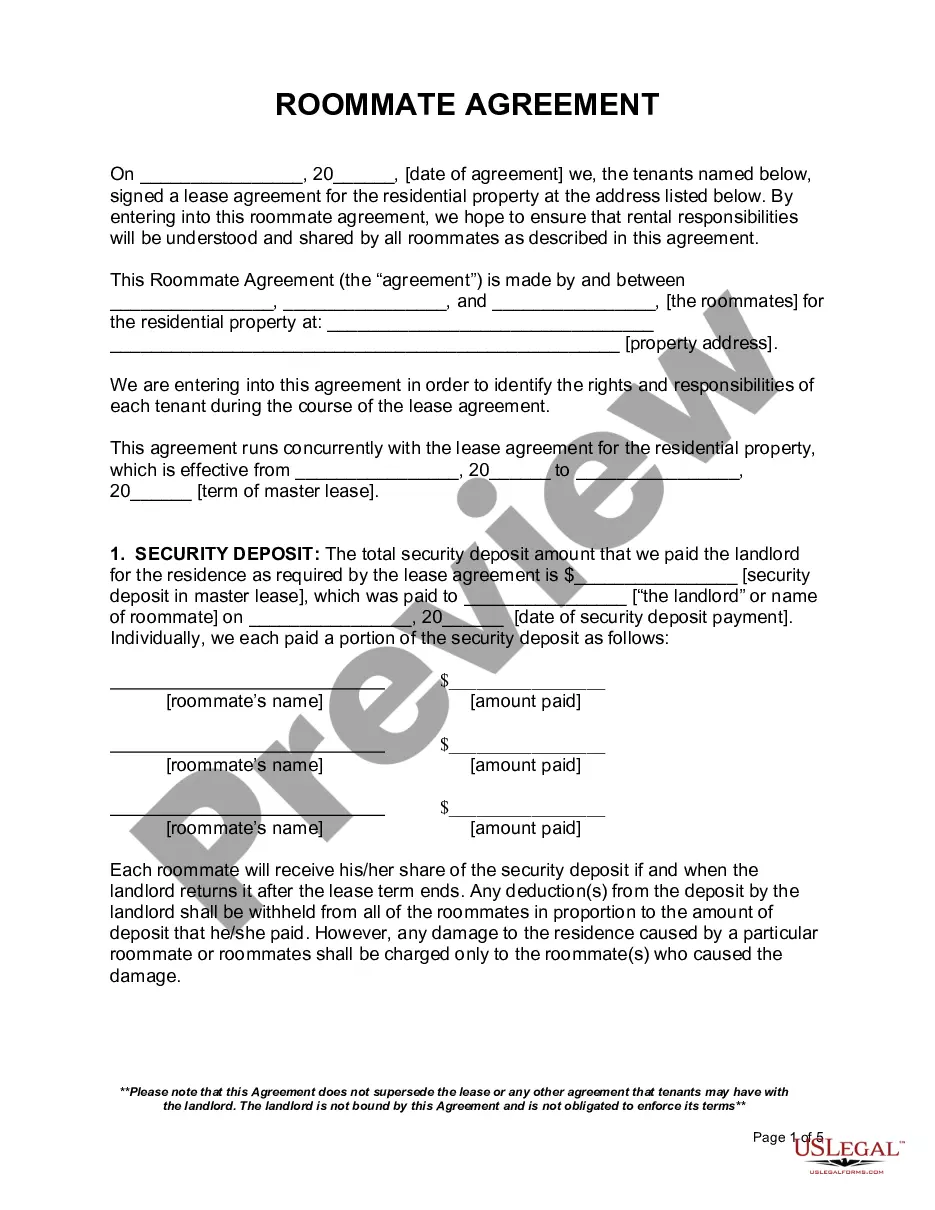
Get your form ready online
Our built-in tools help you complete, sign, share, and store your documents in one place.
Make edits, fill in missing information, and update formatting in US Legal Forms—just like you would in MS Word.
Download a copy, print it, send it by email, or mail it via USPS—whatever works best for your next step.
Sign and collect signatures with our SignNow integration. Send to multiple recipients, set reminders, and more. Go Premium to unlock E-Sign.
If this form requires notarization, complete it online through a secure video call—no need to meet a notary in person or wait for an appointment.
We protect your documents and personal data by following strict security and privacy standards.

Make edits, fill in missing information, and update formatting in US Legal Forms—just like you would in MS Word.

Download a copy, print it, send it by email, or mail it via USPS—whatever works best for your next step.

Sign and collect signatures with our SignNow integration. Send to multiple recipients, set reminders, and more. Go Premium to unlock E-Sign.

If this form requires notarization, complete it online through a secure video call—no need to meet a notary in person or wait for an appointment.

We protect your documents and personal data by following strict security and privacy standards.
Looking for another form?

Form popularity
FAQ
When you sign a joint lease, you and your roommates' names are on the same lease. Usually, your rent payments are combined, but you should ask your landlord how they prefer to receive payments. To decide if co-signing a lease is right for you, consider the benefits and drawbacks that may apply.
Arizona law states that a two person per bedroom occupancy limit is presumed to be reasonable. Depending upon the circumstances, however, such a limit may be challenged, and anything less than two persons per bedroom may violate fair housing laws by having an adverse impact against families with children.
Create a list of house rules with your roommates and agree on how you'll handle monthly rent payments. Decide how you'll be sharing food, utility, and furniture costs, and try to balance out how much each roommate spends. Use digital payment apps for splitting expenses or set up a shared bank account.
What do I include in a Roommate Agreement? Information about the property, roommates, and original lease. Term or length of the agreement. Rent responsibilities. Security deposit details. Responsibilities for utilities and household costs. House rules, roommate duties, and restrictions. Rules for termination of tenancy.
Answer: As a general rule, the answer is yes. Under the Arizona Residential Landlord and Tenant Act, a verbal rental agreement concerning the use and occupancy of a dwelling unit is just as enforceable as a written rental agreement (or lease) is (A.R.S. 33-1310(13)).
Arizona: Guests can stay for up to 29 days. California: Guests become tenants when they stay for over 14 days within six months, or seven nights in a row. Colorado: Guests become tenants after staying for over 14 days within six months.
Set Clear Boundaries: Discuss and agree on personal boundaries regarding privacy, shared spaces, and quiet hours. Be clear about what you're comfortable with. Communication: Keep communication open but limited to necessary topics. Establish Personal Space: Make your personal area distinct. Limit Shared Activities:
Arizona law (ARS § 33-1378) indicates that: “A person who is a guest of a tenant who is not named on a written lease and who remains on the premises without the permission of the tenant or the landlord is not a lawful tenant and that person's presence in or on the premises does not constitute residency or tenancy.
A roommate arrangement is when multiple adults occupy a single unit together. In most cases, the renters are not related, but siblings and cousins can be roommates as well. With a traditional roommate arrangement, all roommates share a single lease.
Golden Rule Provide your roommate with the same level of respect you would want to receive. Assume positive intent, and work together with your roommate to encourage a comfortable living atmosphere.
