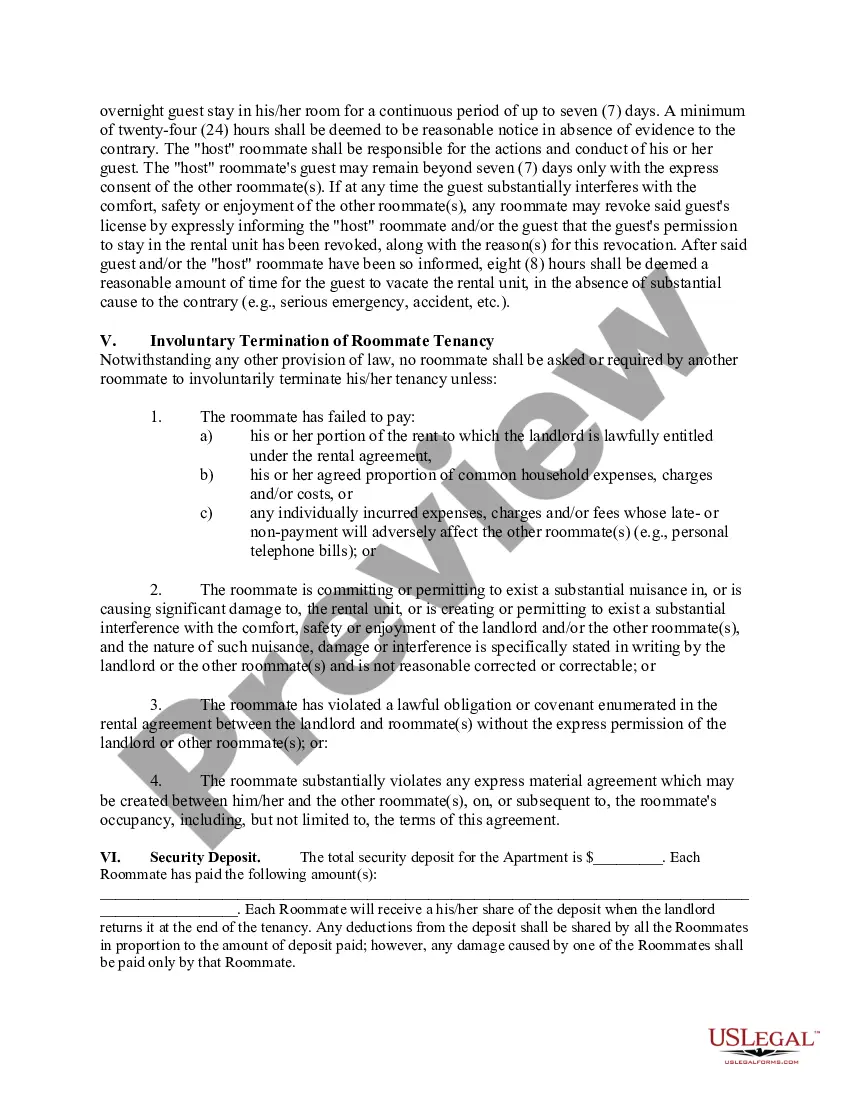
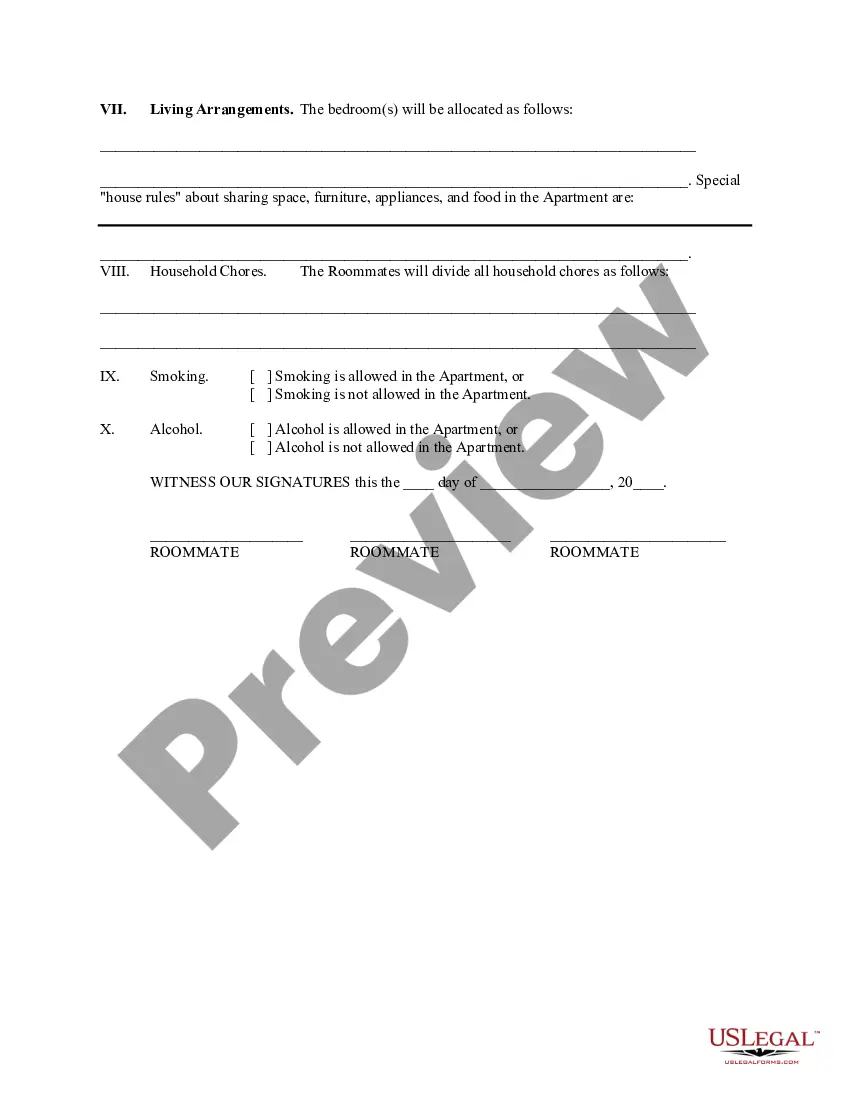
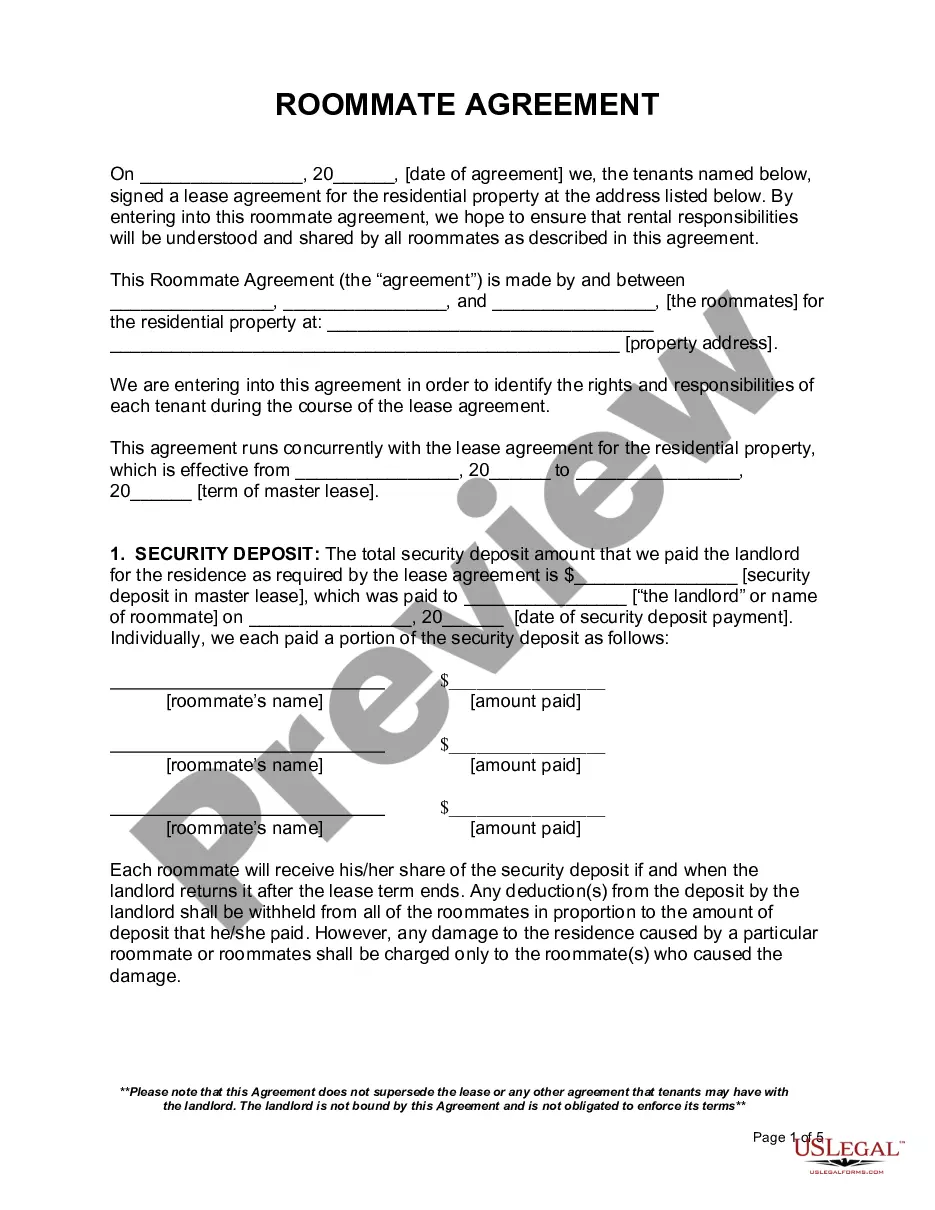
Roommate Form Contract With Parents In Fairfax
Description

Get your form ready online
Our built-in tools help you complete, sign, share, and store your documents in one place.
Make edits, fill in missing information, and update formatting in US Legal Forms—just like you would in MS Word.
Download a copy, print it, send it by email, or mail it via USPS—whatever works best for your next step.
Sign and collect signatures with our SignNow integration. Send to multiple recipients, set reminders, and more. Go Premium to unlock E-Sign.
If this form requires notarization, complete it online through a secure video call—no need to meet a notary in person or wait for an appointment.
We protect your documents and personal data by following strict security and privacy standards.

Make edits, fill in missing information, and update formatting in US Legal Forms—just like you would in MS Word.

Download a copy, print it, send it by email, or mail it via USPS—whatever works best for your next step.

Sign and collect signatures with our SignNow integration. Send to multiple recipients, set reminders, and more. Go Premium to unlock E-Sign.

If this form requires notarization, complete it online through a secure video call—no need to meet a notary in person or wait for an appointment.

We protect your documents and personal data by following strict security and privacy standards.
Looking for another form?



Form popularity
FAQ
How much can a landlord raise the rent? There is no rent control in Virginia. Therefore, there is no limit on rent increases a landlord can impose, but they must give a 30-day written notice of the increase.
There is no rent control in Virginia. Therefore, there is no limit on rent increases a landlord can impose, but they must give a 30-day written notice of the increase. If a tenant objects to the new rent amount, they have the right to vacate the unit within that 30-day period.
Under the Residential Tenancies Act 2010 (NSW), a landlord cannot increase rent more than once in 12 months. The landlord must also give the tenant at least 60 days written notice of the increase, which must be reasonable and justifiable.
Tenants and landlords have legal protections under the Virginia Residential Landlord and Tenant Act (VRLTA). The VRLTA applies to most residential rental properties in Virginia. As a renter, there are certain rights and responsibilities that come with renting a home in Virginia.
The bill provides for notice and a public hearing prior to the adoption of such ordinance and specifies that all landlords who are under the ordinance may be required to give at least two months' written notice of a rent increase and cannot increase the rent by more than the locality's calculated allowance, described ...
As of August 2023, the maximum allowable annual rent increase in the Los Angeles Area is restricted to 8.8% (5% + CPI of 3.8%).
Fairfax County: In Fairfax County, landlords are not typically required to obtain a business license for a single rental property. However, if the rental property is part of a larger rental business with multiple units, a business license might be required.
The WDU Rental Program is designed to help working households afford to live in Fairfax County, near employment centers and transportations options – and avoid those long, expensive commutes from further away. In short, the WDU Rental Program can help you live near where you work – and spend less time on the road.
The Fairfax County First-Time Homebuyer (FTHB) Program offers homes to financially eligible low- to moderate-income households. In addition, the Workforce Dwelling Unit (WDU) Program offers homes to families with income up to 120% of the Area Median Income.
The Affordable Dwelling Unit Program was established when the Fairfax County Board of Supervisors approved the Affordable Dwelling Unit Ordinance in July 1990. The ADU Program is established to assist in the provision of affordable housing for persons of low and moderate income.
