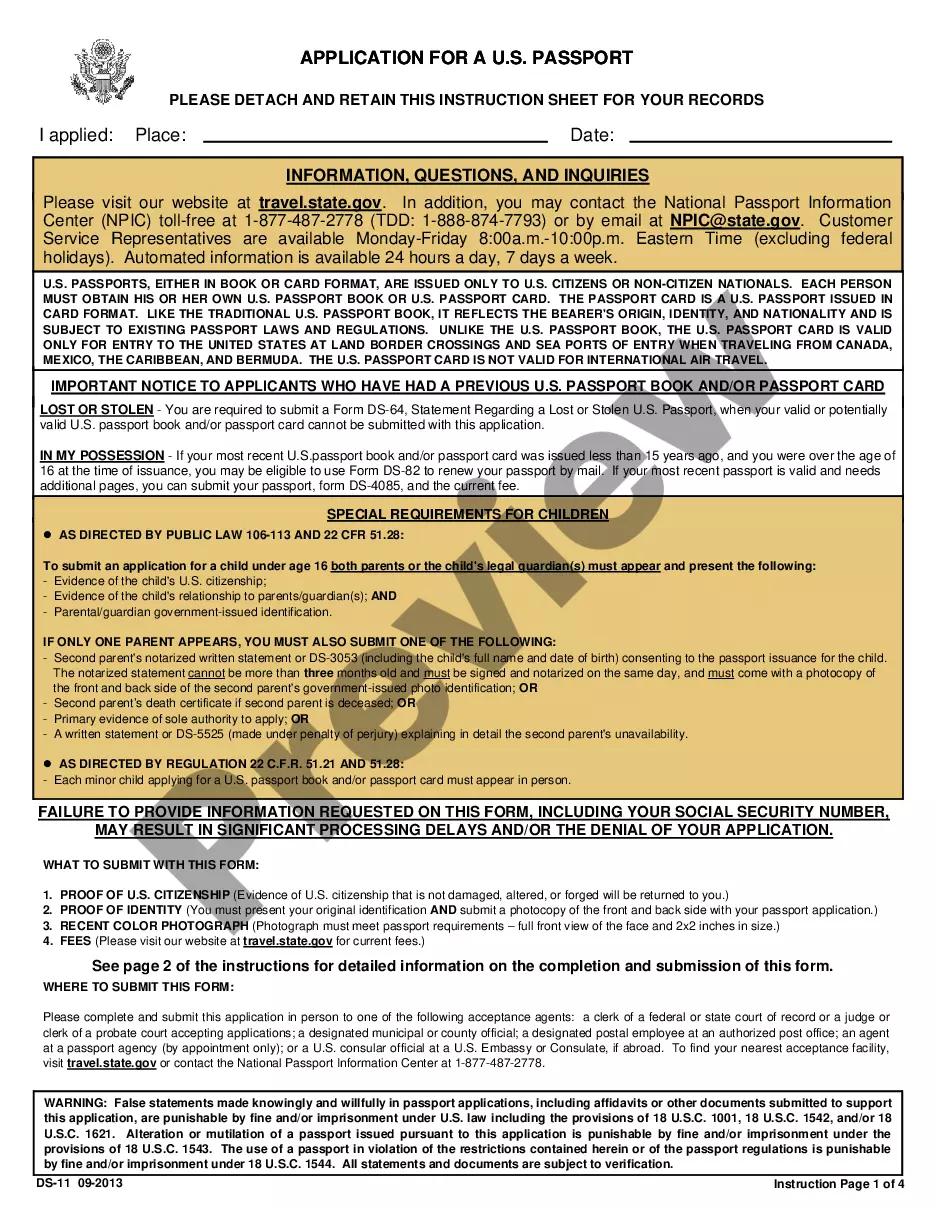
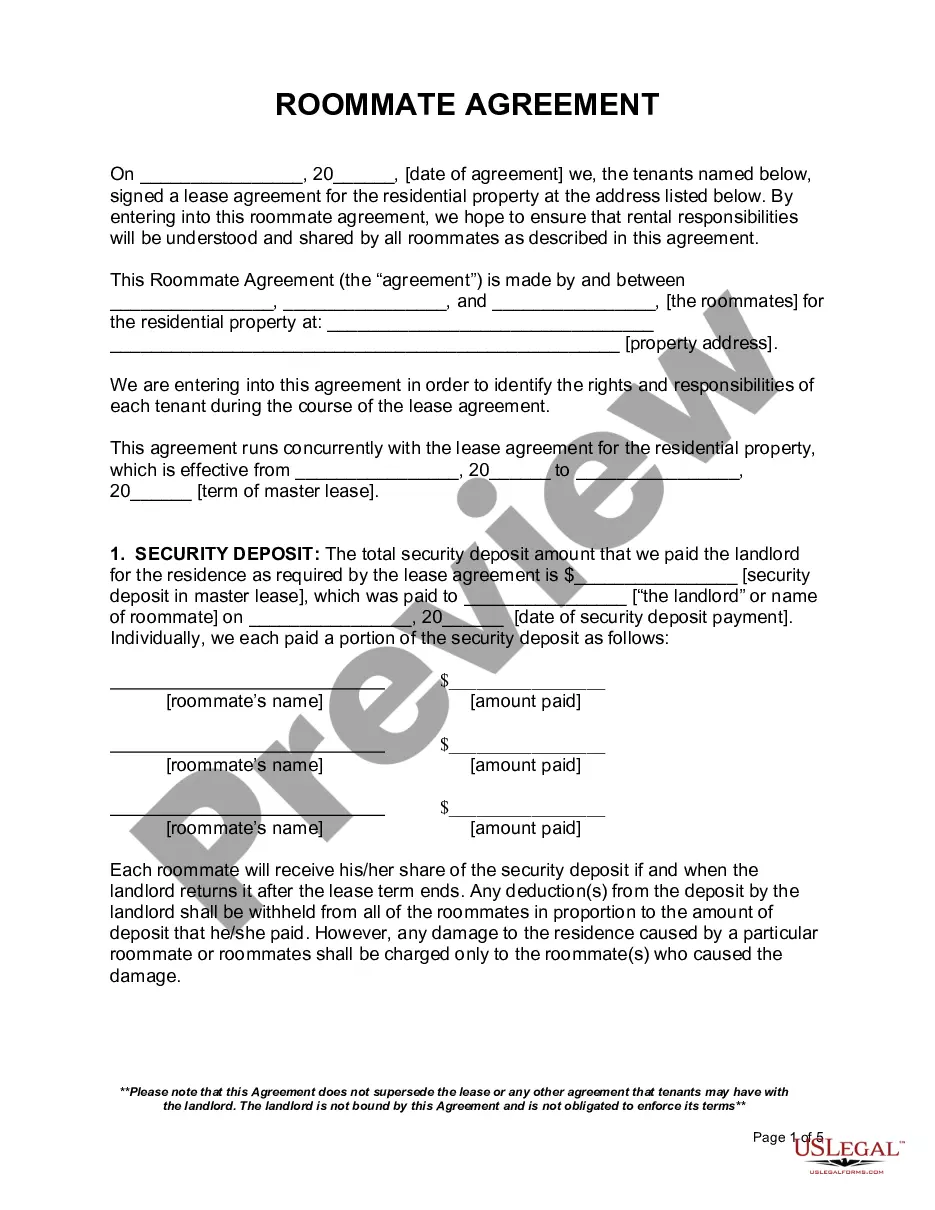
Roommate Agreement For Couples Form College In Michigan
Description

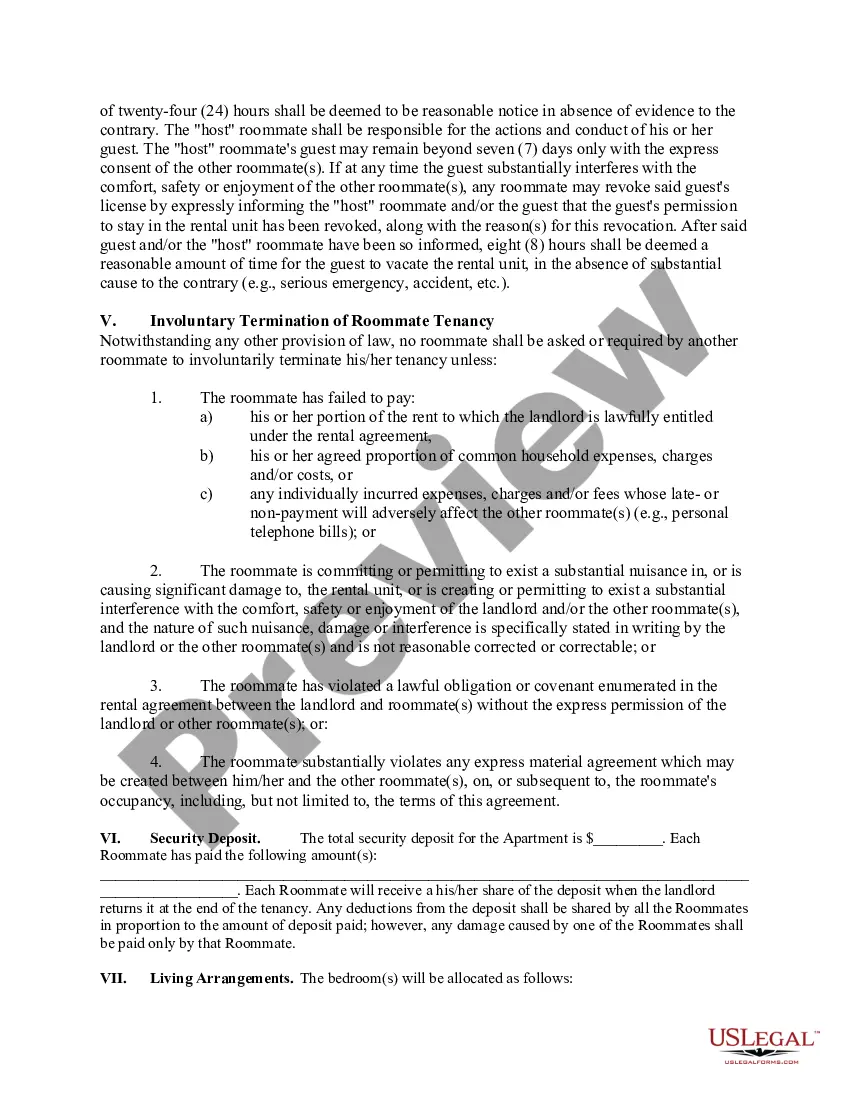
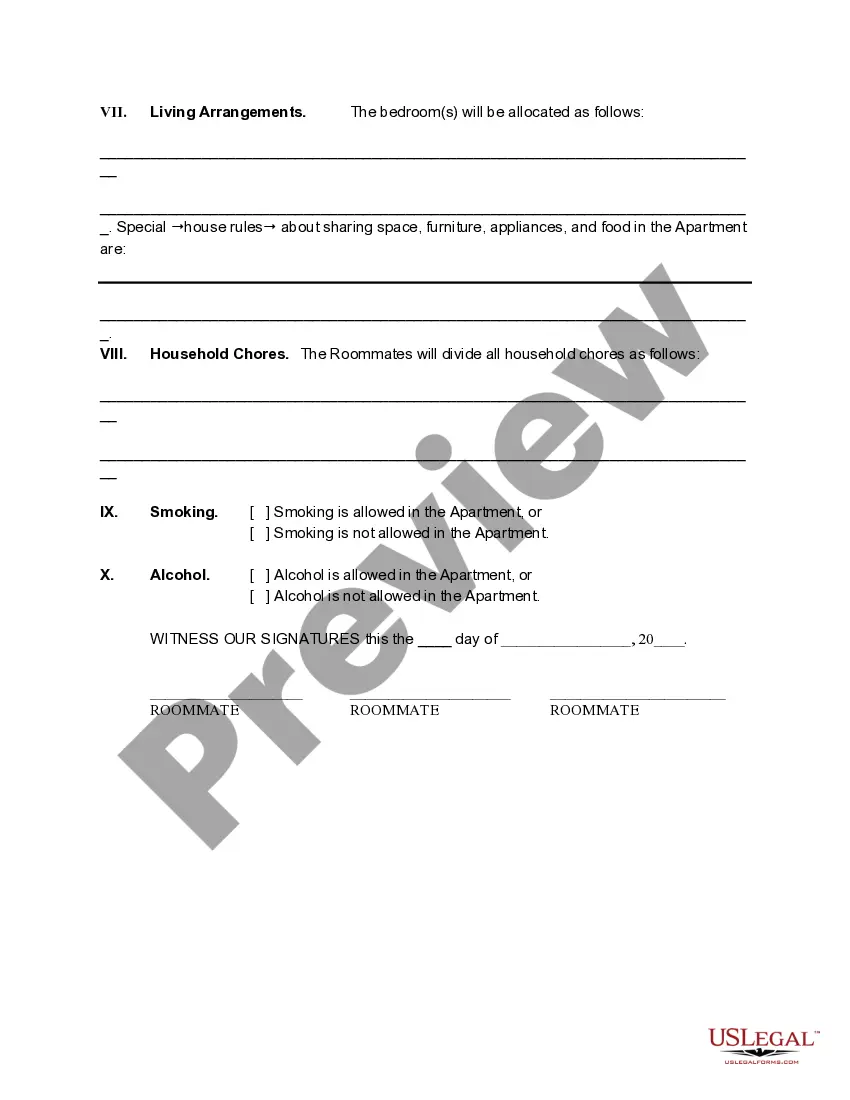

Get your form ready online
Our built-in tools help you complete, sign, share, and store your documents in one place.
Make edits, fill in missing information, and update formatting in US Legal Forms—just like you would in MS Word.
Download a copy, print it, send it by email, or mail it via USPS—whatever works best for your next step.
Sign and collect signatures with our SignNow integration. Send to multiple recipients, set reminders, and more. Go Premium to unlock E-Sign.
If this form requires notarization, complete it online through a secure video call—no need to meet a notary in person or wait for an appointment.
We protect your documents and personal data by following strict security and privacy standards.

Make edits, fill in missing information, and update formatting in US Legal Forms—just like you would in MS Word.

Download a copy, print it, send it by email, or mail it via USPS—whatever works best for your next step.

Sign and collect signatures with our SignNow integration. Send to multiple recipients, set reminders, and more. Go Premium to unlock E-Sign.

If this form requires notarization, complete it online through a secure video call—no need to meet a notary in person or wait for an appointment.

We protect your documents and personal data by following strict security and privacy standards.
Looking for another form?









Form popularity
FAQ
At Michigan, there are two main types of housing: On-Campus and Off-Campus. “On-campus” housing is defined as housing owned by the University. These include residence halls and the Northwood apartments. “Off-campus” housing is not owned by the University.
At the University of Michigan, students are not guaranteed housing after their freshman year on campus. Amid record-breaking enrollment numbers, many students are left to secure accommodations on their own.
First-year students are placed throughout most residence halls, and a high percentage of new students are on North Campus. Since Michigan Housing does not place students based on course of academic study, each community is a mix of majors.
All non-local first-year students are required to live in University housing for two academic semesters, as long as space is available. This policy does not apply to first-year students living with parents or legal guardians in Miami-Dade or Broward counties.
You may search for a roommate via our roommate finder in the housing application. This service allows you to search for a roommate; if you find a potential roommate and successfully form a roommate group, we will do our best to assign you together.
Students are not required to live on campus -- although about 97 percent of first-year students choose to live in Michigan Housing for the community, convenience and security. Living on campus is a big advantage in making the transition to university life. Was this article helpful?
Log in to your My Housing account and click on "Complete Your Roommate Group." The Group Leader will invite one, two, or three additional students to join the group by providing their names and MSU emails.
There is no requirement for first-year students to live in University Housing, yet approximately 97% of incoming students choose to do so. Every year, over 9,500 undergraduate students are housed in 18 residence halls on Central Campus, the Hill Neighborhood, and North Campus.
How to write a roommate agreement Names of both tenants. The property address. The dates the lease begins and ends. The amount of rent each person pays. Who pays for utilities. Who pays the security deposit. Which bedroom each person occupies. Who buys food, or if you're each buying your own food.