Condominium Common Element For Fraternities And Sororities In Texas
Description



Get your form ready online
Our built-in tools help you complete, sign, share, and store your documents in one place.
Make edits, fill in missing information, and update formatting in US Legal Forms—just like you would in MS Word.
Download a copy, print it, send it by email, or mail it via USPS—whatever works best for your next step.
Sign and collect signatures with our SignNow integration. Send to multiple recipients, set reminders, and more. Go Premium to unlock E-Sign.
If this form requires notarization, complete it online through a secure video call—no need to meet a notary in person or wait for an appointment.
We protect your documents and personal data by following strict security and privacy standards.

Make edits, fill in missing information, and update formatting in US Legal Forms—just like you would in MS Word.

Download a copy, print it, send it by email, or mail it via USPS—whatever works best for your next step.

Sign and collect signatures with our SignNow integration. Send to multiple recipients, set reminders, and more. Go Premium to unlock E-Sign.

If this form requires notarization, complete it online through a secure video call—no need to meet a notary in person or wait for an appointment.

We protect your documents and personal data by following strict security and privacy standards.
Looking for another form?







Form popularity
FAQ
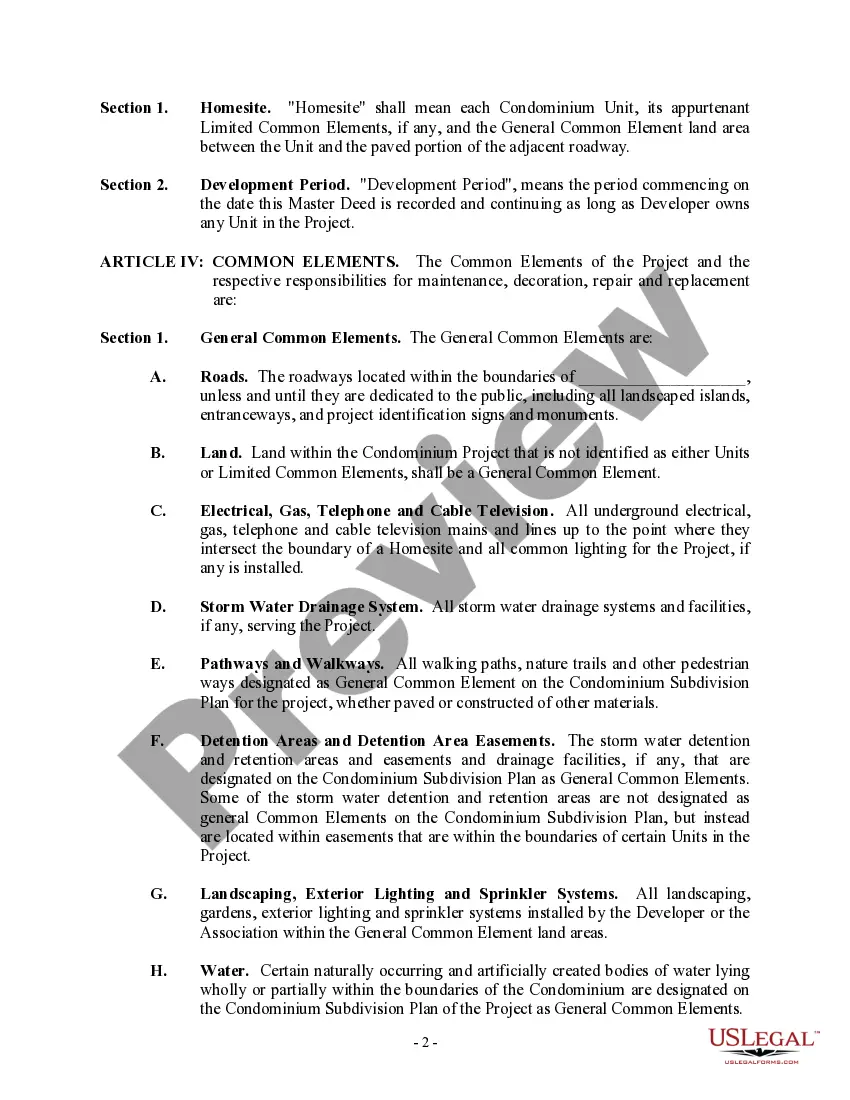
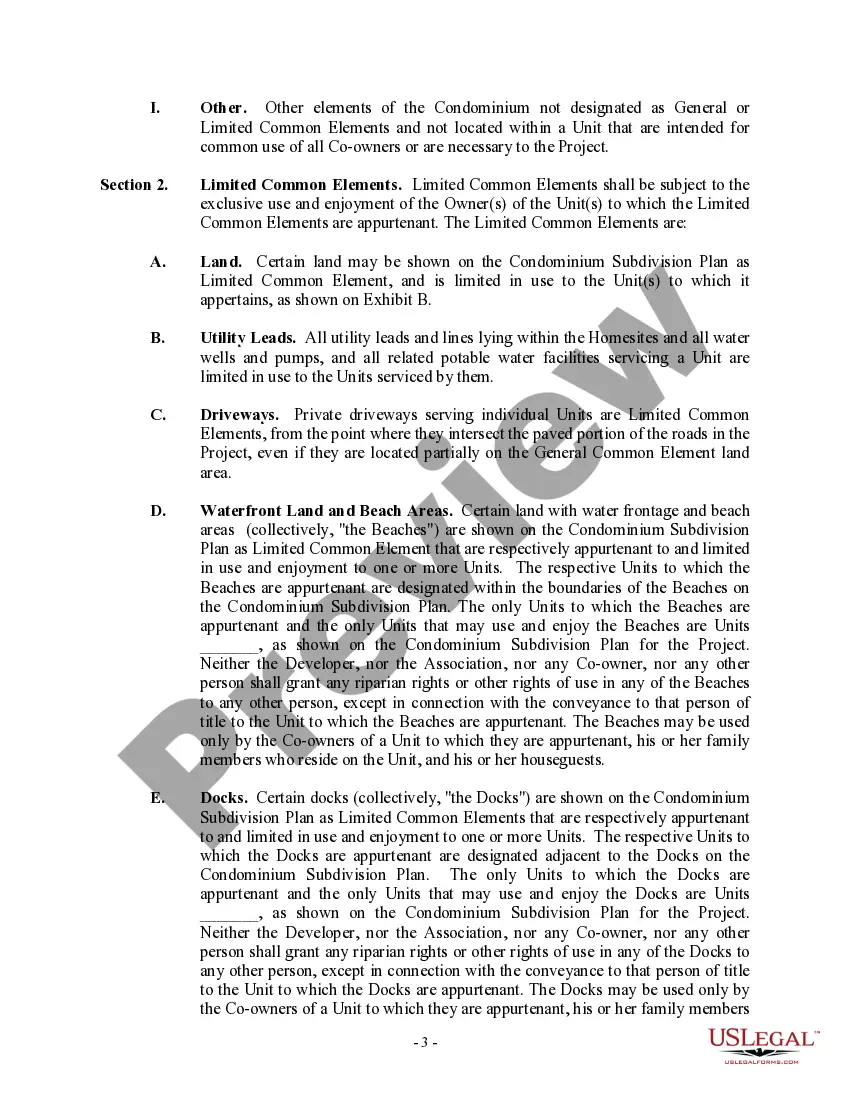
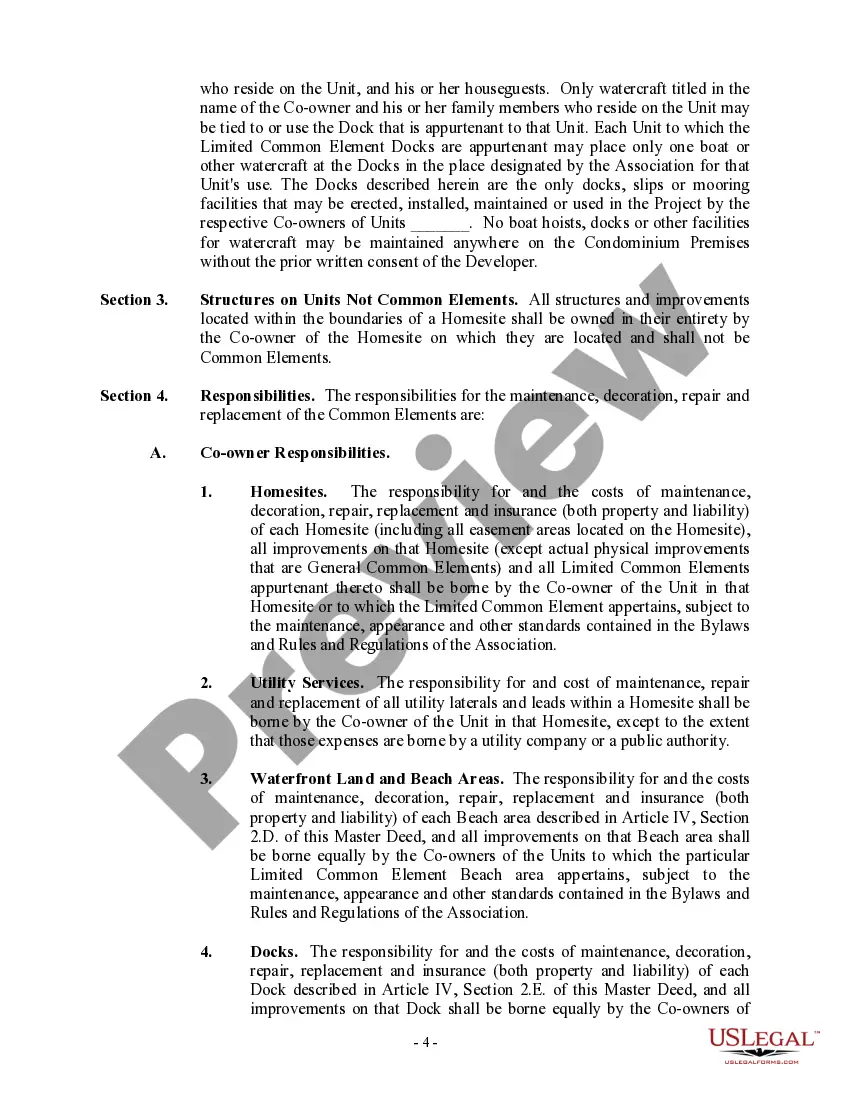
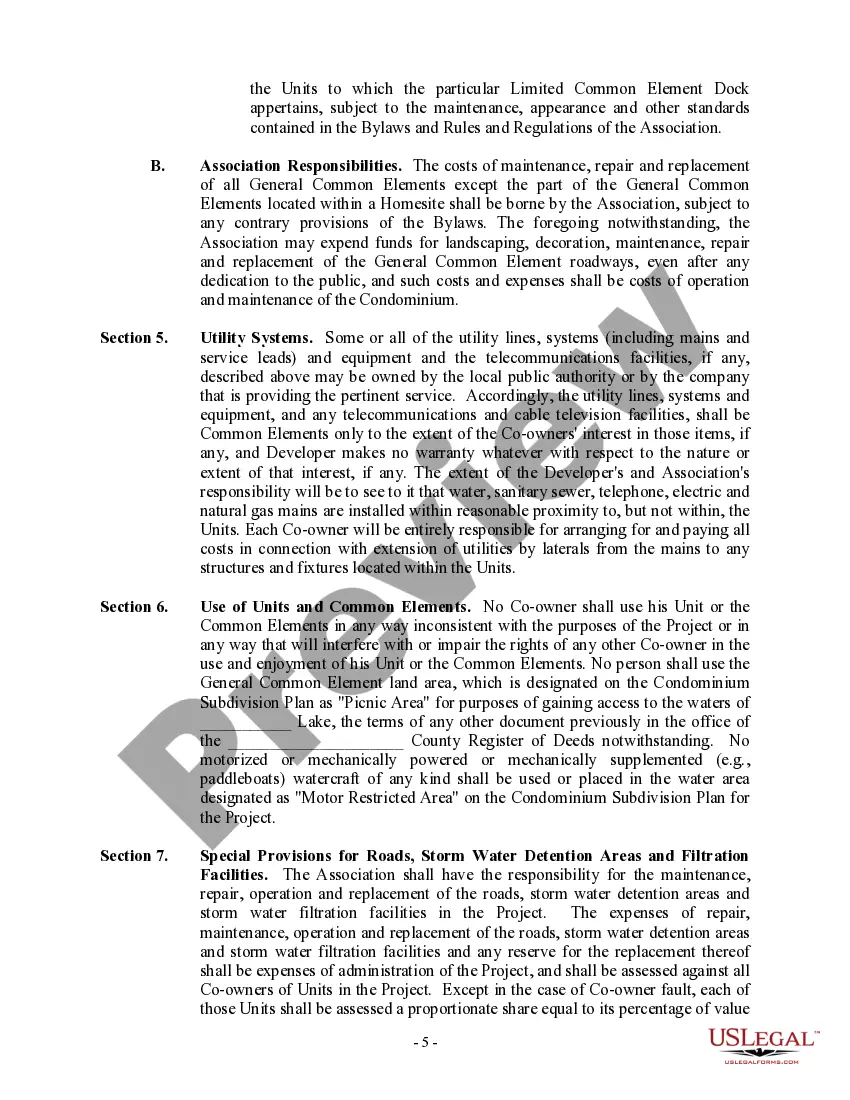
Limited common elements are defined as any aspects of a shared inium complex that are part of a unit, but are not considered to be the sole property of the owner or tenant.
82.059. PLATS AND PLANS. (a) Plats and plans are a part of the declaration and may be recorded as a part of the declaration or separately. Each plat or plan must be legible and contain a certification that the plat or plan contains all information required by this section.
Each individual HOA agreement outlines what is considered a common element and what is considered the homeowner's responsibility. From windows and doors to balconies, these are common gray areas that HOA agreements will address. The same goes for cleaning windows — the agreement will outline whose responsibility it is.
Section 82.111(a)(1) requires that a inium association maintain “property insurance on the insurable common elements insuring against all risks of direct physical loss commonly insured against, including fire and extended coverage. . .” However, under Section 82.111(b), for inium developments with ...
Common Elements of the inium Corporation are the land and structures in the inium Corporation other than the units themselves, such as the exterior landscaped areas, recreational facilities, parking garage, hallways, elevators, corridors, public washrooms, lobby areas, driveways, garbage rooms, electrical ...
Common Elements of the inium Corporation are the land and structures in the inium Corporation other than the units themselves, such as the exterior landscaped areas, recreational facilities, parking garage, hallways, elevators, corridors, public washrooms, lobby areas, driveways, garbage rooms, electrical ...
This means common elements could include, but are not limited to, all the following: land, foundations, hallways, stairways, entrances and exits, common parking areas, storage areas, basement, roof, incinerator, pipes, ducts, electrical wiring and conduits, central heating and air, public utility lines, floors, ...
Inium common areas are community spaces that residents can access within the neighbourhood. These areas are available to all homeowners for use and enjoyment. While all iniums are unique and offer different amenities, some common area examples include: Swimming pools.
Kitchen appliances within the units are not considered part of the common elements of a inium project since they are typically owned and maintained by individual unit owners. Swimming pools and greenbelt areas are examples of common elements as they are shared facilities within the inium project.
Common elements are owned in undivided shares by all inium unit owners as tenants in common and include portions of the inium shared or used in common by the inium's residents. Examples of common elements are: Building structural components and systems. Lobbies.
