Condominium Common Element With Bright Red Highlights In Michigan
Description



Get your form ready online
Our built-in tools help you complete, sign, share, and store your documents in one place.
Make edits, fill in missing information, and update formatting in US Legal Forms—just like you would in MS Word.
Download a copy, print it, send it by email, or mail it via USPS—whatever works best for your next step.
Sign and collect signatures with our SignNow integration. Send to multiple recipients, set reminders, and more. Go Premium to unlock E-Sign.
If this form requires notarization, complete it online through a secure video call—no need to meet a notary in person or wait for an appointment.
We protect your documents and personal data by following strict security and privacy standards.

Make edits, fill in missing information, and update formatting in US Legal Forms—just like you would in MS Word.

Download a copy, print it, send it by email, or mail it via USPS—whatever works best for your next step.

Sign and collect signatures with our SignNow integration. Send to multiple recipients, set reminders, and more. Go Premium to unlock E-Sign.

If this form requires notarization, complete it online through a secure video call—no need to meet a notary in person or wait for an appointment.

We protect your documents and personal data by following strict security and privacy standards.
Looking for another form?







Form popularity
FAQ
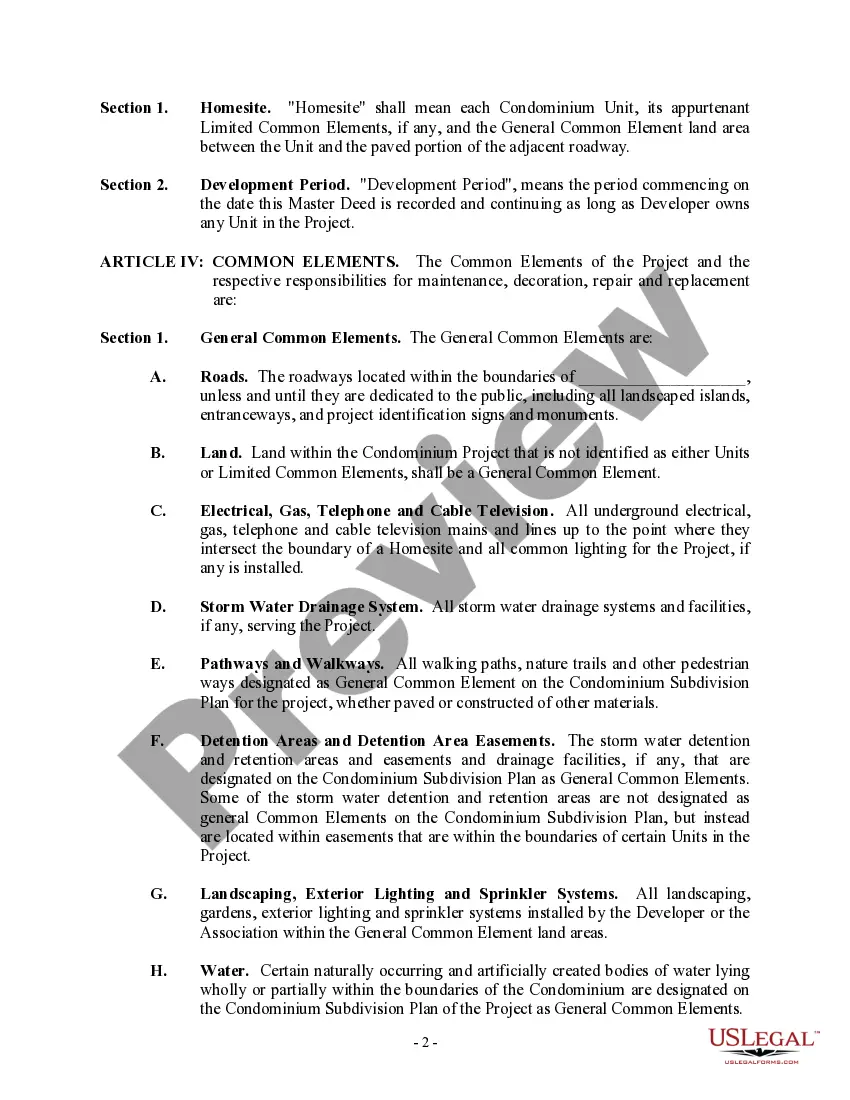
Common Elements of the inium Corporation are the land and structures in the inium Corporation other than the units themselves, such as the exterior landscaped areas, recreational facilities, parking garage, hallways, elevators, corridors, public washrooms, lobby areas, driveways, garbage rooms, electrical ...
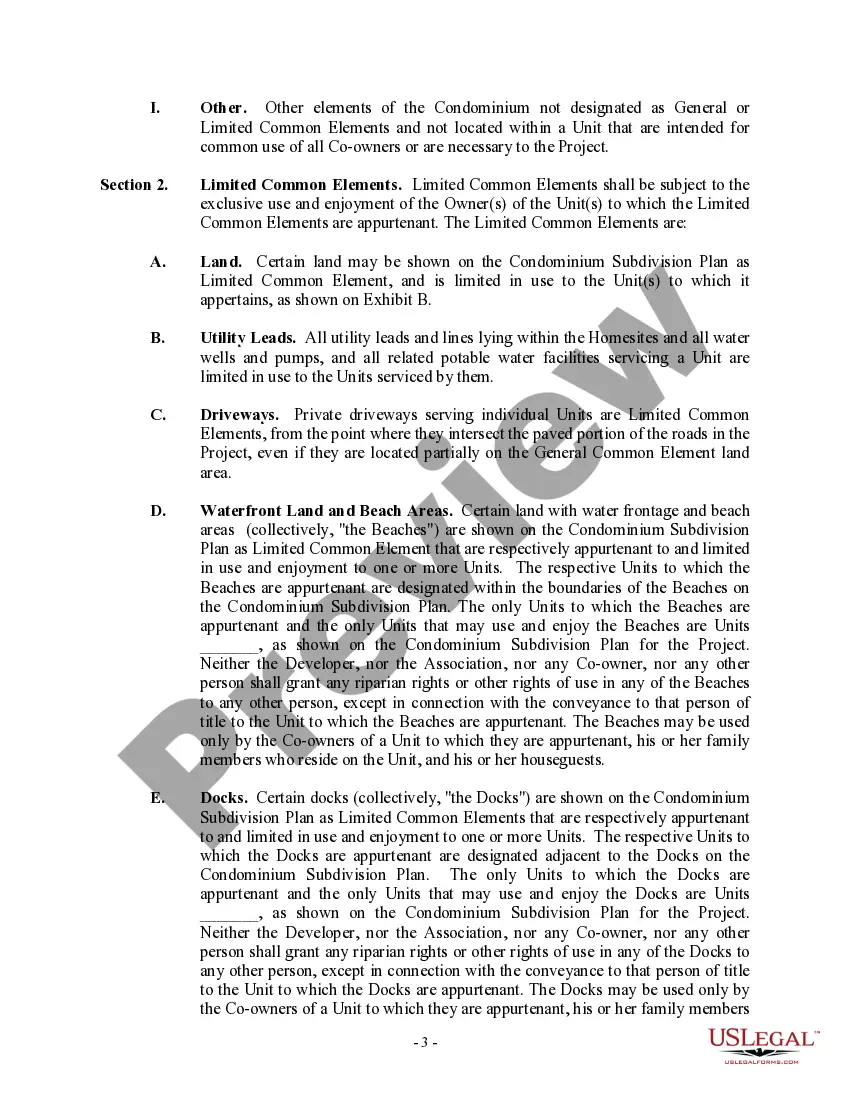
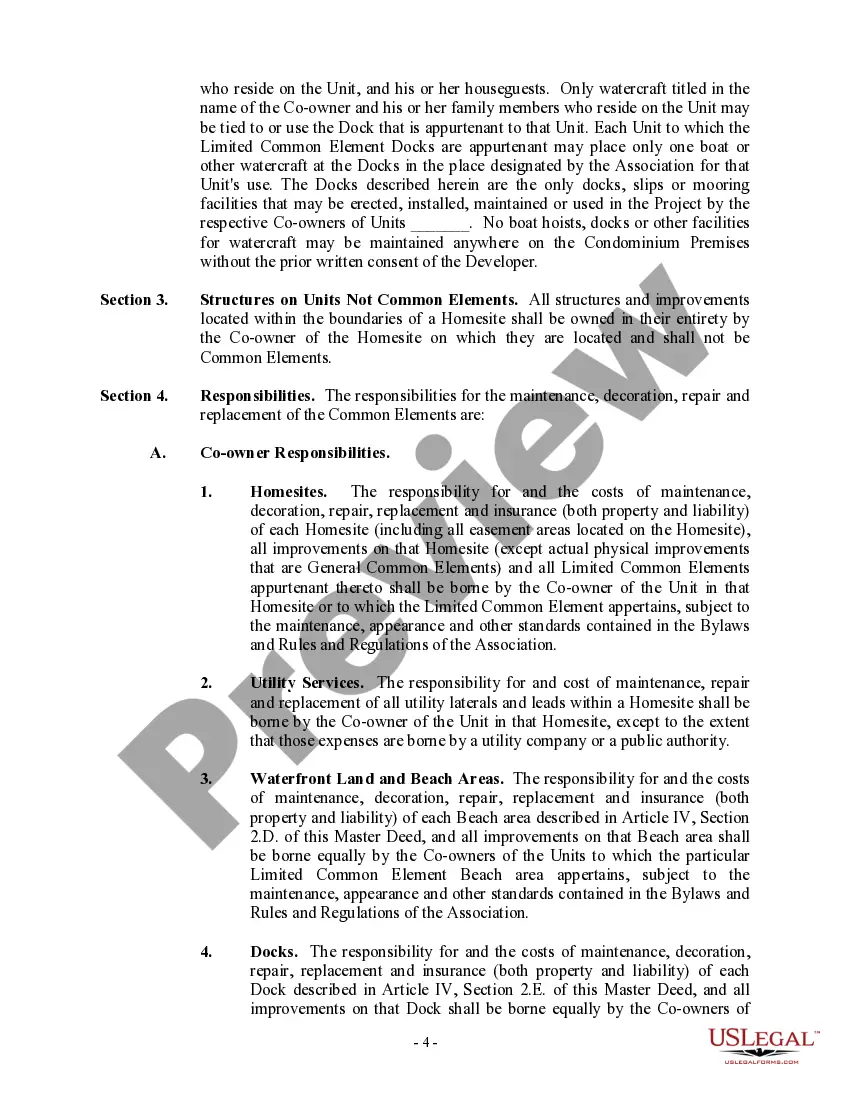
Limited common elements are parts of a condo that are assigned to individual units, but considered community property rather than the tenant's. Examples of limited common elements include windows, balconies, driveways, elevators, clubhouses, and swimming pools.
Section 57 of the Act provides that all books, records, contracts, and financial statements concerning the administration and operation of the inium project shall be available for examination by any of the co-owners at convenient times.
Sec. 84a. (1) The developer shall provide copies of all of the following documents to a prospective purchaser of a inium unit, other than a business inium unit: (a) The recorded master deed.
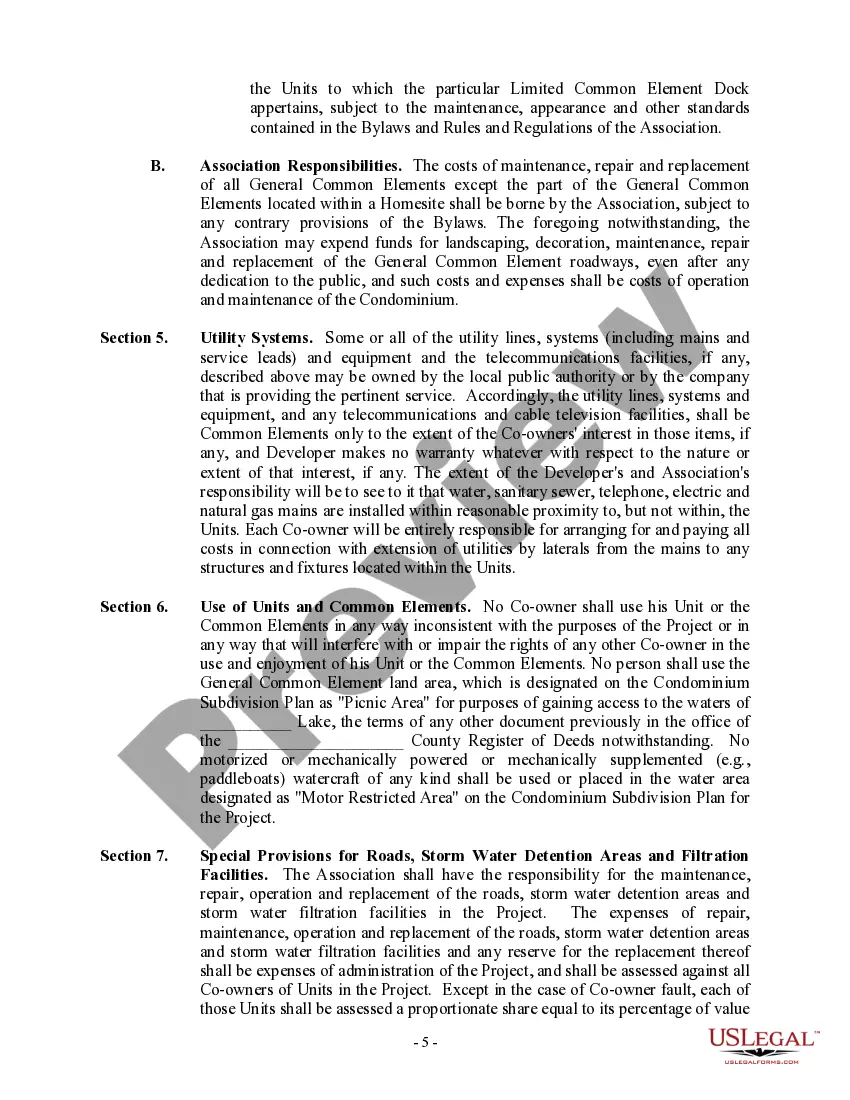
Maintenance, repair, and replacement of a limited common element is usually the responsibility of the association except to the extent the declaration shifts that duty to the unit owner.
Section 57 of the Act provides that all books, records, contracts, and financial statements concerning the administration and operation of the inium project shall be available for examination by any of the co-owners at convenient times.
A common element is defined as all portions of the property except the units. Examples of common elements include fitness centers, elevators, lobbies, walkways, lighting in common hallways, garbage collection areas, swimming pools, landscaping, club houses, and more.
Sec. 47. (1) Subject to the prohibitions and restrictions in the inium documents, a co-owner may make improvements or alterations within a inium unit that do not impair the structural integrity of a structure or otherwise lessen the support of a portion of the inium project.
The dissolution of a homeowners association in Michigan necessitates a formal resolution, approval from a majority of members, and adherence to specific procedures set forth in the Michigan Nonprofit Corporation Act.
Section 112 requires any co-owner desiring to lease out a unit to disclose that fact in writing to the association at least 10 days before presenting a lease or otherwise agreeing to grant possession of a unit to a tenant, and to supply the association with an exact copy of the lease form to be used to enable the ...
