Bylaws Condo Association With Regulations In Wayne
Description

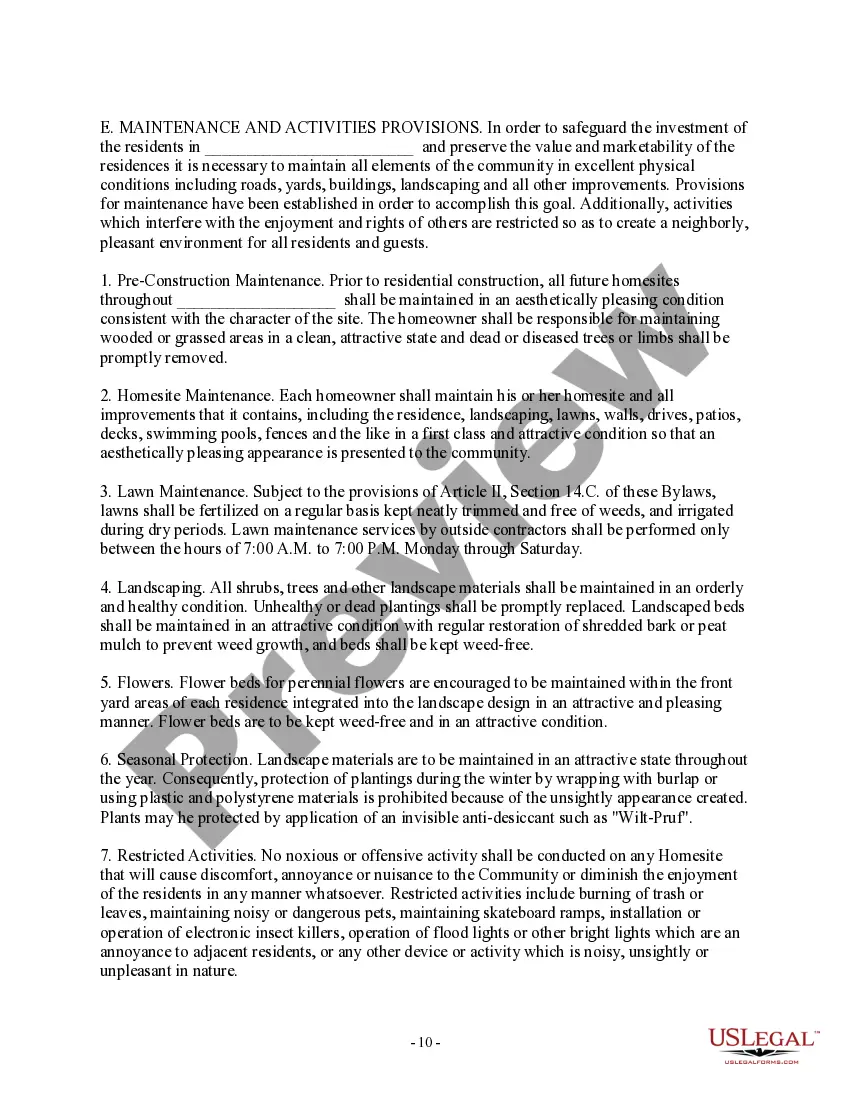



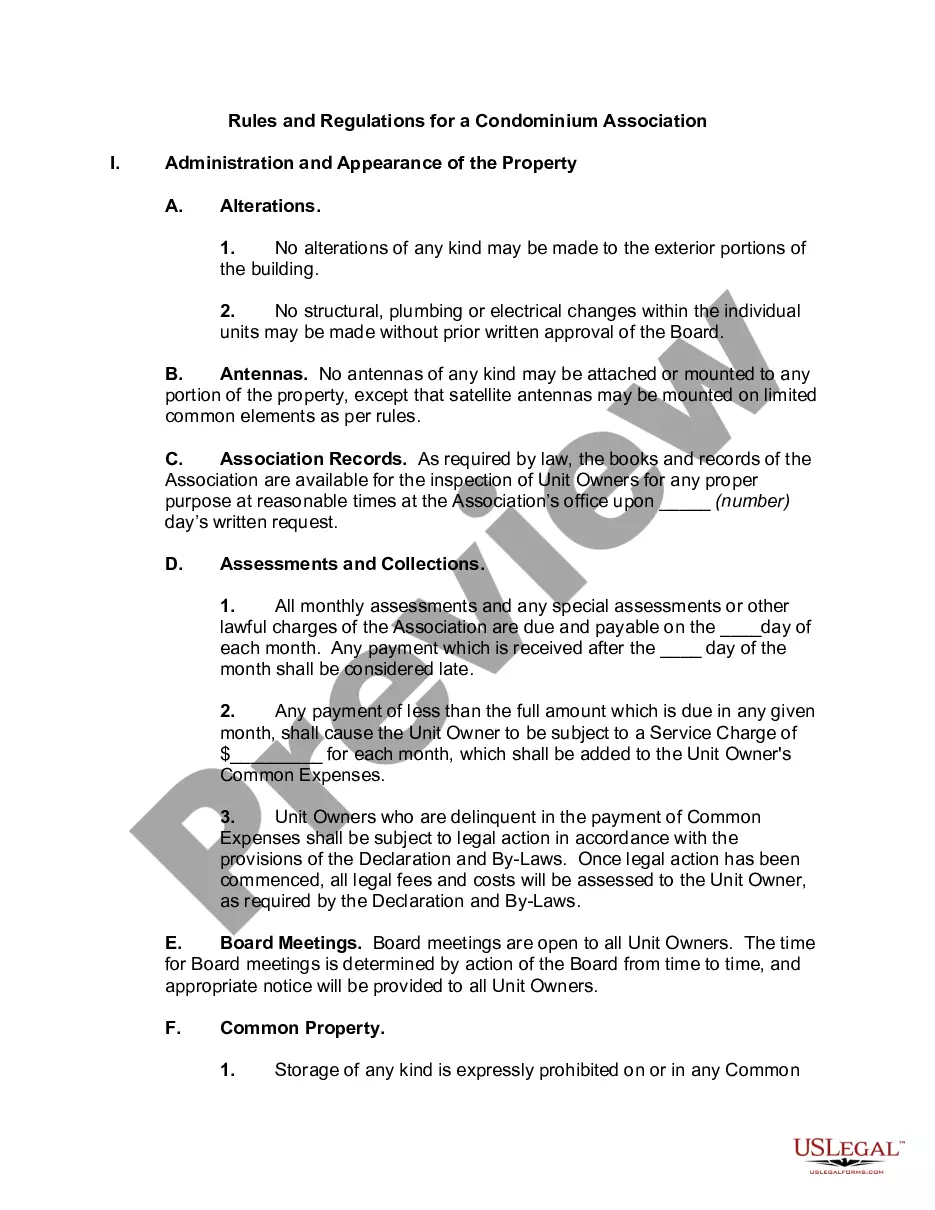

Get your form ready online
Our built-in tools help you complete, sign, share, and store your documents in one place.
Make edits, fill in missing information, and update formatting in US Legal Forms—just like you would in MS Word.
Download a copy, print it, send it by email, or mail it via USPS—whatever works best for your next step.
Sign and collect signatures with our SignNow integration. Send to multiple recipients, set reminders, and more. Go Premium to unlock E-Sign.
If this form requires notarization, complete it online through a secure video call—no need to meet a notary in person or wait for an appointment.
We protect your documents and personal data by following strict security and privacy standards.

Make edits, fill in missing information, and update formatting in US Legal Forms—just like you would in MS Word.

Download a copy, print it, send it by email, or mail it via USPS—whatever works best for your next step.

Sign and collect signatures with our SignNow integration. Send to multiple recipients, set reminders, and more. Go Premium to unlock E-Sign.

If this form requires notarization, complete it online through a secure video call—no need to meet a notary in person or wait for an appointment.

We protect your documents and personal data by following strict security and privacy standards.
Looking for another form?








Form popularity
FAQ
Inium Law The inium Act of the Philippines allows Filipino citizens and businesses to buy iniums. Foreigners, on the other hand, are limited to owning no more than 40% of a corporation's entire and outstanding capital stock, which must be Filipino-owned and controlled.
Section 57 of the Act provides that all books, records, contracts, and financial statements concerning the administration and operation of the inium project shall be available for examination by any of the co-owners at convenient times.
To have a pleasant condo living experience, keep in mind these legal rights for condo owners. The Right to Access Condo Documents. The Right to Equality and Non-Discrimination. The Right to Notice and Meetings. The Right to Run and Vote During Elections. The Right to Protest.
In the Philippines, 50 years is the lifespan of all companies and corporations, big or small. However, the corporation can still be renewed for another 50 years, so your inium ownership does not necessarily end at that point. Fact #3: Three factors need to be fulfilled to declare a inium uninhabitable.
Unlike some states that have specific governmental agencies dedicated to regulating HOAs, Indiana does not have a single state agency that directly oversees these associations. Instead, the regulation of HOAs in Indiana is primarily governed by state statutes, the association's governing documents, and the courts.
Homeowners often ask whether local laws supersede the rules and regulations set forth by their homeowner association (HOA). The short answer is yes, local laws do supersede HOA rules.
Fines. Homeowner's associations in Indiana have the authority to penalize property owners for violations and unpaid dues.
To file a complaint against an HOA in Indiana, homeowners should first consult their association's bylaws for dispute resolution procedures. If the issue remains unresolved, they might consider filing a complaint with the Indiana Attorney General's office or seeking legal counsel to discuss potential civil action.
Can HOAs in Indiana be dissolved? Yes, a homeowners association can be dissolved. The process is usually outlined in the governing documents, but if not, a vote from the majority of the members must be obtained in order for the HOA to be dissolved.
Yes, you can sue an HOA in Indiana if you believe that the association has acted unlawfully, breached its fiduciary duty, or violated the terms of the governing documents. However, it is important to explore alternative dispute resolution methods and consult with an experienced attorney before taking legal action.
