Condo Bylaws Vs. Rules And Regulations In Georgia
Description




Get your form ready online
Our built-in tools help you complete, sign, share, and store your documents in one place.
Make edits, fill in missing information, and update formatting in US Legal Forms—just like you would in MS Word.
Download a copy, print it, send it by email, or mail it via USPS—whatever works best for your next step.
Sign and collect signatures with our SignNow integration. Send to multiple recipients, set reminders, and more. Go Premium to unlock E-Sign.
If this form requires notarization, complete it online through a secure video call—no need to meet a notary in person or wait for an appointment.
We protect your documents and personal data by following strict security and privacy standards.

Make edits, fill in missing information, and update formatting in US Legal Forms—just like you would in MS Word.

Download a copy, print it, send it by email, or mail it via USPS—whatever works best for your next step.

Sign and collect signatures with our SignNow integration. Send to multiple recipients, set reminders, and more. Go Premium to unlock E-Sign.

If this form requires notarization, complete it online through a secure video call—no need to meet a notary in person or wait for an appointment.

We protect your documents and personal data by following strict security and privacy standards.
Looking for another form?








Form popularity
FAQ
The local law supersedes the rules and regulations of the HOA, meaning that HOAs must ensure they are operating under the law.
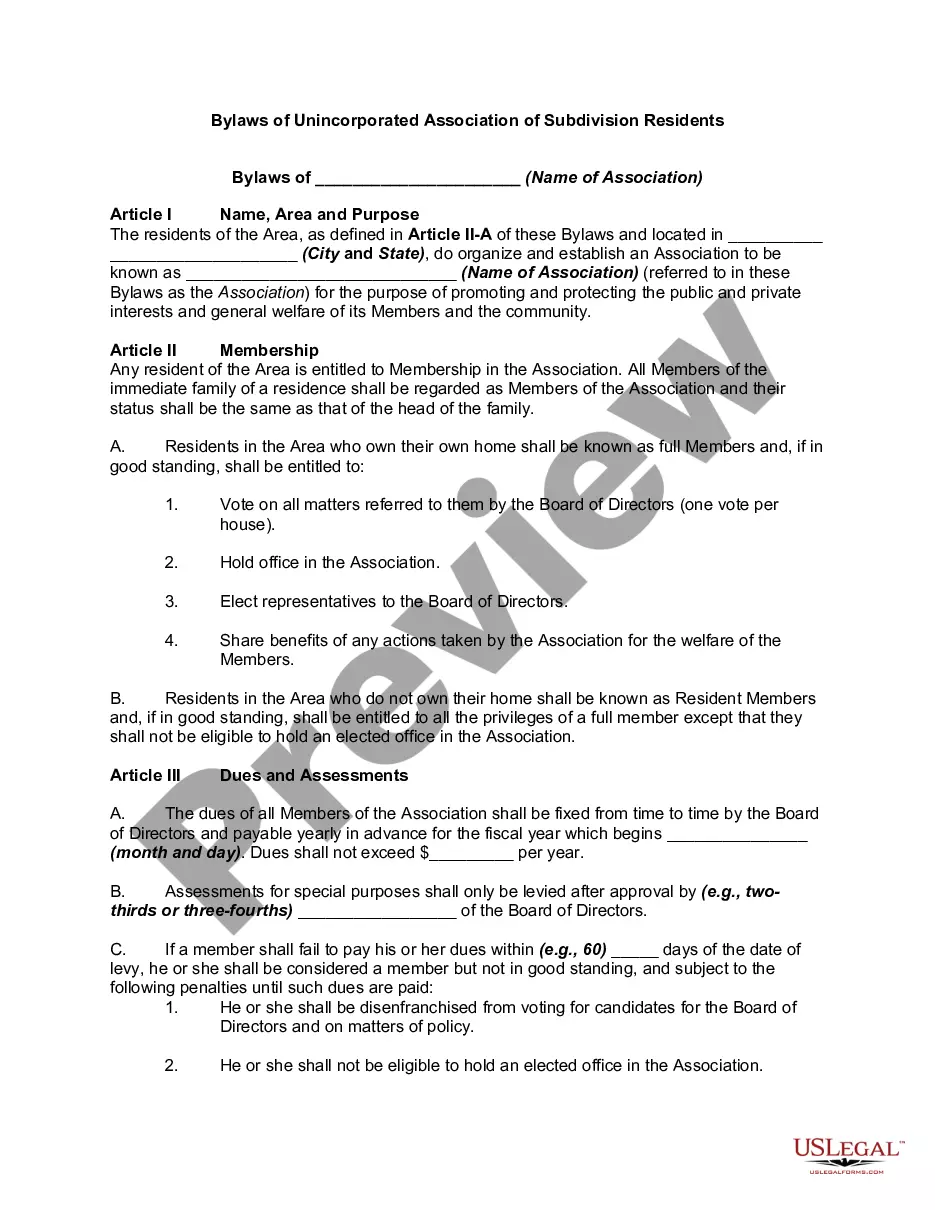
Bylaws govern the organization as a whole and can be amended only by providing notice and gaining a majority vote. Standing rules can be adopted at any meeting without notice and can pass upon a simple majority vote of people in attendance.
Generally speaking, the declaration is the document that creates the inium. The bylaws spell out the day-to-day operations of the association. If your association is more than 10 years old and the bylaws have remained unchanged, board members may want to consider making updates.
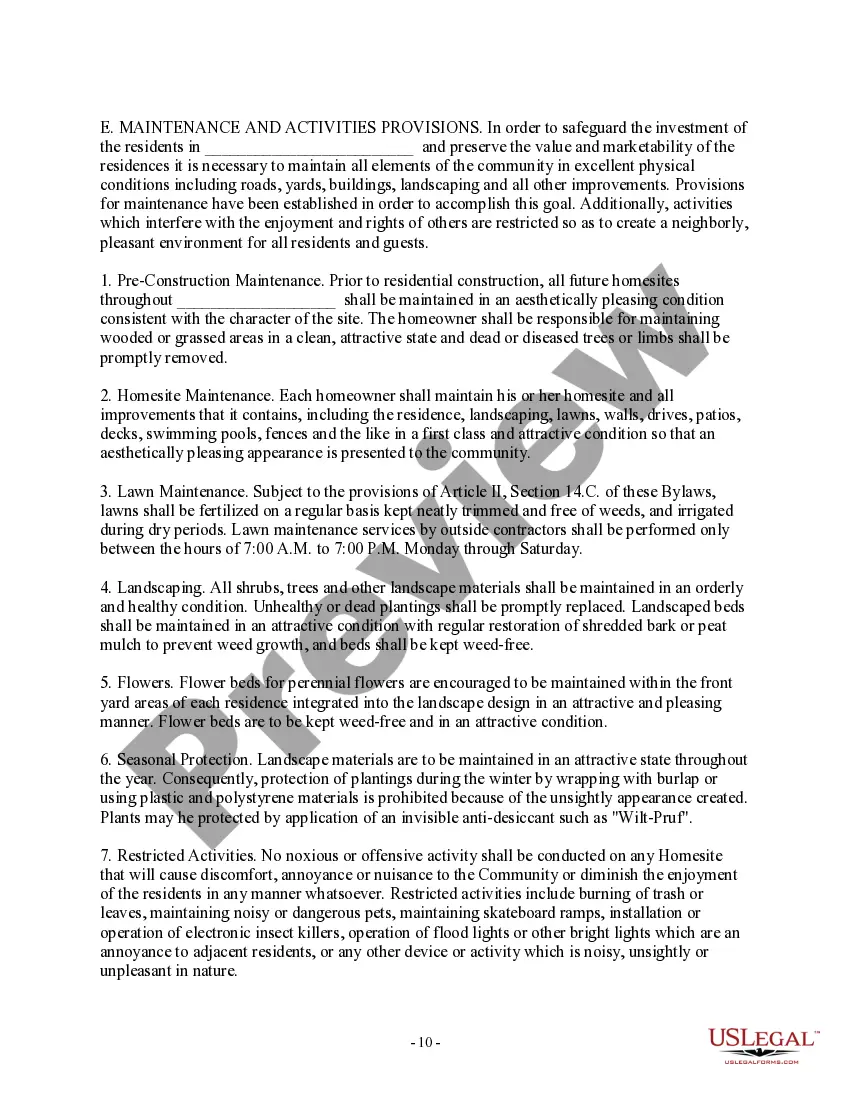
Simply put, homeowners association bylaws dictate how an HOA should run. Since HOAs are considered corporations under law, albeit non-profit, they require bylaws to govern day-to-day operations. HOA bylaws are also sometimes referred to as neighborhood association bylaws or subdivision bylaws.
Again, the CC&Rs set out the rules of the HOA community. They describe the requirements and limitations of what you can do with your property. The goal of the CC&Rs is to protect, preserve, and enhance property values in the community. The bylaws, on the other hand, govern how the HOA operates.
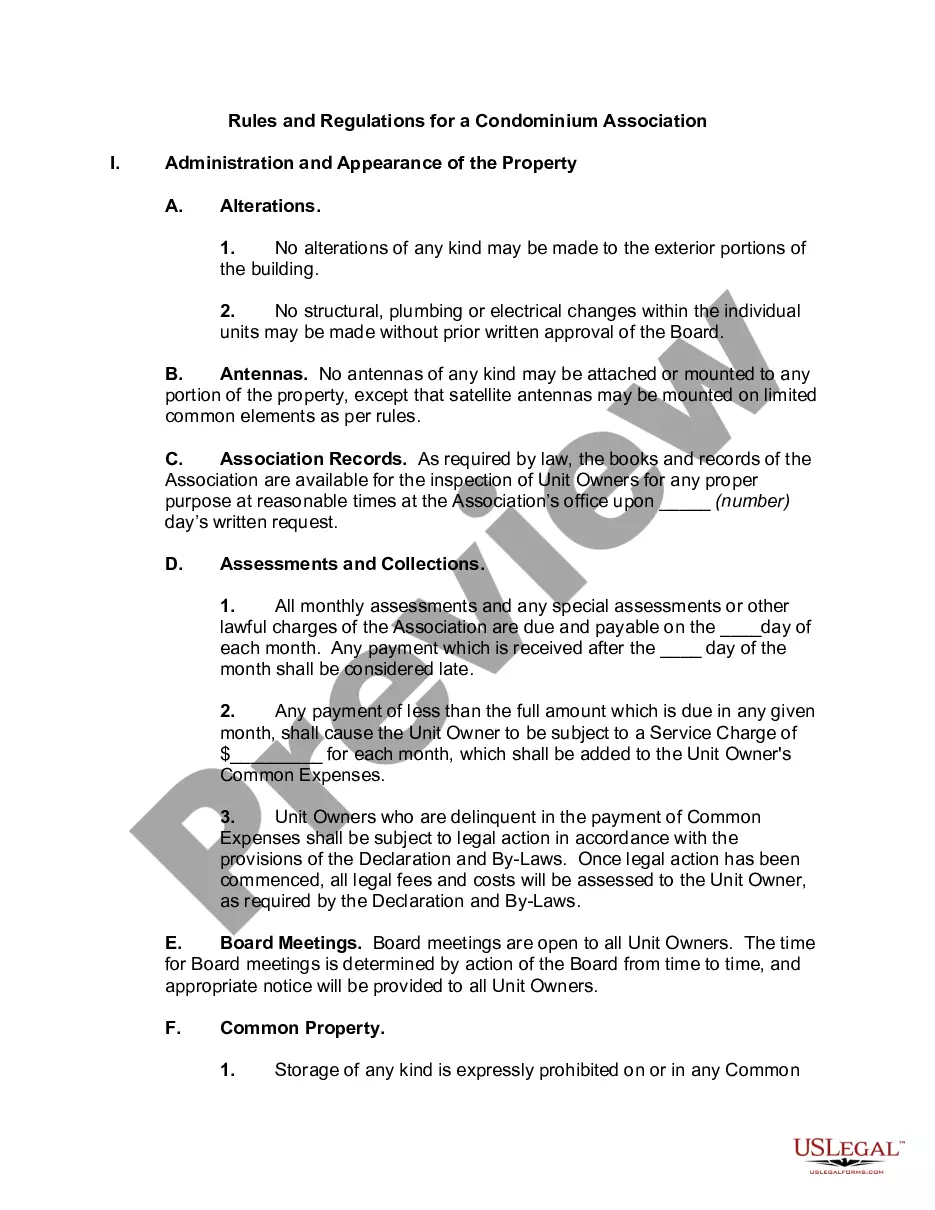
Answer: Yes, condo bylaws are legally binding documents. They are part of the inium's governing documents and are enforceable under both state or provincial laws and local regulations.
House Rules are different from Bylaws in that they can be implemented and changed by the Board of Directors without the need for unit owner approval – which means that they can be changed more easily. Bylaws will very often set forth restrictions on the use of units in the condo.
The Property Owners' Association Act oversees the creation, management, authority, and functions of the HOAs in Georgia. It's important to note here that associations can be formed under the POAA or using common law principles. In such cases, this act will not apply.
Perpetual Duration: Prior to 1993, Georgia law generally provided that covenants expire after 20 years. In 1994, the law was amended to permit covenants to automatically renew. Yet, Georgia courts have subsequently held that covenants in communities recorded prior to 1994 do not receive the benefit of the 1994 law.
Also, for the decisions made by an HOA, except for the cases provided for by Article 7(4) of this Law, the HOA members shall be liable, personally and jointly, in proportion to their share in the common property of HOA members. The responsibility of a hired manager is determined by an agreement.
